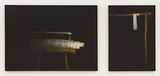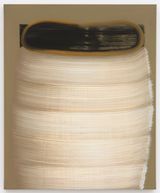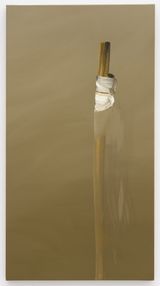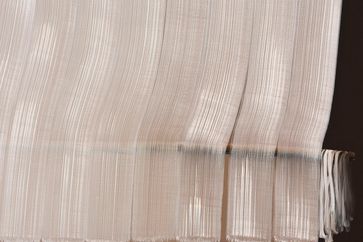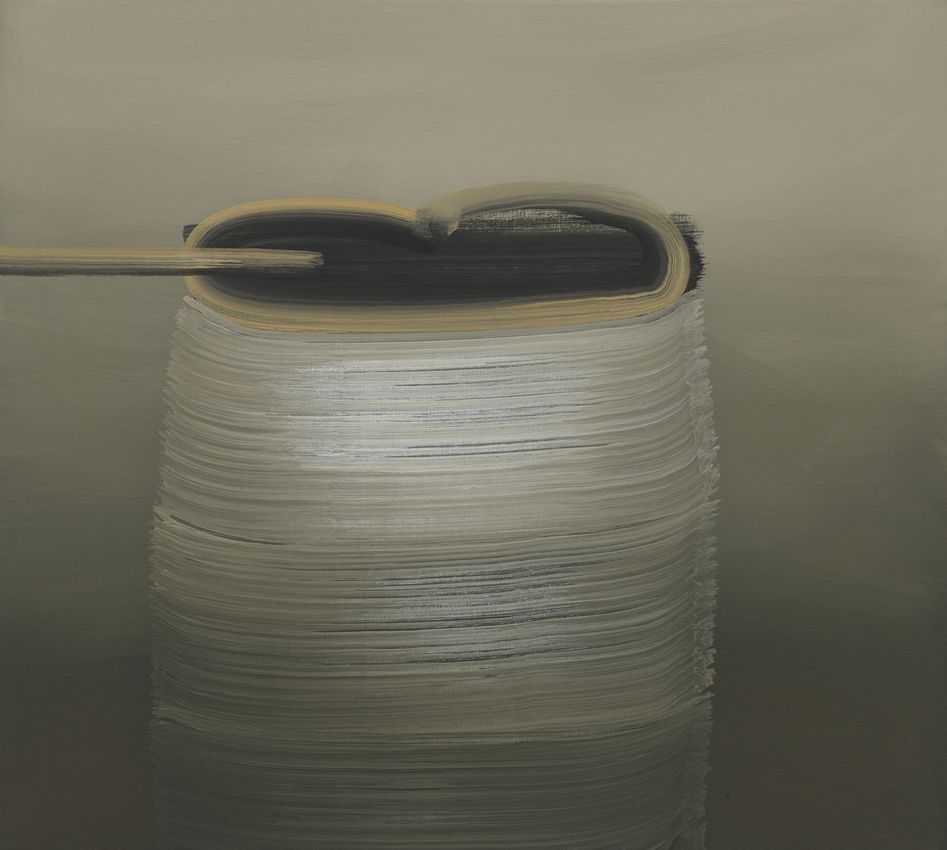
Hyun-Sook Song (b. 1952, Damyang) presents a new series of paintings, One brushstroke, thehorizon of the world, at Zeno X Gallery.
Song has been working since the 1980s on a body of work in which she reflects on a lifebetween two cultures. She travelled from South Korea to West Germany as a guest workerin 1972. During this period, she kept notes and wrote letters home, developing a visuallanguage of her own: she used the expressive nature of calligraphy to express her experienceof Western modernity and her social isolation. This laid the foundations for a practice in whichSong would link the traditions of East Asian painting and European modernism.
Each painting refers, on the one hand, to the transient nature of objects stored in her memoryand, on the other, to the way new experiences can actualise those memories. I also neededthe foreign, the other, in order to become attentive at the highest level. How could I have everdreamed of discovering the values I would like to know and see preserved in the useless thingsbehind our house? (Hyun Sook-Song in ‘Where at Home - Paint or Die. An account of thelife and work of the painter Song Hyun-Sook and the cultural background of her emigration’,Hamburg, 2021, p. 131)
Central to her visual language is the brushstroke that invariably recurs in the titles of herworks. A mental process precedes each brushstroke, but its execution is performed in onefluid movement, which must remain spontaneous, like a dance. Song knows in advance whatmotif she wants to paint, but not yet how exactly she will shape this image on the canvas. Thenumber of brushstrokes is in part determined by the motif: a stick consists of one movement,a Korean shoe of three, and a pot of five, seven or nine strokes, depending on the size.Although her formal language is restricted, the execution is unique and the variations aretherefore endless.
Song developed a very distinctive style and technique by using tempera, a type of paint madeby mixing pigments with egg yolk. This technique was widely used in Western painting inthe Middle Ages, notably because of the paint’s opaque character. Song, by contrast, usestempera in a way that is almost transparent. She prepares her brush by applying each pigmentcolour separately. The colours blend through the movement of the brush. The placementof the brush on the canvas, the pressure and rhythm of the action give each brushstroke aunique character. The second brushstroke builds on the first, but is applied with the sameconcentration, as if it were each time the ‘one’, the first.
Hyun-Sook Song lives and works in Hamburg (DE). She studied at the Academy of Fine Artsin Hamburg between 1976 and 1981. In 1984 she returned to her homeland for a year to studyKorean art history at Chonnam National University in Gwangju. Her work is part of the publiccollections of Kunstmuseum Bern, Kunstmuseum Bonn, Hamburger Kunsthalle, Kunstpalastin Düsseldorf, Leeum-Samsung Museum of Modern Art in Seoul, Mori Art Museum in Tokyo,Fukuoka Asian Art Museum, Seoul Museum of Art, Gwangju Art Museum and GyeonggiMuseum of Art in Ansan.
Hyun-Sook Song is a Korean-German artist recognised for her luminous tempera paintings. Contrary to the historical use of egg tempera, favoured by mediaeval and Renaissance painters for its opacity, Song employs it in a way that the paint medium is semi-transparent. The recurring motifs of her paintings, evocative of objects from her rural childhood in South Korea, explore memory in space.

In 1981, Frank and Eliane Demaegd founded Zeno X Gallery in an early 20th century townhouse in the Antwerp South district. In the early years the program of the gallery was mainly focused on architecture and installations with artists such as John Körmeling, Rem Koolhaas, Anne-Mie Van Kerckhoven and Patrick Van Caeckenbergh. Nowadays the gallery represents around thirty artists which operate in many different mediums such as painting, sculpture, film, photography and performance.

A respected voice in contemporary art discourse.
Focusing on ambitious storytelling and insightful art-world commentary. Ocula Magazine publishes in-depth interviews, critical essays and timely analysis on the artists, exhibitions and ideas driving the global art world.
Learn more about Ocula Magazine
Showcasing the best of the art world.
Ocula partners with galleries from around the world to highlight their artists, artworks and exhibitions. Gallery membership is by application and invitation, with each member vetted by an independent panel.
Learn more about Ocula Membership

Specialises in the sale of major artworks.
Led by a team with deep ties to the world’s leading auction houses, galleries and collectors. Ocula’s advisory team offers bespoke services to high-net-worth clients from around the world who are looking to acquire the best of contemporary and modern art.
Learn more about our team and services