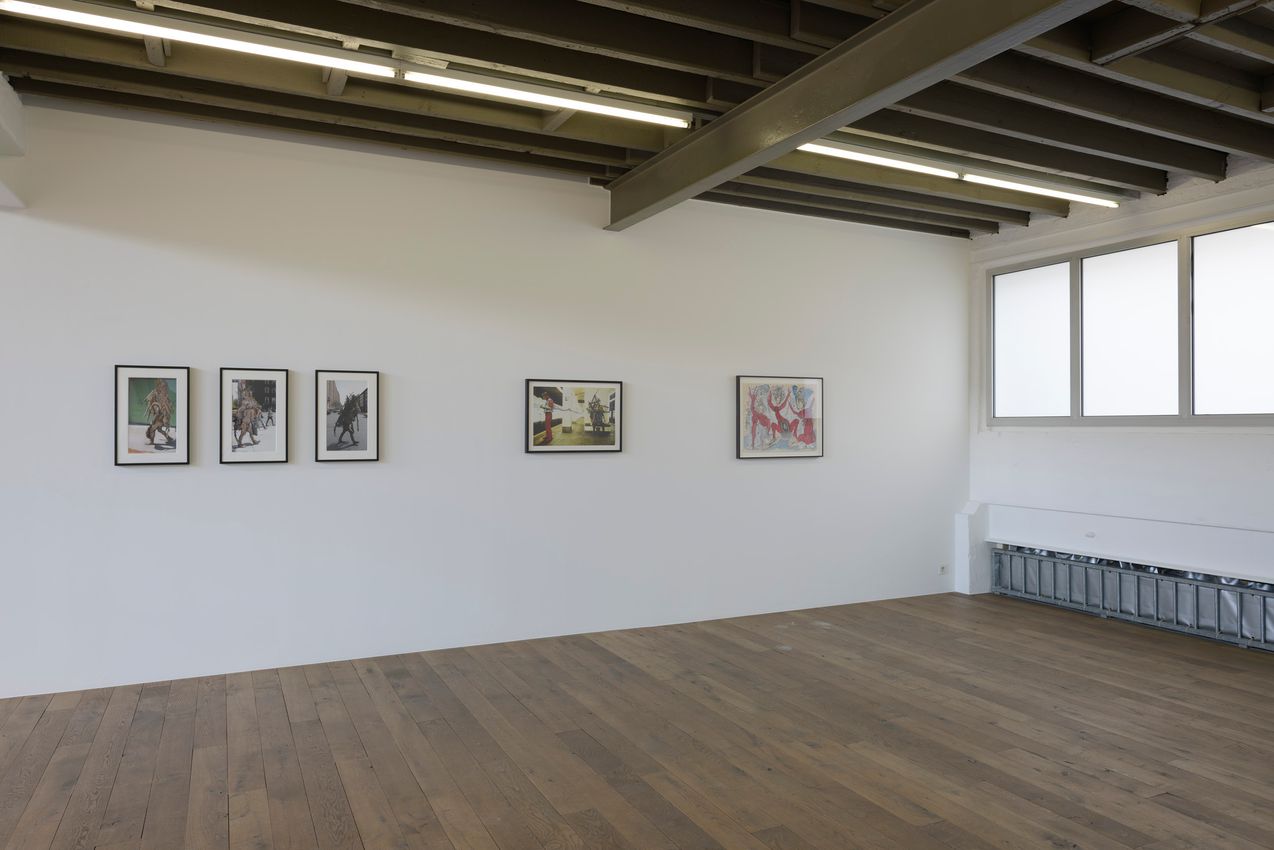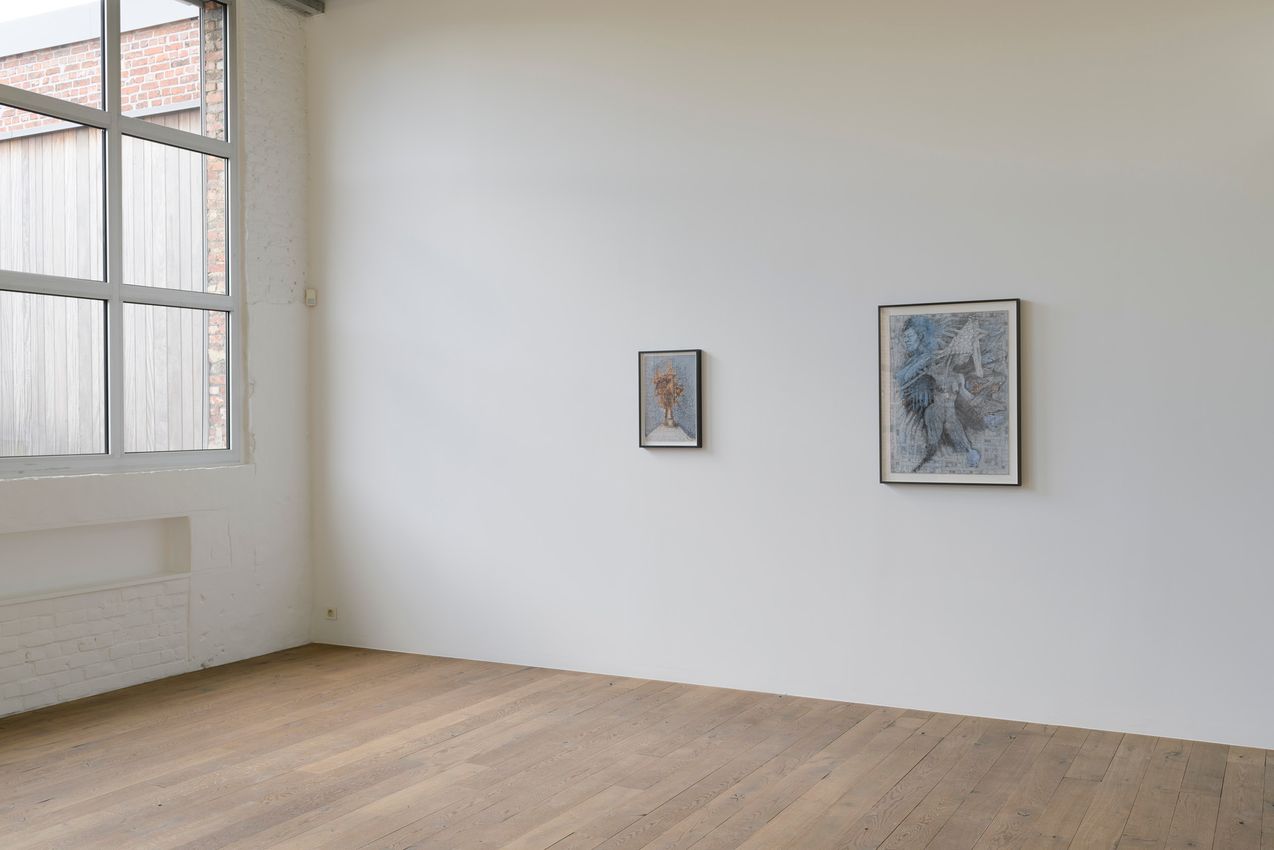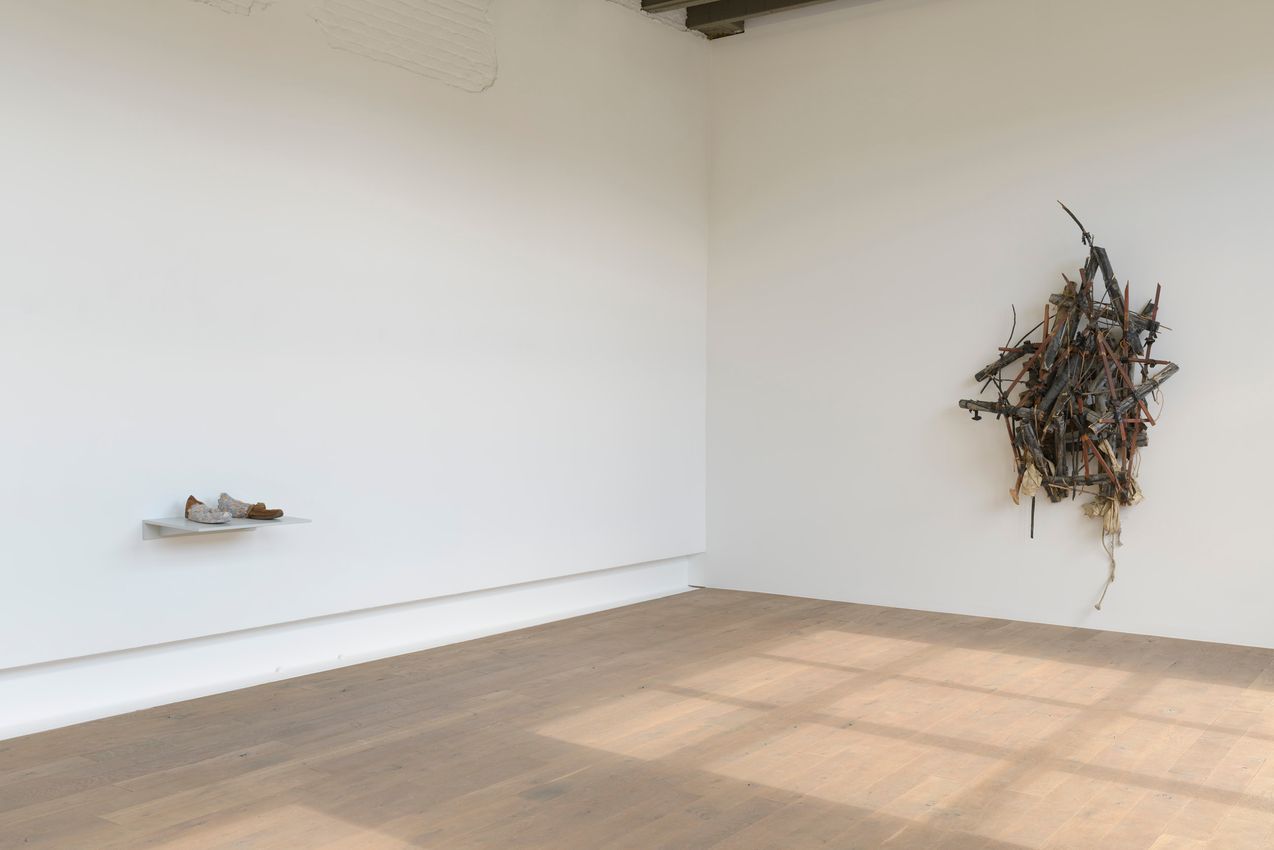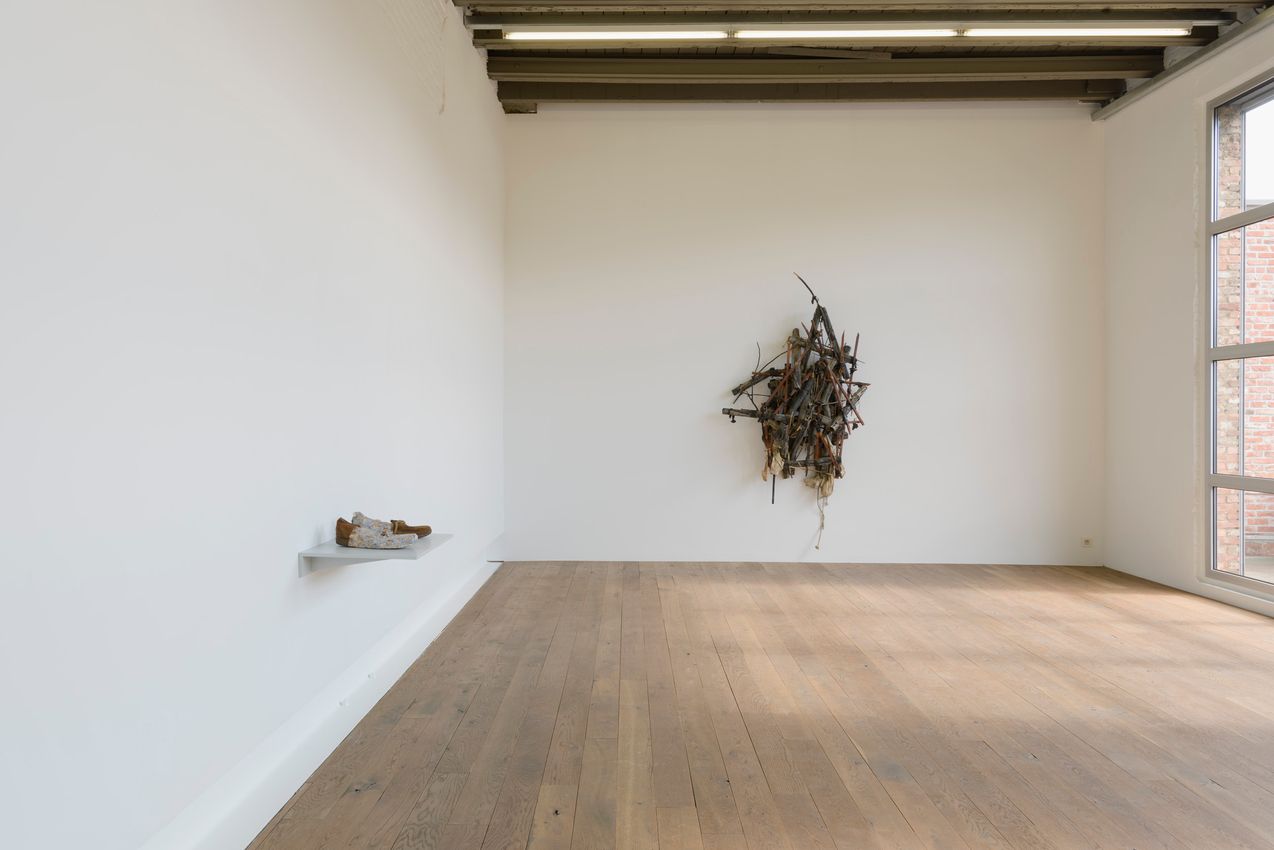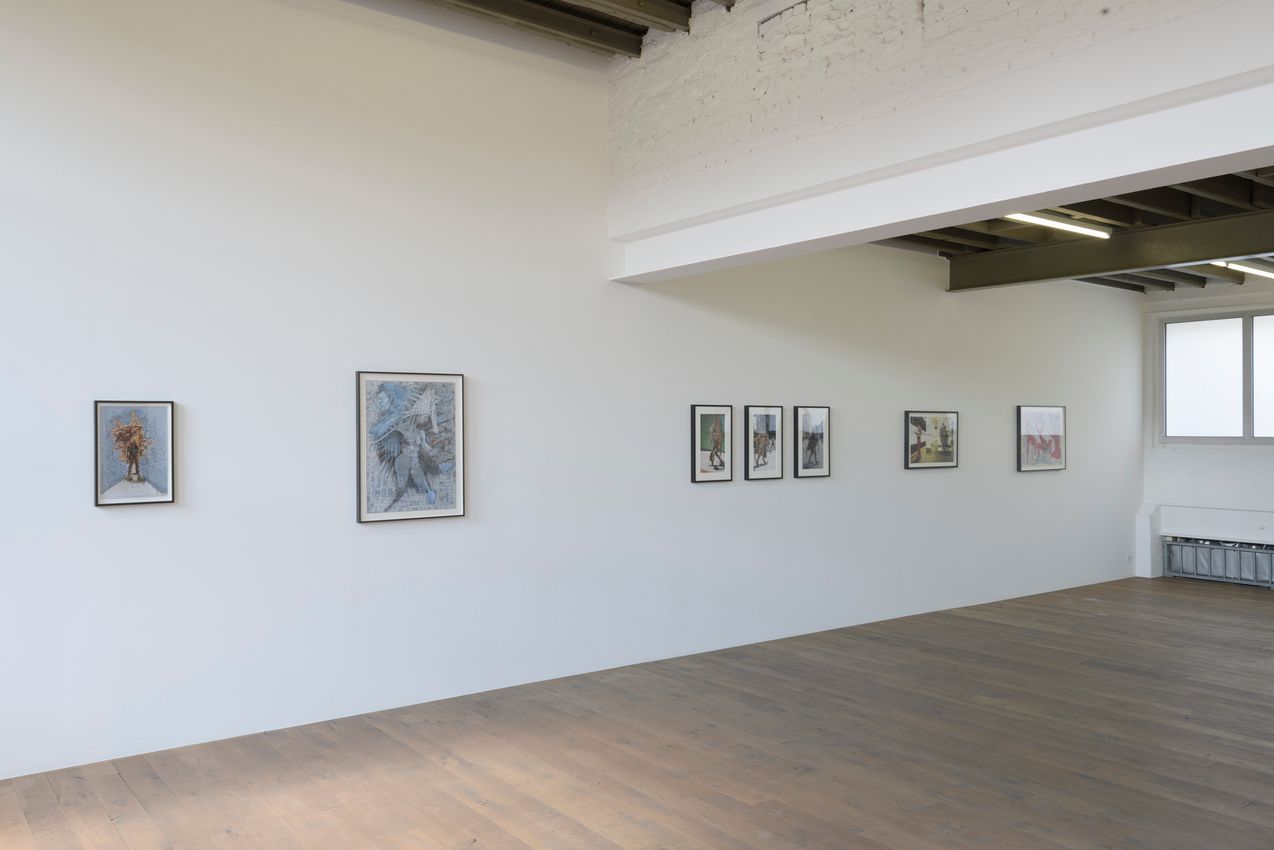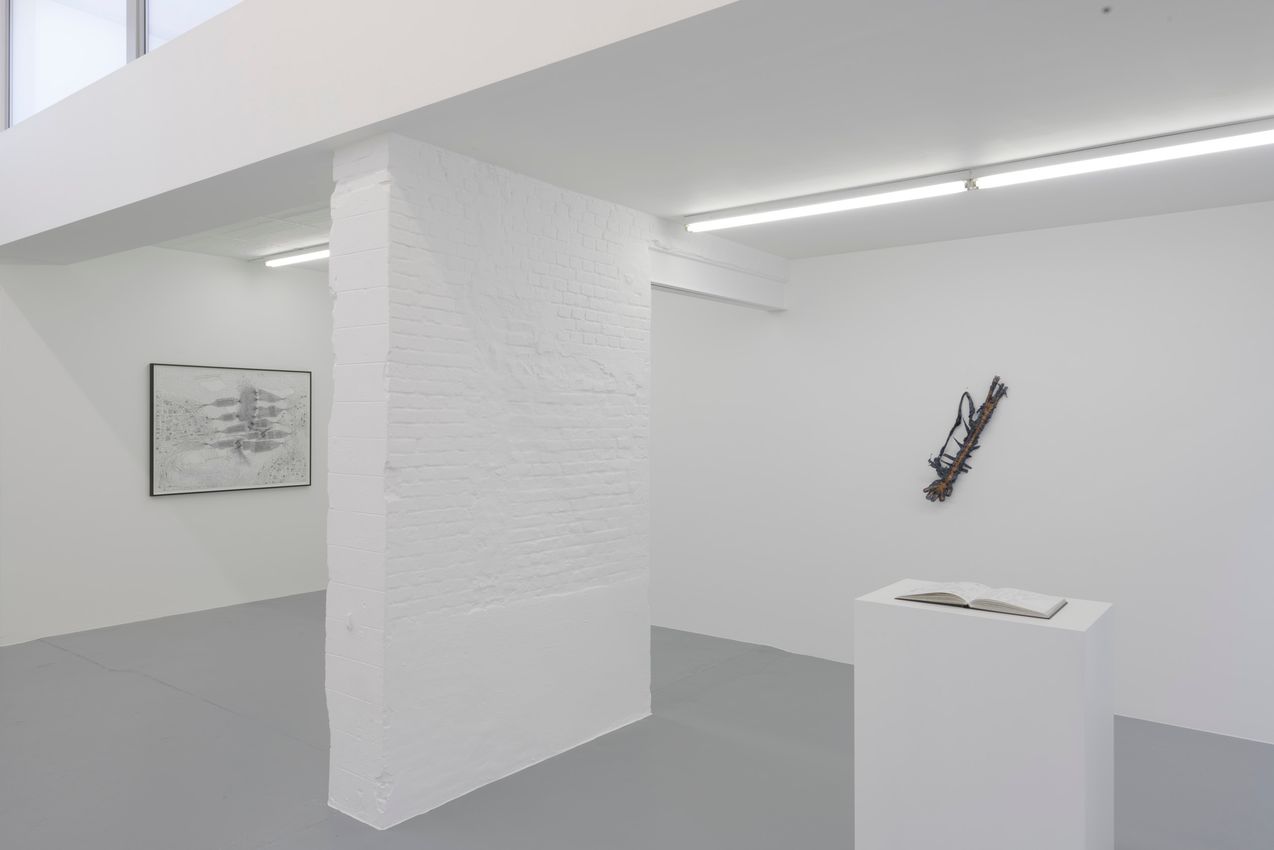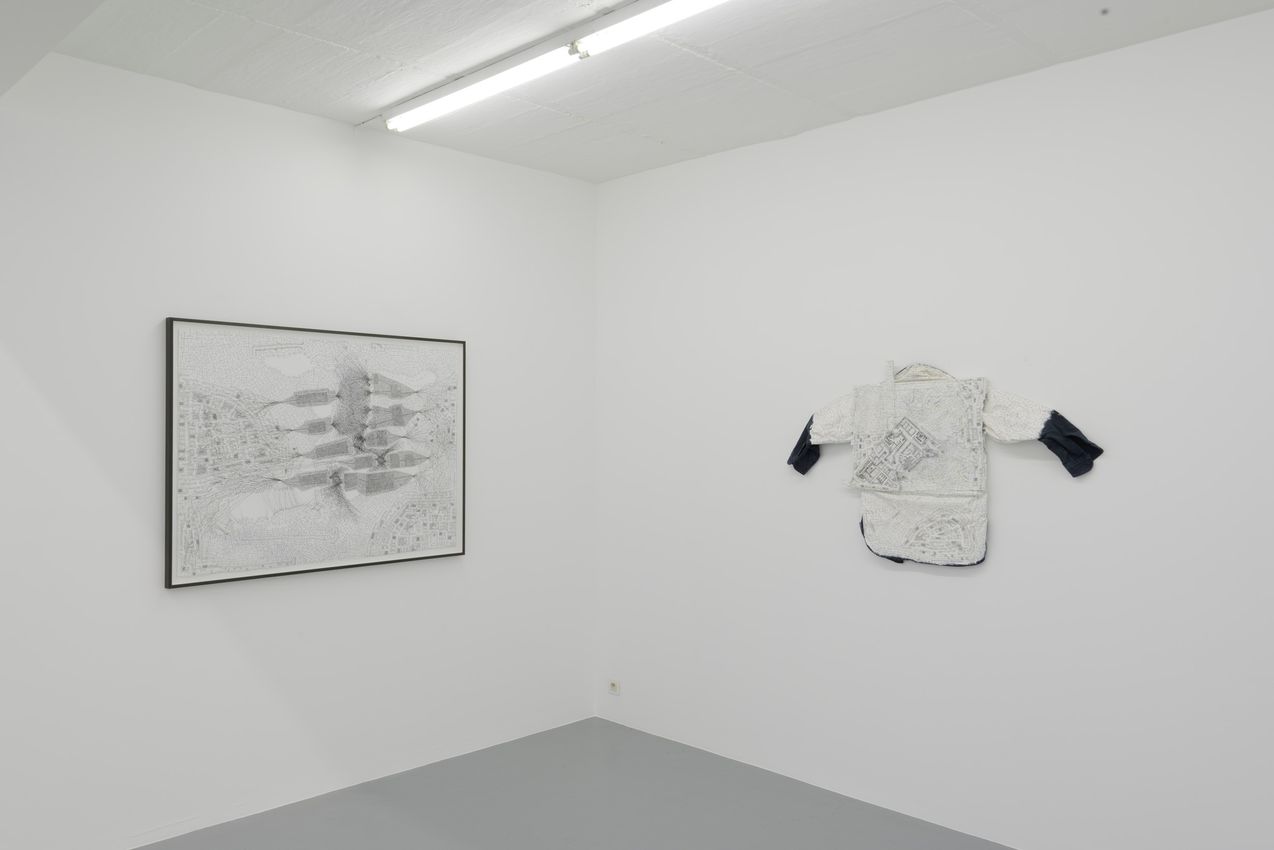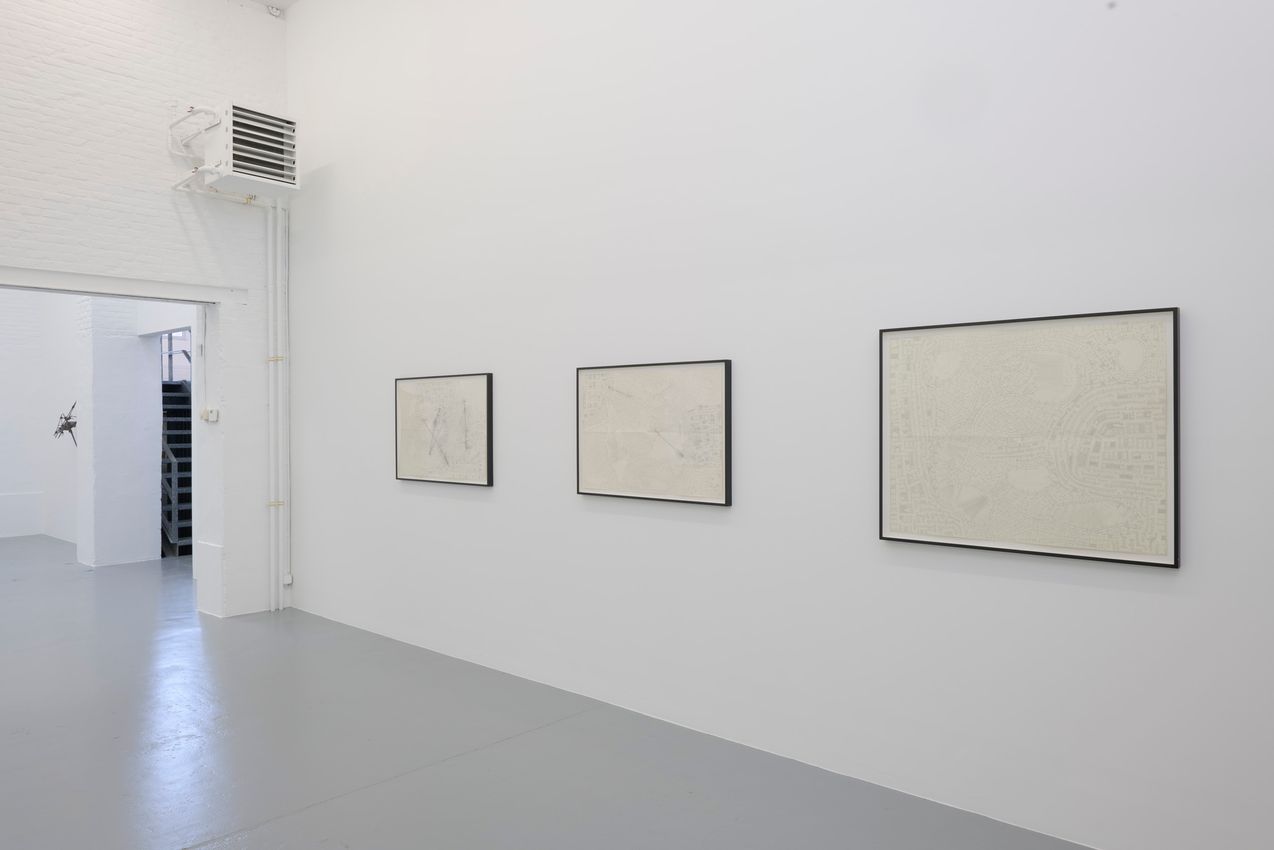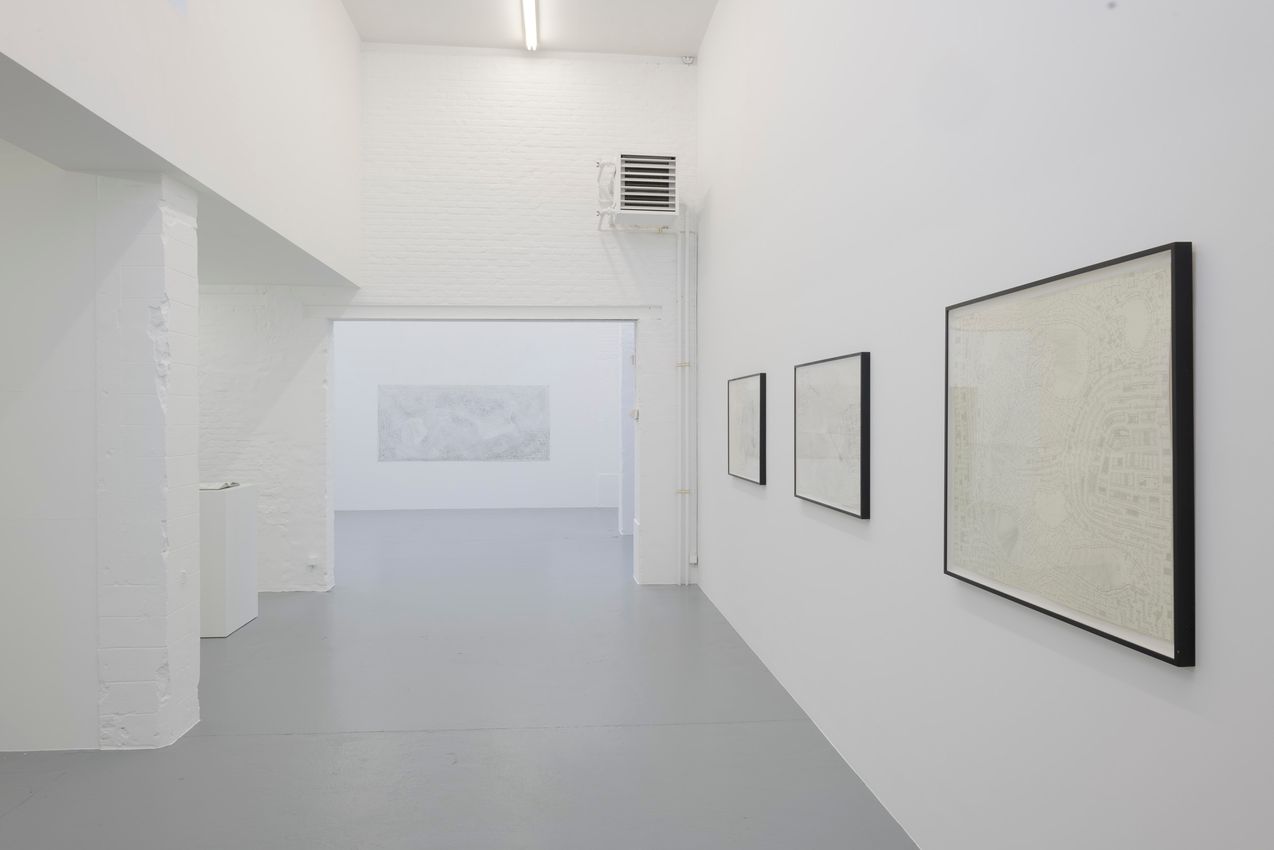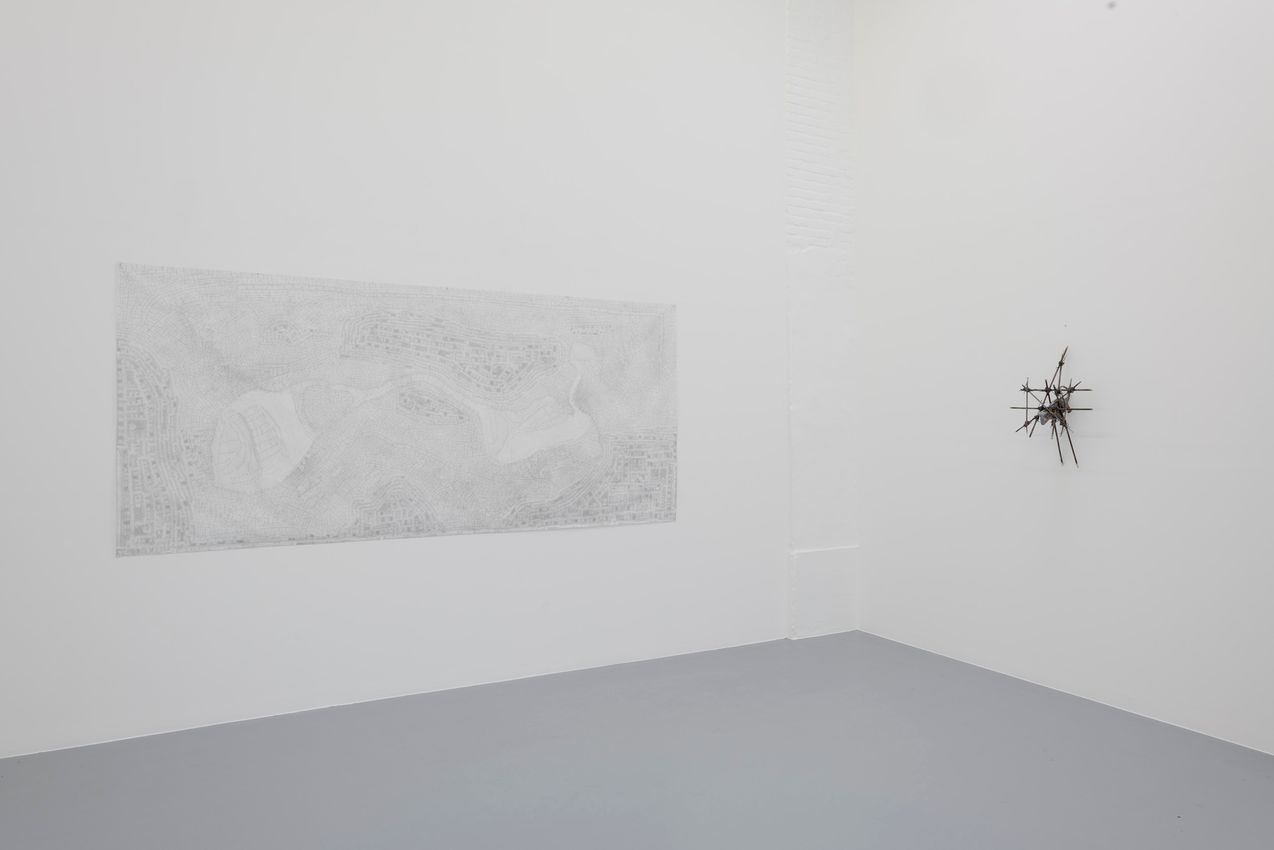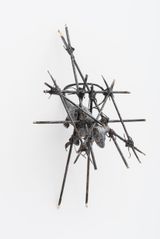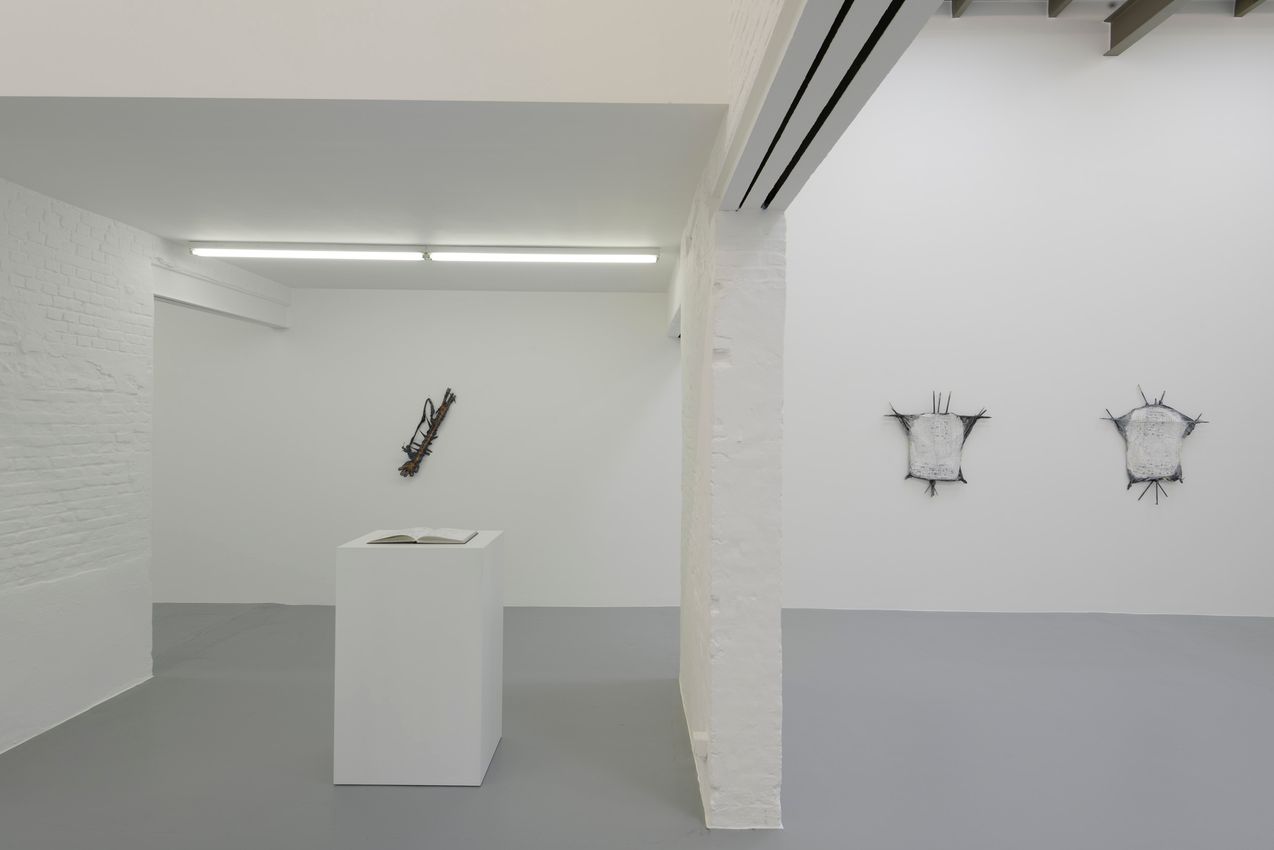
Kim Jones was born in 1944 in San Bernardino, California but has lived and worked in New York since 1982. For the past five decades Jones has been building up a consistent body of work that includes drawings, sculptures, performances and installations. The Last Shape of Things is his fifth solo exhibition since he joined Zeno X Gallery in 2003.
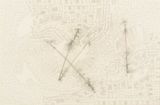
A number of biographic elements help to understand certain motifs better. At the age of seven, for instance, Kim Jones was diagnosed with Perthes’ disease, a disorder of the hip joint, and was forced to spend three years in a wheelchair. To combat the boredom he began to draw intensively. The drawings he made were inspired by the war games that he played as a child and represented battlefields in which crosses and points attacked each other. These drawings would later lead to his famous war drawings, which took on an entirely new layer of meaning once he had taken part in the Vietnam War between 1966 and 1969.
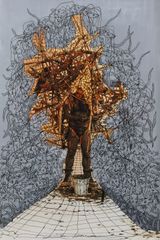
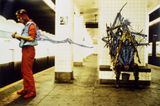
In the early 1970s Kim Jones returned to Los Angeles where he developed his alter ego, Mudman. At the time LA was the place where artists such as Paul McCarthy, Chris Burden, Barbara T. Smith, Allan Kaprow and John Baldessari were coming together to organise exhibitions, live actions and performances. The body, civil-rights activism, sexual liberation and opposition to the war were prominent themes. As Mudman, Kim Jones wandered the streets of Los Angeles, taking in the beach, the subway and the art galleries. He was barely dressed but was smeared with mud, and on his back he carried a construction made out of branches, pieces of cloth and foam rubber. Jones turned his body into a living sculpture and in doing so brought art into the public space.
Given the ephemeral character of the medium, the photos that were made during his performances proved to be highly important documents. For Jones, however, the photos are a lot more than just documentation; he continues to draw and paint on the prints and as such creates autonomous works. Photographic pieces are often combined with fantastic figures and elements from his dreams and connected by association. The drawings often have different dates because Jones continues to work on them over the years. Erasing, changing and transmuting forms and figures are typical of his drawing practice as is the horror vacui. Jones regularly seeks to connect with his works by ‘updating’ them.
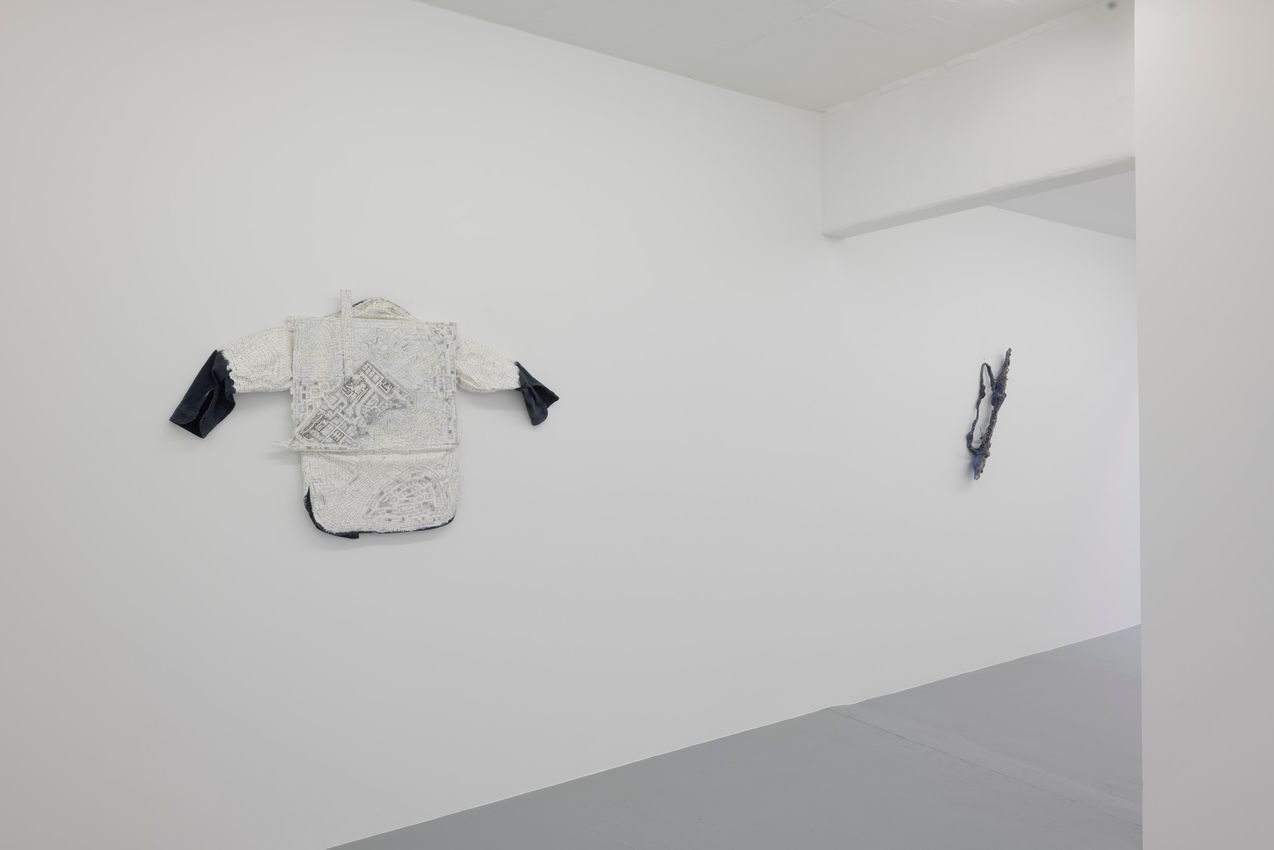
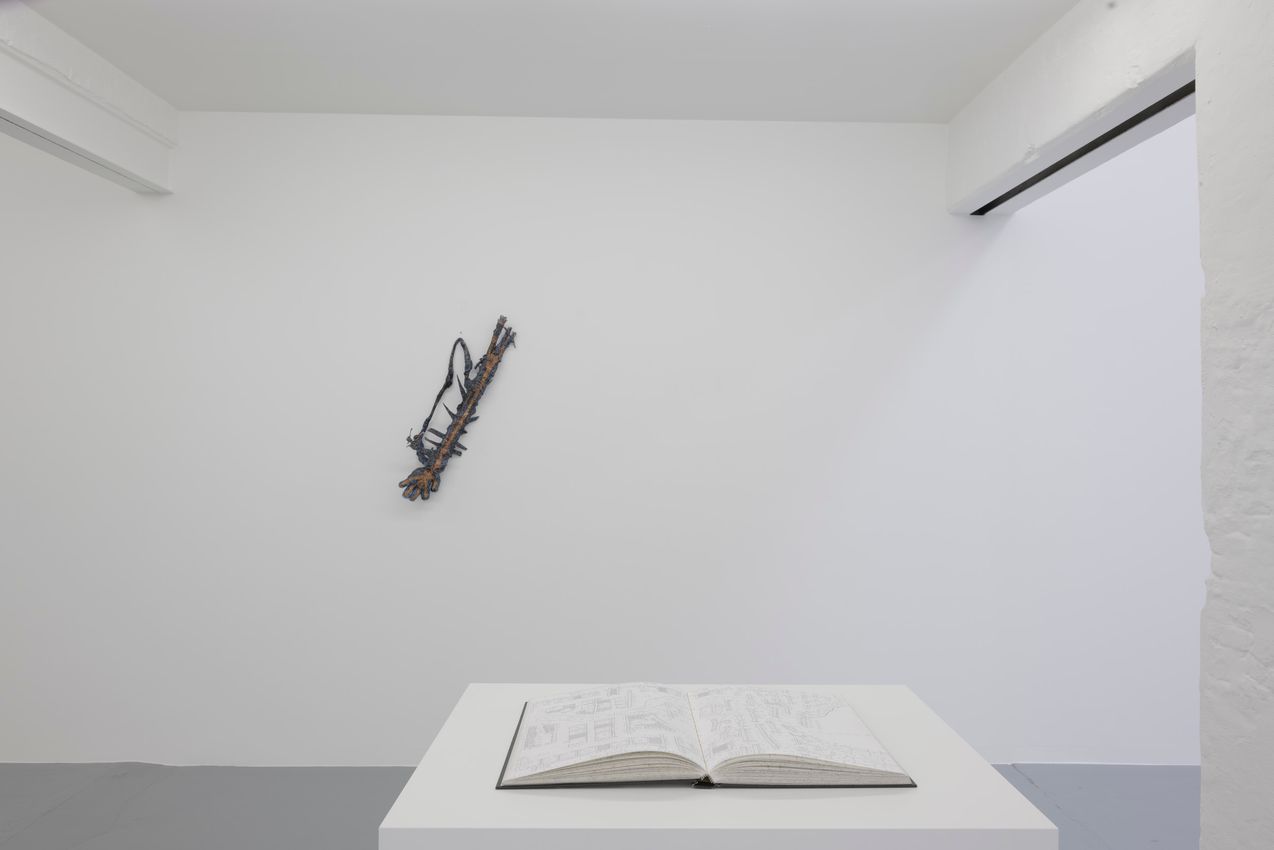
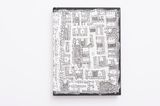
During his residency at PS1 in New York in 1983–1984, he created a sculpture that he could carry on his back when he performed as his alter ego, Mudman. This Mudman Structure (small) is presented in the exhibitionas a historic artefact and as a remnant of his performative practice. The same structure was also used inperformances that he carried out in the New York subway and in the New Museum in New York in 1986. During his residency at PS1, Jones also started painting and working on the clothes that he wore. He transformed his T-shirts, jackets and shoes into Mudman-like sculptures, covered in war drawings.
The work of Kim Jones is included in the prominent public collections of the Metropolitan Museum of Art, New York; MoMA, New York; Museum of Contemporary Art, Los Angeles; Centre Pompidou, Paris; Hammer Museum, Los Angeles; LACMA, Los Angeles; Museum Boijmans Van Beuningen, Rotterdam; SFMOMA, San Francisco; Whitney Museum of American Art, New York, amongst others.
The work of Kim Jones has featured in group exhibitions such as the Sydney Biennale; Venice Biennale; Guggenheim Museum, New York; MCA, San Diego; Museum of Contemporary Art, Los Angeles; MoMA, New York; LACMA, Los Angeles; The Drawing Center, New York. His work will soon be on show at the Smithsonian American Art Museum in Washington.
Kim Jones, born in 1944 in San Bernardino (US), lives and works in New York (US).

In 1981, Frank and Eliane Demaegd founded Zeno X Gallery in an early 20th century townhouse in the Antwerp South district. In the early years the program of the gallery was mainly focused on architecture and installations with artists such as John Körmeling, Rem Koolhaas, Anne-Mie Van Kerckhoven and Patrick Van Caeckenbergh. Nowadays the gallery represents around thirty artists which operate in many different mediums such as painting, sculpture, film, photography and performance.

A respected voice in contemporary art discourse.
Focusing on ambitious storytelling and insightful art-world commentary. Ocula Magazine publishes in-depth interviews, critical essays and timely analysis on the artists, exhibitions and ideas driving the global art world.
Learn more about Ocula Magazine
Showcasing the best of the art world.
Ocula partners with galleries from around the world to highlight their artists, artworks and exhibitions. Gallery membership is by application and invitation, with each member vetted by an independent panel.
Learn more about Ocula Membership

Specialises in the sale of major artworks.
Led by a team with deep ties to the world’s leading auction houses, galleries and collectors. Ocula’s advisory team offers bespoke services to high-net-worth clients from around the world who are looking to acquire the best of contemporary and modern art.
Learn more about our team and services