





JACQUELINE FRASER
b. 1956, New ZealandJacqueline Fraser is a contemporary New Zealand artist of Ngāi Tahu descent who gained recognition in the late 1970s for her immersive installations made from disposable objects. Since then, Fraser’s practice has expanded to include wire figures and collages that—by drawing from an array of visual sources such as fashion shows, magazines, music videos and movies—critically examine our relationship with material culture.
Representative of Fraser’s early practice is He Tohu: The New Zealand Room (1993), for which she reproduced the frame of a Māori whare whakairo (carved meeting house) with plastic tape, wire, ribbon, braid and lace. Exhibited in the then-newly reopened City Gallery in Wellington, He Tohu was a part of an exhibition that commemorated the centennial of the year that women gained the right to vote in New Zealand. In addition to the whare whakairo, He Tohu included wire figures of supernatural entities from Māori legends, hung outside the gallery building.
As exemplified by He Tohu, wire figures and luxurious fabrics are some of the defining characteristics of Fraser’s works. In 2001, the artist presented a trilogy of installations at New Zealand’s first national exhibition in the Venice Biennale, the 1st Yokohama Triennial in Japan, and New York’s New Museum. Each installation featured a series of wire female figures, elaborately dressed and accompanied by poetic texts and fabrics that served as curtains or dividers. On the surface, the expensive textiles and delicate forms of the figures recalled haute couture; masked underneath the allure, however, were stories of violence, loss, discrimination and despair. The printed text included in the mixed-media work The acute massacre of the blessed by the cruel scientific curse « the genetical engineer looks our way » New Zealand Auckland, 8.3.2000 Paris, 22.7.2000, 2000-01 at the Yokohoma Triennial, for example, alluded to eugenics and racial discriminations. It read: ‘And so they said to us-«From the second the poor blighted Māori is born he is destined to be psychotic» [from New Zealand medical survey year 2000]’.
Throughout her practice, Fraser has sought to eliminate territorial specificity by referencing multiple cultures. In her installation at the Venice Biennale, for example, English, Māori and Italian texts were used to assert a range of perspectives of the world. In the New Museum exhibition, A PORTRAIT OF THE LOST BOYS «in five parts deftly and six details of straining»—of which A portrait of that dotted boy was a part—works such as Let me pump them bright, force that breath choked. [[Cote d’Ivoire, Australia, Japan.]] call on different countries as a way of alerting the viewer that the image’s applicability is not confined to a single place; no culture is superior or inferior to another.
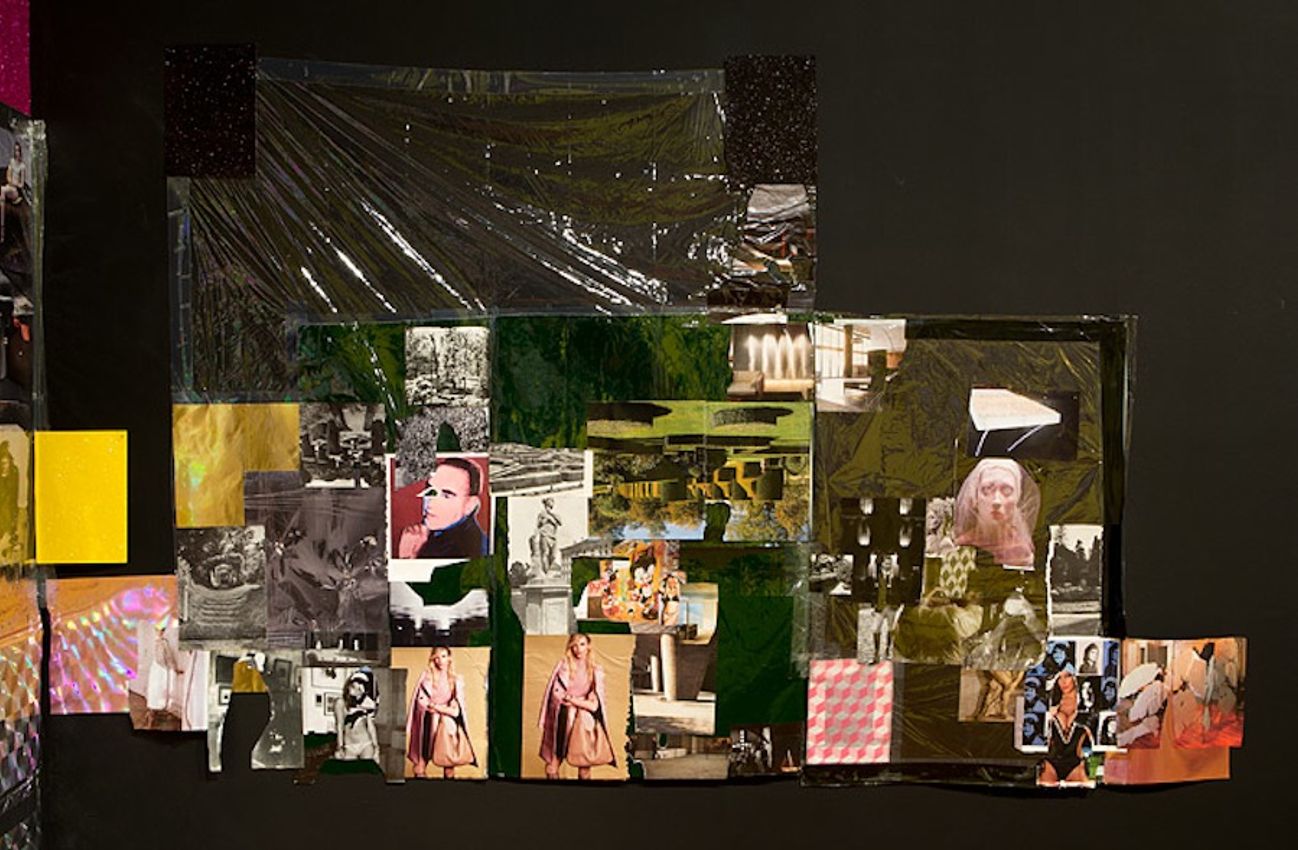
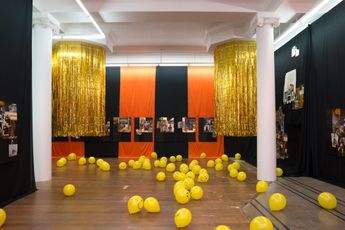
Fraser’s interest in non-specificity continues in her film-inspired works. In her ‘The Making of’ (2011–ongoing) series of installations and collages, for example, the artist creates an environment that captures the ambience of specific films. Part of the series, the film installation The Making of Mississippi Grind 2017 (2017) derives from the 2015 American film Mississippi Grind, which follows two gamblers on a turbulent journey. When the work was featured in the 2017 exhibition Shout Whisper Wail! at Auckland Art Gallery Toi o Tāmaki, the walls of the entrance and exhibition space were lined with glittering tinsel, echoing a casino atmosphere. At the centre of one room, Fraser suspended a pink square chandelier from the ceiling. The light fixture hovered a few feet above the floor, allowing visitors to step inside. Fraser’s film was screened onto its reflective surface, which, combined with a loud rap soundtrack, impeded easy viewing. The installation also included three large-scale collages, composed of images sourced from fashion magazines, brand textiles and artworks by Andy Warhol, further recalling the flamboyance associated with casinos. As fictional pseudo-documentaries of films, Fraser’s ‘The Making of’ works—which also include The Making of American Gangster 2012 (2012), The Making of the Ciao Manhattan Tapes 2013 (2013) and The Making of Wall Street 2015 (2015)—offer an inquiry into the production and consumption of popular culture.
Fraser graduated from Elam School of Fine Arts, Auckland, in 1977 and went on to participate in the Mildura Sculpture Triennial in 1978. In 2018, she was nominated for the Walters Prize for The Making of Mississippi Grind 2017—her second nomination since 2004—and presented The Making of In The Heat of the Night 2018 (2018), based on the 1967 eponymous classic, at the finalist exhibition.
Fraser lives and works between Auckland and New York.
Sherry Paik | Ocula | 2018

Explore Jacqueline Fraser's Exhibitions





Explore and Follow Artists Shaping Contemporary Art
A respected voice in contemporary art discourse.
Focusing on ambitious storytelling and insightful art-world commentary. Ocula Magazine publishes in-depth interviews, critical essays and timely analysis on the artists, exhibitions and ideas driving the global art world.
Learn more about Ocula Magazine
Showcasing the best of the art world.
Ocula partners with galleries from around the world to highlight their artists, artworks and exhibitions. Gallery membership is by application and invitation, with each member vetted by an independent panel.
Learn more about Ocula Membership
Specialises in the sale of major artworks.
Led by a team with deep ties to the world’s leading auction houses, galleries and collectors. Ocula’s advisory team offers bespoke services to high-net-worth clients from around the world who are looking to acquire the best of contemporary and modern art.
Learn more about our team and services