






JORDAN NASSAR
b. 1985, United StatesJordan Nassar’s artistic practice considers homeland, heritage and the Palestinian diaspora. Using traditional Palestinian and Levantine craft techniques—including embroidery, tiling, glass beads, installations and woodworking—he examines issues of identity and cultural participation.
Early Years
Jordan Nassar was born in New York City in 1985 to a Polish-American mother and a Palestinian-American father who had worked as a doctor in Palestine. He has talked about listening to his father’s pro-Palestine views in the context of the pro-Israel environment where he lived. He visited Palestine as a teenager but when he began dating his husband, an Israeli, he visited Israel. Nassar decided to become an artist after working at a gallery in Berlin, learning about contemporary artists and also art history. He began engaging with Palestinian craft because it was “a way for me to start thinking about how it is that I’m Palestinian, what that means to me, to my identity, and to my experience being a Palestinian member of the diaspora in America, not having been raised there”.
Jordan Nassar: Artworks
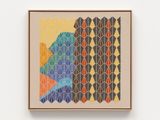
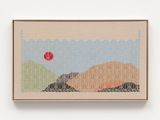
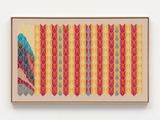
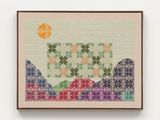
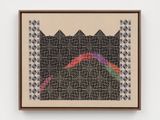
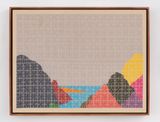
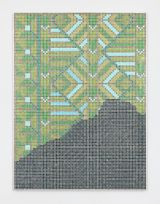
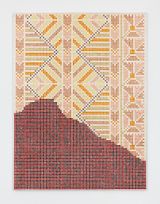
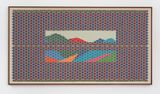
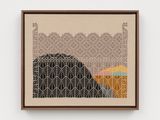
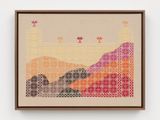
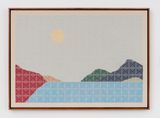
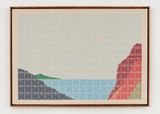
Nassar’s practice began with tatreez hand-embroidery but has expanded into work with glass beads, mother-of-pearl inlaid wood and installations. His engagement with traditional craft techniques comes through his own personal lens: creating connections to homeland that may be fantastical but also rooted in ancestry. It is important to him to collaborate directly with producers of craft in and around Palestine, from embroiderers in the West bank to Armenian ceramicists in Jerusalem.
- Nassar’s early embroideries used patterns he copied from books. “I learned each pattern comes from a village but I’m not from a village, I’m from New York,” he has said. “So I made up a bunch of patterns that look like Palestinian embroidery that don’t exist there as a way for a Palestinian in New York to participate.”
- 2022’s Song of the Flowers comprised 57 separately embroidered and stretched canvases in different shapes and sizes. The traditionally patterned panels were embroidered by Palestinian women, and Nassar created the landscape panels.
- Is the Sky Meant to be Wide Open? (2024) features a three-panel embroidery and a bench inlaid with mother-of-pearl and brass in a grapevine design. Among the grapes, he hid the word “Huriya”, meaning “freedom”.
Jordan Nassar: Select Exhibitions
Select Solo Exhibitions
- Jordan Nassar, SCAD Museum of Art, Savannah (2027)
- Jordan Nassar, The Third Line, Dubai (2026)
- Revelation, James Cohan, New York City (2025)
- There, The Susquehanna Art Museum, Harrisburg (2025)
- Surge, Anat Ebgi, Los Angeles (2024) * A Mountain Looms, James Cohan, New York City (2023)
- Fantasy and Truth, Institute of Contemporary Art, Boston (2022)
- A Sun to Come, Anat Ebgi, Los Angeles (2022)
- To Light the Sky, James Cohan, New York City (2022)
- Lē’ahi’, Shangri La Museum of Islamic Art, Culture and Design, Honolulu (2022)
- The Field is Infinite, KMAC Museum, Louisville (2020)
- I Cut the Sky in Two, James Cohan, New York City (2020)
- We Are the Ones to Go to the Mountains, Anat Ebgi Gallery, Los Angeles (2020)
- Between Sky and Earth, Bainbridge House, Princeton University (2019)
- The Sea Beneath Our Eyes, Centre for Contemporary Art, Tel Aviv (2019)
- Israel For Your Eyes, The Third Line, Dubai (2019)
- Dunya, Anat Ebgi, Los Angeles (2017)
- Jaffa: New Works, Artport Tel Aviv (2017)
- No Secret with Mika Horibuchi, LVL3 Gallery, Chicago (2016)
- And a Night, Evelyn Yard, London (2015)
Select Group Exhibitions
- In a Free State, Luhring Augustine, New York City (2026)
- All About 25, James Cohan, New York City (2025)
- Arcadia and Elsewhere, James Cohan, New York City (2024)
- Fabric, Peter Blum Gallery, New York City (2023)
- Picturing Motherhood Now: Images for a New Era, Cleveland Museum of Art (2021)
- Home is Not a Place, Anat Ebgi, Los Angeles (2019)
- A Matter of Printing, Supportico Lopez, Berlin (2018)
- Summer Reading, Fortnight Institute, New York City (2016)
- Showroom Miami, SWGR Gallery, Miami, FL (2015)
Further Reading
- Jordan Nassar’s Instagram
- Jordan Nassar’s official website
- Artist profile page at Norr Cohan
- 2024 interview from art21
Jordan Nassar FAQs
What is tatreez?
Tatreez is the traditional Palestinian embroidery practice in which clothes, pillows and other linens are decorated with hand-sewn symbols of memory, place and history. It’s a matrilineal practice and colours and techniques vary by family and region.
What techniques and materials does Jordan Nassar use?
When making tatreez, Nassar uses AIDA fabric (mass-produced) and thread rather than embroidery silks. In a video he shared with Ocula in 2020, he explains how to sew the basic stitches and shapes.
He doesn’t work from photographs, instead using his imagination—although also making the point that conflict and politics are changing Palestinian landscapes, so imagination is required to create a hopeful space. When he works with women in Hebron, he uses patterns to create a composition and leaves areas to be filled with landscapes. The women embroider the patterns in their own colour choices, to which Nassar responds when making the landscape parts of the pieces.
Which artists have inspired Jordan Nassar?
Nassar was inspired by Etel Adnan, particularly in the case of landscapes. Some of Nassar’s works use lines from Adnan’s poetry in their titles—for example, his 2024 exhibition, Surge.
Ocula


View Jordan Nassar's Artworks






















Explore and Follow Artists Shaping Contemporary Art
A respected voice in contemporary art discourse.
Focusing on ambitious storytelling and insightful art-world commentary. Ocula Magazine publishes in-depth interviews, critical essays and timely analysis on the artists, exhibitions and ideas driving the global art world.
Learn more about Ocula Magazine
Showcasing the best of the art world.
Ocula partners with galleries from around the world to highlight their artists, artworks and exhibitions. Gallery membership is by application and invitation, with each member vetted by an independent panel.
Learn more about Ocula Membership
Specialises in the sale of major artworks.
Led by a team with deep ties to the world’s leading auction houses, galleries and collectors. Ocula’s advisory team offers bespoke services to high-net-worth clients from around the world who are looking to acquire the best of contemporary and modern art.
Learn more about our team and services