






Kang Seok Ho
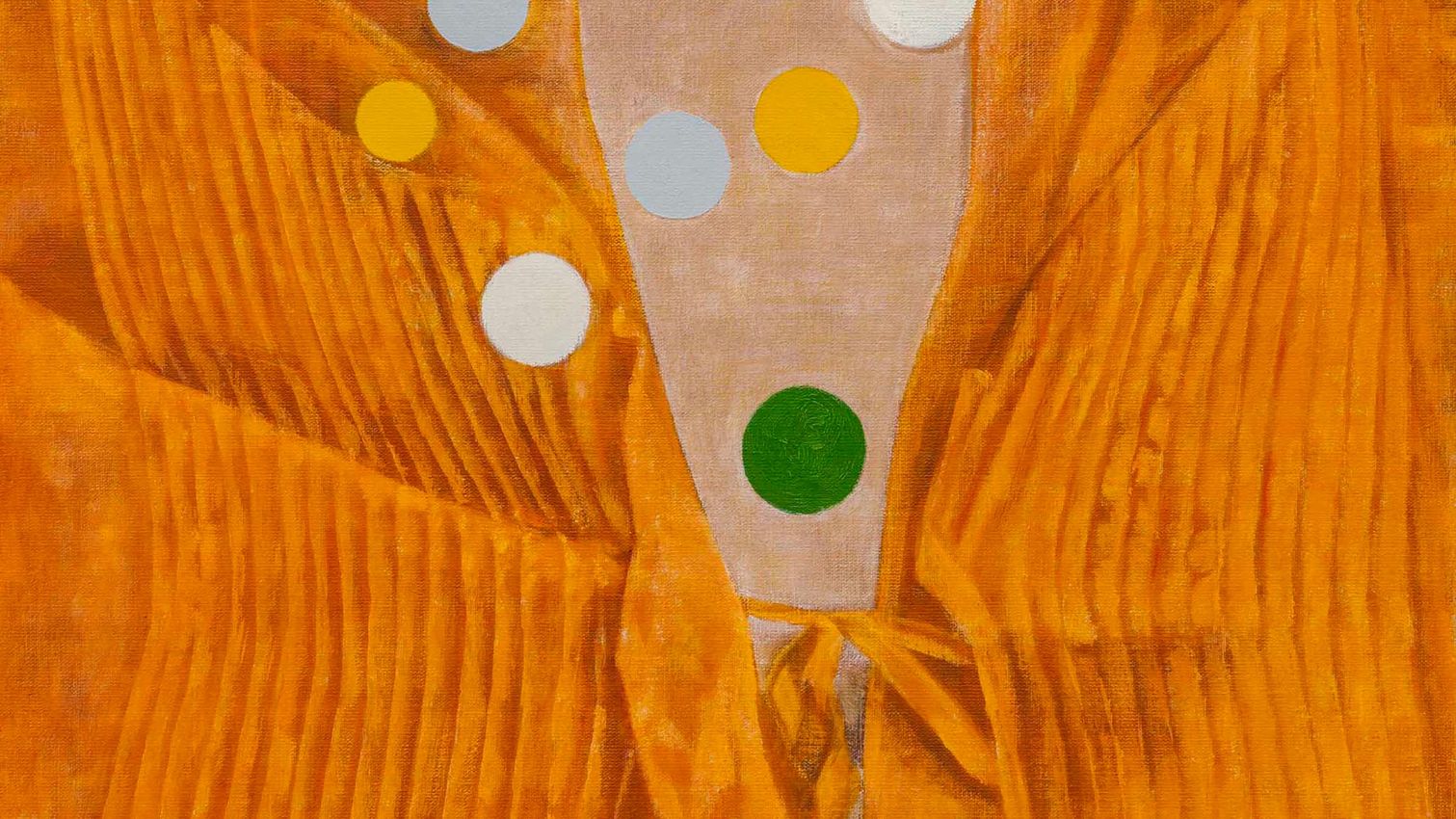
1971-2021, South KoreaKang Seok Ho was a South Korean painter whose finely worked figurative canvases—focused on clothing, skin, and everyday objects—pushed contemporary painting towards a heightened awareness of surface, texture, and the act of seeing itself.
Early life and Background
Kang Seok Ho was born in 1971 in South Korea and studied sculpture at Seoul National University, a training that sharpened his sensitivity to volume and three-dimensional form even as he went on to work primarily in painting. He continued his studies in Germany at the Kunstakademie Düsseldorf under Dutch conceptual artist Jan Dibbets, completing an MFA in painting in 2001 and immersing himself in European art history and design.
After winning the UBS Art Award in Basel in 2000, Kang returned to Seoul, where he developed a close network with contemporaries such as Park Chan-kyong, Haegue Yang, Chung Seoyoung, and Kim Beom while choosing to focus on painting at a time when Korean art discourse emphasised multimedia and conceptual practices. He later taught at Seoul National University of Science and Technology, and his daily life—spanning reading, music, hiking, fishing, and collecting design furniture—fed into a practice that refused to separate art from lived experience.
Kang Seok Ho Artworks
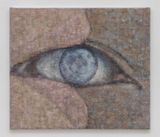
Kang Seok Ho’s artworks explore how looking, distance, and surface structure the relationship between an image and its painted translation, often using photographs as starting points that he cropped, enlarged, and re-angled on canvas. Working within figurative conventions while minimising narrative, he used thin layers of oil paint, built up through tapping and repeated touches of the brush, to create luminous, almost transparent fields where light and air seem to circulate freely.
Clothes and early series
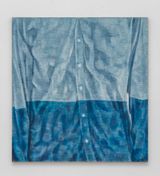
Beginning around 1999, Kang’s Clothes series focused on cropped views of garments that subtly reveal the curves and posture of the body beneath, such as the backside of a figure in a green check jacket with hands clasped behind. By isolating elements like pattern, wrinkles, and colour, he transformed everyday clothing into quasi-landscapes, emphasising rhythm and texture over portrait identity or narrative.
Kang’s interest in the mediation of vision extended into series based on media images, where he edited out recognisable features to focus on posture, folds, and tonal transitions rather than story. This approach underscored his commitment to widening the gap between source image and painting, turning each canvas into a site of patient optical and material inquiry.
Gesture, Get Up, and the body as landscape
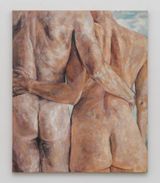
In the Gesture series, Kang painted black-and-white images of politicians and athletes captured mid-performance, concentrating on the expressive charge of hands, torsos, and stances under media scrutiny. His Get Up works zoomed in on clothed torsos and buttocks, excluding faces and other markers to focus on how fabric creases and stretches over the human figure.
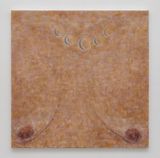
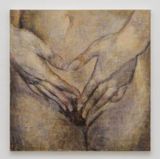
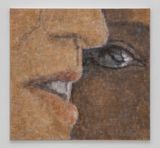
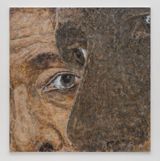
These investigations evolved into the Nude series, in which Kang magnified patches of skin—décolletage, navels, buttocks—so closely that the body becomes an abstract terrain of folds, shadows, and tonal variation. Informed by East Asian landscape painting, he treated even the human figure as a kind of landscape, a mutable ground for exploring gesture, depth, and surface in paint rather than conventional erotic or narrative themes.
Cubes, still lifes, and everyday things
Alongside his figure-based series, Kang developed still lifes and the Cube paintings, which examine how light and shadow articulate simple volumetric forms. These works extend his interest in the boundary between flatness and three-dimensionality, often rendering ordinary objects with a lyric transparency that emphasises atmosphere as much as form.
Kang’s deep interest in modern design and the Bauhaus movement—reflected in his collecting and making of furniture such as chairs and shelves—parallels his painting’s balance of practicality and poetry, seeing beauty in the edited fragments of everyday life. Exhibitions that juxtaposed his design objects and paintings have highlighted how his sensibility crossed between fine art, interiors, and the textures of domestic space.
Select Awards and Accolades
- UBS Art Award, Basel, Switzerland (2000)
- Seoknam Art Prize, Seoul (2004)
- Selected artist, Young Korean Artists 2008: I AM AN ARTIST, National Museum of Modern and Contemporary Art, Korea (2008)
- Professor, Seoul National University of Science and Technology (2018–2021)
To be kept up to date with news relating to Kang Seok Ho, follow him on Ocula.
Kang Seok Ho Exhibitions
Kang Seok Ho has been the subject of solo and group exhibitions at major institutions and galleries in South Korea and internationally, with posthumous shows consolidating his reputation as a key figure in contemporary painting. To be kept up to date with upcoming exhibitions featuring Kang Seok Ho follow him on Ocula; you can also view his exhibitions on Ocula.
Select solo exhibitions
- seok ho kang: Three Minute Delight, Seoul Museum of Art, Seoul, 2022–2023 (first retrospective)
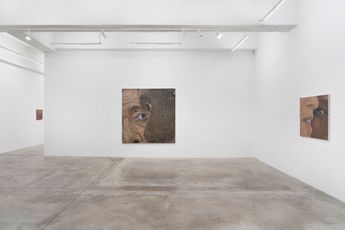
- Deep Is the Rising Sun, Far Is the Falling One, Tina Kim Gallery, New York, 2023
- Hold Still, Tina Kim Gallery, New York, c. 2024–2025 (Nude and Couple series)
- Sixteen solo exhibitions across venues including Insa Art Space, Kumho Museum of Art, and Mimesis Art Museum, 2003–2020
Select group exhibitions
- Young Korean Artists 2008: I AM AN ARTIST, National Museum of Modern and Contemporary Art, Korea
- Kabinett sector presentations at Art Basel with Tina Kim Gallery, featuring focused selections of his paintings
- Multiple group presentations at Tina Kim Gallery, New York, and Gallery SoSo, South Korea
Sign-up to Ocula to follow the artist and learn more about Kang Seok Ho’s art for sale.
Kang Seok Ho FAQs
Who is Kang Seok Ho?
Kang Seok Ho was a South Korean artist known for quietly radical figurative paintings that examine the act of seeing through close-cropped views of clothing, skin, objects, and geometric forms.
You can follow Kang Seok Ho on Ocula to learn more about his work, find out about art for sale, contact his gallery, and keep up to date with upcoming exhibitions.
Where can I see work by Kang Seok Ho?
Works by Kang Seok Ho have been shown at institutions such as the Seoul Museum of Art and at galleries including Tina Kim Gallery in New York and Gallery SoSo in South Korea.
You can follow Kang Seok Ho on Ocula to receive alerts on upcoming exhibitions by the artist.
Are there any lesser-known facts about Kang Seok Ho?
Kang Seok Ho was an avid collector and maker of modern design furniture, influenced by the Bauhaus, and exhibitions have presented his furniture alongside his paintings as part of a continuous creative environment.
You can follow Kang Seok Ho on Ocula to receive alerts on news about the artist.
Where did Kang Seok Ho live?
Kang Seok Ho lived and worked primarily in Seoul, South Korea, returning there after his studies in Düsseldorf and remaining closely tied to the city’s artistic and institutional landscape until his death in 2021.
Where can I buy Kang Seok Ho’s work?
Kang Seok Ho is represented by leading contemporary art galleries, including Tina Kim Gallery, which has presented solo exhibitions and offers his artworks for sale through its programmes and online platforms.
You can explore Ocula to find out which Ocula galleries represent the artist and enquire directly about buying art by Kang Seok Ho, and follow them and their gallery to keep up to date, and you can also get in touch with Ocula’s art advisory team to find out more about buying or selling work by Kang Seok Ho.
Ocula | 2025
















Explore and Follow Artists Shaping Contemporary Art
A respected voice in contemporary art discourse.
Focusing on ambitious storytelling and insightful art-world commentary. Ocula Magazine publishes in-depth interviews, critical essays and timely analysis on the artists, exhibitions and ideas driving the global art world.
Learn more about Ocula Magazine
Showcasing the best of the art world.
Ocula partners with galleries from around the world to highlight their artists, artworks and exhibitions. Gallery membership is by application and invitation, with each member vetted by an independent panel.
Learn more about Ocula Membership
Specialises in the sale of major artworks.
Led by a team with deep ties to the world’s leading auction houses, galleries and collectors. Ocula’s advisory team offers bespoke services to high-net-worth clients from around the world who are looking to acquire the best of contemporary and modern art.
Learn more about our team and services