





Desert X AlUla at the Crossroads
Curators Maya El Khalil and Marcello Dantas walk us through the third edition of Desert X AlUla in the ancient desert region of AlUla in Saudi Arabia. Save to My Ocula
Desert X AlUla highlights the AlUla region as an ancient crossroads. The ruins of the city of Hegra, a UNESCO World Heritage Site built by the Nabataeans over two millennia ago, and the remnants of the ancient Kingdom of Dadan are located in the region.
Curated by Maya El Khalil and Marcello Dantas, with Raneem Farsi and Neville Wakefield reprising their roles as co-artistic directors, the third edition of Desert X AlUla runs until 23 March 2024 alongside the wider AlUla Arts Festival.
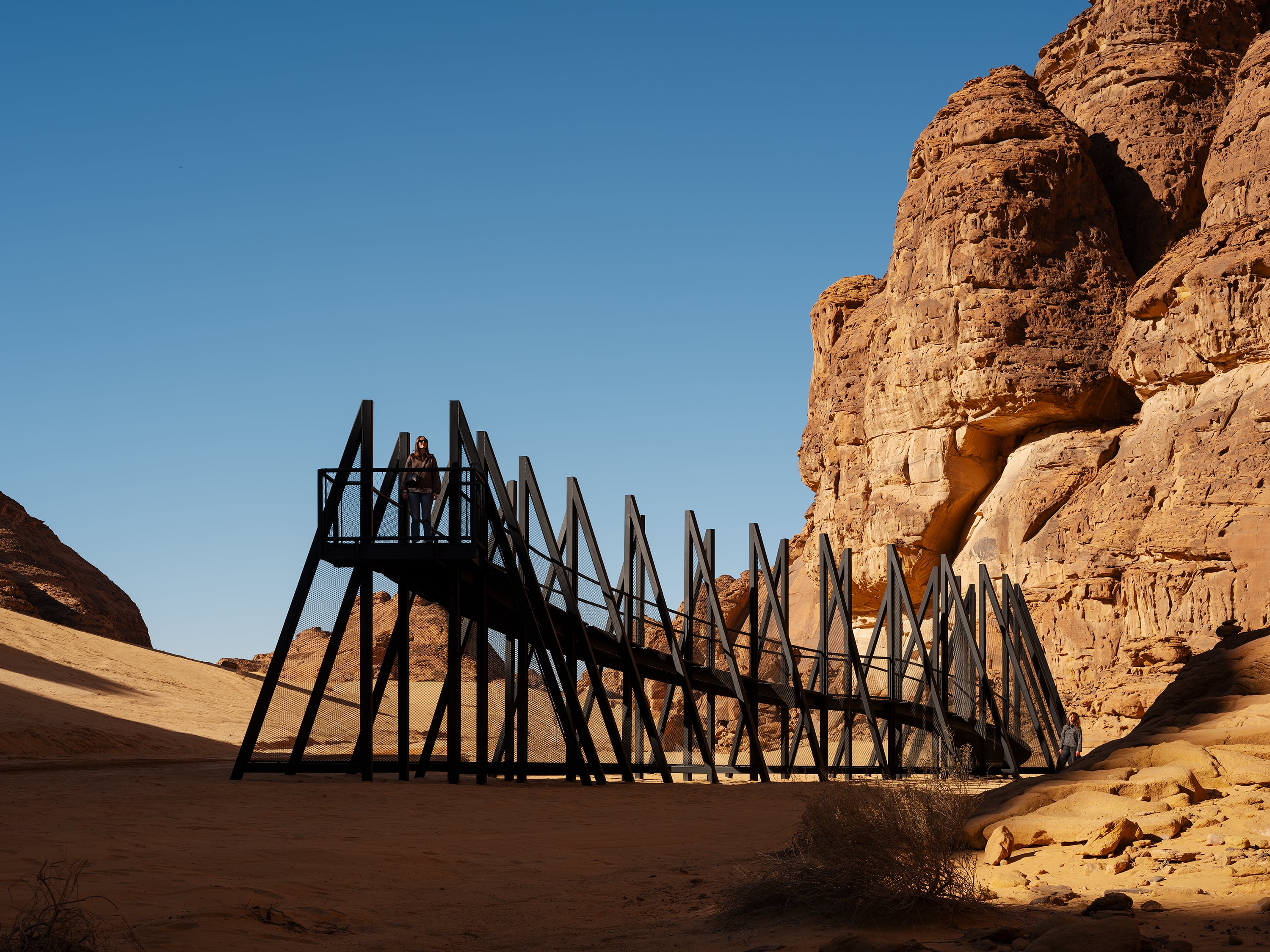
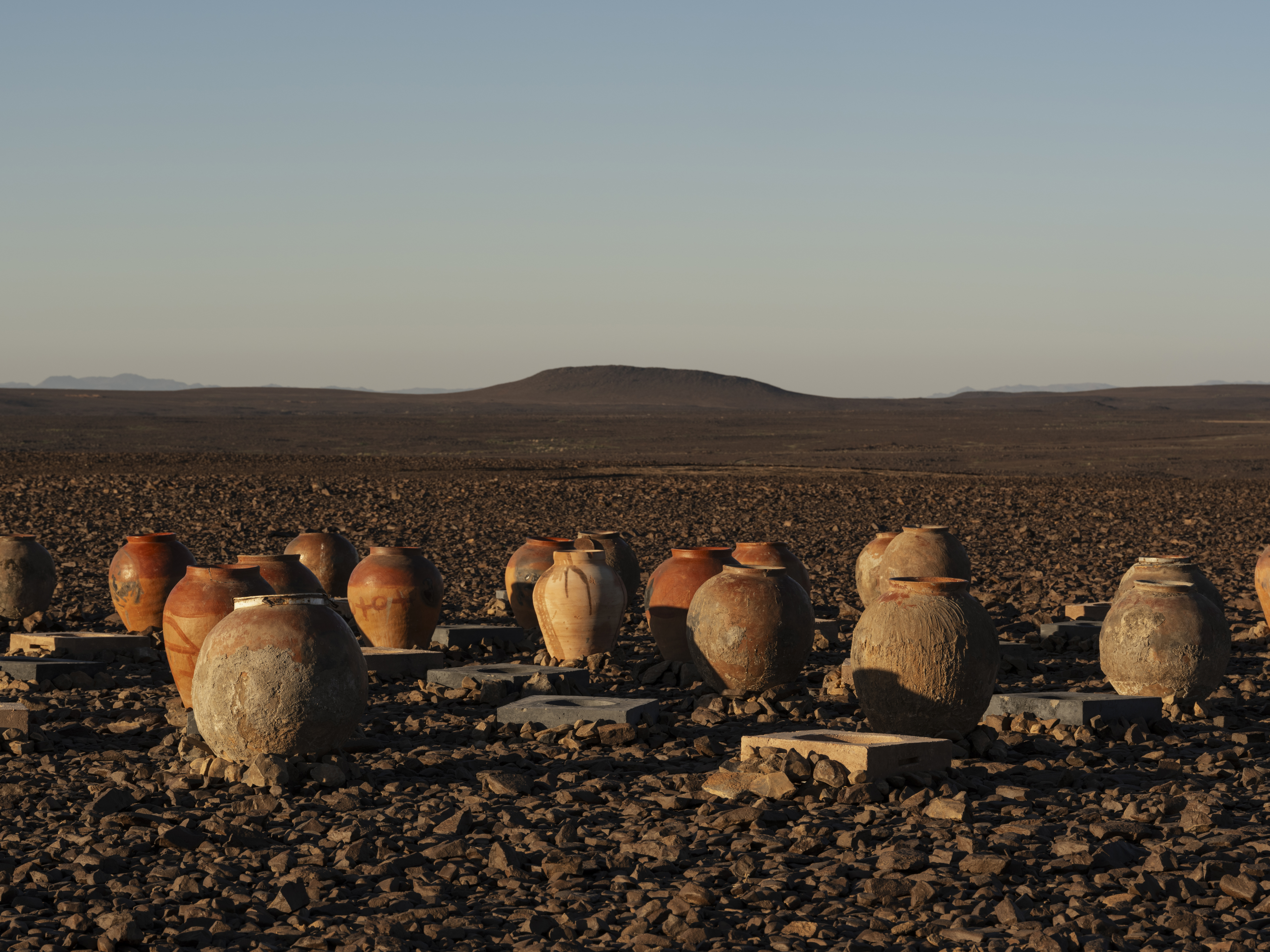
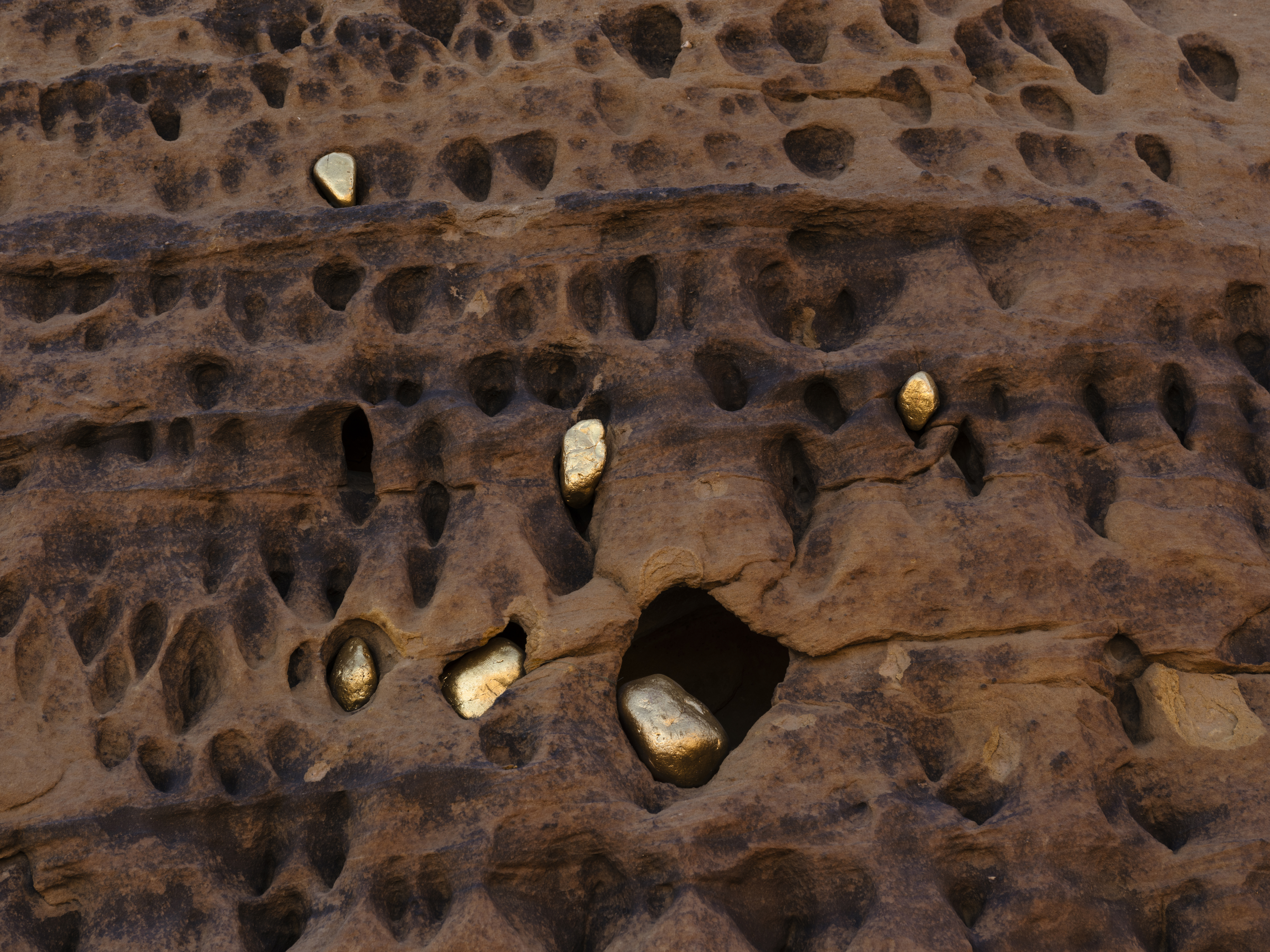
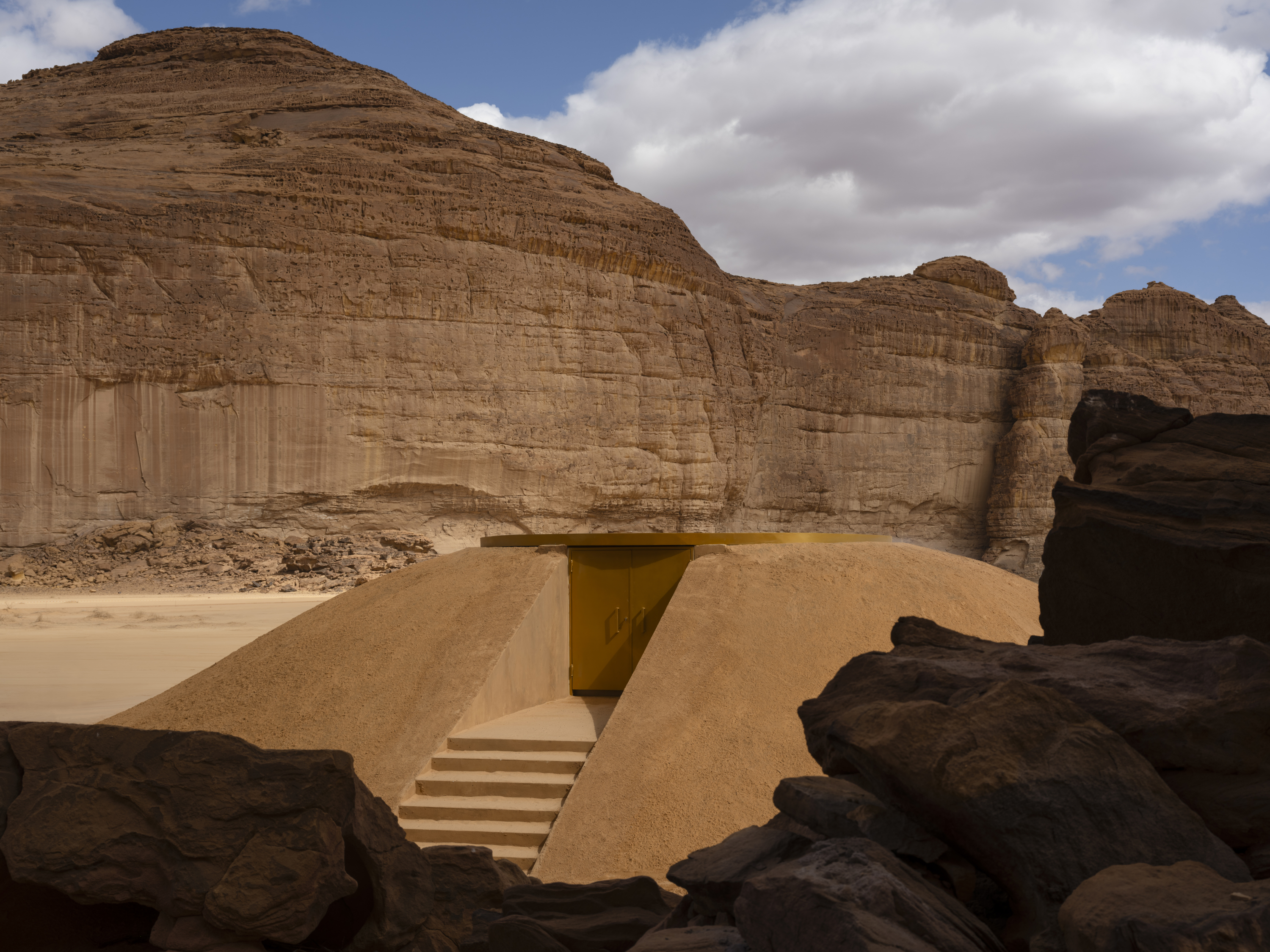
Site-specific commissions by Saudi and international artists respond to the exhibition’s titular theme, In the Presence of Absence. They include Filwa Nazer’s elevated walkway in the form of a steel mesh black snake that draws on pre-Islamic beliefs of desert jinn, and Bosco Sodi‘s gold glazed volcanic rocks, which were gathered from around the landscape and placed in rock faces that look over the desert.
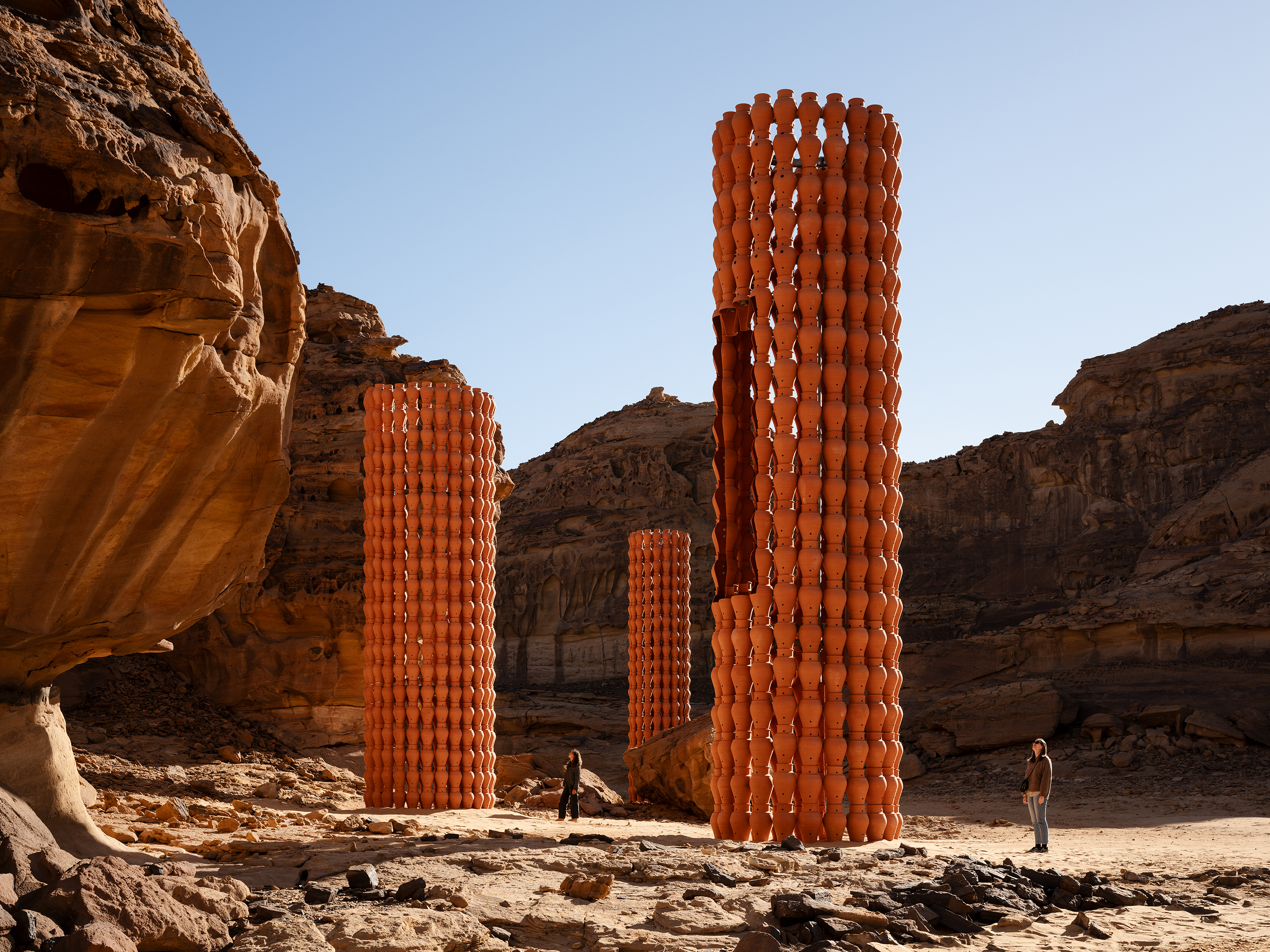
For this edition, the Harrat Uwayrid biosphere reserve and the AlManshiyah Plaza have been added to the exhibition’s central Wadi AlFann desert location, which will host a new global destination for land art from 2026. Ibrahim Mahama’s totemic stacks of terracotta pots appear across all three locations.
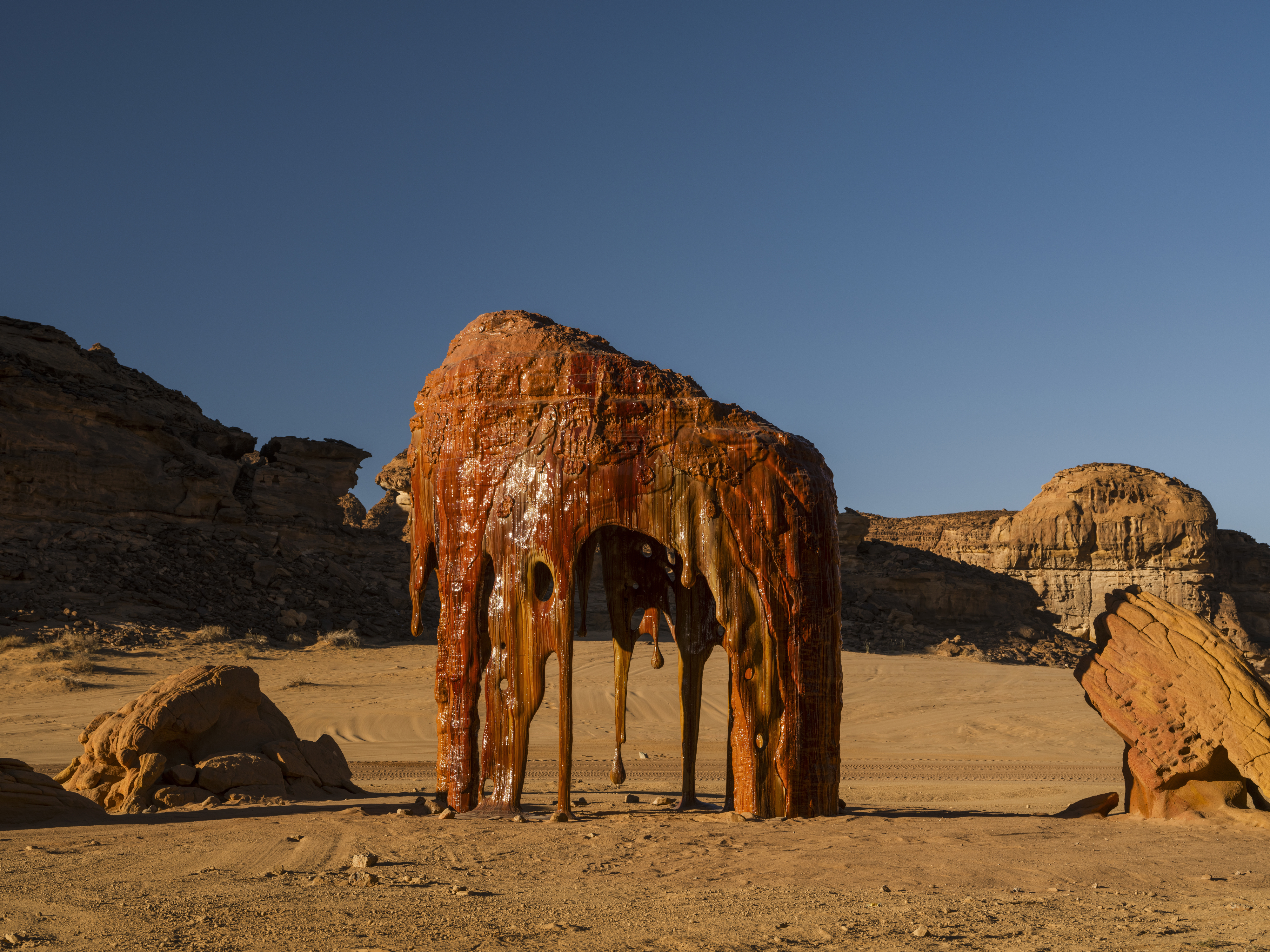
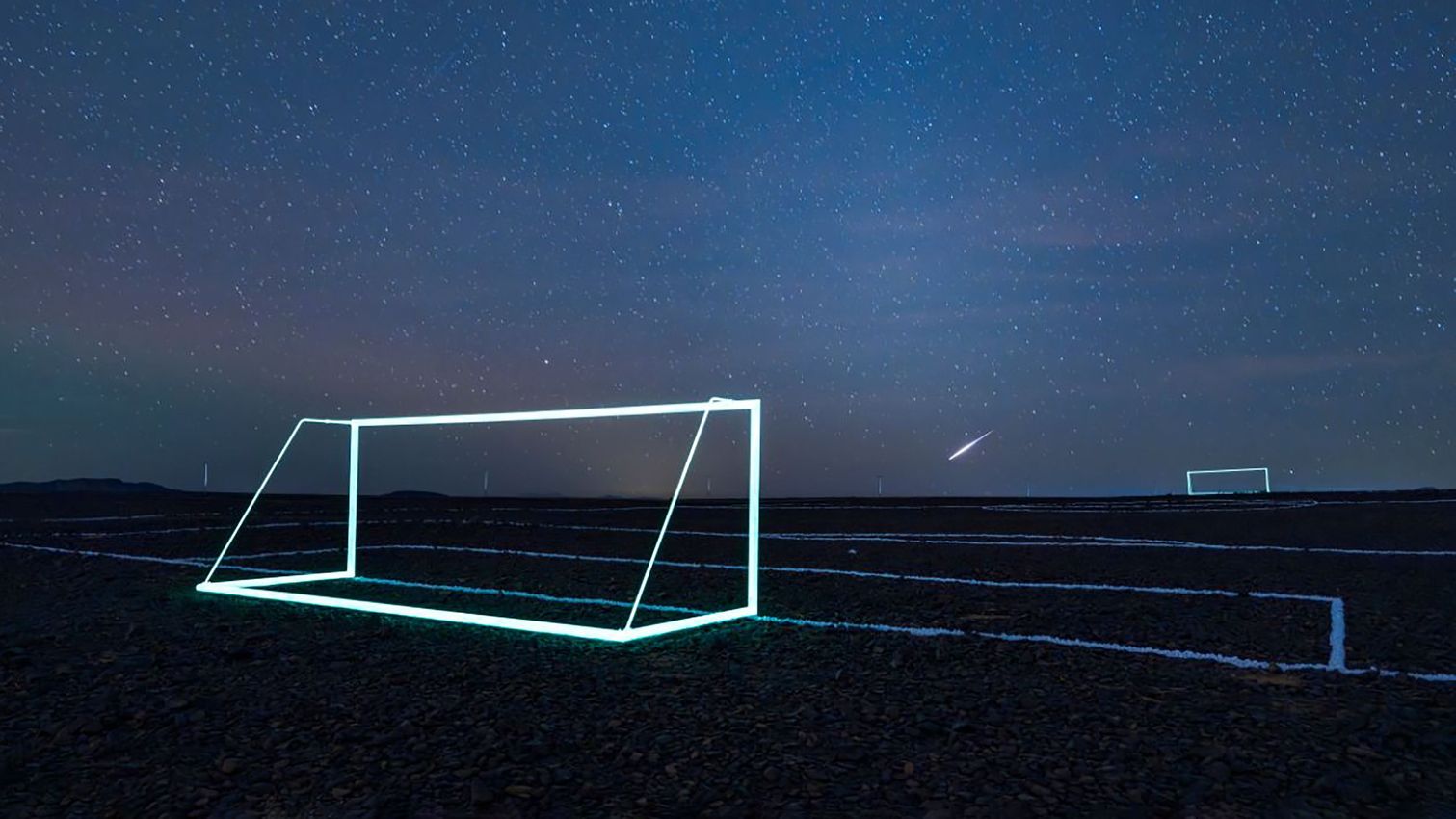
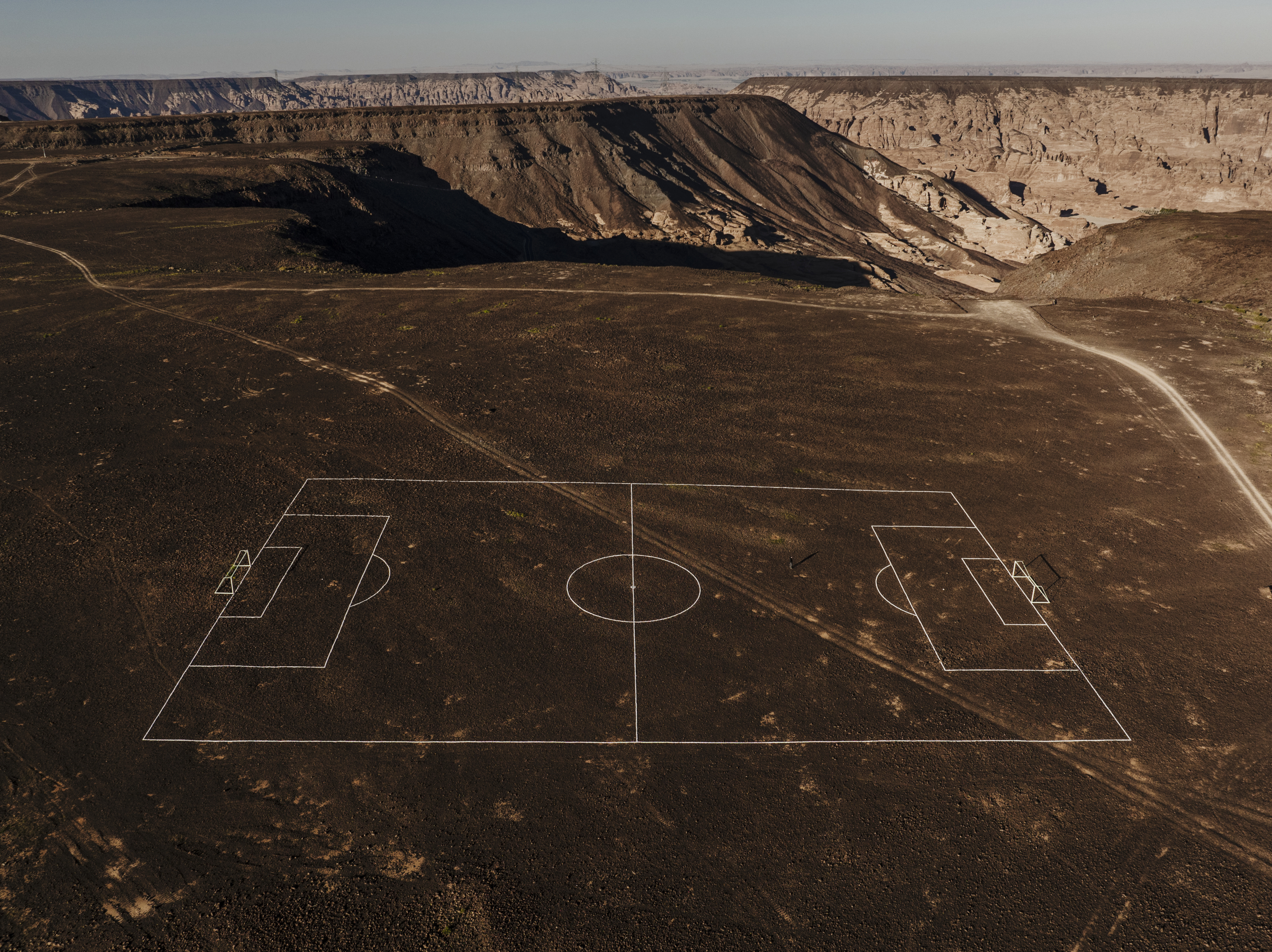
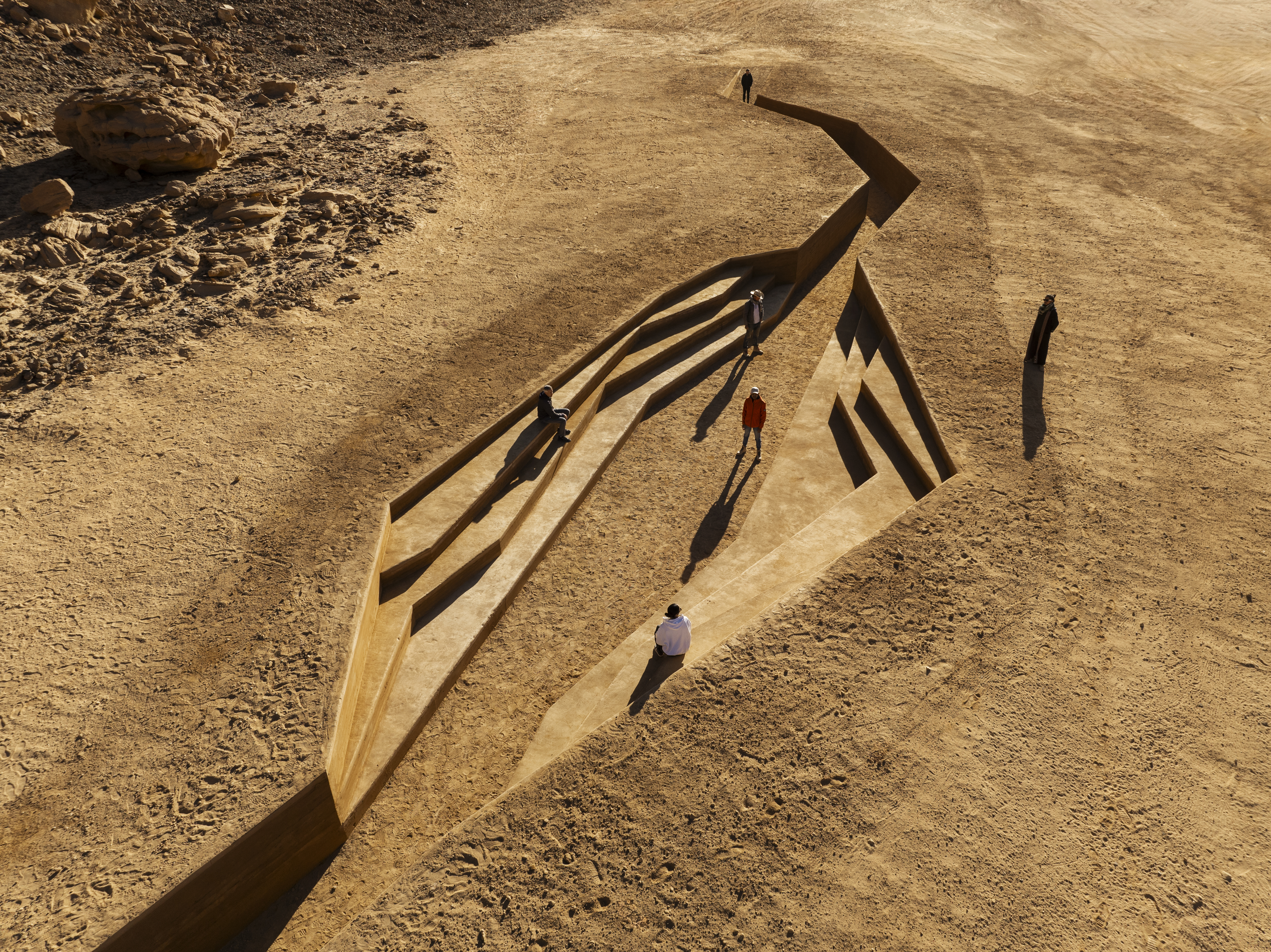
Kuwaiti artist Aseel AlYaqoub’s commission Weird Life: An Ode to Desert Varnish references the so-called desert varnish that occurs naturally in the landscape, while Saudi-Palestinian artist Ayman Yossri Daydban used white stones and rocks gathered by members of the AlUla community to create the lines of a football pitch on the ground.
Beyond the artworks, an extensive programme of events for visitors and local communities takes place during Desert X AlUla. This includes curator and artist talks, primary school visits, and art workshops, as well as traditional Saudi dance, ambient compositions, and live radio broadcasts.
In this conversation, Maya El Khalil and Marcello Dantas introduce Desert X AlUla 2024, reflecting on the exhibition’s themes and the Desert X AlUla project’s ambitions. But not before introducing their respective practices.
Maya, you were the founding director of ATHR Gallery in Jeddah, making your role in this year’s Desert X AlUla something of a homecoming. What’s your take on the evolution of the contemporary art scene in Saudi Arabia?
{MEK} Accelerated, which is incredibly exciting. Developing quickly from a relatively blank canvas with initiatives, spaces, and audiences built from the ground up. The artists have many more opportunities than before; however, the timescales can be incredibly short and that’s something to navigate when trying to deliver outstanding work. There is a need for formats that allow for gestation, risk-taking, and room to make mistakes. It is so exciting to see residency programmes emerge, with support for artists to work without the pressure of outcomes that can be felt in exhibition production. Arts AlUla launched the AlUla Artist Residency Programme, which will further develop the region into a global creative hub, taking inspiration from AlUla’s natural surroundings, heritage, and history.
Different cities are developing distinctive characters. I am looking forward to seeing how the JAX district in Riyadh evolves. The arts heritage is developing at every level, from the institutional, such as SAMOCA, soon to open Villa Hegra in AlUla, to artist-run spaces, such as Maha Malluh’s Shamalat and Ahmed Mater and Muhannad Shono’s studios in Jax, as well as the two Diriyah biennales, each with clear areas of focus.
Marcello, you have worked across South America and Asia, and curated editions of the Vancouver Biennale, BienalSur, and Mercosul Biennial before becoming creative director of the SFER IK Museion in Tulum, Mexico, in 2021. How did this global experience inform your engagement with the Desert X AlUla project?
{MD} I have practised curatorial work that is different from most curators. My work is to bring the audience and the artists close through to a common ground, to create an experience that is remarkable and that is centred in the visitor’s ability to come out with more questions than they came with. I am happy to work interdisciplinarily to collaborate with talents from different fields: art, science, historians, technologists, musicians, but also mixing cultures. The idea of mixing knowledge is a great tool to help new and fresh approaches to subjects and to art creation in general. Great ideas come out of discussions, and they produce new knowledge.
How did you both come to work on the Desert X AlUla’s third edition, and what approach did you take when it came to working collaboratively?
{MD} I was first interviewed by the team in AlUla in 2022. Then later they invited me to join Maya, whom I enjoyed getting to know. We came out with a concept about the invisible forces present in the desert and we started the field trips to AlUla. These were very interesting trips of discovery and interpretation. From those experiences, artists produced proposals and we both selected the list of approved proposals. We split the artists between us to focus more on developing the work with each artist due to the immense amount of work. Maya has a brilliant mind, and we approach the work in different ways. But we certainly complement each other.
{MEK} I was approached to submit a concept proposal in 2023. The idea of the invisible and the unseen occurred—having spent time in AlUla, I realised there were things that were felt but not fully articulated in one’s experiences. Beginning the collaboration with Marcello was an opportunity to discuss and explore these ideas, just as it was with the artists who came on research trips. Interestingly, with a theme that points to what is inarticulable or intangible, there were shared experiences and encounters that informed the works.
Could you introduce the theme of this year’s exhibition, In the Presence of Absence, which proposes to think about things that cannot be seen?
{MEK} Departing from past editions that responded to the landscape’s monumentality, the third edition turns to what is unseen. Our first point of departure is that human perceptions fall short of what this landscape holds. The inconceivable timescales and forces that shaped the landscape humble efforts to understand it. Ordinary perspectives are insufficient for the landscape’s complexities, demanding new ways of seeing. Despite that, the landscape continues to inspire awe—we are driven to engage with it and to encounter it. It inspires us by revealing the ways in which our senses seem limited. To really meet it, we must see in new ways. The artists each approached this contradiction humbly, letting time spent with the environment—researching its histories and observing its atmospheres—to inform their ideas.
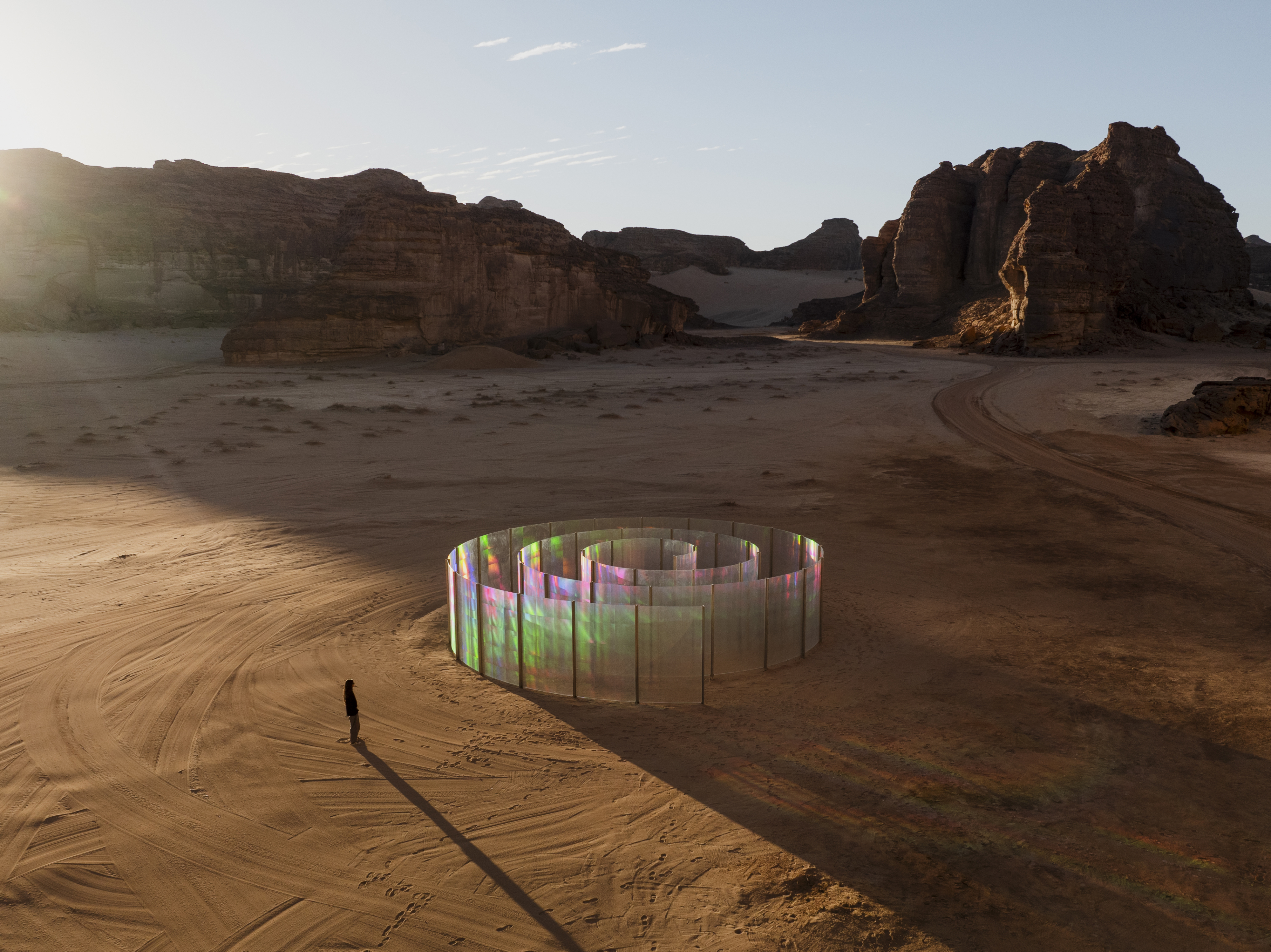
Fundamental to the exhibition is acknowledging that the desert is not empty but shaped by life forms and forces beyond our comprehension. Works make these epic yet imperceptible details apparent through elegant gestures that transform our encounters with the site.
Artists have attuned to imperceptible forces like light and wind that shape the landscape over immeasurable spans of time, and it has been exciting to encounter the landscape through their approaches.
How did you develop your artist list for the project, and what methods of working did you employ when working with artists to develop their site-specific installations?
{MD} Desert X AlUla is one of the most location specific projects I have worked on. Obviously, there are geographical, terrain, and climate challenges, but the layers go much deeper: there are cultural, historical, bureaucratic, and political challenges in making a project of this scale. Saudi Arabia is taking a very bold step towards new contemporary art practices. Complex and difficult projects. The artist’s list was made considering the approach of the artist’s past practices and their willingness to be challenged by new ideas.
{MEK} For the local and regional artists, some were artists I had worked with previously, others I had long admired—it was a joy to have the chance to collaborate with them and spend time in AlUla. For the selection of the international artists, it was an extensive research process, looking for artists whose work intersected with the theme. I ended up with a very long list. When Marcello joined the team, it was good to get his international perspective and insight. Ultimately, the list of artists we approached and spoke with had some logistical considerations and limits in relation to timeliness. Particularly, I was keen to ensure that everyone was able to base their work on a site visit. Also imperative was to ensure a diversity of perspectives and voices from different locations, generations, and mediums. Experiences with working on a large scale was important. For some of the local artists, we had faith in their ideas, making past-experience not a prerequisite. I am proud of what they accomplished.
This is the first time Desert X AlUla is taking place across three sites. In addition to the main Wadi AlFann site, could you introduce the other sites, and how you developed the artworks for these particular locations?
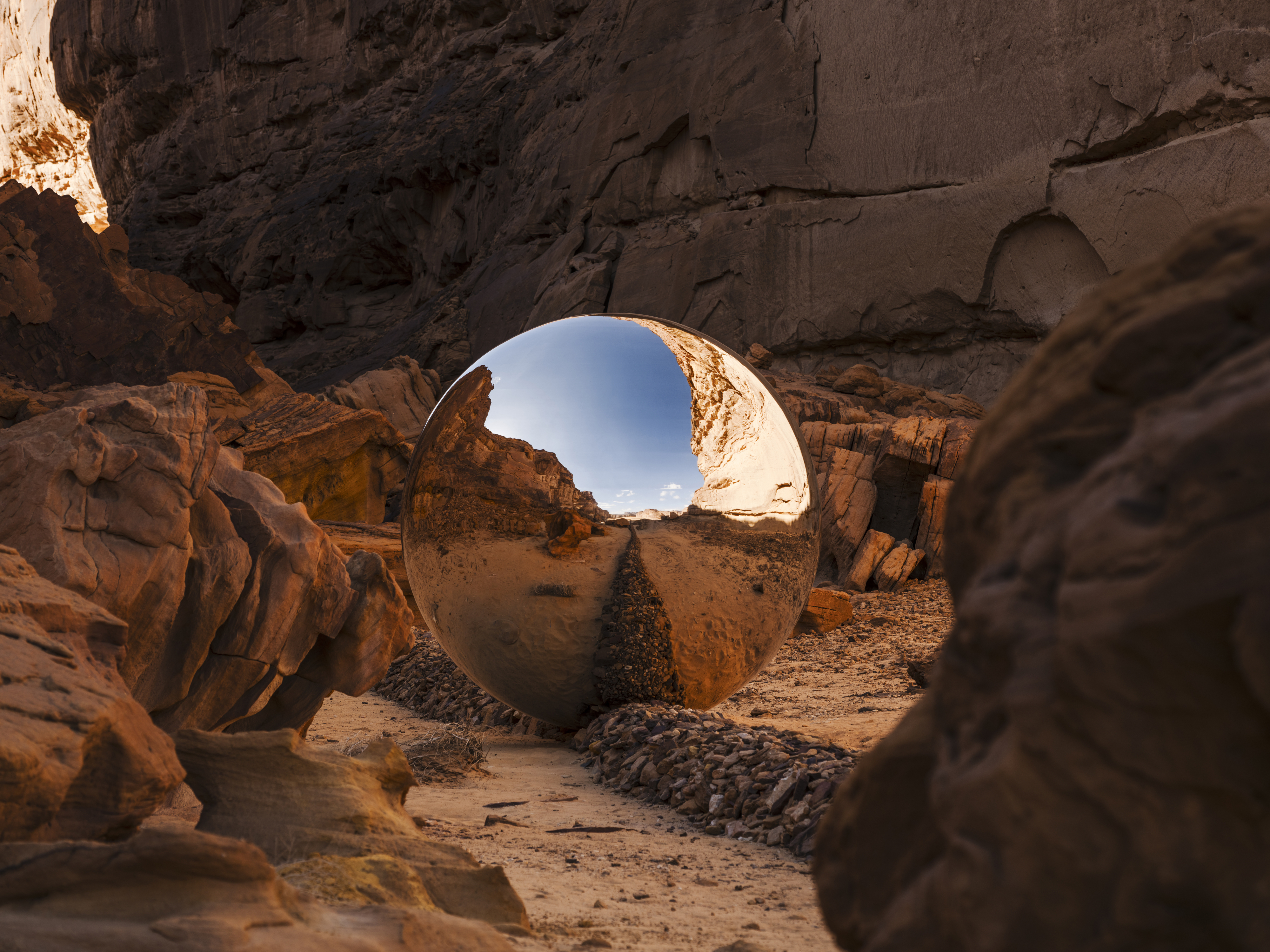
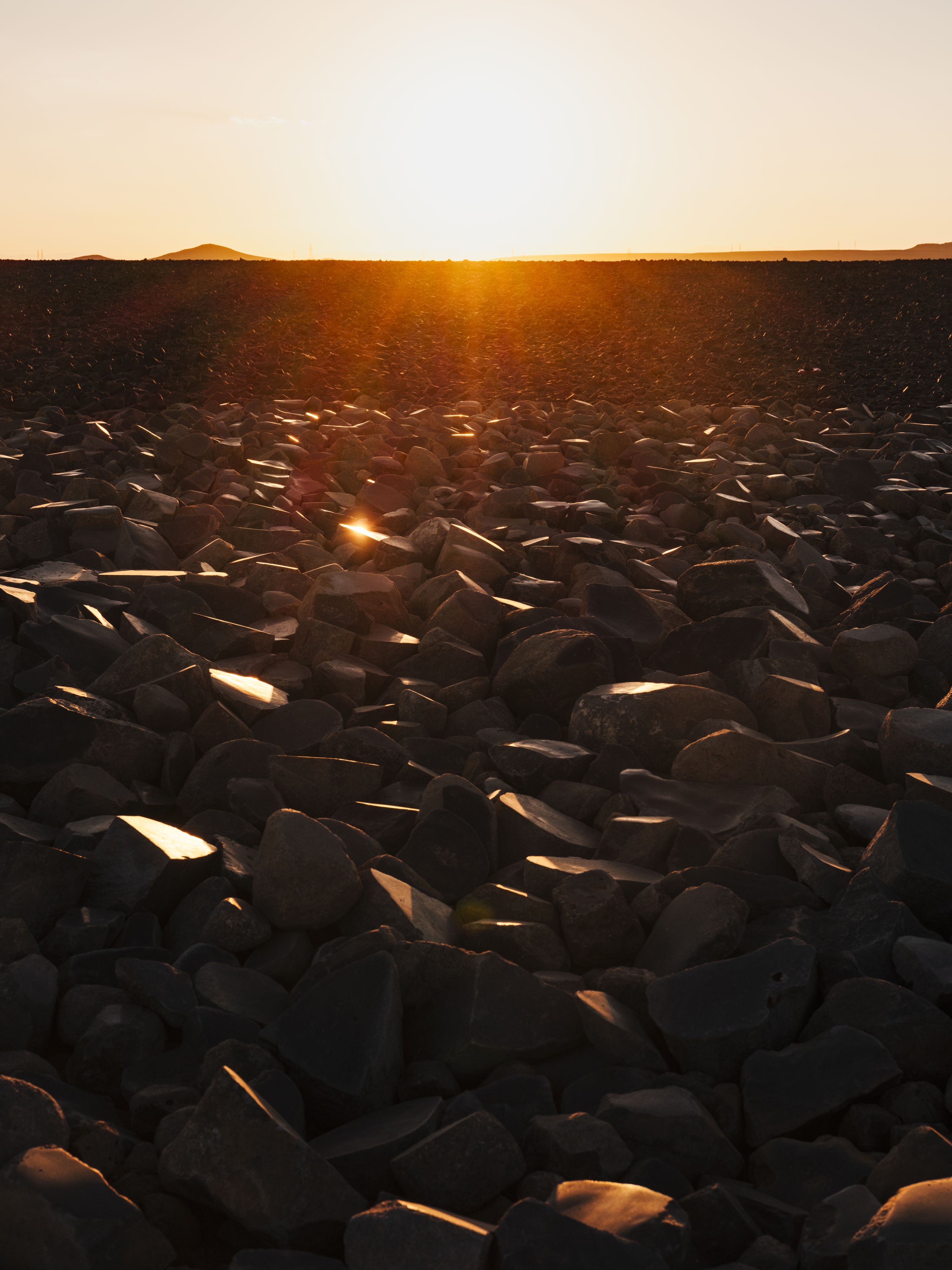
{MD} Each site has special configurations although Wadi AlFann has most works of course. Harrat is a unique place that drew the attention of all artists because of its view of the valley, the volcanic rocks and its geological formation. Desert X AlUla has used that site before, but it is an iconic space, and it produces a completely different sense of scale. Two works, Caline Aoun and Ayman Yossri Dayban’s presented there are very site- and material-specific and create a dialogue with the actual volcanic rocks abundant in the area and the way the light makes things visible or invisible over time. Ibrahim Mahama, on the other hand, created a route of vestiges between the three sites, including the newly built park around the historic AlManshiya Plaza.
Did you have a specific trail or route in mind when placing works across these three locations? This of course relates to how you curated with and around works from previous editions of Desert X AlUla, which in turn connects to this project’s place within the broader landscape of art and culture in the region.
{MD} Desert X AlUla is a platform to reinterpret landscape, so part of our work is to find meaning in the cross section of art, the site, and historical and geological ties. There are some works that are curated for the bird’s eye view for the drone point and that is fine as they are so large, requiring that angle, like Ayman Yossri Dayban, Sara Alissa, and Nojoud Alsudairi. An additional consideration is that Desert X AlUla has both a presential audience and a remote audience. The threshold of perception is also part of the concept of In the Presence of Absence, so some things are invisible to a camera but only perceivable in the presence of the work, for example, in the cases of Kader Attia, Karola Braga, Bosco Sodi, and specially commissioned artist Tino Seghal. With this in mind, we curate for both dimensions mirroring the essence of the desert, where the minuscule and fragile and the monumental and grand must exist together.
Another first for this year’s edition of Desert X AlUla is a special commission by Tino Sehgal, (un titled), which explores the ancient and ongoing relationship between the desert’s natural landscape and human intervention. Could you introduce this commission?
{MEK} Late in the process I felt that we needed a live component to the exhibition, something that would entice and touch the audience about the human scale and condition in the desert. Then I thought about Tino, whom I have worked with in the past and asked him, can you work on this deadline and in this location. He accepted the challenge, and we developed a special commission as part of the programme. Desert X AlUla allowed it to happen, understanding that Tino Sehgal’s work is not a performance, but a living work of art. His sensible touch allows to reveal human fragility and a poetic expression of the body trying to find a place to produce the encounter.
To engage with the specificities of AlUla context defines the Desert X AlUla project in Saudi Arabia, which explores the desert as both an ancient crossroads and a contemporary site of international exchange. What have you learned about the world from working on this project? Particularly when it comes to mediating the global with the local within the context of the international field of art, and all of the politics and expectations that can arise from that?
{MEK} Some artists had never worked or visited the region before, let alone Saudi and there are still some unfortunate misconceptions. But everyone who we approached had an attitude of curiosity and openness—something that was essential to the theme.
Finally, how have you experienced the exhibition, now that it has opened, and you have been able to see responses not only from local, regional, and global audiences, but also from participating artists? What would you say are some of the most striking or memorable reactions that you have observed?
{MD} Yes, I have visited quite a few times. The beauty is the way people walk in the desert and feel the texture, the change of temperature, the scale, the wind, but above all, the encounter. The moment that a smile comes on their face and they realise that the art is transforming their perception and their mind. This is key. That change creates the impact of Desert X AlUla that we want to be able to perceive something invisible. —[O]
Main image: Ayman Yossri Daydban, A rock garden in the shape of a full-sized soccer field, Desert X AlUla 2024 (9 February–23 March 2024). Courtesy The Royal Commission for AlUla. Photo: Lance Gerber.




A respected voice in contemporary art discourse.
Focusing on ambitious storytelling and insightful art-world commentary. Ocula Magazine publishes in-depth interviews, critical essays and timely analysis on the artists, exhibitions and ideas driving the global art world.
Learn more about Ocula Magazine
Showcasing the best of the art world.
Ocula partners with galleries from around the world to highlight their artists, artworks and exhibitions. Gallery membership is by application and invitation, with each member vetted by an independent panel.
Learn more about Ocula Membership
Specialises in the sale of major artworks.
Led by a team with deep ties to the world’s leading auction houses, galleries and collectors. Ocula’s advisory team offers bespoke services to high-net-worth clients from around the world who are looking to acquire the best of contemporary and modern art.
Learn more about our team and services