



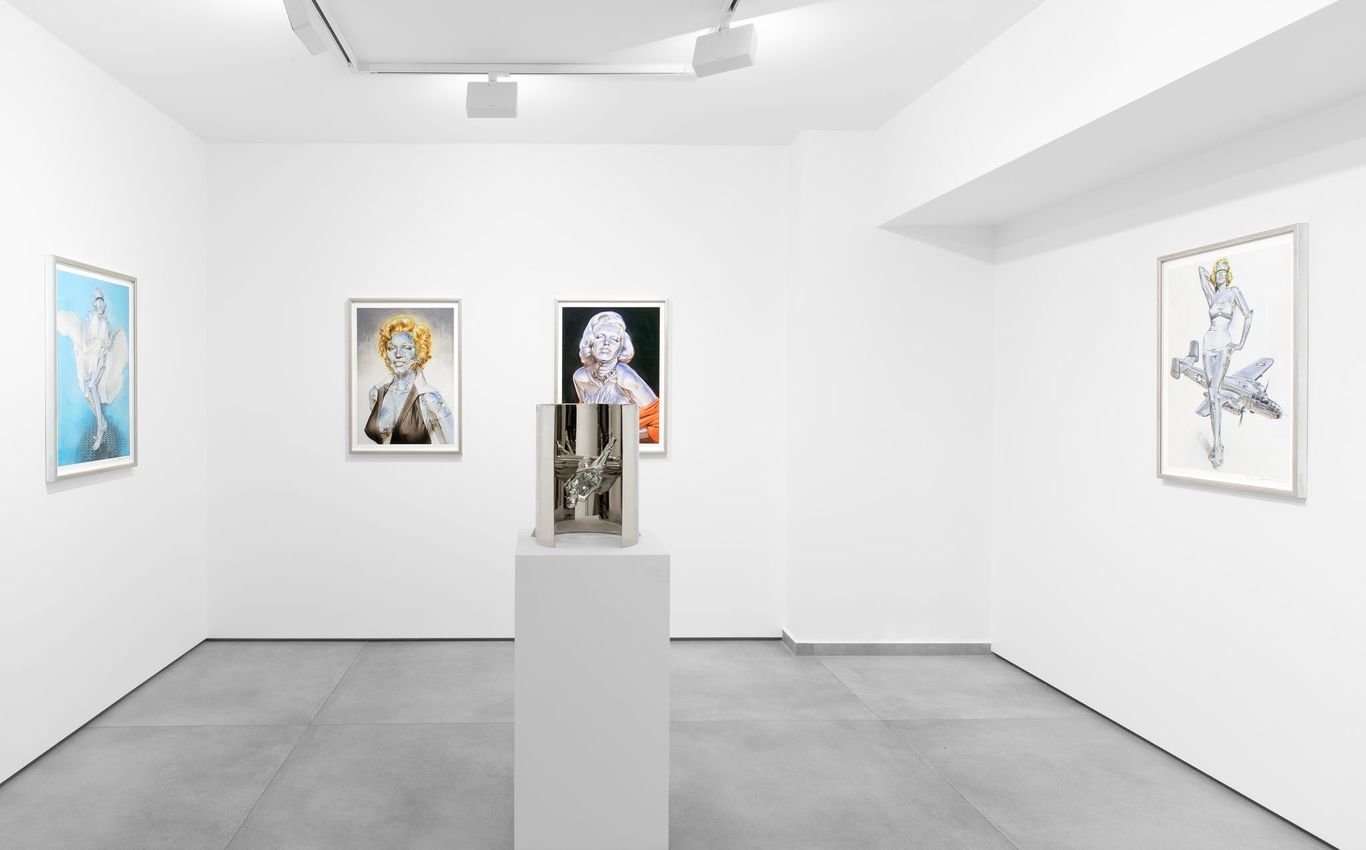
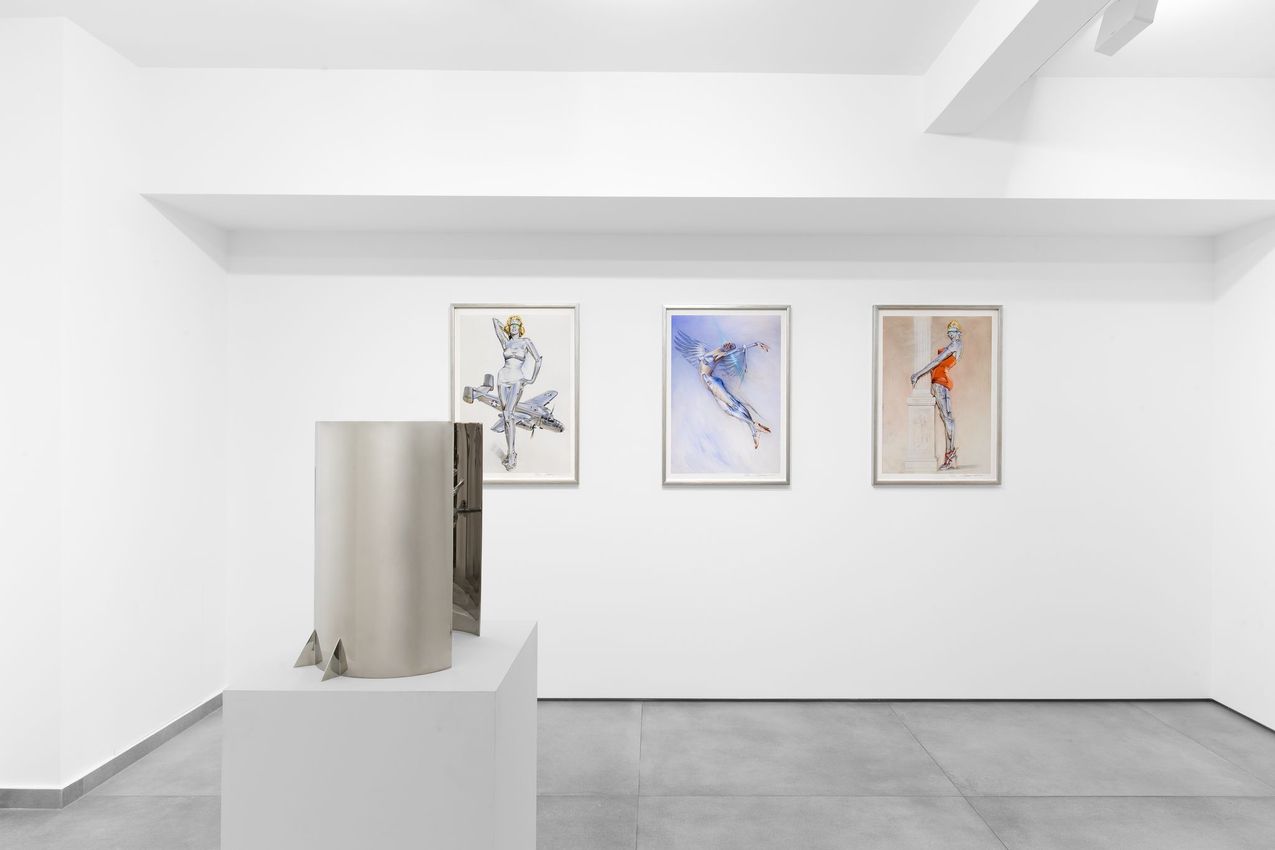
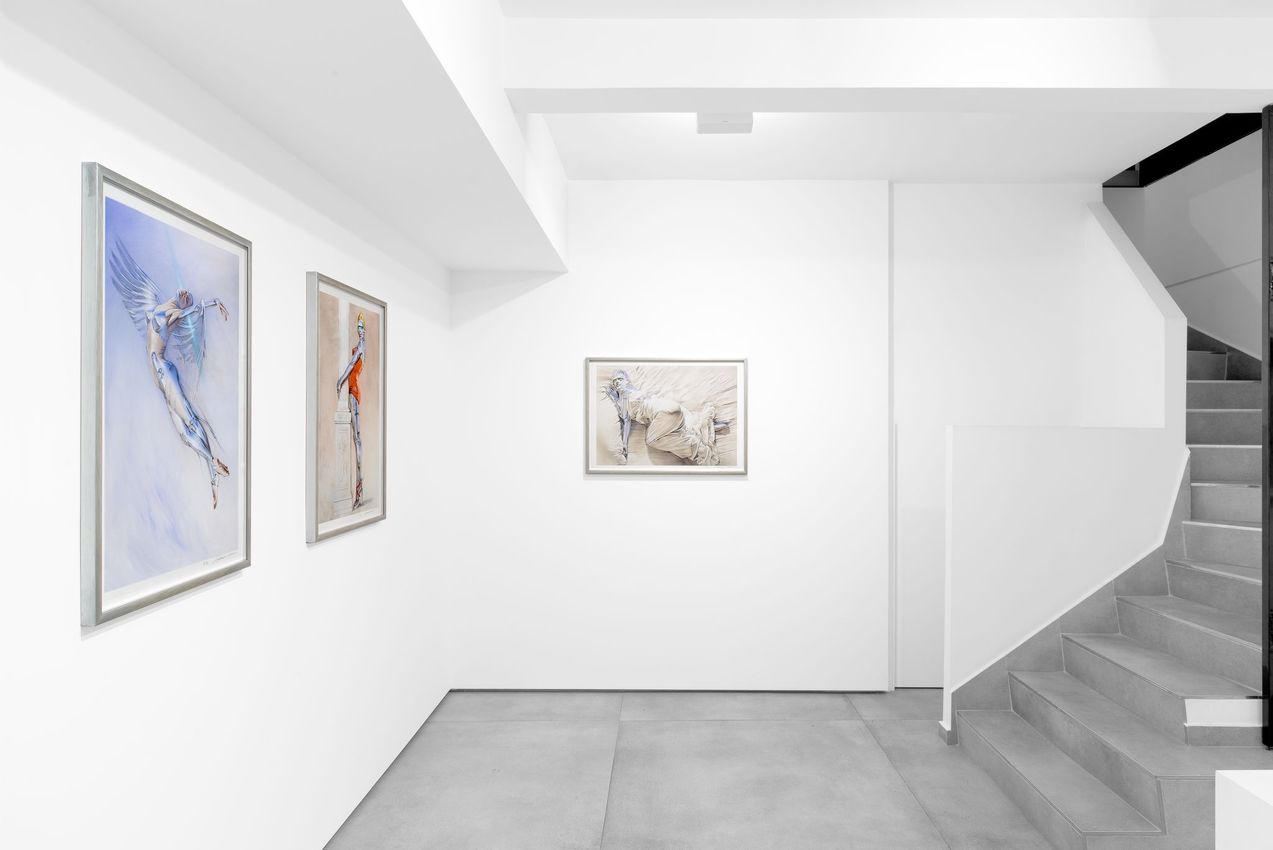
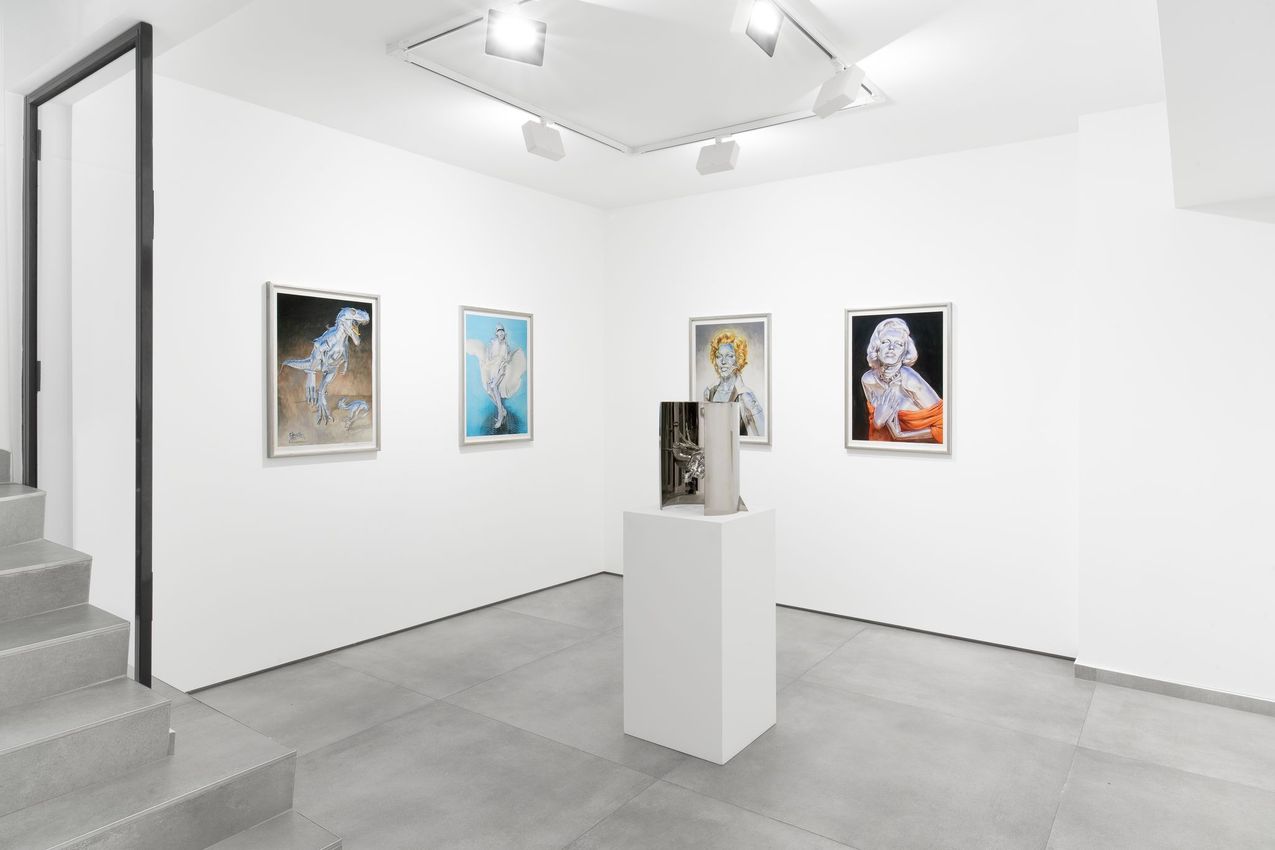
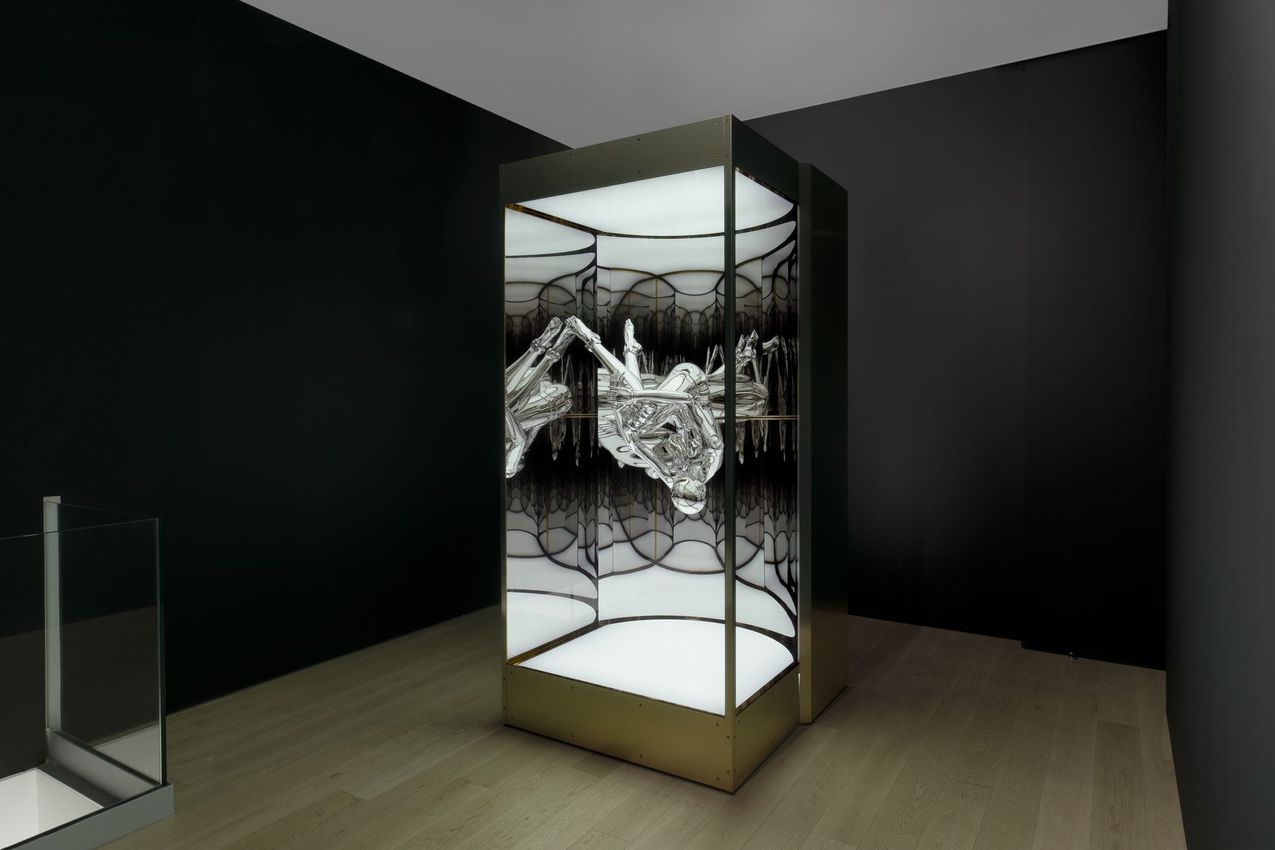
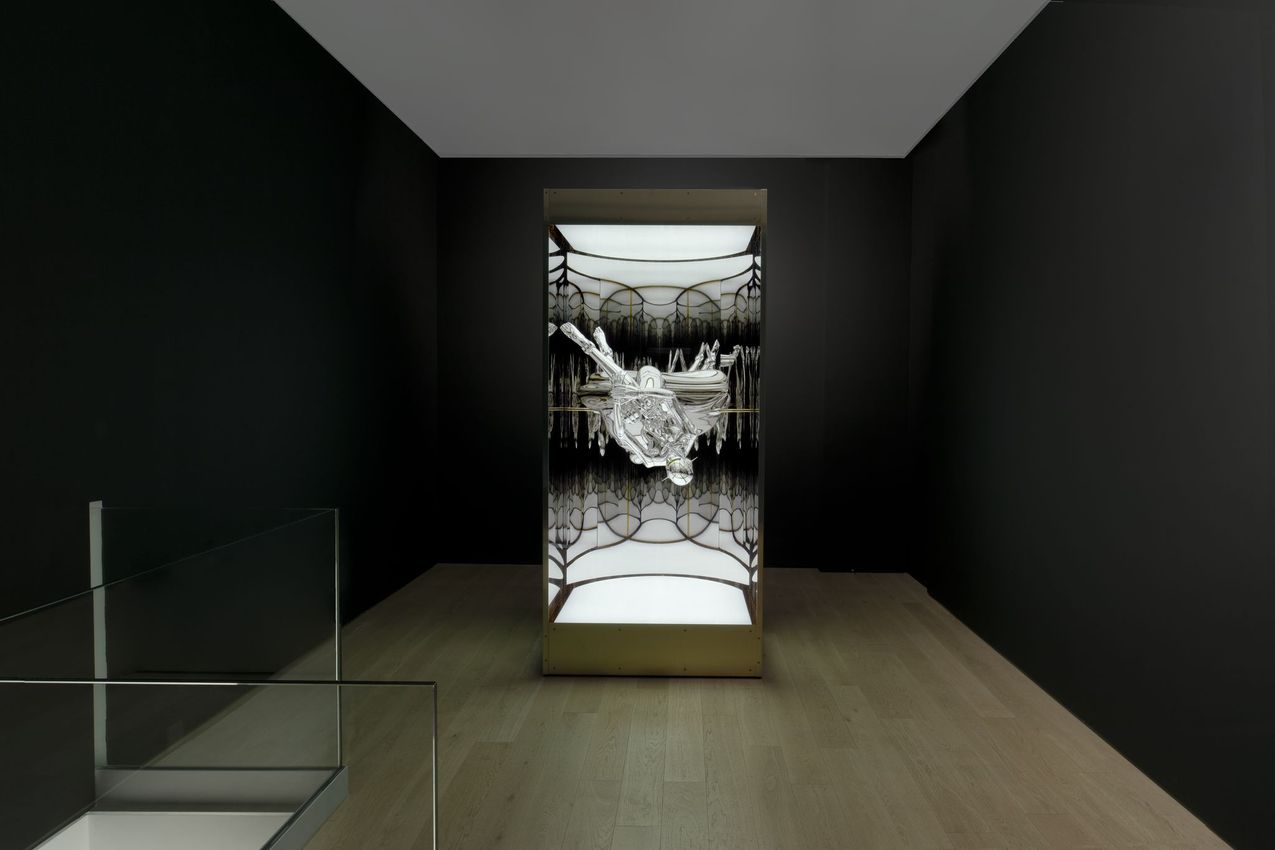
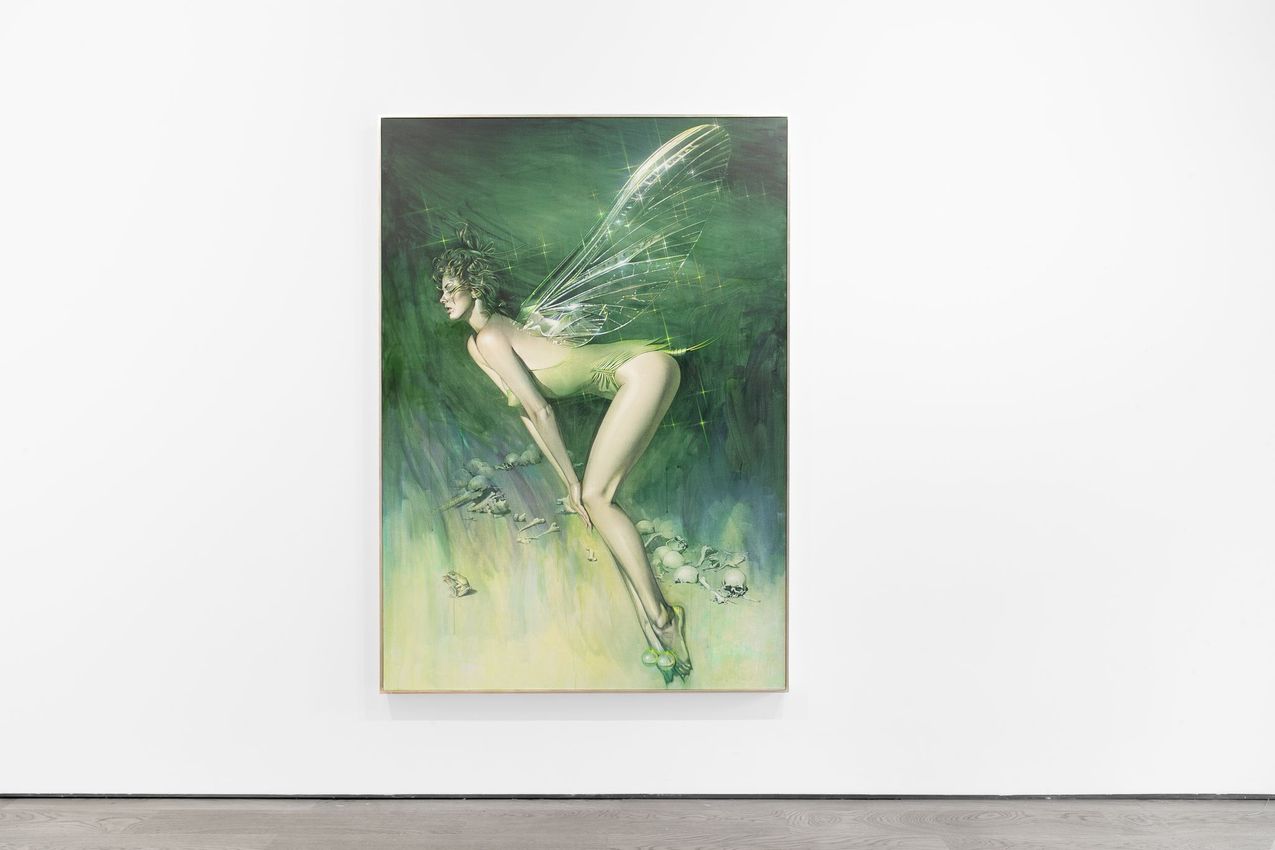
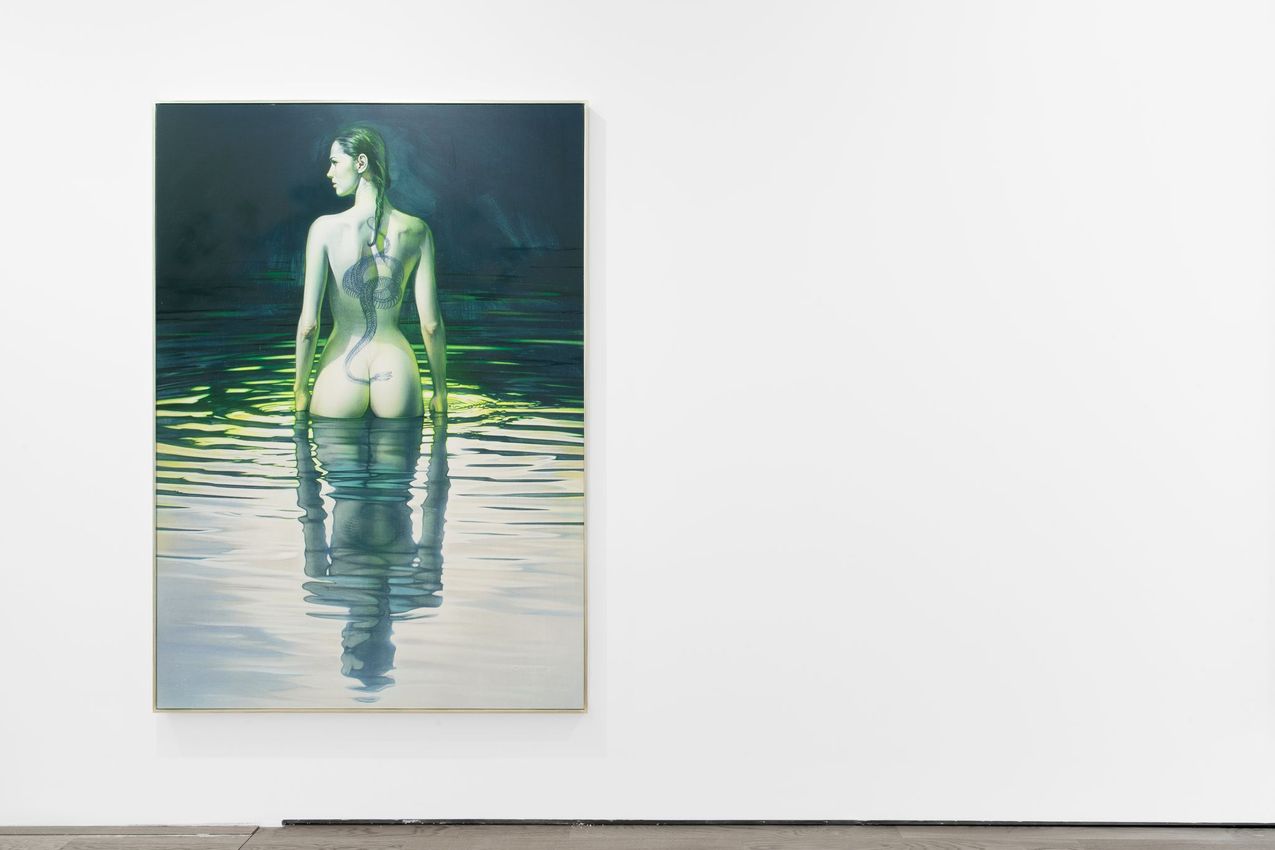
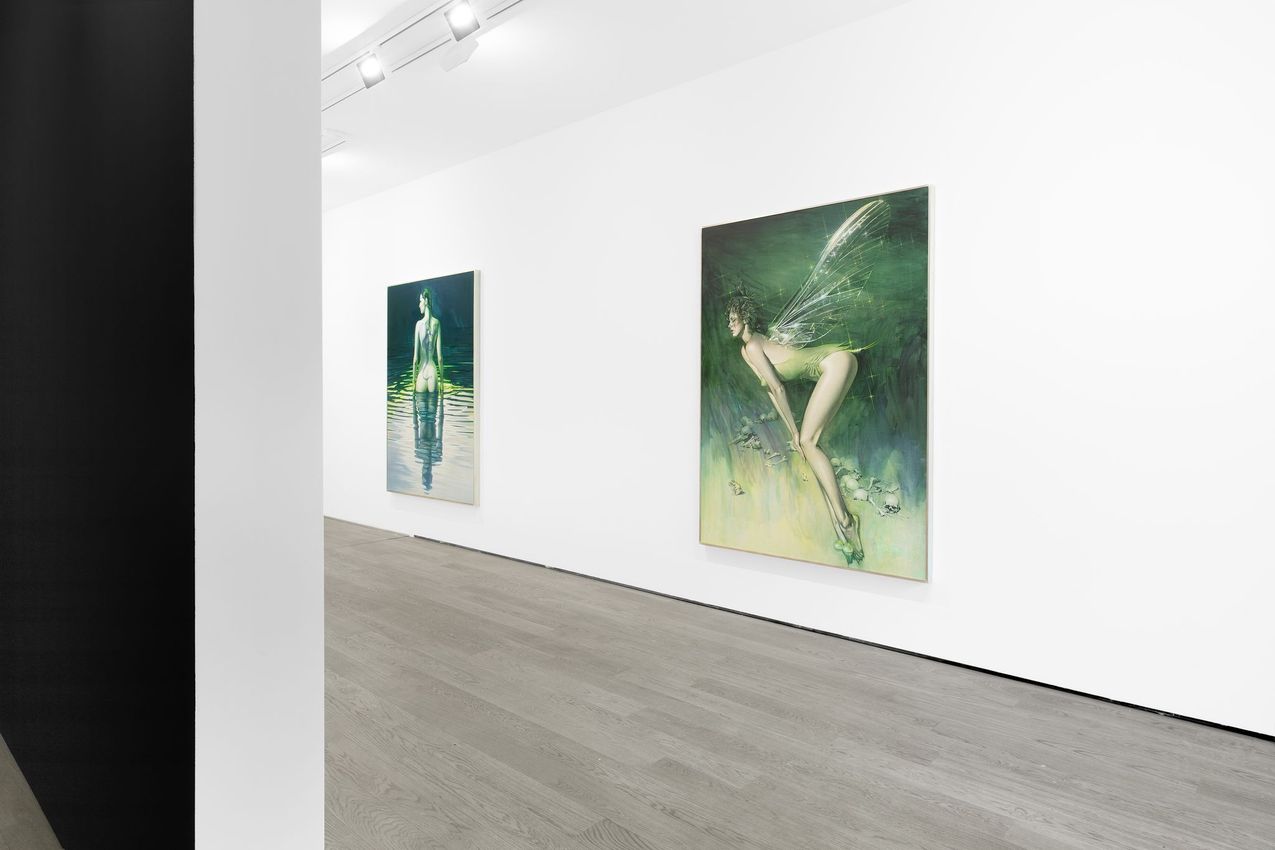
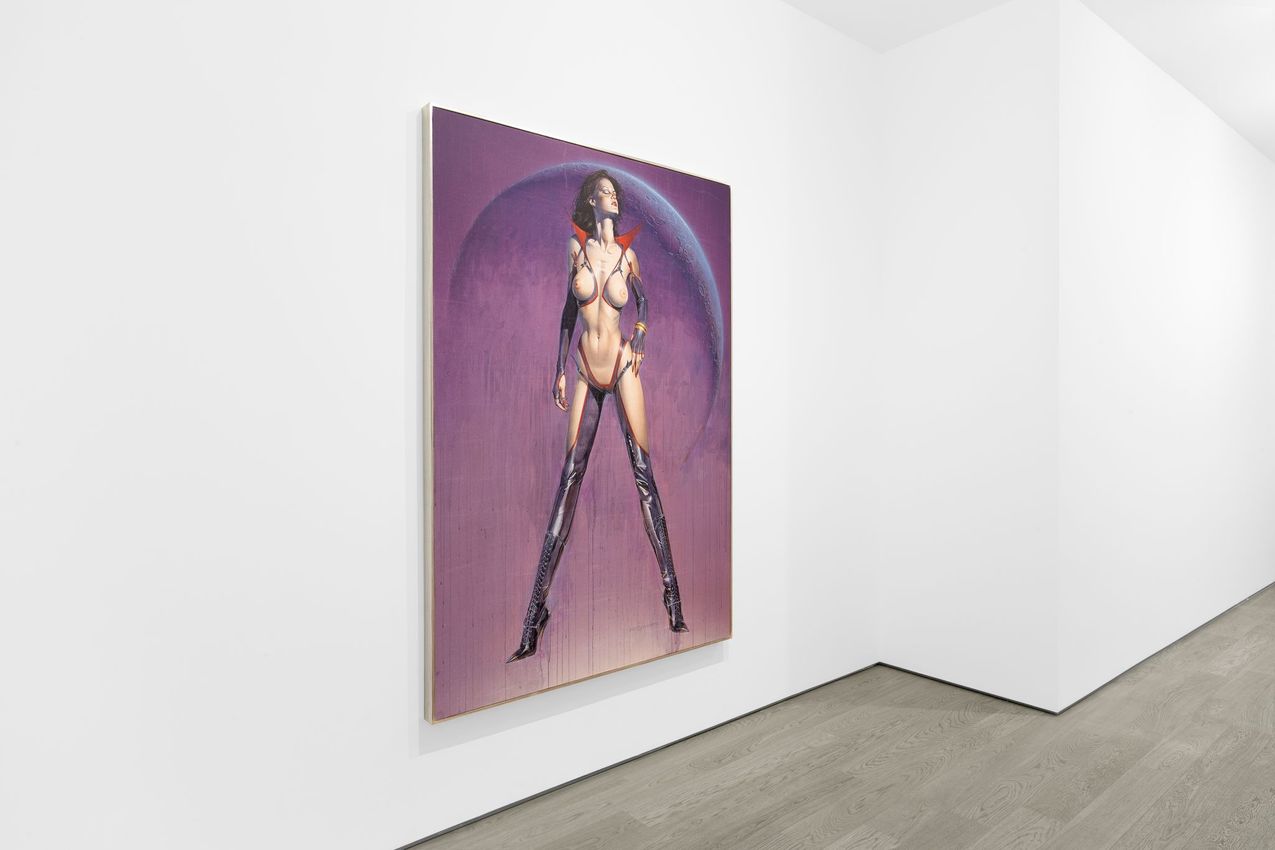
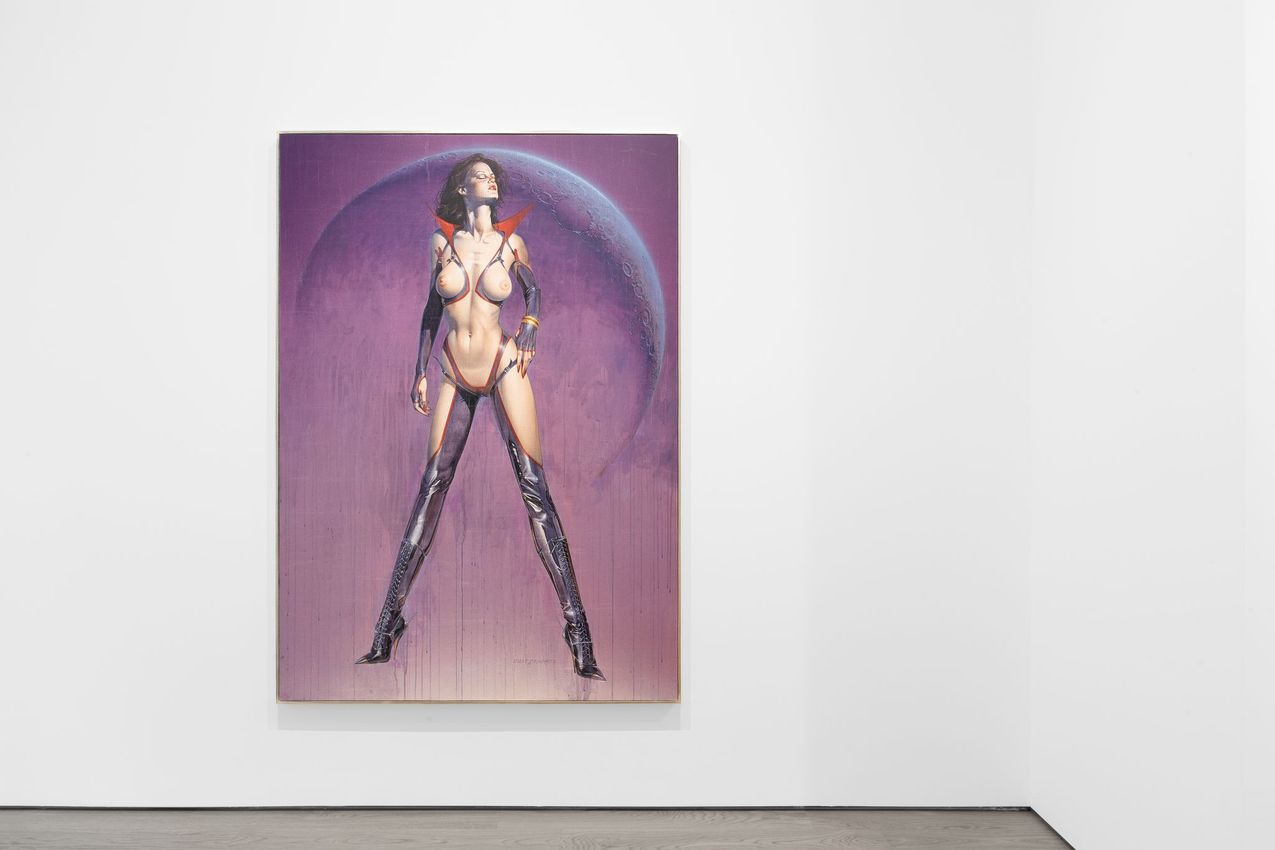
In the word creature, there is create. Hajime Sorayama creates creatures, like a mischievous Pygmalion, chiseling muscles that shimmer under the skin, shaping pearlescent lips and necks, from which he extracts, with a touch of sensuality, his steel Galateas. For Hajime Sorayama’s recent paintings take on a narrative dimension, taking inspiration from a collective memory haunted by androids and pin-ups, carnal and chrome-like sylphs. Once again, we see the obsessive theme of the female body, depicted like a leitmotiv that lends the work its cohesion through continuity.
Born in 1947 in Japan, an independent illustrator from 1972, the artist soon elaborated a singular style, with cyber-erotic tones, which brought him worldwide fame in the 1980s. ‘I draw metals to depict a woman’s softness 1.’ This is what his painting voluptuously manipulates, this discordance between steel and skin, the sharp and the smooth, tekhne and erotica, calling on the viewer’s culture and memory to bear witness as if against the grain. Hence, Marilyn with her flying skirt is a hackneyed image, but here, this retro-futuristic glamor, outside of post-humanist aesthetics, invites us to a parasensory gentleness, from an unknown time and place.
All this has no limits other than those of a creative jubilation, a fully conscious hedonism, full of chimaeras, tall dolls, silky robots. Semantic dissonances that fuel fantasy: such is, it seems, the signature choice of the artist’s highly personal realism, where the incandescence of a silvery Marilyn, of a likely absinth fairy, of a callipygous bather or a Barbarella in thigh-high metal boots is haloed in greens, turquoise, surreal purples, letting us know, like at the end of a somewhat cruel tale designed to conjure up desire and fear, that it’s not true, it’s ‘not for real’. ’They are full of lies2’, admits their master, Hajime Sorayama...
Full of lies, they certainly are, up to his latest sculptures and installations, blending fibreglass, Perspex and stainless steel. But how dare we alienate them? For robots and androids are usually slaves–potentially sex slaves, to which free will is altogether denied, as illustrated namely by the American Paolo Bacigalupi (b. 1972) in his novel The Windup Girl. But, having reached a certain level of complexity, artificial intelligence has gained a kind of conscience, albeit green... And this is being played with here with these Future Eves 3, nestled in their cages, as it were: possibly no art more than that of robotics has ever had as its core inspiration the relations between humankind and its electro-mechanical creations, be they shaped in its image or an expression in its place of a radical–perhaps imperious–otherness.
Woman-sex despotism, somewhat softened in Hajime Sorayama’s paintings by this shimmering, translucent matter, which, when scratched, can imprint the marks of time on the depicted bodies. Blurry brushworks, chromatic subtleties, nuanced palette... In all this, there is something akin to an exhumed lost future revealed by some visual archaeology, outside of the screaming clichés of modernity: unless being modern actually means that we acknowledge the legacy and find a place in a continuity?
1. Hajime Sorayama, Köln, Paris : B. Taschen, 1993.
2. Venin, de Hajime Sorayama, translated from English by Nicolas Meylaender, Paris: Semic, 2004.
3. Cf. L’Ève future, a novel by Auguste de Villiers de L’Isle-Adam, published in 1886.
Press release courtesy Almine Rech. Text: Paloma Hermine Hidalgo.
Japanese born, Hajime Sorayama graduated in 1969 from Chubi Central Art School in Tokyo. He started his career in advertising before freelancing in Hollywood, where he helped to produce visuals for sci-fi films. His works of female images, pursuing of robot and eroticism are well known both inside and outside of Japan.


Almine Rech opened its doors on April 1st, 1997 in the 13th arrondissement in Paris. The gallery was founded on an axis of California Minimal, Perceptual art and Conceptual art, representing artists such as James Turrell, John McCracken and Joseph Kosuth.

A respected voice in contemporary art discourse.
Focusing on ambitious storytelling and insightful art-world commentary. Ocula Magazine publishes in-depth interviews, critical essays and timely analysis on the artists, exhibitions and ideas driving the global art world.
Learn more about Ocula Magazine
Showcasing the best of the art world.
Ocula partners with galleries from around the world to highlight their artists, artworks and exhibitions. Gallery membership is by application and invitation, with each member vetted by an independent panel.
Learn more about Ocula Membership

Specialises in the sale of major artworks.
Led by a team with deep ties to the world’s leading auction houses, galleries and collectors. Ocula’s advisory team offers bespoke services to high-net-worth clients from around the world who are looking to acquire the best of contemporary and modern art.
Learn more about our team and services
