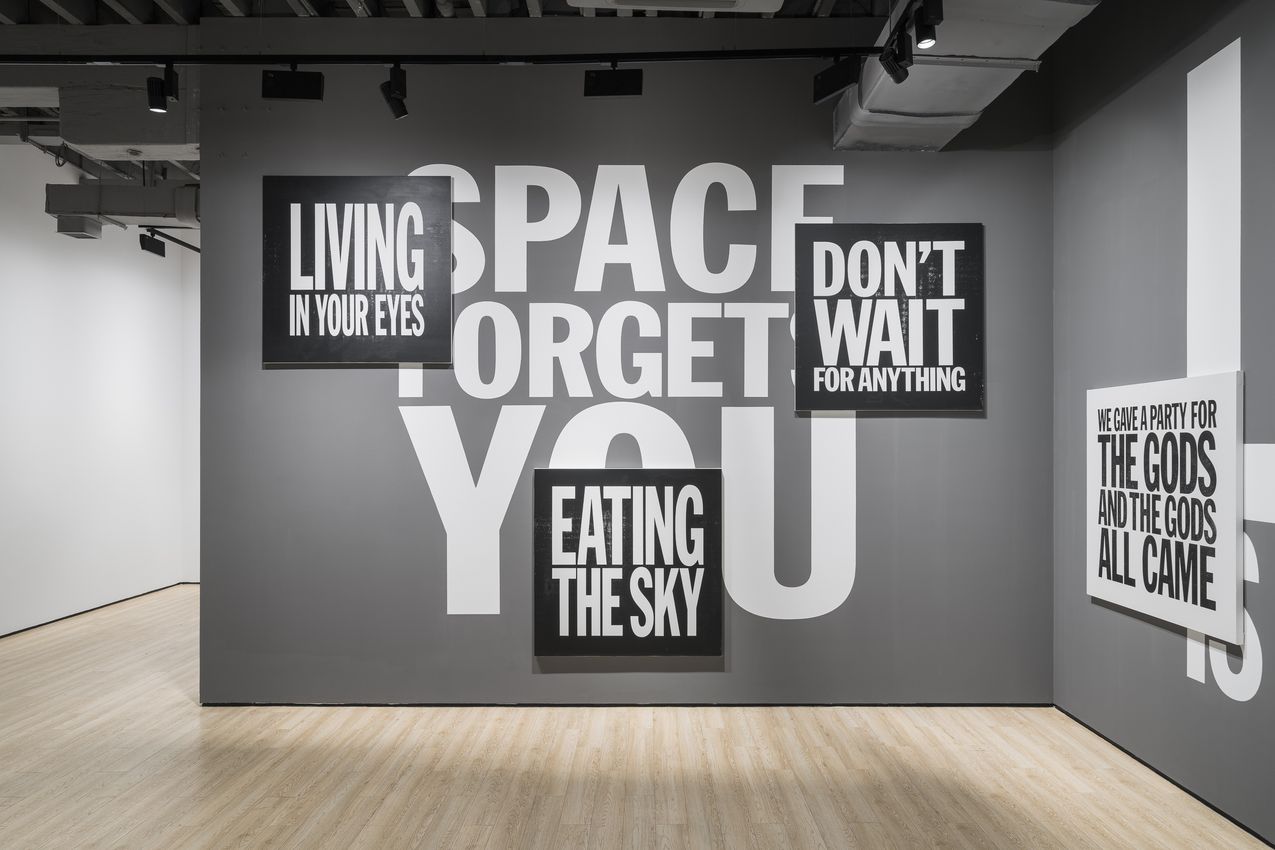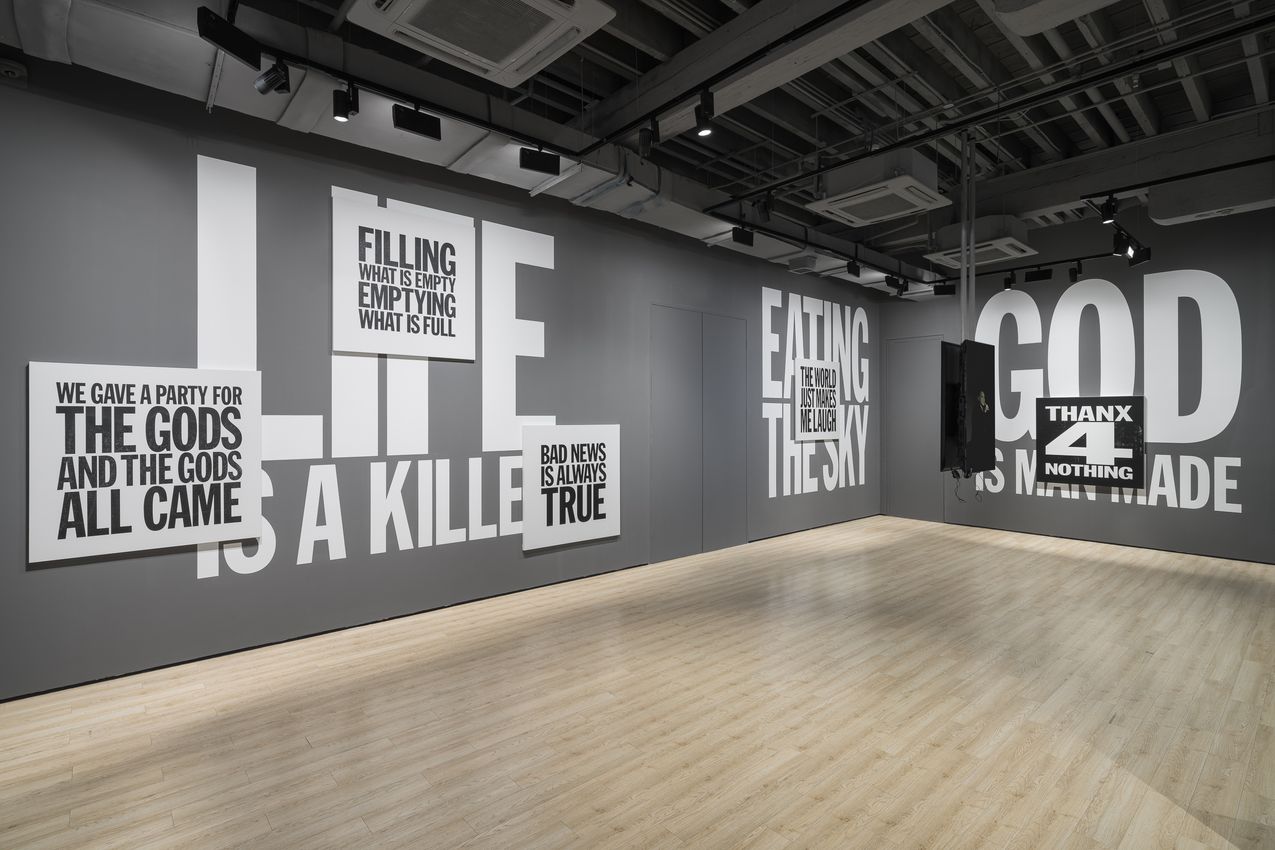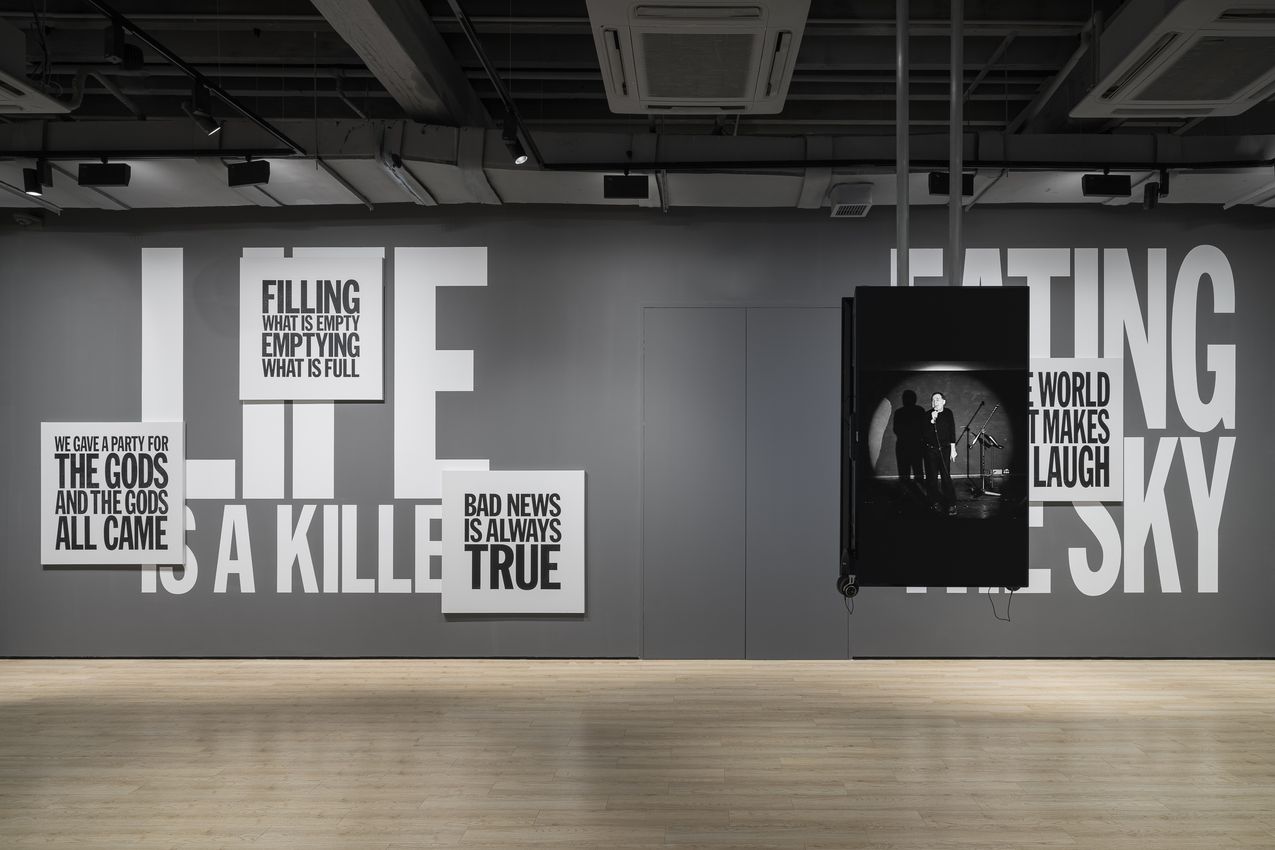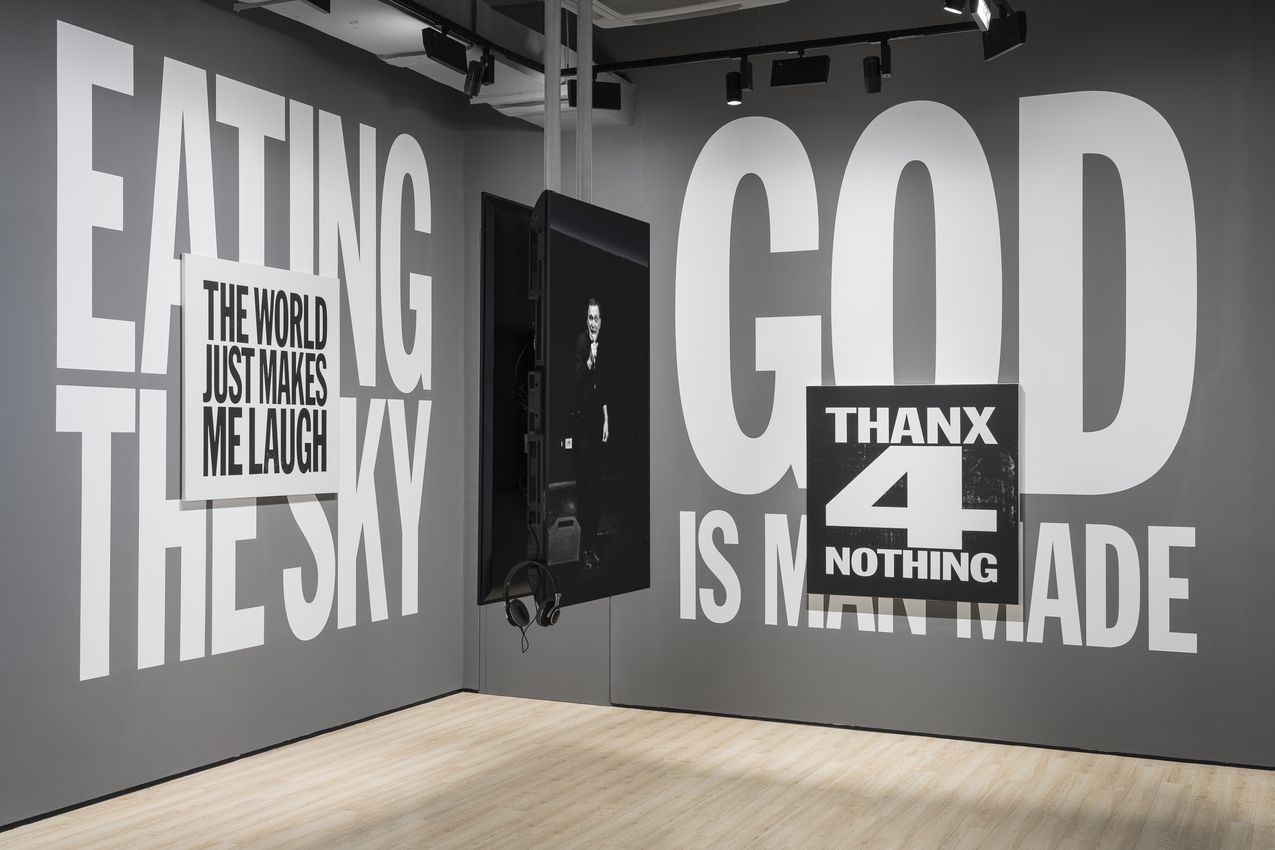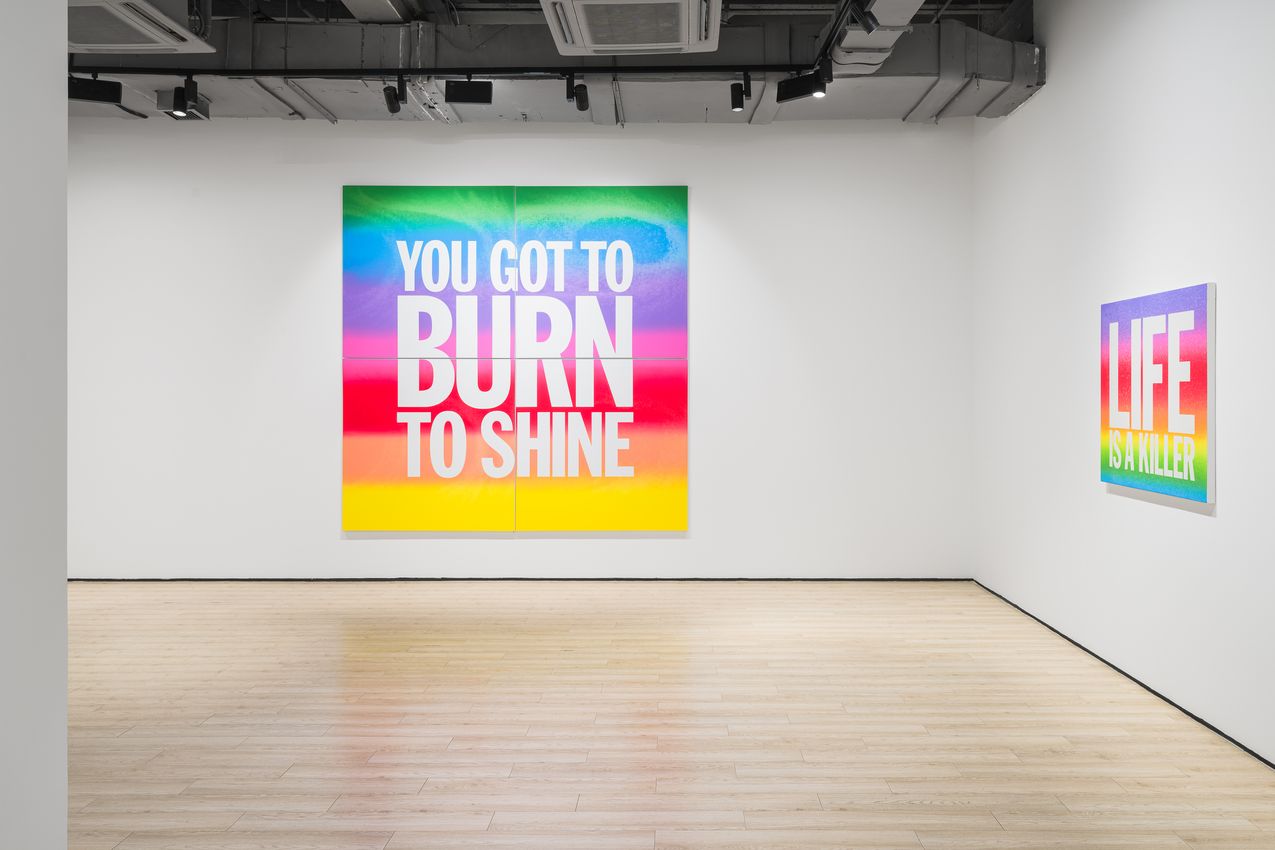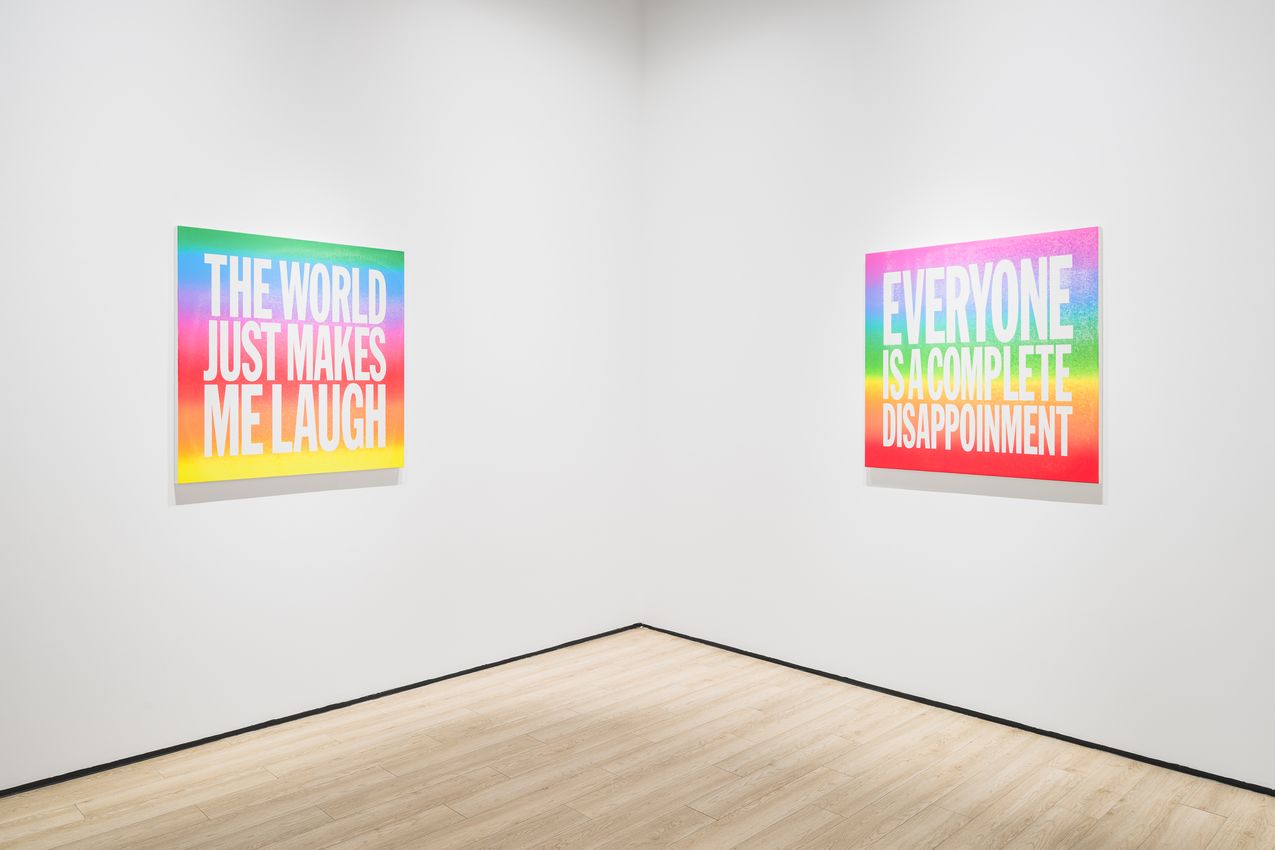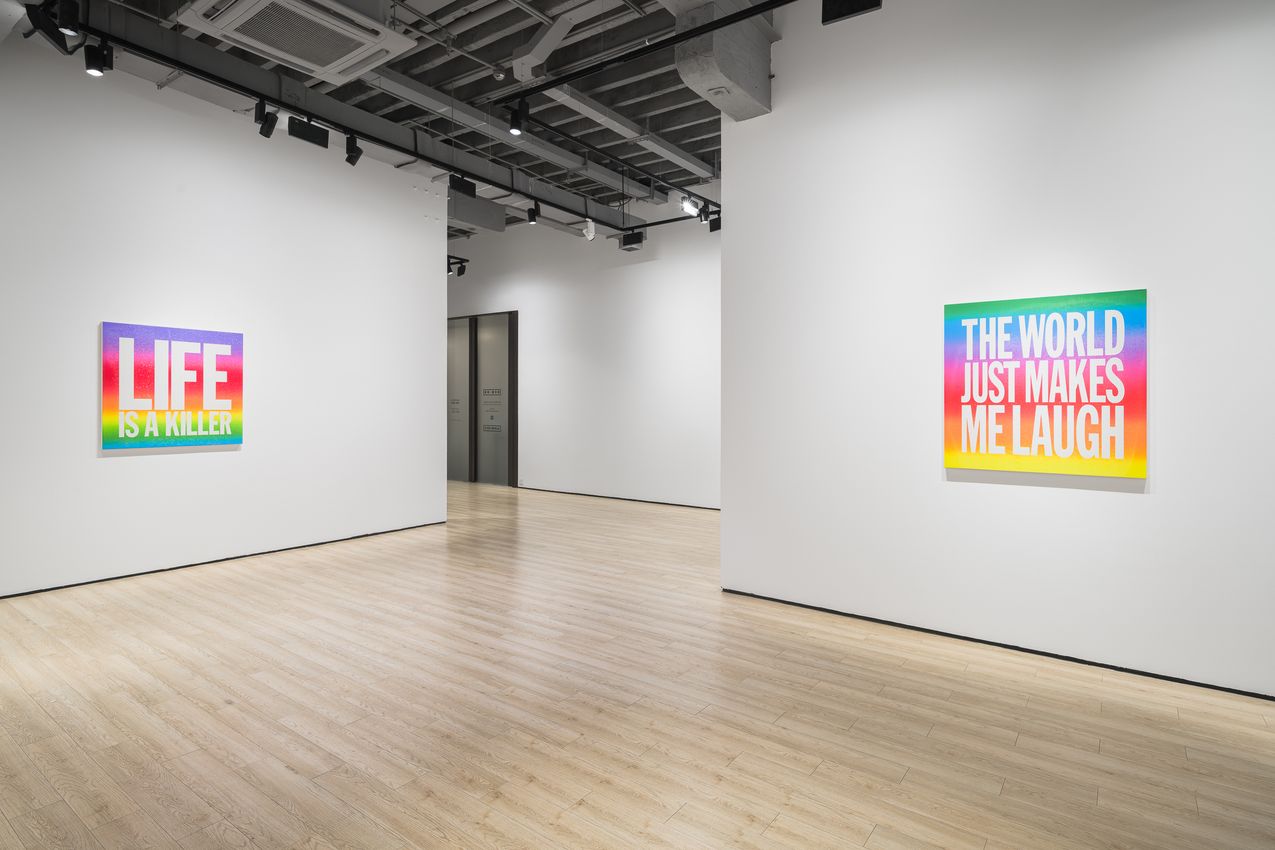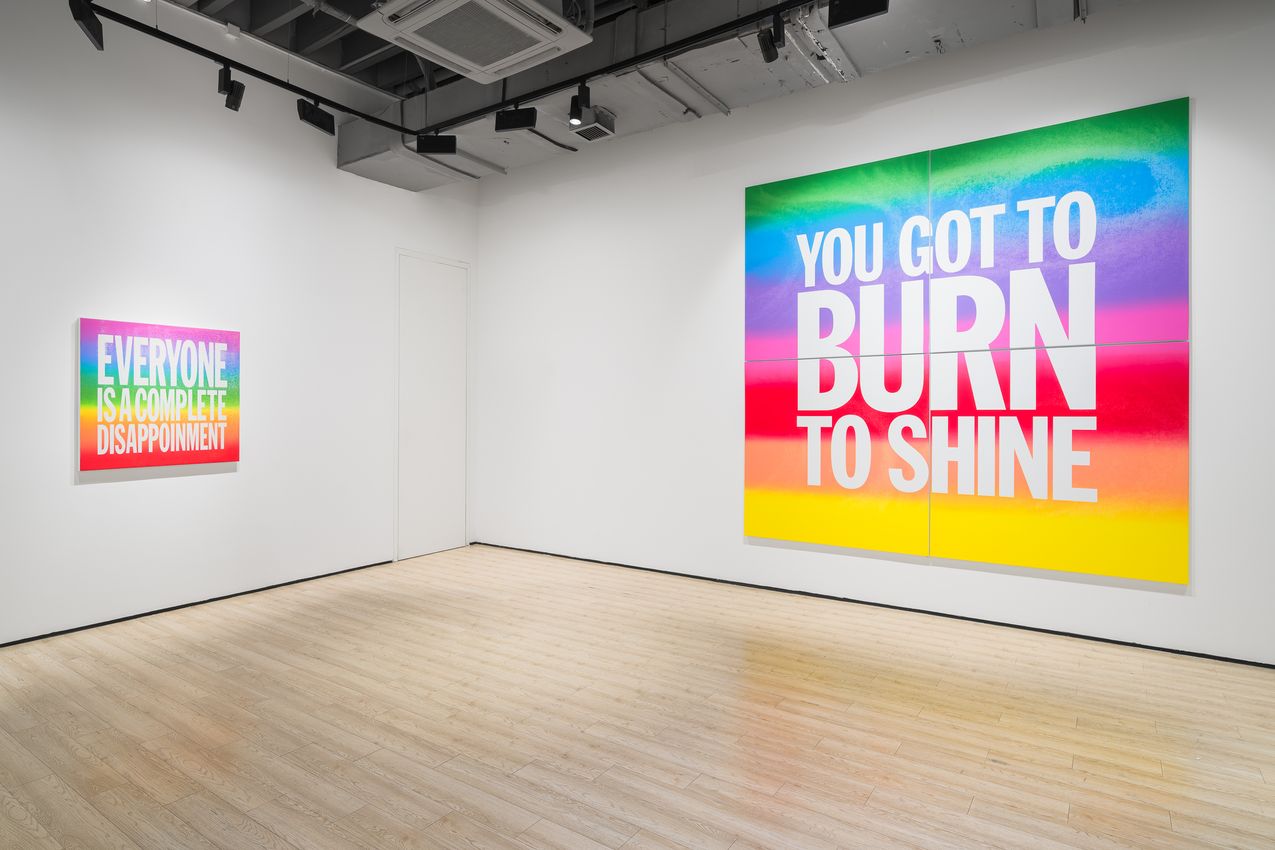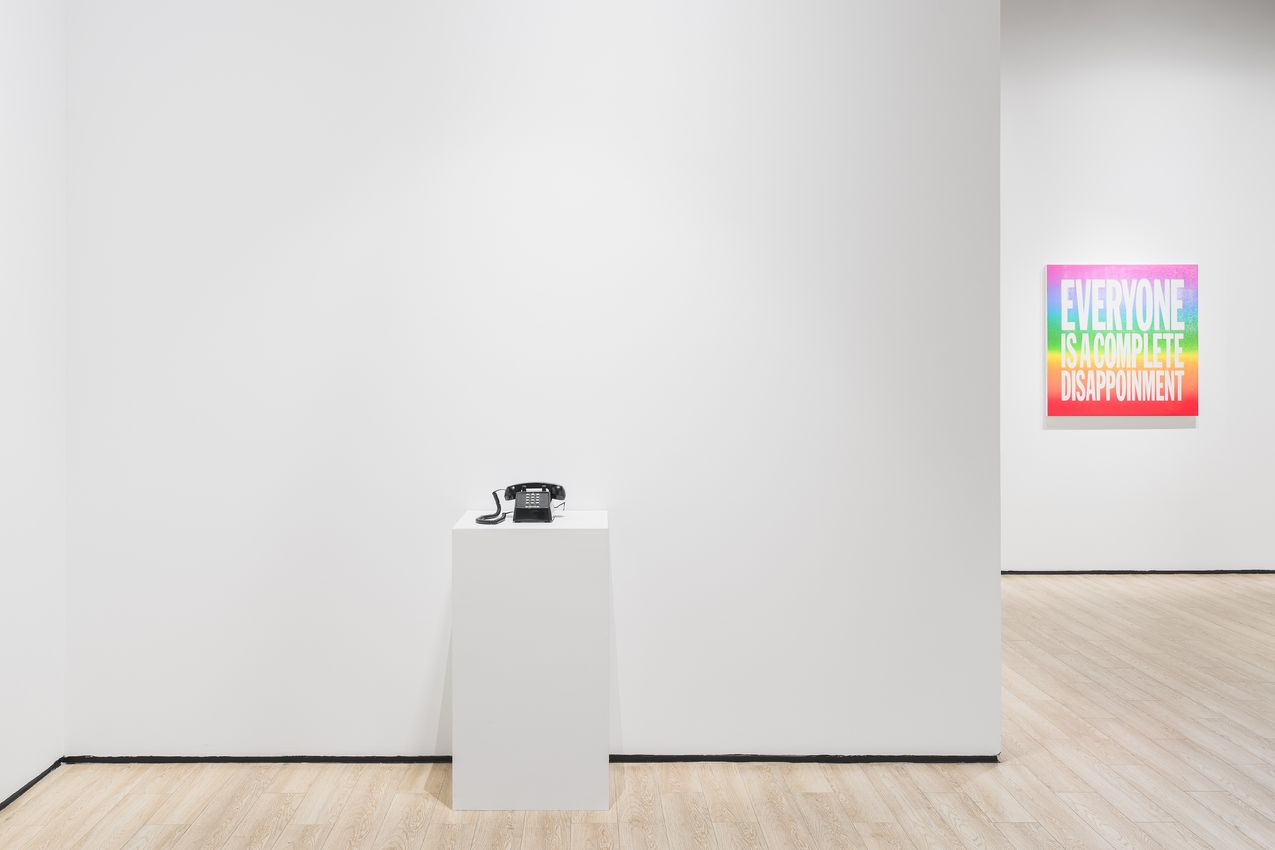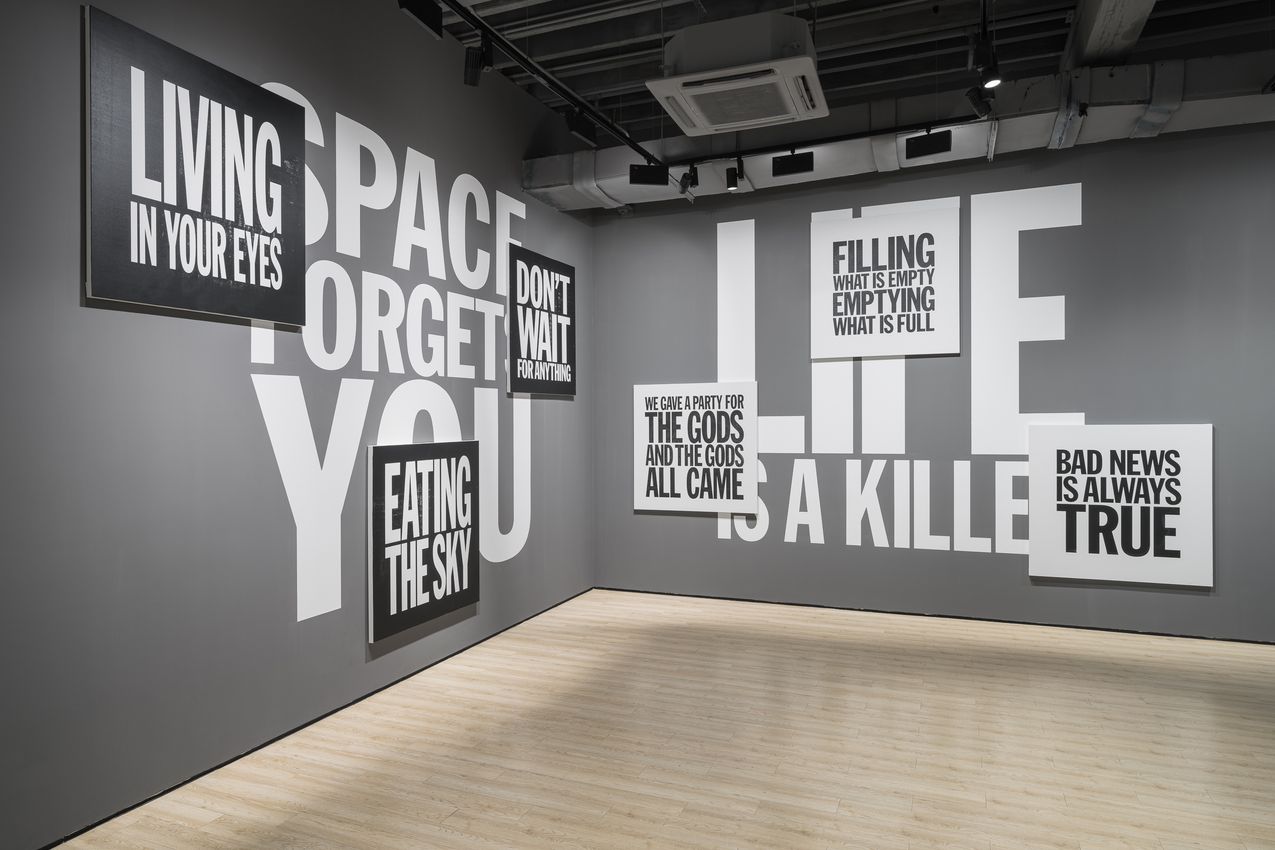
Almine Rech Shanghai is pleased to announce John Giorno’s sixth soloexhibition with the gallery, on view from August 25 to October 14, 2023.
‘I am a poet’ and ‘I am a Buddhist’ are the two ways John Giorno mostoften introduces himself. These two identities are central to ourunderstanding of the artist. However, as a Zen monk once said, ‘How can weappreciate the beauty of the moon when we are in it?’ It would be futile to lookdirectly for traces of Buddhism in Giorno’s artworks. We shall take a detour toappreciate his art.
From the 1950s onwards, North America began to receive influence fromBuddhist preachers led by D.T. Suzuki, Chögyam Trungpa, among others. Some of themost prominent artists, poets, and scholars of the era, including Giorno, integratedBuddhism into their vision in one way or another. However, besides Giorno, very fewlived their entire lives in a way almost as ‘Upāsaka’—the follower of the Buddha. Theartist’s bond with Buddhism began to germinate during his undergraduate years atColumbia University, and he did not limit his interest in this religion to an innerconversation or spiritual solace within himself.
In 1975, Giorno visited India for the fifth time. It was during this trip thathe managed to invite his guru, Dudjom Rinpoche, to visit the United States.Giorno raised funds to help Rinpoche establish the Yeshe Dorje temple in GreenwichVillage, New York City, which was eventually founded in 1976. Giorno devoted allhis energy and time to this temple in the first few years. As he recalled thismoment of history, he said:’ I had accomplished everything I wanted to do.’ In 1982, Giorno transformed his house into a Tantric meditation hall, and used itto hold a grand and solemn Fire Puja every New Year’s Day for more than 30years before his death.
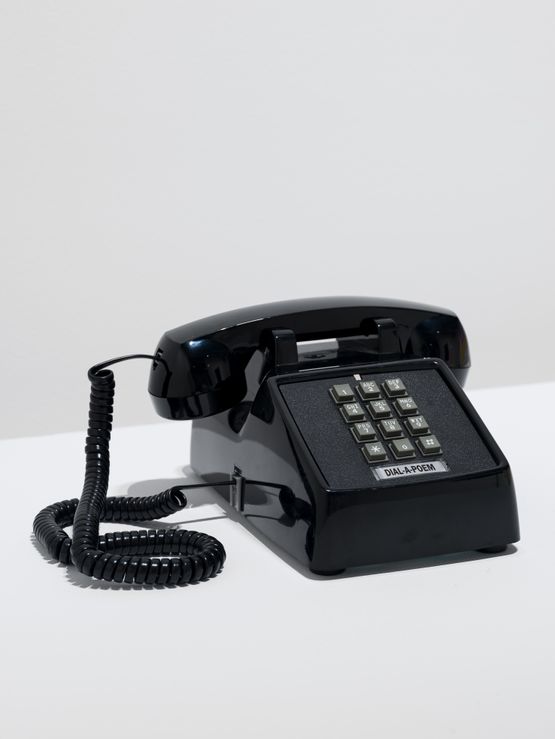
It seems that Giorno’s life and work is all about sharing the treasures he foundwith as many people as possible without differentiation. Just as the concept of ‘Dāna’ is atthe heart of Buddhism, which includes the cherishing of the Three Jewels andunconditional love for others. This is the most fascinating link that connects Buddhism andGiorno’s work. As early as the mid-1960s, he set off to work on the broader disseminationof poetry through the renewal of this genre. Giorno printed stanzas from poetry in anewspaper headline style on flyers, T-shirts, and other everyday objects. In the late 1980s, the artist began experimenting with screen printing on canvas, as we see today on thegallery walls. The idea of democratizing the distribution of poetry pinnacled in the work ‘Dial a Poem.’ Poetry is a form of artistic expression with a shade of elitism, and the artistuses daily action to subtly connect it with everyone. At the same time, the artist hasinadvertently created a kind of ‘blind box’ marketing strategy that we now know—everyone wants to hear their favorite poem. Giorno once said of this work, ‘I discoveredthat creating a desire that is unfulfillable is the ultimate success.’ Human desires is alsoan implicit part of this work.
The genre of poetry, which has a long history in both East and West, undergoescomplex and fascinating transformations in the artist’s writing, utterance, body, and visualartworks. In general, Giorno’s text-based content is complex in its origins, coming from popculture, colloquialisms, advertisements, and even Buddhist stories. Among them, I thinkthe most relatable one to the Chinese audience is the phrase ‘Prefer crying in a limo tolaughing on a bus,’ which has a striking structural and content similitude with the phrase ‘Prefer crying in a BMW to laugh on a bike,’ which has been widely circulated in China sinceten years ago. However, unlike the controversies that the second phrase had beensubjected to, in Giorno’s work, we hardly feel any judgment from the artist himself. Theopposing elements of vulgarity and elegance, the masses and the elite, are all dissolved inhis works. All that remains is the dialogue we have with ourselves when we read thesewords. In a forewords to one of Giorno’s books, William Burroughs writes: ‘John Giornoraises questions to an almost unbearable pitch, to a scream of surprised recognition.Litanies from the underworld of the mind reverberate in your head and ventriloquize yourown thoughts.’
Giorno has no intention of edifying others but rather committinghimself to providing an opportunity to new experiences for all withoutdistinction. Giorno made poetry just a phone call away, and the many TibetanBuddhist institutions he has supported are still flourishing on the ManhattanIsland today.
Press release courtesy Almine Rech. Text: Neil Zhang, curator and researcher in Buddhism.
The work of John Giorno embraces two disciplines: poetry and art, which have been a source of mutual fascination and inspiration for the artist. Harbouring a close kinship with William Burroughs, Robert Rauschenberg, and Andy Warhol, for whom he starred in the famous film, Slee (1963), Giorno is recognised today as one of the most influential poets of his generation. He is also considered the inventor of Performance Poetry, and of Dial-A-Poem–a free telephone line to connect listeners to recordings of original works of poetry. Giorno’s words transform to images in his Poem Paintings which are short excerpts from his writings, phrases that have continually haunted him. At the crossroads between poetry, visual arts, music and performance, Giorno’s work directs itself toward a broad public, redefining the capabilities of poetry and linguistic form.


Almine Rech opened its doors on April 1st, 1997 in the 13th arrondissement in Paris. The gallery was founded on an axis of California Minimal, Perceptual art and Conceptual art, representing artists such as James Turrell, John McCracken and Joseph Kosuth.

A respected voice in contemporary art discourse.
Focusing on ambitious storytelling and insightful art-world commentary. Ocula Magazine publishes in-depth interviews, critical essays and timely analysis on the artists, exhibitions and ideas driving the global art world.
Learn more about Ocula Magazine
Showcasing the best of the art world.
Ocula partners with galleries from around the world to highlight their artists, artworks and exhibitions. Gallery membership is by application and invitation, with each member vetted by an independent panel.
Learn more about Ocula Membership

Specialises in the sale of major artworks.
Led by a team with deep ties to the world’s leading auction houses, galleries and collectors. Ocula’s advisory team offers bespoke services to high-net-worth clients from around the world who are looking to acquire the best of contemporary and modern art.
Learn more about our team and services