Press Release
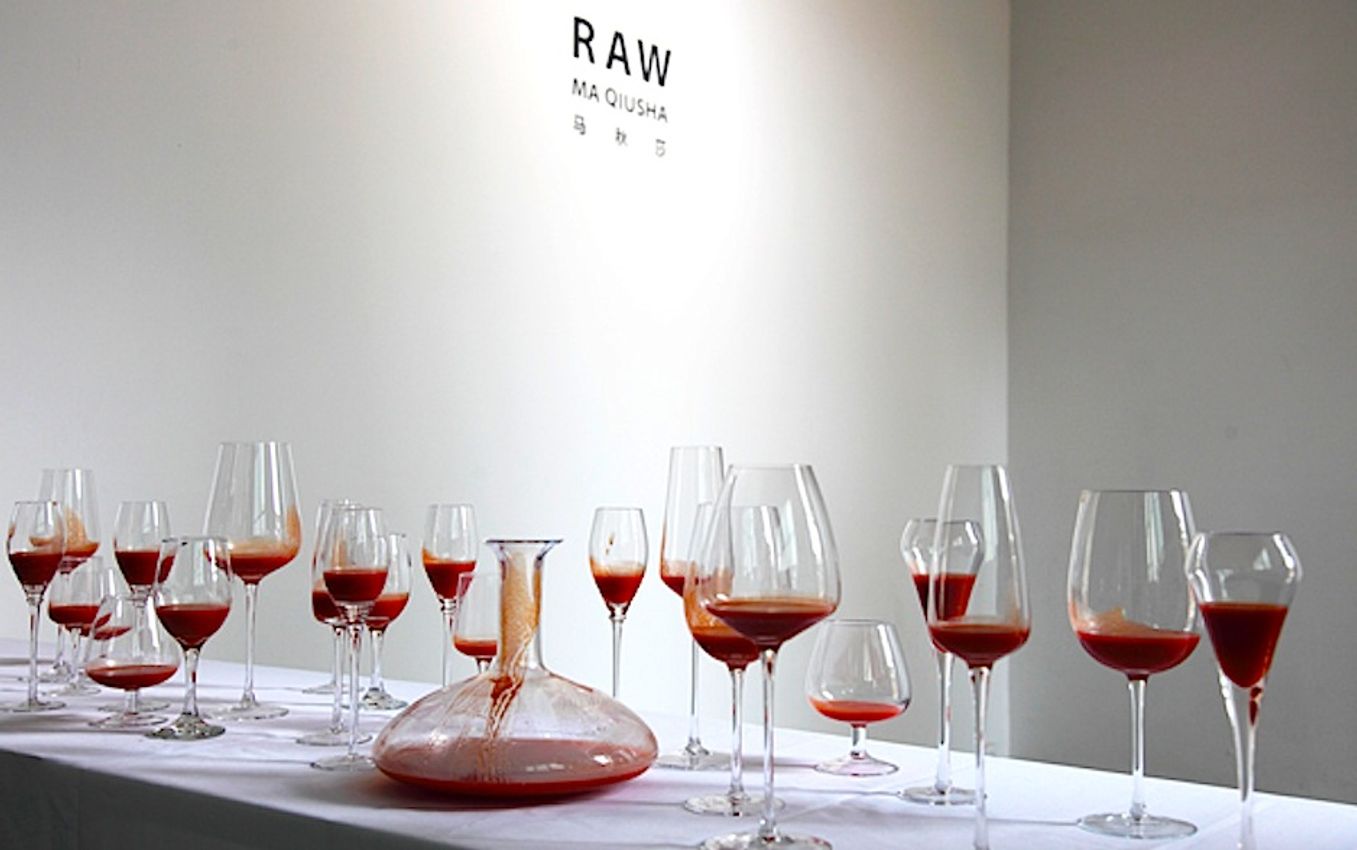
Beijing Commune is pleased to announce the opening of Ma Qiusha’s third solo show Raw at the gallery. The show will present two video works and a photo series she has produced lately.

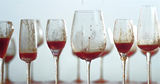
The core meaning of the word ‘raw’ is ‘uncooked’ or ‘being in its natural state’, ‘not processed or puried’. It is also a commonly used technical term for an image format: raw les are named so because they are not yet processed and therefore are not ready to be printed or edited. It is the initial state of a digital image before any further manipulation. For Ma Qiusha, an artist who has been working largely with video and photography, processing images is naturally part of her daily work. Her reactions on such adaptations or manipulations of the ‘raw’ materials, in both literal and metaphorical sense, have developed into the three inter-connected pieces for the new show Raw. The two projected videos take up the major walls of the dark space of the gallery. Rainbow, the one shot with high-denition camera, present to the viewers a dream-like scene: three teenage girls in the dress for gure skating are turning around, hand in hand, to mash the tomatoes under their skating shoes. The acnes on the young faces, the tiny meshes on the stockings over the vigorous legs, the splashing crimson juice of the fruit, the glowing edges of the glass vessels, and the blade of the skating shoes, all these details seem to be amplied or more vivid through the HD camera. On the opposite wall is Star, which shows sparkling spots ashing sporadically on an unidentiable dark background. The video was shot in the bushes near the artist’s home on a summer night. The ‘stars’ are in fact the burning moment of the bodies of insects killed by an electronic fly-swatter wielded around in the bushes. Shot in the natural condition without any articial light, the scene may easily mislead the viewers particularly with its beautiful title. The discrimination of the technical method of the two videos does not change the fact that both works are highly deceptive: Rainbow is a fantasy teemed with intensive details that look very ‘true’ but are all, in fact, meticulously edited by the artist, while Star, which involves little post-production, presents a ‘romanticised’ killing moment shot an odinary video camera.

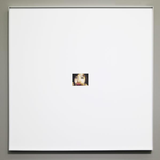
Dan is the title for the photographs in the lightened neighboring space. It is also the name of a girl who learnt painting with Ma Qiusha when she was a teenager. The images are taken from the albums of personal photos shared by Dan in her Qzone, Weibo (both are popular SNS used by the young people in China) or from her mobile phone, dated from 2005 to 2013, the years that witnessed her transformation from a schoolgirl to an artist herself, little by little. The original sizes of these images are very small as they were only everyday snapshots and are never supposed to be exhibited. Ma Qiusha printed the images on a set of ‘standardised’ 100 x 100 cm photo paper, on which vast blank is left around the small image in the center. The viewers are almost forced to go closer to the work to look at these low-denition snapshots via which Dan establishes her self-image, aesthetically, in the evolving social life of the girl.

Meanwhile, echoing the videos, the manipulation of the viewers’ perception of this process is realised via the artist’s paradoxical use of the very ‘raw’ (in the sense of ‘unprocessed’) images and the ruthless, standardised void she adds to these images.

Ma Qiusha was born in in Beijing 1982, and now works and lives in Beijing. She received her BA in art from China’s Central Academy of Fine Arts, Beijing, in 2005 and MFA from Alfred University, New York, in 2008. She has been widely exhibited, including shows at National Museum of China, Minsheng Art Museum, Ullens Center for Contemporary Art, ZKM, Contemporary Arts Museum Houston, Groninger Museum, Tate Modern Museum, and Portland Institute for Contemporary Art, etc.
About the Artist

Ma Qiusha’s work is often explicitly biographical and hyper-specific in its context. Her diversified art practice encompasses video, photography, painting and installation. Linking interestingly and cautiously with the conflicts and dilemmas that are encountered in daily experience, her works reveal strange imagination concealed beneath the surface of the mundane. These subtle experiences of daily life conveyed by the body, or by parts of the body, arise repeatedly in several of her works, mostly expressed as metaphorical postures of a more ambiguous nature. Another overarching theme in Ma Qiusha’s works is the intergenerational gaps, as she often demonstrates particular flair for injecting her art with subtle but unmistakable signs and symbols of the sociocultural transformations during the several recent high-speed decades that are deeply complex in their mining of personal and collective memories, offering audiences insights into lived, human experiences. In one sense, all of her work is imagistic, the often-used “window”, “cars” and “road” employed as rhetorical vehicles in various scenes to present the various perspectives for viewing conceived by the artist. Bringing together relationships, objects, structures and stories as a way to subvert dominant readings of their histories, her works stand out as increasingly crucial documents of the country’s tensions and its political and social shifts.

View Artist Profile

Also Exhibiting at Beijing Commune

About the Gallery

Founded in 2004, Beijing Commune is now located in 798 Art Factory, Beijing. Its initial programs were mainly group shows exploring various currents in contemporary art while now it primarily focuses on solo shows to carry on the in-depth research.

View Gallery Profile
Address
798 Art District, No. 4 Jiuxianqiao Road
Chaoyang District
Beijing
China
Opening Hours
Tuesday – Saturday
10am – 6pm
(1)
Beijing Beijing Commune, 798 Art District, No. 4 Jiuxianqiao Road
Beijing Commune
798 Art District, No. 4 Jiuxianqiao Road, Chaoyang District, Beijing, China

Opening hours
Tuesday – Saturday
10am – 6pm
The art world in focus