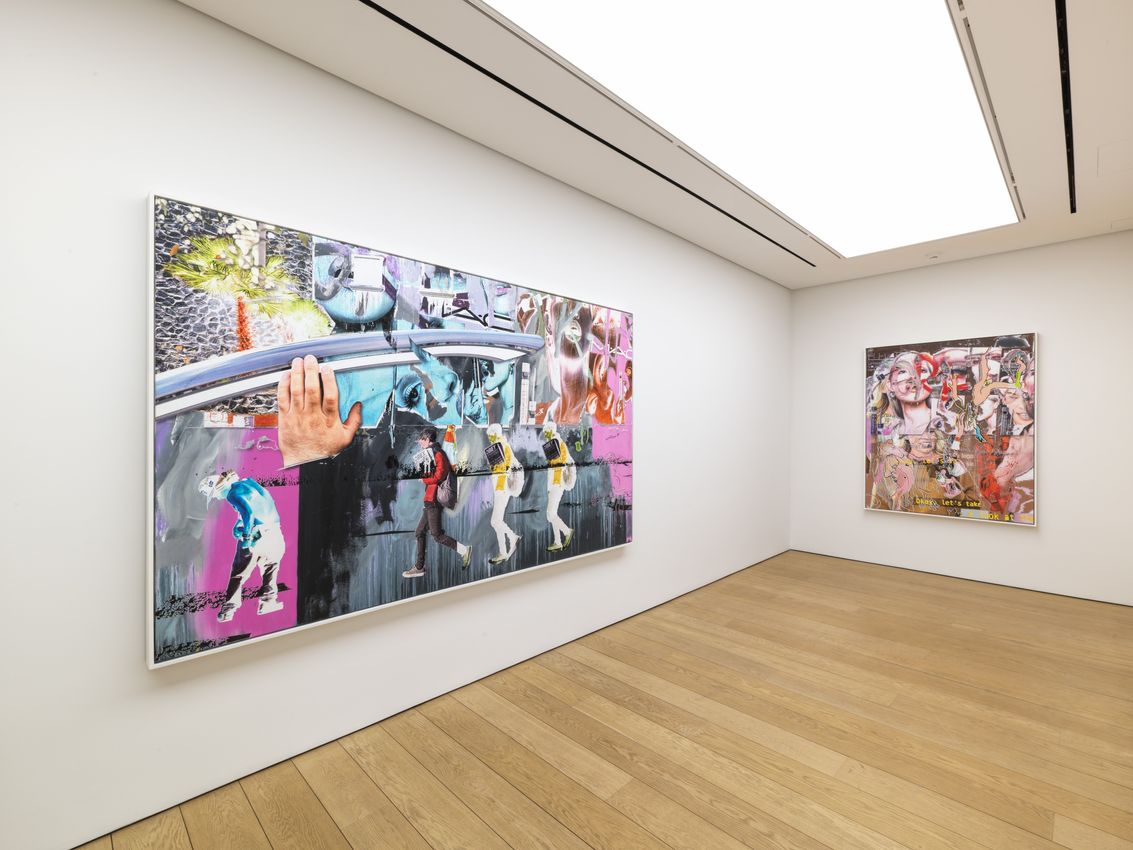
Now there’s painting on one side and photography—that is, the picture as such—on the other. Photography has almost no reality; it is almost 100 percent picture. And painting always has reality: you can touch the paint; it has presence; but it always yields a picture. . . . I once took some small photographs and then smeared them with paint. That partly resolved the problem, and it’s really good—better than anything I could ever say on the subject.
—Gerhard Richter
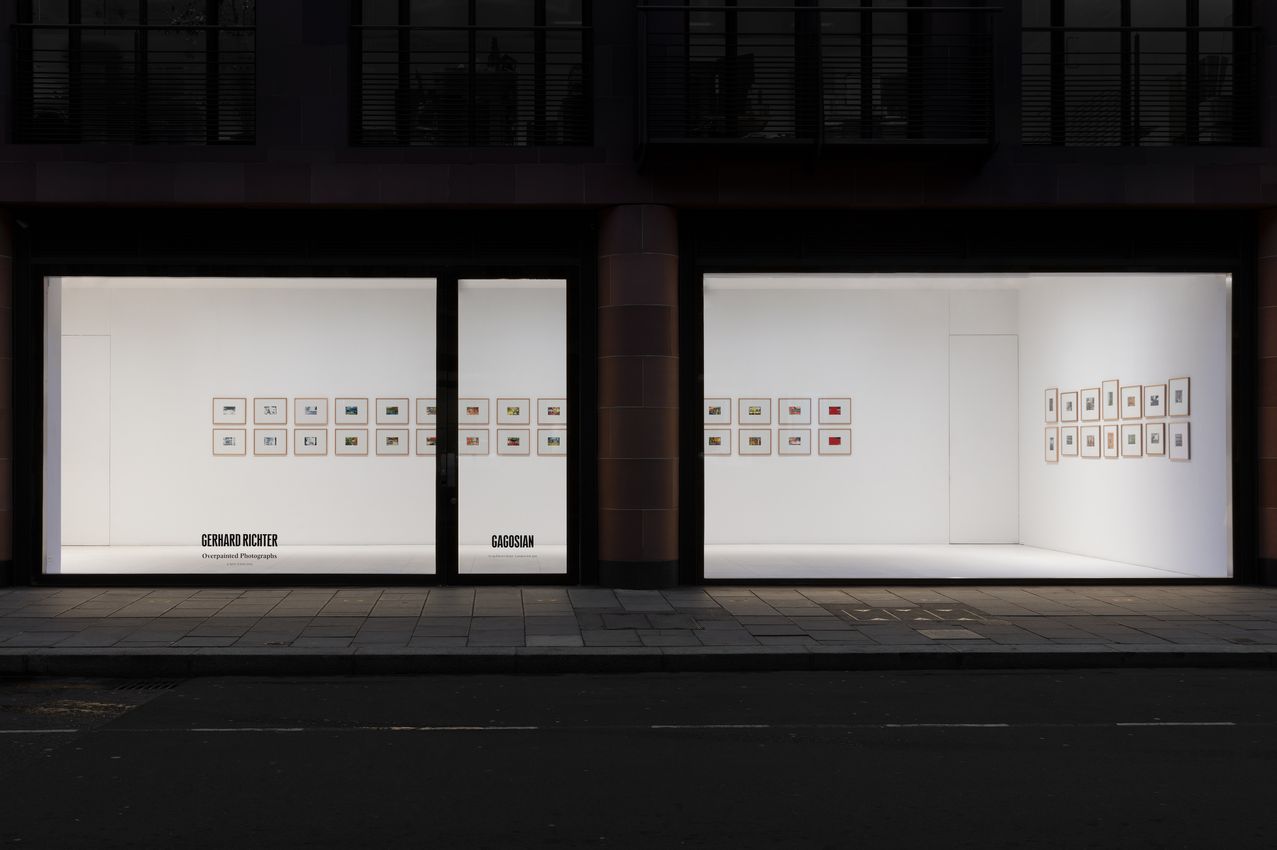
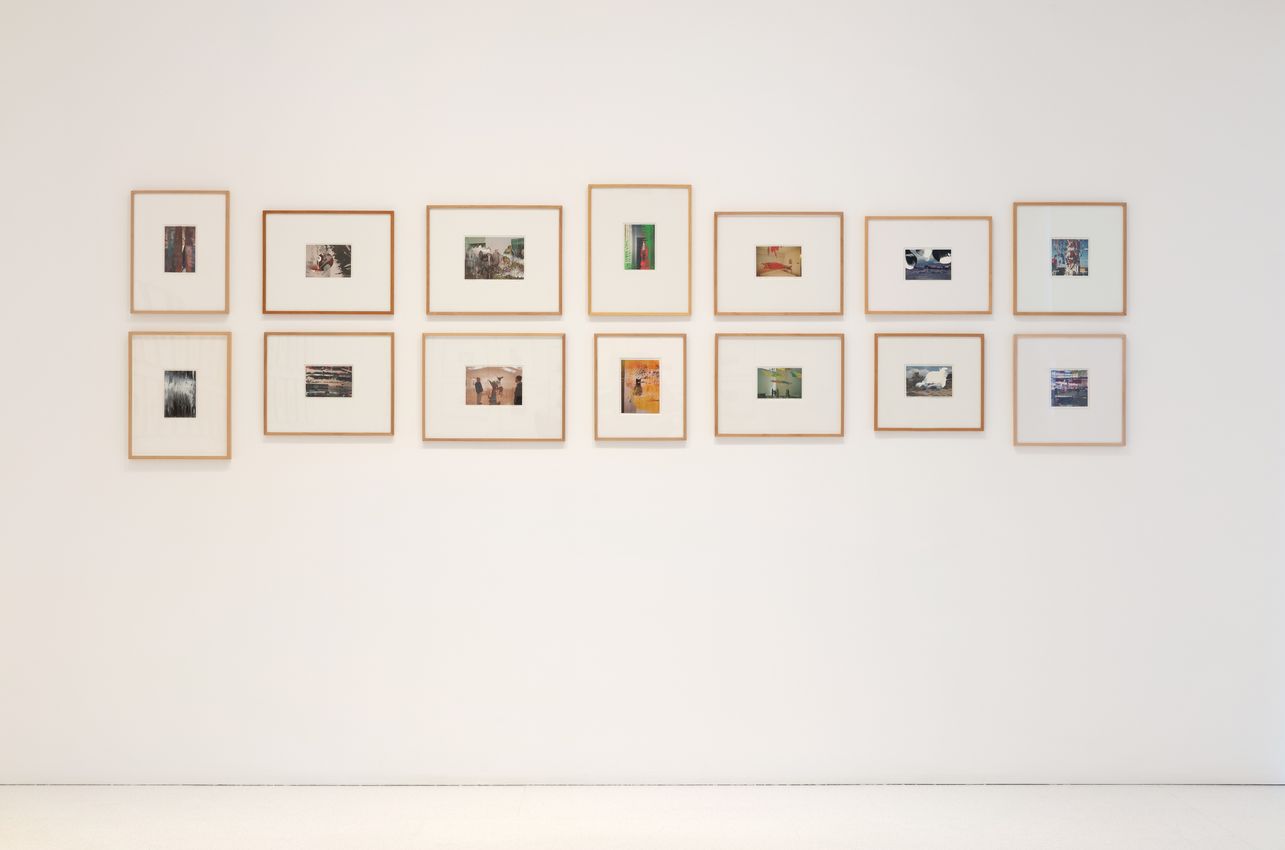
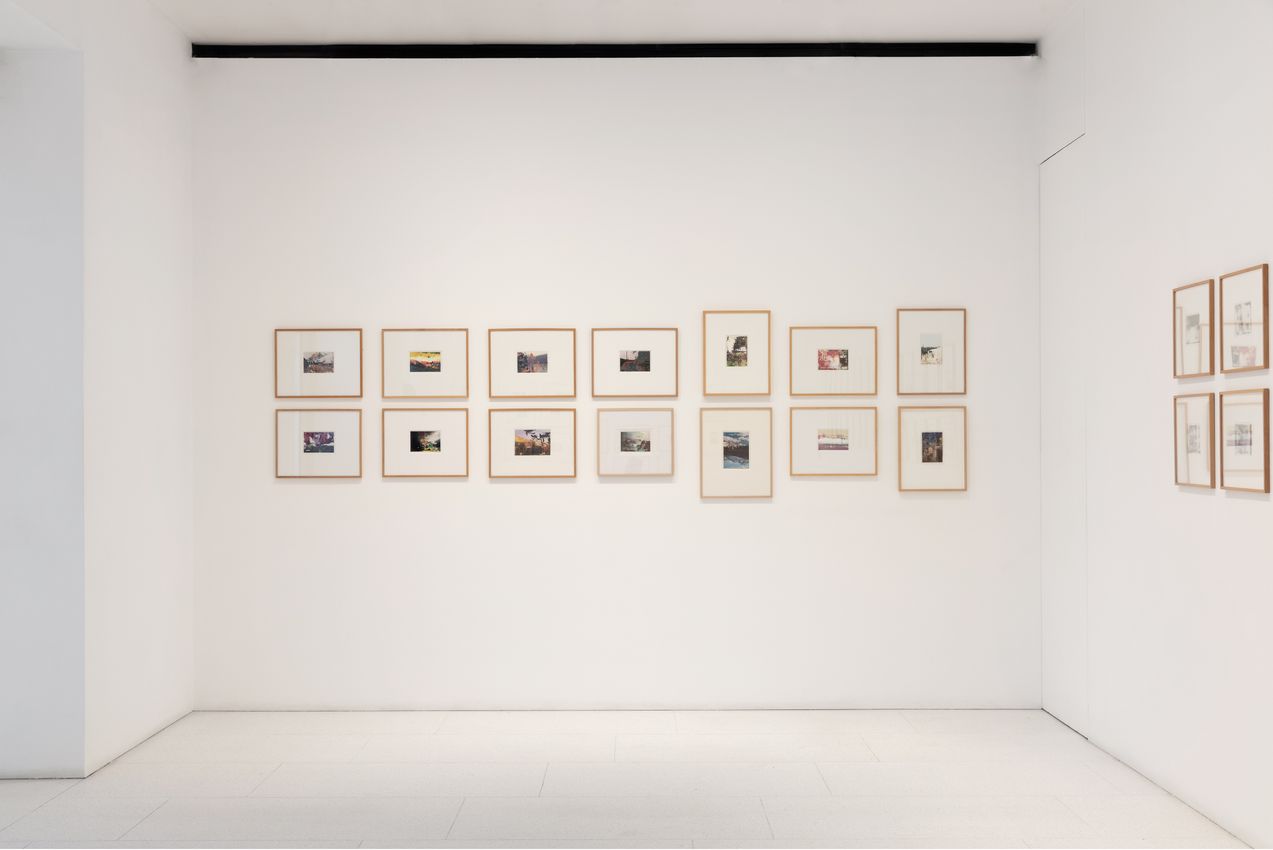
Gagosian is pleased to present overpainted photographs by Gerhard Richter.
Throughout his long and eminent career, Richter has expanded the potential of image making through a dialogue between old and new media. He began painting over photographs in the mid-1980s, at the very moment when New York Neo-Conceptual artists were engaging with questions of image appropriation and reproduction, and the German Neo-Expressionists were focusing rather on the sheer emotionality of paint. Richter has continued to bridge these two lines of inquiry into the present day, probing their tensions as photographic technologies become increasingly pervasive. Unlike his photo paintings of the 1960s (in which he translated found and personal photographs into arrestingly lifelike, out-of-focus paintings), the works in this exhibition retain their status as printed photographs—made with light rather than the artist’s hand—yet they are complicated by the application of paint, which merges photographic reproduction with abstract materiality.
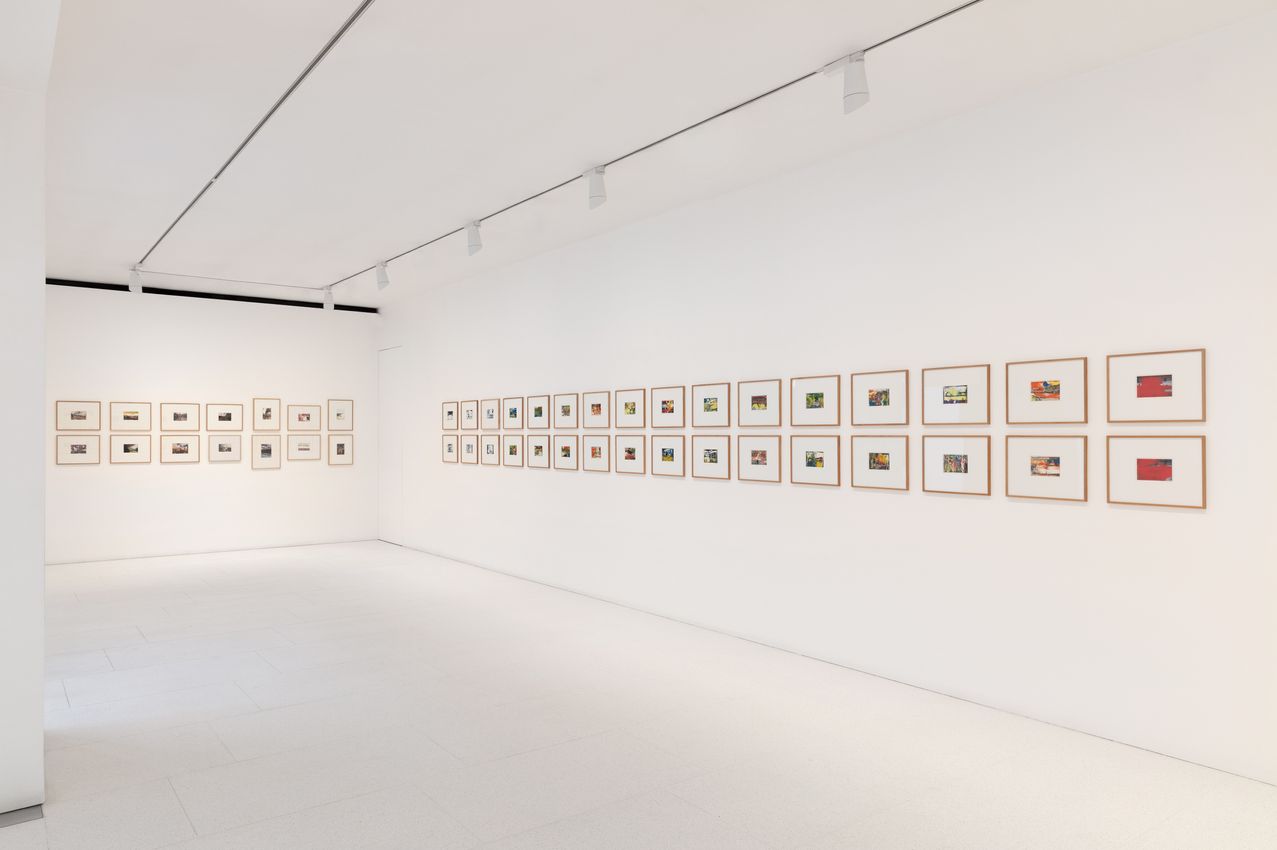
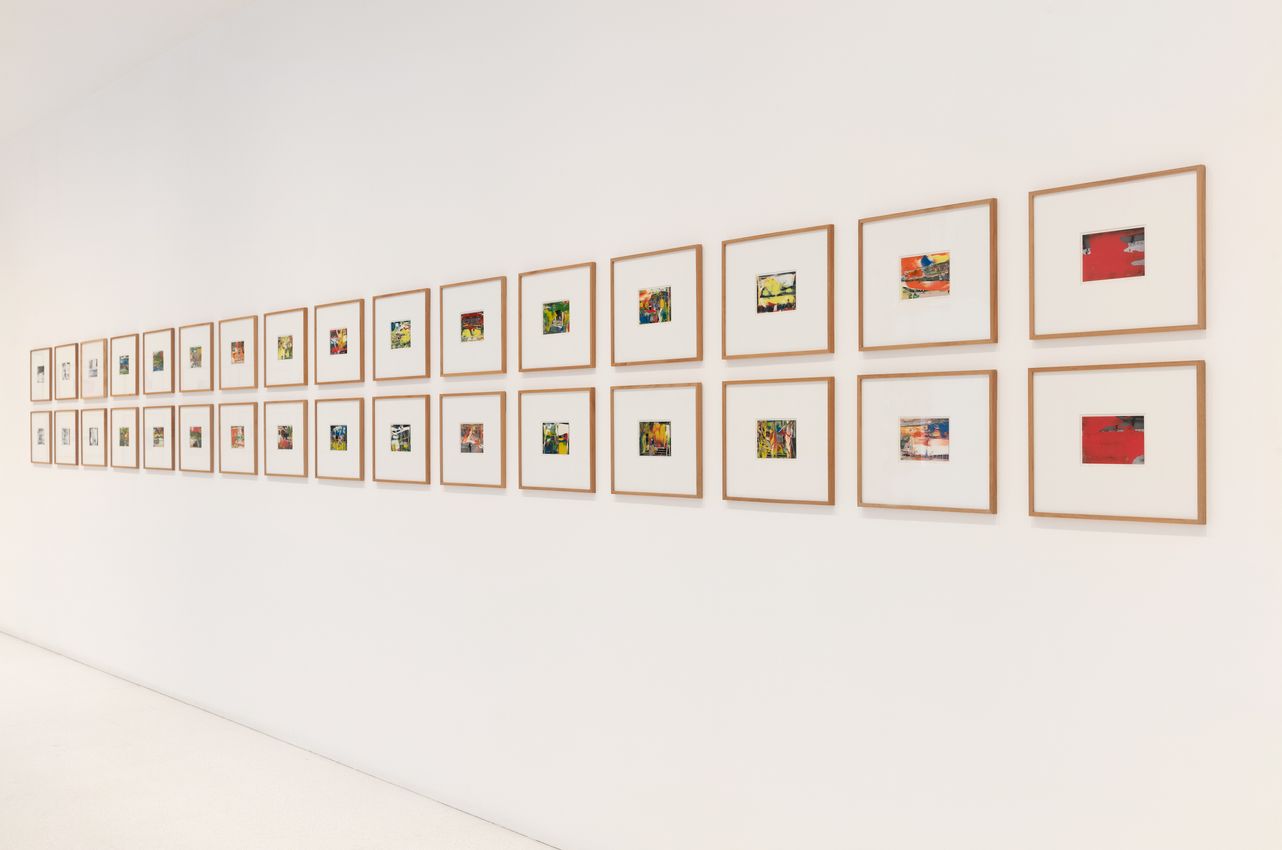
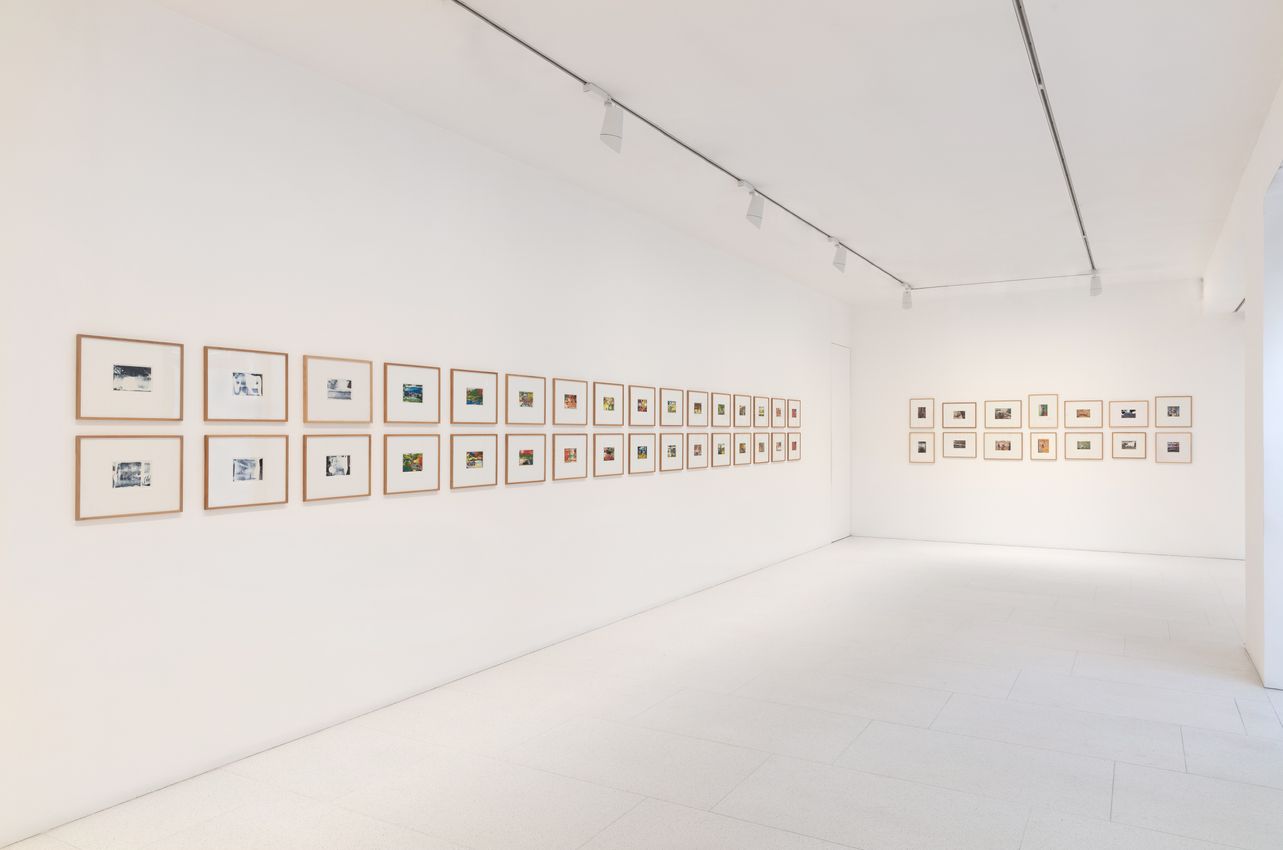
Included in the exhibition are works from Museum Visit (2011), Richter’s largest series of overpainted photographs, comprising over two hundred individual images. Taken during a visit to Tate Modern in London during the run-up to Panorama, his retrospective at the museum in 2011–2012, the photographs capture the flux of visitors throughout a single day in a handful of specific locations. Richter narrates the increasing flow of visitors with different paint colours, obscuring areas with the squeegees he uses for his distinctive smeared abstractions. Screens of white communicate when there are few people in the galleries, and bright and bold colours indicate when the crowds and subsequent activity grow.
In other series, such as ‘Urban Landscapes’ (1989–2016), ‘Rural Landscapes’ (1988–2016), and ‘Firenze’ (2000), Richter likewise obscures and reveals specific details of natural vistas and city streets. The Firenze works comprise three photographs that Richter took in 1999 on the banks of the Arno River in Florence. Buildings, water, bridge, and sky are alternately covered and exposed, challenging the viewer to hone in on visual moments that might have otherwise escaped notice. Together, the overpainted photographs attest to the infinite variations in perception that exist from one person to another, and from one moment to the next—a reality that photography denies through its mechanical process, but one that Richter reintroduces with his applications of paint. Thus, in the overpainted photographs, two oppositional aspects of his process—a narrowing-in on the specific and an embrace of ambiguity—are united.
Gerhard Richter: Seascapes will open at the Guggenheim Bilbao, Spain, in May 2019.
Gerhard Richter is a renowned German painter and one of the most influential contemporary artists of the 20th and 21st centuries, celebrated for both his abstract paintings and photorealistic works. Over a career spanning more than six decades, Richter has explored how photography and painting borrow from, contradict, and reinvent each other, making him a key figure in postwar and contemporary art


A respected voice in contemporary art discourse.
Focusing on ambitious storytelling and insightful art-world commentary. Ocula Magazine publishes in-depth interviews, critical essays and timely analysis on the artists, exhibitions and ideas driving the global art world.
Learn more about Ocula Magazine
Showcasing the best of the art world.
Ocula partners with galleries from around the world to highlight their artists, artworks and exhibitions. Gallery membership is by application and invitation, with each member vetted by an independent panel.
Learn more about Ocula Membership

Specialises in the sale of major artworks.
Led by a team with deep ties to the world’s leading auction houses, galleries and collectors. Ocula’s advisory team offers bespoke services to high-net-worth clients from around the world who are looking to acquire the best of contemporary and modern art.
Learn more about our team and services