Draw in and on the entire surface of it, color it in part, and make it a kind of sea.
—Helen Frankenthaler
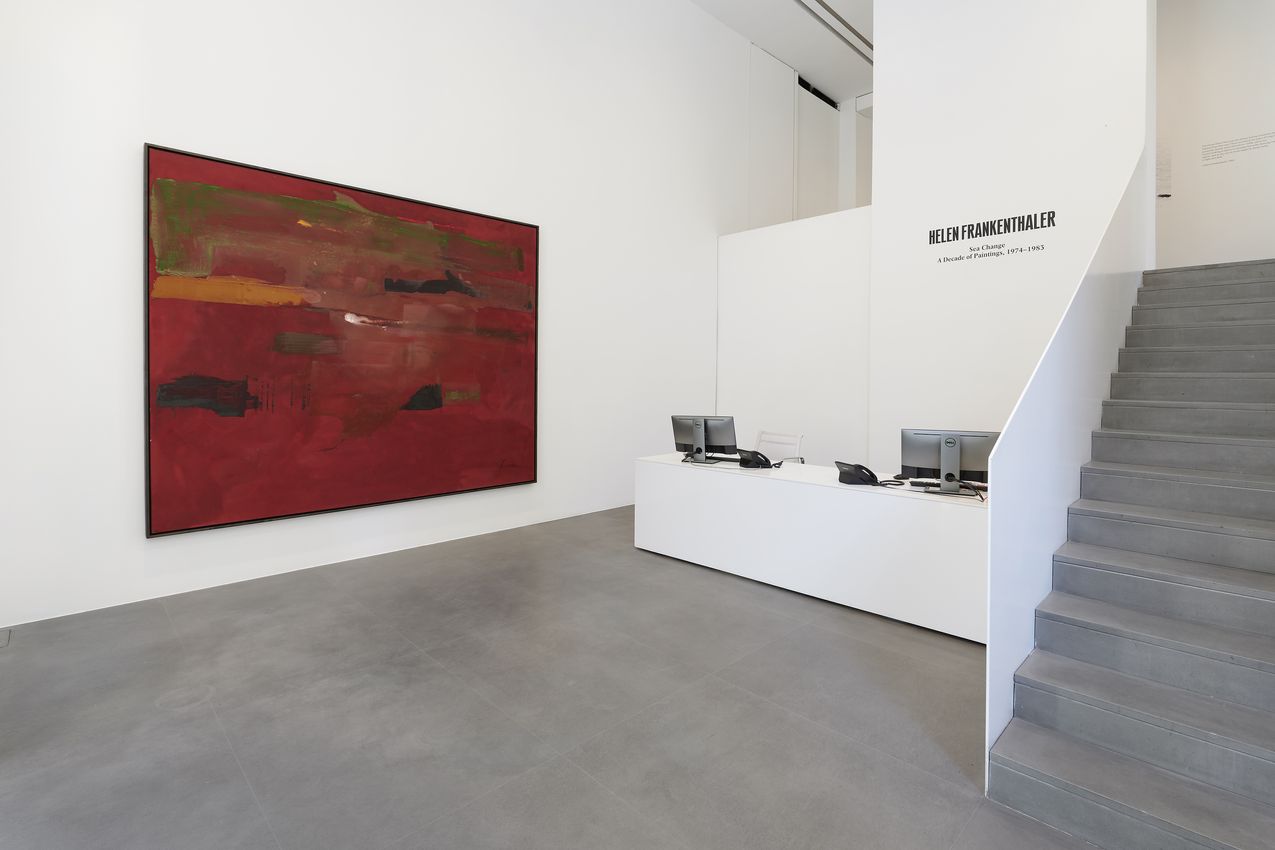
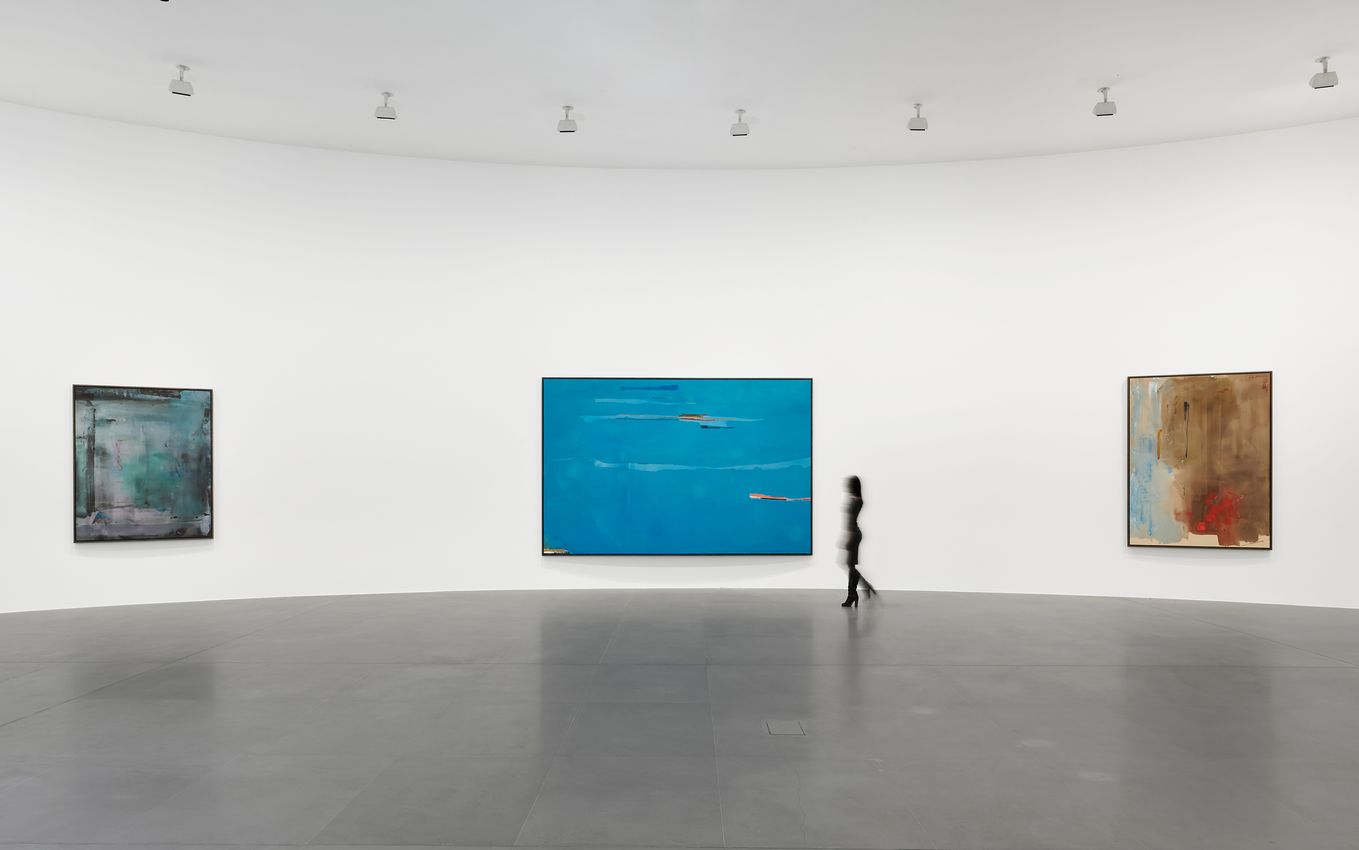
Gagosian is pleased to present an exhibition of paintings by Helen Frankenthaler in Rome, coinciding with an exhibition of her work at the Palazzo Grimani, Venice, on the occasion of the 58th Venice Biennale.
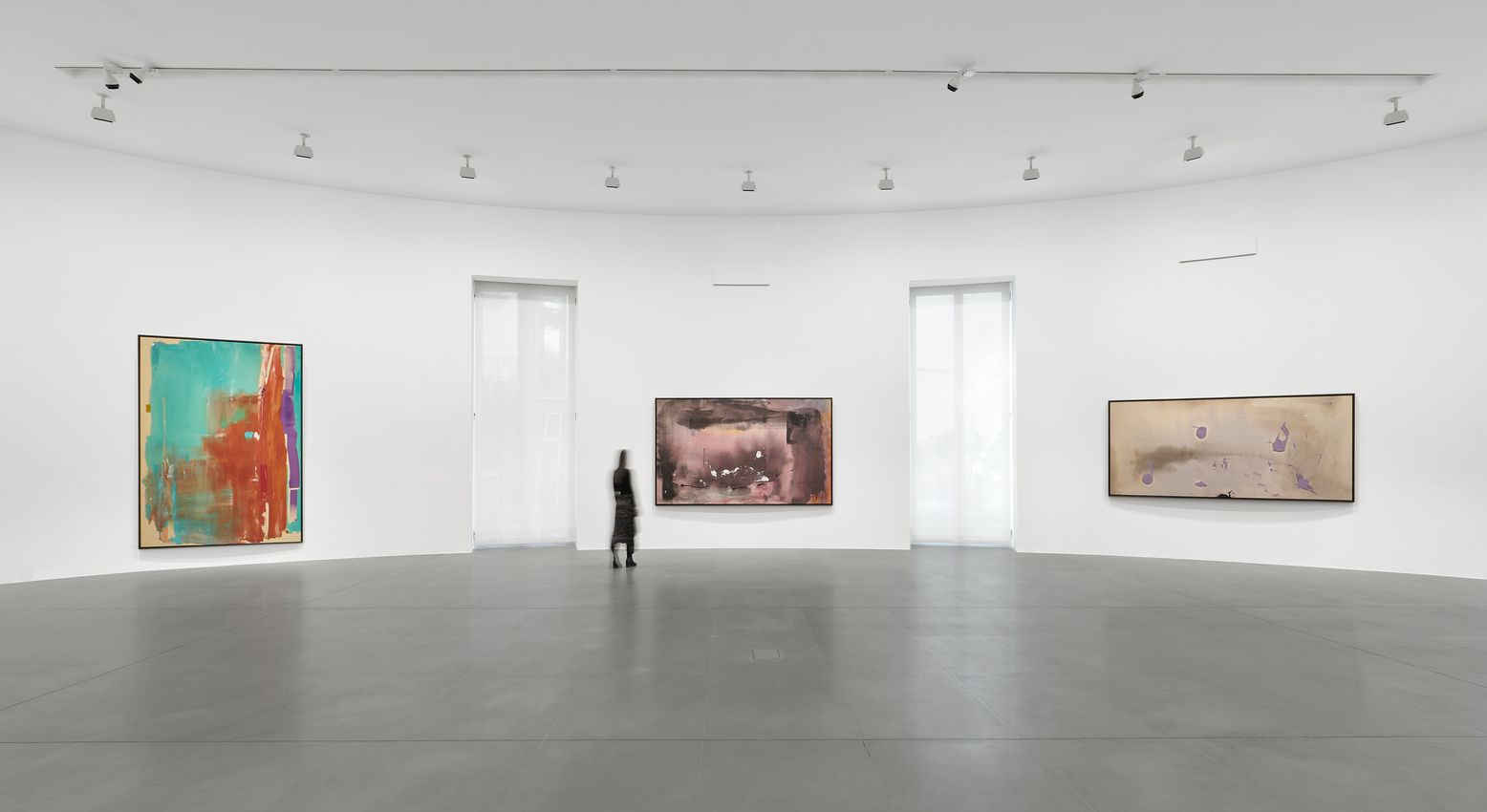
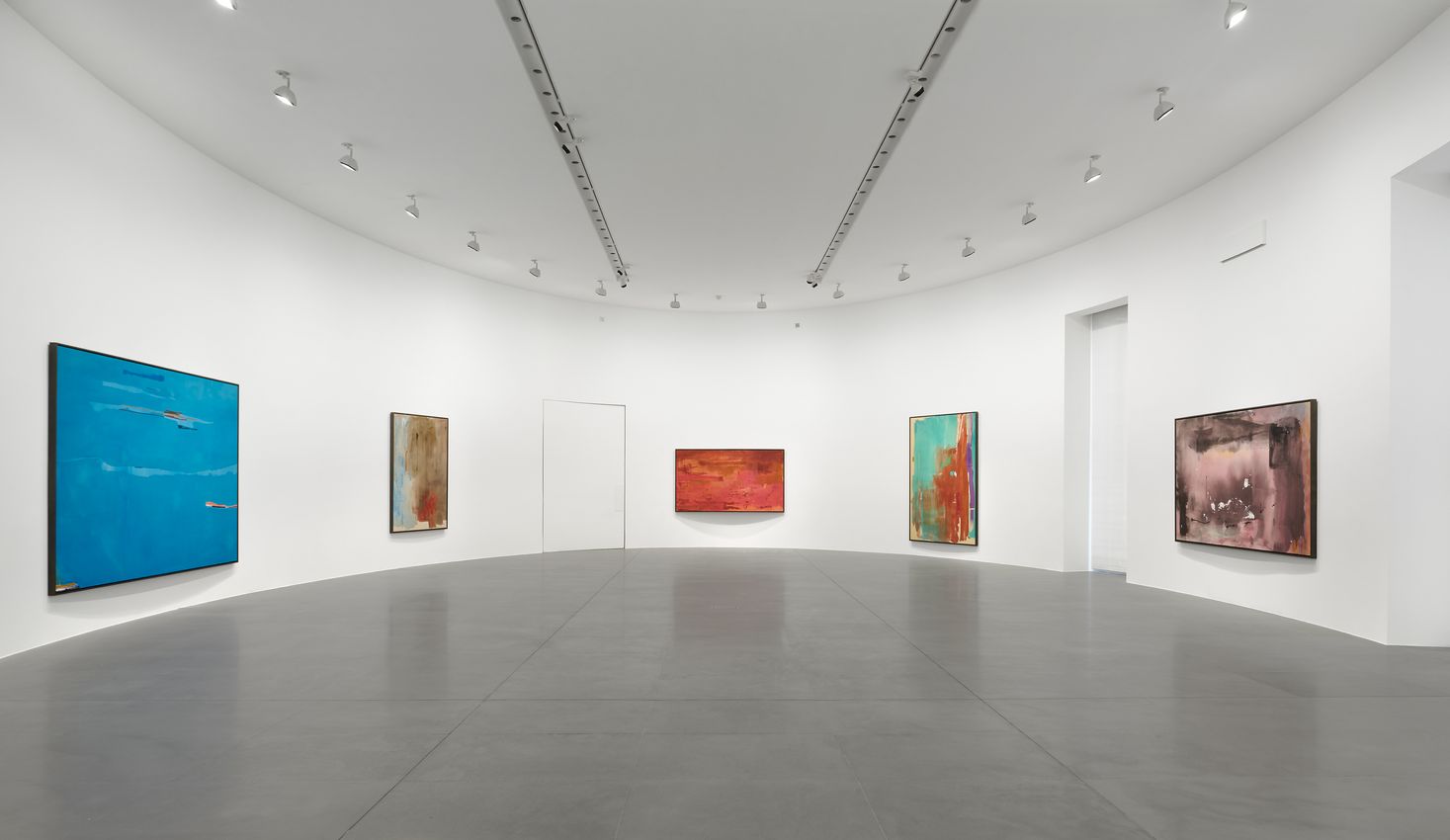
In the summer of 1974, Frankenthaler rented a house at Shippan Point in Stamford, Connecticut, facing the waters of Long Island Sound, marking the beginning of an important period of change for her work. Sea Change comprises twelve canvases that Frankenthaler painted between 1974 and 1983, which reflect her responses to the changing appearance of the wide vistas and moving tides.
One of the earliest canvases, Ocean Drive West #1 (1974), is explicitly oceanic with its floating horizontal bands, seeming to recede across an expanse of transparent blue. In Jupiter (1976) and Reflection (1977), the bands are bunched together and turned to the vertical, appearing to all but dissolve. In both of these paintings, the warm earth colours of the bands contrast with a cool, aqueous blue-green, evoking the meeting of land and water. The large, wide canvases, Tunis II and Dream Walk Red (both 1978), emanate warmth, with densely layered dark red, rose, crimson, sienna, and scarlet. In this period, Frankenthaler talked about ‘doing more to each picture,’ to create something at once more complex and complete.
In Feather (1979), Omen (1980), and Shippan Point: Twilight (1980), colours mix, layer, and fold into each other to produce soft, unnameable hues. The dabs, dots, and dashes of yellow pigment in Omen presaged the ambitiously scaled horizontal canvases that followed, with thick clumps and trails of darker-coloured pigment on a lighter atmospheric ground in Sacrifice Decision (1981), or lighter on darker in Eastern Light (1982). With Tumbleweed (1982), Frankenthaler sets this painterly incident onto a solid, mid-toned field of green, which turns it away from the allusion of atmosphere—air and water—onto firmer ground, as acknowledged by the title, and the verdant surface.
The latest canvas in the exhibition, Silver Express (1983), makes clear that Frankenthaler is no longer thinking of the water and is instead imagining moving over a flat, resistant surface—in this case, to the edges of that most urban space, the square. This solid red monochrome is at once the opposite and the outcome of what had begun with the fluid blue monochrome of Ocean Drive West #1. A ‘kind of sea’ was back on land.
Helen Frankenthaler: Sea Change is the fifth exhibition of Frankenthaler’s work presented by Gagosian since 2013. It was organised by John Elderfield, a senior curator at Gagosian. The exhibition will be accompanied by a fully illustrated catalogue with an essay by Elderfield.
Pittura/Panorama: Paintings by Helen Frankenthaler, 1952-1992 will open at Palazzo Grimani, Venice, on May 7 and remain on view until November 17.
Helen Frankenthaler (1928–2011), whose career spanned six decades, has long been recognised as one of the great American artists of the twentieth century. Heir of first-generation Abstract Expressionism, she brought together in her work—with prodigious inventiveness and singular beauty—a conception of the canvas as both a formalised field and an arena for gestural drawing. She was eminent among the second generation of postwar American abstract painters and is widely credited for playing a pivotal role in the transition from Abstract Expressionism to Colour Field painting. One of the foremost colourists of our time, she produced a body of work whose impact on contemporary art has been profound.


A respected voice in contemporary art discourse.
Focusing on ambitious storytelling and insightful art-world commentary. Ocula Magazine publishes in-depth interviews, critical essays and timely analysis on the artists, exhibitions and ideas driving the global art world.
Learn more about Ocula Magazine
Showcasing the best of the art world.
Ocula partners with galleries from around the world to highlight their artists, artworks and exhibitions. Gallery membership is by application and invitation, with each member vetted by an independent panel.
Learn more about Ocula Membership

Specialises in the sale of major artworks.
Led by a team with deep ties to the world’s leading auction houses, galleries and collectors. Ocula’s advisory team offers bespoke services to high-net-worth clients from around the world who are looking to acquire the best of contemporary and modern art.
Learn more about our team and services