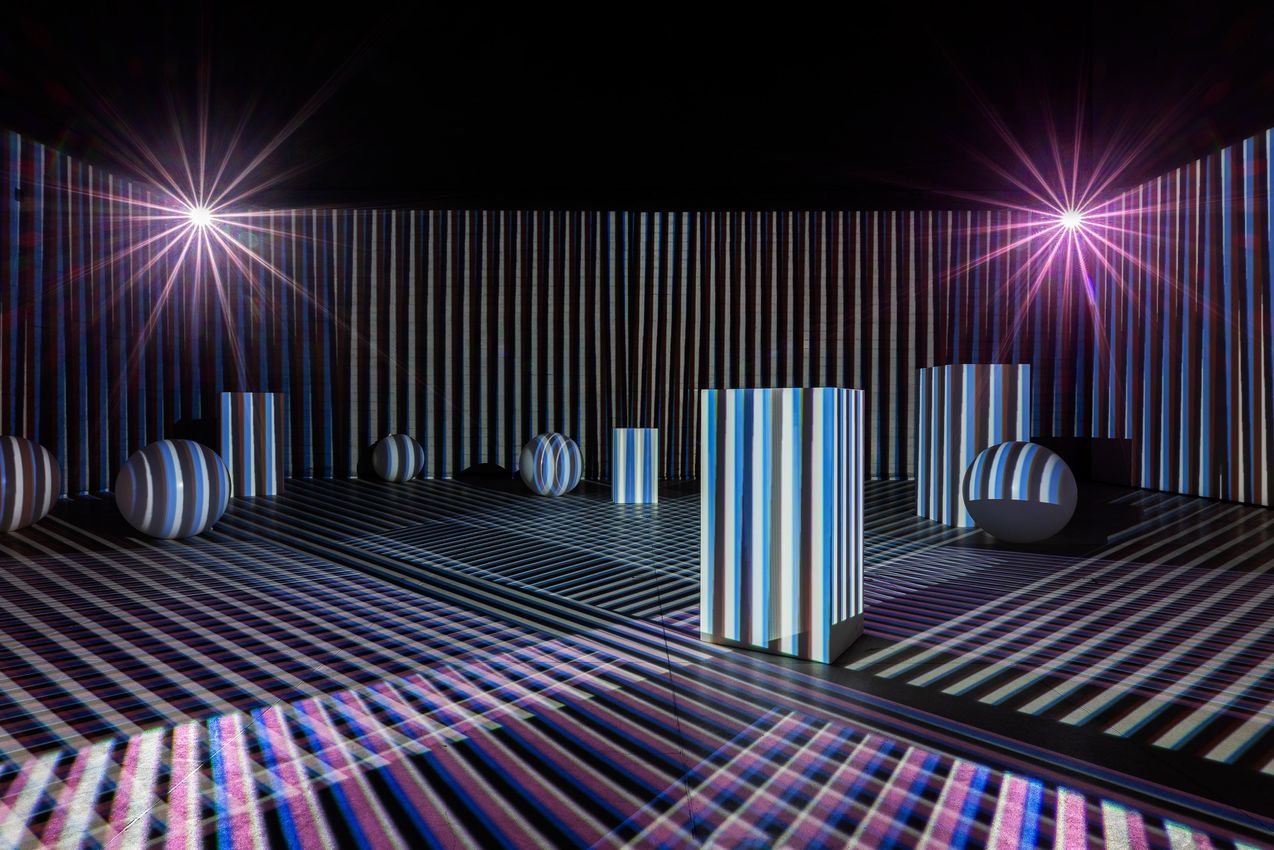
About the Environment Chromointerferent
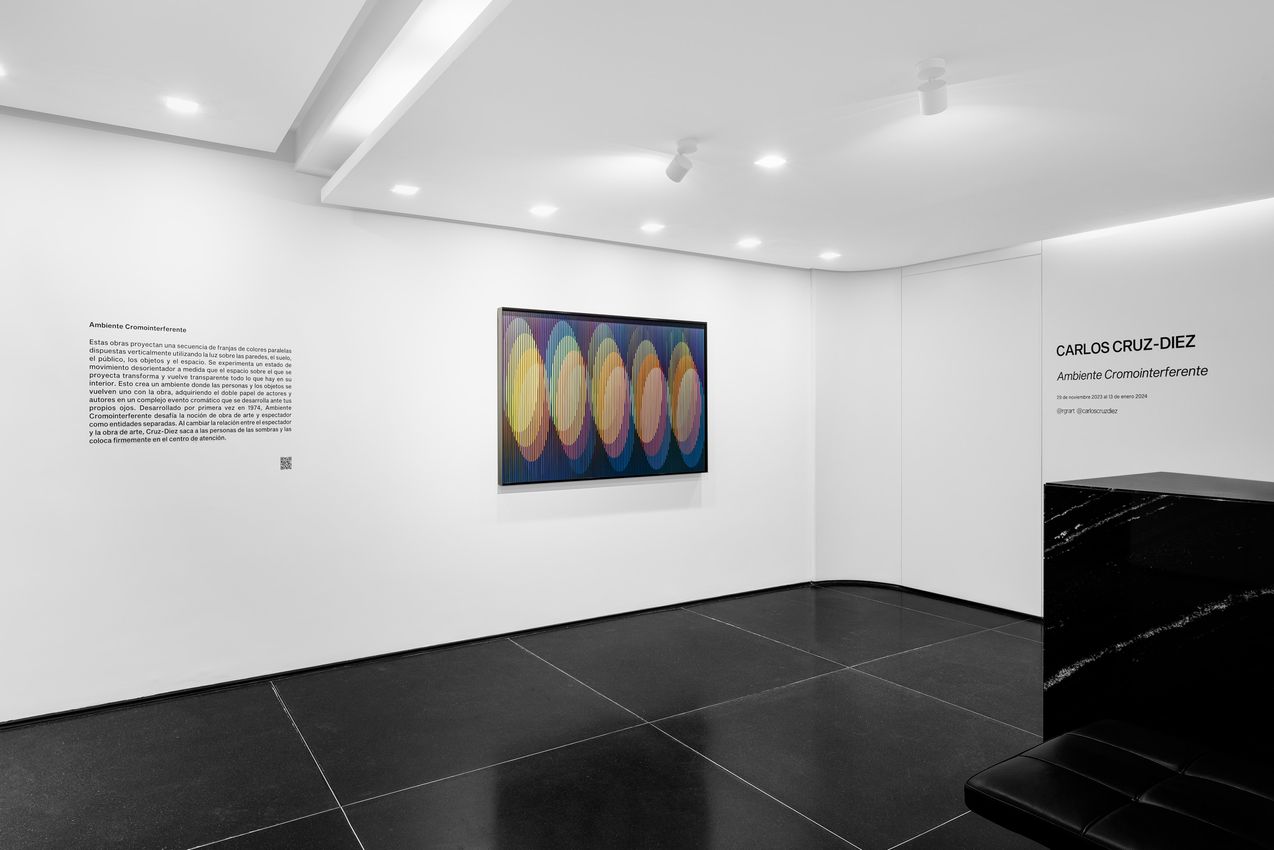
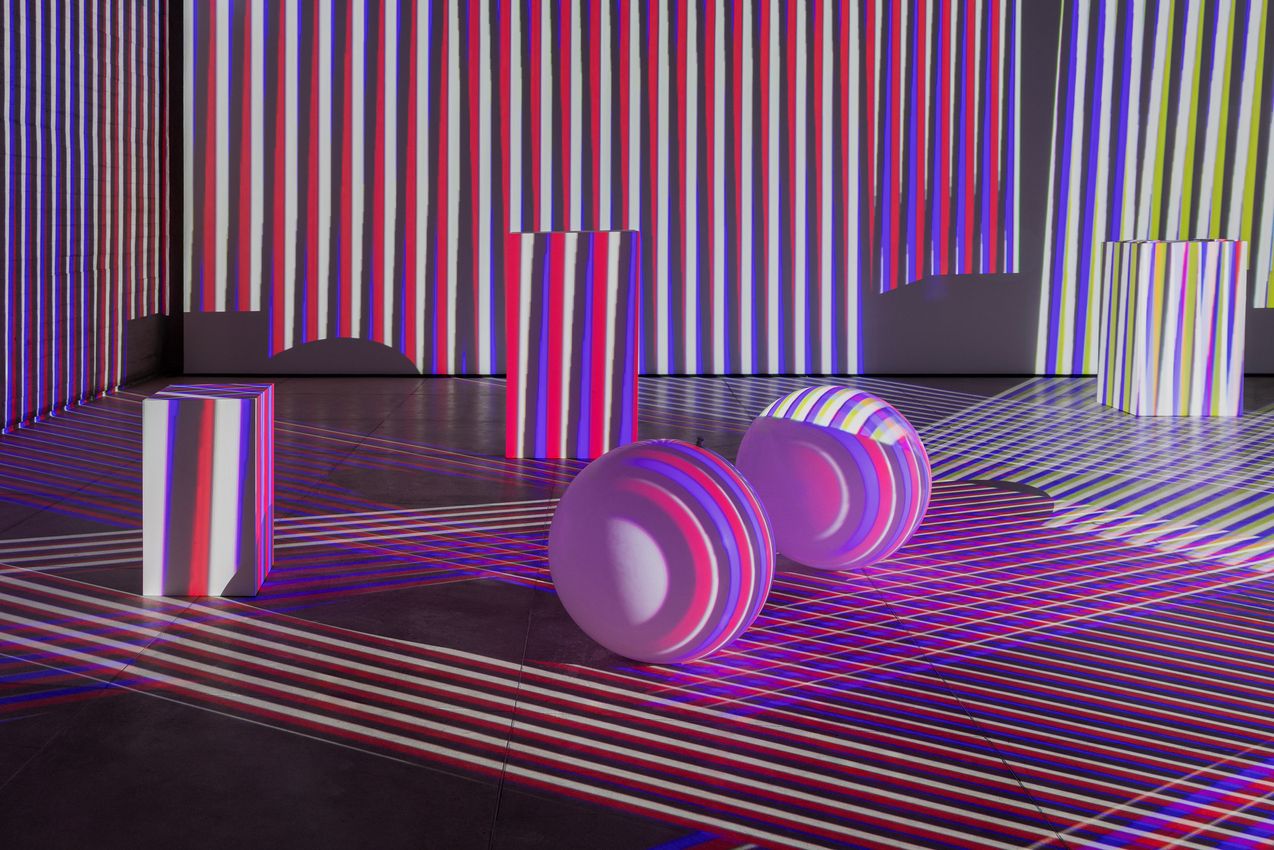
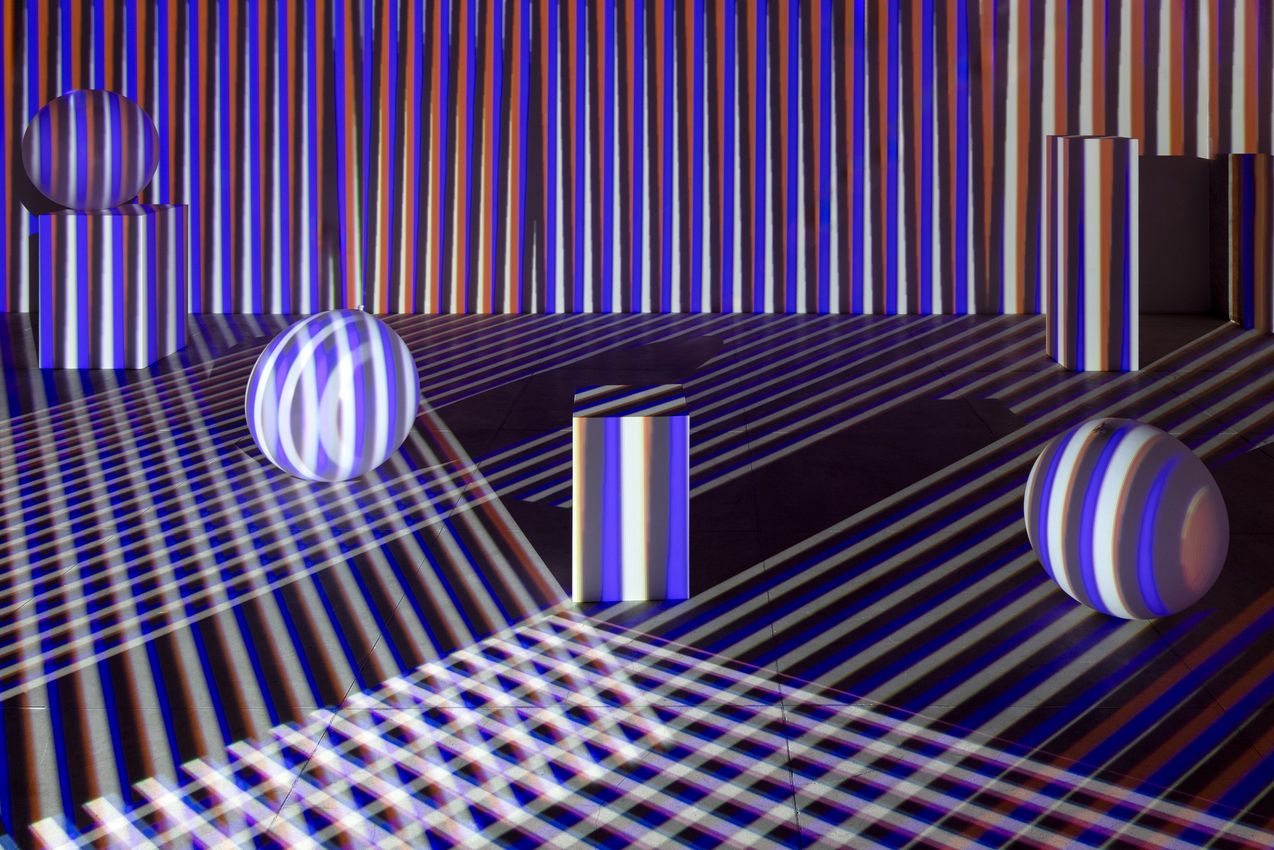
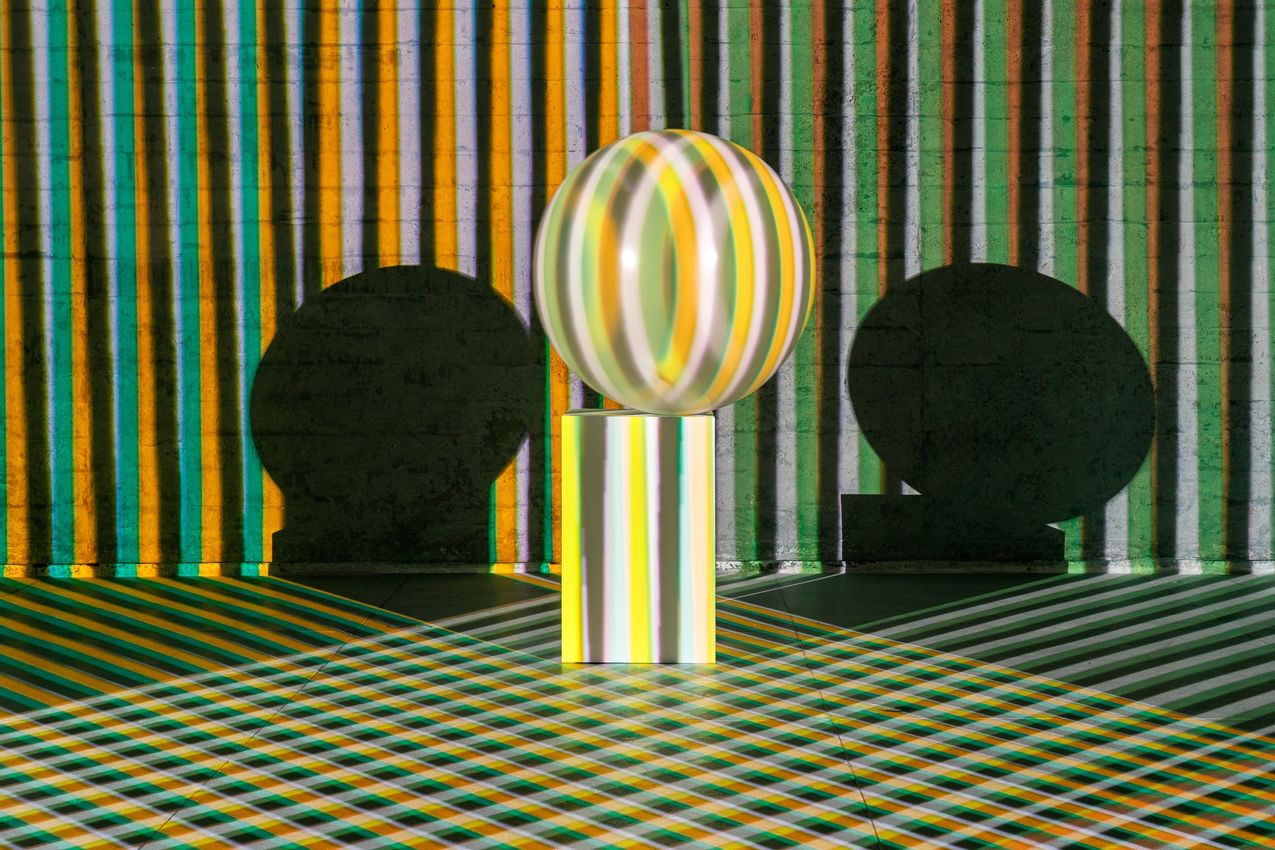
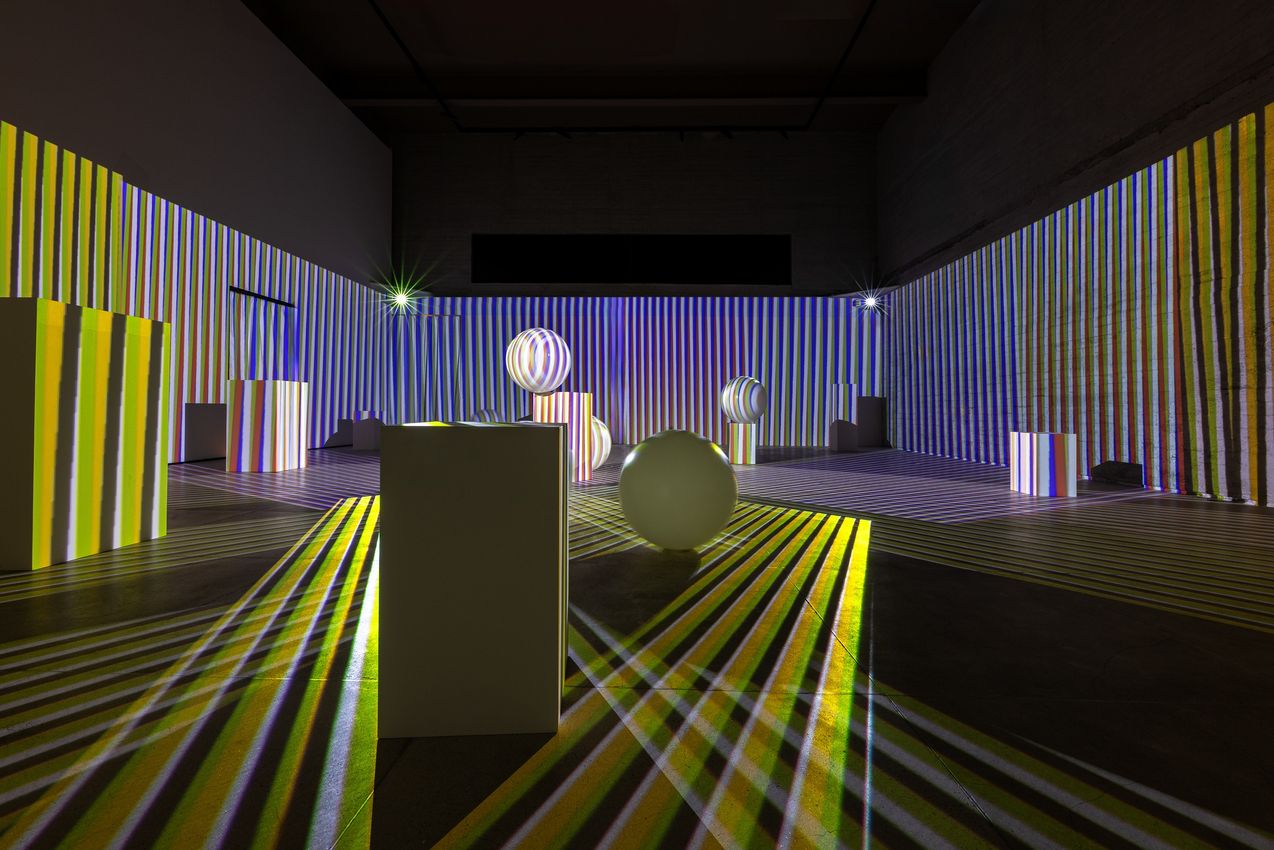
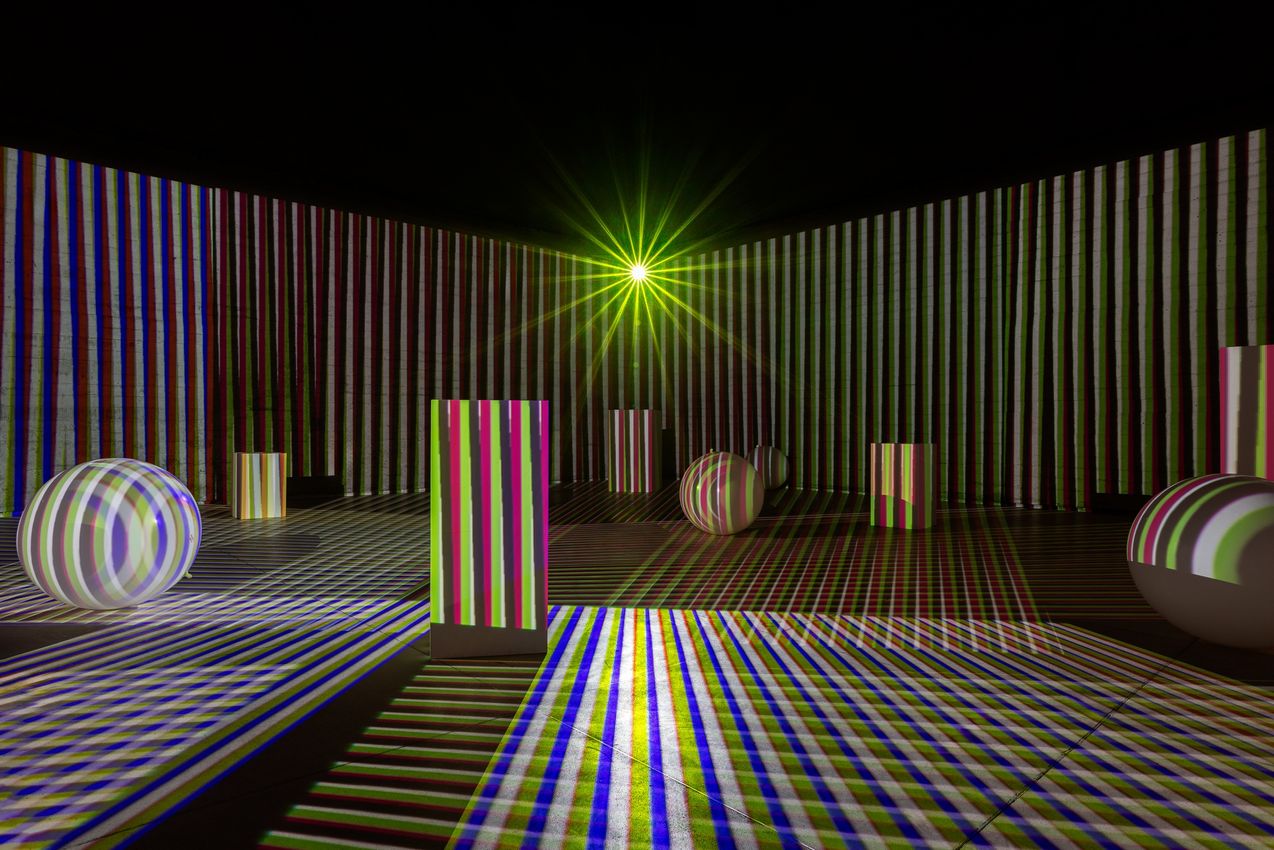
These works project a sequence of parallel-coloured strips arranged vertically using light onto walls, the ground, the public, objects, and space. A disorientating state of motion is experienced as the space it is projected on transforms and makes transparent all that is within it. This creates an environment where people and objects become one with the work, acquiring the twin roles of actors and authors in a complex chromatic event that unfolds before your very eyes.
First developed in 1974, Environment Chromointerferent challenges the notion of artwork and viewer as separate entities. By changing the relationship between viewer and artwork Cruz-Diez takes people out of the shadows and places them firmly in the spotlight.
*See also Chromointerference
About the Chromointerference
1965’s Chromointerference is composed of two layers; at its base is a sequence of parallel-coloured strips arranged vertically that change colour depending on the distance and movement of the viewer. On top is a transparent surface with a pattern made up of black lines creating interference. This can be stationary - making the movement dependent on the viewer—or in motion, either by hand (Chrominterference Manipulable) or with an engine (Chromointerference Mecanique).
Due to the movement created by the overlaying pattern a volume effect is sometimes visible, creating depth where none exists. The colours of the modules brighten and change. According to Cruz-Diez this work is a ‘false prism’ as it reproduces the colours of the light spectrum using the second layer of black lines.
Carlos Cruz-Diez was one of the most prominent figures of Kinetic art whose work has been based upon the revaluation of color as an experience in itself, as a phenomenon of light in which interpretation or cultural background are no longer relevant. His artistic practice invites viewers to become conscious of how perceptual relationships constitute the aesthetic, and how every context implies a different approach and construction of the same artwork.

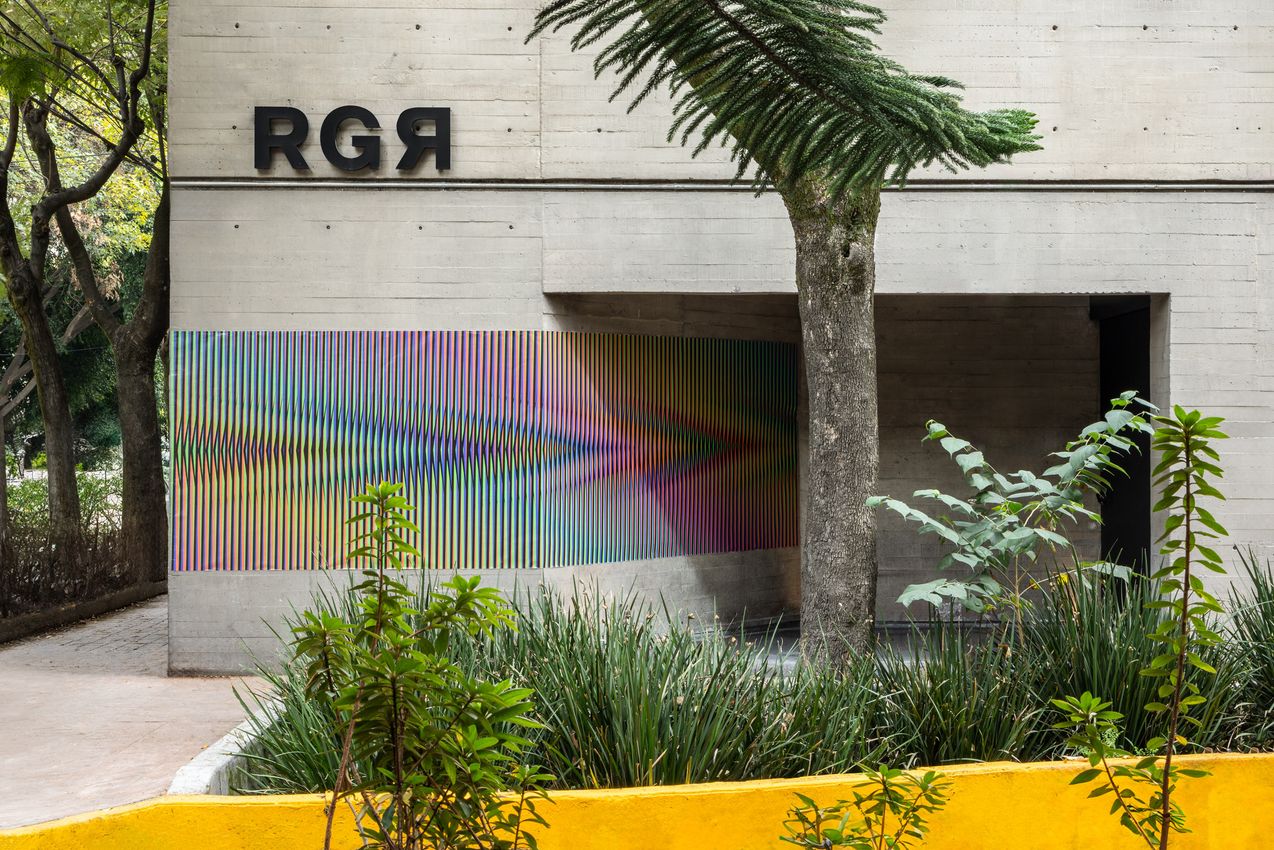
RGR is a contemporary art gallery committed to fostering dialogue across generations, movements, and artistic practices. Founded in 2018 in Mexico City, the gallery presents a diverse program that brings together established artists, historical legacies, and emerging voices shaping the contemporary art landscape. With a strong focus on experimentation and critical discourse, Galería RGR represents both pioneering figures in modern and contemporary art and contemporary artists exploring new frontiers in painting, sculpture, installation, and digital media. Its exhibition program encompasses a wide range of artistic approaches, from geometric precision to conceptual and expansive narratives that reflect the cultural and social context of our time.

A respected voice in contemporary art discourse.
Focusing on ambitious storytelling and insightful art-world commentary. Ocula Magazine publishes in-depth interviews, critical essays and timely analysis on the artists, exhibitions and ideas driving the global art world.
Learn more about Ocula Magazine
Showcasing the best of the art world.
Ocula partners with galleries from around the world to highlight their artists, artworks and exhibitions. Gallery membership is by application and invitation, with each member vetted by an independent panel.
Learn more about Ocula Membership

Specialises in the sale of major artworks.
Led by a team with deep ties to the world’s leading auction houses, galleries and collectors. Ocula’s advisory team offers bespoke services to high-net-worth clients from around the world who are looking to acquire the best of contemporary and modern art.
Learn more about our team and services