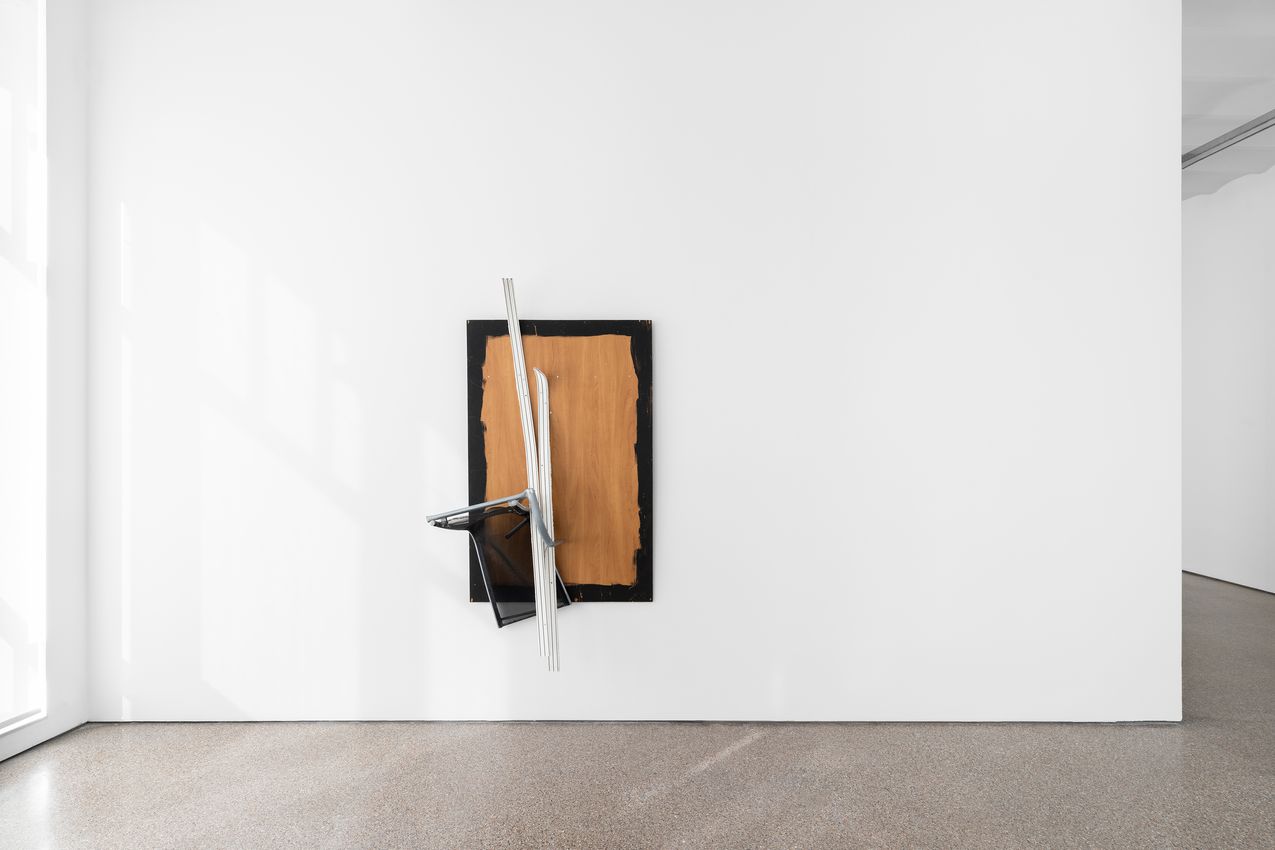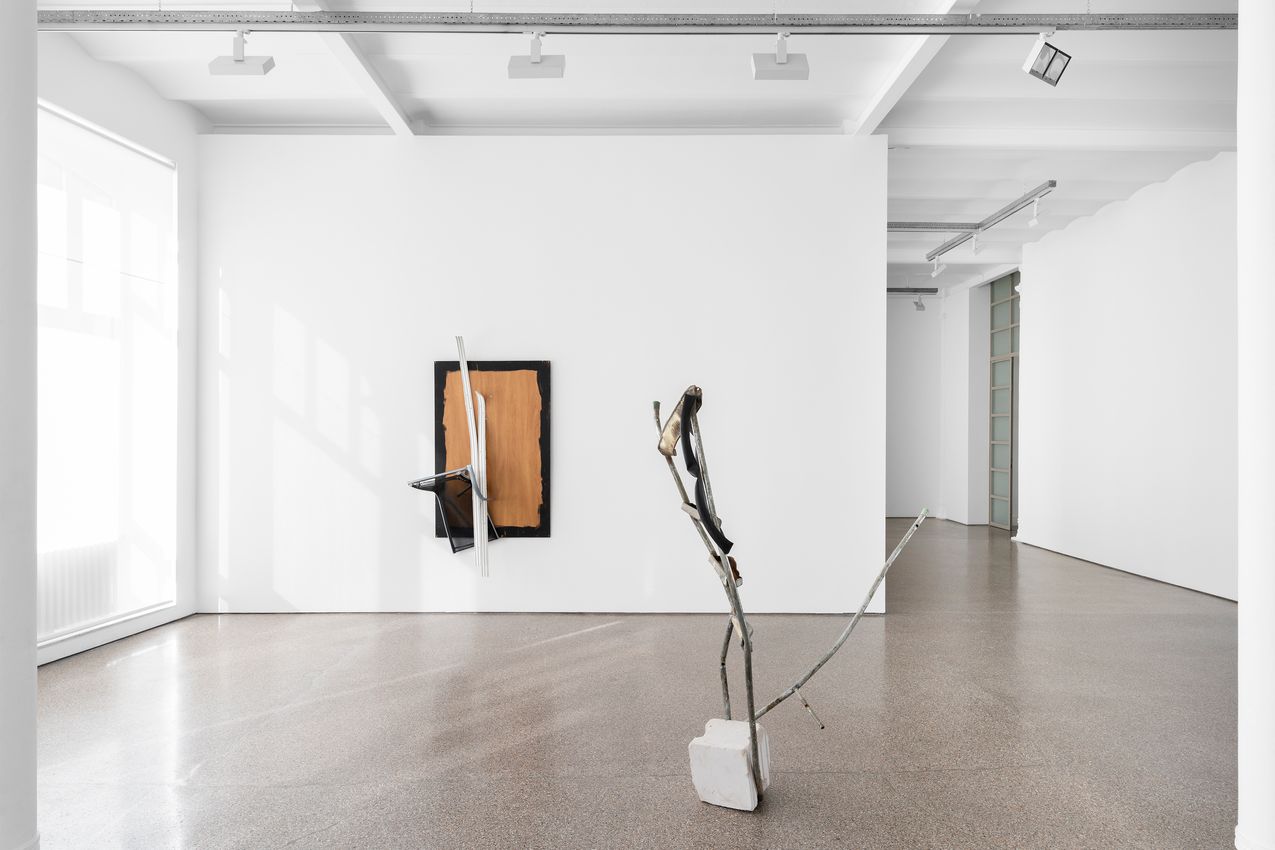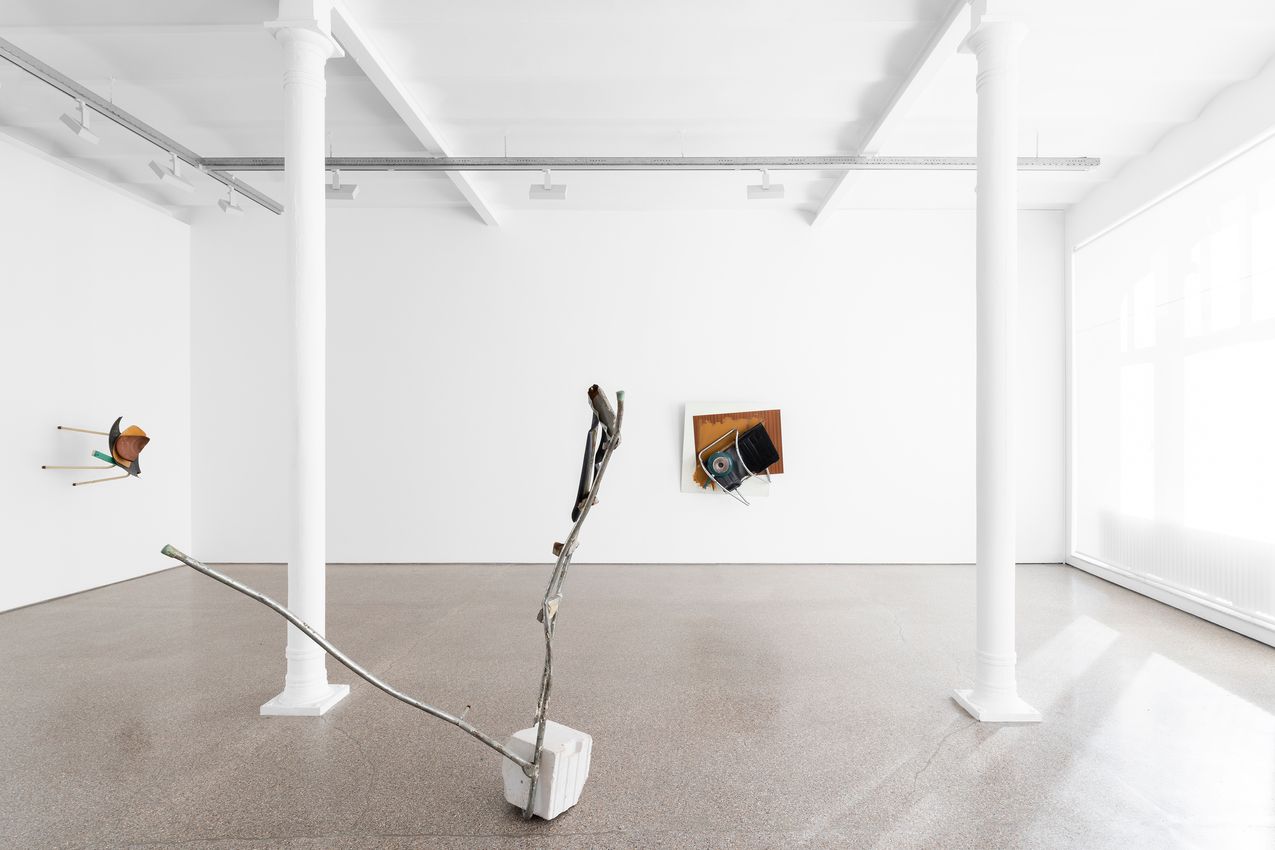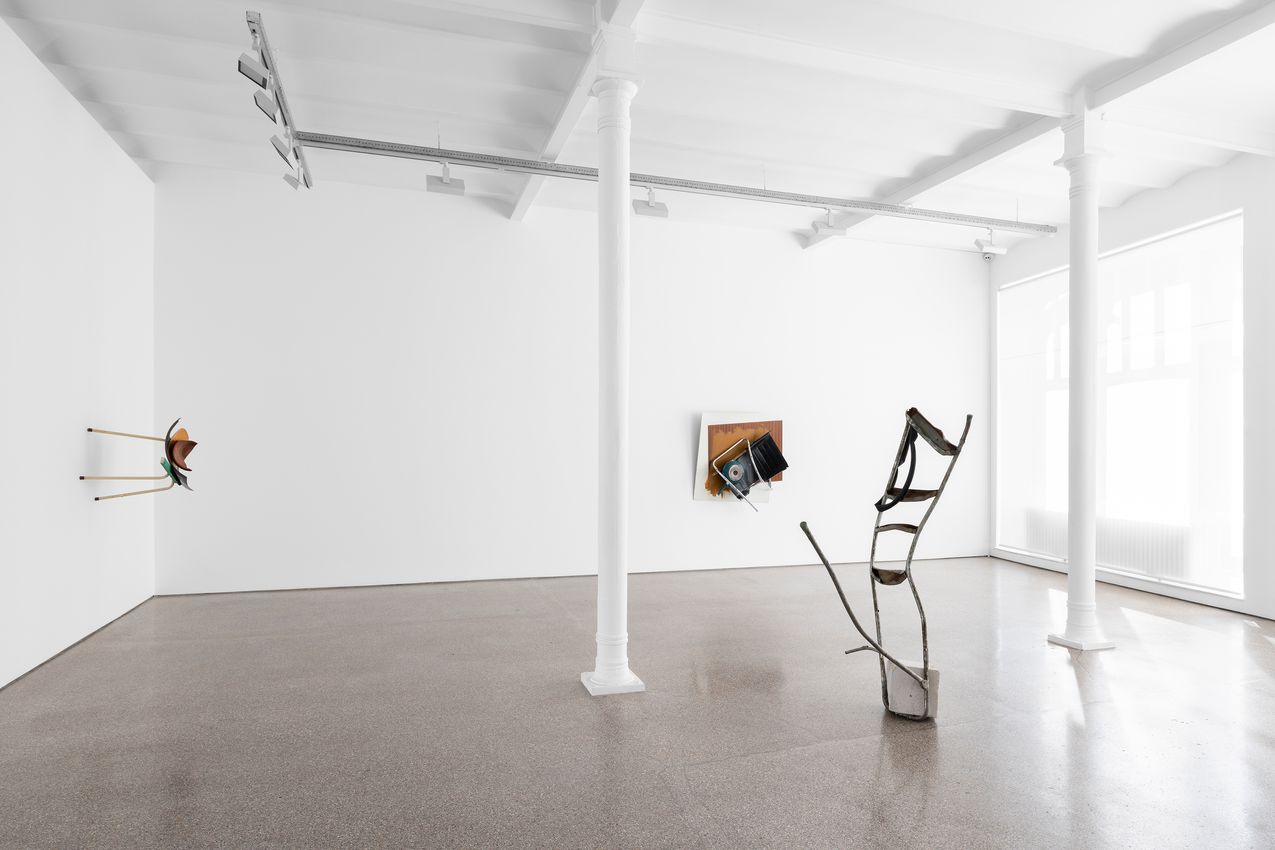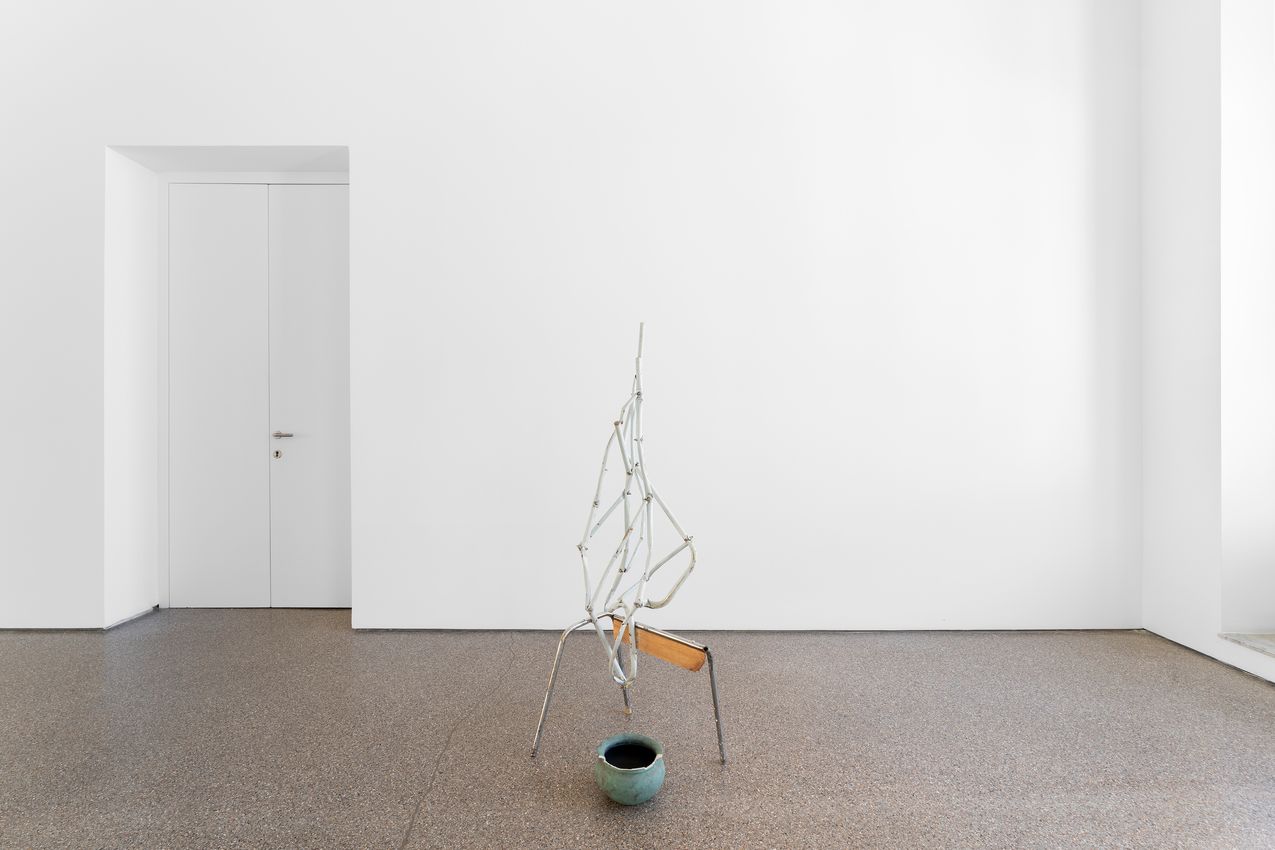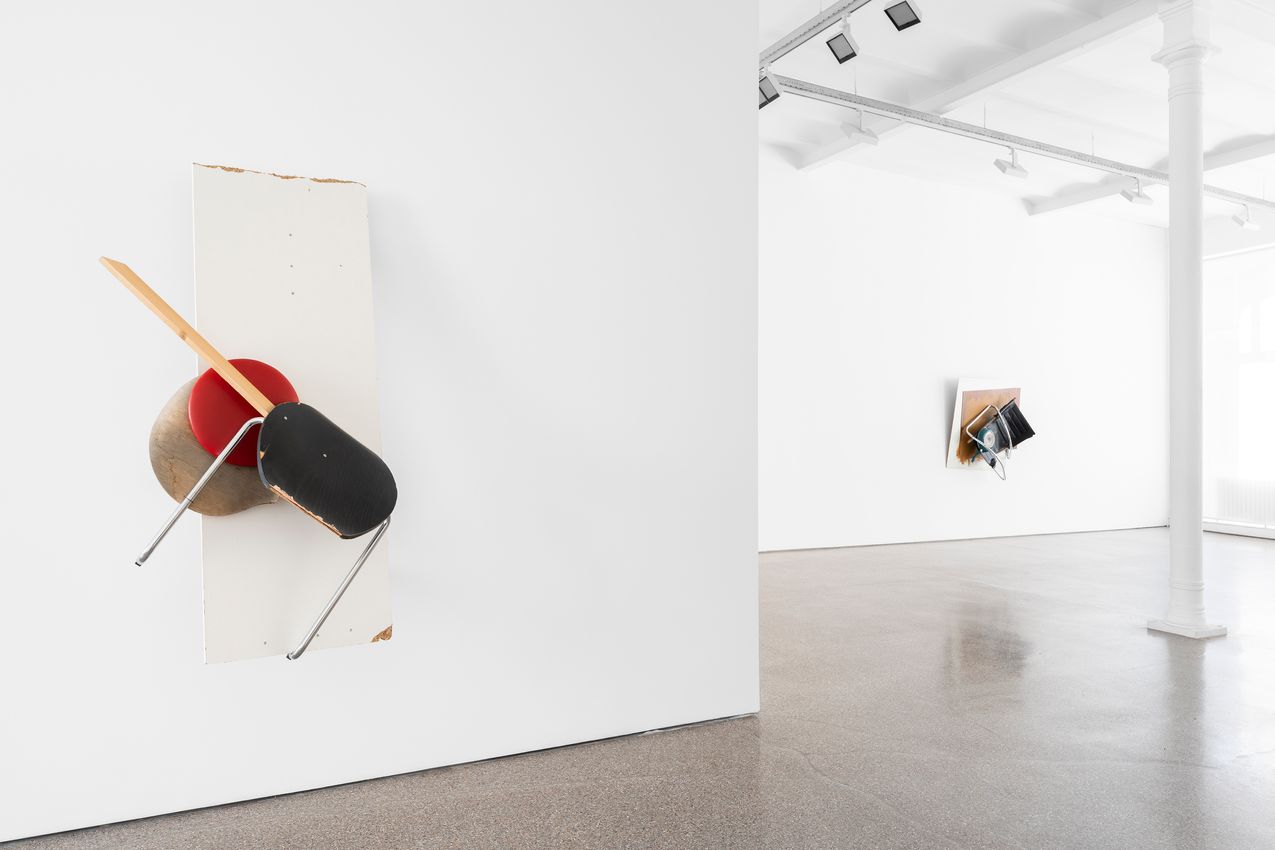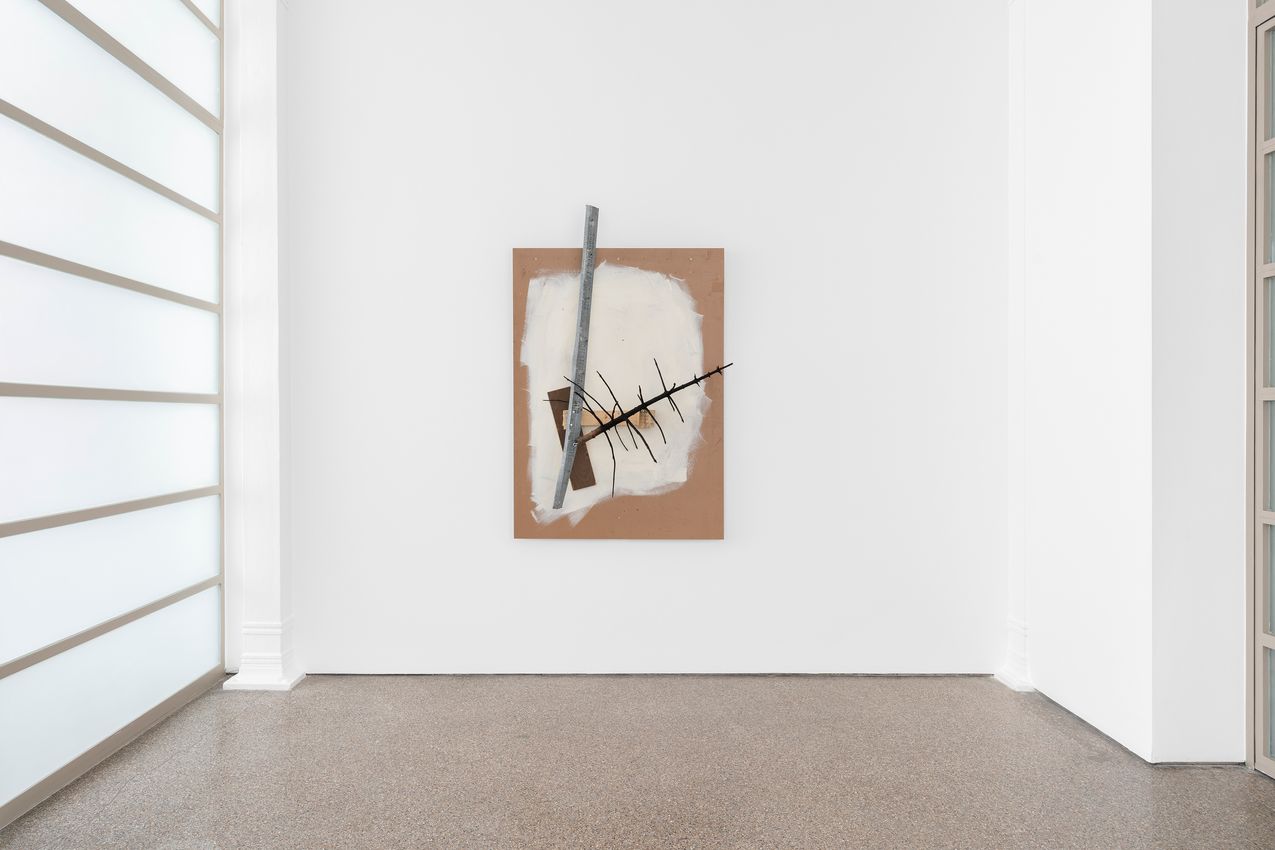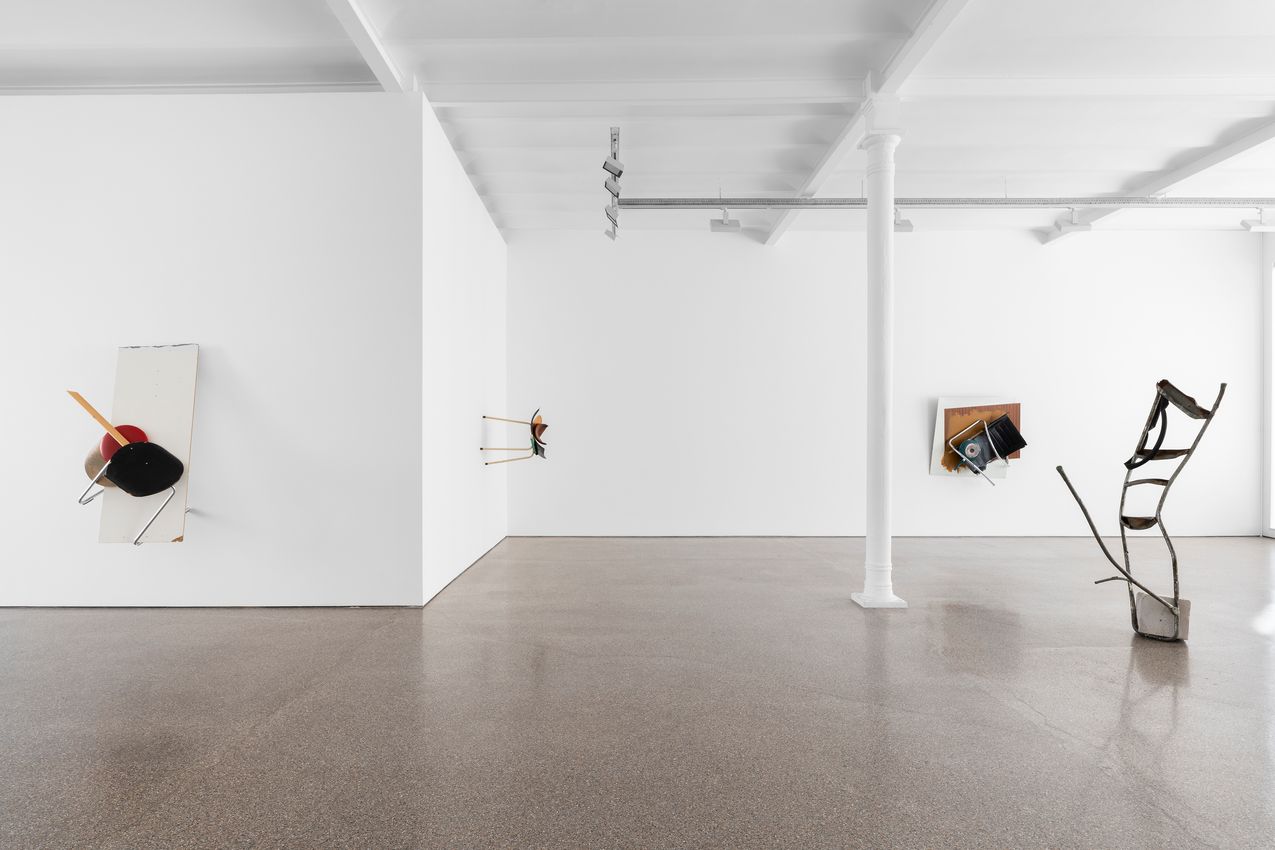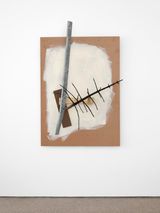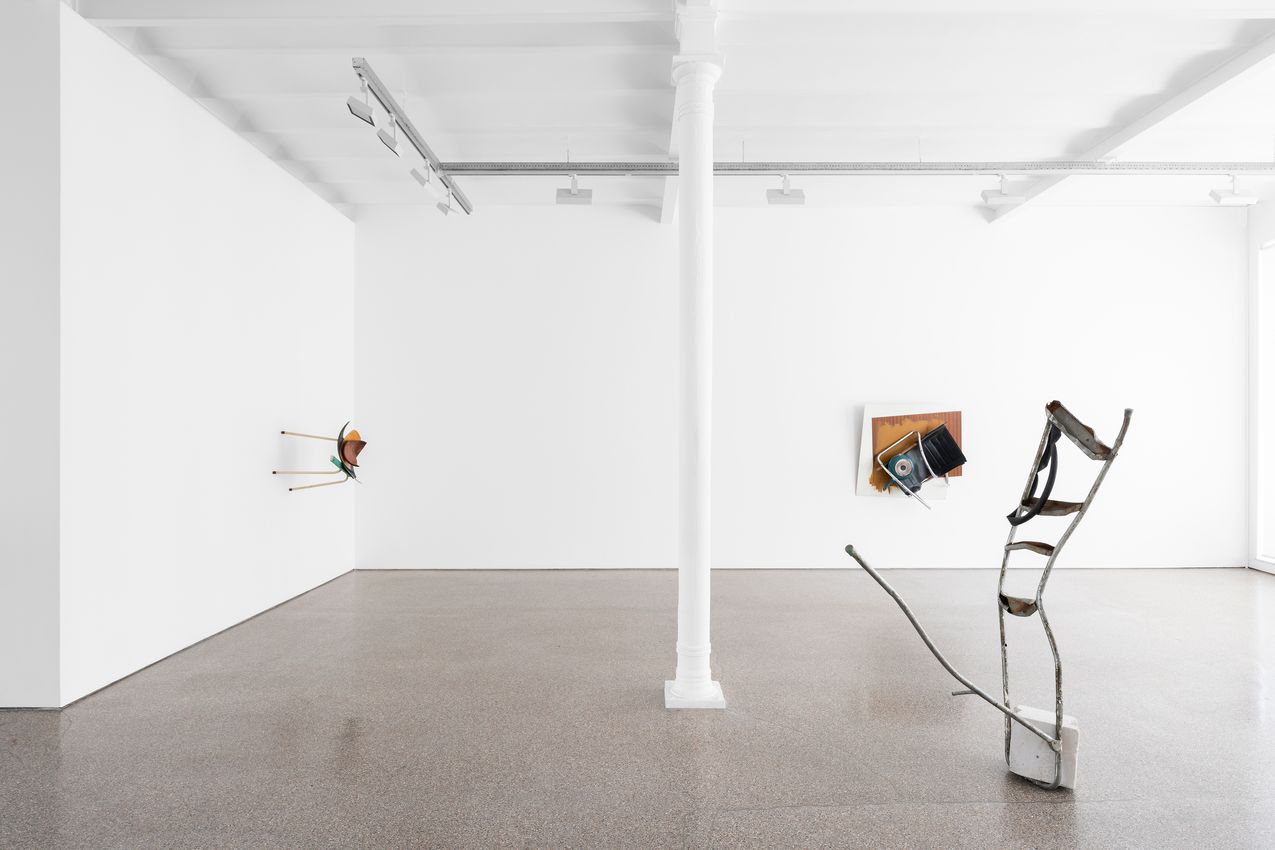
In his sculptural assemblages, Johannes Esper brings the material chaos of the outside world into the studio, and subsequently, into the gallery. Scraps of wood, metal, plastic, fibreboard and discarded quotidian objects such as broken chairs, ladders and frying pans come together to form precarious and aesthetically challenging arrangements.
For his second solo exhibition at Galerie Greta Meert, the artist presents a series of new sculptures where the process of adding and subtracting found material takes on a pictorial quality through the natural flattening that these discarded objects are submitted to. In this practice of bricolage and layering, meaning emerges when you least expect it. Occasionally, these works present themselves as makeshift pastiches of modernist sculpture, they play with sculptural tropes and exceptions. Some objects appear to be treated with care and consideration while the placement of other elements feels incidental or the result of a purely instinctual process or practical necessity. Here, the distinction between adornment and support structure becomes irrelevant.
Esper’s sculptures are unexpectedly graceful, they seduce us through the beauty found in a twisted piece of rusted metal, the delicate shape of a broken flower pot or the expressionist brushstroke left on a piece of coated fibreboard. But this state of appearance remains fragile and unstable. We want to believe in it and sublimate these found objects the way we think we are asked to in an art context, yet in doing so, we find ourselves questioning the nature of the endeavour—the difference between hope and doubt (up and down). The deadpan but occasionally convoluted titles added by the artist constitute yet another layer of deception that leads the viewer on a path where functionality is repeatedly folded onto itself to the point where it teeters on the edge of nothingness. In the end, it’s still up to us to pick up the pieces.
Born in 1971 in Cochem (Germany), Johannes Esper lives and works in Karlsruhe. He studied sculpture at the State Academy of Visual Arts in Karlsruhe from 1998 to 2004. His work has been exhibited in galleries and public institutions throughout Germany and Europe including exhibitions at Kunsthalle Baselland (2017), Wilhelm-Hack Museum Ludwigshafen (2013), Museum Wiesbaden (2009) and Bundeskunsthalle Bonn (2005).
Over the past 30 years, Galerie Greta Meert established itself as one of Brussels’ leading contemporary art galleries. Founded in 1988 as Galerie Meert Rihoux, it was subsequently renamed after its founding director Greta Meert in 2006. Located in the center of Brussels, the gallery occupies a five-story Art Nouveau building designed by Louis Bral and renovated for the gallery by renowned Belgian architects Hilde Daem and Paul Robbrecht. Since 2012 three floors of the building are dedicated to exhibitions, making it possible to maintain an expanded exhibition schedule.

A respected voice in contemporary art discourse.
Focusing on ambitious storytelling and insightful art-world commentary. Ocula Magazine publishes in-depth interviews, critical essays and timely analysis on the artists, exhibitions and ideas driving the global art world.
Learn more about Ocula Magazine
Showcasing the best of the art world.
Ocula partners with galleries from around the world to highlight their artists, artworks and exhibitions. Gallery membership is by application and invitation, with each member vetted by an independent panel.
Learn more about Ocula Membership

Specialises in the sale of major artworks.
Led by a team with deep ties to the world’s leading auction houses, galleries and collectors. Ocula’s advisory team offers bespoke services to high-net-worth clients from around the world who are looking to acquire the best of contemporary and modern art.
Learn more about our team and services