Press Release

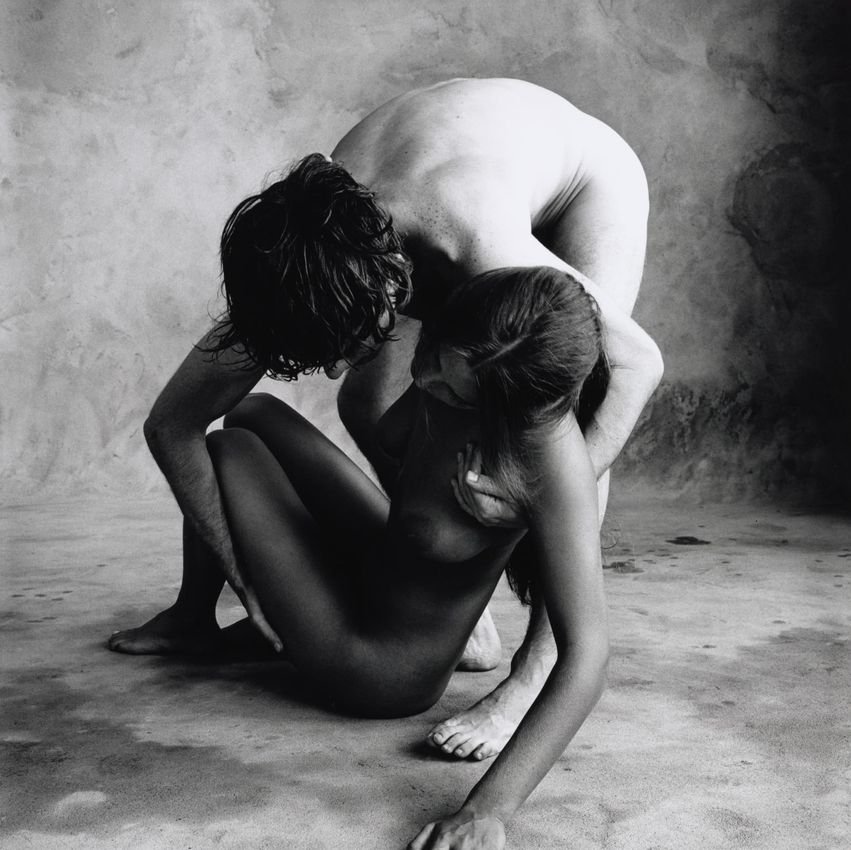
What I remember is the purity of the relationship of these young people and an innocence so different from today’s. As I look at these pictures, how the dancers touch each other, how they embrace [...] there’s a serenity that as a photographer I’m not used to. — Irving Penn, 1995

This exhibition is dedicated to a rarely-seen series ofphotographs by Irving Penn. Taken in 1967, the carefullycomposed images are the result of Penn’s collaborationwith the Dancers’ Workshop of San Francisco, capturingthe groundbreaking work of the American choreographerAnna Halprin. In addition to the photographic series, oneof Irving Penn’s rare paintings is also part of the exhibition.

Penn captured the dancers in his studio as they re-stagedHalprin’s improvisational choreography, The Bath (1966).The group of 14 photographs, which were printed for thefirst time in 1995, highlight Halprin’s pioneering approachto movement and reveal a more experimental side to Penn’spractice. In its entirety, the series is exhibited for the firsttime in the German-speaking world.

The summer of 1967 in San Francisco has become knownas the ‘Summer of Love’. Young people converged on thecity, drawn to its burgeoning counterculture that broke thetaboos of American society, promoting community, altruism,mysticism and free love. Fascinated by the movement, IrvingPenn travelled to the Bay Area the following September todocument its participants with a series of group portraits tobe published in Look magazine. He wanted, as he termed it,to ‘look into the faces of these new San Francisco peoplethrough a camera in a daylight studio, against a simplebackground, away from their own daily circumstances.’

At the heart of the avant-garde art scene in the 1960s wasthe Dancers’ Workshop of San Francisco. Their founder andchoreographer, Anna Halprin, was a pioneer of postmoderndance. Her practice promoted healing and a sense ofcommunity through body awareness and improvisedgroup interactions based on ritual, which radically changed modern dance. ‘Dance is breath made visible,’ Halprinsaid of her approach. Her daring performances wereoften participatory and rarely took place in traditionalstage settings, with one instance leading to a summons forindecent exposure only a few short months before IrvingPenn photographed the troupe.

And yet the photographs were considered too daring tobe published in ‘The Incredibles’ essay featured in the 9January 1968 issue of Look magazine. According to VasiliosZatse, deputy director of the Irving Penn Foundation, theyremained forgotten for almost three decades until Halprincontacted Penn in 1995, enquiring about the photographsfor her archive. He selected 14 negatives and printed themfor her, using the gelatin silver process. Although the twonever met, Penn stated at the time: ‘I didn’t know Ann[a]Halprin at all, but I know from these pictures, I tell you, Ilike her very much.’

Dance was a recurring theme throughout Penn’s career.From his photographs of American ballet companies in 1946to his 1999 series capturing the movements of dancer andchoreographer Alexandra Beller, the artist maintained aninterest in new and avant-garde forms of performance. Itis undoubtedly thanks to his affinity for the art form thatPenn was able to capture The Bath with such acuteness.Where Halprin found that the photographs brought out theessence of her own work, Penn remarked that they gave hima sense of ‘serenity,’ which he was, in his words, ‘not usedto.’ The series, therefore, represents a unique confluencebetween modern photography and postmodern dance andconstitutes a rare document of the meeting of two artisticminds.

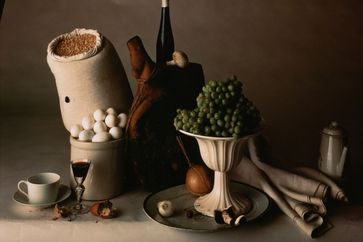
In addition to the photographs, the exhibition presents awork on paper from 1987 that highlights the broad spectrumof Irving Penn’s artistic practice. After his retrospectiveat the Museum of Modern Art in New York in 1984, theartist returned to the medium of painting and, inspired byhis experience with printing photographs, developed anexperimental technique: he photographed drawings andenlarged them as platinum-palladium prints. He then usedthe resulting prints as a painting surface, which he workedon with a combination of watercolours, ink, dry pigmentsand gum arabic – materials that lend the works a complexsurface structure. The photographic series The Bath relatesto Irving Penn’s wider interest in exploring movement andorganic forms, a theme that can also be found in his abstractpainting; the entwining shapes recall the interlacing bodiesof the dancers.

Read More
About the Artist

Irving Penn was an enormously influential fashion, portrait, and still life photographer whose commercial work was widely seen in magazines like Vogue or The New Yorker throughout the 1960s, 70s, and 80s.

View Artist Profile Irving Penn contemporary artist
About the Gallery

Founded in 1983, Galerie Thaddaeus Ropac has galleries across Europe, in London, Paris and Salzburg, and an expanding team in Asia. Specialising in contemporary art and representing over 60 artists, the gallery supports and showcases the careers of some of the most influential artists today with a wide-ranging programme of over 40 exhibitions each year across its five extensive and historic gallery spaces.

View Gallery Profile
Address
Mirabellplatz 2
Salzburg
Austria
Opening Hours
Tuesday – Friday, 10am – 6pm
Saturday, 10am – 2pm
(1)
Salzburg Mirabellplatz 2
Thaddaeus Ropac
Mirabellplatz 2, Salzburg, Austria
+43 662 881 3930

Opening hours
Tuesday – Friday, 10am – 6pm
Saturday, 10am – 2pm
The art world in focus