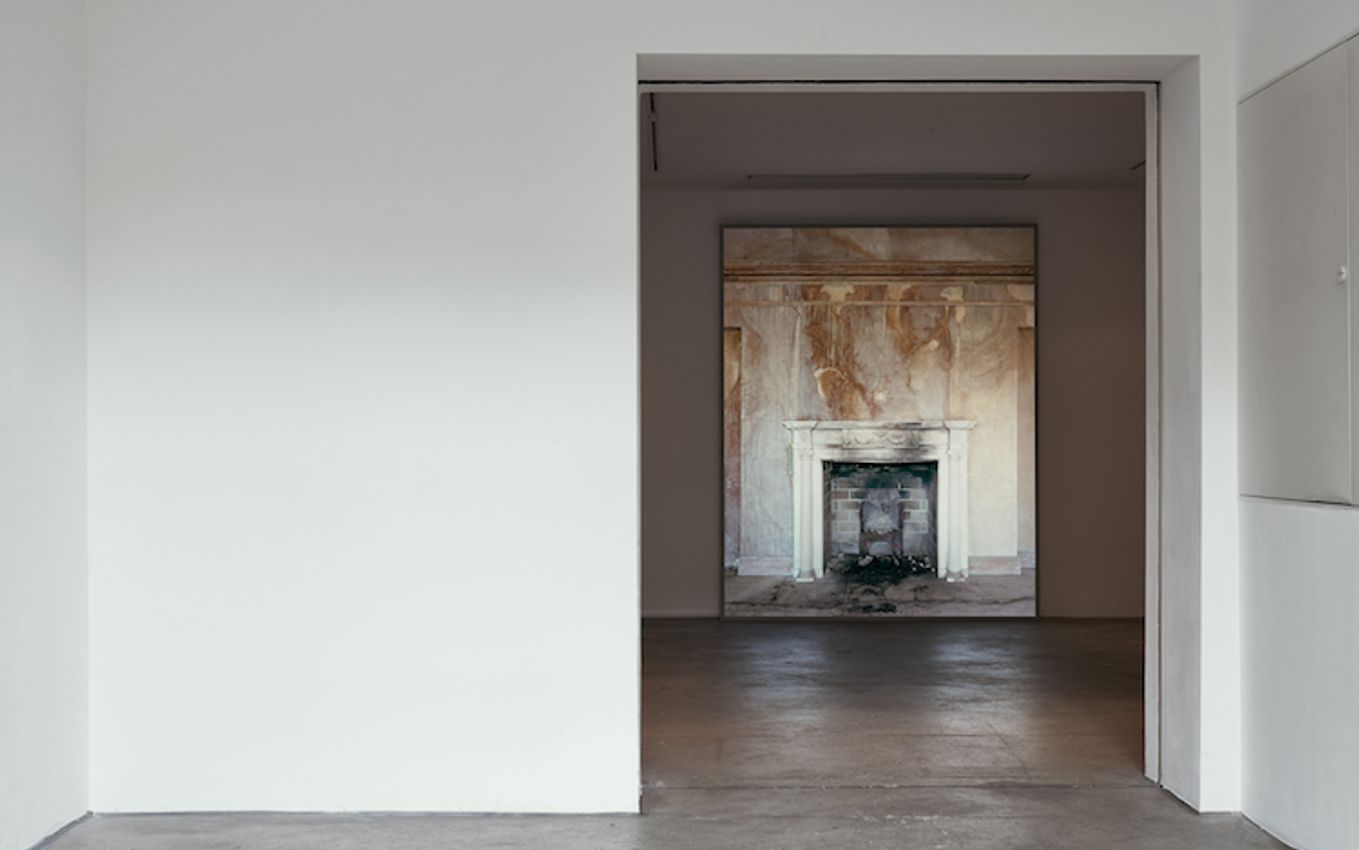
This exhibition took place when the gallery was previously known as Choi & Lager.
Many of McFarland’s earlier digital compositions—similarly made up of multiple photographs—were perfected in their seamlessness, presenting to the viewer an uncanny though ‘real’ looking single photograph. In the last several years, the artist has expanded his practice of digital manipulation and created works which purposely fracture, breaking down parts of the image and exposing the mechanics and most notably the time and duration involved in the picture making process. The analogue signs demonstrated throughout McFarland’s newer works contrast the veneer of usual digital retouching, and what have classically been regarded as photographic ‘flaws’ instead play a larger role in the conceptual presentation of his work.
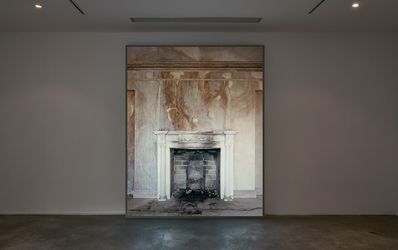
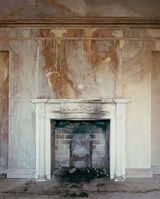
Fireplace is life-scale image of a hearth from McFarland’s new series entitled Villa. Black ash and smoke-damage layer the interior, while water damage and stains permeate the walls in the surrounding room. Deterioration is a recurring theme in McFarland’s work, a metaphor for duration and the entropic processes of time. This work, illuminated in a lightbox, continues McFarland’s depictions of light and it’s intrinsic relationship to photography. The new work is in dialogue with early imagery of fires from his past works including Embers, Late Evening (2002) (an iconic, early piece in his first digitally manipulated series Cabin).
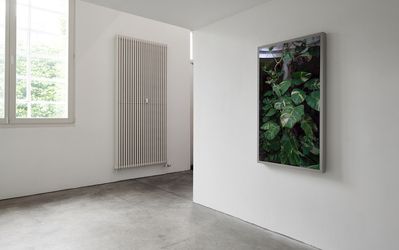
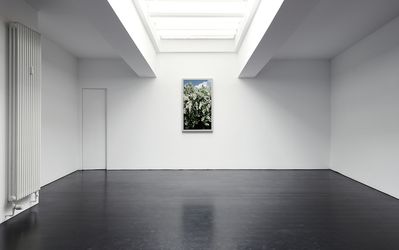
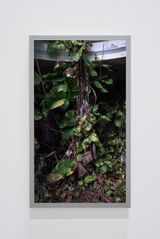
Colonnade depicts the same neglected estate as Fireplace, this piece a vertical video that slowly pans 360 degrees of unkempt foliage and crumbling columns. The overall view conveyed is similar to that of a panoramic photograph, though this perspective is prolonged as the movement of the camera slowly completes the scene, looping continually.
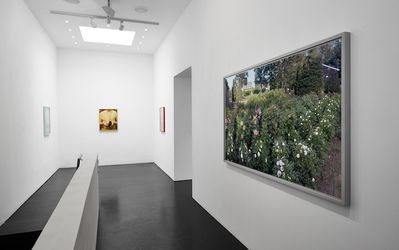
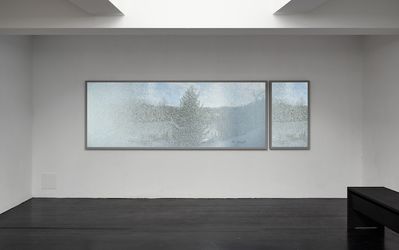
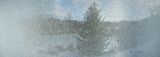
Shattered Glass examines the concept of duration, and its representation in different media including photography and video, eschewing Henri Cartier-Bresson’s notion of the decisive moment. While the view out of the window is a frequent trope in the history of landscape art, Shattered Glass collapses the image through its fractured surface, such that the window is at once a material barrier and a mediating threshold. Its surface boundary, dividing two and three dimensional space, is something we look both at and through.
Using a DLSR camera mounted on a tripod panning device, the 4k video and photographic stills were shot at the same time. As the camera pans fluidly from left to right over the course of nine minutes, the viewer’s gaze moves from interior to exterior space. The final transmounted chromogenic print, realised as a landscape tableau, is actually a composite of several frames shot in a similar proportion to the monitor, using portrait orientation. Because the two components of this work are backlit using a similar LED technology, their visual qualities are unified, allowing both formats to be situated on more equal footing.
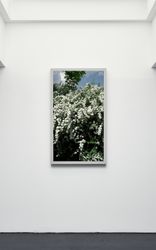
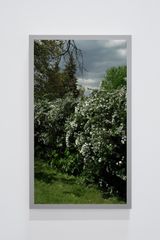
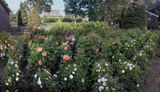
Flower Stand, Scuttlehole Road, Water Mill, New York offers a slight departure from McFarland’s previous durational photographs of the gardens around Vancouver and returns to a more traditional idea of photography and its representation of the instant. It’s an image that comprises theHamptons and re-examines popular pictorial representations of the elite New York vacation town. Like the constructive or additive process of creating and tending a garden the picture making techniques employed in photography are reflected in the subject of the garden.
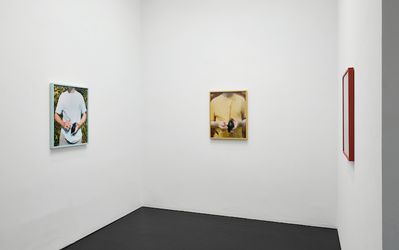
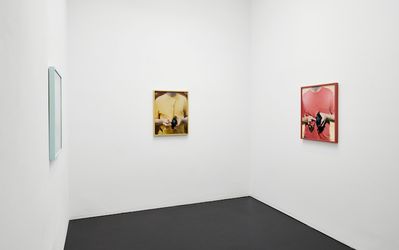
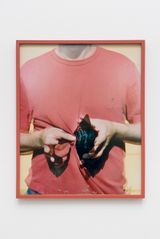
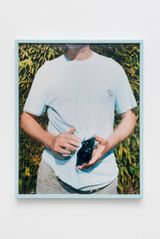
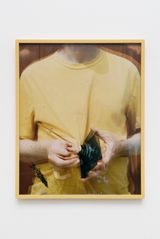
Cleaning Lens sees the artist cleaning his lenses wearing a Crewneck Jersey T-shirt in a range of different colours. And what if dust is really a key to the ensuing decades? Why do we dislike it? We are stardust, after all. Dust must be kept well away from camera equipment, but it is deeply photogenic. There is also something universal about dust: we come from it, go to it, and create it daily. Inevitable and unruly, dust is the enemy of the modern order, its repressed other, its nemesis. But it has a story to tell from the other side.
Scott McFarland lives and works in Toronto, Canada. His works are included in public collections such as the MoMA, the J. Paul Getty Museum, the National Gallery of Canada, the SFMoMA, the Walker Art Center, and the Vancouver Art Gallery. In 2014, the Art Gallery of Ontario exhibited McFarland’s solo exhibition Snow, Shacks, Streets, Shrubs which surveyed his recent work. Other major surveys of McFarland’s work have been exhibited at the National Gallery of Canada (2010) and the Vancouver Art Gallery (2009). Most recently, McFarland exhibited at the SFMoMA (About Time) and Fort Gansevoort, New York (Sky Leaks).


McFarland’s crystalline, hyperreal images derive from a laborious technical methodology, in which he exposes multiple large-format negatives at a given scene, digitises them and painstakingly reassembles the images into a seamless, cohesive composite.

The beginning of the JARILAGER Gallery traces back to 1998 when Jari Lager first opened his artist run space VTO in the East End of London, while also working at the LISSON Gallery, this was followed with the opening of UNION Gallery in 2003 on Union Street at Bankside near the Tate Gallery.

A respected voice in contemporary art discourse.
Focusing on ambitious storytelling and insightful art-world commentary. Ocula Magazine publishes in-depth interviews, critical essays and timely analysis on the artists, exhibitions and ideas driving the global art world.
Learn more about Ocula Magazine
Showcasing the best of the art world.
Ocula partners with galleries from around the world to highlight their artists, artworks and exhibitions. Gallery membership is by application and invitation, with each member vetted by an independent panel.
Learn more about Ocula Membership

Specialises in the sale of major artworks.
Led by a team with deep ties to the world’s leading auction houses, galleries and collectors. Ocula’s advisory team offers bespoke services to high-net-worth clients from around the world who are looking to acquire the best of contemporary and modern art.
Learn more about our team and services