



Press Release

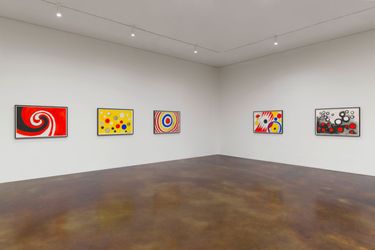
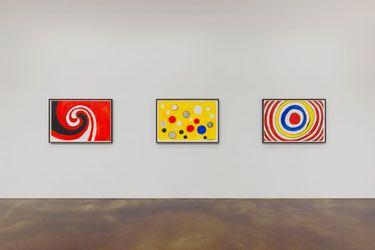
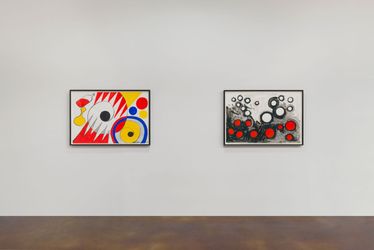
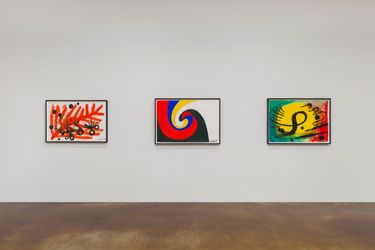
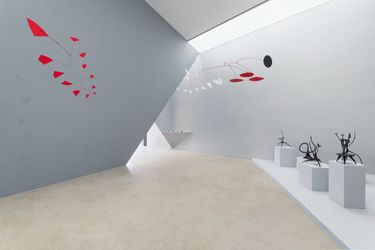
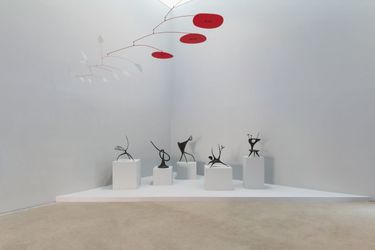
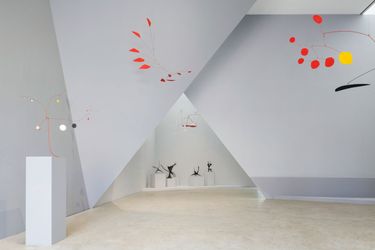
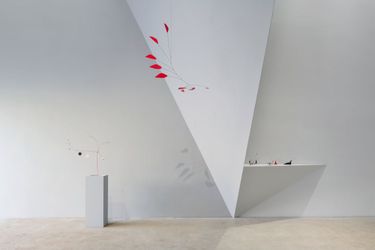
Kukje Gallery is pleased to announce CALDER, a major exhibition to be held in the gallery’s K2 and K3 spaces in Seoul from 4 April to 28 May 2023. Alexander Calder is universally celebrated as one of the 20th century’s most influential and innovative artists, and the presentation at Kukje Gallery, organised in cooperation with the Estate of Alexander Calder, will include iconic examples of his mobiles and standing mobiles, as well as a stunning selection of bronzes and works on paper. The first show of Calder’s work at the gallery since 2014, CALDER will focus on the artist’s immensely productive period beginning in the 1940s through the 1970s. Characterised by material experimentation and the use of abstract forms to engage and activate space, Calder’s sculptures continue to enchant viewers with their mix of poetic lightness and philosophical gravity; his work has become synonymous with the modern ideals of freedom and sophistication.

Starting in the late 1920s, Calder served as a vital bridge between European Modernism and the nascent American avant-garde. He was a contemporary of Marcel Duchamp, who famously coined the term ‘mobile’ to describe Calder’s kinetic works (a pun on the French word, which means both ‘motion’ and ‘motive’). Calder’s continuously evolving approach to sculpture and diverse visual vocabularies led him to international acclaim in the post-WWII milieu, fundamentally altering the history of art and establishing a legacy that continues to influence a wide range of contemporary artists around the world.

The exhibition at Kukje Gallery will focus on how gesture and intuition underlie the artist’s mastery of movement. This primacy is well established in the unexpected yet graceful turns of Calder’s mobiles, which expanded the purview of sculpture—activating not only their environments but also the air that they float in. Many exhibitions have explored this effect in relation to choreography, such as the Whitney Museum of American Art‘s Calder: Hypermobility in 2018. The show’s curators described his works as having ‘an embedded performativity that is reflected in their idiosyncratic motions and the perceptual responses they provoke.’

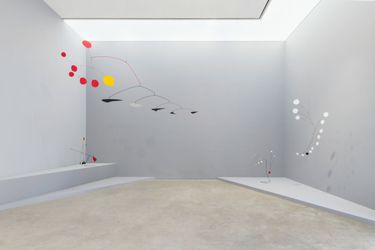
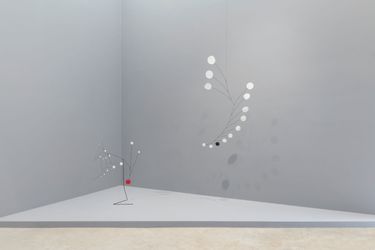
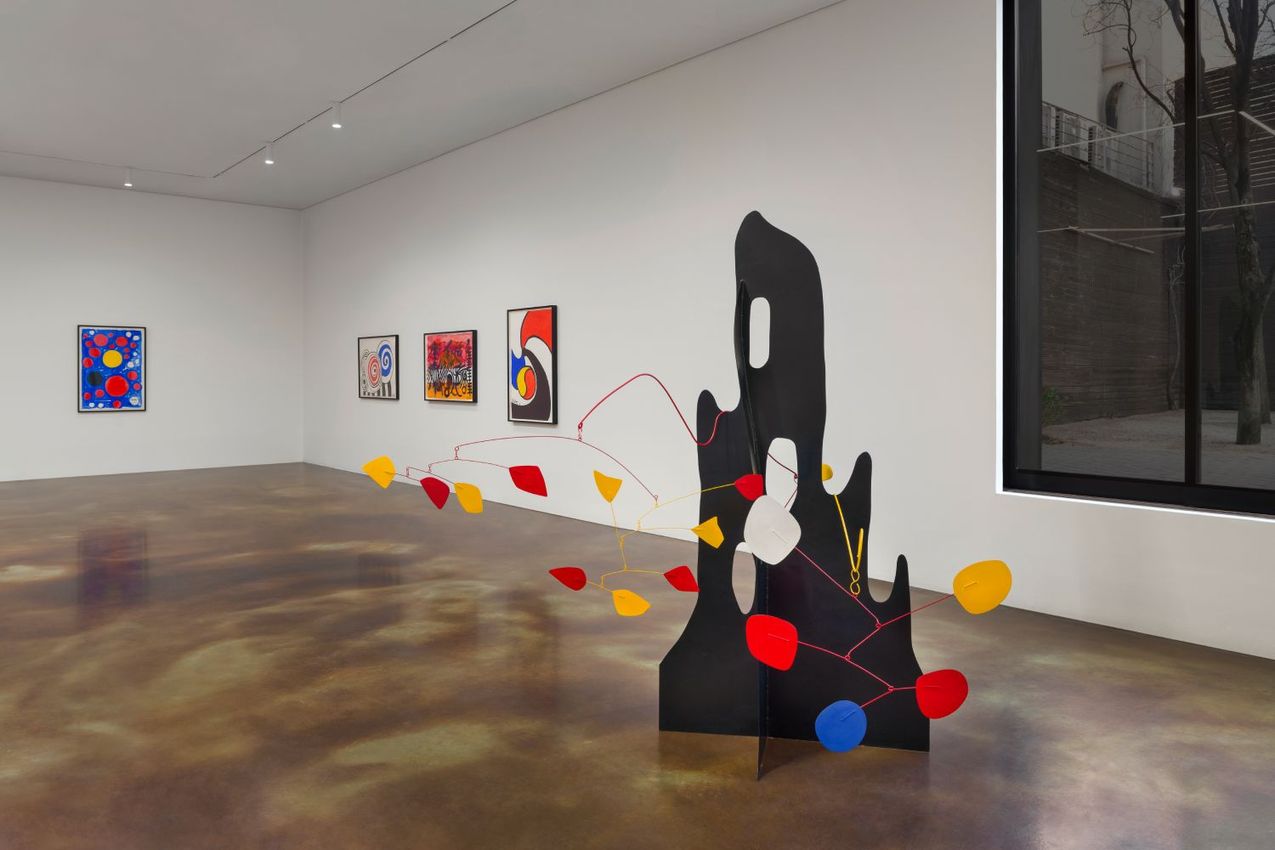
Installed in Kukje Gallery’s K3 space, Calder’s mobiles and standing mobiles are arranged to showcase the distinctive character and profound spatial dynamics that power them. This performativity can be seen to stunning affect in such standing mobiles as the sound-making _Untitled _(c. 1940) and the small-scale Grand Piano, Red (1946), as well as the sweeping arc of hanging mobiles including Untitled (c. 1954) and White Ordinary (1976). Their ability to capture energy can be likened to geology and time, and perhaps more evocatively, weather. The monumental _Guava _(1955) evokes a full sky of brilliant colors cutting through space. The way the mobiles pick up and amplify atmospheric changes are central to their magical transformation of the gallery. This sensitivity to attraction and repulsion, power and grace, is also perfectly embodied in the three superlative bronzes shown together here, The Flower, Fawn, and Whip Snake (all 1944).

This same attention to invisible elements can also be seen powerfully in K2 where the ink and gouache works establish a powerful resonance with Calder’s sculptural practice, a process that sees the artist working out ideas and experimenting with spatial configurations. The vibrant black calligraphic lines in Untitled (1963), recurring spirals in Blue Eye, Red Eye (1969), and natural forms in _Yellow Flower, Red Blossoms _(1974) expand on this dialogue. Taking it even further, Calder’s lines in The Bottle (1975) suggest the seismic waves that underlie the landscape.

The gouaches and sculptural works installed through K2 and K3 together create a kind of symbiotic concert involving something like a call and response. The works on paper function like an accompaniment, assisting the viewer in understanding the unseen complexities of the mobiles and how they inhabit and transform the gallery space.

Read More

Installation Views

Seoul Lowdown: Five Must-See Spring Exhibitions Spotlight Seoul Lowdown: Five Must-See Spring Exhibitions Reporting from South Korea, Ocula Magazine shares five must‑see exhibitions around Seoul this spring. Read the story
About the Artist

Alexander Calder (1898-1976), whose illustrious career spanned much of the 20th century, is the most acclaimed and influential sculptor of our time. Born in a family of celebrated, though more classically trained artists, Calder utilized his innovative genius to profoundly change the course of modern art. He began by developing a new method of sculpting: by bending and twisting wire, he essentially “drew” three-dimensional figures in space. He is renowned for the invention of the mobile, whose suspended, abstract elements move and balance in changing harmony. Calder also devoted himself to making outdoor sculpture on a grand scale from bolted sheet steel. Today, these stately titans grace public plazas in cities throughout the world.

View Artist Profile

Also Exhibiting at Kukje Gallery

About the Gallery

Established in the heart of Seoul in 1982, Kukje Gallery is a leading Korean gallery dedicated to showcasing works by Korean and international artists and promoting modern and contemporary art. At 54 Samcheong-ro, Jongno-gu, the gallery has 3 key exhibition spaces, respectively named K1, K2, and K3. In 2018, the gallery opened a second location in F1963, a cultural complex housed in a former wire factory in Suyeong-gu, Busan.

View Gallery Profile
Address
54, Samcheong-ro
Jongno-gu
Seoul
South Korea
Opening Hours
Monday – Saturday
10am – 6pm

Sunnday
10am – 5pm

National Holidays
10am – 5pm
(1)
Seoul 54, Samcheong-ro, Jongno-gu
Kukje Gallery
54, Samcheong-ro, Jongno-gu, Seoul, South Korea

Opening hours
Monday – Saturday
10am – 6pm

Sunnday
10am – 5pm

National Holidays
10am – 5pm
The art world in focus