Press Release

This exhibition reflects on the irrepressible, productive capacity of the organic world. The amazing overflowing fecundity of things, that is both marvelous and overwhelming. This is encapsulated by a new video, From Within, that depicts a woman within a cavernous space composed of translucent amber stalactites. She leans forwards and begins to disgorge an apparently limitless stream of golden honey-like liquid. It is simultaneously beautiful and disturbing, deliberate and serene but going against the deep-seated intuition that nothing good ever comes back out of the body. Honey fascinates me. When we eat it, we are the third creature to have digested it; it has passed through two bees to get to us. It may be the earliest example of humans utilising the unique biological processes of other creatures for their own purposes; an ancient symbiosis between people and bees that displays exactly the sort of the inter-species connections that seem so radical when played out in contemporary science.

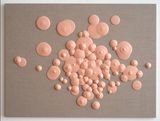
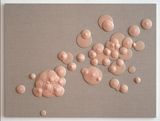
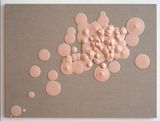
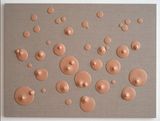
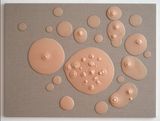
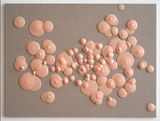
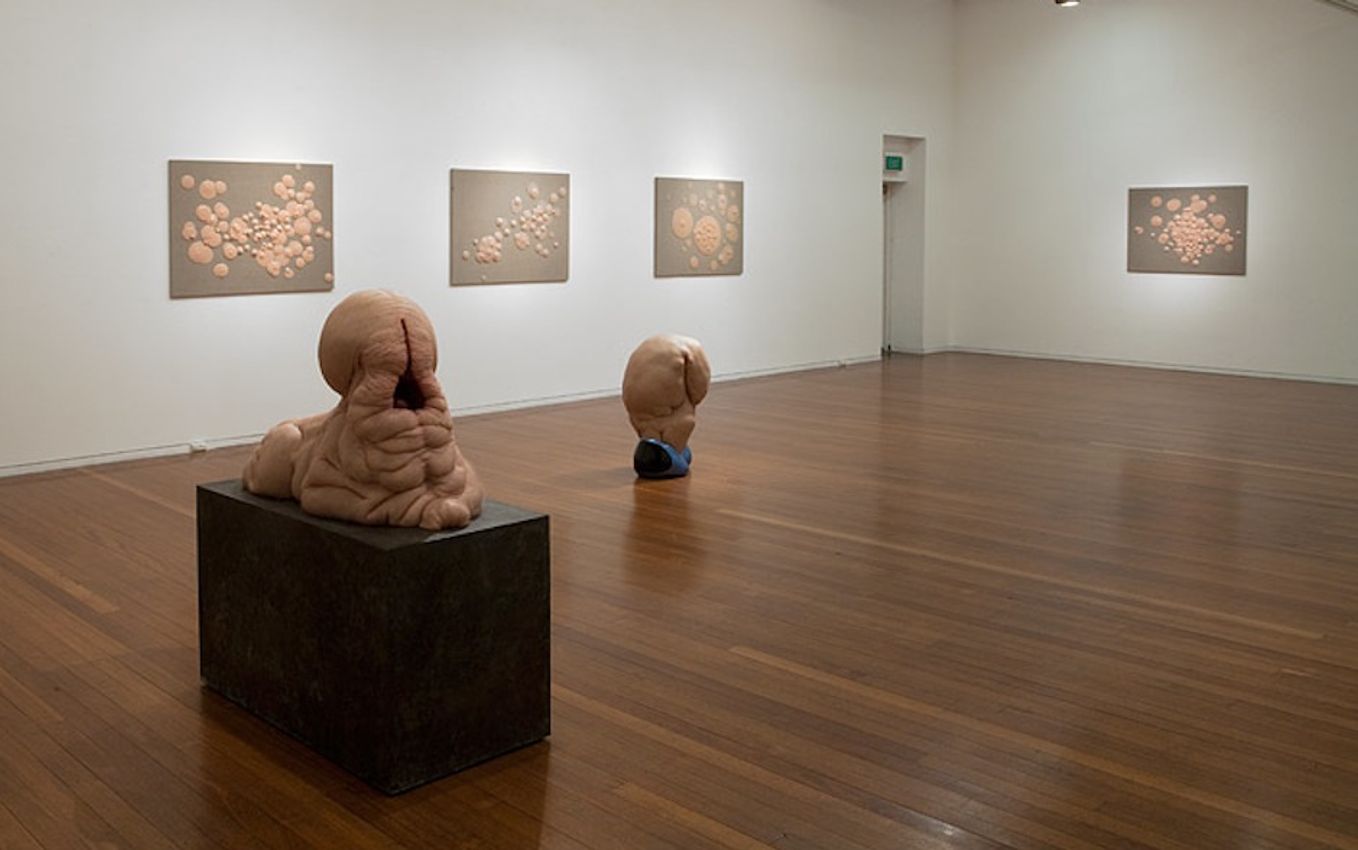
Formally, the voluptuous, amorphous, liquid forms and their resulting accretion and accumulation recur throughout the show. We see them in the paintings and the the amorphous fleshy forms of the sculptural works. The paintings come almost automatically, an interplay between silicone’s natural tendency to flow and accrete and my own desire to control it. I mostly use silicone to mimic the material properties of flesh. Like all great mimics, silicone is a paradox; best known for being something else. I have become increasingly interested in the material itself; in the backs of moulds and the inside of castings, in the overflows and errors. I find the spills and drips both fascinating and evocative because in some ways it reminds me of the creatures I create; unlovely and unwanted yet beautiful and irrepressible all the same. In the studio we collect these overflows to keep as tests and to feed back into the process of refinement and increased verisimilitude. However, I see a beauty there that I find compelling and evocative. In the form of paintings, they are abstract but seem to suggest complex micro-structures or macrocosms.

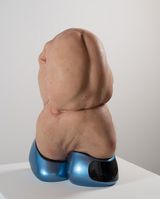
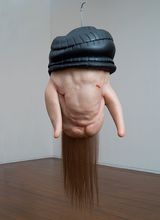
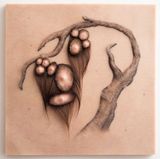
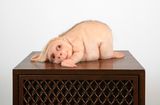
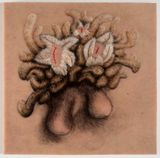
There is a similar abstract corporeality in a group of new sculptures; Ghost, Atlas and Sphinx. These works reflect on the contemporary understanding of the body as essentially mutable. From the very cellular level of organisms to the physical appearance of people, we now expect everything to be changeable to suit our desires. These sculptures are quite instinctive, very much my drawings made ‘flesh’ and as such portray a more enigmatic narrative. The hyperrealism of my sculptural process is subverted by the deliberate anti-naturalism of the forms themselves. There is none of the certainty that you usually find with highly realistic figures. It is hard to gauge whether they are literal or metaphorical. In Sphinx, there is a reference to the the use of bodies for production, with the head sheltering what appears to be a human organ. However, this glistening object could just as easily be a large bean or seed. Sphinx is an expression of raw fecundity. It references ancient sculpture which reminds us that the earliest sculptures - the stone age venus figures - were depictions of fertility.

Patricia Piccinini

About the Artist

Patricia Piccinini is one of Australia’s most distinguished artists. She has exhibited nationally and internationally for over two decades.

View Artist Profile

Also Exhibiting at Roslyn Oxley9 Gallery

About the Gallery

Established in Sydney by influential Australian art dealer and gallerist Roslyn Oxley and her husband Tony Oxley in 1982, Roslyn Oxley9 Gallery is one of Australia’s leading commercial galleries.

View Gallery Profile
Address
8 Soudan Lane
Paddington, NSW
Sydney
Australia
Opening Hours
Tuesday – Friday
10am – 6pm

Saturday
11am – 6pm
(1)
Sydney 8 Soudan Lane, Paddington, NSW
Roslyn Oxley9 Gallery
8 Soudan Lane, Paddington, NSW, Sydney, Australia

Opening hours
Tuesday – Friday
10am – 6pm

Saturday
11am – 6pm
The art world in focus