






AMIE DICKE
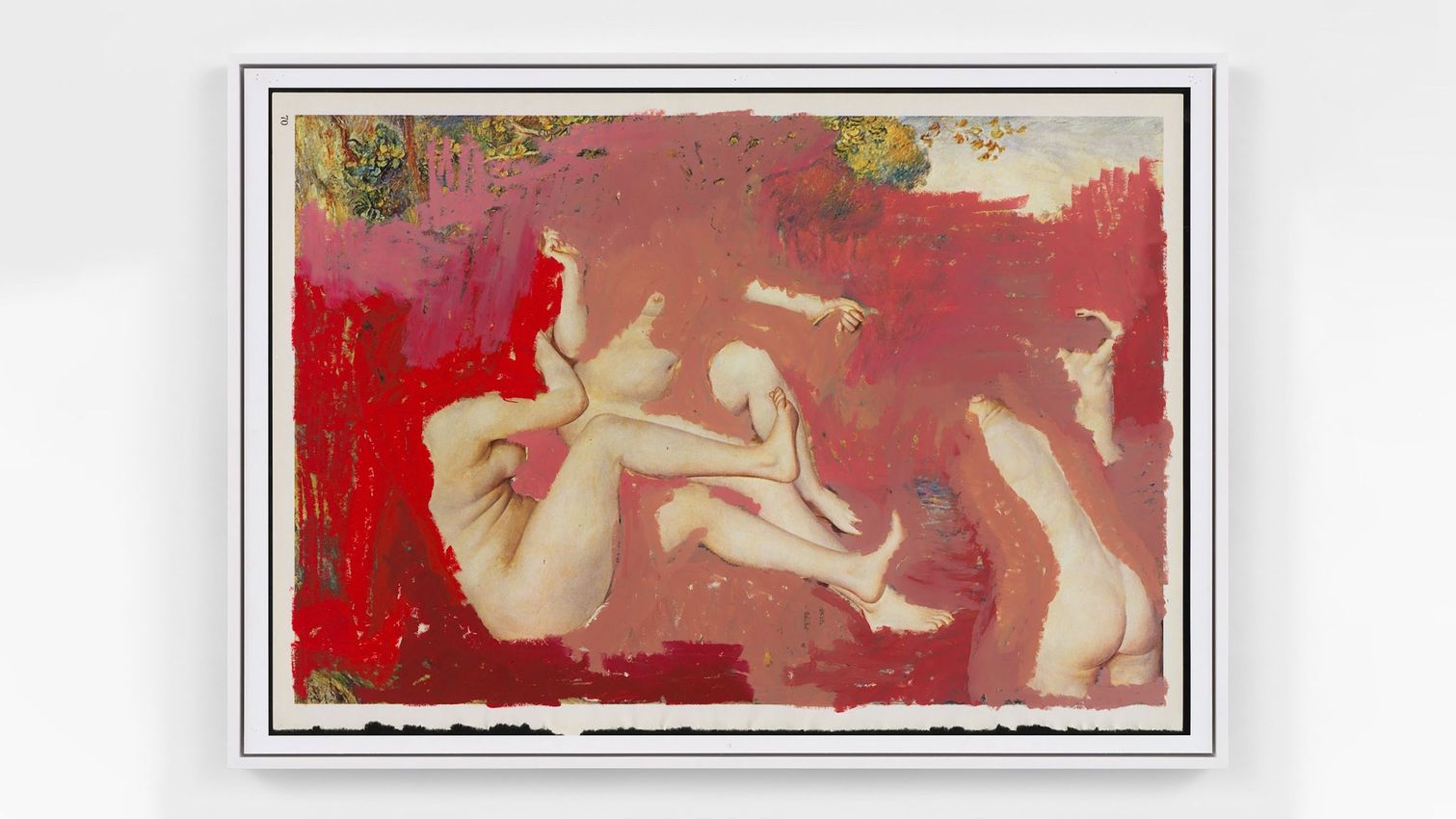
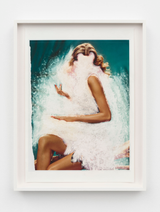
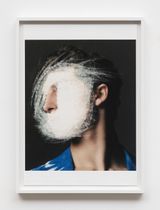
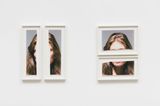
b. 1978, NetherlandsQuestioning the portrayal of women (and, more recently, men) in fashion and advertising as objects for consumption, Amie Dicke disrupts existing images to reveal associations and meanings that we might not otherwise consider. She defaces and recreates imagery in many ways, including by cutting parts away, erasing them with sandpaper or caking them in make-up.
Early Years
Amie Dicke was born in Rotterdam in 1978 into a creative family: her mother was a stylist, her father an interior designer and among her grandparents were a poet and an architect. While studying at the Willem de Kooning Academie, she cast the negative space between her legs using marzipan and icing, demonstrating her lasting interest in absence and presence. After graduating in 2000, Dicke moved to New York City, which she found “overwhelming”. The pace of NYC was a stark contrast from Rotterdam, and Dicke used billboards as a focus point for navigation: in 2001 she started making works based on fashion magazines, considering the concept of the promise of beauty and creating emptiness by cutting away parts of the images. It is often written that Dicke was a model while living in NYC, but in fact she was a teen model in Rotterdam, not in New York. “I was too shy to be a good model,” she said in 2024.
Amie Dicke: Artworks
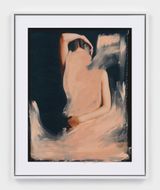
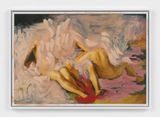
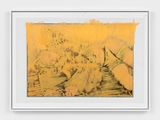
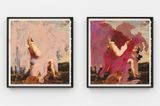
Amie Dicke’s creative practice centres on creating voids and empty spaces in existing imagery. While well-known for defacing fashion portraiture, she also works with found objects, which could be anything from a Turkish photobook to 40,000 glass slides from a shuttered Amsterdam photographic archive. She sometimes uses scalpels, powder and layering to alter images, at other times blowing up images and reproducing them on archival paper. Disturbing familiar narratives in this way asks viewers to consider what established visual cues mean to us, and Dicke’s images have a dualistic quality that blends absence and presence.
- Political Horizon (2017), from 2017’s The Liver Must Go to the Images exhibition, is a large-scale sandpapered piece featuring a blown-up newspaper clipping of two anonymous besuited politicians embracing, turning a run-of-the-mill greeting into a brief moment of intimacy.
- 2019’s tryptich Smile/Lean In/Elbow are digital prints on archival paper, focusing in on details of bodies in a way that upends established fashion photography. The deep red lips of Smile are kissing the bottom of the frame, while Lean In focuses on a detail of a male shoulder. Elbow zooms in on an arm joint, with a short red sleeve at the top of the image.
- Church (2024) is based on a reproduction of a painting Dicke found in a catalogue, which originally featured two girls wearing pleated garments praying. Erasing the girls (although not their shadows) gives a ghostly aura to the pleats that remain behind.
Amie Dicke: Exhibitions
Select Solo Exhibitions
- Figure Head, Oosterkerk, Amsterdam (2025)
- Open Arms, Anat Ebgi Gallery, New York City (2024)
- Solo, Landhuis Oud Amelisweerd/Centraal Museum, Utrecht (2022)
- Meet Me at the Altar, Felix Meritis, Amsterdam (2021)
- One-Liner, Anat Ebgi, Los Angeles (2020)
- The Liver Must Go to the Images, Stigter Van Doesburg, Amsterdam (2017)
- Sucking Stones, Looiersgracht 60, Amsterdam
- Collecting Alibis, Anat Ebgi, Los Angeles and Stigter Van Doesburg, Amsterdam (2013)
- Connected Isolation, Hiromi Yoshii Gallery, Tokyo (2010)
- Passive Drifter, Peres Projects, Berlin (2008)
- Verwilder, Visionaire Gallery, New York City (2005)
- New Season, New Girls, New Looks, D’Amelio Terras, New York City (2004)
Select Group Exhibitions
- S-curve, The Flag Art Foundation, New York City (2026)
- Scratches on Film, Anat Ebgi, Los Angeles
- The Imaginary Made Real, Berry Campbell Gallery, New York City (2024)
- The Conversation, Anat Ebgi at Minnesota Street Project, San Francisco (2019)
- Bic Collection, Centquartre, Paris (2018)
- Once in a Lifetime, Oude Kerk, Amsterdam (2016)
- How Soon is Now?, organised by Gallery Stigter Van Doesgburg, Manifesta, Amsterdam (2015)
- Blood Sugar Sex Magik, The Company, Los Angeles (2012)
- I Should Have Done That, Nest, Den Haag (2011)
- Get Behind Me Satan and Push, Peres Projects, Berlin (2010)
- Call it What You Like!, Collection Rik Reinking, Art Centre Silkeborg Bag (2008)
Further reading
Amie Dicke’s website Amie Dicke’s Instagram 2024 interview from Office about her Open Arms exhibition Amie Dicke’s artist profile page at Anat Ebgi
Amie Dicke FAQs
What techniques and materials does Amie Dicke use?
Amie Dicke defaces images, for example, cutting up and altering fashion portraiture, sandpapering glossy magazines, removing the ink reservoirs from rollerball pens, or covering books with layers of make-up. Her 2020 exhibition One–Liner was the debut of a technique where Dicke used a continuous incision to slice into aluminium plates containing fashion images and then bending shapes into the metal. At the time, she said: “Nothing is really removed, nothing is lost, just opened.” She also works with found objects, including bicycle bells left on the streets of Amsterdam.
What are Amie Dicke’s influences?
It could be said that the visual storytelling practices of fashion and consumerism are Dicke’s biggest influences, in that her work disrupts these established narratives. However, Dicke has also started using well-known Western art as a starting point: for example, 2024’s The Bathers questions Renoir’s 1887 painting The Bathers, retelling the story with the swimmers trying to stay afloat in a sea of lipstick.
Where does Amie Dicke live and work?
Amie Dicke is based in Amsterdam—for a period she rented studio space inside a former Catholic church. Her practice is also influenced by found objects from the streets of the Dutch city.
Ocula

View Amie Dicke's Artworks












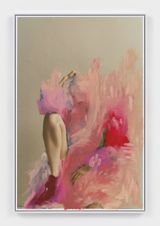


Explore Amie Dicke's Exhibitions

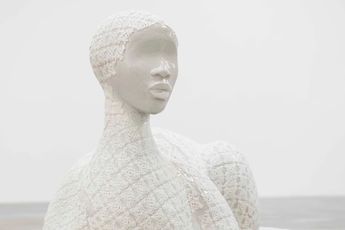

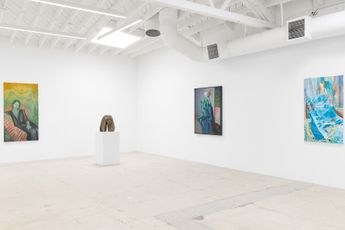


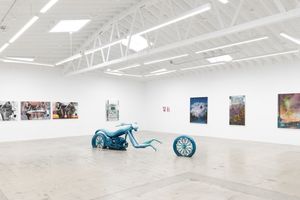
Explore and Follow Artists Shaping Contemporary Art
A respected voice in contemporary art discourse.
Focusing on ambitious storytelling and insightful art-world commentary. Ocula Magazine publishes in-depth interviews, critical essays and timely analysis on the artists, exhibitions and ideas driving the global art world.
Learn more about Ocula Magazine
Showcasing the best of the art world.
Ocula partners with galleries from around the world to highlight their artists, artworks and exhibitions. Gallery membership is by application and invitation, with each member vetted by an independent panel.
Learn more about Ocula Membership
Specialises in the sale of major artworks.
Led by a team with deep ties to the world’s leading auction houses, galleries and collectors. Ocula’s advisory team offers bespoke services to high-net-worth clients from around the world who are looking to acquire the best of contemporary and modern art.
Learn more about our team and services