





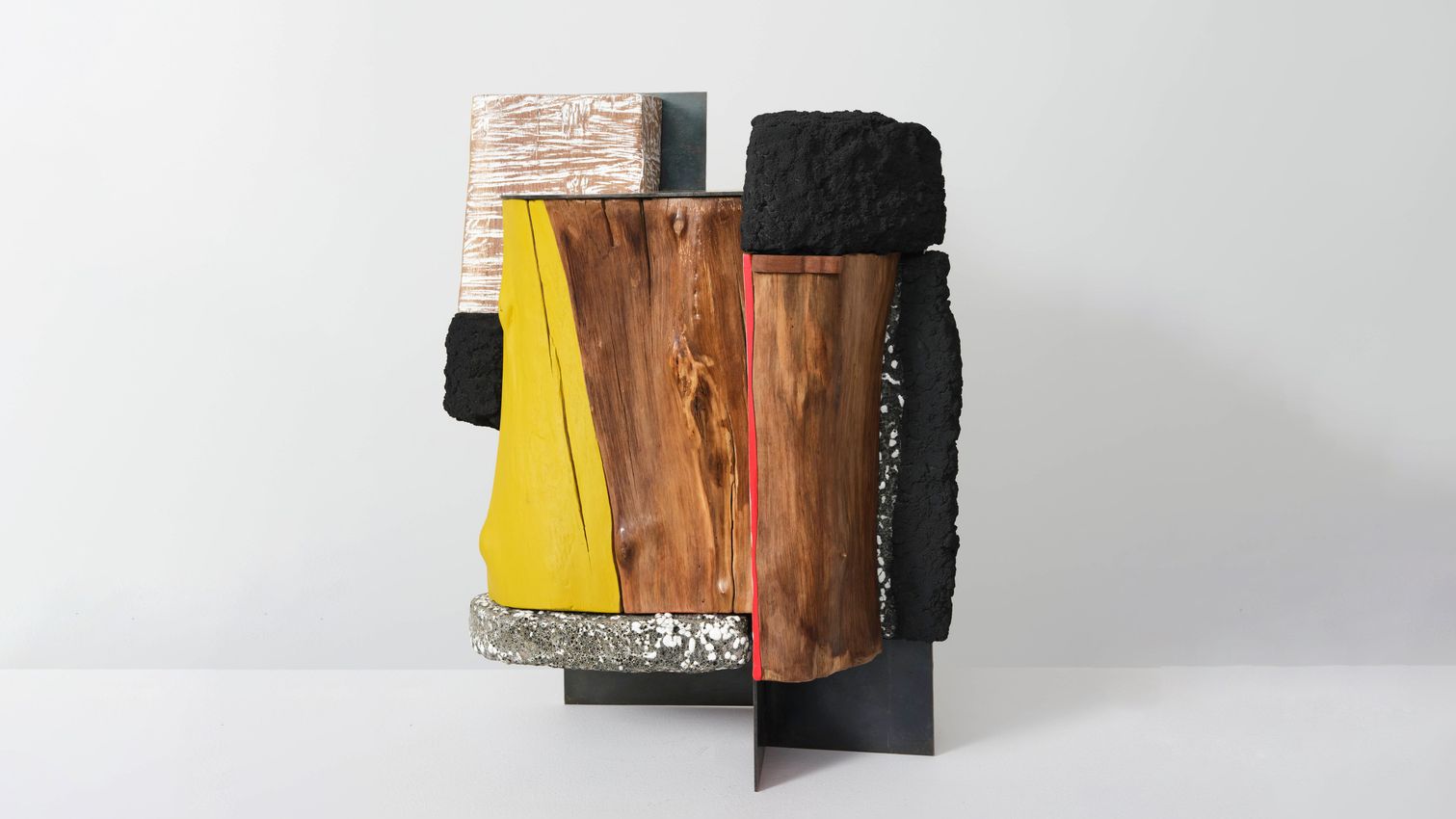
ARLENE SHECHET
b. 1951, United StatesArlene Shechet (b. 1951, New York) is an American sculptor whose improvisatory, materially adventurous practice has been central to the contemporary reinvention of ceramics and sculpture. Best known for gravity-defying ceramic and mixed-media sculptures that seem to twist, lean and melt while remaining poised, she creates precarious yet carefully calibrated assemblages that fuse clay with wood, steel, concrete, bronze, and painted colour. Her work has been the subject of major institutional exhibitions, including the survey All at Once at the ICA Boston, the outdoor project Full Steam Ahead in Madison Square Park, and the large-scale exhibition Girl Group at Storm King Art Center, and she is represented by Pace Gallery and Vielmetter Los Angeles. In 2026 Pace Los Angeles presents Big Sister, the debut of a new outdoor painted-aluminium sculpture installed in the gallery’s courtyard, marking her first new outdoor work since Girl Group.
Early life and career
Born and raised in New York, Shechet studied at New York University before completing her MFA at the Rhode Island School of Design in 1978. Early in her career she worked across sculpture and works on paper, but by the 1990s and 2000s she was increasingly drawn to experimental approaches to clay, rejecting conventional vessel forms in favour of complex, idiosyncratic structures that pushed the material’s physical limits. Her sustained engagement with porcelain and industrial production processes intensified in the mid-2000s, including an extended collaboration with the Meissen porcelain manufactory that informed later bodies of work and exhibitions.
From early on, Shechet developed a parallel interest in exhibition-making and display, often describing herself as an installation artist who happens to make objects. This sensibility informs both her solo presentations and curatorial projects at institutions such as The Frick Collection, The Phillips Collection, The Drawing Center, and Harvard Art Museums, where she has rethought how decorative arts and sculpture are installed and perceived. Over several decades she has received significant recognition, including a National Endowment for the Arts Fellowship, a Guggenheim Fellowship, a Joan Mitchell Foundation grant, the CAA Artist Award for Distinguished Body of Work, the Anonymous Was A Woman Award, and election as a lifetime member of the American Academy of Arts and Letters in 2023.
Works, series and methods
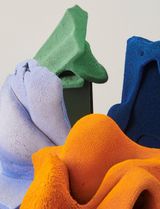
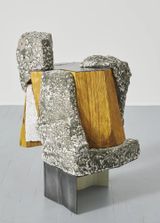
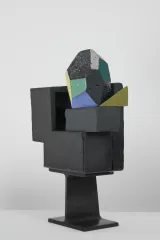
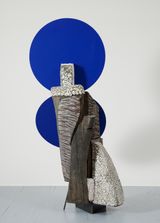
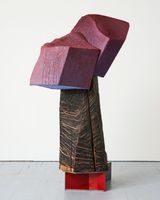
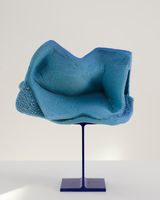
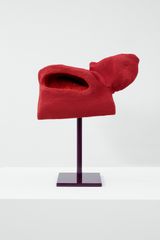
Shechet’s best-known works are highly physical, improvisatory sculptures in ceramic and mixed media, whose lopsided silhouettes, bulges, cavities, and protrusions often evoke bodies in states of leaning, stretching, slumping, or recovering balance. She builds up clay by hand, embracing slippages, cracks, glaze runs, and firing accidents, then combines fired forms with idiosyncratic bases—plinths of carved wood, cast concrete, or painted steel—that function as integral sculptural elements rather than neutral supports. Colour is central to her process: glazes and painted surfaces range from translucent washes to thick, glossy layers, producing an optical push-and-pull between mass and surface, weight and chromatic lift.
A pivotal body of work emerged from her engagement with porcelain and the history of decorative arts, where she incorporated casts of firebricks and factory slip moulds—tools usually hidden from view—into her sculptures. These works, and the exhibition Porcelain, No Simple Matter: Arlene Shechet and the Arnhold Collection at The Frick Collection (2016–17), juxtaposed her sculptures with 18th-century European porcelain, revealing the labour, technology, and power relations embedded in ostensibly refined objects. Projects such as From Here On Now at The Phillips Collection and interventions at The Drawing Center and Harvard Art Museums further developed this method of re-staging historical collections and contemporary works in unexpected combinations.
Her large-scale public works extend this vocabulary outdoors. Full Steam Ahead (Madison Square Park, 2018–19) introduced vividly coloured, hybrid concrete-and-ceramic sculptures arranged with benches and platforms that blurred distinctions between art object, furniture, and public infrastructure. In 2024 Arlene Shechet: Girl Group at Storm King Art Center brought together recent works in wood, steel, ceramic, paper, and bronze, including six new monumental sculptures dispersed across the landscape, translating her interest in balance, asymmetry, and colour into outdoor forms that respond to changing light and terrain.
The 2026 exhibition Big Sister at Pace Los Angeles presents a new painted-aluminium sculpture of the same title, installed in the gallery’s courtyard from 11 February to 6 June 2026. Described as her first new outdoor sculpture since Girl Group, Big Sister continues her exploration of precarious balance and visual paradox at architectural scale; its debut is accompanied by a public conversation with Shechet, artist David Salle, and curator Stephanie Barron, organised by Pace Live and LACMA‘s Modern and Contemporary Art Council.
Themes and context
Shechet’s practice is rooted in an exploration of material behaviour and the expressive potential of form, often staging a tension between control and chaos, fragility and resilience, beauty and awkwardness. By foregrounding the marks of making—fingerprints, seams, slumps, misalignments—she positions sculpture as a record of negotiation between the artist’s will and the stubbornness of matter. Many works inhabit a space between figuration and abstraction, hinting at bodies, furniture, or architectural fragments without resolving into fixed identities, which allows them to operate as open-ended metaphors for emotional and psychological states.
Her curatorial and installation projects extend these concerns into institutional contexts, questioning inherited hierarchies between fine art and decorative arts, pedestal and object, centre and periphery. By reconfiguring display systems—tilting plinths, uneven sight lines, unexpected juxtapositions—Shechet prompts viewers to move, look from multiple angles, and become aware of how exhibition design shapes interpretation. Situated within contemporary sculpture’s broader turn to ceramics and craft, her work has been widely cited as helping to shift clay from marginal medium to a central site of experimentation, while foregrounding histories of gendered labour and the decorative.
Exhibitions, collections and recognition
Shechet has been featured in the survey All at Once at the Institute of Contemporary Art, Boston, which traced two decades of her practice across more than 150 works. Solo exhibitions and projects include Full Steam Ahead in Madison Square Park, Porcelain, No Simple Matter at The Frick Collection, From Here On Now at The Phillips Collection, interventions at The Drawing Center and Harvard Art Museums, Girl Group at Storm King Art Center, and the 2026 outdoor presentation Big Sister at Pace Los Angeles. She has also presented exhibitions with Pace Gallery in New York, Hong Kong, East Hampton, Palo Alto, and Palm Beach, and with Vielmetter Los Angeles, among others.
Her work is represented in over 50 public collections internationally, including the Metropolitan Museum of Art, Centre Pompidou, National Gallery of Art, Los Angeles County Museum of Art, Hirshhorn Museum and Sculpture Garden, Nasher Sculpture Center, Walker Art Center, and Whitney Museum of American Art. Major honours include a National Endowment for the Arts Fellowship, a Guggenheim Fellowship, a Joan Mitchell Foundation Painters and Sculptors Grant, the Anonymous Was A Woman Award, the CAA Artist Award for a Distinguished Body of Work, and election as a lifetime member of the American Academy of Arts and Letters in 2023.
Arlene Shechet FAQs
What is Arlene Shechet best known for?
Arlene Shechet is best known for experimental ceramic and mixed-media sculptures that appear to lean, sag, and twist while maintaining precarious balance. Her improvisatory approach to clay and sculptural supports has been widely credited with changing the landscape of contemporary ceramics and sculpture.
What themes does Arlene Shechet explore in her work?
Shechet’s work explores themes of material transformation, balance and imbalance, and the tension between control and accident. Her sculptures often hover between abstraction and figuration, reflecting on the humour and pathos of human experience through awkward, animated forms and vivid colour.
How does Arlene Shechet work with ceramics and other materials?
Shechet uses clay in highly experimental ways, hand-building irregular forms, embracing cracks and glaze drips, and subjecting pieces to multiple firings. She frequently combines fired ceramics with custom plinths of wood, steel, concrete, or bronze, integrating base and object into a single sculptural composition and, in recent outdoor works, extends this logic to large-scale metal structures.
Where can I see Arlene Shechet’s work?
Her work is held in major collections including the Metropolitan Museum of Art, Centre Pompidou, National Gallery of Art, LACMA, the Hirshhorn Museum, the Nasher Sculpture Center, Walker Art Center, and the Whitney Museum of American Art. Current and recent presentations include Girl Group at Storm King Art Center, the outdoor installation Big Sister at Pace Los Angeles, and exhibitions and projects with Pace Gallery and Vielmetter Los Angeles.
Ocula | 2026


View Arlene Shechet's Artworks



















Explore and Follow Artists Shaping Contemporary Art
A respected voice in contemporary art discourse.
Focusing on ambitious storytelling and insightful art-world commentary. Ocula Magazine publishes in-depth interviews, critical essays and timely analysis on the artists, exhibitions and ideas driving the global art world.
Learn more about Ocula Magazine
Showcasing the best of the art world.
Ocula partners with galleries from around the world to highlight their artists, artworks and exhibitions. Gallery membership is by application and invitation, with each member vetted by an independent panel.
Learn more about Ocula Membership
Specialises in the sale of major artworks.
Led by a team with deep ties to the world’s leading auction houses, galleries and collectors. Ocula’s advisory team offers bespoke services to high-net-worth clients from around the world who are looking to acquire the best of contemporary and modern art.
Learn more about our team and services