






MARY CORSE
b. 1945, United StatesMary Corse is a pioneering American contemporary artist celebrated for her luminous, minimalist paintings and innovative explorations of light, perception, and materiality. Often associated with the 1960s Light and Space movement in Southern California, Corse is renowned for her unique technique of embedding glass microspheres into acrylic paint, creating surfaces that shift and radiate with changing light and the viewer’s movement. Her groundbreaking practice has been the subject of major institutional surveys, including Mary Corse: A Survey in Light at the Whitney Museum of American Art and the Los Angeles County Museum of Art.
Early Years
Mary Corse was born in Berkeley, California, in 1945. She began her studies at the University of California, Santa Barbara, in 1963, and later earned her BFA from the Chouinard Art Institute (now CalArts) in Los Angeles in 1968. For most of her career, Corse has lived and worked in Los Angeles and Topanga Canyon, drawing inspiration from the region’s light and atmosphere; however, she maintains that her works are rooted in abstraction and perception, not landscape.
Mary Corse Artworks
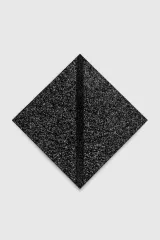
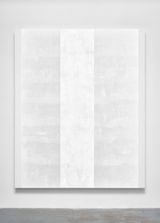
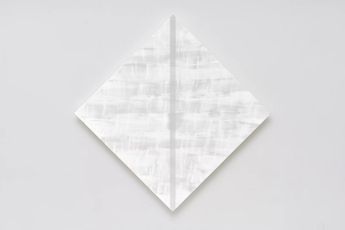
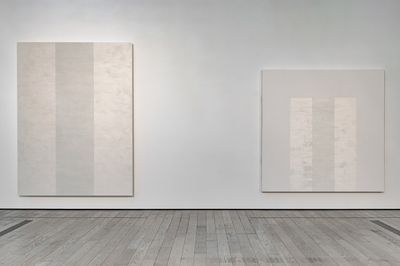
Mary Corse’s art practice is defined by her investigation into the subjective experience of light, color, and space through minimalist painting and innovative materials. She is best known for her White Light paintings, which use glass microspheres—tiny reflective beads used in highway markings—to create surfaces that appear to emit light and change with the viewer’s position.
Early Experimentation and Lightboxes (1960s)
In the mid-1960s, Corse began experimenting with shaped canvases, plexiglass, and illuminated boxes, seeking ways to make light both the subject and material of her art. Her early Lightboxes (1966–68) used fluorescent and argon-filled tubes encased in plexiglass, and she studied quantum physics to develop wireless lighting systems for her works.
White Light Paintings (1968–present)
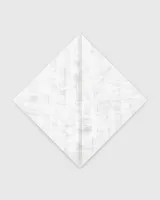
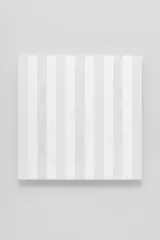
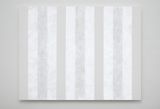
Corse’s breakthrough came in 1968 when she began mixing acrylic paint with glass microspheres, inspired by the reflective road markings she observed while driving at night. These White Light paintings are composed of vertical bands or geometric forms, with surfaces that shimmer and shift as viewers move, activating a direct, embodied experience of light. ‘Nothing’s static in the universe. So why make a static painting?’ Corse has said
Black Earth and Black Light Series (1970s–1980s)
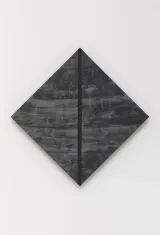
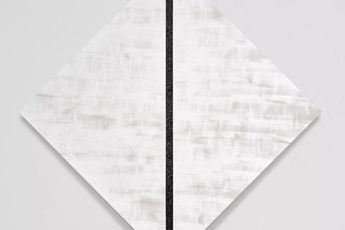
After moving to Topanga Canyon in 1970, Corse expanded her practice to include the Black Earth series—large ceramic slabs glazed black and fired in a custom-built kiln. She also developed the Black Light series, using black acrylic and microspheres to explore the perceptual boundaries of darkness and light.
Later Developments and Installations
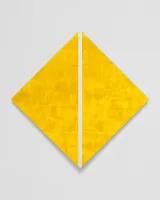
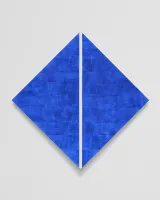
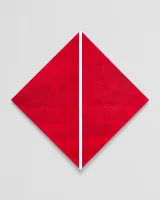
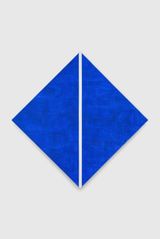
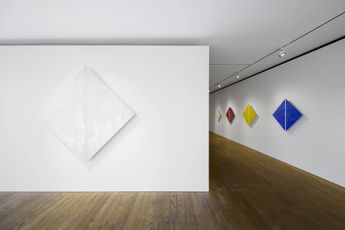
From the 2000s onward, Corse reintroduced primary colors into her paintings, further exploring color as a constituent of white light. Her installations—such as the Halo Room—and recent exhibitions continue to expand her investigations into the phenomenology of perception and the possibilities of painting
Select Public Commissions, Awards and Accolades
- Permanent installation for the U.S. General Services Administration at the Los Angeles federal courthouse (2016)
- Cartier Foundation Award (1993)
- National Endowment for the Arts Fellowship (1975)
- Theodoran Award, Solomon R. Guggenheim Museum (1971)
- New Talent Award, Los Angeles County Museum of Art (1967)
Exhibitions
Mary Corse has been the subject of both solo and group exhibitions at important galleries and institutions. Below is a selection of important exhibitions.
Solo Exhibitions
- Mary Corse: Presence in Light, Pace Gallery, New York (2024)
- Mary Corse: Painting with Light, Long Museum, Shanghai (2021); traveled to Amorepacific Museum of Art, Seoul (2022)
- Mary Corse: A Survey in Light, Whitney Museum of American Art, New York (2018); traveled to Los Angeles County Museum of Art (2019)
- Mary Corse: Variations, Lisson Gallery, London (2020)
- Mary Corse: Recent Paintings, Pace Gallery, New York (2019)
- Pacific Standard Time: Crosscurrents in L.A. Painting and Sculpture, 1950–1970, J. Paul Getty Museum, Los Angeles (2011)
- Phenomenal: California Light and Space, Museum of Contemporary Art San Diego (2011)
- Venice in Venice, 54th Venice Biennale, collateral exhibition curated by Nyehaus (2011)
- Reductive Minimalism: Women Artists in Dialogue, 1960–2012, University of Michigan Museum of Art, Ann Arbor (2014)
Collections
Corse’s works are held in major public collections, including the Whitney Museum of American Art, New York; Solomon R. Guggenheim Museum, New York; Dia Art Foundation, New York; National Gallery of Art, Washington D.C.; J. Paul Getty Museum, Los Angeles; Los Angeles County Museum of Art; Museum of Contemporary Art, Los Angeles; Menil Collection, Houston; Long Museum, Shanghai; and Amorepacific Museum of Art, Seoul.
Mary Corse FAQs
Where can I see Mary Corse’s art?
Mary Corse’s artworks are in the permanent collections of the Whitney Museum of American Art (New York), Solomon R. Guggenheim Museum (New York), Dia Art Foundation (New York), National Gallery of Art (Washington D.C.), J. Paul Getty Museum (Los Angeles), Los Angeles County Museum of Art, Museum of Contemporary Art (Los Angeles), Menil Collection (Houston), Long Museum (Shanghai), and Amorepacific Museum of Art (Seoul).
What is Mary Corse best known for?
Mary Corse is best known for her White Light paintings, which use glass microspheres to create radiant, shifting surfaces that explore the perception of light and space.
What inspired Mary Corse’s use of glass microspheres?
Corse was inspired after noticing the luminosity of road markings at night and began mixing glass microspheres—used in highway paint—into her acrylics to achieve a shimmering, light-emitting effect.
What awards has Mary Corse received?
She has received the Cartier Foundation Award, National Endowment for the Arts Fellowship, Theodoran Award from the Solomon R. Guggenheim Museum, and the New Talent Award from the Los Angeles County Museum of Art.
Are there any interesting facts about Mary Corse?
Mary Corse was one of the few women associated with the Light and Space movement, and her contributions were only fully recognized decades later.
How do you pronounce Mary Corse’s name?
It is pronounced ‘MAIR-ee KORS’
Ocula | 2025

View Mary Corse's Artworks















Explore Mary Corse's Exhibitions









Explore and Follow Artists Shaping Contemporary Art
A respected voice in contemporary art discourse.
Focusing on ambitious storytelling and insightful art-world commentary. Ocula Magazine publishes in-depth interviews, critical essays and timely analysis on the artists, exhibitions and ideas driving the global art world.
Learn more about Ocula Magazine
Showcasing the best of the art world.
Ocula partners with galleries from around the world to highlight their artists, artworks and exhibitions. Gallery membership is by application and invitation, with each member vetted by an independent panel.
Learn more about Ocula Membership
Specialises in the sale of major artworks.
Led by a team with deep ties to the world’s leading auction houses, galleries and collectors. Ocula’s advisory team offers bespoke services to high-net-worth clients from around the world who are looking to acquire the best of contemporary and modern art.
Learn more about our team and services