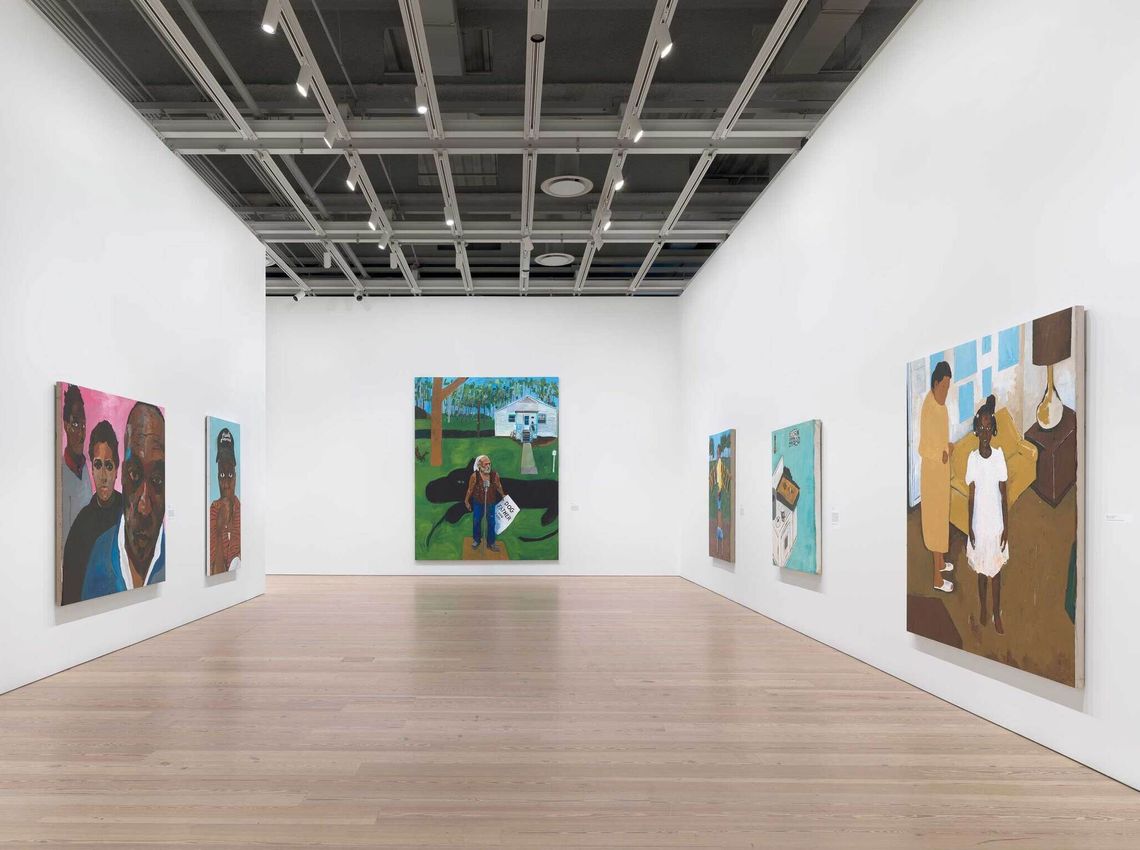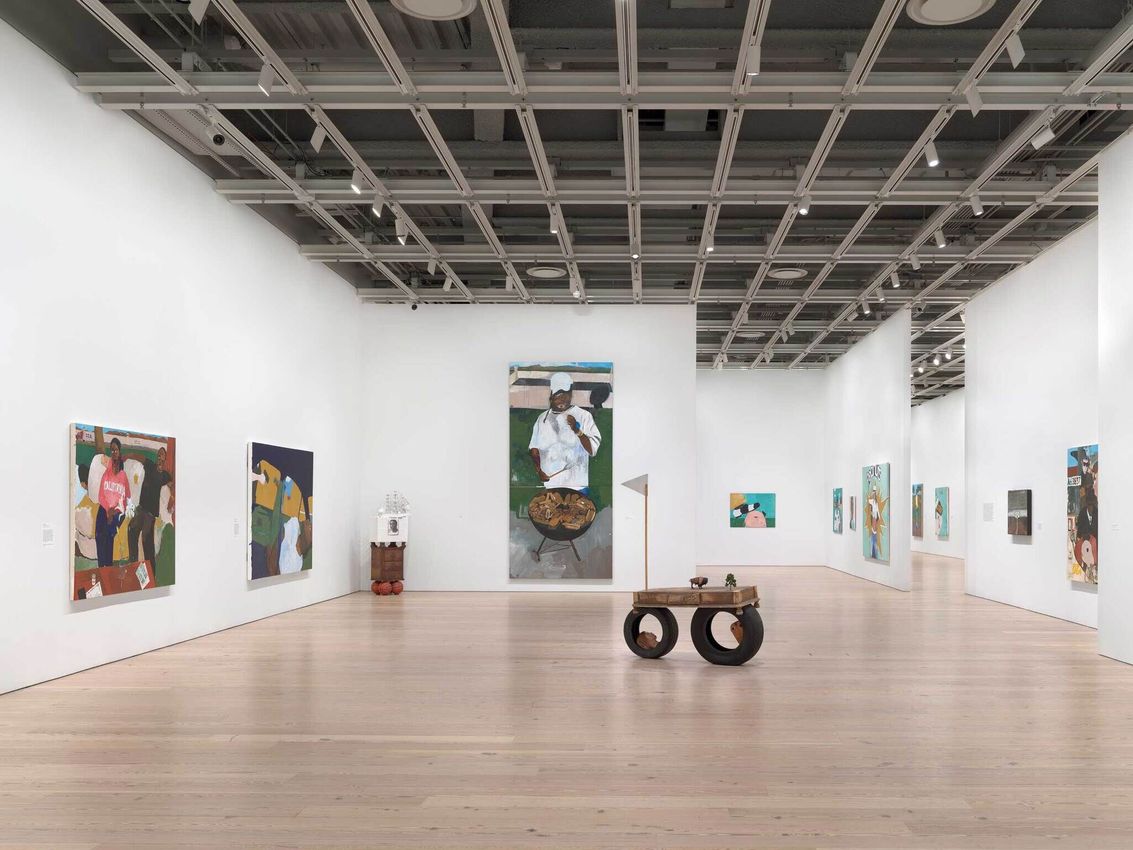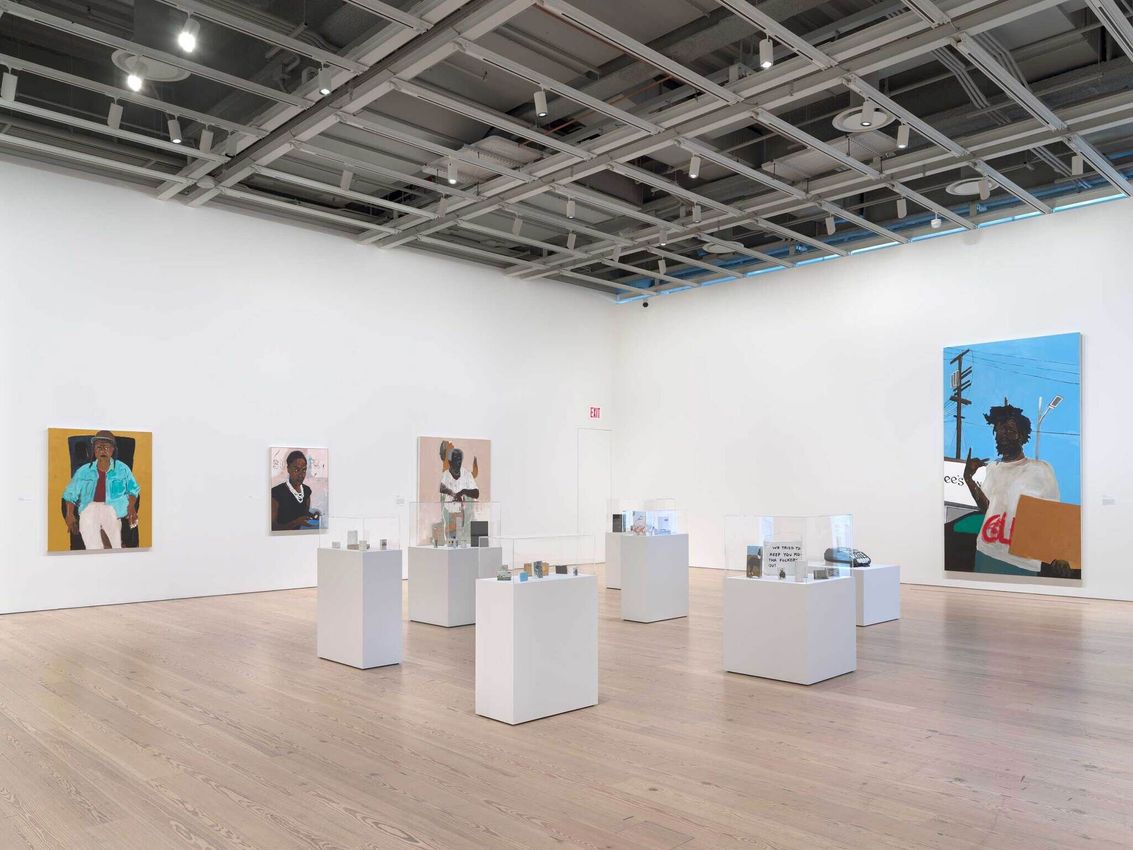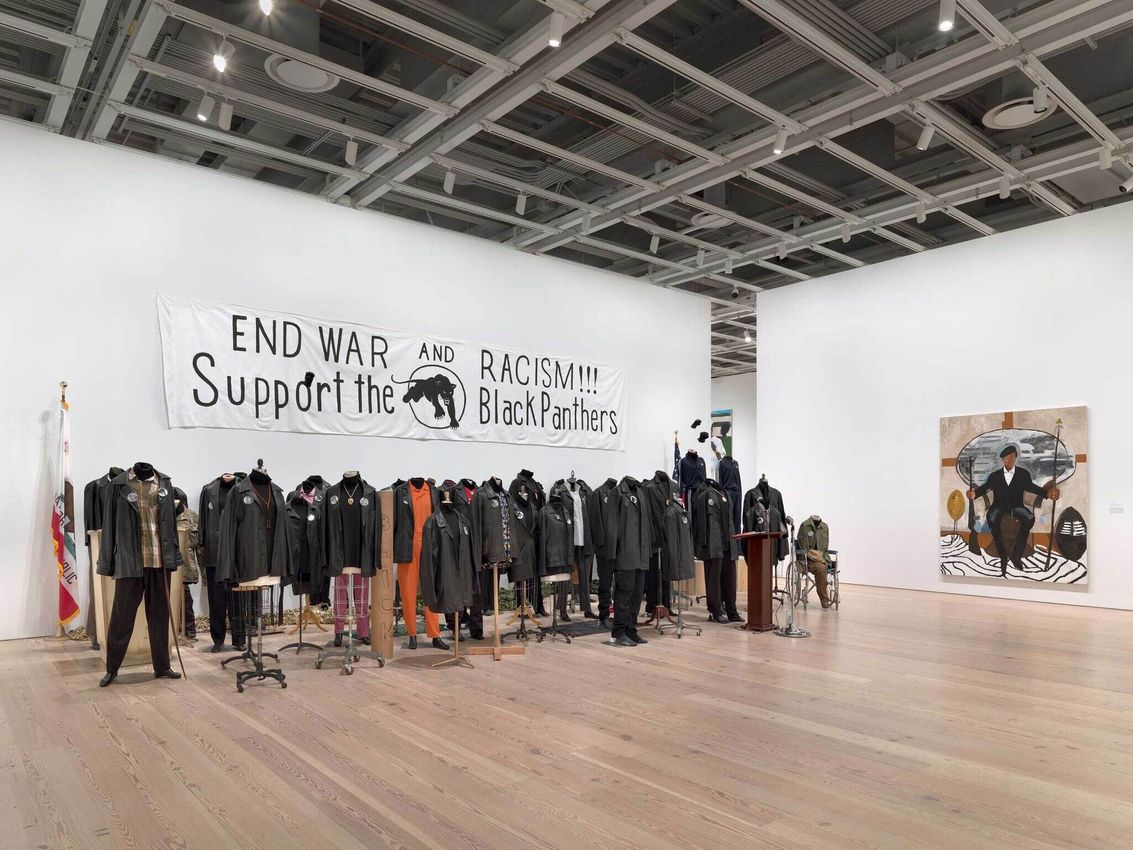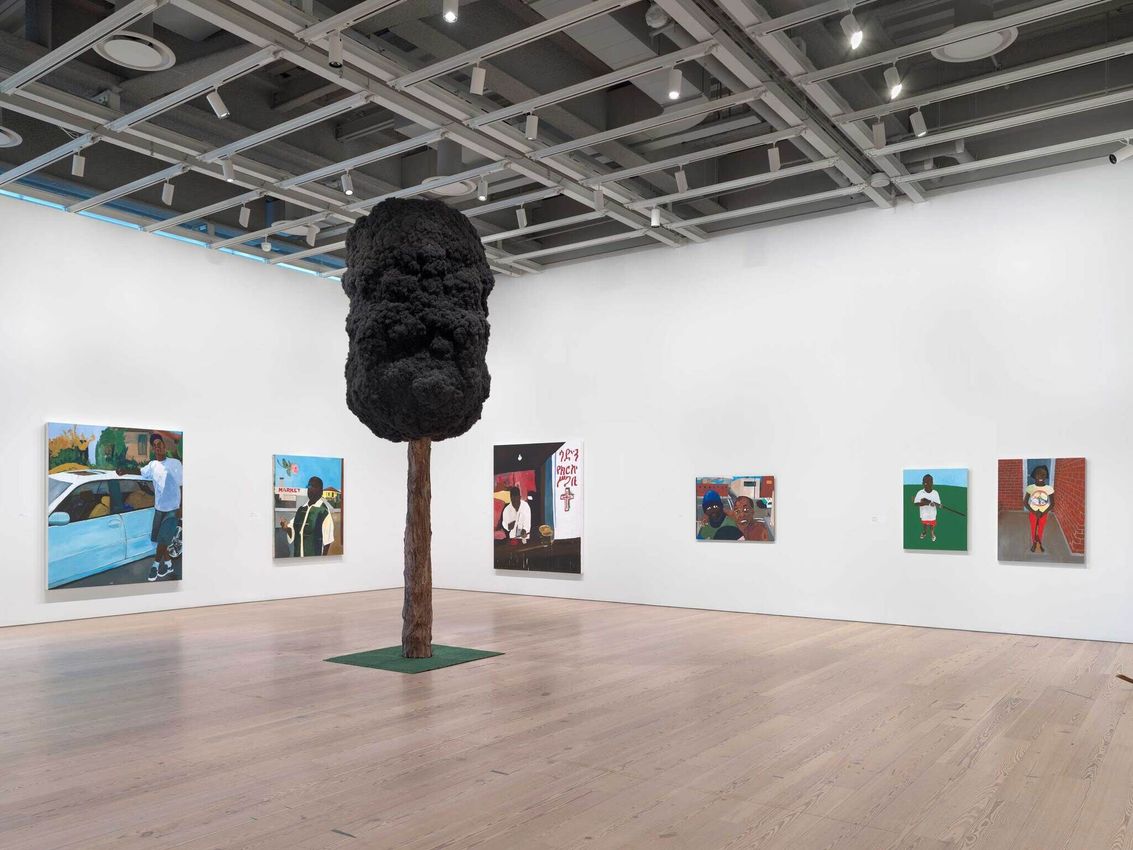
For more than thirty years, the Los Angeles–based artist Henry Taylor (b. 1958) has portrayed people from widely different backgrounds—family members, friends, neighbors, celebrities, politicians, and strangers—with a mixture of raw immediacy and tenderness. His improvisational approach to artmaking is hinted at in this exhibition’s title, Henry Taylor: B Side, which refers to the side of a record album that often contains lesser-known, more experimental songs.
Taylor’s paintings, executed quickly and instinctually from memory, newspaper clippings, snapshots, and in-person sittings, are variously light-hearted, intimate, and somber. In them, he combines flat planes of bold, sensuous color with areas of rich, intimate detail and loose brushstrokes to create paintings that feel alive. Guided by a deep-seated empathy for people and their lived experiences, Taylor captures the humanity, social milieu, and mood of his subjects, whose visceral presence is heightened by their closely cropped, often life-size images.
In working from personal experience and shared history, Taylor offers a view of everyday life in the United States that is grounded in the experiences of his own community, including the incarceration, poverty, and often deadly interactions with police that disproportionately affect Black Americans. Deeply steeped in art history, his work forms a continuum with the expressive figurative painting and politically engaged work of European and American artists from Max Beckmann to Bob Thompson, Philip Guston, and Alice Neel.
Henry Taylor paints figurative portraits but should never be considered simply a “portraitist”. While his subjects—empathetically portrayed, whether homeless people in LA or celebrities or victims of police violence—take centre stage in his artworks, it is Taylor’s evocation of the social and cultural narratives in each picture that tells the real story.
The Whitney Museum of American Art is a landmark cultural institution located in New York‘s vibrant Meatpacking District, at 99 Gansevoort Street. Designed by renowned architect Renzo Piano, the museum’s striking asymmetrical structure integrates cutting-edge architecture with sweeping skyline views and direct access to the High Line, making it an essential destination for anyone interested in American art and culture.

A respected voice in contemporary art discourse.
Focusing on ambitious storytelling and insightful art-world commentary. Ocula Magazine publishes in-depth interviews, critical essays and timely analysis on the artists, exhibitions and ideas driving the global art world.
Learn more about Ocula Magazine
Showcasing the best of the art world.
Ocula partners with galleries from around the world to highlight their artists, artworks and exhibitions. Gallery membership is by application and invitation, with each member vetted by an independent panel.
Learn more about Ocula Membership

Specialises in the sale of major artworks.
Led by a team with deep ties to the world’s leading auction houses, galleries and collectors. Ocula’s advisory team offers bespoke services to high-net-worth clients from around the world who are looking to acquire the best of contemporary and modern art.
Learn more about our team and services