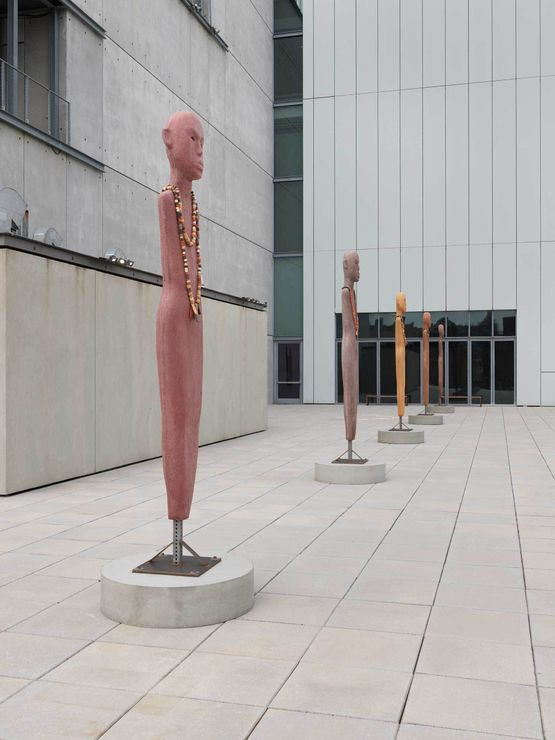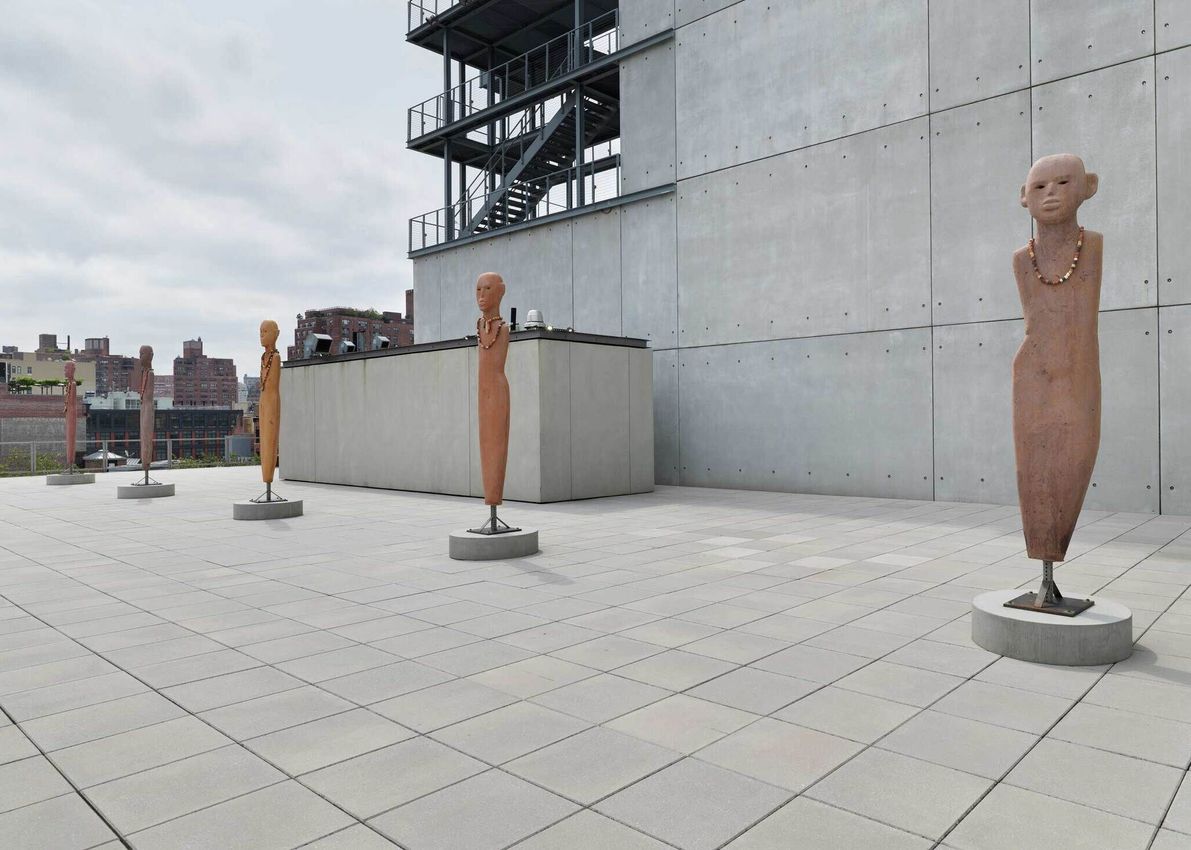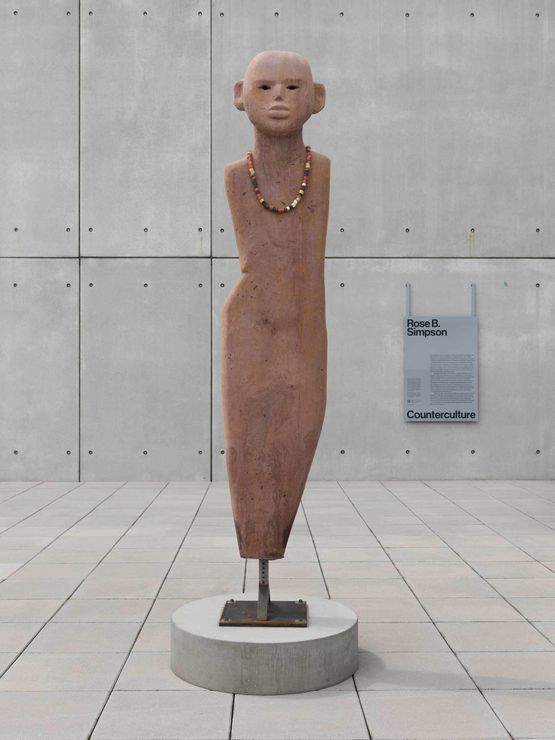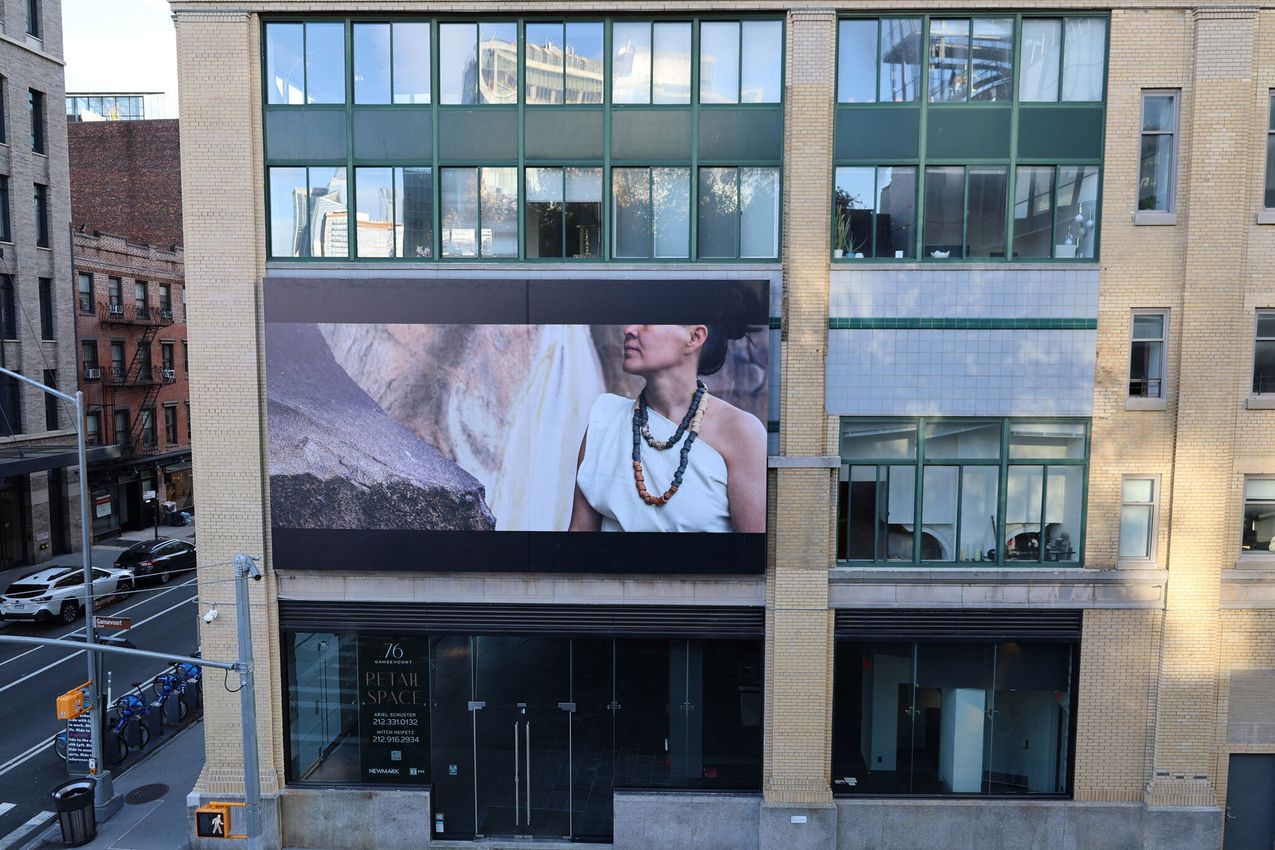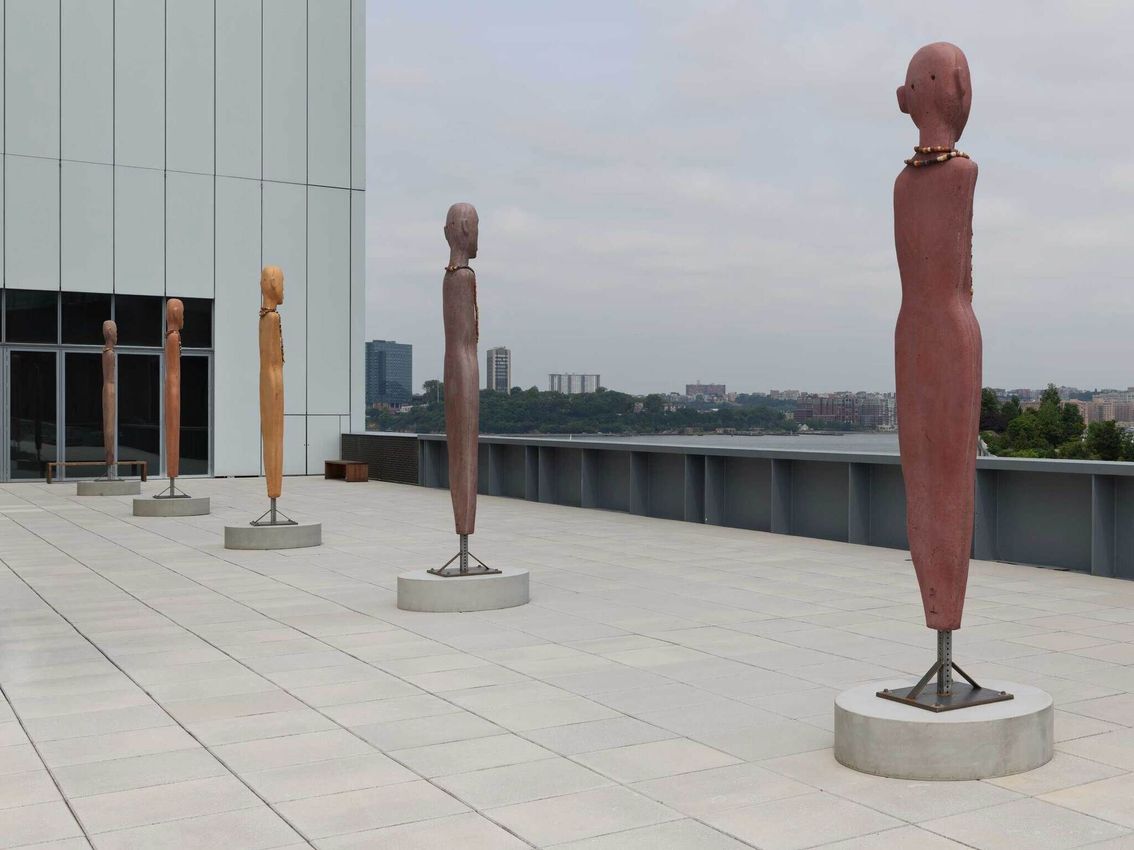
Through her work in ceramic, metal, printmaking, painting, and performance, Rose B. Simpson (b. 1983) draws connections between our contemporary lives and the landscapes we inhabit. Simpson surfaces the histories of marginalized peoples, underscoring a collective lack of awareness about our ancestral past and the natural world. For Simpson, the five figures on view here—cast in concrete in colors reminiscent of her work in clay—remind us that “we are not independent, that the inanimate are watching, and that we are responsible not only to the present but to the ancestral spirits that inhabit a particular place.” Simpson titled both the exhibition and the individual works Counterculture as a reference to the importance of communities that live separately from dominant cultures but still have significant cultural impact. These watchful figures serve as stand-ins for those that colonization has aimed to silence, including the Lenape and who inhabited much of present-day Manhattan and the surrounding area until they were forcibly displaced by the Dutch in the seventeenth century. Looking out over the city and the Hudson River, notably through hollow eyes, they suggest an awareness of the world beyond our present reality, pointing to landscapes now obscured from this location. This installation is presented in conjunction with a billboard on Gansevoort Street titled Encounter. The work, a collaboration between Simpson and filmmaker Razelle Benally, is a photographic image that depicts a queer Indigenous individual framed against a rock face in northern New Mexico; the landscape in the image nods to the hardness of the city street where it is presented. As with Simpson’s sculptures on the terrace, the figure wears a beaded ceramic necklace, underscoring a connection to the natural world through the use of clay and a sense of empowerment through this adornment. For Simpson and Benally, Encounter is ultimately an invitation to consider how the natural world relates to the built environment.
Rose B. Simpson (born, lives, and works in Santa Clara Pueblo, NM) is a mixed-media artist whose work explores the impact, both emotional and existential, of living in the postmodern and postcolonial world. Growing up in a multigenerational, matrilineal lineage of artists working with clay, her practice is informed by indigenous tradition.
The Whitney Museum of American Art is a landmark cultural institution located in New York‘s vibrant Meatpacking District, at 99 Gansevoort Street. Designed by renowned architect Renzo Piano, the museum’s striking asymmetrical structure integrates cutting-edge architecture with sweeping skyline views and direct access to the High Line, making it an essential destination for anyone interested in American art and culture.

A respected voice in contemporary art discourse.
Focusing on ambitious storytelling and insightful art-world commentary. Ocula Magazine publishes in-depth interviews, critical essays and timely analysis on the artists, exhibitions and ideas driving the global art world.
Learn more about Ocula Magazine
Showcasing the best of the art world.
Ocula partners with galleries from around the world to highlight their artists, artworks and exhibitions. Gallery membership is by application and invitation, with each member vetted by an independent panel.
Learn more about Ocula Membership

Specialises in the sale of major artworks.
Led by a team with deep ties to the world’s leading auction houses, galleries and collectors. Ocula’s advisory team offers bespoke services to high-net-worth clients from around the world who are looking to acquire the best of contemporary and modern art.
Learn more about our team and services