





Art Critic Roberta Smith Departs New York Times
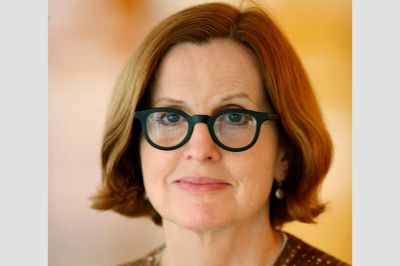
Roberta Smith. Courtesy New York Times.

Roberta Smith is retiring from her position as co-chief art critic at The New York Times. She will continue to contribute short reviews to the newspaper every couple of months.
‘I will have more time to pursue my number one interest, which is going to galleries and museums, looking at stuff,’ Smith wrote on her Instagram.
She also acknowledged her plans to spend more time enjoying other forms of culture.
‘I think I can say that art has kept me young – or something close. I look forward to seeing if live music, dance, and theatre can do the same,’ she said.
Smith began freelancing for the Times in 1986, joining the staff in 1991. She went on to contribute some 4,500 reviews and essays to the newspaper.
‘Over more than 50 years, Ro has anointed the new, celebrated the overlooked, and held institutions accountable on many fronts, including representation and acquisitions, while bringing fresh context to marginalised areas of art-making, especially outsider art and craft,’ said Barbara Graustark, her longtime editor, in a press release.
‘Roberta refuses to be impressed by names, preferring to look hard at the art, not the marketplace,’ Graustark continued. ‘And she has stayed true to her declaration at the start of her career that “if it seems unnecessarily difficult or obscure, I find it pretentious.” She has said she saves her praise for art that is “rich enough, human enough, accessible”.’
Roberta was the first woman to serve as chief art critic at the Times, a role she held alongside Holland Cotter.
‘It’s been a real privilege to work with Roberta, one of the touchstone contemporary art critics of her generation, and always a stimulating colleague,’ Cotter said.
On his Instagram, Smith’s husband Jerry Saltz, who writes about art for New York Magazine, wrote, ‘I am biased but believe that @robertasmithnyt is the best pure art critic alive. The directness, integrity, conciseness, power of observation, ability to parse differences and conditions, love of art, respect for artists, and obsession for how things are made make her indispensable and irreplaceable.’
‘We who have art in our lives in any form are incredibly lucky,’ Smith said. ‘But the real luck may be having people who love and obsess about art so completely in our lives.’ —[O]
Main image: Roberta Smith. Courtesy New York Times.

A respected voice in contemporary art discourse.
Focusing on ambitious storytelling and insightful art-world commentary. Ocula Magazine publishes in-depth interviews, critical essays and timely analysis on the artists, exhibitions and ideas driving the global art world.
Learn more about Ocula Magazine
Showcasing the best of the art world.
Ocula partners with galleries from around the world to highlight their artists, artworks and exhibitions. Gallery membership is by application and invitation, with each member vetted by an independent panel.
Learn more about Ocula Membership
Specialises in the sale of major artworks.
Led by a team with deep ties to the world’s leading auction houses, galleries and collectors. Ocula’s advisory team offers bespoke services to high-net-worth clients from around the world who are looking to acquire the best of contemporary and modern art.
Learn more about our team and services