





Richard Serra, Sculptor of Steel Behemoths, Dies Aged 85

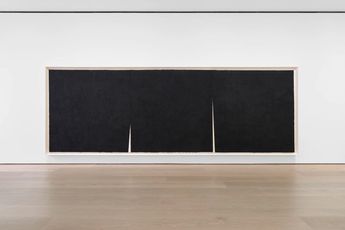
Richard Serra. Artwork © 2021 Richard Serra/Artists Rights Society, New York. Courtesy Gagosian. Photo: Kai Jüenemann.

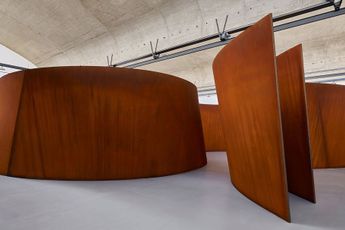
American artist Richard Serra died on Tuesday at age 85. His lawyer, John Silberman, confirmed to The New York Times that the cause was pneumonia.
Though now remembered as one of the most important sculptors to emerge in the 20th century, Serra initially sought to become a painter. Born in 1938 in San Francisco, he received a BA in English Literature from the University of California, Santa Barbara, then went on to obtain a BFA and MFA from Yale.
In 1965 and 1966 he travelled to Europe where he saw Velazquez’s Las Meninas at the Prado Museum. There, he realised that he could not be a painter.
‘I thought there was no possibility of me getting close to that,’ he once told critic Calvin Tomkins.
Returning to New York, Serra began to work with industrial materials and unconventional forms of sculpture. ‘Splash’ (1968–1970) saw him famously throw molten lead at the point where the wall met the floor in galleries, while Thirty-five Feet of Lead Rolled Up (1968) involved unrolling and tightly rolling a sheet of lead.
Serra carried out numerous site-specific installation commissions in his lifetime. Perhaps the most famous and notorious is Tilted Arc (1981), a gently curving rusted corten steel arc installed across the Foley Federal Plaza in New York. The work elicited negative feedback from civic workers around the area, who petitioned to remove it from the plaza. Although Tilted Arc was removed in 1989, it continues to influence conversations about site-specific works and the nature of public sculpture.
Internationally recognised for his work, Serra was awarded the Golden Lion for Lifetime Achievement at the 49th Venice Biennale in 2001. He was also acknowledged with the National Order of the Legion of Honour in France (2015) and the J. Paul Getty Medal (2018), among other accolades.
Serra’s work is currently on view at Galerie Lelong & Co. in Paris until 30 April. A solo presentation of his drawings opens at David Zwirner, London, on 9 April. —[O]
Main image: Richard Serra. Artwork © 2021 Richard Serra/Artists Rights Society, New York. Courtesy Gagosian. Photo: Kai Jüenemann.







A respected voice in contemporary art discourse.
Focusing on ambitious storytelling and insightful art-world commentary. Ocula Magazine publishes in-depth interviews, critical essays and timely analysis on the artists, exhibitions and ideas driving the global art world.
Learn more about Ocula Magazine
Showcasing the best of the art world.
Ocula partners with galleries from around the world to highlight their artists, artworks and exhibitions. Gallery membership is by application and invitation, with each member vetted by an independent panel.
Learn more about Ocula Membership
Specialises in the sale of major artworks.
Led by a team with deep ties to the world’s leading auction houses, galleries and collectors. Ocula’s advisory team offers bespoke services to high-net-worth clients from around the world who are looking to acquire the best of contemporary and modern art.
Learn more about our team and services