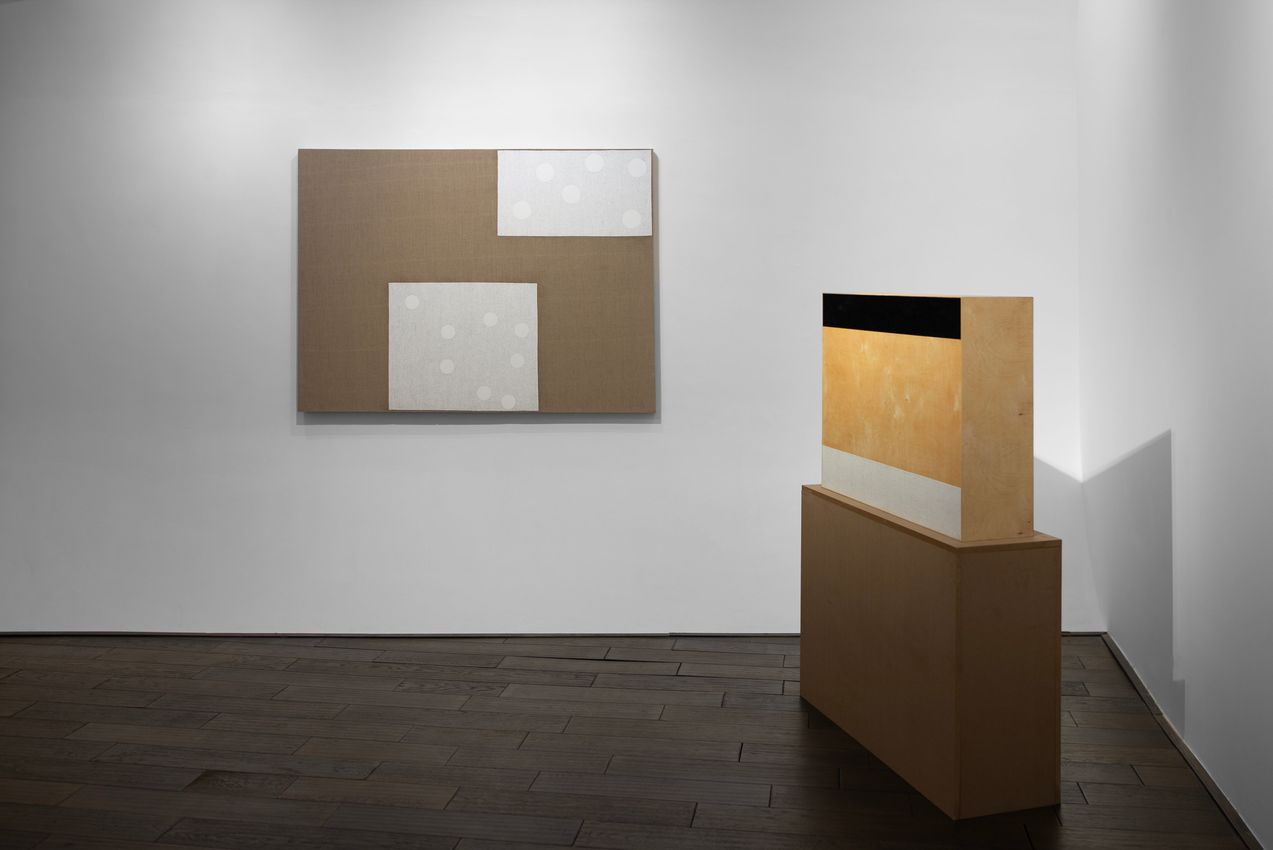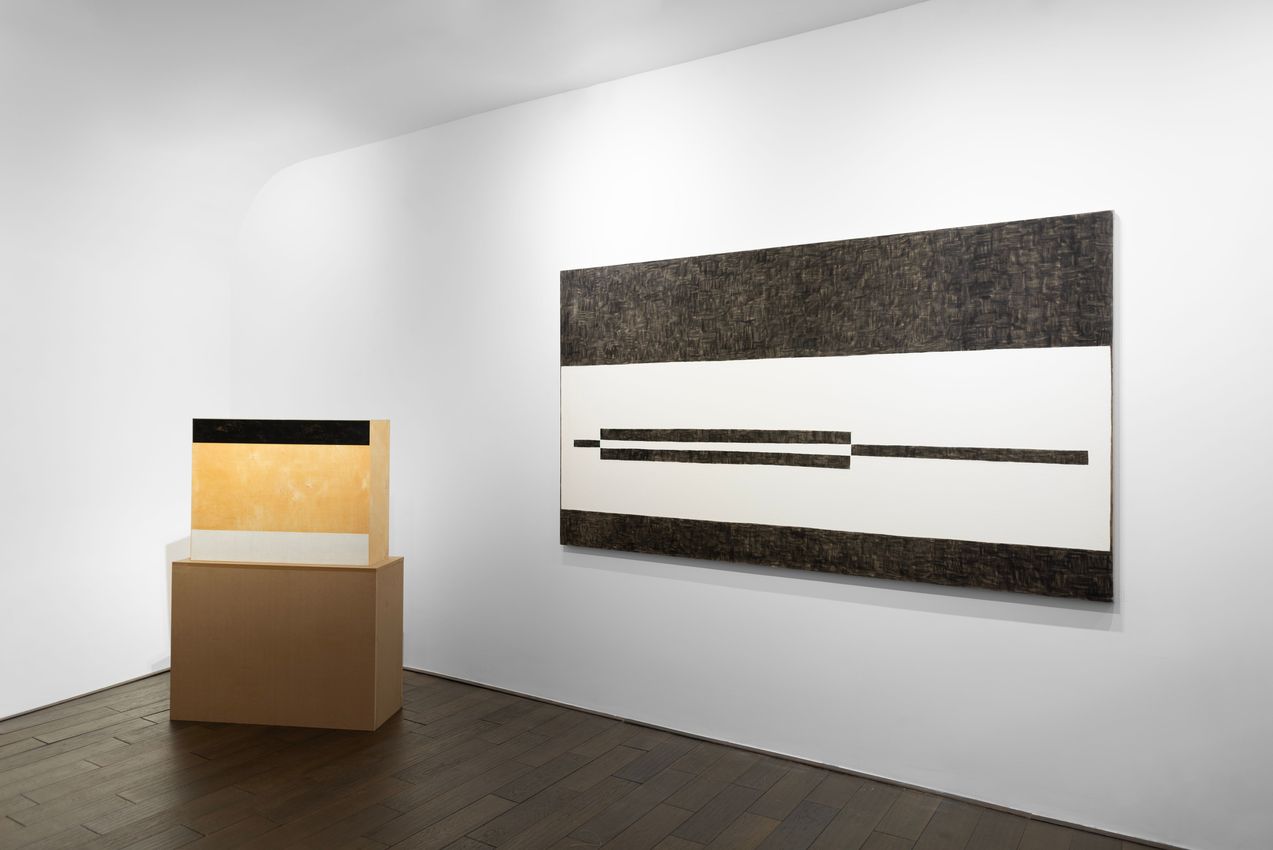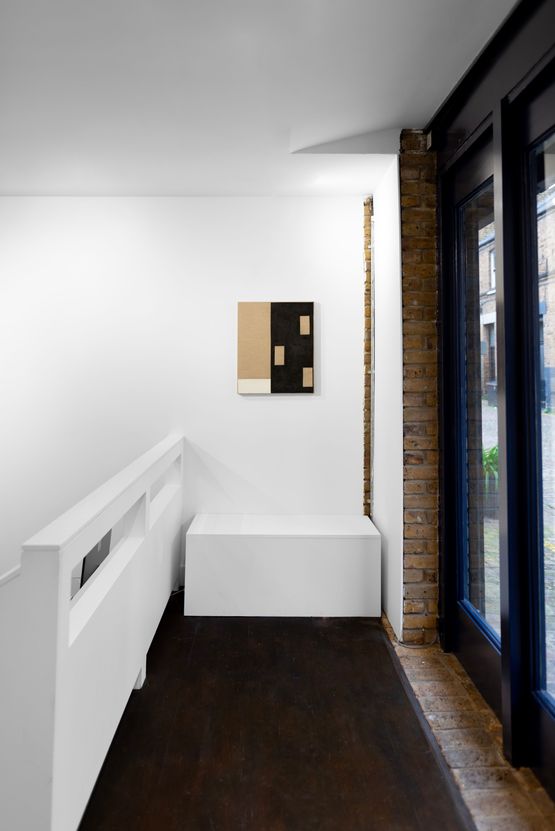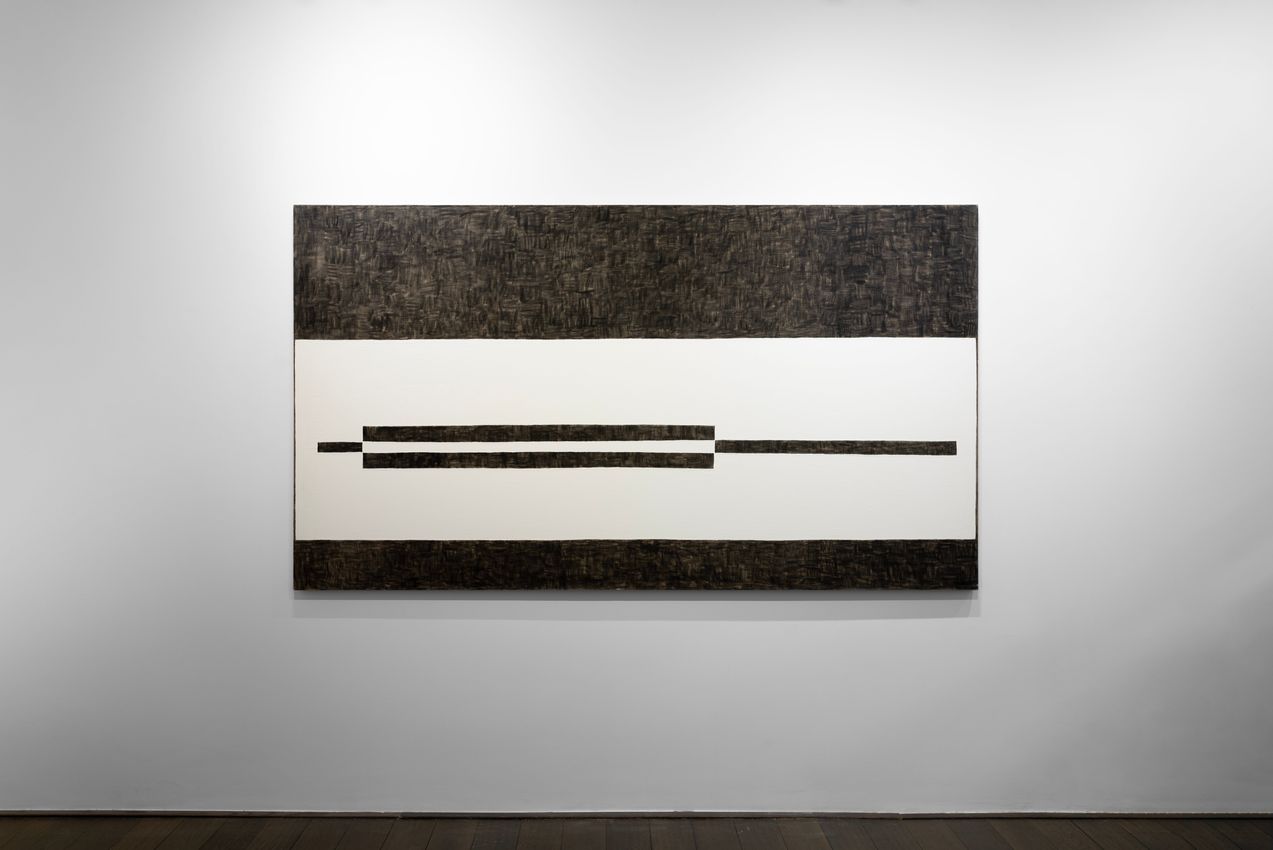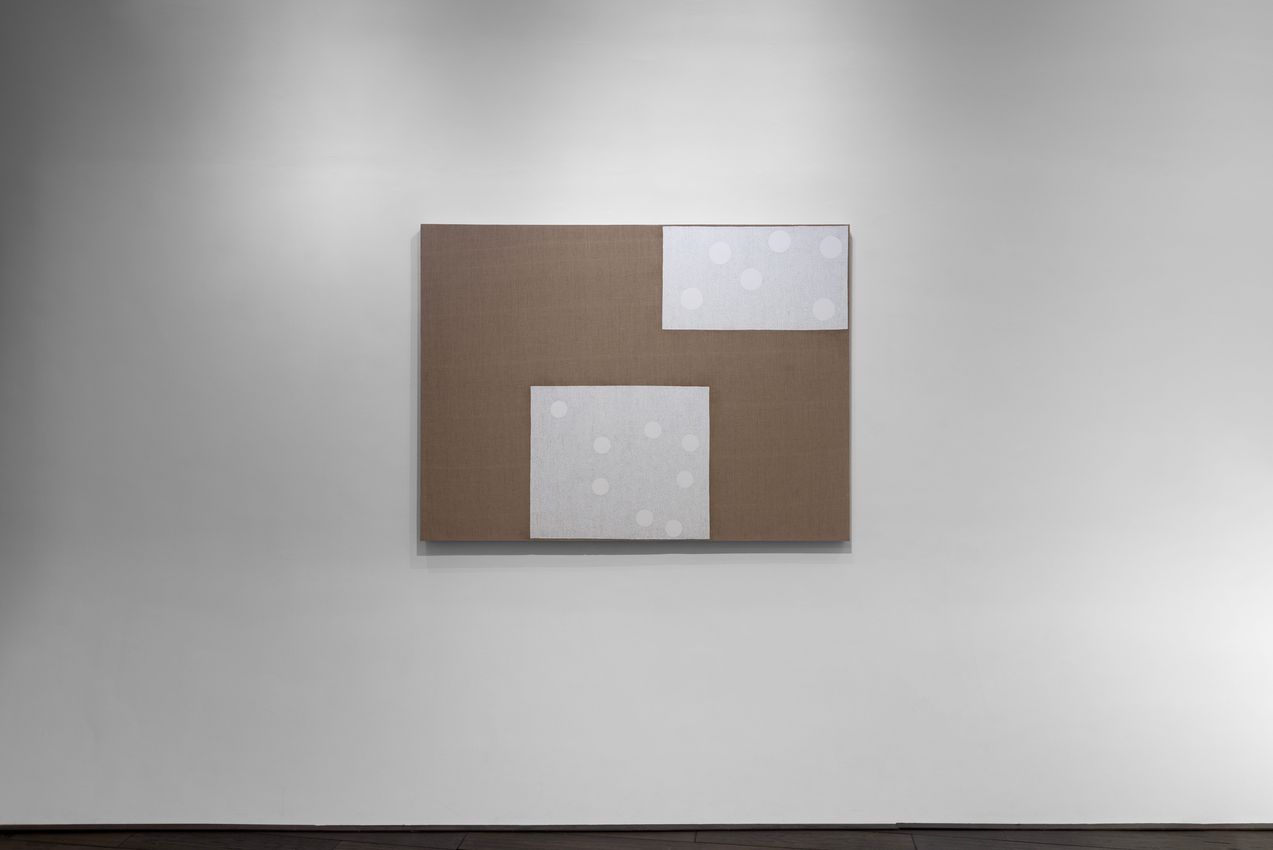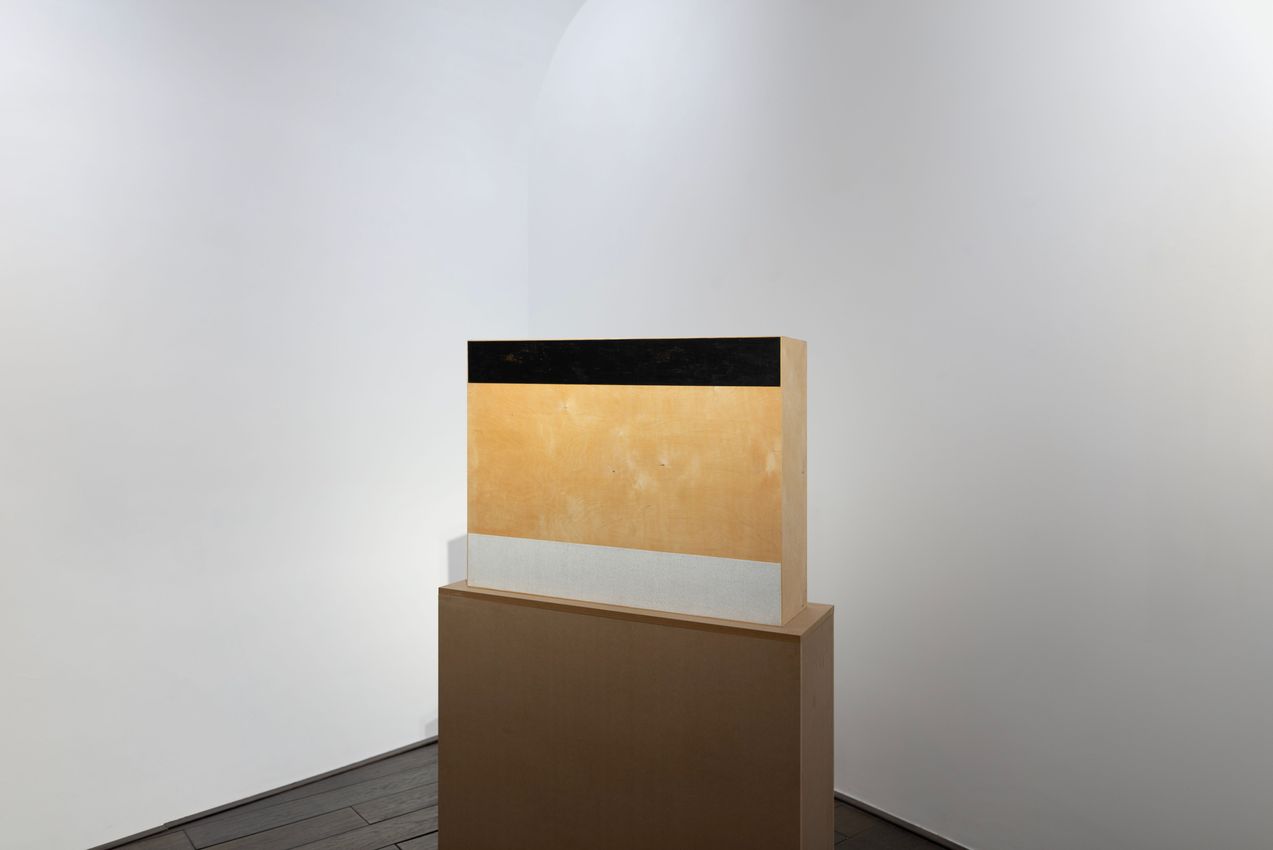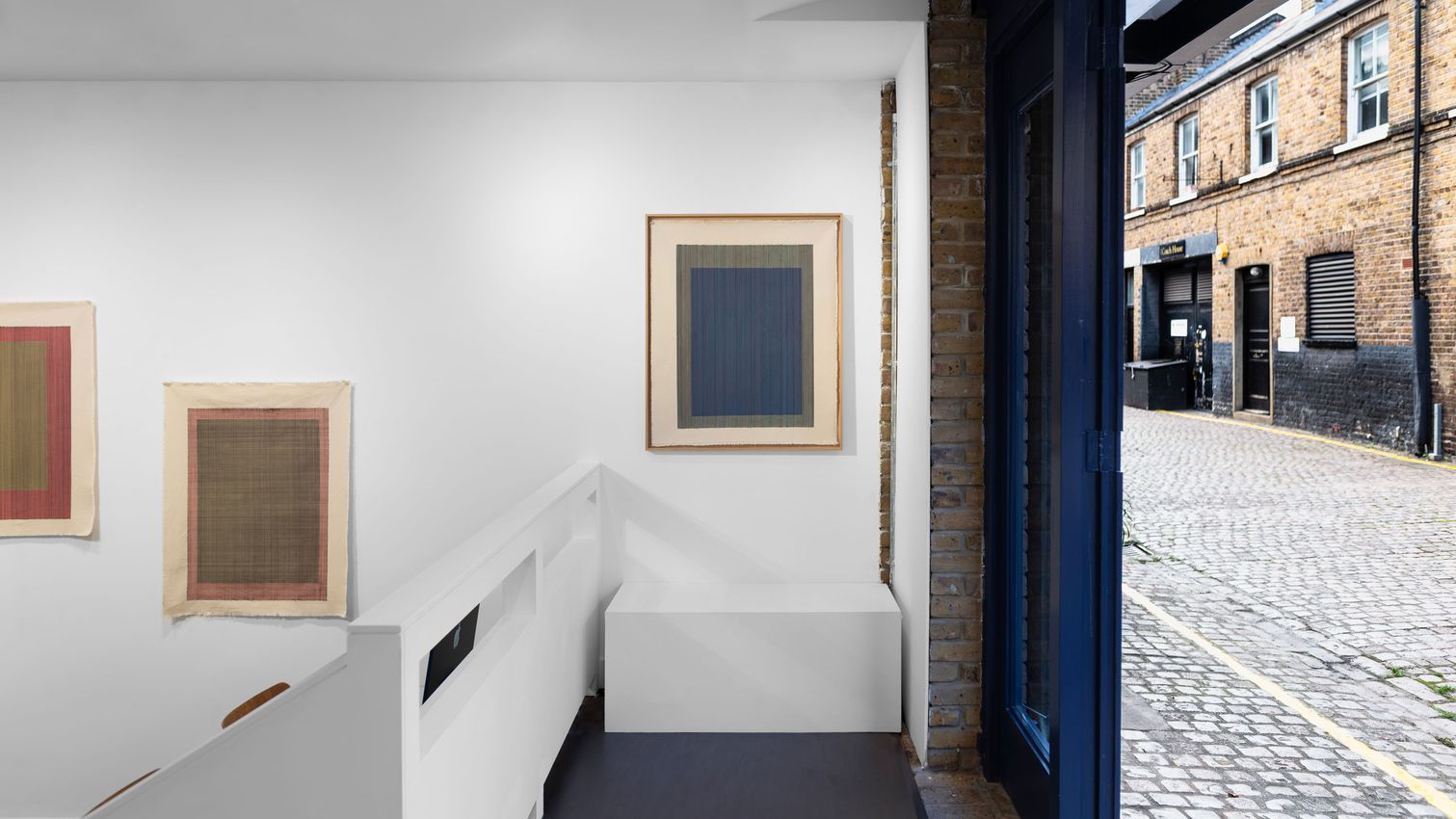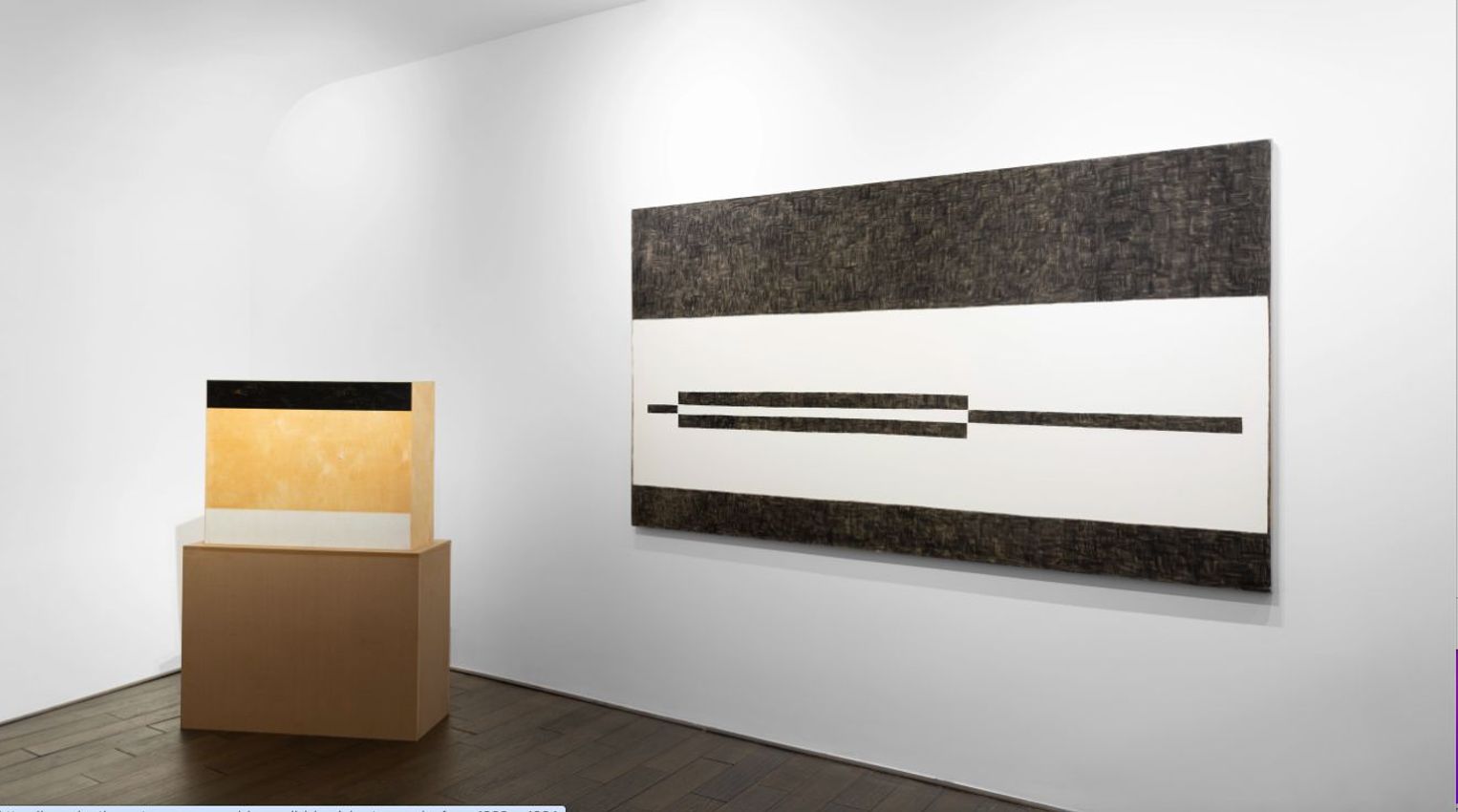
Bartha_contemporary is pleased to present three key works by Alan Johnston made between 1988 and 1994. The installation consists of two large paintings and an early sculpture. Originally shown at the Jack Tilton Gallery in New York, these pieces are being exhibited for the first time in the UK.
By blurring the distinctions between symmetry and asymmetry, as well as positive and negative space, each piece appreciates the elegance of pure geometry and balances it with the tactile quality of his handmade processes.
Given Johnston’s artistic development in London and Düsseldorf and his eventual return to Scotland in 1973, art critics tended to characterise Johnston’s style as a mix of European influences. The rhythmic1 nature of his pieces, whose straight edges and sharp angles are suspended in harmony on a figureless plane, have a timeless and global appeal. Indeed, Johnston continues to find avid audiences for his work across Europe, the US and Japan.
Fast forward, and Johnston’s practice is still described as culminating ‘against a background of European tradition and modernism’2. London’s Tate Gallery, home to some of Johnston’s work, explains the movement of modernism as a ‘new alignment with the experience and values of modern industrial life’3.
In 2013, Johnston’s monumental ceiling drawing Tactile Geometry4 confronted this alignment to modernism_._ While he was commissioned to exemplify his practice through drawing upon Tate Britain’s Djanogly Café ceiling designed by Caruso St John Architects, the project was completed exclusively by hand. Standing starkly in contrast to industrialisation, this painstaking process calls back to a more traditional and classical approach.
Johnston carefully selects his materials: hand-crafted sculptures made of industrial birch plywood or machine-woven linen canvases stretched on meticulously made wooden stretchers, high-quality zinc-white acrylic paint, specially sourced graphite pencils and charcoal bound in beeswax, all applied most simply.
Johnston’s portfolio consequently exists at the crux of European Modernism and tradition. In the 1993 publication Unpainted Ear Drawings, Johnston’s works are shown in tandem with a Kenneth White poem. The poet writes about the landscape of Cape Wrath, nodding at his and Johnston’s shared Scottish heritage and influence:
lines of force
lines of fragility
powers of erosion
hierarchies of resistance
The lines of Johnston’s newly re-presented work at Bartha_contemporary strike a delicate balance between ‘force’ and ‘fragility’, Scotland and the global landscape, modernism and tradition. All these ideas culminate in what Johnston often refers to as ‘opposing forces’. The artist is dually interested in Wabi-sabi, the Japanese philosophy of finding beauty in imperfections, and the broader context of Scottish urban planner and philosopher Patrick Geddes, underlining the almost paradoxical nature of opposing forces in Johnston’s work.
1 Mark Francis first applied the idea of ‘rhythm’ in Johnston’s pieces in his essay ‘The Artist, the Mountain, and the Plain,’ 1978.2 Alexander Moffat, ‘Alan Johnston,’ 1978.
3 https://www.tate.org.uk/art/art-terms/m/modernism.
4 https://www.tate.org.uk/art/artists/alan-johnston-22356/alan-johnstons-tactile-geometry
Press release courtesy Bartha_contemporary
‘My work explores spatial contexts and relations through drawing and architectural construction, reflecting on the spatial and tactual implications in architecture where perceptual notions are rendered as common factors in sight and touch. This field is closely related to the work of Patrick Geddes, Philosophical Generalism, and Gesamtkunstwerk. This is a comparative context which has its roots in the practice of art, architecture and visual thinking in the West and the East, and relates to concepts and practices such as Wabi Sabi. I engage in collaborative initiatives in art and architecture with Professor Shinichi Ogawa, Tokyo, and Neil Gillespie, Edinburgh.’


Established at the turn of the century by Niklas and Daniela von Bartha, the London-based gallery, Bartha Contemporary, places a strong emphasis on non-figurative and conceptual works by mostly established American and European contemporary artists. Hailing from the second generation of the art-dealing von Bartha family, Niklas, along with his wife Daniela, maintains a retrospective look at underappreciated modernising movements of the past in the gallery programme, whilst championing the latest works of contemporary artists.

A respected voice in contemporary art discourse.
Focusing on ambitious storytelling and insightful art-world commentary. Ocula Magazine publishes in-depth interviews, critical essays and timely analysis on the artists, exhibitions and ideas driving the global art world.
Learn more about Ocula Magazine
Showcasing the best of the art world.
Ocula partners with galleries from around the world to highlight their artists, artworks and exhibitions. Gallery membership is by application and invitation, with each member vetted by an independent panel.
Learn more about Ocula Membership

Specialises in the sale of major artworks.
Led by a team with deep ties to the world’s leading auction houses, galleries and collectors. Ocula’s advisory team offers bespoke services to high-net-worth clients from around the world who are looking to acquire the best of contemporary and modern art.
Learn more about our team and services