



























Exploring Britain’s Contemporary Art Renaissance
As one of the most influential countries of the mid-century art world, the United Kingdom continues to play a significant role in driving today’s trends.
The history of British art has long been shaped by movements that reflect the country’s social and political landscape. Art of the early Victorian period was driven by the Royal Academy of the Arts until the 1850s during which the Pre-Raphaelite Brotherhood—a short-lived yet influential collective—popularised dedication to detail and moralism. French influence in the 1870s introduced Impressionism, just as Britain’s own artists turned towards Aestheticism, which emphasised art for beauty’s sake.
In the early 20th century, groups such as the Camden Town Group and the Bloomsbury Group laid the groundwork for a distinctly British modernism. Following World War II, the UK rose to the forefront of the global art scene with movements such as pop art—led by Richard Hamilton, Peter Blake, and David Hockney—simultaneously developing on the island and overseas in the US.
At the same time, artists such as Henry Moore and Barbara Hepworth introduced new approaches to sculpture, while Francis Bacon, Lucian Freud, and the School of London challenged the abstract trends popularised in other countries. The emergence of the Young British Artists (YBAs) in the 1990s—figures like Tracey Emin, Damien Hirst, Sarah Lucas, and Chris Ofili—combined shock value with conceptual sophistication, capturing international attention.
Today, visitors and collectors can explore the UK’s contemporary art through a rich calendar of events, including the Frieze Art Fair in London, the Manchester International Festival, and the Liverpool Biennial. Across museums, galleries, and innovative platforms like artist-run spaces, the UK remains an essential destination for visitors eager to discover new ideas through image and story.
Major Museums and Art Galleries in Britain
The most famous United Kingdom art galleries are undoubtedly concentrated within London, where over 250 registered art institutions display some of the most innovative artists in the world—the most prominent of these being Tate Britain, which houses an extensive collection of works spanning over 500 years. Its sister museum, Tate Modern, opened in 2000 with a focus on significant modern and contemporary artists. Tate organises the annual Turner Prize, which celebrates the innovative UK artists pushing the boundaries of art.
Another one of the best English art galleries is the Serpentine Galleries, a pair of buildings situated five minutes apart in Kensington Gardens. Each year, Serpentine commissions a temporary pavilion by a leading architect, promoting art in nature beyond the gallery walls.
The Saatchi Gallery, founded by businessman Charles Saatchi, presents contemporary art exhibitions of emerging artists. It became a registered charity in 2019, focusing its efforts on making contemporary art accessible to all. Other institutions in London, including the Institute of Contemporary Arts (ICA), the Hayward Gallery, the Chisenhale Gallery, and the Whitechapel Gallery, continue to provide a platform for pioneering contemporary artists.
Yet the UK is home to numerous spaces dedicated to contemporary art outside of the capital. Visitors flock to renowned galleries, such as the Hepworth Wakefield in West Yorkshire, the Ikon Gallery in Birmingham, the Open Eye Gallery in Liverpool, Tate Liverpool, and Nottingham Contemporary.
Beyond contemporary art, the United Kingdom houses many world-leading art, history, and culture museums. Must-visit highlights include the National Gallery, which holds a collection of paintings dating back to the 13th century, and the Victoria and Albert Museum, dedicated to the decorative arts.
British Art Gallery Districts and Cultural Quarters
As one of the world’s leading art cities, London is home to over 800 art galleries and is ever-growing, with more locations to discover new forms of paintings, sculpture, and photography.
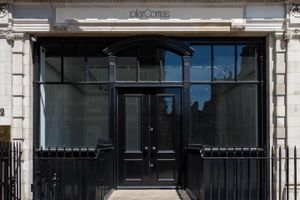
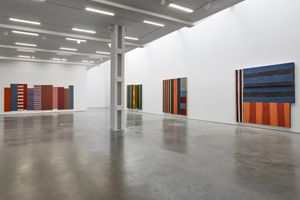
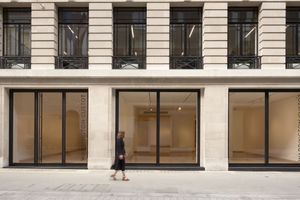
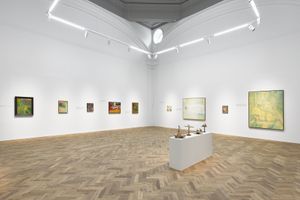
Mayfair and its surrounding area remain the heart of London’s commercial art world, home to Sotheby’s, Christie’s, and the Royal Academy of Arts, alongside top galleries like Gagosian, Hauser & Wirth, David Zwirner, Pace, and Marian Goodman. The locale also hosts respected galleries Sadie Coles HQ, White Cube, Almine Rech, Amanda Wilkinson, Pilar Corrias, and Sprüth Magers.
In East London, galleries such as Maureen Paley, Kate MacGarry, and Tabula Rasa support emerging artists and distinctive practices, while Victoria Miro exhibits international names. Community engagement thrives through events like First Thursdays, with over 150 galleries opening late monthly.
North London is home to Lisson Gallery, a key institution for minimalist and conceptual art since the 1960s. In South London, Cadogan Gallery champions artist-led programming. Beyond the capital, visitors can find dozens more art galleries in England that exhibit thought-provoking installations, drawings, and paintings.
Alternative Art Spaces
England has a long tradition of artist-run initiatives and unconventional art spaces. Today, the country is home to a diverse range of alternate art organisations and spaces that support innovation, collaboration and emerging practices.
In Manchester, Castlefield Gallery blends a typical gallery setting with dedication to artist development, while Birmingham’s Eastside Projects operates as an artist-run multiverse housed in a free gallery. Bristol’s Spike Island offers one of the largest studio complexes in the country, combining public programming with residencies.
In London, SET transforms disused commercial properties into affordable studios for growing artists, while Auto Italia South East promotes collaborative, experimental work with a focus on new media and live art. Primary in Nottingham, Assembly House in Leeds, and Cubitt Artists in London all provide more examples of what the artist-run model has to offer.