





MARTIN BOYCE
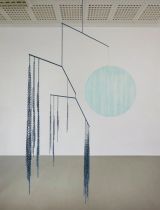
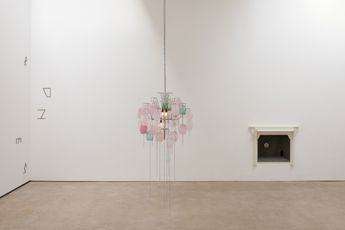
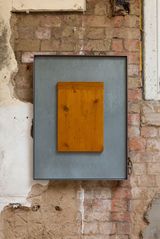
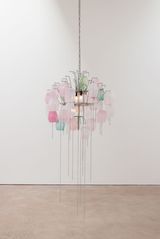
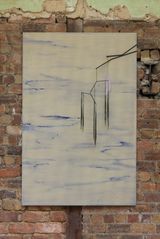
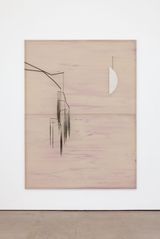
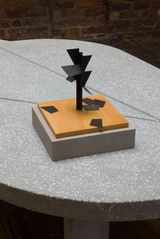
b. 1967, United KingdomMartin Boyce has reworked and reformulated iconic design objects, developing his own pictorial language based on a reading of the formal and conceptual histories of design, architecture and urban planning. In an extended act of homage, deconstruction and re-imagining, Boyce has, for example, assembled reconstructed versions of Charles and Ray Eames 1949 storage units or created mobiles with fragments of Arne Jacobsen’s chair from 1955. Since 2005, elements drawing on Jan and Joel Martel’s concrete trees constructed for the Robert Mallet-Stevens’s Pavilion of Transport at the Exposition des Arts Decoratifs et Industriels Modernes in Paris in 1925 have been an important part of the artist’s formal vocabulary. His recurring use of unlikely elements, among them sections of rusted chain-link fences or suspended metal chains of various thicknesses, freed from their function as demarcation or restraint, create oddly affecting sculptures.
While Martin Boyce’s oeuvre includes shapes drawn both from modernist and classic design sources, it also includes references to everyday urban objects, such as fences, trash bins, or telephone boxes. Transformed by Boyce’s vision of the history of design, these elements, remaining more or less reminiscent of utilitarian objects, create enchanted landscapes that appear as slightly laconic witnesses of past urban development programs but also imbue the formal vocabulary of contemporary urbanism with moments of unexpected tenderness and beauty.
Courtesy Esther Schipper

Works at Esther Schipper






Recently Exhibited


Exhibiting Elsewhere

Works Elsewhere











Explore and Follow Artists Shaping Contemporary Art
A respected voice in contemporary art discourse.
Focusing on ambitious storytelling and insightful art-world commentary. Ocula Magazine publishes in-depth interviews, critical essays and timely analysis on the artists, exhibitions and ideas driving the global art world.
Learn more about Ocula Magazine
Showcasing the best of the art world.
Ocula partners with galleries from around the world to highlight their artists, artworks and exhibitions. Gallery membership is by application and invitation, with each member vetted by an independent panel.
Learn more about Ocula Membership
Specialises in the sale of major artworks.
Led by a team with deep ties to the world’s leading auction houses, galleries and collectors. Ocula’s advisory team offers bespoke services to high-net-worth clients from around the world who are looking to acquire the best of contemporary and modern art.
Learn more about our team and services