There have been some recent shifts in our art+science relations, shifts that aim to diffuse individualism and human ego. The plant turn refers to changes in how humans perceive plants. The planetary turn refers to changes in how humans relate to the universe. Both of these new areas of research suggest a less human-centred approach to thinking. They are also both connected to the most obvious symptom of change: the future, as experienced through the weather.
Changes in plant and planetary perception can’t be seen but the weather can. We can see the soot on buildings when it hasn’t rained for three months. We can feel the extreme thunder after a long dry summer. We have to bucket out the deluge when it rains so hard, it floods. We have to clear up the burnt remnants, and line up the dead, after bushfires.
The future sits in wait up in the sky, as the condensation on the clouds. But while we watch the weather change, we must still raise our kids and pay our mortgages. No rest for the human, in an epoch of accelerationism. As artists and writers, we must still write and make work... to make sense of these changes.
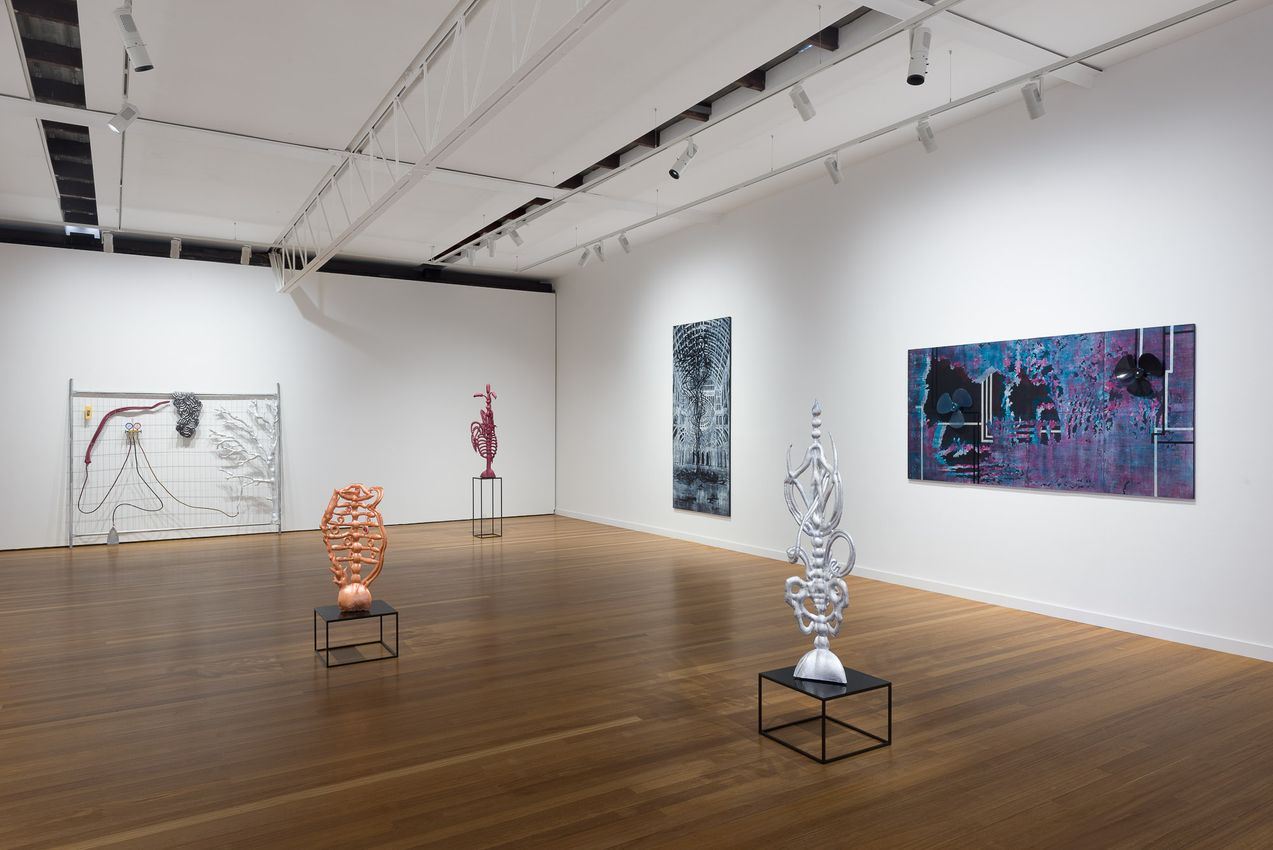
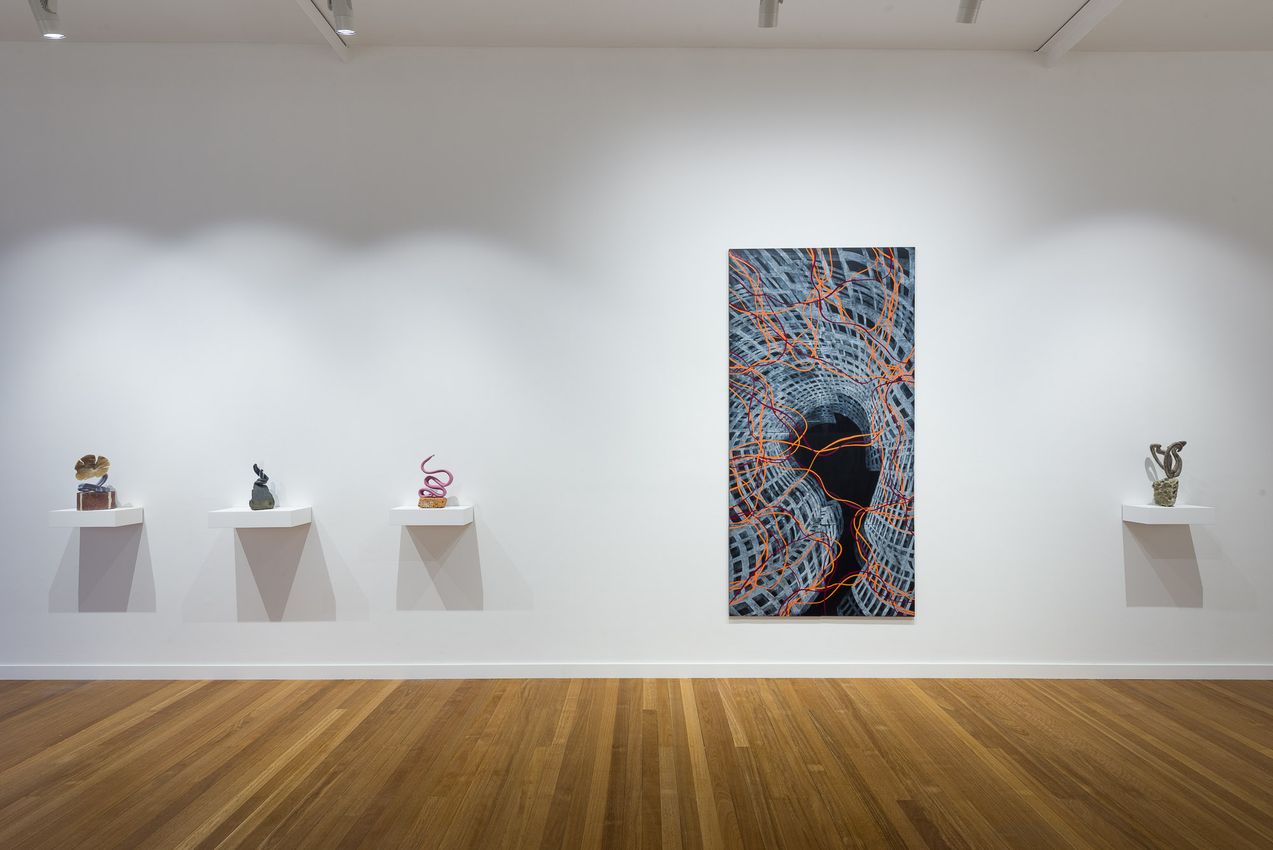
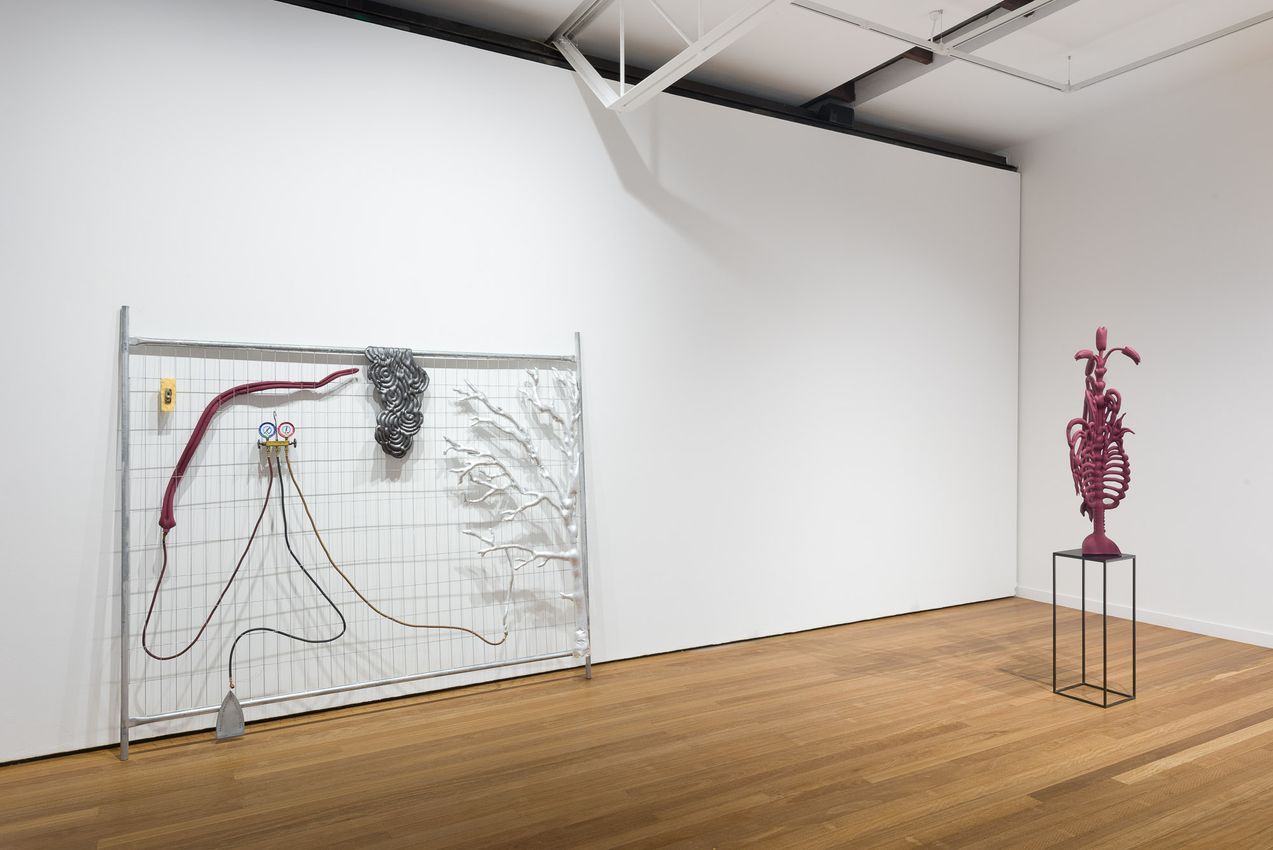
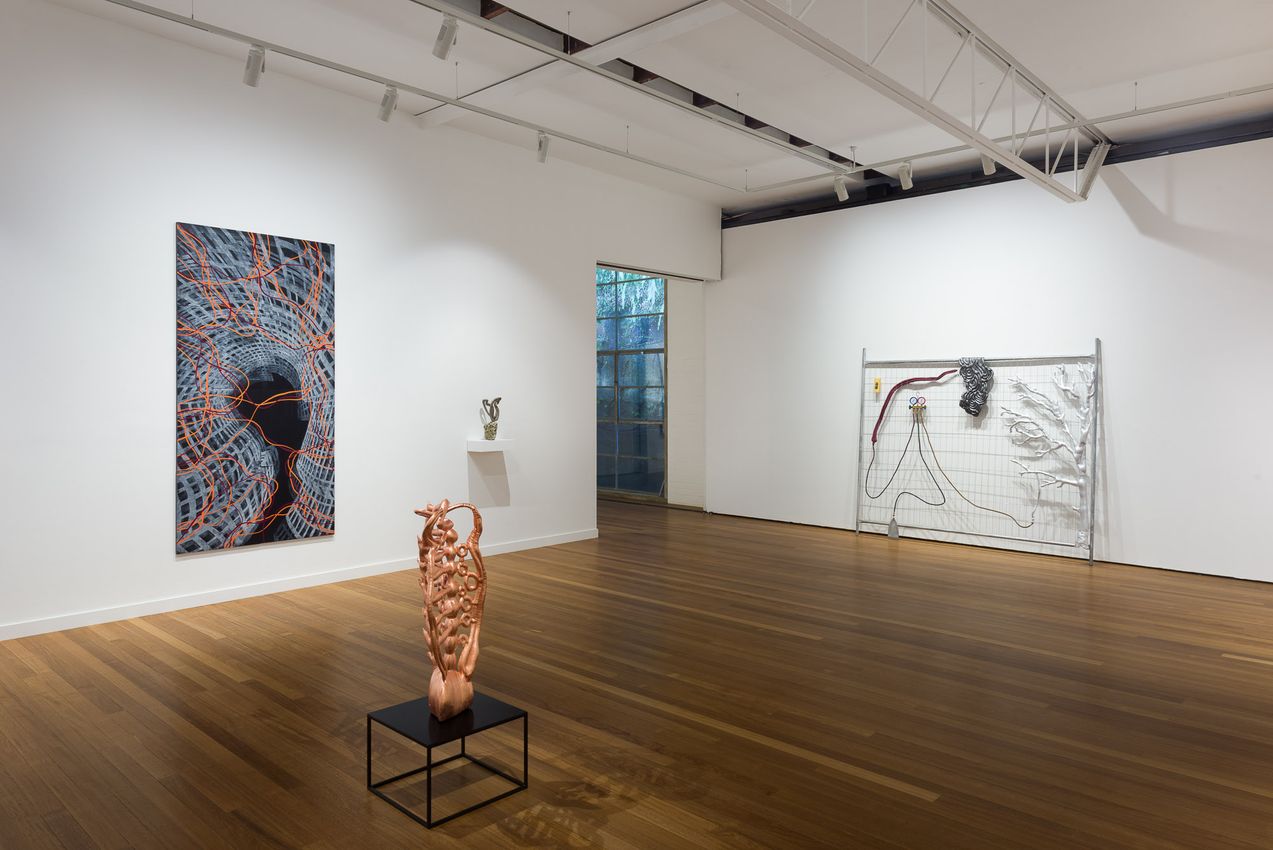
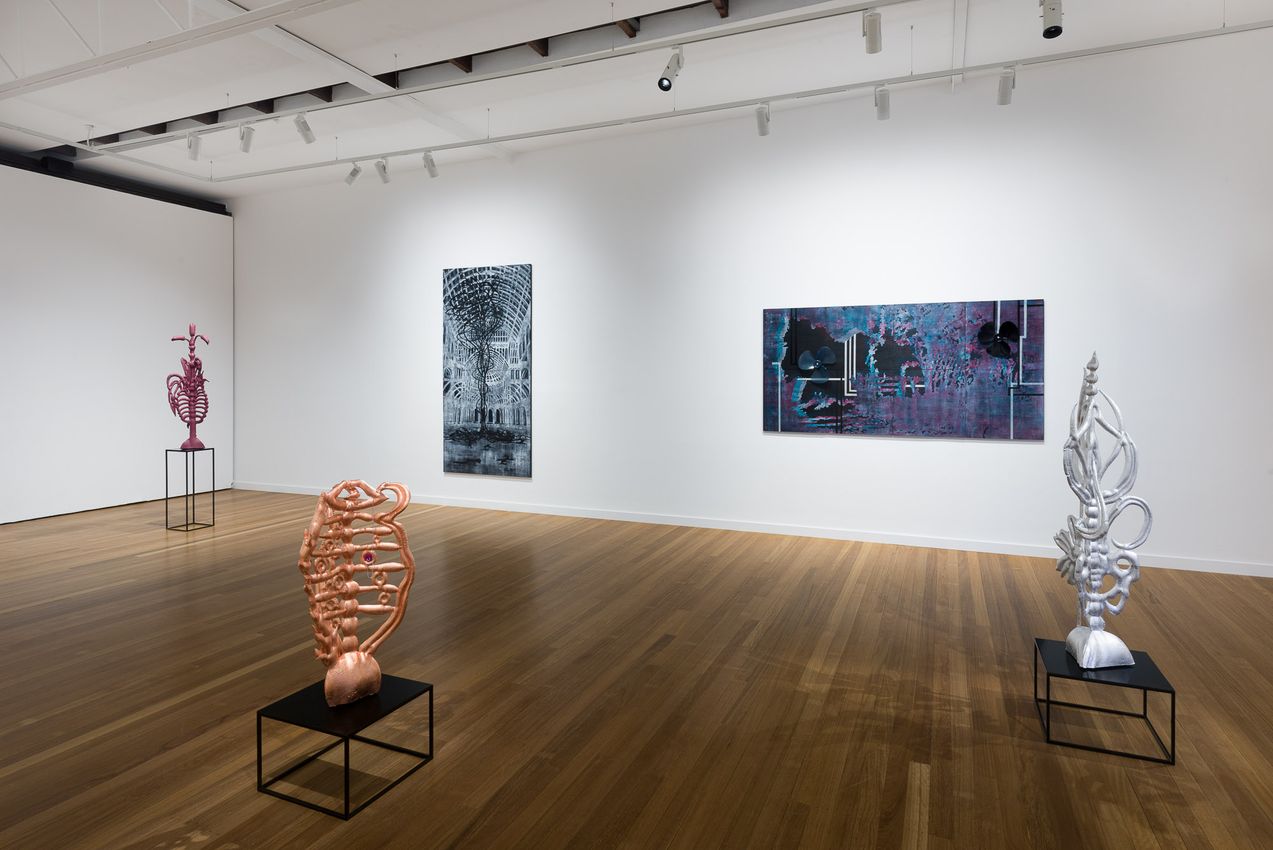
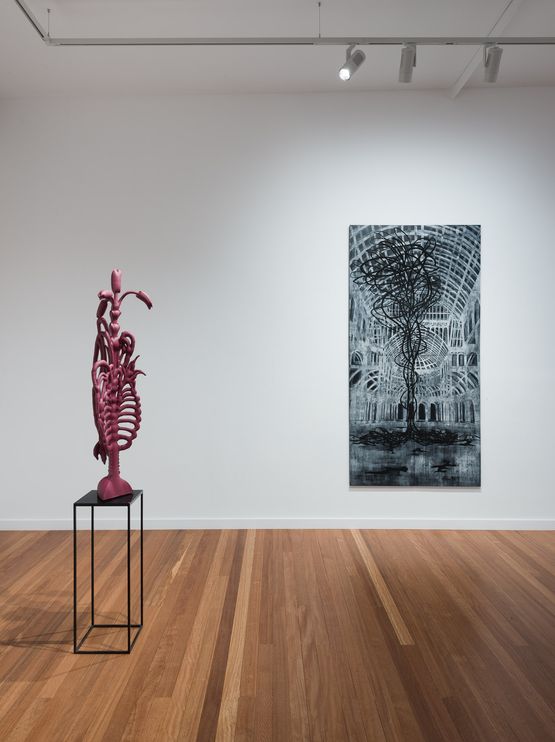
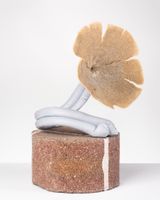
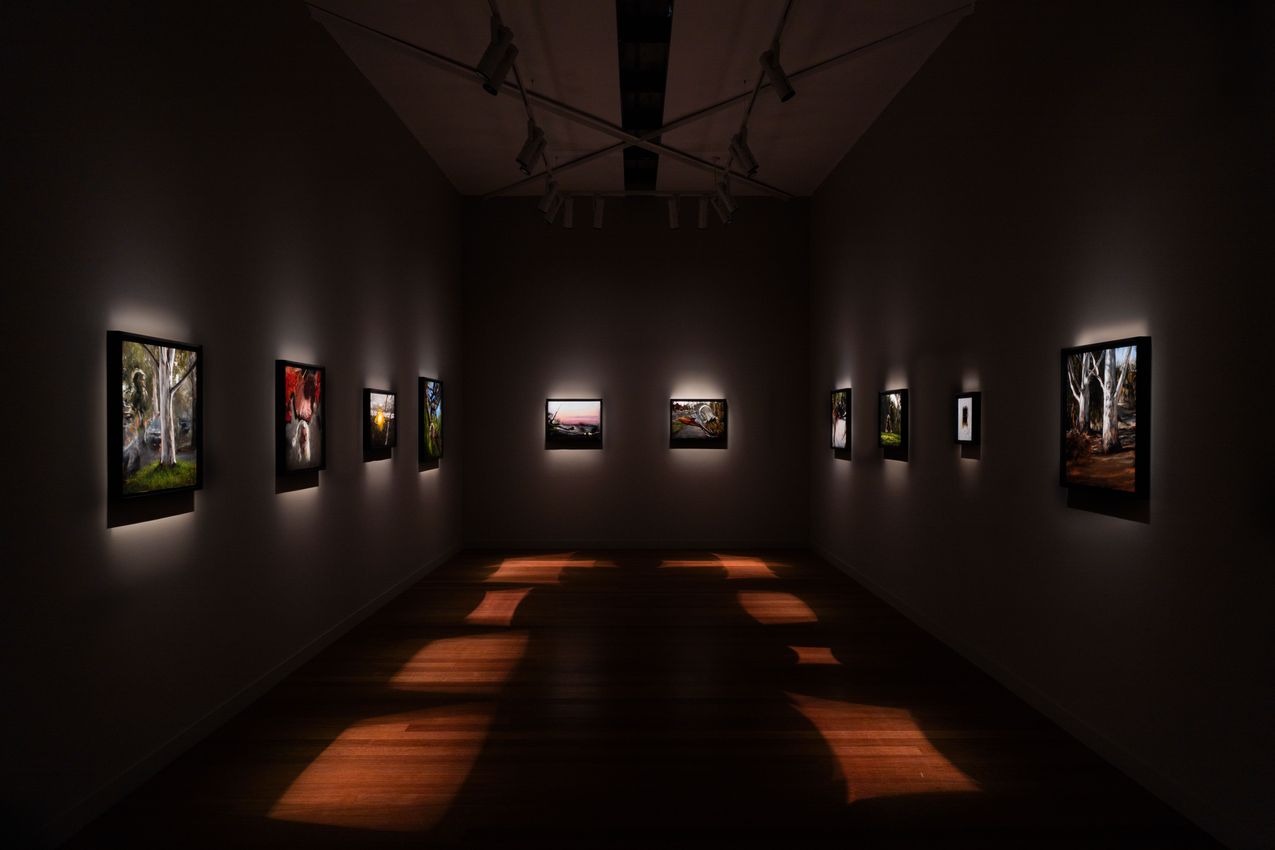
Caroline Rothwell has been consumed with curiosity about plants and the cosmos for a long time, well before these critical academic ‘turns’ began to crank their slow wheels. She has been one of the drivers of change, so that people can see the invisible, can notice what is difficult to see. She has used carbon from car exhausts to create drawings and animations. She has incorporated the burned trees and cars into her installations.
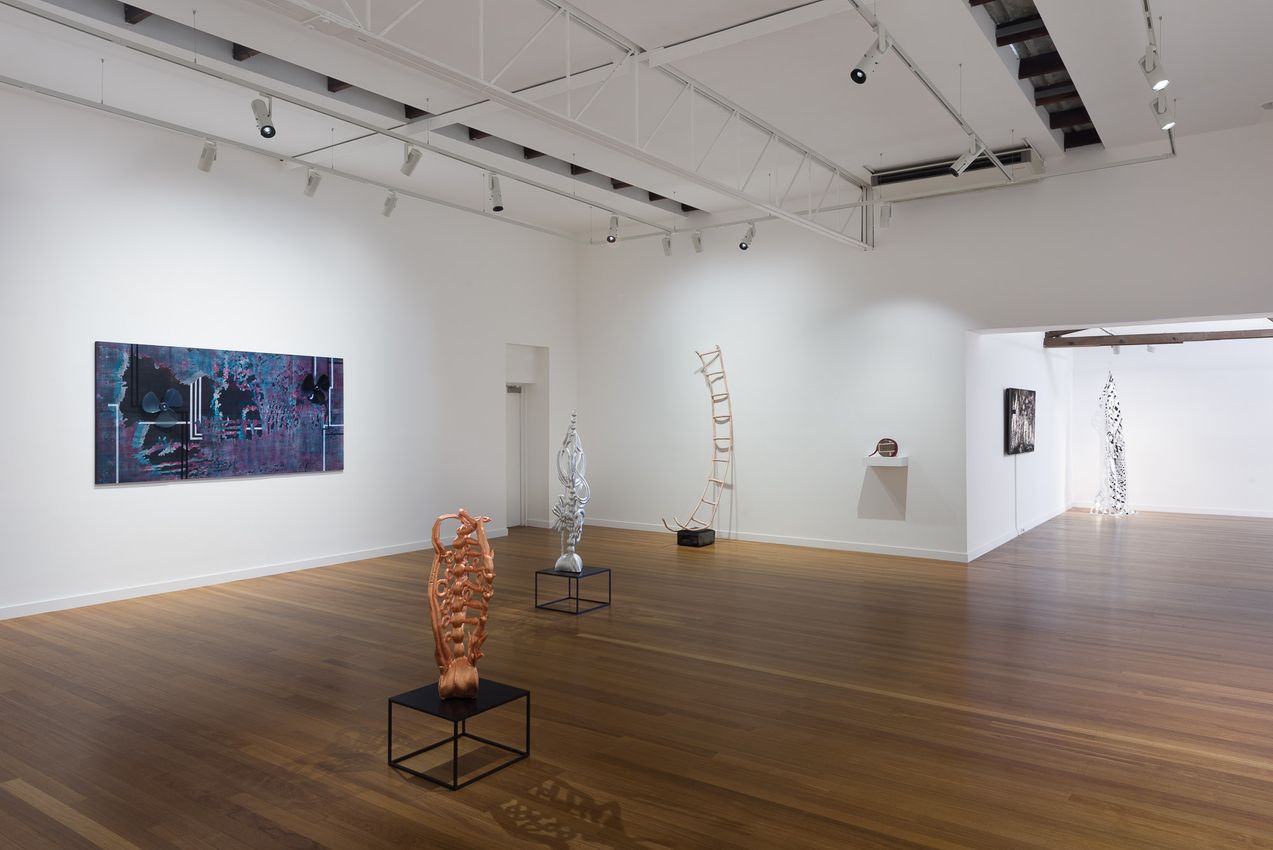
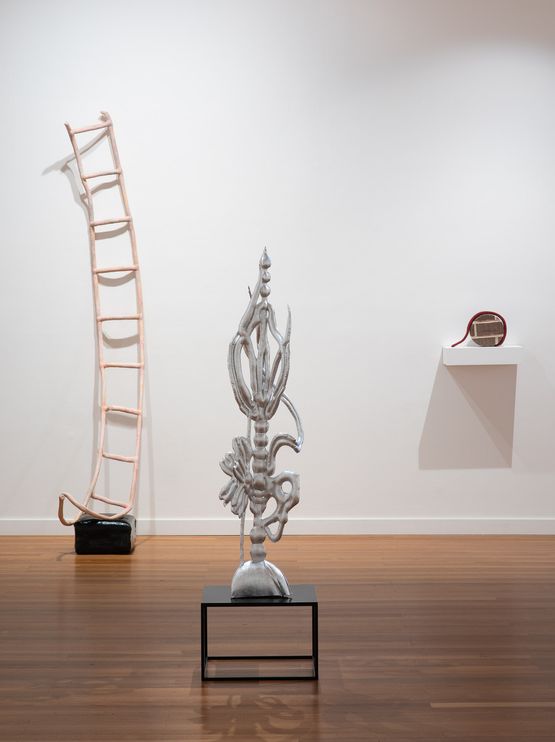
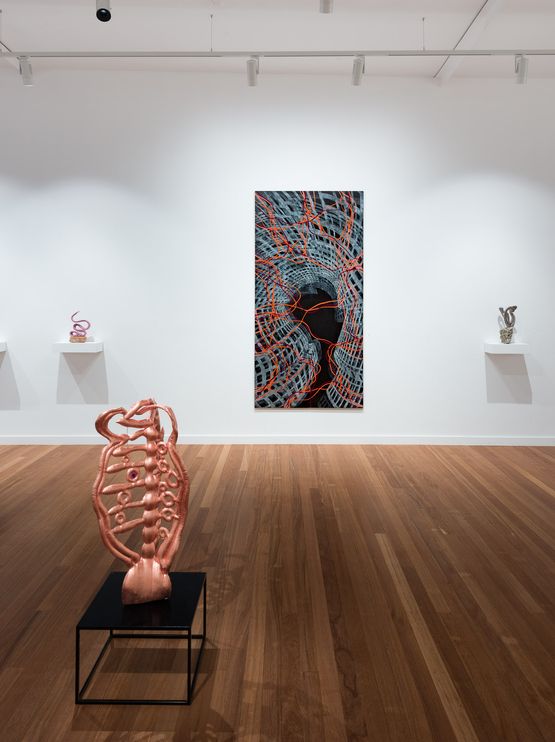
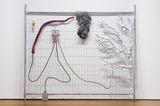
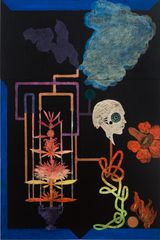
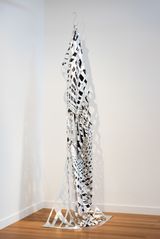
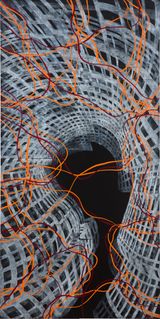
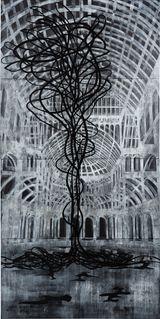
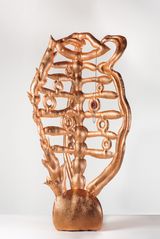
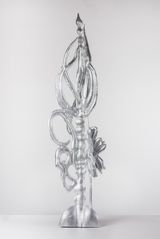
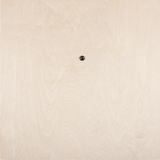
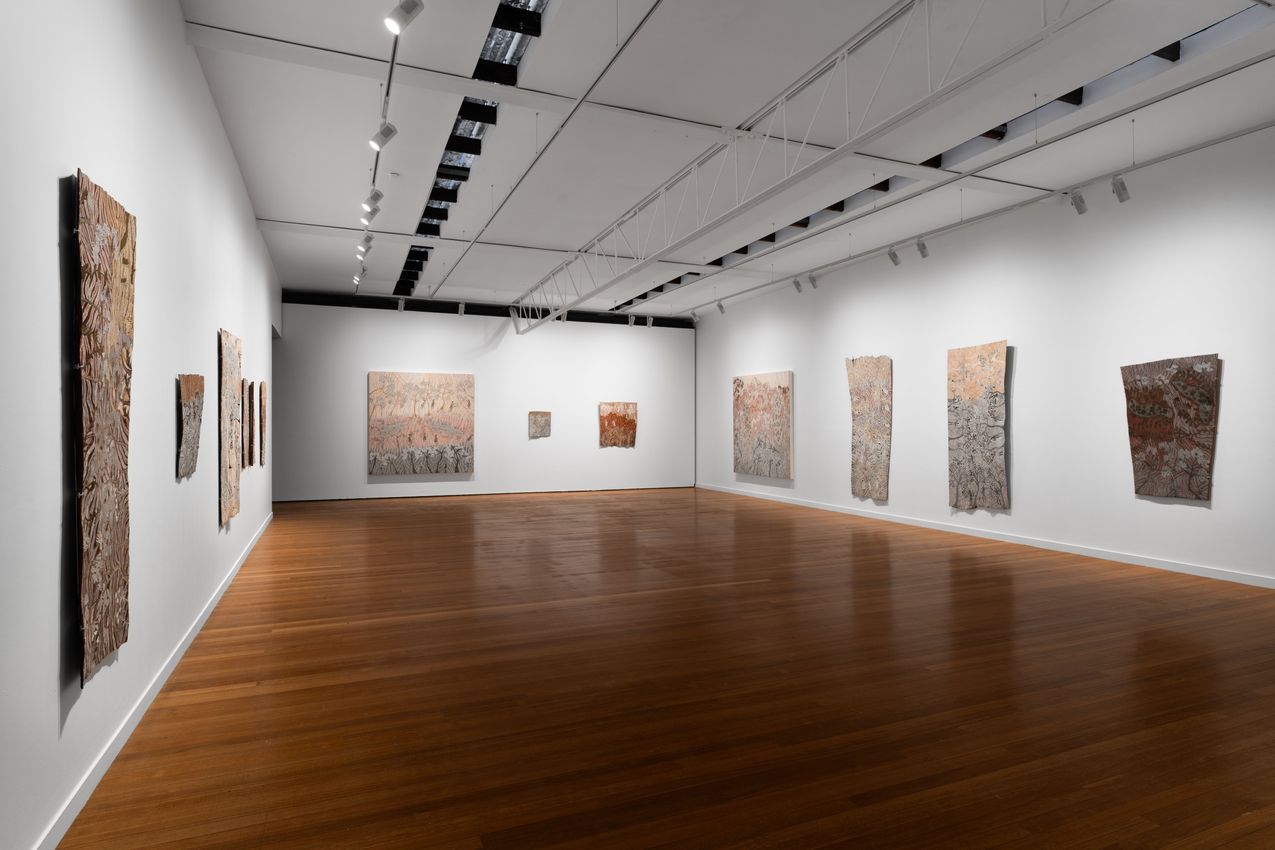
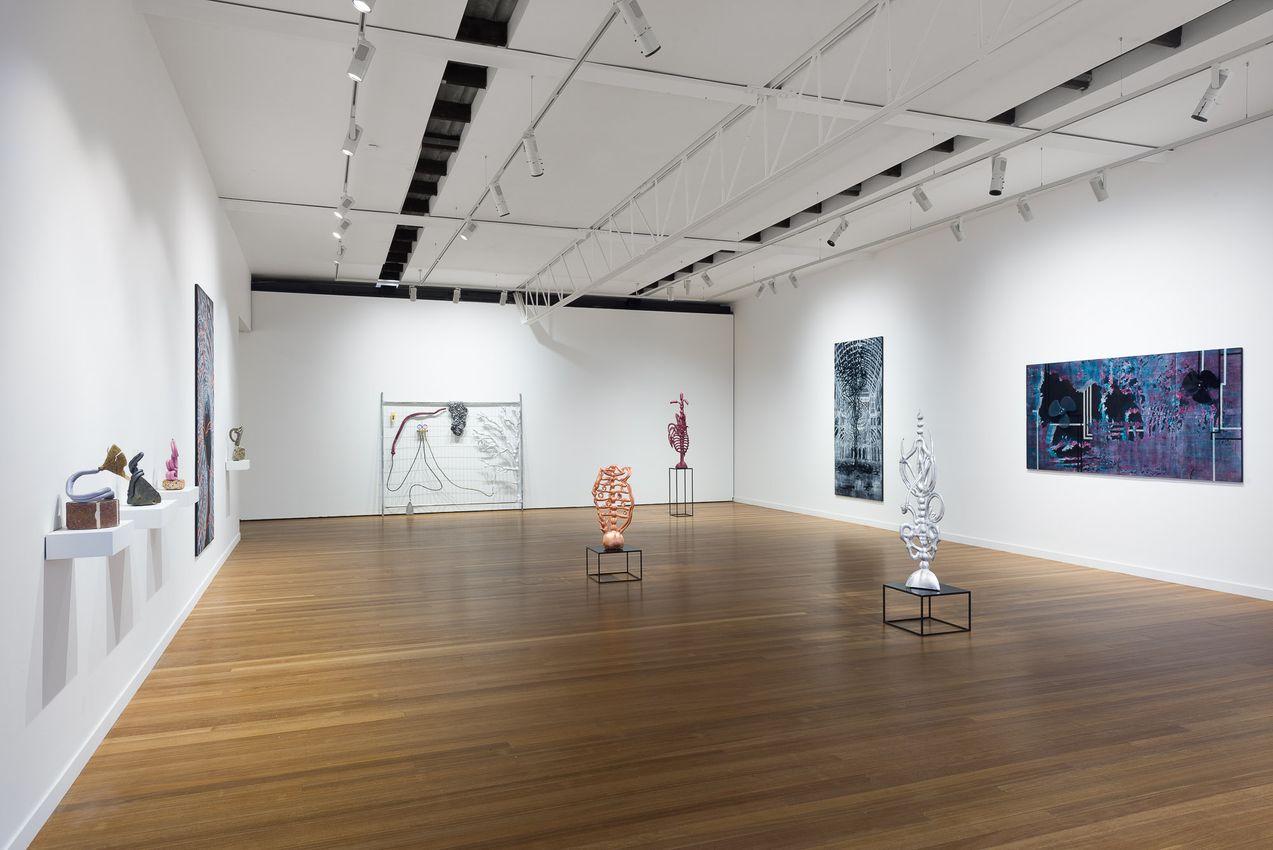
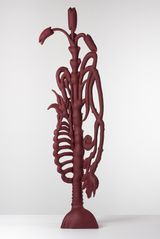
Caroline’s plant structures are endemic in her aesthetic too. Mycelium, friend to the plants, curls in vinyl threads across her two-dimensional painted impressions that lead your eye to a vast endless space. Her vegetal forms evolve out of human rib cages in her sculptures. Trees peer back at you through a microcosmic peephole. Why wouldn’t she be consumed with plants, knowing they are the backbone of the earth? Ecologist Monica Gagliano says, ’plants are perhaps the most fundamental form of life, providing sustenance, and thus enabling the existence of all animals, including humans.’ Caroline knows this too.
The artist’s approach is consistently existential – she bears the weight of human responsibility on her shoulders. However she is able to adopt play and instinct, in her studio, to see which is the best way to communicate human relationships in a changing world. She also understands fungi as a massively networked power source. French philosopher Luce Irigaray writes about plants in the book_Though Vegetal Being_ and bemoans the way humans can’t seem to stop separating nature/culture, religion/science and logos/cosmos. Irigaray suggests that plants challenge those separations. Well, Caroline challenges us in exactly the same way.
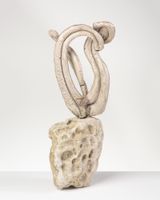
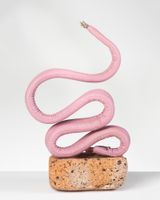
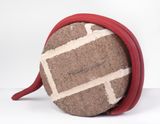
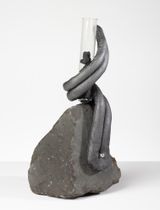
Where do her fungi-like curls stop, and her tongues start? Those tongues are sensual and greedy; they disrupt the unseen but hinted-at structures in the corner of everyone’s eye. We tend to be blind to the chemical compositions of the rocks in our gardens and parks, until they are licked. Caroline subtly reminds us of the way natural biological elements bind us all – plants, humans, rocks, buildings... tongues.
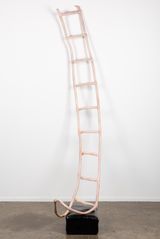
For those who have been following Caroline’s work for some time, it is probably worth noticing how her fleshy tongues become snakes. Greed and Eden are hard to escape. The story of Adam and Eve’s eviction from the perfect garden is a difficult story to bear. Humans have, ever since, been trying to tame the natural world, to return to the construct of Eden. But Eden, snake-like as ever, slithers away whenever we get close. Not even Caroline’s ladders will get you there. The only way back is to remember the future.
–Dr Prudence Gibson, 2023
Caroline Rothwell’s artworks explore the effects of human intervention on nature, often delving into ideas surrounding consumption and the legacy of colonisation.


Established in Sydney by influential Australian art dealer and gallerist Roslyn Oxley and her husband Tony Oxley in 1982, Roslyn Oxley9 Gallery is one of Australia’s leading commercial galleries.
A respected voice in contemporary art discourse.
Focusing on ambitious storytelling and insightful art-world commentary. Ocula Magazine publishes in-depth interviews, critical essays and timely analysis on the artists, exhibitions and ideas driving the global art world.
Learn more about Ocula Magazine
Showcasing the best of the art world.
Ocula partners with galleries from around the world to highlight their artists, artworks and exhibitions. Gallery membership is by application and invitation, with each member vetted by an independent panel.
Learn more about Ocula Membership

Specialises in the sale of major artworks.
Led by a team with deep ties to the world’s leading auction houses, galleries and collectors. Ocula’s advisory team offers bespoke services to high-net-worth clients from around the world who are looking to acquire the best of contemporary and modern art.
Learn more about our team and services