Mounira Al Solh
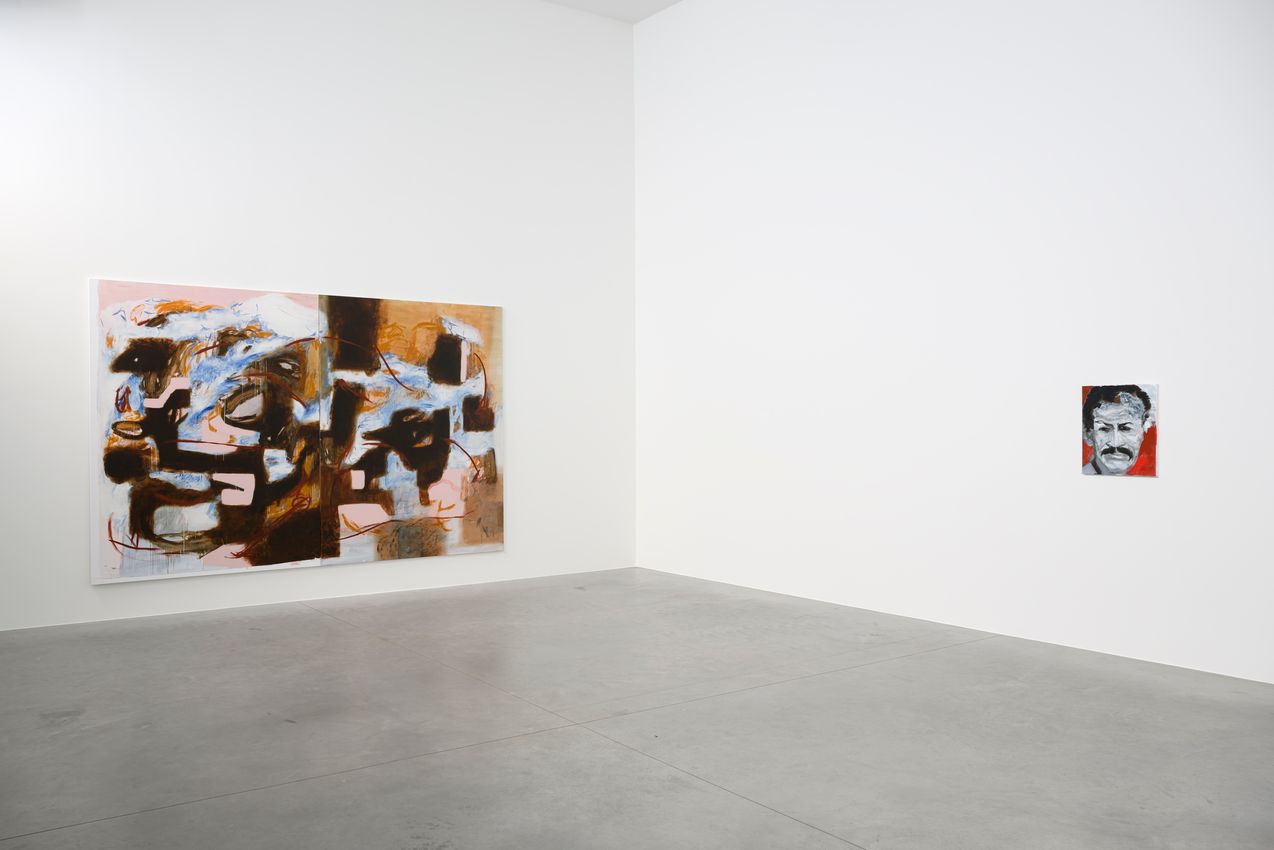
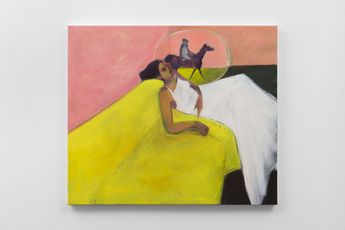
The canvas Passion Teapots and the Birth of Al Hamza, On Fire (2019) by Mounira Al Solh(b. 1978, Beirut, Lebanon) shows a curved woman holding a teapot to her head. The workwas previously shown in the Risquons-Tout exhibition at WIELS in Brussels in 2020. As isoften the case with Al Solh, the scene can be read as a patchwork of stories and accountsshe collected over the years. In this painting, for instance, she incorporates stories aboutresistance and female authors as well as references to the Arabic language. ‘Al Hamza’in the title of the work refers to an Arabic letter which can be found on the breast of thewoman.
The painting She Woke Up the Radio (2022) is a portrait of the Moroccan feminist writerFatema Mernissi. Her books L’amour dans les pays musulmans and Beyond the Veil: Male-Female Dynamics in a Muslim Society are influential works about gender and sexualityin muslim countries. The title of the painting also refers to Al Solh’s childhood memoryof waking up during the Lebanese Civil War to Fairuz’ rousing music and lyrics on theradio. The songs of this Lebanese singer were often about a free and festive Beirut thatno longer existed and seemed far away because of the war then raging. The artist writes:“The saddest moment is when your city is bombed and someone plays Fairuz in thebackground.”
Mounira Al Solh lives and works in Zutphen and Beirut. In 2024 she will represent Lebanonat the Venice Biennale. She will soon have solo exhibitions at the ABN AMRO Kunstruimteand at H’ART Museum in Amsterdam as a laureate of the ABN AMRO Art Award, and atNational Museum Cardiff as Artes Mundi 10 nominee. She has had solo shows at The ArtInstitute of Chicago, BALTIC Centre for Contemporary Art in Gateshead, Felix NussbaumHaus in Osnabrück and KW Institute for Contemporary Art in Berlin, among others. Shehas also participated in the São Paulo Biennial (2023), Sharjah Biennial (2023), VeniceBiennial (2015) and Documenta 14 (2017).
Strauss Bourque-LaFrance
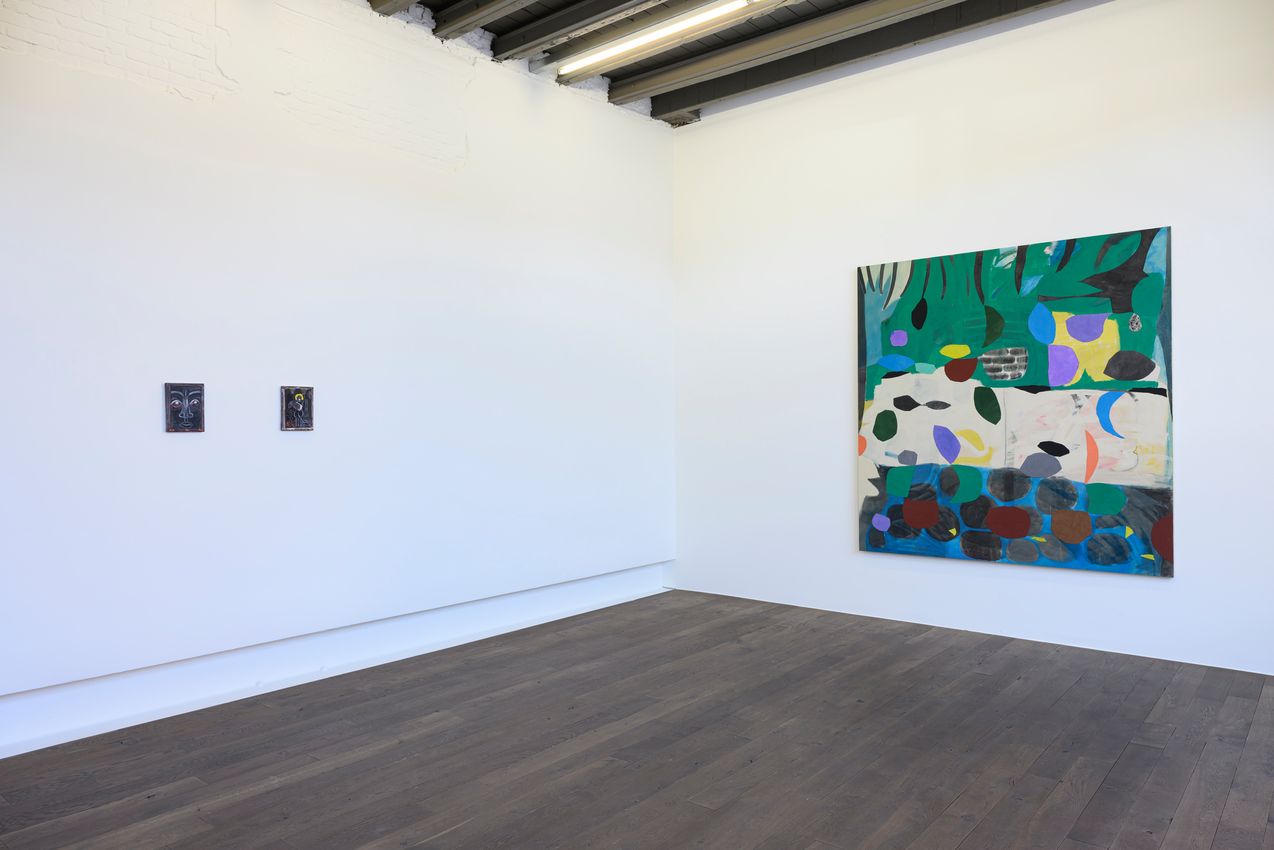
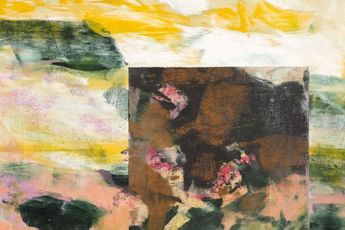
Strauss Bourque-LaFrance (b. 1983, Maine, US) approaches painting as a physical collageprocess. He starts from pieces of canvas or parts of previous paintings that he cuts up,arranges, paints and assembles into a new painting—coloured shapes stack and disperse,washes, shadows and suggestions of nature emerge amongst layers of saturated colour,while gestural graphite markings divide the canvas. The optical and material potential ofcollage engages with mark making, forming energetic and unique constructions that callto mind feminist craft practices, cartoon forms, and hybrid landscapes. Bourque-LaFrancecombines references and techniques from the painting canon to create an image that feelsfamiliar yet is difficult to define. His work directly responds to the ever-shifting aspects ofthe human interior and the evolutionary desire to translate these obscurities into physicalforms - he notes, ”...here, abstraction is the result of our inability to truly understand andtranslate our interiority, not just a series of art historical tropes.”
Strauss Bourque-LaFrance lives and works in Los Angeles and New York. He has had soloexhibitions at T293 in Rome and Rachel Uffner Gallery in New York. His work has beenincluded in two-person and group shows in the US and internationally, at venues includingSculptureCenter in New York, The Contemporary Austin, Sea View in Los Angeles, Exo Exoin Paris, ICA in Philadelphia, The Kitchen in New York, Derosia in New York, Harkawik inLos Angeles and Galerie Tobias Naehring in Leipzig.
Miriam Cahn
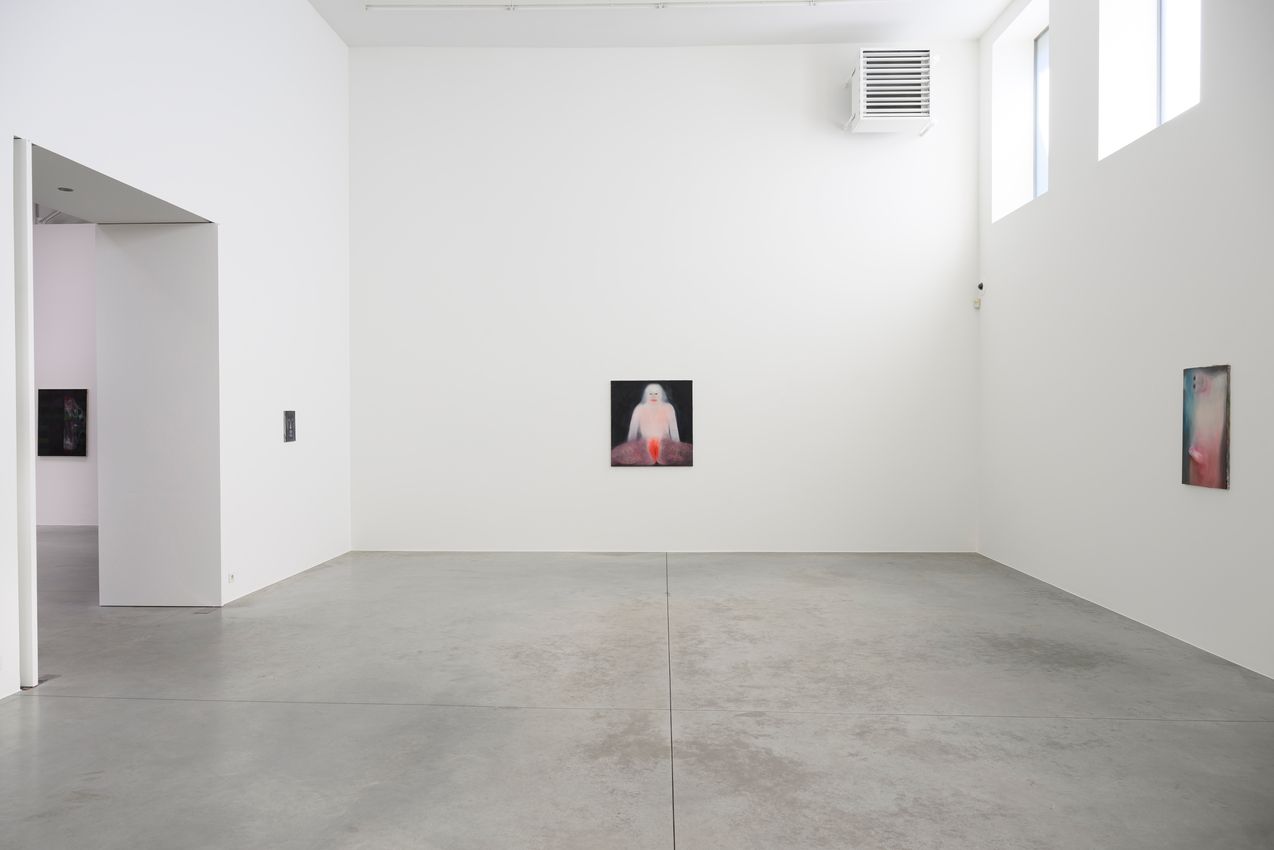
The body occupies a central place in the oeuvre of Miriam Cahn (b. 1949, Basel,Switzerland), which includes paintings, drawings, photography and performance. Workingfrom a feminist perspective, Cahn creates images characterised by emotional intensityand violent expressiveness, works which have a compelling impact on the viewer. Herfigures are ghostly characters emerging from a dark, often atmospheric background.Instead of hard, masculine lines, Cahn employs hazy contours that break the classicdistinction between foreground and background. With great sensitivity, she applies colourto emphasise certain elements, often eyes, lips and genitalia. These motifs, which referto intimacy, vulnerability and fertility, are often the object of violence, but can equally bethat of desire and connection. With her radical images, Cahn doesn’t strive for beautyor attractiveness but wants instead to address patriarchal systems, abuse of power andoppression. In doing so, she uses the body as an instrument to approach gender equalityon an animalistic, instinctive level.
Miriam Cahn lives and works in Stampa. She represented Switzerland at the VeniceBiennale in 1984 and a large installation with her work was part of the central exhibitionat the Venice Biennale in 2022. She has had solo exhibitions at Palais de Tokyo in Paris,Fondazione ICA Milano, The Power Plant in Toronto, Haus der Kunst in Munich, Sifang ArtMuseum in Nanjing, Kunstmuseum Bern, Museo Reina Sofia in Madrid, Kunsthalle Baseland Kunsthaus Zürich. Her work is in the collections of Tate Modern in London, MoMA inNew York, Pinault Collection in Paris and Kunstmuseum Basel, among others.
Raoul De Keyser
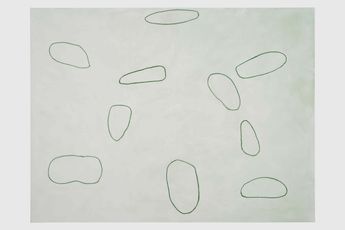
Sketch (La Mancha) (2006) and Rests (2007) come from the late period in the oeuvreof Raoul De Keyser (1930–2012, Deinze, Belgium), when the motifs were becomingincreasingly abstract and it was often more difficult to identify what they were based on.From 2003 De Keyser started experimenting with remnants of a series of prints of a linocutfrom the 1990s. The traces of a printing technique thus serve as a blueprint for new work.The referral to older work is typical of his output from that period: “In an endless trial anderror process, pictorial solutions from earlier works are brought up and linked to issuesexplored previously in another series. As a result, De Keyser’s artistic genealogy in no wayresembles a linear progression. Any teleological interpretation fails. New works shed newlight on older ones while each stage in his oeuvre retains its own identity and validity ratherthan becoming subordinate to the inevitably subsequent stage. De Keyser’s painting hasno final destination, it exists by grace of the detours.” (Steven Jacobs, Retour, Ludion,2007)
Raoul De Keyser had important solo exhibitions at Pinakothek der Moderne in Munich,S.M.A.K. in Ghent, The Renaissance Society in Chicago, Kunsthalle Bern, BOZAR inBrussels, Portikus in Frankfurt, Douglas Hyde Gallery in Dublin, FRAC Auvergne inClermont-Ferrand, M WOODS in Beijing, Whitechapel Gallery in London and De Pont inTilburg, among others.
Marlene Dumas
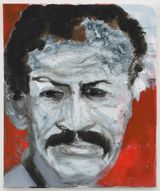
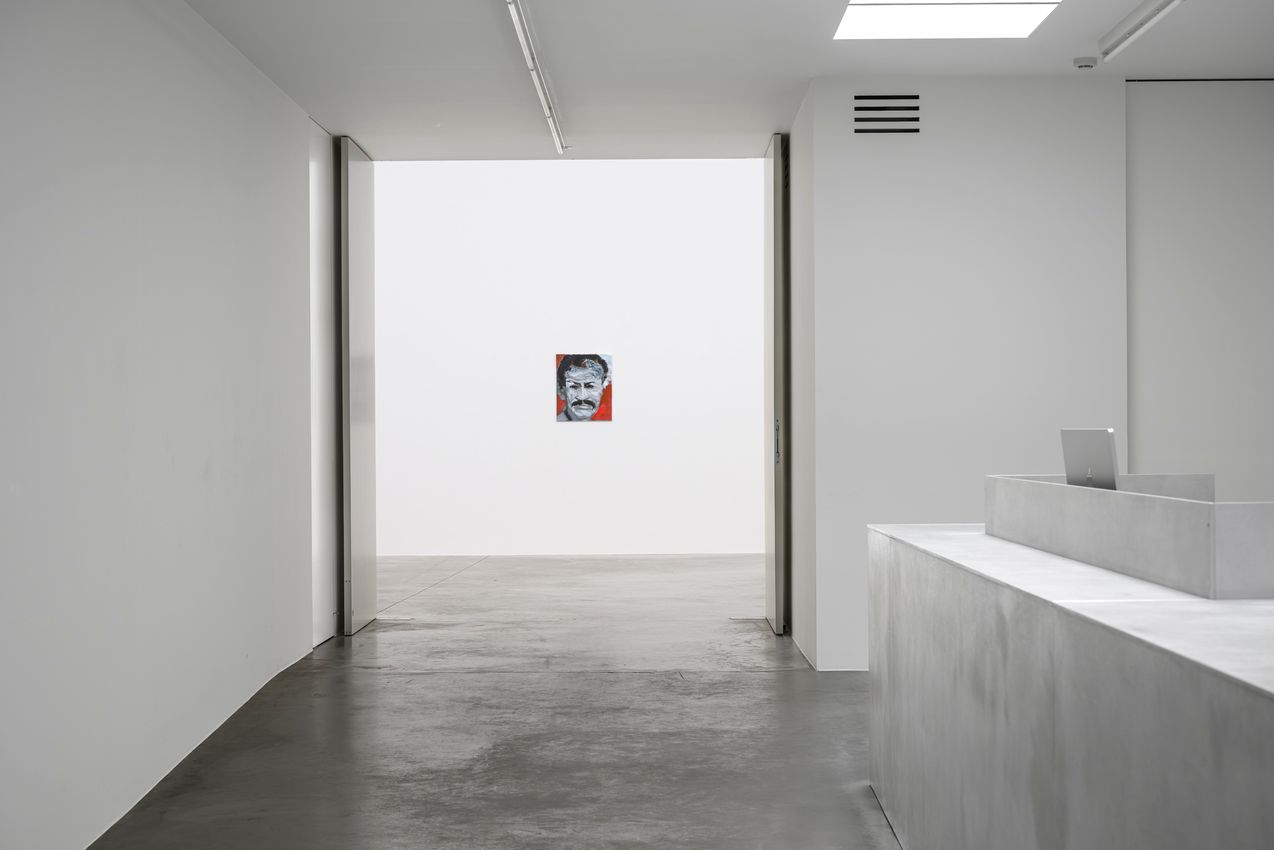
For this exhibition, Marlene Dumas (b. 1953, Cape Town, South Africa) painted a specialportrait of the artist Jack Whitten, who was represented by Zeno X Gallery since 2008and who passed away in 2018. His monumental work Soul Map (2015) is the central workaround which the exhibition Soul Mapping was built. Based on a photograph of JackWhitten in his studio in the 1970s, the portrait is a testament to the respect Marlene Dumashas for the artist’s remarkable oeuvre.
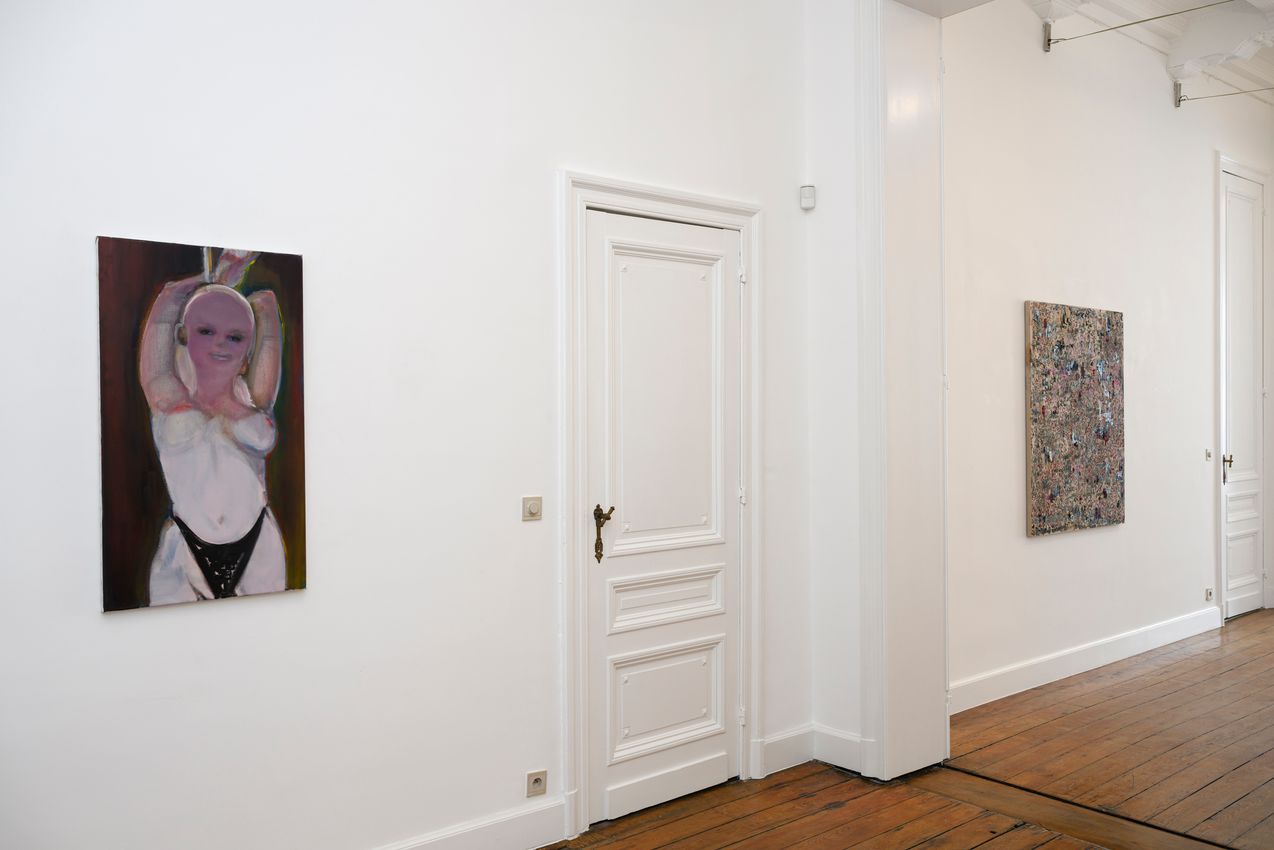
Bermuda Triangle (2000) is part of the Strippinggirls series. For this series of paintingsand photographs, Marlene Dumas and Anton Corbijn delved into Amsterdam’s nightlifetogether and each made portraits of strippers. The exhibition was shown not much later atS.M.A.K. in Ghent and at the Theater Instituut in Amsterdam. “Anton and I are both knownfor stripping people. We both make portraits. If this is true, then it’s not so much aboutrevealing roles ... It’s the exposure of a melancholy sex appeal, where surnames disappearand first names are fictitious.”
Marlene Dumas lives and works in Amsterdam. She has had solo exhibitions at PalazzoGrassi in Venice, Fondation Beyeler in Basel, MoMA in New York, Stedelijk Museum inAmsterdam, The Art Institute of Chicago, Centre Pompidou in Paris, MOCA in Los Angelesand Tate Modern in London, among others.
Mary Heilmann
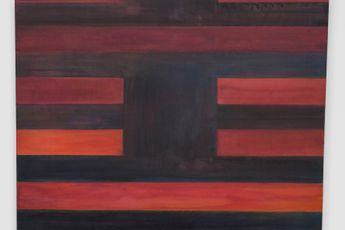
Mary Heilmann (b. 1940, San Francisco, United States) is considered one of the foundersof contemporary abstract painting. She has been working since the 1960s on a uniquebody of work that finds its inspiration in everyday reality. Her oeuvre is characterised by aninstinctive approach to colour and form, in response to the universality and timelessnessof geometric modernist abstraction. She often starts out from basic shapes – circles,squares, grids and lines – to which she playfully adds elements that produce an eclecticresult. Contours are blurred, shapes melt into each other or splashes of colour are applied.Behind her seemingly casual technique lies a complex structure that gradually becomespalpable.
Mary Heilmann lives and works in New York. A major solo exhibition will open at Dia:Beaconin New York in September 2023. She has also had solo exhibitions at the WhitechapelGallery in London, Whitney Museum of American Art in New York, Kunstmuseum Bonn,New Museum in New York, Wexner Center for the Arts in Columbus, and many othervenues. Her work was part of the Whitney Biennial in 1972, 1989 and 2008.
Sanya Kantarovsky
Sanya Kantarovsky (b. 1982, Moscow, Russia) works with various art forms, such assculpture, text and animation, but painting is at the basis of his artistic practice. His fictionalportraits are often constructed from various art historical references and visual elementsfrom cinema, design or illustration. The dark humour that emanates from his figurativepaintings evokes feelings of unease, alienation and confusion. Kantarovsky explores therelationship between image and viewer, playing with the way he makes the figures appearon canvas. For instance, the viewer’s gaze is sometimes sought out very directly, as ifbegging for connection, and at other times, on the contrary, completely averted.
Sanya Kantarovsky lives and works in New York. He has had institutional solo exhibitionsat the Aspen Art Museum in Colorado, Kunsthalle Basel, Fondazione Sandretto ReRebaudengo in Turin and LAXart in Los Angeles. His work is included in the museumcollections of Hirshhorn Museum and Sculpture Garden in Washington, LACMA in LosAngeles, ICA in Boston, MCA Chicago, Hammer Museum in Los Angeles, Tate in Londonand Whitney Museum of American Art in New York, among others.
Leah Ke Yi Zheng
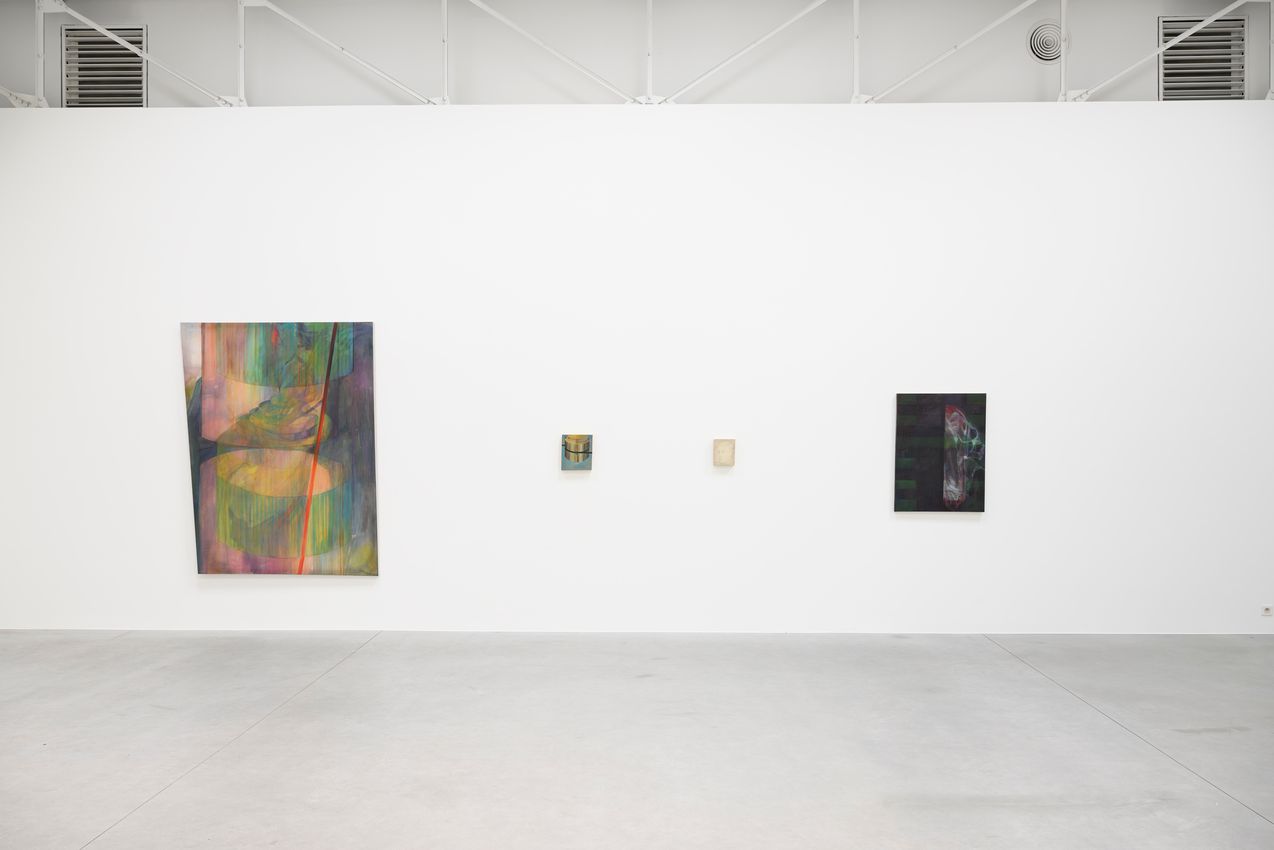
Leah Ke Yi Zheng (b. 1988) grew up in Wuyishan (China), where she was apprenticed intraditional Chinese painting techniques from an early age. She then went to the Schoolof the Art Institute of Chicago, where she developed a style that reflects ancient Chinesetechniques with elements of post-war avant-garde European painting. Zheng controlsthe legibility of her images through distances of viewing, subject matter, and by varyingthe transparency of paint embedded in silk canvas. The viewing process is therefore animportant part of the experience of her work and is also emphasized by the uneven shapesof her canvases. Zheng begins her work process by making her own wooden stretcherframe, which always takes on a unique shape and deviates from the rectangular norm.The light, translucent nature of silk provides a curious contrast to the heaviness, but alsosometimes warmth, of the wood. By destabilizing the painting’s infrastructure – sometimesalmost invisibly – she emphasizes the object-like nature of the painting. Two works featurethe motif of the fusee: the spring mechanism inside a watch or machine. The precision ofthe altered mechanical form and the command of time create a tension in relation to thefluidity of the paint and the amorphous appearances that sometimes emerge through theback of the canvas. Untitled (Helmut Kolle) (2023) is a portrait of German painter of thesame name, who was the partner of art critic and collector Wilhelm Uhde. Zheng first drewthe portrait in pencil on silk, but then decided to overpaint it with ink and remove the pencillines, creating a special interplay between the two different media.
Leah Ke Yi Zheng lives and works in Chicago. She has had solo shows at David LewisGallery in New York, 4th Ward Project Space in Chicago and The Arts Club of Chicago. Shecurrently teaches at the School of the Art Institute of Chicago.
Moshekwa Langa
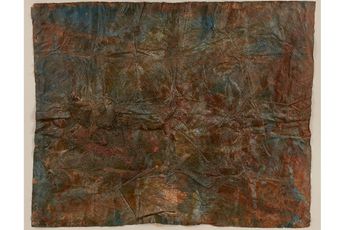
Moshekwa Langa (b. 1975, Bakenberg, South Africa) collects materials from his immediatesurroundings to document his personal history. The artist still returns regularly to his nativevillage of Bakenberg, which wasn’t included on maps during apartheid and therefore didn’tofficially exist. This prompted the artist to map events, people and places from his life. Boththrough his collages on paper and in his large-scale installations, he reflects on broadersocial themes such as identity, migration and displacement. His works are composed ofdifferent layers of paper, paint and other materials which he superimposes and blendstogether. Traces of actions, planned or not, are also visibly present. Together they formpoetic and tangible images in which both physical and psychological boundaries arequestioned.
Moshekwa Langa lives and works in Amsterdam. Langa has had solo exhibitions atKM21 in The Hague, La Chapelle des Cordeliers in Toulouse, Krannert Art Museum inChampaign, Illinois, Kunsthalle Bern, Modern Art Oxford, MAXXI in Rome, KunstvereinDüsseldorf, Contemporary Arts Center in Cincinnati, The Renaissance Society in Chicago,Centre d’Art Contemporain Genève and Museum Boijmans van Beuningen in Rotterdam.He has participated in several major biennials, including Berlin (2018), Dakar (2018), Lyon(2011), São Paulo (2010 and 1998), Venice (2009 and 2003), Gwangju (2000), Johannesburg(1997), Istanbul (1997) and Havana (1997). He did a residency at the Rijksakademie vanBeeldende Kunsten in Amsterdam in 1997–98.
Rosalind Nashashibi
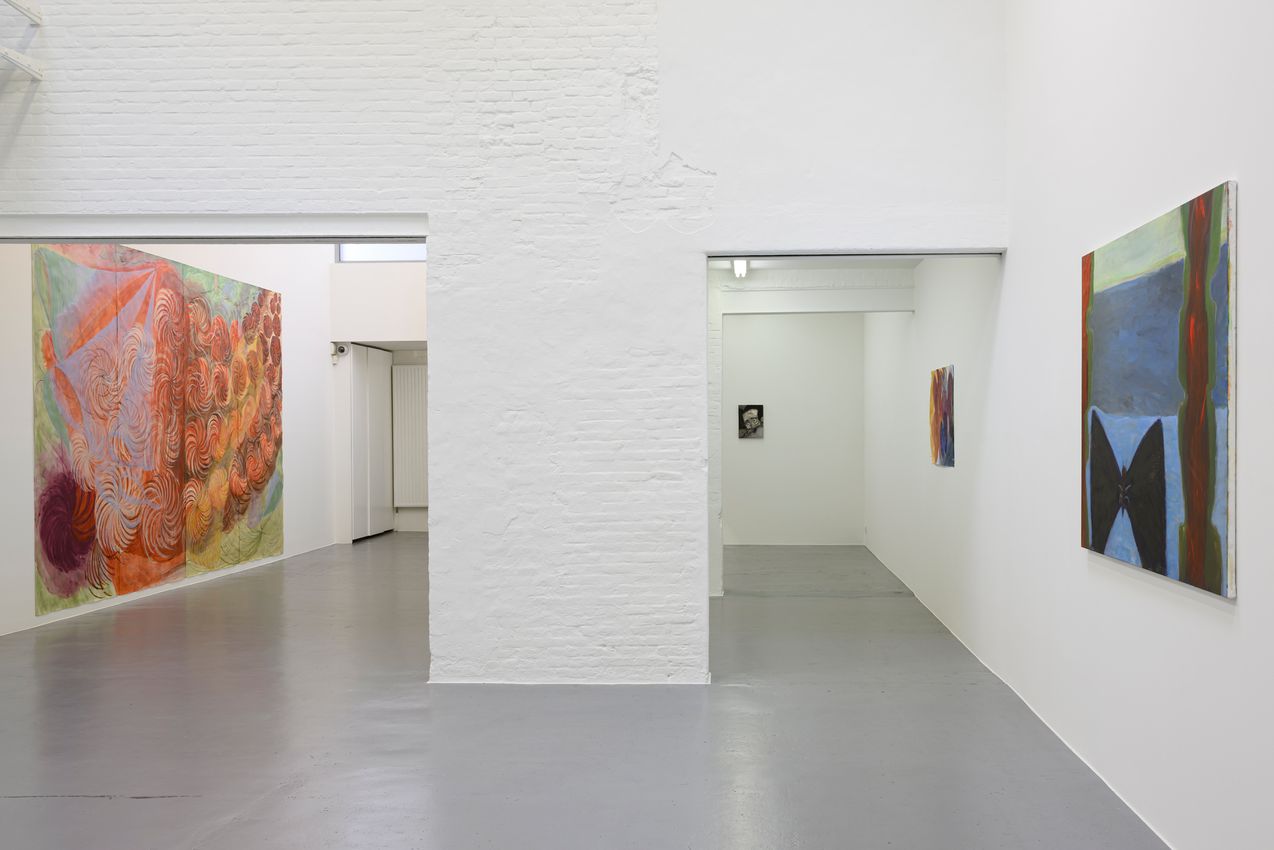
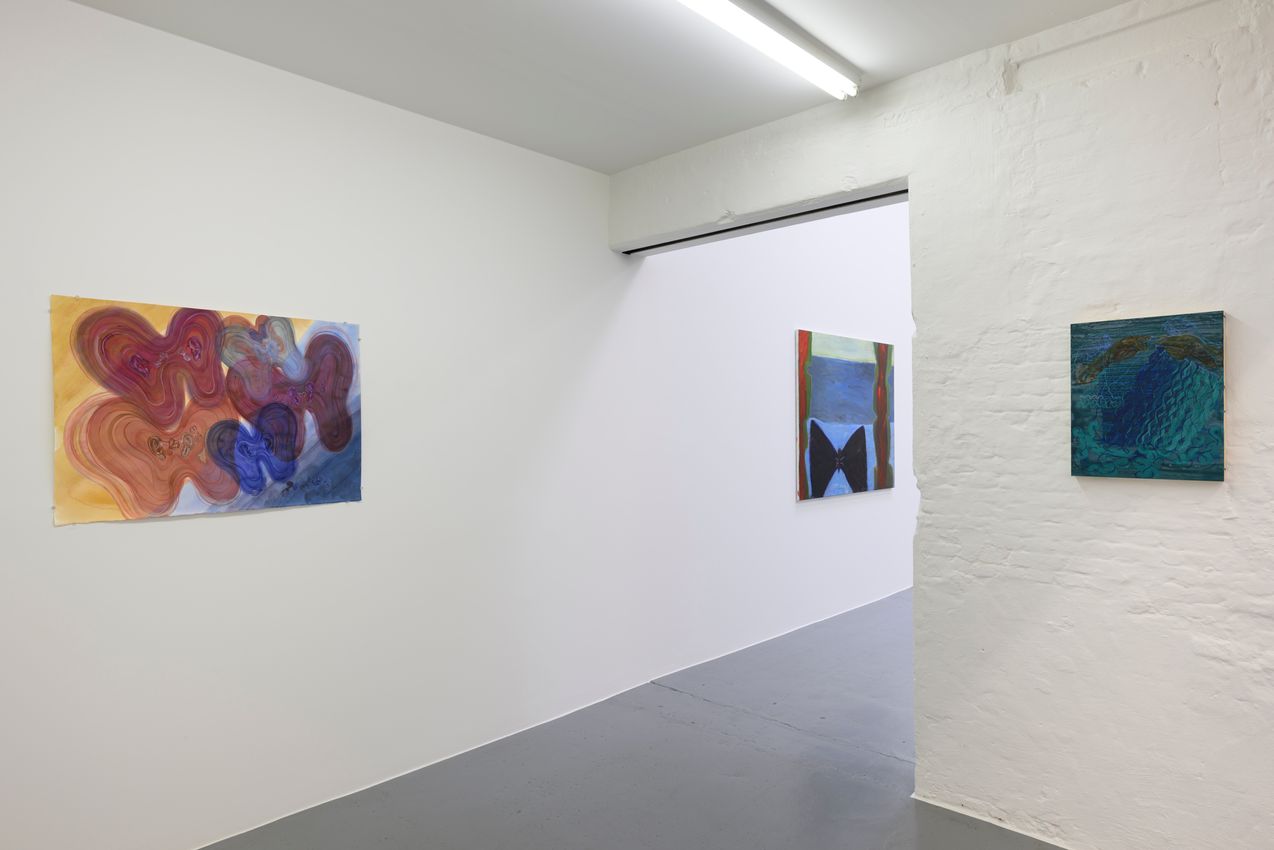
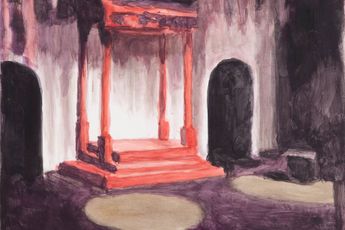
The oeuvre of Rosalind Nashashibi (b. 1973, Croydon, United Kingdom) consists ofpaintings and films, two practices that are in direct dialogue with each other. Her worksare the result of observations from her immediate environment, which she combines withelements from an imaginary world. She is fascinated by how this combination speaks to thecollective imagination. She uses recurring motifs to evoke a strange sense of recognitionwhere something feels familiar but whose origins we cannot trace. For instance, the mothin Heavy Moth (2022) has already surfaced in previous works as a bowtie, cat ears or bat.The red pillars in the work are also a recurring motif that acts as a framework for action.This experiment confirms her conviction about the influence of the history of painting onher own visual language. In the work Punch in Love (She’s Getting Stronger) (2023), part ofa series based on a work by Giovanni Domenico Tiepolo, she reflects on themes such aslove, power and the position of women in painting.
Rosalind Nashashibi lives and works in London. She has had solo exhibitions at NottinghamContemporary, the Musée Carré d’Art in Nîmes, National Gallery in London, S.M.A.K. inGhent, Secession in Vienna, The Art Institute of Chicago, Witte de With in Rotterdam andTate Britain in London. Nashashibi represented Scotland at the Venice Biennale (2007) andalso participated in Documenta 14 (2017), Manifesta 7 (2008) and the Sharjah Biennial(2011). Her work is held in numerous public collections such as MoMA in New York, CentrePompidou in Paris, Kunsthaus Zürich, Tate in Londen and S.M.A.K. in Ghent.
Marina Rheingantz
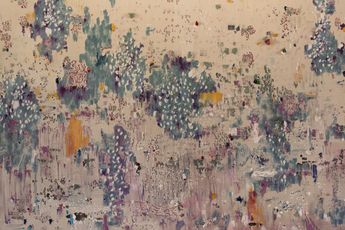
Marina Rheingantz (b. 1983, Araraquara, Brazil) created two paintings especially for thisexhibition in which the landscape once again plays the main role. The title Braquiaria (2022)refers to a grass-like plant species common in the Brazilian countryside. It is a plant thatgrows rapidly, overgrowing other vegetation in the process. Rheingantz doesn’t aim for aliteral, truthful representation of nature, but rather wants to evoke the sensory experienceof perception. She paints landscapes from memory in highly varied and evocativeimagery that lies between figuration and abstraction. Maria Ruth (2023) bears the name ofRheingantz’ grandmother, with whom she has a special connection. She gave the title tothe canvas only afterwards, when she realised that the delicate look of the work remindedher of her grandmother.
Marina Rheingantz lives and works in São Paulo. She has had solo exhibitions at FRACAuvergne in Clermont-Ferrand and Carpinteria in Rio de Janeiro. Her work has also beenincluded in exhibitions at Estação Pinacoteca in São Paulo, Kunsthal KAdE in Amersfoort,Hakodate Museum of Art in Hokkaido, Museu de Arte Moderna do Rio de Janeiro and Citédes Arts in Paris, among others. Her work is part of the collections of Centre Pompidou inParis, Centro Cultural São Paulo, Dallas Museum of Art, Museu de Arte Moderna do Rio deJaneiro, Museum of Fine Arts in Boston, Museu Serralves in Porto, Museum Voorlinden inWassenaar, Pinault Collection in Paris and the Taguchi Art Collection in Tokyo.
Salman Toor
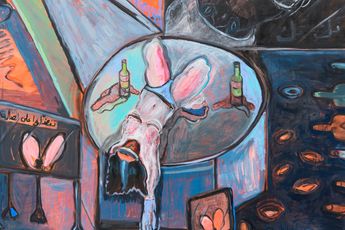
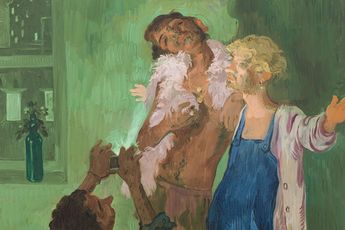
The paintings of Salman Toor (b. 1983, Lahore, Pakistan) depict intimate everyday scenesof the lives of young, queer Brown men. The tall, narrow figures, often depicted in emeraldgreen hues, evoke an atmosphere of celebration, love and desire. The narrative scenes andportraits, in which Toor juxtaposes his own experiences with those of others, are reflectionson the fragile search for identity. The images highlight the duality of joy and unrest thatcomes from living between different cultures: a conservative, traditional culture and afree, contemporary queer culture. Toor combines academic techniques and art-historicalreferences with a loose, sketchy style - the delicate linear brushstrokes emphasise the thinline between fiction and autobiography in his work.
Salman Toor lives and works in New York. He has had solo museum exhibitions at theWhitney Museum of American Art in New York, Honolulu Museum of Art, Tampa Museumof Art, Baltimore Museum of Art and M WOODS in Beijing. His work is part of the publiccollections of MCA Chicago, The Metropolitan Museum in New York, Tate London, WhitneyMuseum of American Art in New York, Walker Art Center in Minneapolis and many others.
Anh Trần
The paintings of Anh Trần (b. 1989, Bến Tre, Vietnam) engage in a dialogue with the historyof Western abstract painting. Instead of focusing on style, technique or materials used,the artist turns her attention to the emotional power of a work. Energy and sensibilityare central in her large-scale paintings. The symbols or words present in her work oftenrest lightly between fictional and personal experiences. Trần questions the formal andacademic straitjacket of painting and addresses the false dichotomy between original andreplica. Her work is also a commentary on Western modernism’s appropriation of aestheticelements from other cultures.
Anh Trần lives and works in Berlin and Amsterdam. She took part in the CarnegieInternational (2022) in Pittsburgh and the Biennial of Painting (2022) at Museum Dhondt-Dhaenens in Deurle. She currently has a solo exhibition at Fitzpatrick Gallery in Paris. Herwork has been shown in group exhibitions at Museum de Fundatie in Zwolle, Galerie FonsWelters in Amsterdam, Bortolami Gallery in New York and Artspace Aotearoa in Auckland.She was also a resident at the Rijksakademie van Beeldende Kunsten in Amsterdam(2021–22).
Luc Tuymans
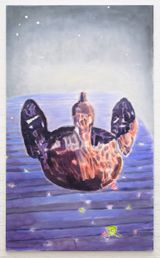
The painting Happy Birthday (2023) is based on the animated film of the same title createdby Luc Tuymans (b. 1958, Mortsel, Belgium) during the pandemic and screened at ZenoX Gallery during his latest solo exhibition in 2021. The work is based on a photographTuymans took of an inflatable duck bobbing on the water of a swimming pool rented forhim on the occasion of his birthday. The beams of light from the laser projection on thepool create a surprising but festive atmosphere. The absurd, rather light-hearted scenecontrasts with the physical scale of the painting.
Luc Tuymans lives and works in Antwerp. An exhibition recently opened at the Akademieder Künste in Berlin in which his work engages in dialogue with that of German actressand director Edith Clever, known for her portrayals of strong female characters. He has hadsolo exhibitions at De Pont in Tilburg, Palazzo Grassi in Venice, National Portrait Gallery inLondon, The Menil Collection in Houston, MCA Chicago and Haus der Kunst in Munich,among others.
Jack Whitten
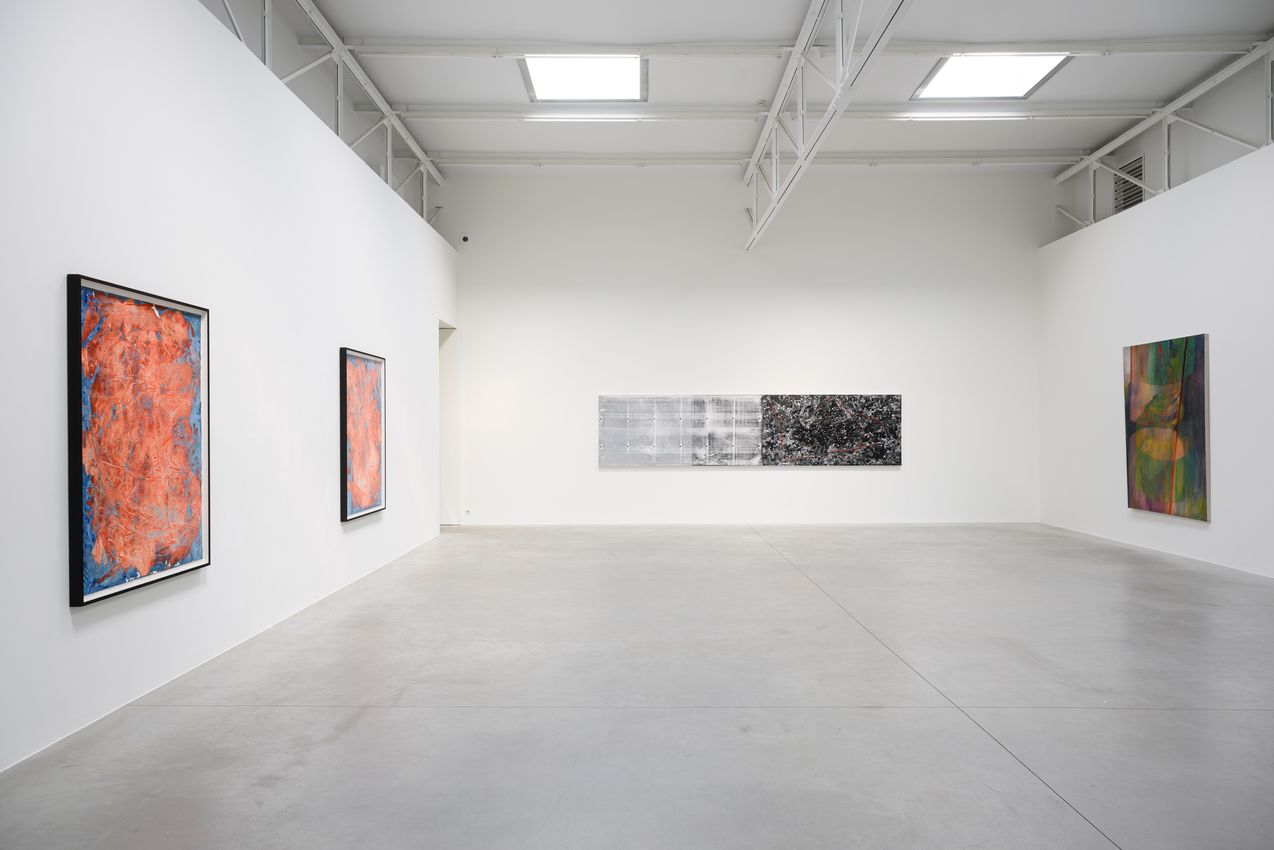
The painting Soul Map (2015) by Jack Whitten (1939, Bessemer, Alabama – 2018, NewYork) is the central work in the exhibition that also lent its name to the title of the exhibition.“As an abstract painter, I work with things that I cannot see”, Whitten said. “Google hasmapped the whole earth. We have maps of Mars. We don’t have a map of the soul, andthat intrigues me. I want the viewer to think of the Soul Map as a psychic GPS system.“The painting consists of two different panels: Whitten obtained the smoothness of the leftpanel by moving over the surface with his ‘developer’ – a kind of rake he created in the1970s – while the right panel consists of a collage of ‘tesserae’ or pieces of acrylic paintthat he meticulously applied to the canvas. Although the expansive undulation of the leftsurface contrasts sharply with the compressed particles on the right, both consist entirelyof acrylic paint, although in different states of being. “Point and wave are both sound andlight as well as matter and mind. Inspired by quantum physics – a theory of matter, energyand light – Whitten regarded the point and the wave as interchangeable just as matter andenergy were.” (Richard Shiff in Jack Whitten: Cosmic Soul, 2022).
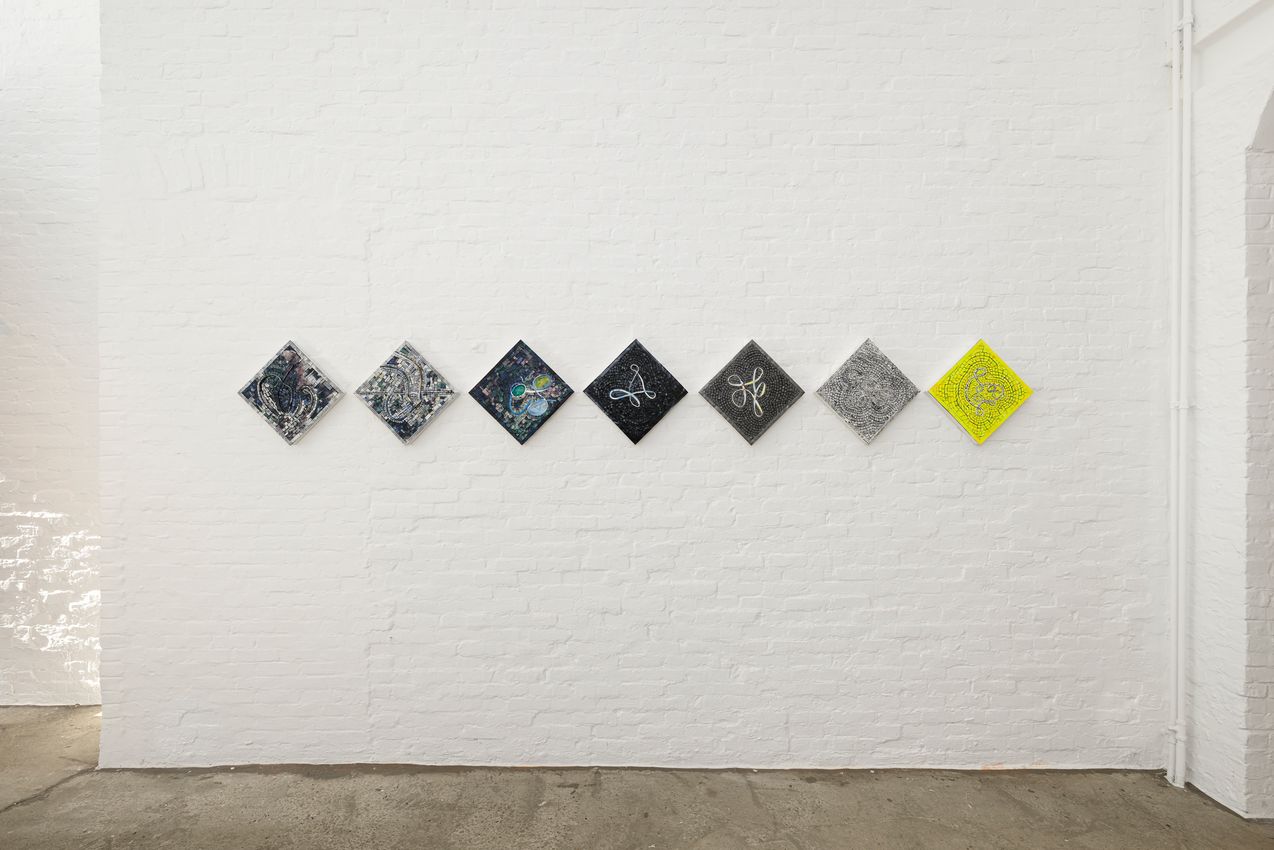
Seven Loops for Elizabeth Murray (2011) is a seven-part work that Jack Whitten createdas a tribute to American painter Elizabeth Murray (1940–2007), who was also a dear friendof the artist. A pioneer of abstract painting, Murray was known for her colourful and large-scale ‘shaped canvasses’. Her modest presence belied the bombastic, expansive energyof her colourful works. In focusing his thoughts about Elizabeth Murray, Whitten chose anunusual format in presenting the seven small paintings he dedicated to her. They seemto dynamically gesture one to the other. The energy of the loops are contained in eachseparate image by a framing device and kept from uncoiling and bursting into space.
The work of Jack Whitten will be the subject of a major retrospective exhibition at MoMA inNew York in 2026. He had solo exhibitions at Dia:Beacon in New York, Hamburger Bahnhofin Berlin, Museum of Fine Arts in Houston, The Met Breuer in New York, Whitney Museumof American Art in New York, Walker Art Center in Minneapolis and The Studio Museum inHarlem, among others.
Dan Zhu
In her drawings and paintings, Dan Zhu (b. 1985, Jiangxi, China) creates her ownworld. Starting from her fascination with the dialogue between fiction and reality, shejuxtaposes natural elements – leaves, flowers, flying creatures – with depictions from thehuman subconscious to create unusual scenes. Her images often come into existencespontaneously and in turn carry the seeds for new works. As sequences or rhythms, hermotifs seem to refer to mathematical patterns frequently found in nature. For Take Offand Run (2022-2023), her largest work to date, she placed large sheets of paper on thefloor and painted in a kneeling position, as in the tradition of Chinese calligraphy, with thefull reach of her arms. Only at a later stage did the large flower reveal itself, spreading invarious emanations across the picture surface and ending in a small snail. On the woodenpanel Mountains (2023), two hands knit a scarf that is simultaneously unravelled, like anever-ending task.
Dan Zhu lives and works in The Hague and Shenyang. She was a resident at theRijksakademie in Amsterdam (2018–19). Zhu recently had solo exhibitions at KunstinstituutMelly in Rotterdam and Tabula Rasa Gallery in Beijing and London. Her work is in the publiccollections of Teylers Museum in Haarlem, Stedelijk Museum in Schiedam and SchunckMuseum in Heerlen, among others.
In 1981, Frank and Eliane Demaegd founded Zeno X Gallery in an early 20th century townhouse in the Antwerp South district. In the early years the program of the gallery was mainly focused on architecture and installations with artists such as John Körmeling, Rem Koolhaas, Anne-Mie Van Kerckhoven and Patrick Van Caeckenbergh. Nowadays the gallery represents around thirty artists which operate in many different mediums such as painting, sculpture, film, photography and performance.

A respected voice in contemporary art discourse.
Focusing on ambitious storytelling and insightful art-world commentary. Ocula Magazine publishes in-depth interviews, critical essays and timely analysis on the artists, exhibitions and ideas driving the global art world.
Learn more about Ocula Magazine
Showcasing the best of the art world.
Ocula partners with galleries from around the world to highlight their artists, artworks and exhibitions. Gallery membership is by application and invitation, with each member vetted by an independent panel.
Learn more about Ocula Membership

Specialises in the sale of major artworks.
Led by a team with deep ties to the world’s leading auction houses, galleries and collectors. Ocula’s advisory team offers bespoke services to high-net-worth clients from around the world who are looking to acquire the best of contemporary and modern art.
Learn more about our team and services