





ZAC LANGDON-POLE
b. 1988, New ZealandZac Langdon-Pole is a New Zealand artist whose sculptural and photographic practice works across found and fabricated objects to probe how histories, value systems, and cosmologies are ordered and re-ordered over time. Best known for intricate assemblages that bind together shells, meteorites, minerals, and archival fragments, he explores translation, memory, and the shifting relations between the familial and the celestial. Langdon-Pole’s work has been presented at institutions including S.M.A.K. in Ghent, Museum für Moderne Kunst in Frankfurt, Kunsthalle Darmstadt, Kunstverein München, City Gallery Wellington, and the Institute of Modern Art in Brisbane. His international recognition has been marked by the Ars Viva Prize (2017) and the BMW Art Journey award for Sutures of the Sky (2018–19), alongside recent projects such as the solo exhibition Containing Multitudes at City Gallery Wellington (21 November 2020–7 March 2021).
Early Life and Career
Born in 1988 in Aotearoa New Zealand, Zac Langdon-Pole studied at the Elam School of Fine Arts, University of Auckland, graduating with a Bachelor of Fine Arts (Honours) in 2010. He subsequently relocated to Germany, completing postgraduate studies at Frankfurt’s Städelschule in 2015, where he studied under Willem de Rooij, a move that connected his practice to wider debates in European contemporary art. After several years based between Frankfurt, Darmstadt, and Berlin, he has returned to live in Tāmaki Makaurau Auckland while maintaining an active international exhibition profile.
Langdon-Pole’s early exhibitions in Aotearoa, including shows at Pah Homestead and The Dowse Art Museum, coincided with invitations to participate in projects across Europe and North America. By the mid-2010s, presentations at Kunstverein München, La Biennale de Montréal, and NTU Centre for Contemporary Art Singapore established him as part of a generation of New Zealand artists engaging with global circuits of institutions, residencies, and biennials. Key recognitions such as the National Contemporary Art Award (Merit Award) at Waikato Museum and residencies at NTU CCA Singapore, Fogo Island Arts, and McCahon House further shaped the conceptual and geographical scope of his work.
Works and Methods
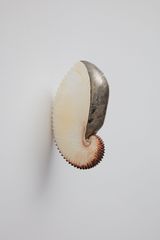
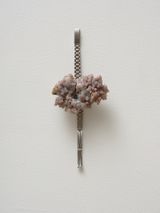
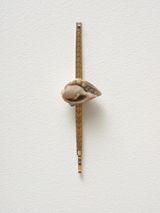
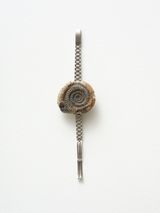
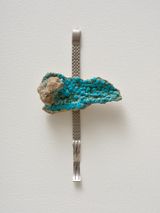
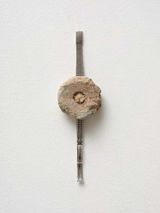
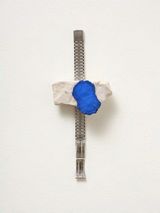
Langdon-Pole’s work often begins with existing objects—shells, meteorites, minerals, books, or everyday artefacts—that he subtly intervenes in to open questions about translation, authenticity, and belief. In series such as Passport (Argonauta), first shown at Art Basel Hong Kong in 2018, meteorite fragments are meticulously carved to occupy the apertures of delicate paper nautilus shells, bringing together extra-terrestrial matter and oceanic life in a single hybrid form. These objects highlight the collision of geological and biological timescales, while evoking long-standing philosophical questions about identity and change, from the ship of Theseus to contemporary debates on planetary transformation.
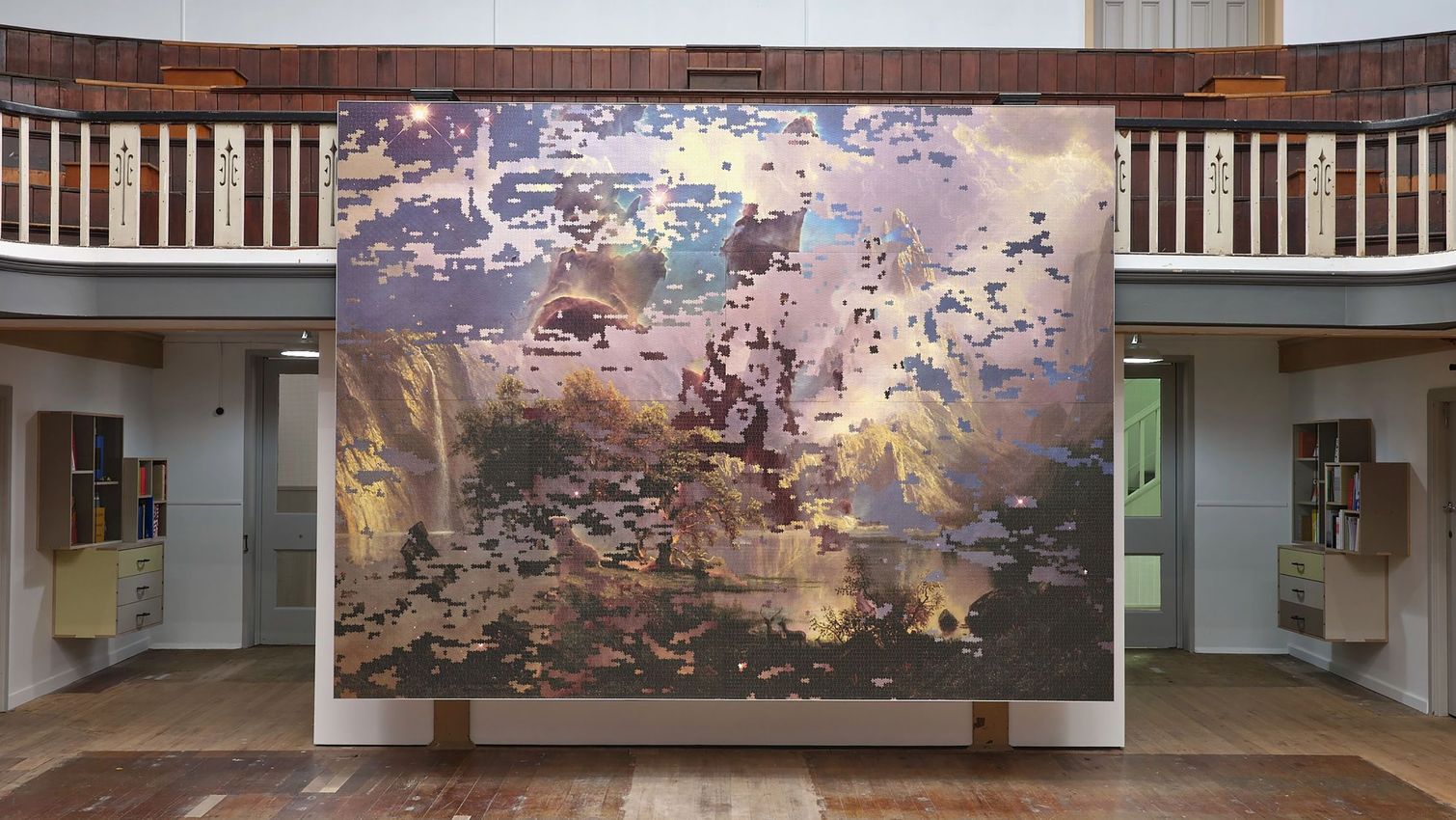
His sculptural language frequently exploits the tension between the “straight” and the “absurd,” inviting viewers to oscillate between reading works as precise cosmological models and as pataphysical thought experiments. Works that combine shells, quartz crystals, and magnetised metal filings, for example, use hidden magnetic forces to choreograph intricate growth-like forms that seem both natural and engineered. This attention to invisible structures—whether magnetic fields, shipping routes, or legal regimes around passports and borders—recurs across his practice, where modest gestures generate dense networks of reference.
Photographic and film-based works extend these concerns into images and sequences that chart the movement of objects and stories across oceans and archives. The BMW Art Journey, awarded in 2018, enabled Langdon-Pole to trace routes from London through Western Europe, across Pacific Island nations including Samoa, Hawai’i, and the Marshall Islands, before returning to New Zealand, using photography, writing, and film to document encounters with scholars, sailors, and local communities. Subsequent works and publications emerging from this project treat the journey itself as both research method and material, alluding to constellations of migration, navigation, and extraction that link seemingly distant sites.
Themes and Context
A recurring focus of Langdon-Pole’s practice is how systems of classification—scientific, cartographic, museological, or bureaucratic—shape what counts as knowledge and value. By splicing together artefacts from different domains, he draws attention to the metaphors and power structures embedded in taxonomies, from natural-history displays to passport controls. At the same time, an interest in memory and inheritance runs through his work, where “familial” scales of experience intersect with larger colonial, ecological, and cosmic narratives.
Critics have noted that his works foster an attentive, open form of looking, in which meaning is never fixed but continually deferred among materials, titles, and contexts. Situated within broader tendencies of post-conceptual and post-internet practices, his projects touch on maritime histories, celestial navigation, and the circulation of images, without resolving these references into a single explanatory frame. By foregrounding translation—linguistic, material, and cultural—Langdon-Pole’s art reflects on how worlds are stitched together and where they might come apart.
Exhibitions and Recognition
Langdon-Pole has exhibited widely in New Zealand and internationally, with institutional presentations at S.M.A.K., Ghent; Kunsthalle Darmstadt; Kunstverein München; Museum für Moderne Kunst, Frankfurt; Kunsthalle Mainz; NTU Centre for Contemporary Art, Singapore; and City Gallery Wellington. In Aotearoa, his work has been shown at venues including The Dowse Art Museum, Pah Homestead, Auckland Art Gallery Toi o Tāmaki (via the Chartwell Collection), and Michael Lett in Tāmaki Makaurau. Recent exhibitions include Containing Multitudes at City Gallery Wellington, Porous World at Michael Lett, and shows at the Institute of Modern Art in Brisbane and the Asia Pacific Triennial at QAGOMA.
His work has featured in international biennials and triennials such as La Biennale de Montréal, the Art Encounters Biennial in Timișoara, and the Triennale Kleinplastik in Fellbach, as well as at art fairs including Art Basel Miami Beach and Art Basel Hong Kong. Awards and residencies include the Ars Viva Prize for Visual Arts (2017), the BMW Art Journey (2018), the Charlotte Prinz Scholarship in Darmstadt, residencies at NTU CCA Singapore, Fogo Island Arts, and McCahon House, and recognition in the National Contemporary Art Award in Waikato. His work is held in public collections such as Museum für Moderne Kunst, Frankfurt; Buxton Contemporary; Auckland Art Gallery Toi o Tāmaki; and the Chartwell Collection, underscoring its significance within both New Zealand and international contexts.
Zac Langdon-Pole FAQs
What is Zac Langdon-Pole best known for?
Zac Langdon-Pole is best known for sculptural and photographic works that combine found and fabricated objects—such as shells, meteorites, minerals, and documents—to explore translation, memory, and systems of classification. Projects like Passport (Argonauta) have drawn international attention for the way they bring together celestial and oceanic materials to think about identity, history, and transformation.
What themes does Zac Langdon-Pole explore in his art?
Langdon-Pole’s work addresses how knowledge and value are produced through scientific, bureaucratic, and museological frameworks, often focusing on maritime routes, celestial navigation, and archival structures. His sculptures and images consider the relationship between personal and planetary histories, emphasising processes of translation across time, space, and culture.
Where has Zac Langdon-Pole exhibited?
Langdon-Pole has exhibited at institutions such as S.M.A.K. in Ghent, Kunsthalle Darmstadt, Kunstverein München, Museum für Moderne Kunst in Frankfurt, Kunsthalle Mainz, NTU Centre for Contemporary Art Singapore, and City Gallery Wellington. In Aotearoa New Zealand, his work has been shown at The Dowse Art Museum, Pah Homestead, Michael Lett in Tāmaki Makaurau, and as part of the Chartwell Collection at Auckland Art Gallery Toi o Tāmaki.
What is the BMW Art Journey and how did it influence Zac Langdon-Pole’s work?
The BMW Art Journey is an award that funds an artist to realise a research-based journey, and Langdon-Pole received it in 2018 for his project Sutures of the Sky. His proposal traced routes from Europe through the Pacific Islands to New Zealand, using travel, photography, film, and writing to investigate histories of navigation, migration, and extraction, which have continued to inform his subsequent projects and publications.
Ocula | 2026

View Zac Langdon-Pole's Artworks


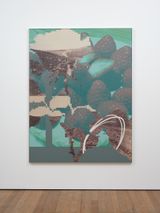
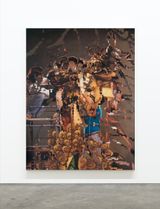
196.8 x 150.5 x 4 cm (incl frame)
Lett Thomas Request Price & Availability

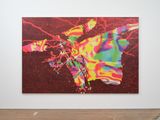
196.8 x 301.1 x 4 cm (incl frame)
Lett Thomas Request Price & Availability

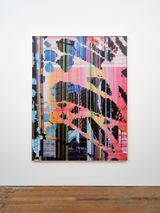

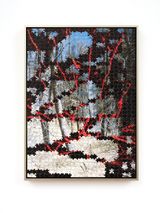

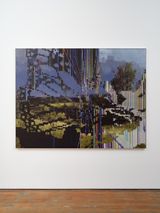

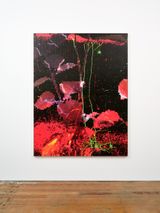
196.8 x 150.5 x 4 cm (incl frame)
Lett Thomas Request Price & Availability


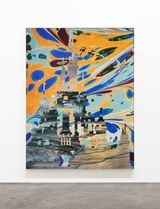


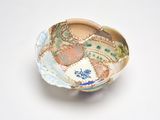
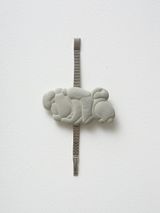
14 x 29 x 30 cm
STATION Request Price & Availability










Explore Zac Langdon-Pole's Exhibitions








Explore and Follow Artists Shaping Contemporary Art
A respected voice in contemporary art discourse.
Focusing on ambitious storytelling and insightful art-world commentary. Ocula Magazine publishes in-depth interviews, critical essays and timely analysis on the artists, exhibitions and ideas driving the global art world.
Learn more about Ocula Magazine
Showcasing the best of the art world.
Ocula partners with galleries from around the world to highlight their artists, artworks and exhibitions. Gallery membership is by application and invitation, with each member vetted by an independent panel.
Learn more about Ocula Membership
Specialises in the sale of major artworks.
Led by a team with deep ties to the world’s leading auction houses, galleries and collectors. Ocula’s advisory team offers bespoke services to high-net-worth clients from around the world who are looking to acquire the best of contemporary and modern art.
Learn more about our team and services