












Contemporary Art in Aotearoa New Zealand
Small and sparsely populated, New Zealand nurtures an art scene far away from the rest of the world—but perhaps it is thanks to this isolation that the country outputs art with a distinctive Kiwi flavour. Artists draw from a range of influences like international trends, the beauty of nature, and indigenous Māori artwork.
For hundreds of years, New Zealand was inhabited by indigenous Māori who developed symbolist techniques with roots in the Polynesian islands. Traditional Māori arts primarily consist of whakairo (carving), tā moko (tattooing), raranga (weaving), and kōwhaiwhai (painting).
In the 18th century, amateur British painters settled in New Zealand, primarily depicting the then-exotic landscape—but it was only until the last decade of the 19th century that professional artists migrated over, bringing traces of modernist movements with them. The La Trobe scheme introduced more professional artist-teachers to the country and played a key role in developing a distinctive style of New Zealand regionalism that focused on local subjects.
Yet, New Zealand’s location and its connection to the British Empire still meant it took decades for continental European modernist trends to become accepted in the mainstream. Developments in television and travel finally sped up the process. Prominent artists across the 20th century include Rita Angus, Colin McCahon, Billy Apple, Frances Hodgkins, Ian Scott, Tony Fomison, Robin White, Dick Frizzell, and Gordon Walters.
Māori artwork, too, was revitalised in the 1960s-70s with the Māori Renaissance. The Te Māori exhibition, which toured the United States, played a monumental part in the Māori art revival, presenting it for the first time as a living art form rather than as an ethnographic study. Notable Māori artists from this time include Ralph Hotere, John Bevan Ford, Cliff Whiting, and Marilynn Webb, and later, Kura Te Waru Rewiri, Robyn Kahukiwa, Shona Rapira Davies, and Emily Karaka.
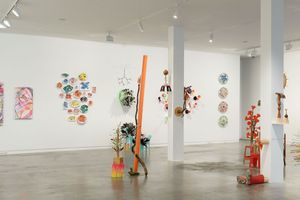
Today, New Zealand continues to uplift artists through its many galleries, artist-run initiatives, and events like the Aotearoa Art Fair and Auckland Art Fair. Art enthusiasts can visit these art spaces and immerse themselves in the sculptures and paintings of the likes of Francis Upritchard, Neil Dawson, Simon Denny, Lisa Reihana, and Shane Cotton.
Institutional Pillars of New Zealand Art
New Zealand’s most extensive art gallery is located in the heart of its biggest city—the Auckland Art Gallery Toi o Tāmaki contains a permanent collection of 15,000 works while showcasing regularly changing exhibitions by local and international artists. Artspace Aotearoa focuses on emerging contemporary artists, while Tautai Pacific Arts Trust, located next door, displays works from artists around the Pacific region.
Te Tuhi, the first purpose-built arts centre in New Zealand, serves Auckland’s eastern region with curated contemporary painting and sculpture. Likewise, Te Uru Waitākere Contemporary Gallery showcases new works from ever-changing exhibitions in the West.
The capital city of Wellington also has some of the most famous art galleries in New Zealand. Te Papa Tongarewa, New Zealand’s national museum, showcases a range of art exhibitions on its upper floors. A short walk away is the City Gallery Te Whare Toi, which features no permanent collection but offers a spacious exhibition area for a variety of new works. In neighbouring Lower Hutt, The Dowse Art Museum runs an exciting contemporary art program while housing the New Zealand Film Archive.
Christchurch Art Gallery Te Puna o Waiwhetū is the premier art gallery of the South Island. It sits right next to the Centre of Contemporary Art (CoCA), born from the Canterbury Society of Arts, which once dominated the New Zealand art scene. A few streets away, the Arts Centre Te Matatiki Toi Ora is a former boys’ high school now converted into a lively museum complex, including curated galleries and exhibition spaces like The Central Art Gallery, The Physics Room, and Pūmanawa.
Best Art Galleries in New Zealand Aotearoa
Auckland’s contemporary art scene is centred around Karangahape Road, affectionately known as K’ Road. One prominent gallery is the Bergman Gallery, the second branch of a Rarotongan gallery which represents artists from the greater Pacific region. Michael Lett is another significant K’ Road gallery with over 20 years of history. Other galleries in the area include Two Rooms, Starkwhite, and Anna Miles Gallery. Just outside the Auckland Art Gallery sits Gow Langsford, New Zealand’s leading art dealer.
Art galleries are dotted across Te Aro, Wellington—the oldest of which, McLeavy Gallery, was established in 1968 and still sits in its original location on the lively Cuba Street. Hamish McKay and Bowen Galleries are two more long-standing art galleries that exhibit trans-Tasman artists, while Jhana Millers is a newer offering that primarily displays NZ artists. Ihorei and Kura Gallery each focus on supporting local Māori art, showcasing carvings, ceramics, and more.
In Christchurch, leading gallerist Johnathan Smart operates two galleries: the eponymous Jonathan Smart Gallery and The Central, located in the former library of the Arts Centre. Other galleries of note include Nadene Milne Gallery, Fibre Gallery, and PG gallery192.
Aotearoa Artist-Run Initiatives and Experimental Art Spaces
New Zealand has always been a significant contributor to artist-run initiatives. The Group, a Christchurch-based art association, created gallery spaces to showcase their own works throughout the 20th century. Meanwhile, New Zealand artist Billy Apple established New York’s 2nd artist-run space in the 1960s.
In the present day, there are over a dozen artist-run spaces in New Zealand. The longest-running of these is the RM Gallery and Project Space, established in 1997 and currently located on K’ Road. It supports not just local visual artists but also writers through its writer’s residency.
Enjoy Contemporary Art Space, located on Cuba Street, which began as an artist-run initiative but today operates as a not-for-profit art space, focusing on exhibitions and publications by emerging and mid-career artists. The Blue Oyster Gallery is another funded art project space that has been running for over 20 years. It is based in Dunedin and has a long history of supporting experimental artwork.