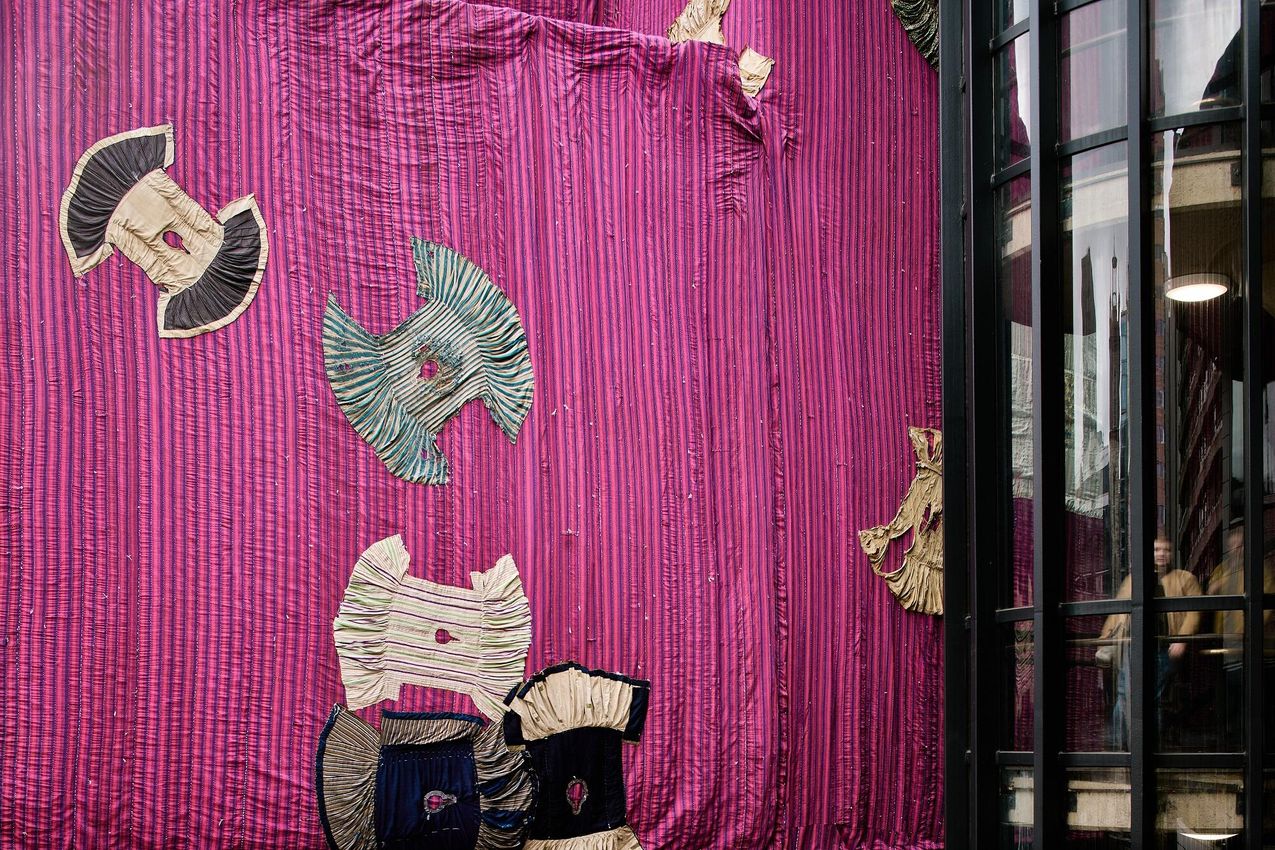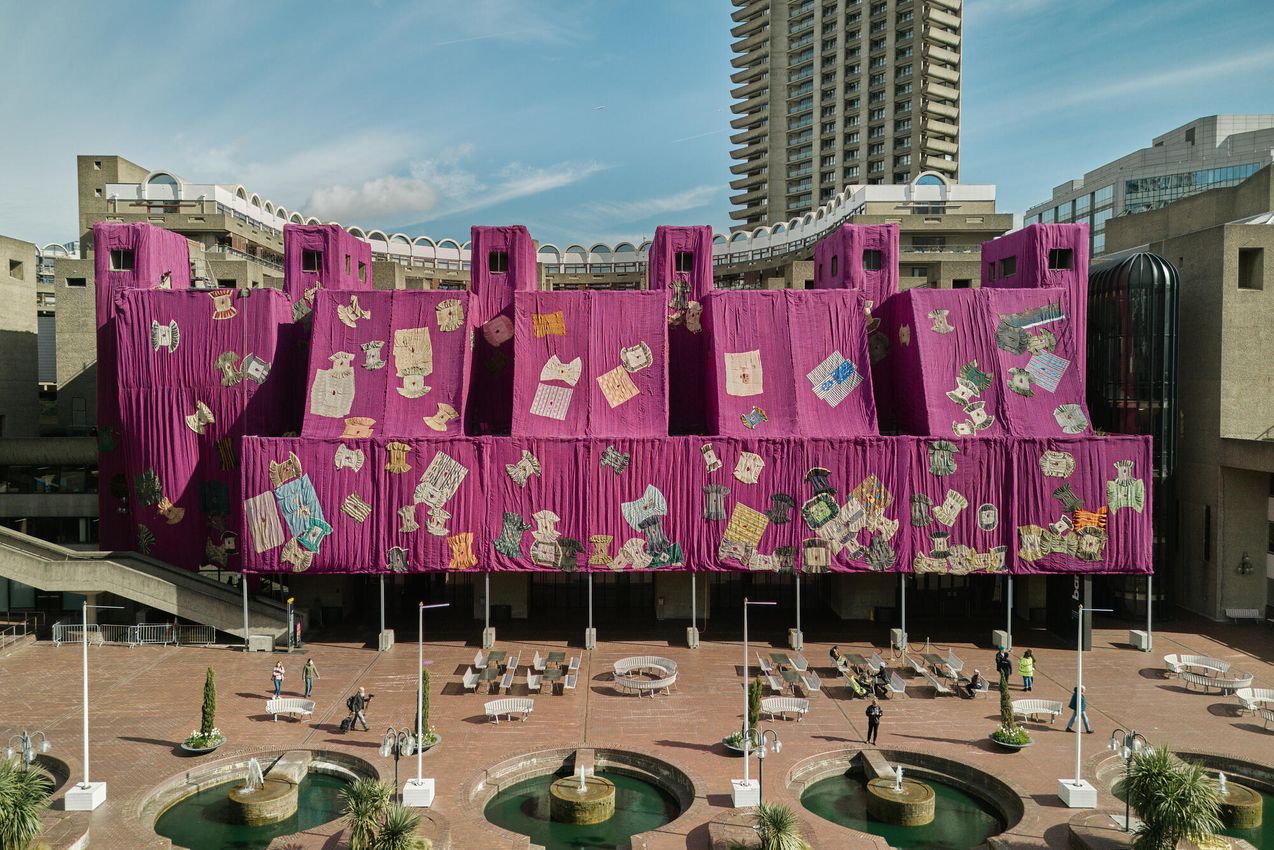
A new artwork by Ibrahim Mahama transforms our Lakeside Terrace, enveloping the building’s iconic concrete walls with approximately 2000 square metres of bespoke woven cloth.
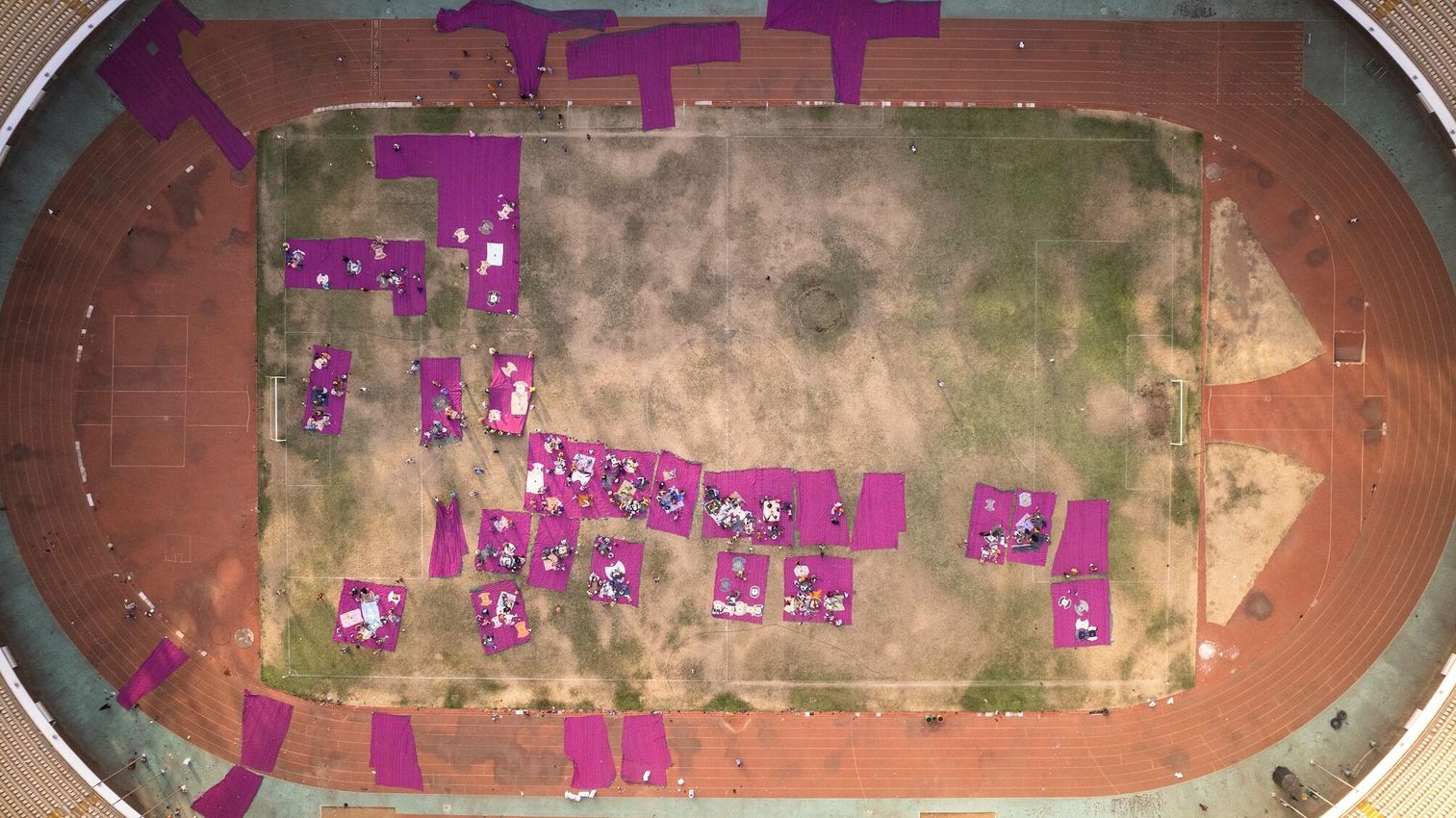
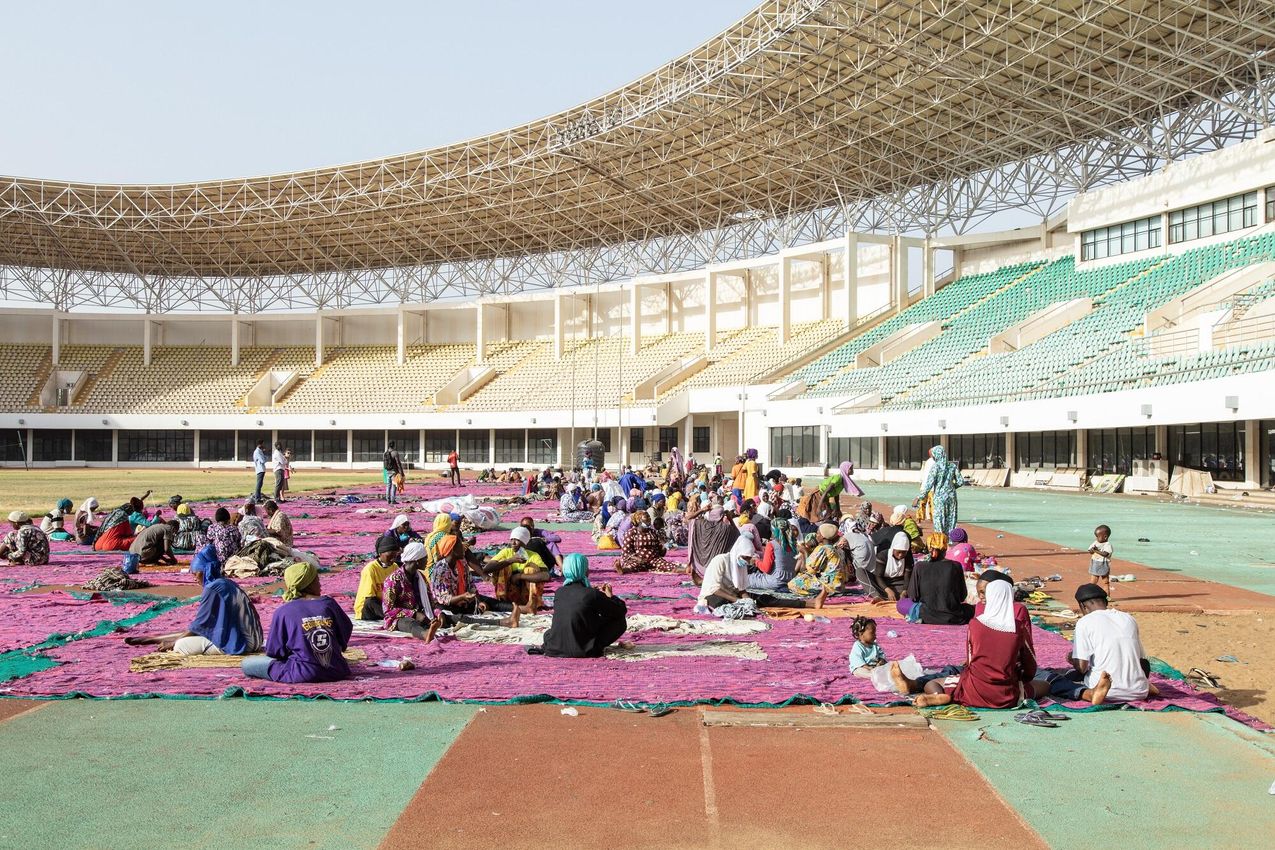
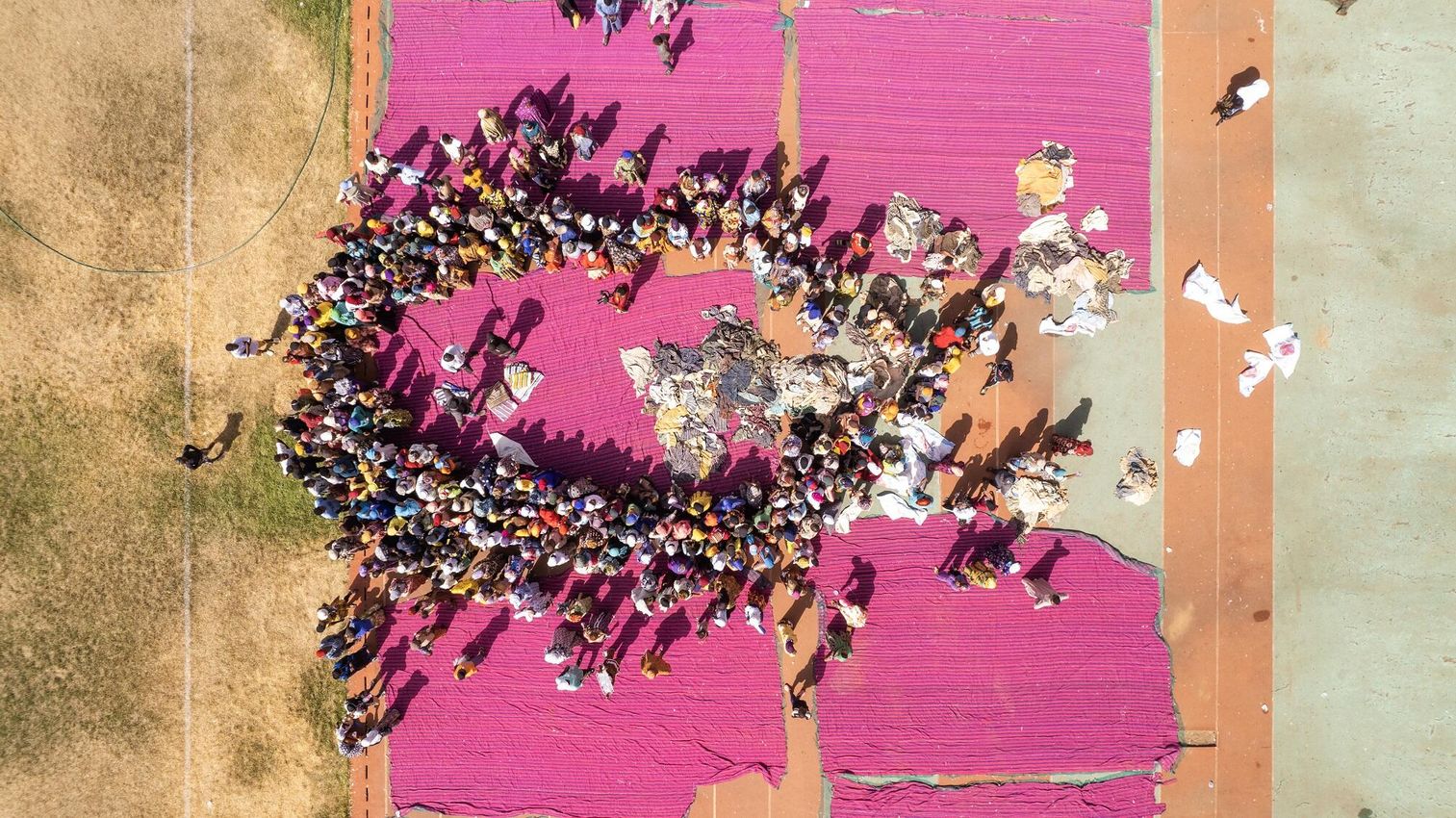
Purple Hibiscus has been created in collaboration with hundreds of craftspeople from Tamale in Ghana where the colossal panels of pink and purple fabric have been woven and sewn by hand, to be fitted to the brutalist planes of our building.
100 ‘batakaris’ – robes worn by Ghanaian kings – are embroidered onto the artwork. Often saved by families over generations, these precious textiles carry the imprints of the figures they once clothed, signifying the continued relevance of intergenerational knowledge. Ibrahim Mahama holds a deep interest in the life cycles of textiles and what can be learnt from the historical memories embedded within them.
Purple Hibiscus is part of Unravel: The Power & Politics of Textiles in Art.
Purple Hibiscus, named after Chimamanda Ngozi Adichie’s eponymous 2003 novel, is an ambitious new commission by Ibrahim Mahama, created in collaboration with hundreds of craftspeople from Tamale in Ghana. The work has been woven and then sewn by hand to produce colossal panels of pink and purple fabric that are fitted to the brutalist planes of the Barbican’s Lakeside façade.
Embroidered onto the cloth are approximately 100 ‘batakaris’ – robes worn by Northern Ghanaian royals and ordinary people – which Mahama has collected through a process of exchange and barter from numerous communities across Northern Ghana. These precious textiles, often saved by families over generations, tucked away in wardrobes or stored below beds, carry the imprints of the lives, lineage and power of the figures they once clothed. Worn, degraded and bearing traces of years of use, these smocks are testaments to the endurance of traditional belief systems, and the continued relevance of intergenerational knowledge. Incorporating these smocks into the commission carries forward Mahama’s deep interest in the life cycles of textiles and what can be learnt from the historical memories embedded within them.


Ibrahim Mahama’s vast installations use materials connected to Ghana’s past and present to open a discussion about the intersectionality of memory, colonialist history, politics, global trade and commerce.


The Barbican is a world-renowned arts and learning hub in the City of London, celebrated for its striking Brutalist architecture and multidisciplinary programming. Opened in 1982 as part of the larger Barbican Estate, it has become a cultural landmark, bringing together visual arts, music, theatre, dance, film, and education under one roof.
A respected voice in contemporary art discourse.
Focusing on ambitious storytelling and insightful art-world commentary. Ocula Magazine publishes in-depth interviews, critical essays and timely analysis on the artists, exhibitions and ideas driving the global art world.
Learn more about Ocula Magazine
Showcasing the best of the art world.
Ocula partners with galleries from around the world to highlight their artists, artworks and exhibitions. Gallery membership is by application and invitation, with each member vetted by an independent panel.
Learn more about Ocula Membership

Specialises in the sale of major artworks.
Led by a team with deep ties to the world’s leading auction houses, galleries and collectors. Ocula’s advisory team offers bespoke services to high-net-worth clients from around the world who are looking to acquire the best of contemporary and modern art.
Learn more about our team and services