





Frosty Myers Reflects on 50 Years of ‘The Wall’ in SoHo

Forrest Myers, Green-T (2007) on the exterior of the Catskill Art Space. Photo: Zach Hyman.

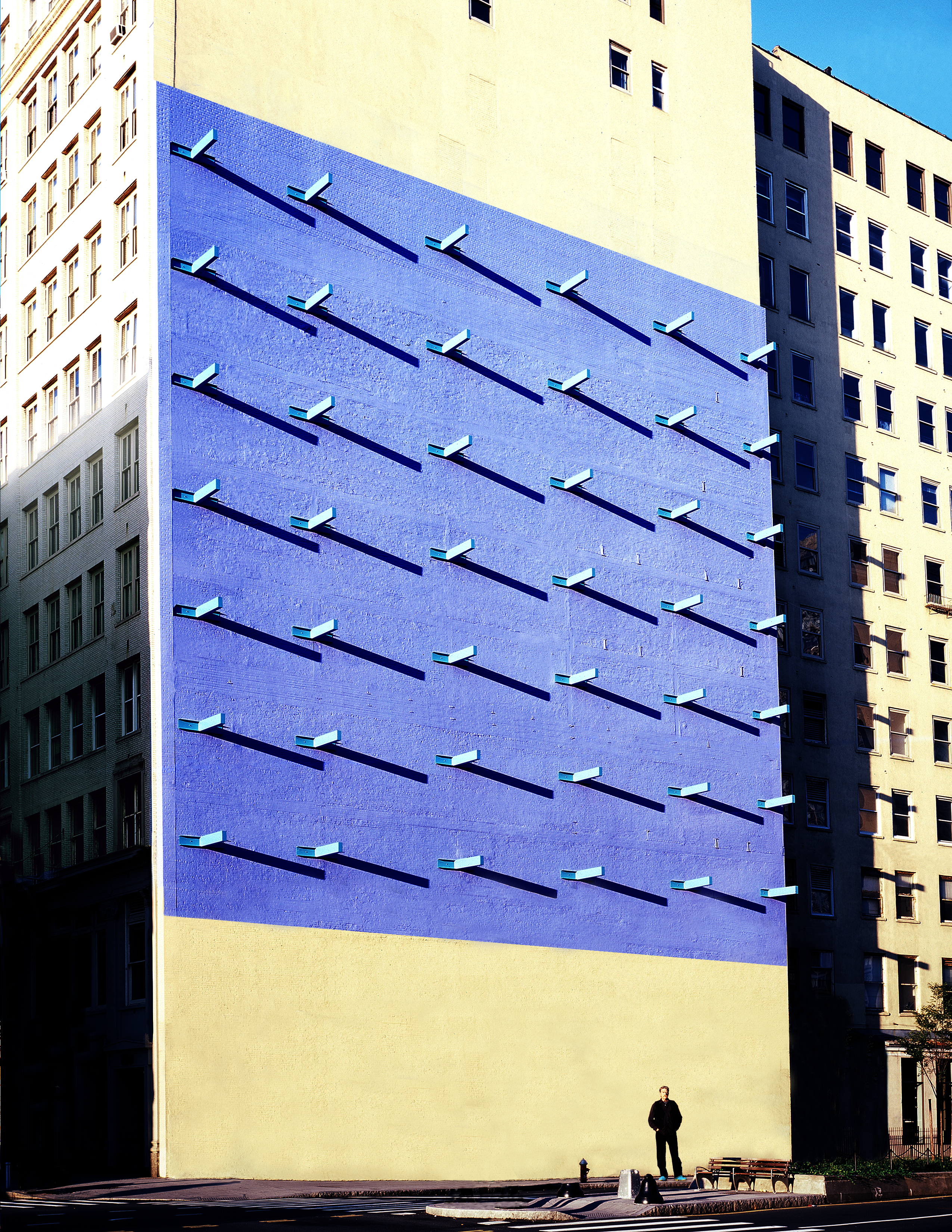
In 1973, artist Forrest ‘Frosty’ Myers installed his eight-storey work The Wall (1973) on the northwest corner of Broadway and Houston. The work consists of 42 aluminium bars bolted to steel braces and painted green on a periwinkle background.
The installation survives as a memorial to the experimental SoHo art scene that Myers was a part of in the ‘60s, ‘70s, and ‘80s, when he collaborated with Robert Grosvenor, Robert Rauschenberg, Andy Warhol, and Claes Oldenburg, among others.
On the occasion of the solo survey show Forrest Myers at Catskill Art Space (CAS) through 26 August, Myers discusses his recent works and looks back at how both his practice and SoHo have evolved over the decades.
In your survey exhibition Forrest Myers, you pay homage to your installation The Wall, which is often referred to as ‘the gateway to SoHo.’ In what way was that work a product of its place and time?
My wife, Debra Arch Myers, had the conceptual idea of making 42 extra T’s or Projections from The Wall and placing one at a time on buildings around the world. Sally Wright, Director of the CAS, kept the idea flowing by permanently placing a T from The Wall on the front of the CAS building in Livingston Manor, New York.
Back in 1973, when the artwork was created in SoHo it was a derelict, light manufacturing area where manufacturing had left and artists were able to move into these factories at low rents. This enabled the establishment of the largest artist district that New York City had ever experienced. A renaissance was taking place. The Wall became a symbol for the neighbourhood—‘the Gateway to SoHo announcing that you were entering into an artist neighbourhood.
How has SoHo changed in the decades since?
The character of SoHo has flipped 180 degrees from when the artwork was initially installed. Now this area is known for being the high-end shopping district of New York City, but the artwork hasn’t changed. It still represents the spirit of the artists from those days — calling back to when they made the area transform.
Looking at the artworks in your current show, what ideas, and approaches have persisted throughout your practice?
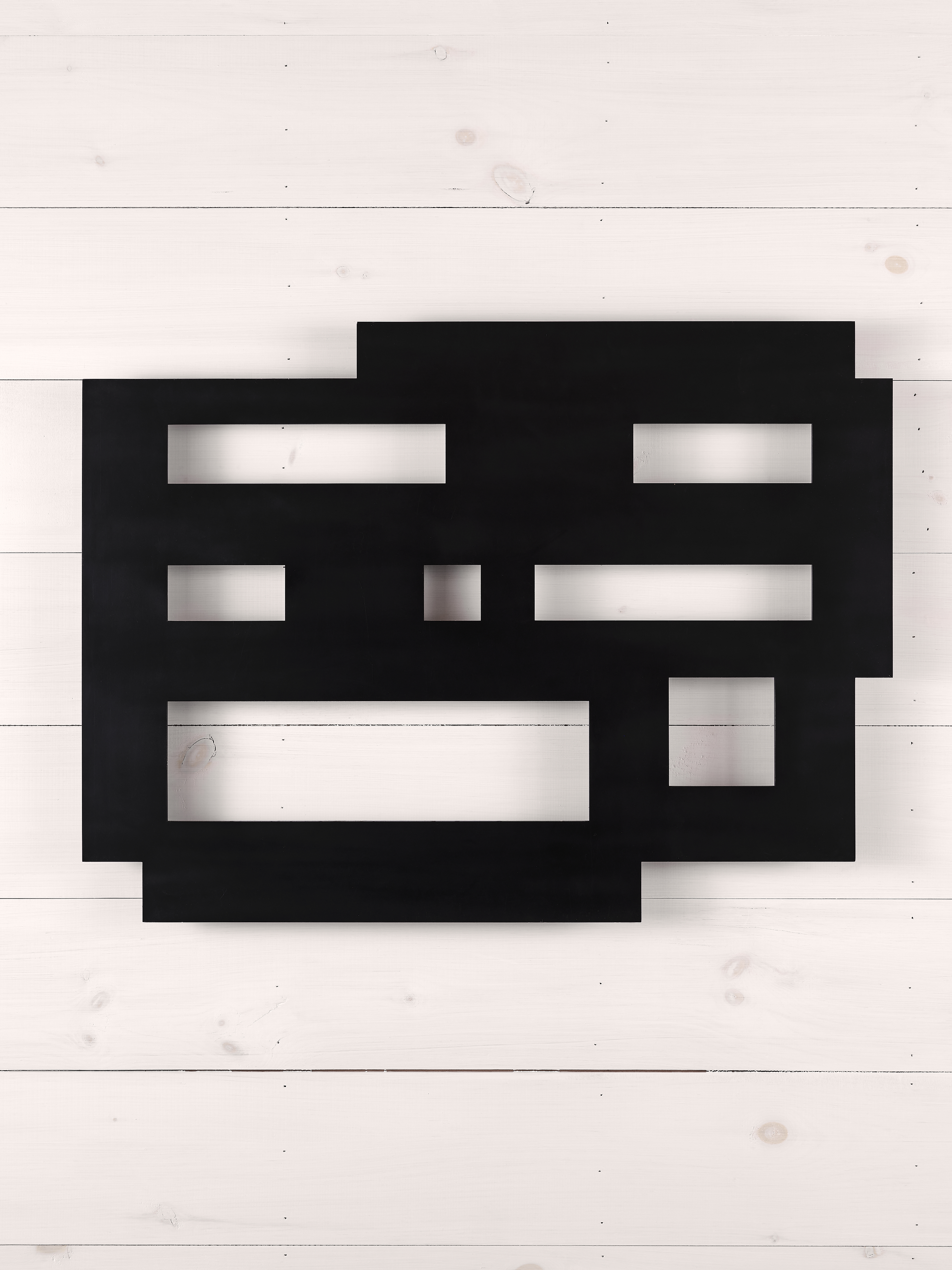
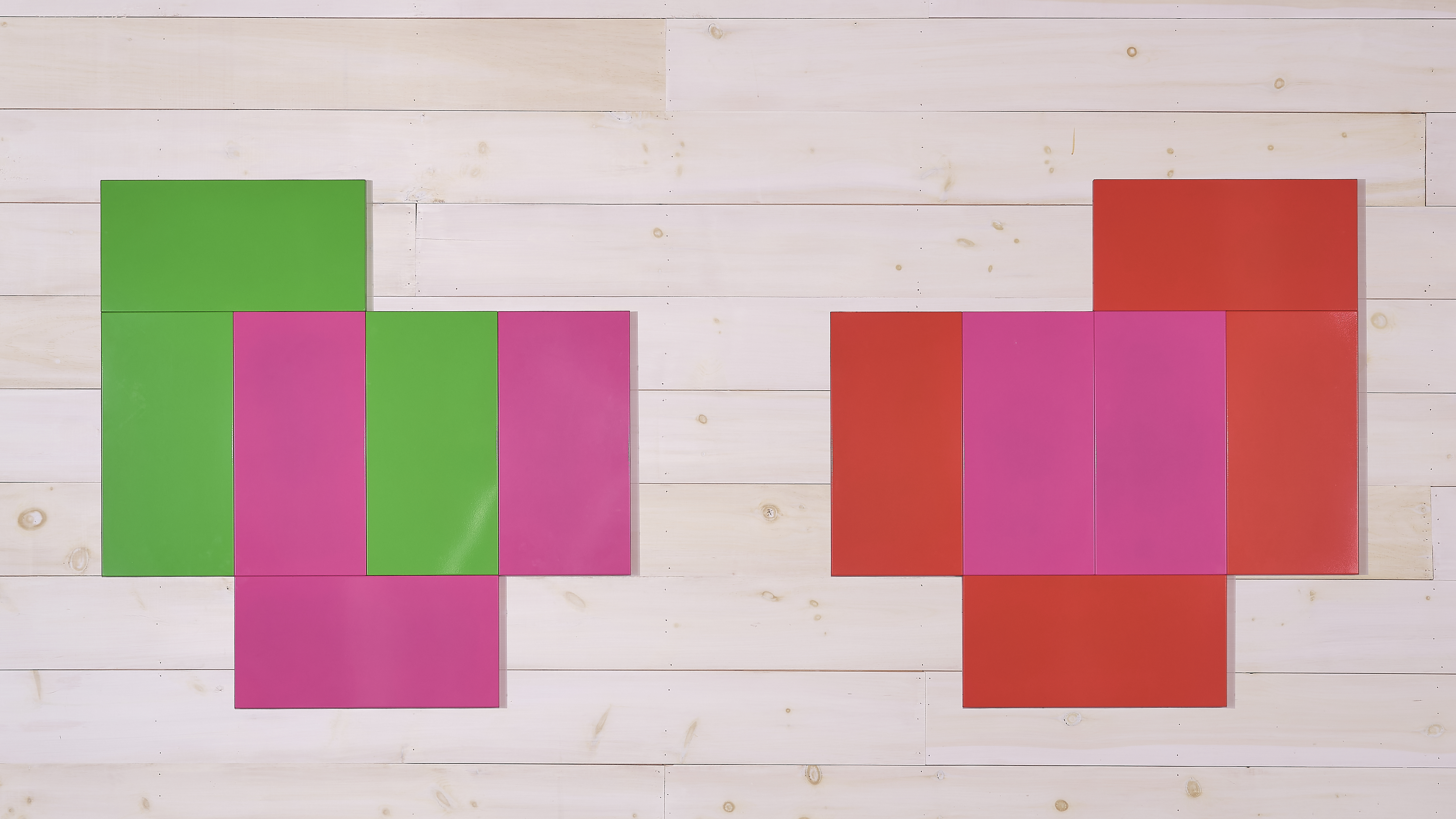
There are many different ideas and methods for achieving those concepts — someone said it looks like a one-man group show. I have always appreciated that I could go into the studio and invent something new that I had not thought of before. This keeps the studio interesting and challenging.
Where did your interest in metal and industrial materials come from?

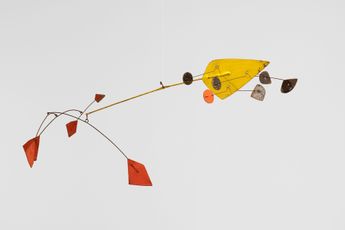
I admire Mark di Suvero‘s practice of making sculpture, using industrial materials and heavy metal plate to create large-scale work that would express a poetic idea. Amazing stuff! I also would credit Alexander Calder as having a huge effect on my thinking. The way his mobiles anticipate making art in space was revolutionary. His colour sense was also something I learned from.
James Turrell‘s light installation Avaar (1982) is on the second floor of the CAS at the same time as your show. Were there similarities between what you began doing with light in New York and Turrell’s light experiments that started in California in the 1960s?
We were both doing work with light in the 1960s. He did a triangular piece, Raethro (1967), that projected light onto a corner of the room to make a terrific light sculpture. At the same time, I was using searchlights to project massive pyramid shapes into the night sky. My first light sculpture was titled Searchin’; it was conceived in 1966 and realised for the first time over Tompkins Square Park in New York City on 1 October, 1967. Billy Kluver, the laser physicist at Bell Labs, calculated the piece as ‘piercing 20 billion cubic feet of sky over New York City.’
What new projects are you working on?
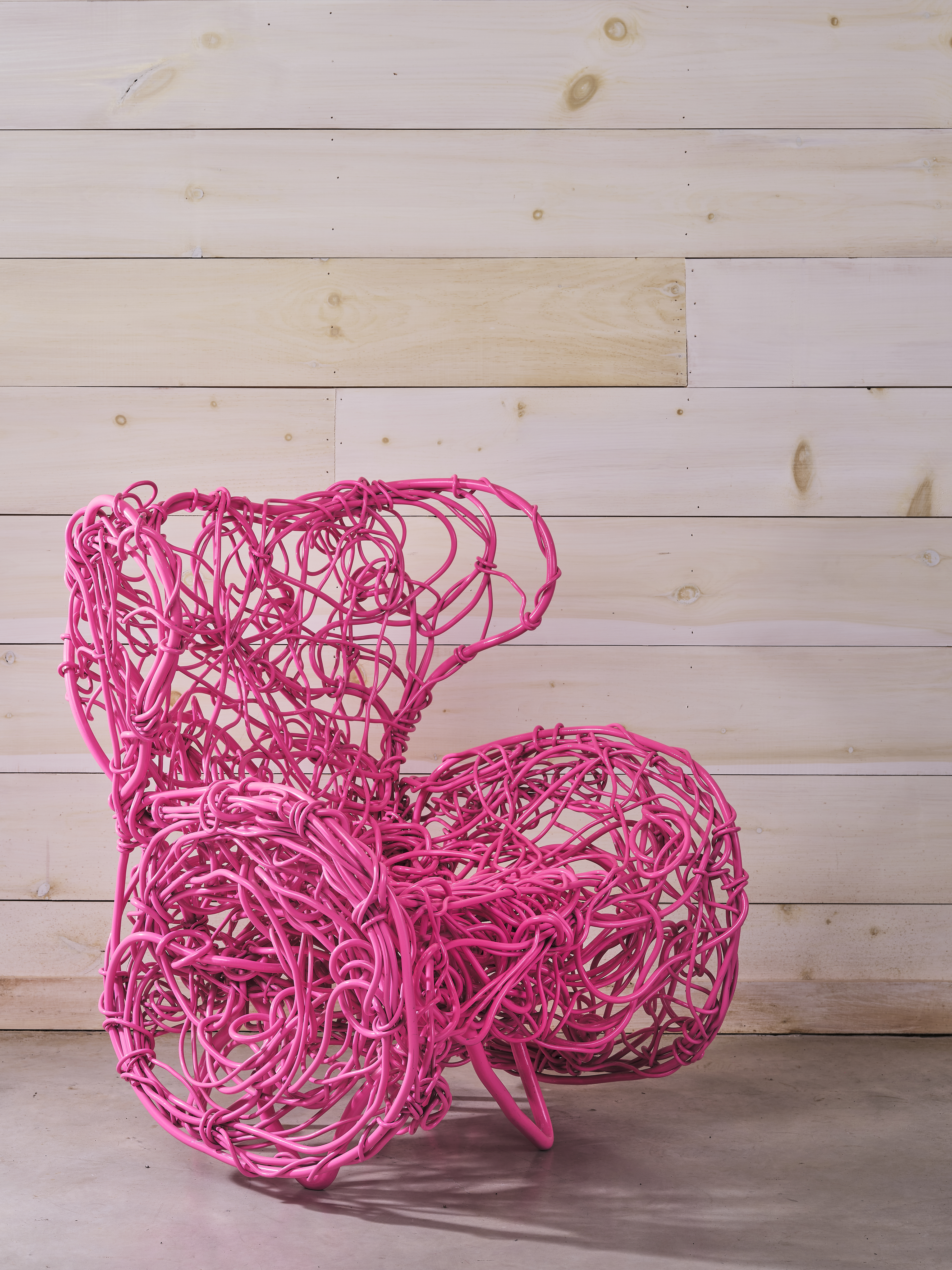
I am working on a land speed race car, Belly Tanker, which I consider Folk Art and I am hoping to get around to doing some Hieroglyphs on some rocks at the Sculpture Garden and Museum in Damascus, Pennsylvania, which I run with Debra. The reason I became an artist is so I could do whatever I wanted, it seems life is one big one-man group show after all! —[O]
Main image: Forrest Myers, Green-T (2007) on the exterior of the Catskill Art Space. Photo: Zach Hyman.





A respected voice in contemporary art discourse.
Focusing on ambitious storytelling and insightful art-world commentary. Ocula Magazine publishes in-depth interviews, critical essays and timely analysis on the artists, exhibitions and ideas driving the global art world.
Learn more about Ocula Magazine
Showcasing the best of the art world.
Ocula partners with galleries from around the world to highlight their artists, artworks and exhibitions. Gallery membership is by application and invitation, with each member vetted by an independent panel.
Learn more about Ocula Membership
Specialises in the sale of major artworks.
Led by a team with deep ties to the world’s leading auction houses, galleries and collectors. Ocula’s advisory team offers bespoke services to high-net-worth clients from around the world who are looking to acquire the best of contemporary and modern art.
Learn more about our team and services