





Fiona Pardington

Fiona Pardington. Photo: Mark Tantrum


Working closely with City Gallery Wellington curator Aaron Lister, the New Zealand photographer Fiona Pardington has developed a retrospective that speaks to the extraordinary breadth of her practice.
Fiona Pardington: A Beautiful Hesitation includes very early family portraits from the 1980s alongside her well-known photographs of objects and taonga from both New Zealand and European museums. Pardington approaches photography as an elastic medium: a means of visual scrutiny and a source continual wonderment.
KBC: Can you tell me how this retrospective of your work came about and what it means for your current practice?
FP:
People have been threatening to make a survey of my work for a while now, but I’ve avoided it. There’s something disturbing for me about a survey: it seems to me that if you didn’t approach it properly, it could be like digging your own grave and having to jump in. But in the end I wanted to work with Aaron Lister because he’s extremely smart and intuitive and put a great deal of energy into understanding the complexity and depth of my practice—a depth that, generally speaking, many people do not know much about.
Bu there is nothing more ‘deadly’ than simply starting with the works I did as an art student around 1980, then including a couple from every year until now. That would be dreadfully dreary, really. So we have made it thematic instead. The subtexts of my work have remained the same from the beginning. And will continue to be until I fall off my perch.
KBC: The show is arranged around four quite basic but powerful thematic clusters: death, sex, flesh and the female gaze. Can you talk about these fundamental subjects in your work?
FP: These are the deep tidal themes of my practice. To a certain extent, the female gaze was more associated with an earlier stage. Nonetheless, I am still extremely disappointed by the ignorance of some people, particularly younger women who want to ignore these issues or who say that they are not feminist. It is just a profound ignorance of the history of what women and men have done.
One thing I remembered very strongly as a young child is the shock that I got when I realised that because I was female that I would be treated differently—I discovered the hierarchy of looking. It was almost a form of culture shock when I realised that I was going to be treated as a lesser being. I was always quite an ambitious child and I wanted to do well at school and be an artist from a very young age. This was my way of being within the hierarchy. Nonetheless, it is still very hard to avoid the gaze that I was born into.
“Photography is such a powerful medium and that is why I took it up—I could almost feel it in my bones. Especially the complications it takes on with our embodied self, issues of time, human vision, simulacra and facsimile, and the photograph’s indexical character.
KBC: I have a really vivid memory of your One Night of Love series where you re-photographed a discarded collection of 1950s soft porn images. They show women twisting their semi-nude bodies into various potentially beguiling poses. But they also include the editing work of the photographer in the form of ‘X’ marks scrawled directly onto the photograph suggesting that they didn’t ‘make the cut.’
FP: These were the ‘wank mags’ photographs—a collection of contact sheets that were leant to me after being abandoned at the back of a building in London. I went through the contact sheets and re-photographed the images that I felt addressed power issues and exposed the enormous problems within that industry and within the dominant ‘entertainment’ paradigm. Things still haven’t changed much, for instance the terrible paternalism and outrageous sexism that is entrenched in the Hollywood film industry. It is a huge overarching paradigm and all I can do is make small gestures towards it.

KBC: These works made me realise just how hugely variable your practice is and how open it is to the different ways that photography can function. On the one hand, you produce these very skilful and precise ‘still-life’ photographs, and on the other hand you pull back from those photographic skills by simply re-photographing existing images.
FP: Yes, I like to do all of those things simultaneously. Precisely because photography allows me to do that—it is such a capacious medium. Photography is kind of chimerical; it can be almost anything you want it to be. And even more so now that we’ve moved into digital media.
Photography is such a powerful medium and that is why I took it up—I could almost feel it in my bones. Especially the complications it takes on with our embodied self, issues of time, human vision, simulacra and facsimile, and the photograph’s indexical character. I just knew that this medium would be extremely productive and it was only going to get more complicated and more technically exquisite.
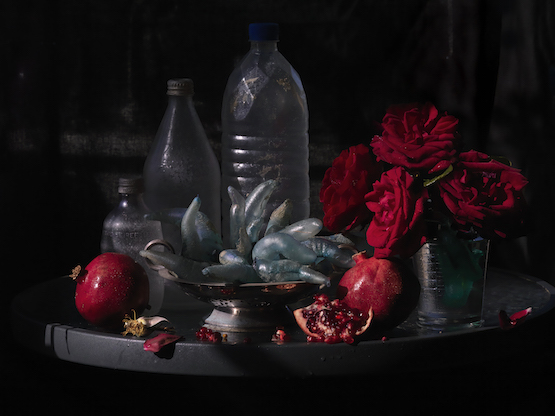
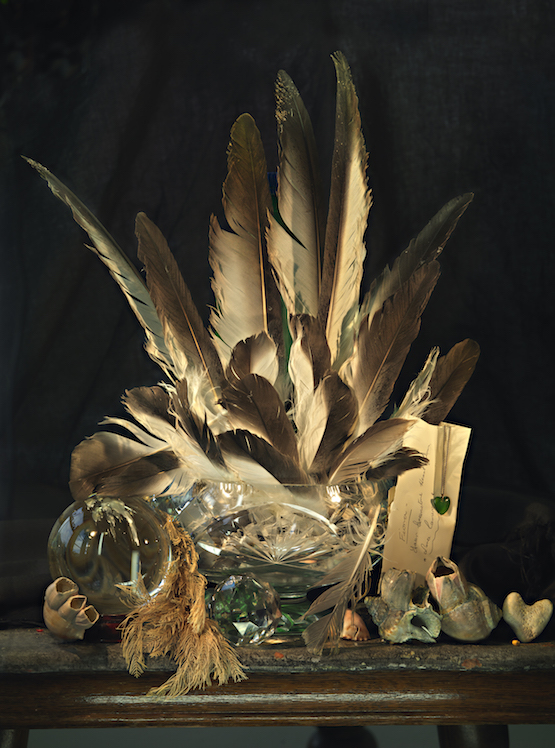
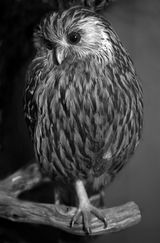
KBC: Can you talk about your more recent still life works? Photographs of various objects and materials, both ‘dead’ and ‘alive’: bones, feathers, letters, jewellery, vases, bottles, your mother’s roses...
FP: I’ve always been interested in the vanitas painting trope as something that has been exhausted and become passé. I really liked the idea of reviving it through photography. The still-life tradition has such an amazing language, so much metaphorical power, from its religious and social symbolism to the bragging rights of very rich Dutch traders who were collecting incredibly rare things from unknown lands. It is a history of exploration that doesn’t exist anymore now that everything is ‘known.’
KBC: You describe your work as ‘a hesitation in time’? A beautiful description—what does it mean for you?
FP: This is a poetical description—a proposition really. It is not intended to ‘sum up’ my practice. Rather, I use it to open up people’s thoughts. I believe it allows them an open window to look into, to consider how our experience is affected by an image and how photography can facilitate this. It also makes us think harder about how all photography is situated in the past.
KBC: What has it been like for you to look back on your own practice; your own past and history as an artist?
FP: I’ve had to look at a lot of early works from the first years including people that have meant a lot to me and who are now dead—my grandmother and my daughter’s father. It’s quite interesting for me because you can’t really understand some fundamental aspects of your life until you’ve lived well past them. It is interesting to have some distance between your early self that generated those photographs and myself now. So looking at those works today has been bittersweet. And that is why photography is so amazing! All I can say is photograph everyone you love as often as you can. There are never enough photographs in the world. —[O]
Main image: Fiona Pardington. Photo: Mark Tantrum





A respected voice in contemporary art discourse.
Focusing on ambitious storytelling and insightful art-world commentary. Ocula Magazine publishes in-depth interviews, critical essays and timely analysis on the artists, exhibitions and ideas driving the global art world.
Learn more about Ocula Magazine
Showcasing the best of the art world.
Ocula partners with galleries from around the world to highlight their artists, artworks and exhibitions. Gallery membership is by application and invitation, with each member vetted by an independent panel.
Learn more about Ocula Membership
Specialises in the sale of major artworks.
Led by a team with deep ties to the world’s leading auction houses, galleries and collectors. Ocula’s advisory team offers bespoke services to high-net-worth clients from around the world who are looking to acquire the best of contemporary and modern art.
Learn more about our team and services