






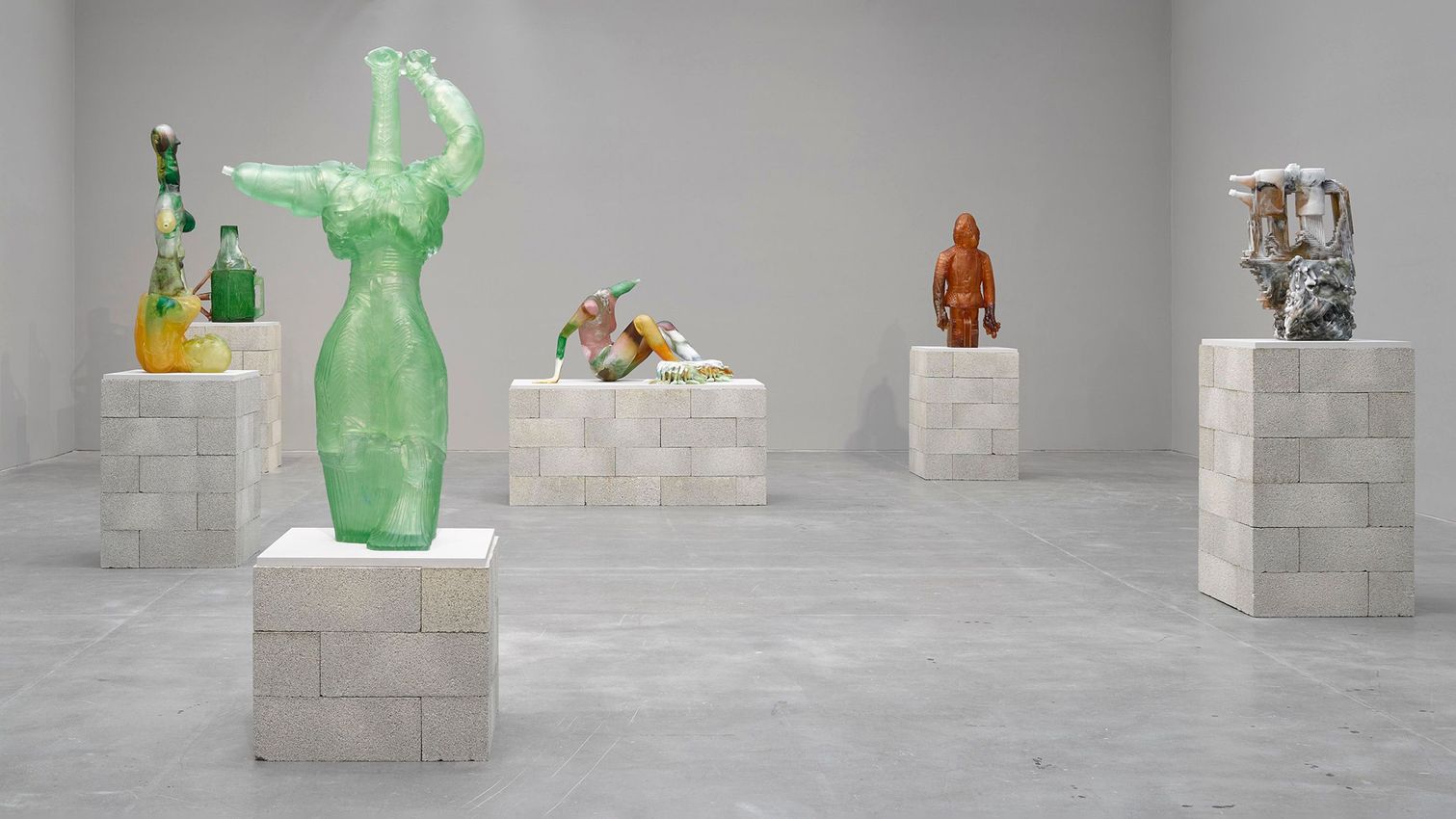
ANDRA URSUŢA
b. 1979, RomaniaAndra Ursuţa is known for her visceral, confrontational artworks that merge vulnerability with violence, often using cast bodily forms, found materials, and ancient symbology to evoke the fragile, yet brutal contradictions of contemporary life.
Early Years
Born in the small border town of Salonta, Romania, Andra Ursuţa grew up under the lingering shadow of post-Communist transition. Her early experiences in an isolated, politically charged environment strongly shaped her outlook and her later artistic voice. Ursuţa relocated to the United States in the late 1990s, earning her BFA from Columbia University, New York, in 2002.
Since then, she has been based in New York, where she has developed a distinctive body of contemporary art that spans sculpture, installation, and performance. Her works often fuse autobiographical elements with global narratives of displacement, power, and ritual.
Artworks
Andra Ursuţa’s artworks blend classical sculptural techniques with 3D scanning, casting, and inventive material use to explore the grotesque, the uncanny, and the abject. Her contemporary art practice evokes both personal and collective trauma through the distorted human form.
Process and Materials
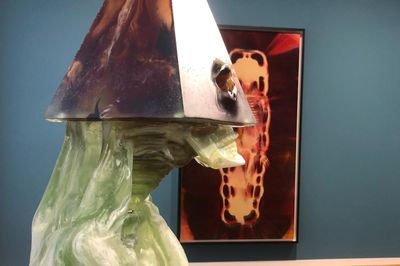
Andra Ursuţa blends traditional sculpture with experimental processes, using 3D scanning, casting, and handcrafted elements to create contemporary artworks charged with tension. Her materials—wax, salt, bronze, resin—evoke both vulnerability and resistance, often rendering the human figure as fractured, enclosed, or armoured. Bodies appear under siege, contorted or decaying, layered with cultural and emotional symbolism. These physical states become metaphors for systems of control and survival. Ursuţa’s process foregrounds the collision between flesh and infrastructure, turning her sculptures into poetic records of societal anxiety and personal trauma.
Venice Biennale and Global Recognition
Ursuţa’s inclusion in the 59th Venice Biennale, The Milk of Dreams (2022), affirmed her position in the canon of contemporary sculpture. Her work, which featured a hybridised, chrome-armoured female form, embodied the exhibition’s focus on metamorphosis, identity, and the limits of the body. It extended her ongoing interrogation of protection, violence, and gendered embodiment. This exposure amplified her presence across major museums and galleries, leading to institutional acquisitions and commissions. Ursuţa’s artworks continue to gain recognition for their visceral impact and their resonance with the psychological landscape of the 21st century.
Influences and Themes
Raised in post-Communist Romania, Ursuţa draws from a wide spectrum of references—folk rituals, Catholic iconography, medieval architecture, nationalist propaganda, and science fiction. Her work is haunted by histories of violence and marginalisation, often channelling themes of exile, defence, and bodily fragmentation. The female body recurs as both subject and structure, transformed through myth and machinery. Influences from Arte Povera, performance art, and Eastern European gothic aesthetics filter into her installations, resulting in artworks that are at once archaic and futuristic, intimate and politically charged.
Exhibitions
Andra Ursuţa has been the subject of both solo and group exhibitions at important institutions. A selection of important exhibitions are provided below.
Solo Exhibitions
- Andra Ursuţa: Apocalypse Now and Then, DESTE Foundation Project Space, Slaughterhouse, Hydra (2025)
- Andra Ursuţa: Vanilla Isis, Fondazione Sandretto Re Rebaudengo, Turin (2018)
- Andra Ursuţa: Alps, New Museum, New York (2016)
- Andra Ursuţa: Whites, Kunsthalle Basel (2015)
- Andra Ursuţa: As I Lay Drying, Institute of Contemporary Art, Miami (2014)
- Hammer Projects: Andra Ursuţa, Hammer Museum, Los Angeles (2014)
Group Exhibitions
- A Year in Art: 2050, Tate Modern, London (2025)
- Reaching for the Stars: Works from the Sandretto Re Rebaudengo Collection, Fondazione Palazzo Strozzi, Florence (2023)
- 59th Venice Biennale: The Milk of Dreams, Venice (2022)
- What’s Going On, Rubell Museum, Washington, DC (2022)
- _The Warmth of Other Suns: Stories of Global Displacemen_t, The Phillips Collection, Washington, DC (2019)
- A Good Neighbour. 15th Istanbul Biennial, Istanbul (2017)
Critical Reception
Andra Ursuţa’s contemporary artworks have been featured in leading art publications including Artnet News, ArtReview, and Interview Magazine.
Andra Ursuţa FAQs
What medium does Andra Ursuţa work in?
Andra Ursuţa works primarily in sculpture and installation, often combining traditional mediums like bronze and glass with experimental materials such as salt, wax, and resin. She frequently uses 3D scanning and digital modelling to replicate and manipulate the human form—often her own—before casting it into bodily shells or structures. This fusion of old and new processes allows her contemporary artworks to oscillate between fragility and aggression, forming a uniquely hybrid practice grounded in material experimentation and psychological intensity.
What themes are central to Andra Ursuţa’s art?
Ursuţa’s contemporary art explores themes of power, violence, gender, displacement, and the body under pressure. Her sculptures often depict contorted or enclosed figures, reflecting psychic and societal constraints. Drawing on Romanian folklore, religious iconography, and post-Communist memory, she creates artworks that channel both personal trauma and collective anxiety. The interplay of myth, technology, and the grotesque allows her to examine how bodies are shaped, damaged, or protected in response to cultural and political forces—especially those affecting women and marginalised identities.
Is Andra Ursuţa influenced by her Romanian heritage?
Yes. Ursuţa’s Romanian heritage plays a significant role in shaping the visual language and emotional undercurrents of her work. Raised during the cultural aftermath of Ceaușescu’s dictatorship, she infuses her sculptures with echoes of nationalism, religious mysticism, and folk superstition. Gothic forms, protective armour, and ritualistic symbols allude to a history marked by fear and resistance. These elements—filtered through her diasporic experience in the United States—result in contemporary artworks that reflect both her personal background and a broader engagement with survival, transformation, and memory.
Ocula | 2025


Explore Andra Ursuţa's Exhibitions






Andra Ursuţa in Ocula Magazine







Explore and Follow Artists Shaping Contemporary Art
A respected voice in contemporary art discourse.
Focusing on ambitious storytelling and insightful art-world commentary. Ocula Magazine publishes in-depth interviews, critical essays and timely analysis on the artists, exhibitions and ideas driving the global art world.
Learn more about Ocula Magazine
Showcasing the best of the art world.
Ocula partners with galleries from around the world to highlight their artists, artworks and exhibitions. Gallery membership is by application and invitation, with each member vetted by an independent panel.
Learn more about Ocula Membership
Specialises in the sale of major artworks.
Led by a team with deep ties to the world’s leading auction houses, galleries and collectors. Ocula’s advisory team offers bespoke services to high-net-worth clients from around the world who are looking to acquire the best of contemporary and modern art.
Learn more about our team and services