






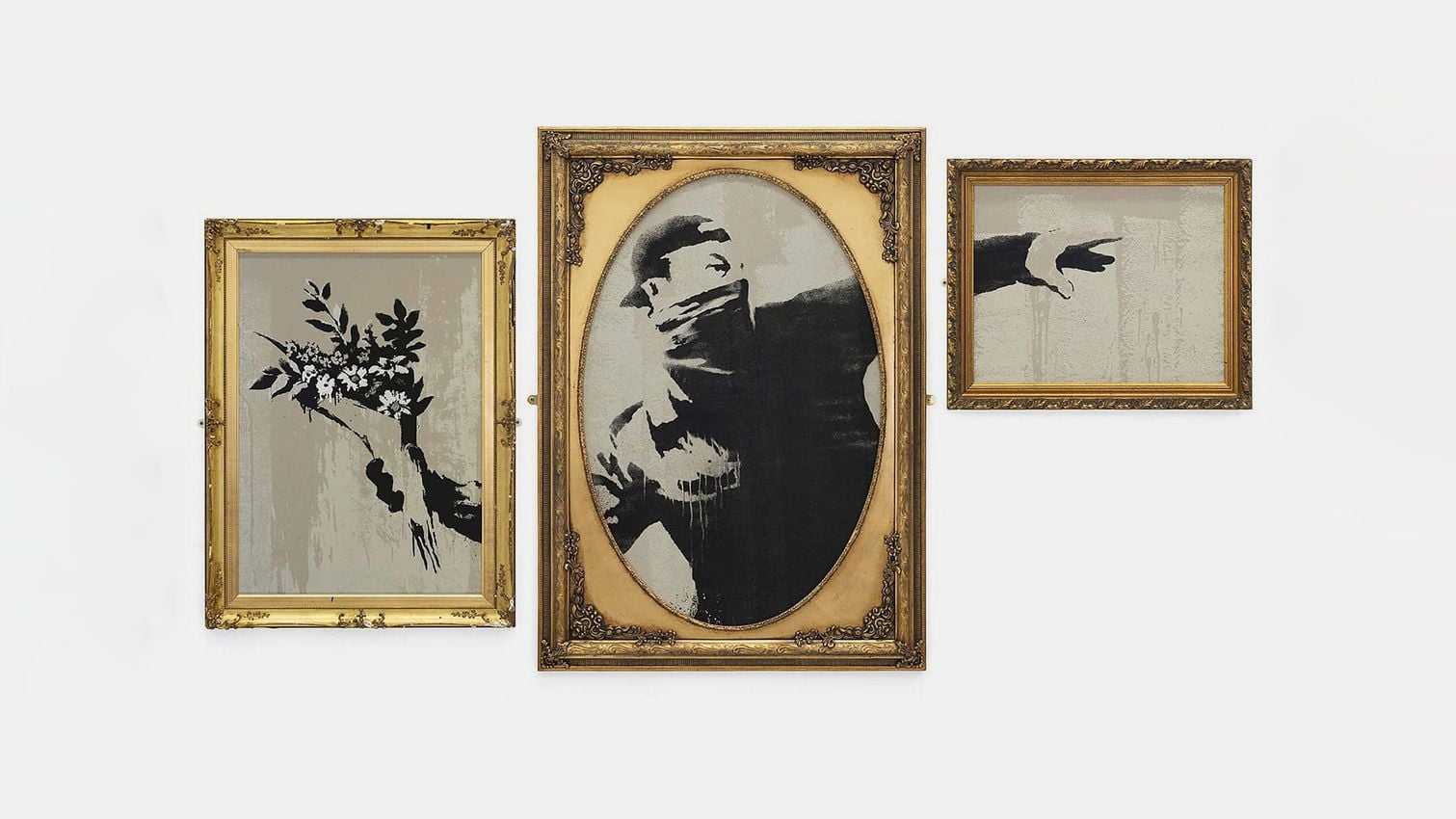
BANKSY
b. 1974, United KingdomBanksy is an anonymous British street artist and political satirist who emerged from the Bristol graffiti scene in the 1990s and has since become one of the world’s most influential contemporary artists. His street art, installations, films, and books fuse dark humour with biting social commentary on power, capitalism, war, and the art world itself, all while he continues to work under a cloak of anonymity.
Who is Banksy?
Banksy is widely believed to have been born in or near Bristol, England, around 1974, and to have emerged from the city’s underground graffiti and street art culture. Early on, he was associated with local graffiti crews and was influenced by artists such as 3D (Robert Del Naja), while the French artist Blek le Rat is often cited as a key precursor in the use of stencils.
Working initially with freehand graffiti, Banksy adopted the stencil technique that became his signature, allowing him to work quickly and precisely in public spaces where the risk of arrest was high. His rise began in the late 1990s and early 2000s, as his distinctive black-and-white stencil style—often combined with small touches of vivid colour—started appearing on walls and bridges in Bristol, London, and later on streets around the world.
Banksy’s Artistic Style and Techniques
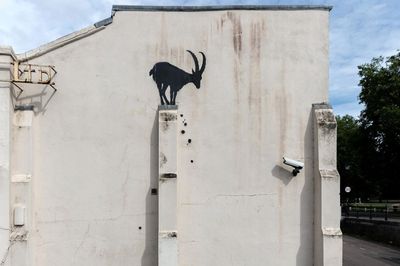
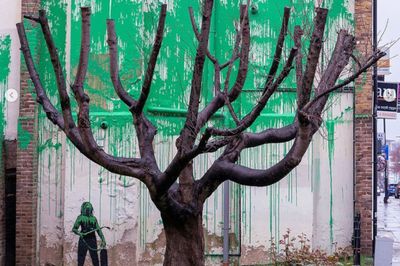
Banksy’s art is instantly recognisable for its bold, graphic stencil imagery, often juxtaposing innocent or familiar figures with provocative or subversive scenarios. He frequently incorporates existing urban features—cracks in walls, street signs, CCTV cameras, or growing plants—so the architecture and environment become part of the work.
While stencils are central to his practice, Banksy also uses freehand painting, sculpture, installation, and screen printing. His imagery is typically concise and iconic: children, policemen, soldiers, rats, monkeys, and members of the royal family appear in absurd or unsettling contexts to highlight contradictions in modern life. The combination of a simple visual language with layered symbolism has made his works highly legible both on the street and in galleries.
Themes in Banksy’s Artworks
Banksy’s work consistently explores anti-authoritarianism, political hypocrisy, and the abuses of power by governments, corporations, and institutions. Recurring themes include protest and civil disobedience, the militarisation of society, surveillance and the erosion of privacy, the impact of war on children, and the everyday absurdities of life under late capitalism.
He also targets the art market and the commodification of creativity, often pointing out the irony that his anti-capitalist street works now sell for high prices at auction. Other frequent motifs include the loss of childhood innocence, the failures of state and corporate responses to crises, and the role of media in shaping public perception. Through dark humour and visual wit, his works invite viewers to question authority and to consider their own complicity in the systems he critiques.
Notable Artworks, Projects, and Interventions
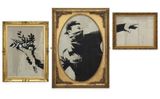
Much of Banksy’s best-known art responds directly to specific locations and events. For example, he has created murals on the streets of London, Bristol, New York, and other cities that reference police brutality, refugee crises, and government surveillance. In TriBeCa, New York, he once used a bright orange flower emerging from a wall to allude to the attacks on the World Trade Center, layering symbolism into an otherwise modest urban scene.
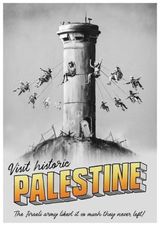
One of his most politically charged bodies of work has taken place in Palestine, particularly around the West Bank barrier. On a visit to Bethlehem in 2005, Banksy painted a series of images on the wall and in the surrounding area, depicting children peering through cracks in the concrete to idyllic landscapes beyond, or balloons lifting individuals over the barrier. These interventions juxtapose playful imagery with the harsh physical and political reality of the barrier itself.
Banksy’s practice has also expanded into large-scale immersive projects. His breakout exhibition, “Turf War” (2003, London), held in a former warehouse in Hackney, featured live animals and controversial imagery such as the Queen depicted as a chimpanzee and Winston Churchill with a bright green mohawk. In 2006, “Barely Legal” in Los Angeles included a live painted elephant in a room whose wallpaper pattern matched the animal’s stencilled decoration, a pointed comment on the “elephant in the room” of global inequality that affluent audiences often ignore.
Over the last two decades, Banksy has produced screen prints, paintings, sculptures, installations, collaborative projects, and film. His documentary “Exit Through the Gift Shop,” focusing on French-born, Los Angeles-based artist Thierry Guetta (also known as Mr. Brainwash), premiered at the Sundance Film Festival in 2010 and went on to receive an Academy Award nomination. The film blurs the lines between documentary and performance, reinforcing questions around authorship, authenticity, and the commodification of street art.
Two of his largest undertakings—‘Dismaland’ (2015, Weston-super-Mare) and ‘The Walled Off Hotel’ (2017–ongoing, Bethlehem, Palestine)—further demonstrate his ambition and collaborative approach. ‘Dismaland’, a dystopian pop-up theme park, brought together a bleak reinterpretation of the amusement-park experience with works by numerous contemporary artists, performers, and musicians. ‘The Walled Off Hotel’, located near the West Bank barrier in Bethlehem, operates as both a functioning hotel and a living installation, featuring Banksy’s artworks alongside contributions from local and international artists and offering visitors what it describes as ‘the worst view in the world’.
Exhibitions and Shows
Banksy’s art has appeared, officially and unofficially, in many cities around the globe, often outside traditional institutional frameworks. At the same time, he has staged a series of influential exhibitions and projects that bridge the gap between street and gallery contexts.
Notable exhibitions and projects include:
- Existencilism, 331⅓ Gallery, Los Angeles (2002)
- Turf War, London (2003)
- Crude Oils, London (22–24 October 2005)
- Barely Legal, Los Angeles (2006)
- The Village Pet Store and Charcoal Grill, New York (2008)
- Dismaland, Weston-super-Mare, England (2015)
- The Walled Off Hotel, Bethlehem, West Bank, Palestine (2017–ongoing)
In addition to these projects, Banksy’s works have appeared in and around major museums and galleries, sometimes with the cooperation of institutions and sometimes as unauthorised interventions. His street pieces in cities such as London, Bristol, New York, Los Angeles, and Bethlehem have often become attractions, drawing visitors as soon as they are discovered.
Banksy’s Pranks and Provocations
Alongside paintings, sculptures, prints, and installations, Banksy is known for elaborate and sometimes mischievous acts that blur the boundaries between art, performance, and practical joke. These pranks are central to his critique of the art establishment and its conventions.
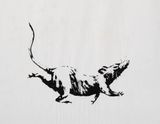
In the early 2000s, he surreptitiously installed his own altered artworks in major museums, hanging spoof or subversively edited paintings in institutions such as the British Museum and the Tate without prior permission. In 2005, his Crude Oils exhibition in London featured reworked ‘vandalised’ versions of famous paintings and included the release of 164 live rats into the gallery space, confronting visitors with discomfort and chaos rather than traditional white-cube refinement.
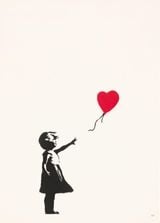
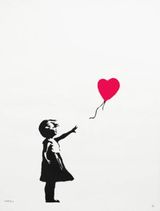
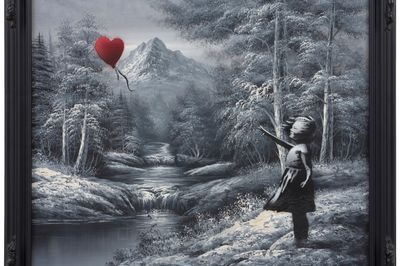
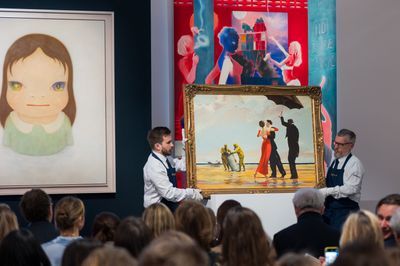
One of his most widely publicised stunts occurred at Sotheby’s in London in October 2018. Immediately after his framed print Girl With Balloon (2006) was sold at auction, a hidden shredding mechanism built into the frame partially destroyed the work as it hung on the wall. The piece was later retitled Love is in the Bin, and the stunt became a defining moment in debates about value, authenticity, and spectacle in the contemporary art market.
Artist books and Publications
Banksy has produced several books that document and reflect on his work, as well as on street art and graffiti more broadly. These publications typically combine photographs of his pieces with short, punchy texts that expand on his ideas about politics, art, and public space.
Among his best-known books is Wall and Piece (2006), published by Cornerstone, which collects many of his street pieces and interventions accompanied by commentary. Other titles and unofficial compilations further trace his evolution from local graffiti artist to global cultural figure. Even as his works circulate widely in print and online, his personal background and legal identity remain unconfirmed and carefully guarded.
Today, Banksy’s murals, stencils, and installations continue to appear unexpectedly in cities around the world. Each new work is rapidly photographed, shared, debated, and often physically removed, repainted, or auctioned—illustrating the ongoing tension between ephemerality and commodification that lies at the heart of his practice.
Market and Collecting
Since the mid-2000s, Banksy’s artworks have become some of the most sought-after pieces in the contemporary art market, with key paintings and rare prints achieving multi-million-dollar prices at auction. Collectors typically acquire his work on the secondary market through specialist galleries, private dealers, and auction houses, where pieces are accompanied by certificates of authenticity issued by his official body, Pest Control. Because of the prevalence of fakes and unauthorised reproductions, prospective buyers are generally advised to focus on authenticated originals and limited-edition prints, to check provenance carefully, and to work with reputable Banksy specialists when building a collection.
Banksy FAQs
Why is Banksy considered an important contemporary artist?
Banksy is regarded as a key figure in contemporary art because he brought street art and graffiti into mainstream cultural and critical conversations while maintaining an anti-establishment stance. His widely publicised interventions, exhibitions, and pranks have challenged how art is displayed, valued, and consumed.
What are some of Banksy’s most famous artworks and projects?
Some of Banksy’s most recognised works and projects include his murals on the West Bank barrier in Palestine (from 2005 onwards), the now-iconic Girl With Balloon image (first appearing in 2002), and his unauthorised street pieces in cities such as London, Bristol, New York, and Los Angeles. Major projects like the dystopian theme park Dismaland (2015) and ‘The Walled Off Hotel’ in Bethlehem (opened in 2017), as well as his Academy Award–nominated film Exit Through the Gift Shop (2010), have further cemented his global influence.
Where has Banksy exhibited his work?
Banksy has held exhibitions and projects in cities including London, Los Angeles, and New York, often in unconventional venues such as warehouses, disused seaside resorts, and temporary spaces. Shows like Existencilism (2002, Los Angeles), Turf War (2003, London), Crude Oils (2005, London), Barely Legal (2006, Los Angeles), and The Village Pet Store and Charcoal Grill (2008, New York) are among his most discussed exhibitions.
What are Banksy’s most famous pranks?
Banksy’s best-known pranks include secretly hanging altered paintings in major museums, releasing live rats into his Crude Oils exhibition, and staging the partial self-destruction of Girl With Balloon via a hidden shredder immediately after it was sold at auction. These actions are designed to provoke debate about authenticity, spectacle, and the role of institutions in defining artistic value.
Has Banksy’s identity ever been revealed?
Despite ongoing speculation, Banksy’s identity has never been definitively confirmed. Over the years, journalists and fans have proposed various candidates based on stylistic analysis, location data, and anecdotal evidence, but Banksy has consistently chosen to remain anonymous.
How can I see Banksy’s art today?
Banksy’s works can be seen in a mix of public and private settings. Some original street pieces still exist in locations around the world, though many have been removed, painted over, or relocated, while others appear in galleries, museums, and private collections. New works sometimes appear without warning, and his larger projects, such as ‘The Walled Off Hotel’, can be visited in person.
Where can I buy Banksy’s art?
Banksy does not sell work directly to the public, and new prints are no longer released through his official authentication body, Pest Control, in the way they once were. Today, authenticated Banksy prints and originals are typically bought and sold on the secondary market via specialist galleries, private dealers, and major auction houses that work with Pest Control certificates of authenticity. Prospective buyers are usually advised to work with reputable Banksy specialists to verify provenance, condition, and pricing before purchasing.
What are the most expensive Banksy works sold at auction?
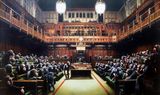
Several Banksy works have achieved headline-making prices at auction, reflecting his status in the contemporary art market. In 2021, the half-shredded painting Love Is in the Bin (2018) sold at Sotheby’s in London for about 18.6 million GBP (around 25.4 million USD), setting a record for the artist. Earlier that year, Game Changer (2020), a tribute to NHS healthcare workers, sold at Christie’s in London for roughly 16.8 million GBP (around 23 million USD), with proceeds donated to health charities. Other high-value auction results include Sunflowers from Petrol Station (2005), which sold for about 14.6 million USD in 2021, and major canvases such as Devolved Parliament (2009) and Show Me the Monet (2005), each realising prices above 10 million USD.
Ocula | 2026


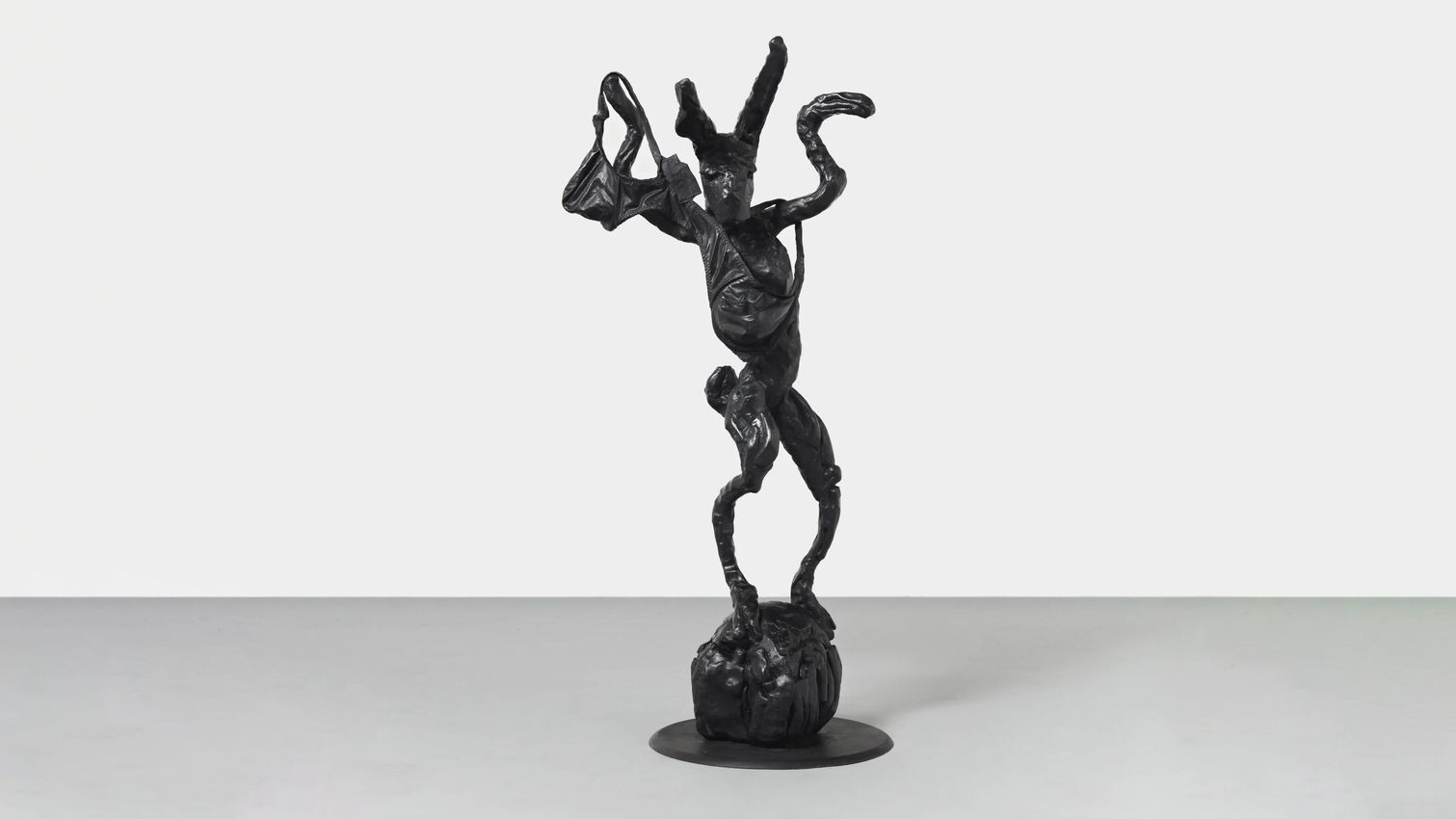
View Banksy's Artworks




















Banksy in Ocula Magazine








Explore and Follow Artists Shaping Contemporary Art
A respected voice in contemporary art discourse.
Focusing on ambitious storytelling and insightful art-world commentary. Ocula Magazine publishes in-depth interviews, critical essays and timely analysis on the artists, exhibitions and ideas driving the global art world.
Learn more about Ocula Magazine
Showcasing the best of the art world.
Ocula partners with galleries from around the world to highlight their artists, artworks and exhibitions. Gallery membership is by application and invitation, with each member vetted by an independent panel.
Learn more about Ocula Membership
Specialises in the sale of major artworks.
Led by a team with deep ties to the world’s leading auction houses, galleries and collectors. Ocula’s advisory team offers bespoke services to high-net-worth clients from around the world who are looking to acquire the best of contemporary and modern art.
Learn more about our team and services