





TRINH T. MINH-HA
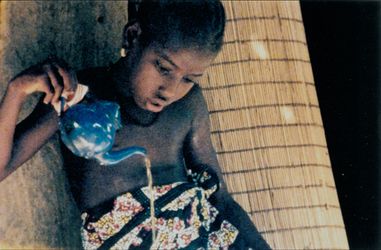
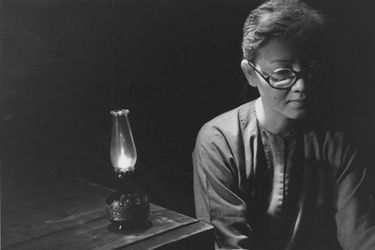
b. 1952, VietnamBorn in Vietnam in 1952, Trinh T. Minh-ha is a writer, theorist, composer and filmmaker whose practice is positioned within the fields of feminist and postcolonial studies. After leaving Vietnam during the country’s war in 1970 at the age of 17, Trinh T. Minh-ha studied music composition, French literature and ethnomusicology at the University of Illinois. After completing an exchange year at Sorbonne Paris-IV and later her PhD dissertation, Trinh T. Minh-ha then went on to teach in Dakar in Senegal for three years. It was there Trinh T. Minh-ha created her first 16mm film, Reassemblage (1982), which documents the lives of women in rural Senegal in a manner that she famously described as ‘speaking nearby’ rather than ‘speaking about’ the subjects she portrays.
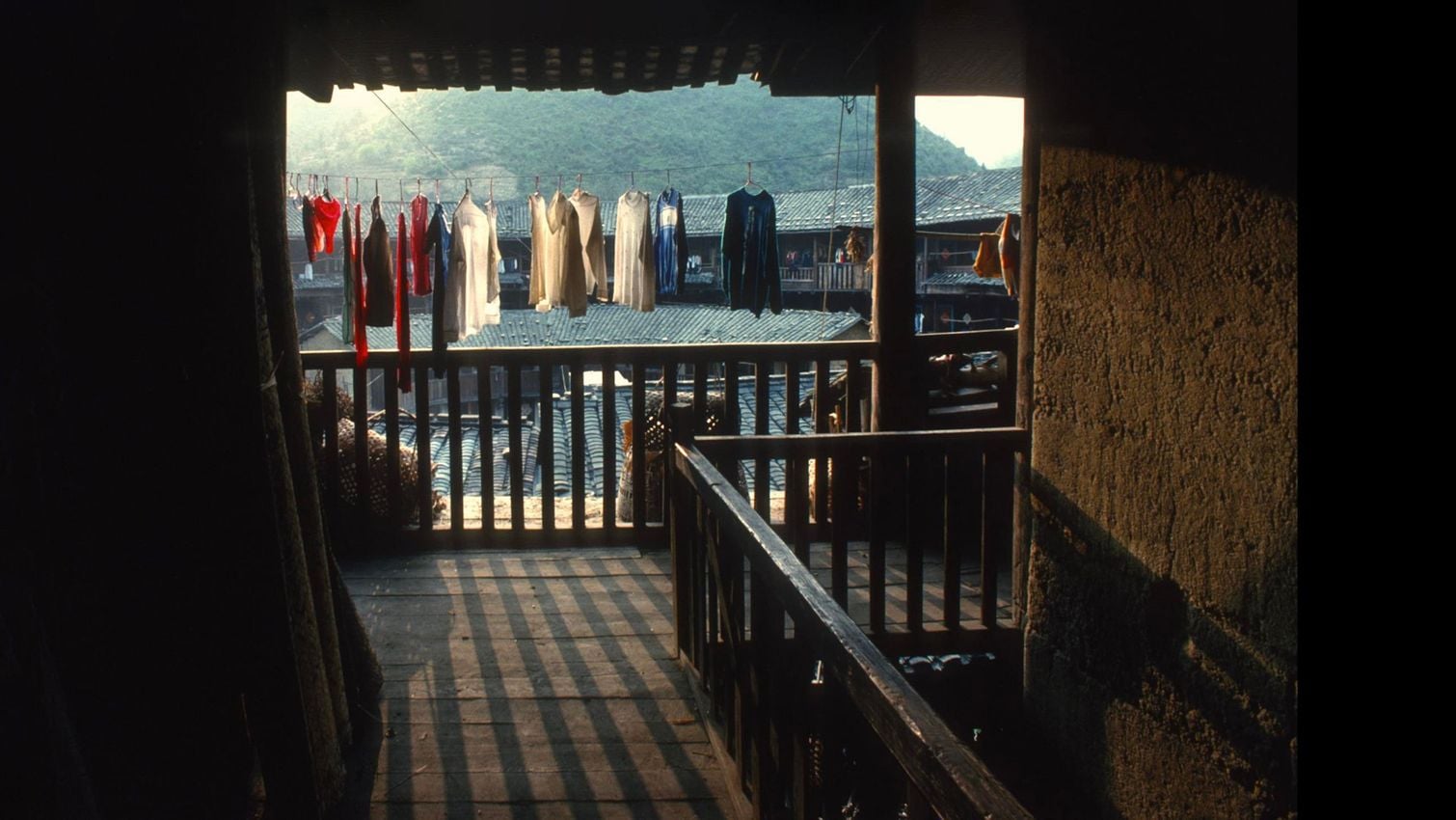
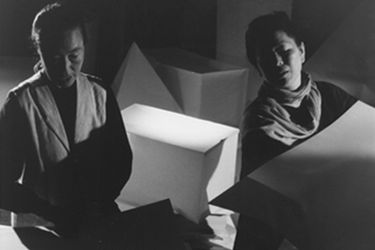
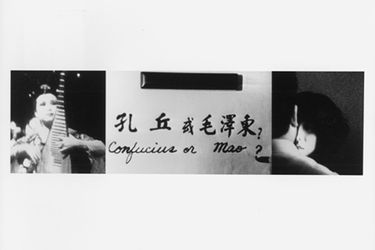
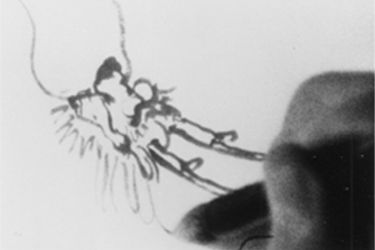
Trinh T. Minh-ha’s films evade categorisation, existing as ‘boundary events’—in a zone between labels, or where labels might form only to dissolve. Her 1992 film Shoot For The Contents is another example of this. The film presents a multi-layered enquiry into the shifting culture and politics of China post-1989, which takes as its starting point a statement made by Chairman Mao Zhedong in 1956, ‘Let a hundred flowers blossom and a hundred schools of thought contend’, and enters a complex and poetic exploration into questions of power and change, politics and culture against the backdrop of the Tiananmen Square crackdown in 1989. Infusing popular songs and classical music, as well as intimate footage of various subjects and stylised interviews—the film confounds viewers who seek a traditional, informative documentary format and offers instead an insight into the creative processes of filmmaking.
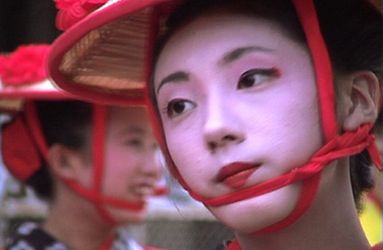
Trinh T. Minh-ha has orchestrated a number of cinematic encounters with cultures from all around the world—including China, Vietnam, and Japan—and has created a number of works in the digital format since her 2002 film The Fourth Dimension. In this film, Trinh T. Minh-ha turns her lens to Japan, examining the country’s culture through its art and social rituals, providing once more a multi-layered dimension in which to consider the effect of video on image-making, as well as the use and passage of time in the moving image, and the act of ‘seeing’. Her films have been given over 50 retrospectives in the US, the UK, Brazil, Canada, Italy, Korea, Spain, the Netherlands, Slovenia, France, Germany, Switzerland, Austria, Japan, India, Taiwan, Hong Kong, Jerusalem, and were exhibited at documenta 11 (2002) in Germany.
Examples of Trinh T. Minh-ha’s extensive writing are En miniscules, a book of poems published by Edition Le Meridien in 1987; When the Moon Waxes Red. Representation, gender and cultural politics, published by Routledge in 1991 and more recently, Elsewhere, Within Here, Immigration, Refugeeism and the Boundary Event published in 2010 by Routledge. She has lectured extensively throughout her career—in the States, as well as in Europe, Asia, Australia and New Zealand—on film, art, feminism, and cultural politics, and is Professor of Gender & Women’s Studies and of Rhetoric at the University of California, Berkeley.
Tessa Moldan | Ocula | 2018

Representative Artworks
View story
View story
View story

View story
View story

View story

View story
View story
View story
View story
View story








Explore and Follow Artists Shaping Contemporary Art
A respected voice in contemporary art discourse.
Focusing on ambitious storytelling and insightful art-world commentary. Ocula Magazine publishes in-depth interviews, critical essays and timely analysis on the artists, exhibitions and ideas driving the global art world.
Learn more about Ocula Magazine
Showcasing the best of the art world.
Ocula partners with galleries from around the world to highlight their artists, artworks and exhibitions. Gallery membership is by application and invitation, with each member vetted by an independent panel.
Learn more about Ocula Membership
Specialises in the sale of major artworks.
Led by a team with deep ties to the world’s leading auction houses, galleries and collectors. Ocula’s advisory team offers bespoke services to high-net-worth clients from around the world who are looking to acquire the best of contemporary and modern art.
Learn more about our team and services