The art world in focus
Subscribe to our newsletter for news and insights on artists, galleries and exhibitions.
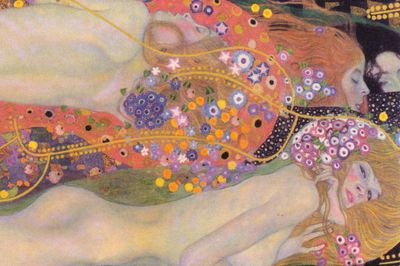
Gustav Klimt, Water Serpents II (1904–1907) (detail). Oil on canvas. 80 x 145 cm. Public domain.
Ukraine’s National Agency on Corruption Prevention (NACP) has launched a project aimed at preventing the illegal sale of artworks by sanctioned Russian nationals.
They said the War & Art project is designed to ‘strengthen the sanctions policy in the art sphere and help track sanctions violations in global operations on the art market.’
Russian oligarchs could easily hide and launder their money through art objects, they said.
The War & Art website lists artworks believed to be held, or recently held, by 14 Russian nationals, including former Chelsea Football Club owner Roman Abramovich, fertiliser magnate Andrey Melnichenko, and Dmitry Rybolovlev—a fertiliser magnate who also owns a football club (AS Monaco).
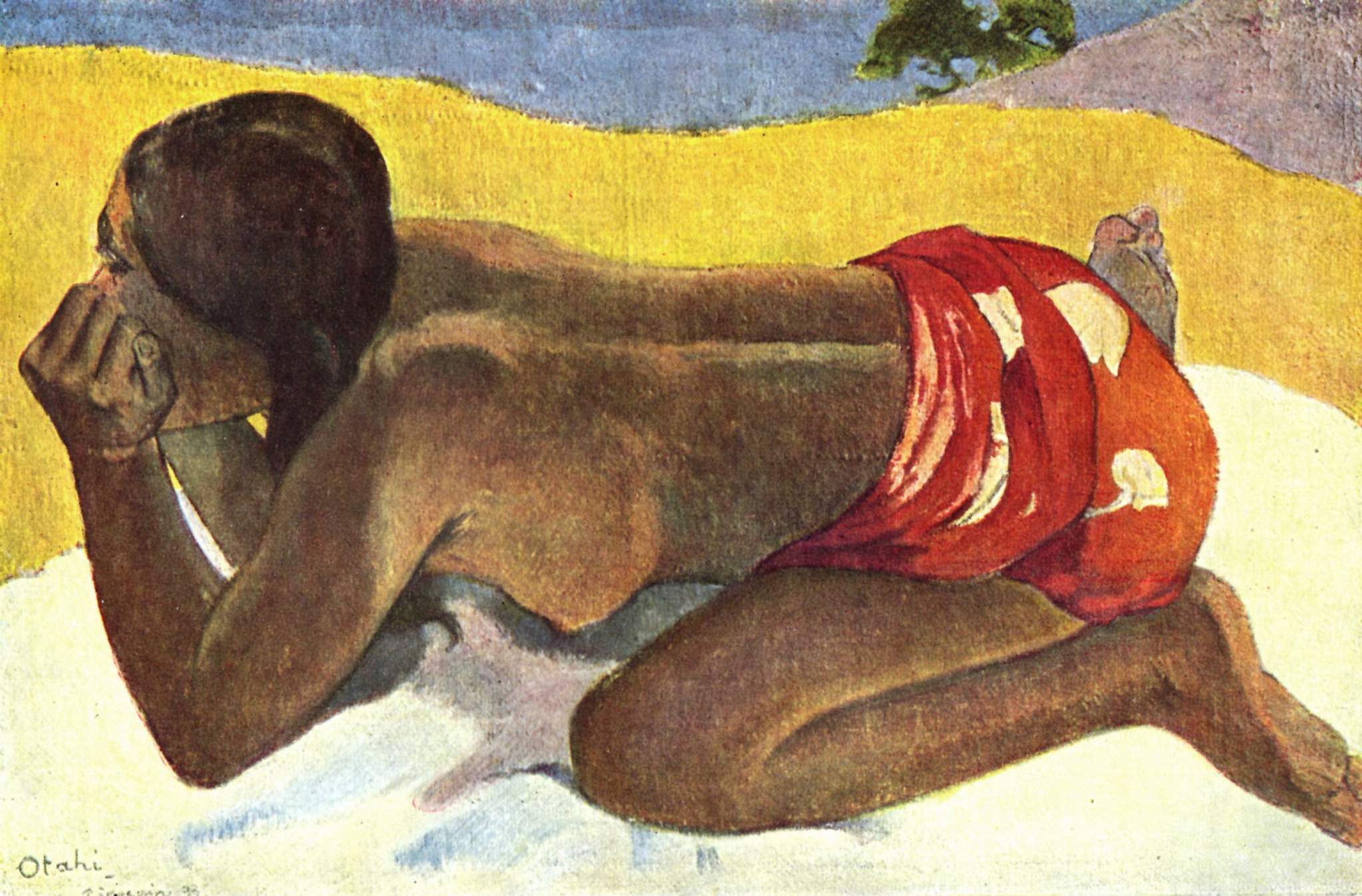
Rybolovlev is the former owner of Leonardo da Vinci‘s Salvatore Mundi (ca. 1500), the most expensive work ever sold at auction. He has also purchased: Gustav Klimt‘s stunning Water Serpents II (1907), purchased for U.S. $183.8 million; Mark Rothko‘s $186 million No. 6 (Violet, Green and Red) (1951); and Paul Gauguin‘s $120 million Otahi (1893).
Works Abramovic has collected suggest a fascination with the grotesque. Works he owns include Francis Bacon‘s $86.3 million Triptych (1976), Lucian Freud‘s $33.6 million obese nude Benefits Supervisor Sleeping (1995), and Alberto Giacometti‘s lumpy $14 million Woman of Venice (1956).
Just one work purchased by Andrey Melnichenko is listed, Claude Monet‘s $80.5 million Water Lily Pond (1919), one of some 250 ‘Water Lilies’ paintings made by the French Impressionist.
Works by living artists identified by the War & Art project include David Hockney‘s Beverly Hills Housewife (1966), which was bought by Dasha Zhukova, and the Damien Hirst butterfly painting Midas and the Infinite (2008), purchased by Mikhail Fridman for $950,000.
The U.K., U.S., E.U., Canada, Australia, New Zealand, and Japan are among the economies that have imposed sanctions on Russian nationals for their ties to Russia since Vladimir Putin invaded Crimea in 2014. —[O]







A respected voice in contemporary art discourse.
Focusing on ambitious storytelling and insightful art-world commentary. Ocula Magazine publishes in-depth interviews, critical essays and timely analysis on the artists, exhibitions and ideas driving the global art world.
Learn more about Ocula Magazine
Showcasing the best of the art world.
Ocula partners with galleries from around the world to highlight their artists, artworks and exhibitions. Gallery membership is by application and invitation, with each member vetted by an independent panel.
Learn more about Ocula Membership
Specialises in the sale of major artworks.
Led by a team with deep ties to the world’s leading auction houses, galleries and collectors. Ocula’s advisory team offers bespoke services to high-net-worth clients from around the world who are looking to acquire the best of contemporary and modern art.
Learn more about our team and services