





Emily Cormack
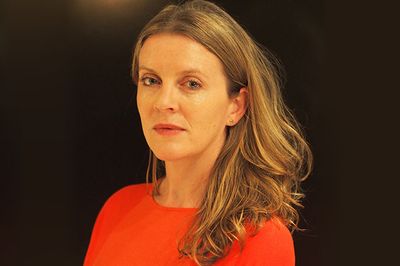
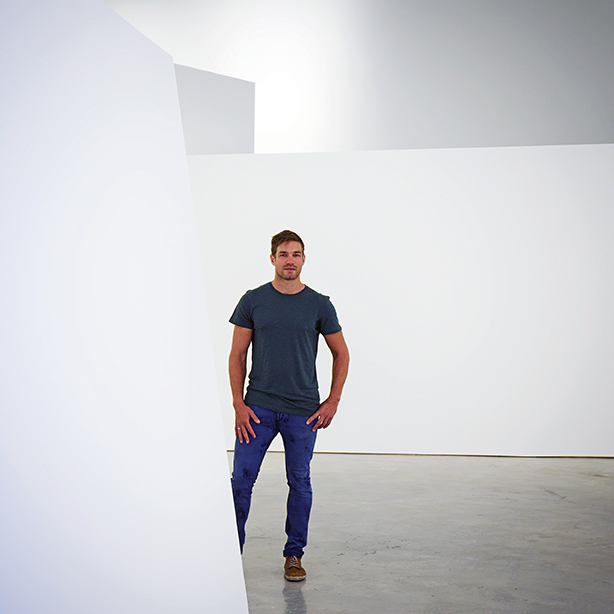
Courtesy Emily Cormack.
The works in Primavera 2016 chart the human body as it encounters itself in the space of art. The body’s echoes, shadows, murmurs and movements are seized upon by the eight artists in the exhibition as material evidence of a forensic life.
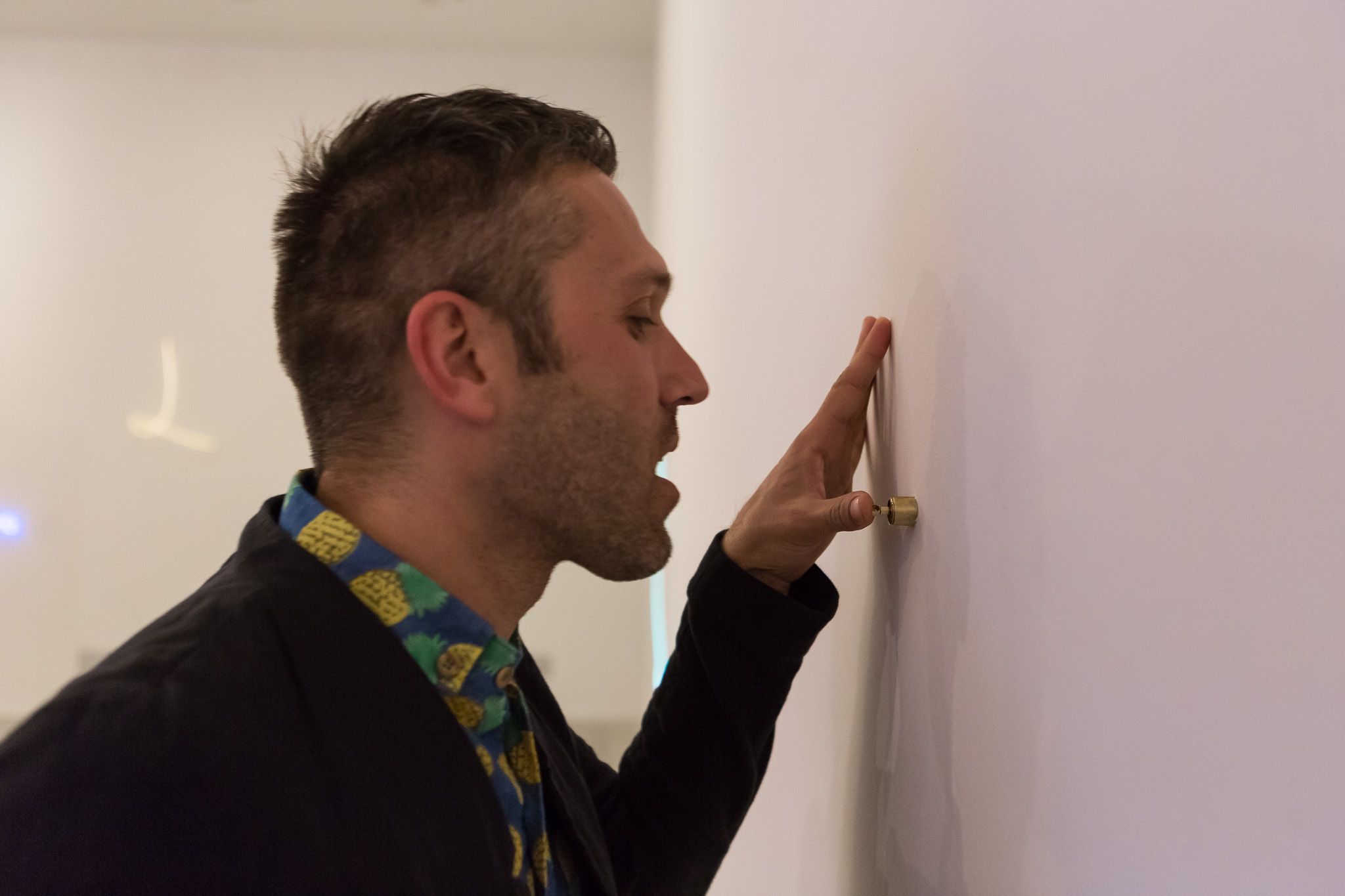
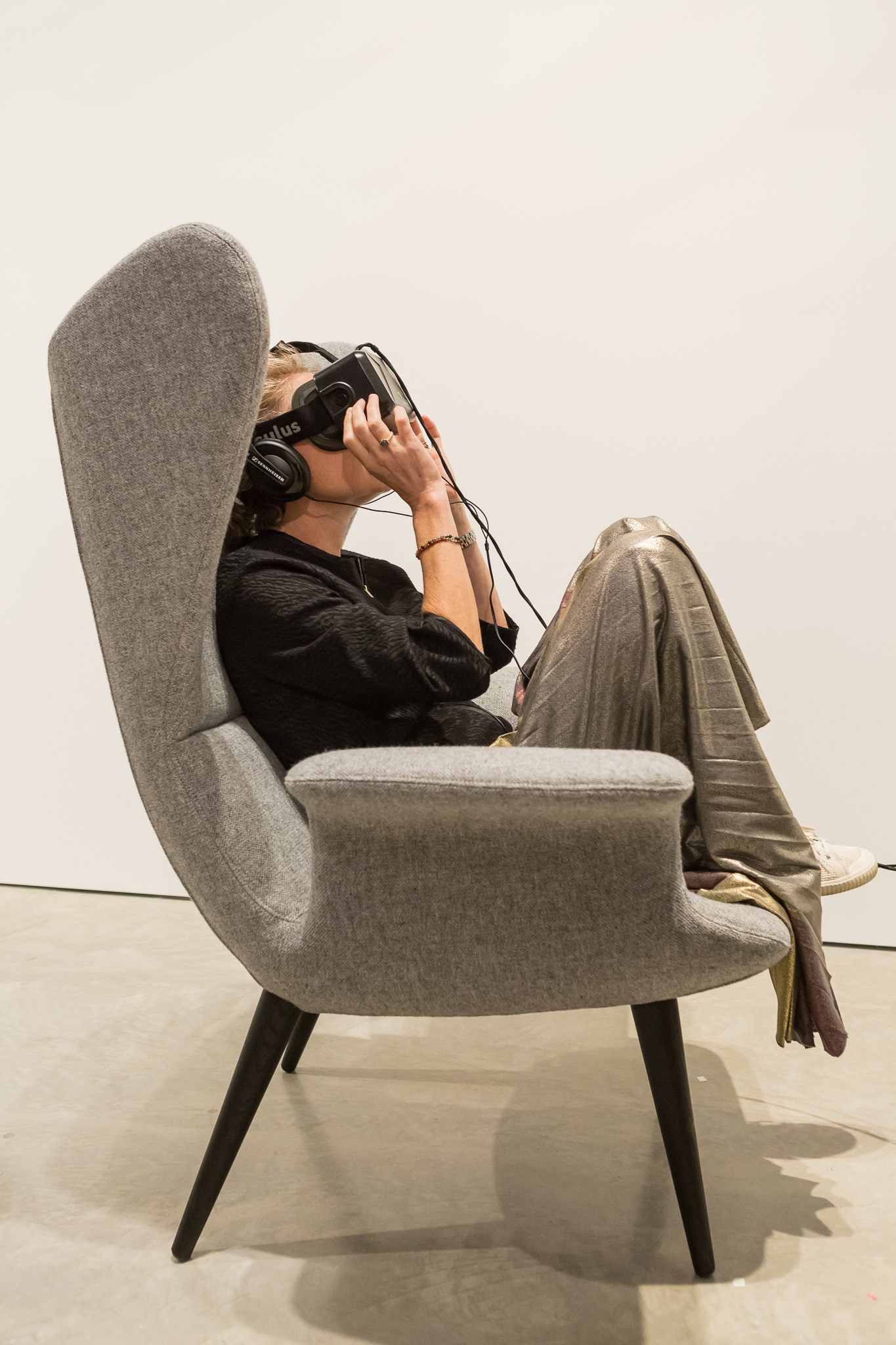
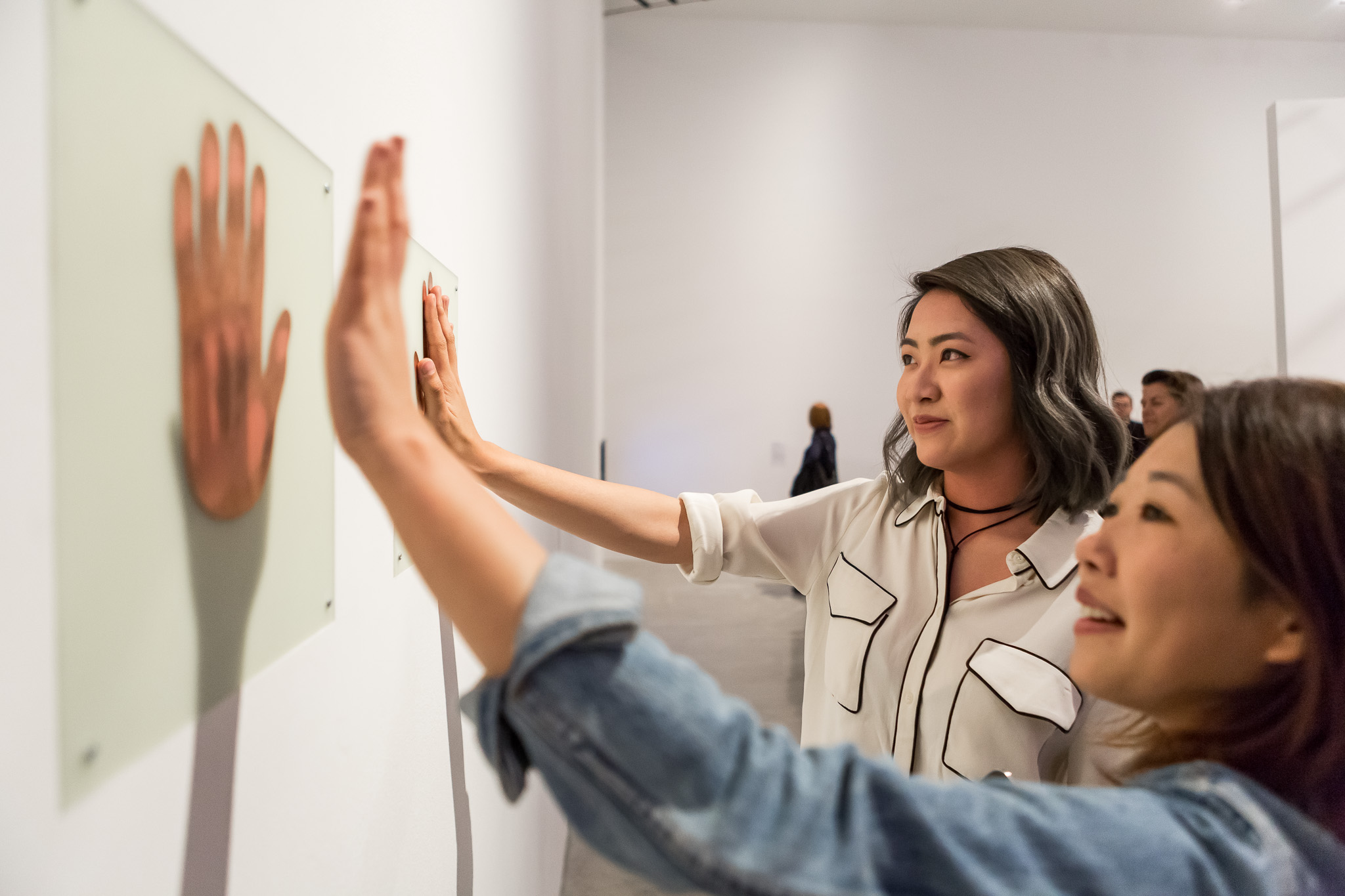
Visitors encountering Emily Parsons-Lord’s The Confounded Leaving have the option of pressing a discreet button on the wall and filling the gallery with sulphur hexafluoride, a greenhouse gas which Parsons-Lord calls ‘future air’ because it is a compound so stable that it is likely to persist for up to sixteen future generations. With a similar spirit of amplification, Pia van Gelder’s sonic sculptures give the body an audible frequency.
When I used the work my body sounded like a warning, as if it were alerting other visitors in the gallery that there might be a nuclear warhead approaching; the woman who used the work after me emitted a similar sound and—just as I began to suspect the work may be a gimmick—a third woman leant against the amplified copper hands van Gelder had placed on the wall and a new frequency rang out across the gallery. Her body frequency was higher and softer than mine; if I was a siren, she was a song.
Curator Emily Cormack has sought out artists who don’t just animate sensation but render cognition in material ways. The way we feel—and what it looks and sounds like when we do—is front and centre in this exhibition. I spoke with Cormack about her experience curating Primavera and how we might begin to understand the enduring affect of art.
SRM: The focus on the human body in this year’s Primavera felt like a rebuff against the theory of Object Oriented Ontology, a recent trend in contemporary art that privileges the agency of inanimate things. I left Primavera with the conflicted sense of the works being both objective and intimate; at times there was a chilliness to their commentaries on our shared humanity.
EC: Much of my research has looked into Object Oriented Ontology, as I am interested in the idea that an art object might have agency or energy of its own. So some of those ideas do feed into this [Primavera] but with this exhibition I am examining the way that an art object affects the body and the way that it can actually physically interact or communicate, so I am moving away from those more propositional object to object interactions.
Maybe the bleed that you perceive between the subjective and objective in the exhibition is because the works are having a conversation with you, so they are actually tracking the divide in some way between the subjective and the objective; vacillating between the artist’s subjectivity and the viewer’s subjectivity using an objective methodology.
SRM: How did you come to curate this year’s Primavera?
EC: This year’s Primavera curator was selected on an application process, so I had to apply with an idea for the exhibition. For this Primavera I honed my thinking in on the idea of transmission. In my practice I am particularly interested in the exchange of information that occurs between an artwork and the viewer, and I have been researching this through my PhD research as well as testing these ideas for many years in my exhibitions.

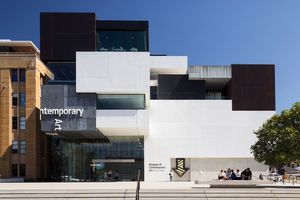
For Primavera I continued this enquiry into processes of transmission and tried to understand how you might be able to quantify or understand and extrapolate upon this exchange. Eventually, the body of research of embodied cognition became an important vehicle to investigate this. And so Primavera, for me, became about transmission and the ‘electrical’ exchange that occurs between an artwork and the viewer. I wanted to experiment with the different ways we might measure how the body receives information and the extent to which this might inform the way we create meaning. I also felt like this kind of exhibition might be a really satisfying experience for the very broad range of visitors that view exhibitions at the MCA.
SRM: How did the notion of embodied cognition inform your curatorial frame? You have said of Primavera 2016 that the exhibition ‘imagines that the ‘brain’ is distributed throughout the body, spreading across its various systems, dispersed and alive throughout’. This sounds similar to the way an artist might approach the world, weighing everything in their study of encounters and phenomena.
EC: Whilst embodied cognition is a rapidly expanding and quite complex field of knowledge, I have presented a simplified annotation of the theory in this exhibition. Situated throughout our body are receptors of various kinds that receive and process the world around us. These receptors are embedded within different biological systems throughout our body, which are triggered by external stimulus.
This trigger activates a chemical, electronic or neurological impulse that starts a chain reaction within our body and ultimately feeds into the way that we understand and navigate our world. With this exhibition I am proposing the possibility that these processes might influence our perceptual experience of art before we cognitively process it. As if our body is making meaning on a physiological level before we even begin processing it cognitively.
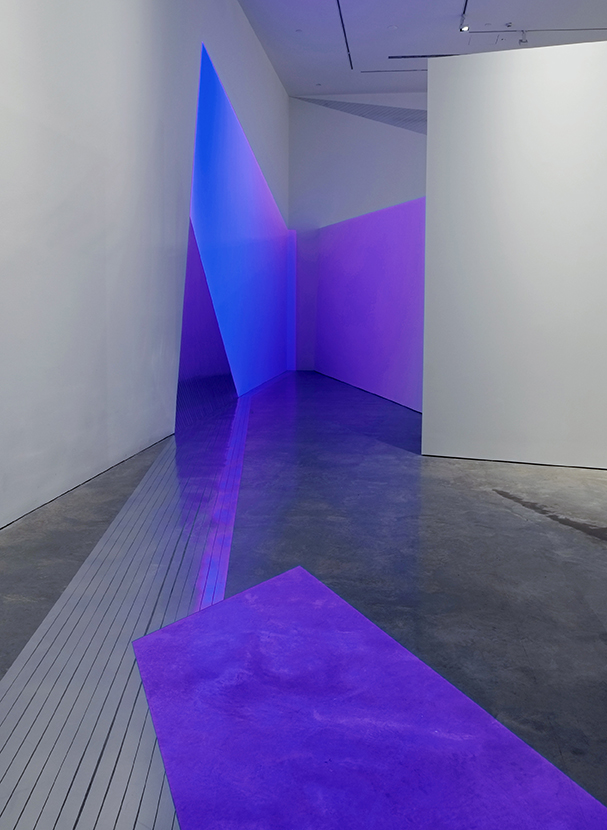
In what is a kind of poetic mimesis of the curatorial enquiry, I have structured the whole exhibition like a body, with each of the art works corresponding to a different bodily system. I have assigned each artist a bodily system based on the various chemical, electrical or hormonal receptors that are triggered through experiencing each of the different works.
The respiratory, sensory, limbic and nervous systems are all represented. Steven Cybulka’s work [a curvilinear wall] refers to the skeletal system, which is interesting when you consider its contrary function as being both rigid and supportive, but at the same time it yields to the force of our muscular and nervous energy. I like this analogy as for me it can also be seen to describe how I feel about curatorial frameworks in general. Another system referenced is the endocrine system, which is the fight or flight system in the body that releases adrenaline, among other hormones.
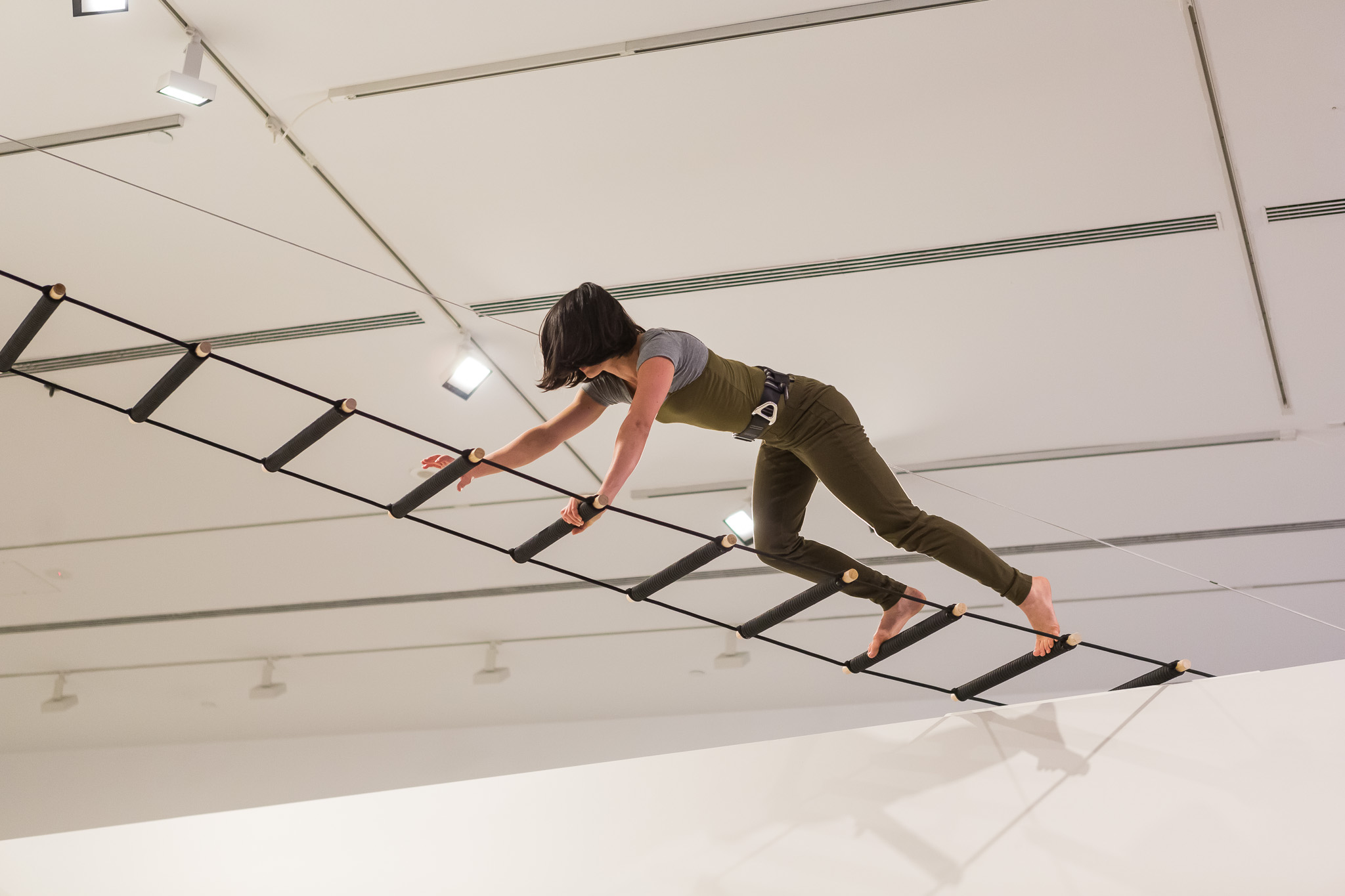
This system is stimulated by Mira Oosterweghel’s ladder work, which traverses the upper spaces of the gallery and is activated by an aerialist twice weekly. Feelings of fear, suspense or danger within the viewer challenge the stability of the viewing space, inviting a bodily response that skews usual modes of passive spectatorship.
SRM: The works in this year’s Primavera are connected by a broad consideration of physical, emotional, material and historical architectures. This is evidenced by the fact your curation uses the human body as a blueprint, responding to each unique system as a site. How important is it for you as a curator to make connections between works and, more specifically, does the curation of a survey show like Primavera change the way you work?
EC: In an exhibition like this, without the commercial constraints that one might encounter in a commercial gallery context, the artist is free to experiment. In Primavera there’s no restriction other than age and budget, there’s no conceptual or societal restrictions imposed upon the work.
I’ve always been interested in context and very aware of how important it is to the way we create meaning. Of course, part of that is architecture but it’s also light, sound, scent, all of the things that go into informing our proprioceptive understanding of our environment. With every exhibition I have to think very carefully about how the works communicate with each other and whether they’re going to support or antagonise each other and whether that antagonism is productive or not.
“When I travelled around the country meeting with artists I had a clear sense of the ideas I was interested in exploring, and it was very exciting when I found many others who shared this enquiry. Once I established that an artist was exploring the fields of transmission or perception, and after many conversations, we were able to develop a level of trust.
SRM: Survey shows that use contemporaneity to try to make sense of art can end up feeling like a party were everyone has been asked to wear the same thing. How did you negotiate the parameters of an exhibition that seeks to highlight artists in the early stages of their career?
EC: To me survey exhibitions of this nature don’t make sense. How is it possible to present an artwork meaningfully when it is positioned alongside a work of contrary intentions? Often works can be positioned alongside each other that cancel each other out. Whether we like it or not humans gather meaning sequentially, we create stories through our sequential experiences of the world around us, so within my exhibitions I try to make each part essential to the whole, and the whole essential to each part.
I’m definitely not a curator of a survey exhibition, which is why it suited me this time that the MCA were asking curators to come forward with an idea first. The idea of the auteur curator coming and selecting the best artists under 35 is something I find problematic—in a not very interesting way. So it was exciting to have the opportunity to curate it using a different methodology that was more enquiry based and that was more sincerely in line with what the artists were trying to express.
SRM: It must be exciting to work closely with artists during the process of production and see some ideas get dropped and help foster others. How did you work with the artists for Primavera 2016?
EC: When I travelled around the country meeting with artists I had a clear sense of the ideas I was interested in exploring, and it was very exciting when I found many others who shared this enquiry. Once I established that an artist was exploring the fields of transmission or perception, and after many conversations, we were able to develop a level of trust. Typically trust is my preferred curatorial methodology. I would never tell an artist what to make.
Every artist created new works for this exhibition, which I think is unique in the history of Primavera. There’s always an element of risk when working like this but if you understand fundamentally where the artist is coming from, and feel that the framework is sufficiently conversational, then you can be fairly sure that what the artist makes is going to create a really interesting dialogue with the other works.
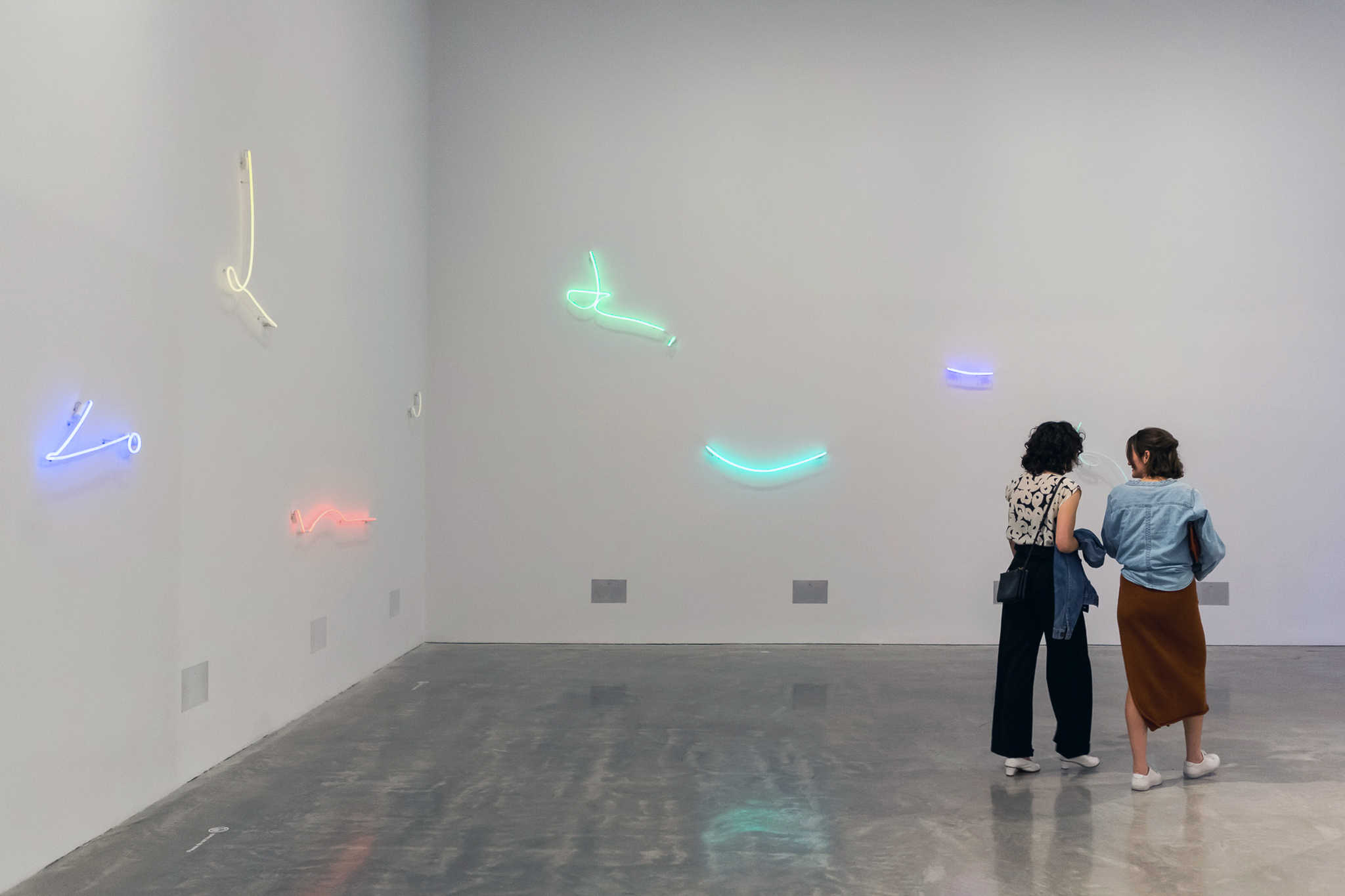
They were all really exciting to work with. I’ve worked with Danae Valenza a few times, so I went to her with my concept and she started developing her ideas and would incrementally reveal her thinking and I realised the depth of sympatico that we had. I had another really delightful experience with Pia van Gelder; I really love her work and think it articulates an important aspect of the show; the physical connection between an artwork and the viewer and the way an artwork can draw your energy out and transform it.
In the past Pia’s work has been performative and workshop-based so I had asked Pia to think about her work sculpturally and how it might work within an exhibition space such as the MCA. So she went away—and wrote me a very long email and within it were a number of points and ideas that were almost word for word the research notes I had been developing for the exhibition.

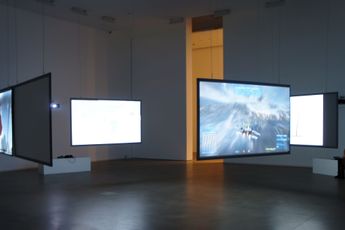
She wrote that she had an image of a Harun Farocki‘s work Transmission in her mind in relation to our conversation. Remarkably, the concept of transmission had obsessed me for a long time and had actually stemmed from this same Harun Farocki video work that I had viewed at the Gwangju Biennale in 2010.
SRM: Farocki’s video documents the way people move differently when they encounter memorials or statues, it is a lexicon of reverence and mourning. How have you noticed audiences responding to the works in Primavera?
EC: Sadly I have not had much of an opportunity to sit with the exhibition as I am based in Melbourne. But I have spies in Sydney who regularly update me and send videos of people having a great time with the works. By all accounts the works are functioning as I had hoped, touching viewers in different ways and hopefully opening up new channels of perception for some who may not have considered the role that their body plays in the viewing process.
SRM: What can audiences expect to see from you after Primavera?
EC: I am returning to my PhD at Monash University where I will deepen some of the knowledge I have gained through this exhibition. I am also employing what I have learnt about the way an artwork can affect the body and influence its movement through space through several Public Art projects that I am collaborating with architects on. These are in large, busy public spaces with many thousands of visitors, which is a rich context when viewed through the prism of Embodied Cognition. I am also brewing new exhibition ideas, which I hope to present over the next couple of years. —[O]
Main image: Courtesy Emily Cormack.


A respected voice in contemporary art discourse.
Focusing on ambitious storytelling and insightful art-world commentary. Ocula Magazine publishes in-depth interviews, critical essays and timely analysis on the artists, exhibitions and ideas driving the global art world.
Learn more about Ocula Magazine
Showcasing the best of the art world.
Ocula partners with galleries from around the world to highlight their artists, artworks and exhibitions. Gallery membership is by application and invitation, with each member vetted by an independent panel.
Learn more about Ocula Membership
Specialises in the sale of major artworks.
Led by a team with deep ties to the world’s leading auction houses, galleries and collectors. Ocula’s advisory team offers bespoke services to high-net-worth clients from around the world who are looking to acquire the best of contemporary and modern art.
Learn more about our team and services