





transmediale Artistic Director Kristoffer Gansing Looks Back

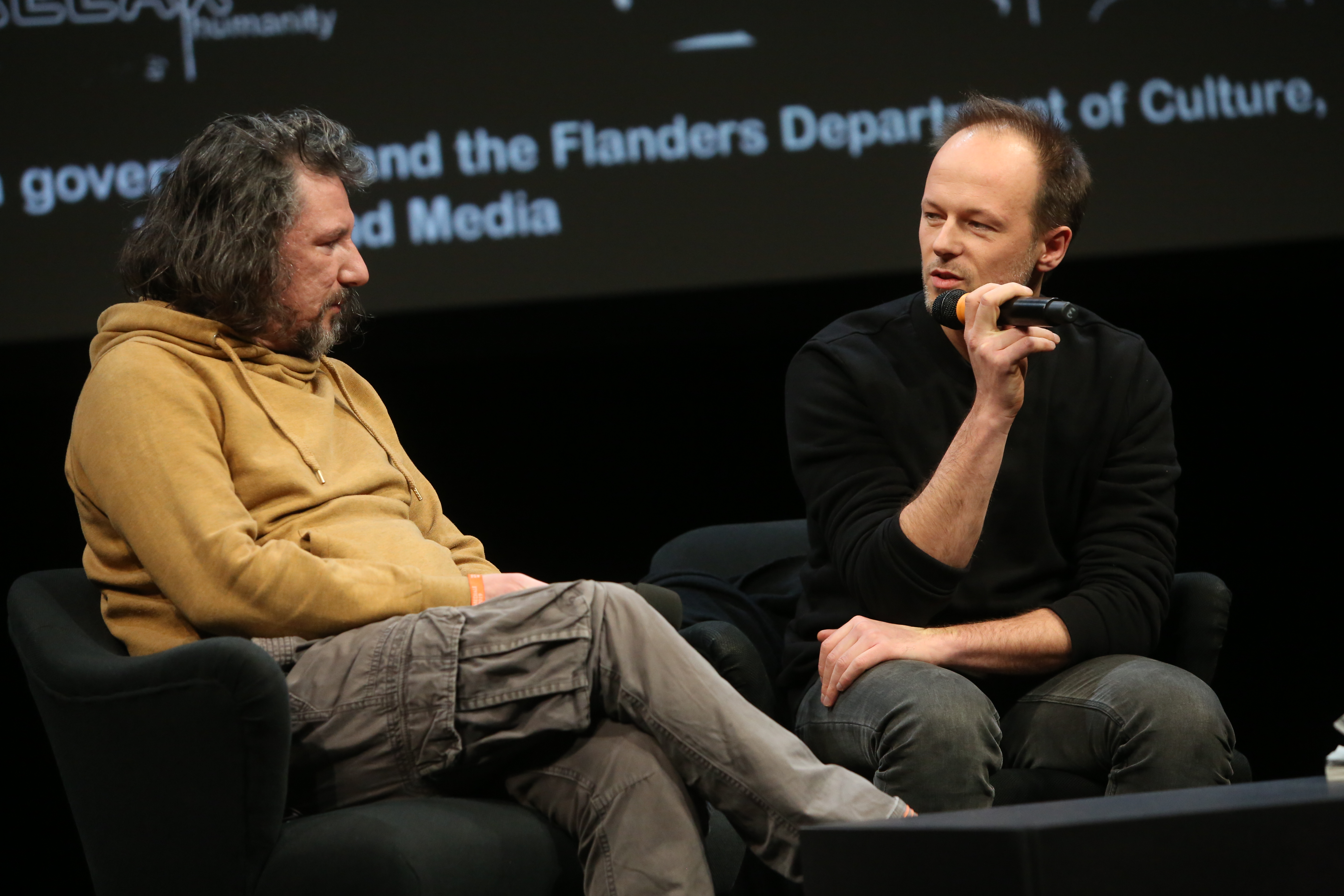
Kristoffer Gansing. Courtesy transmediale. Photo: Laura Fiorio.

Since 2012, Kristoffer Gansing has worked as the artistic director of transmediale—a festival at the forefront of digital media and culture that analyses the current moment through self-reflection and anticipation of rapidly oscillating futures. Explorations into moving image, online culture, and the socio-political landscape of digital media have defined Gansing’s tenure, from his first edition, in/compatible (31 January–5 February 2012), which took incompatibility as an essential part of cultural production, to his final iteration of the festival in 2020, End to End (28 January–1 March 2020), which will explore network and infrastructure idealism in an age of algorithmic manipulation.
The exhibition has been centred at Berlin‘s Haus der Kulturen der Welt since 2002, though its 2020 edition will also expand to the Volksbühne theatre. The format changes from year to year, but at its core is always a didactic discourse and presentation programme, working betweenexhibitions, performances, and workshops. Throughout, a key intent for Gansing has been to emphasise transversatility over transmediality, giving priority to making connections that are often overlooked, by including or developing symposiums, exhibitions, film programmes, and workshops that stimulate conversations that sit more comfortably outside institutional new media practice.
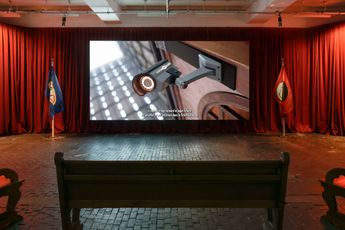
Gansing’s approach has constantly balanced dealing with a rapidly shifting present while carefully evaluating the past and anticipating a contingent future. Under his guidance, transmediale has moved from being a somewhat niche event to becoming a focal point for critical reflection on the issues that constitute the weird fabric of everyday life in the digital era, in many cases preemptively. For example, the panel ‘War Machines: Military Technologies between Civility and Authority’ with Tsila Hassine and Ziv Neeman at in/compatible in 2012 assessed how new, apparently liberating technologies find their genesis in the most repressive systems of command and control—birthed inthe closed world of military institutions and strategies. This panel took place one year before the release of the Edward Snowden leaks.
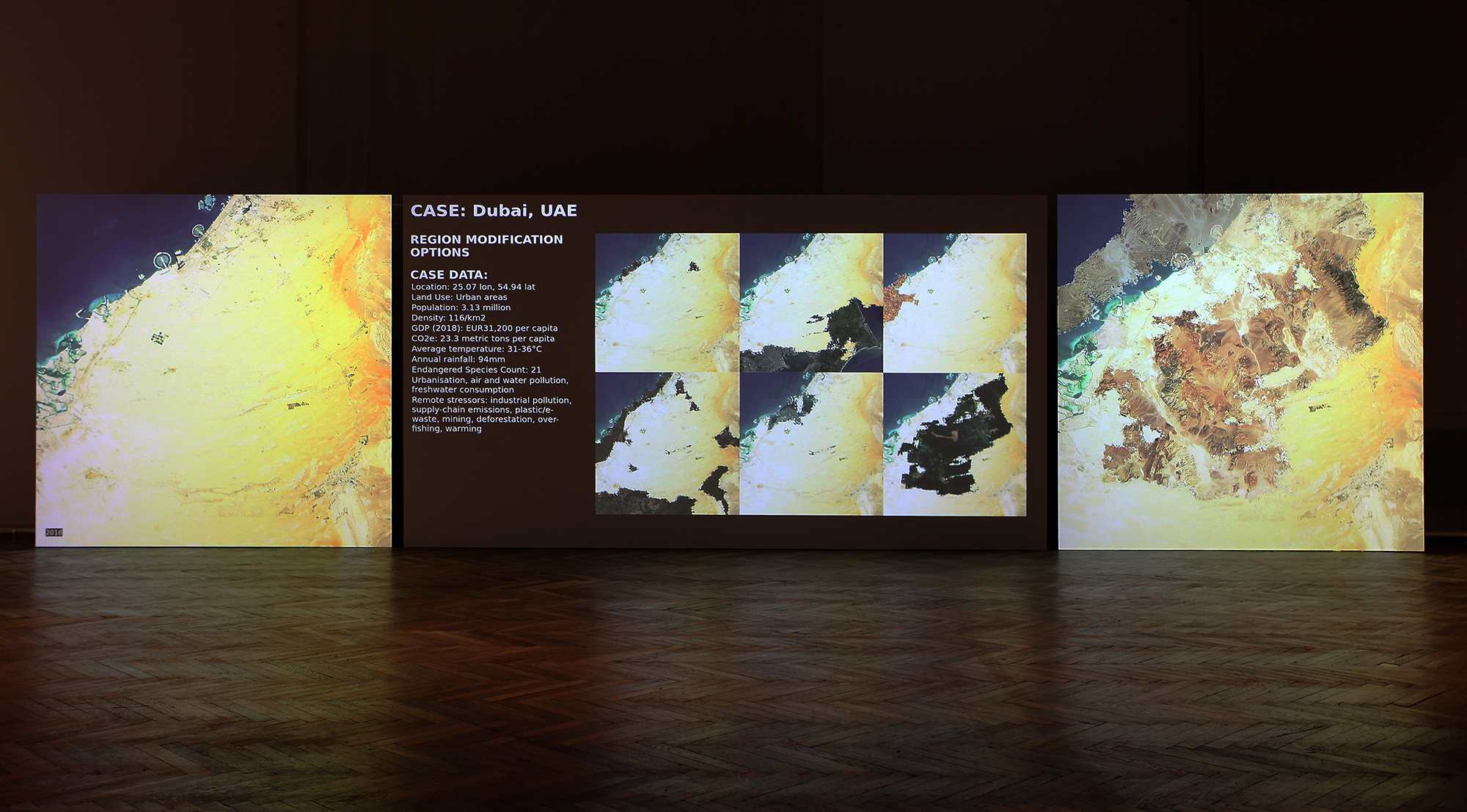
This year’s edition, End to End, reflects on the emerging horizons of both the biological and the digital as something that bears a complexity that is far outside ‘the human’—something that requires a new kind of mediation,whether through the vitality of current protest tactics, the adoption of decentralisation as realisable goal, or the drives to shift towards circular economies. The central exhibition, The Eternal Network, assesses what is at stake in the legacy of net art through works like the installation Asunder(2019) by Tega Brain, Julian Oliver, and Bengt Sjölén, where a supercomputer analyses satellite, climate, and geology data, generating environmental engineering plans that pragmatically address both human and nonhuman agendas.
With each year, Gansing has carved a path towards documenting shared, lived experience—a quality that is sometimes overlooked in the techno-fetishism of new media culture. This approach underscores Gansing’s thinking in this conversation, which looks back on eight years of change as he oversees his final transmediale.
TS: When you joined transmediale in 2012 as artistic director you were already an accomplished curator, as a member of the artist-run channel tv-tv in Copenhagen, for example—a project that anticipated the stakes of media distribution, content politics, and intellectual property that are so palpable today. What was it that made you want to be part of transmediale? Did you feel that there was an aspect of the festival that you wanted to build on?
KG:
I was already attending the festival back when I had just finished my MA and was working in a kind of new media-like university department, so transmediale was an alternative media education for me. I also was working on projects like tv-tv, and I often found there to be a very dire theoretical and critical approach to digital culture and new media. transmediale has had a social and political outlook from the very start, with a focus on broader cultural issues, not only high-tech media art or collaborations with media industries. This is also because of its foundation within a more grassroots, D.I.Y. media culture that existed back then, although at that time it was more focused around video. We saw this represented at 2019’s festival, when we commemorated the passing of Alex Adriaansens. Most of the people who came up on stage to speak, spoke about their experiences coming from squats and other independent movements, and I think transmediale comes out of that culture.
But a lot of that culture has become institutional or semi-institutional, like transmediale, but is still operating in some kind of cultural counter-public, because that’s where these kinds of issues were originally rooted. People thought that in this media, there could be a chance for organising society in a new way. Of course, we see a lot of co-opting of that, and that was one of the things I reacted against when I became artistic director. I do think that the festival moved in the direction of becoming too laissez-faire, in a way; for example, by playing up against the creative industries and celebrating openness in a very naïve way. At this point, I think it opened up to a bigger crowd, and when I came in there was already a bigger public interest outside of the media art community.
TS: I think that’s a very good point, because there has been a broadening of the project since transmediale’s genesis within the Berlinale (Berlin International Film Festival), and even in the years since I first started attending, there has been an expansion that has allowed people to bring their children. That’s something I don’t think you would have seen ten years ago.
KG: Yeah, now we are actually discussing forms of childcare and kids programming. I think that should be done, even though as a festival we don’t normally have that kind of resource, it’s something we need to think about.
“There is no such thing as one digital culture that everyone can get on board with; it looks very different from different parts of the world.
TS: If we think about 2012 for a moment—you became artistic director at a crucial point in two different, but not mutually exclusive, histories: the emergent realism of the 2008 financial crash and the mainstreaming of communicative technology. By 2012, the idea had crystallised that this financial crisis was not a contingent black swan event, but a hard-coded fork that had permanently engineered a new future trajectory. 2012 also saw a significant step in the widespread adoption of mobile technology: Facebook goes public and buys Instagram.
Against this backdrop, you devised your first edition of transmediale under the theme in/compatible—taking incompatibility as a fundamental of cultural production. transmediale has consistently dealt with the present while anticipating a contingent future. How do you cope with dealing with the present when the circumstances change more rapidly each year? For example, the mainstream news discourse surrounding artificial intelligence certainly wasn’t mainstream five years ago. Has the widespread adoption of digital culture made your job, in a sense, more difficult?
KG: Well there are recurring cycles, not only with these topics existing as buzz words, but of world events that unfold and repeat themselves in different ways. We’ve had other financial crashes since 2008 that have led to other kinds of social responses, and I think that is just something you have to manage with a historical awareness. That’s always been part of my approach—to try and look backwards and forwards at the same time in order to deal with the present and not be nostalgic or futuristic. Having dealt with media archaeology, this has always been part of my methodology.
It’s a very good question and you’ve outlined quite well what we’ve been doing over the past few years. I think there was a big shift in 2014 with the afterglow festival where we had the ‘post-Snowden’ moment, and there was a huge surge in audience numbers. You do hear things like, ‘the leaks didn’t have a big impact, they didn’t lead to anything’, or, ‘we have even more surveillance now’. That may all be true, but there is much more discussion about these issues in the general public, and that’s not only due to these leaks, but digital society and digitisation, or digitalisierung as it is called in German.
It’s strange for me to see how these things are debated as a new transformation, whereas from my perspective this has been going on for more than 30 years, since the birth of cybernetics. The cultural function of the festival, for me, is really to retain this function of critical reflection—that’s super important. It’s not that the festival has become irrelevant, it’s arguably the opposite, because these topics are now discussed on a much broader social basis.
“At transmediale, I’m always emphasising transversality rather than the transmediality. It is a festival that always tries to speak about what is going on in the world now
TS: It makes the festival more relevant.
KG: Exactly, and that also puts us in a challenging position, because we’ve already noticed in the last two years that there is much more demand for us to provide answers, be accessible, and use our privileged position as a high culture festival in Germany to deal with all these topics. It’s really interesting to see different factions react differently to parts of our projects. I’m not interested in pleasing the media art crowd with spectacular installations, but that doesn’t mean that we don’t have spectacle. I’m not totally against it, I just think that people’s attention should be drawn to the right things.
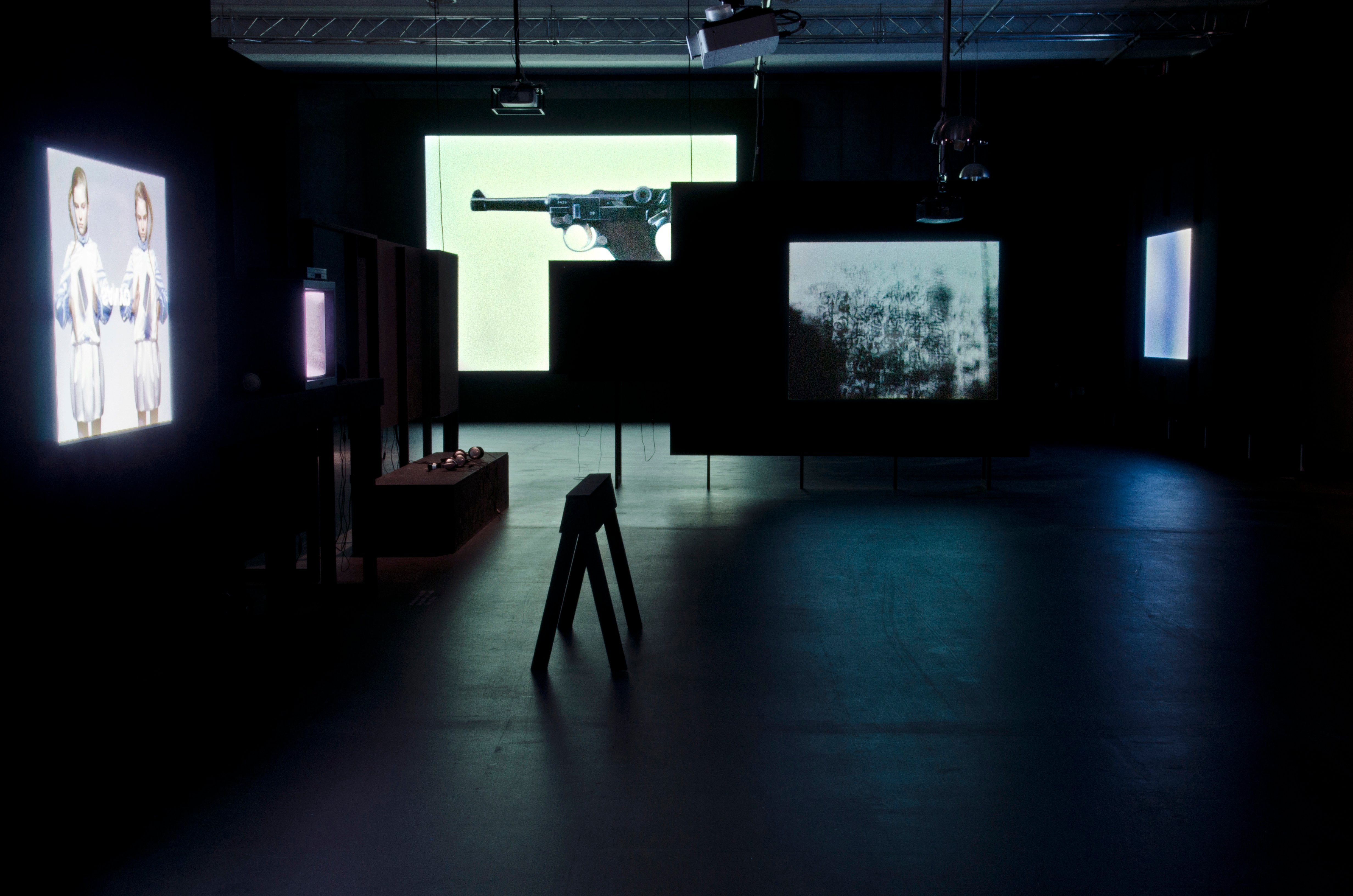
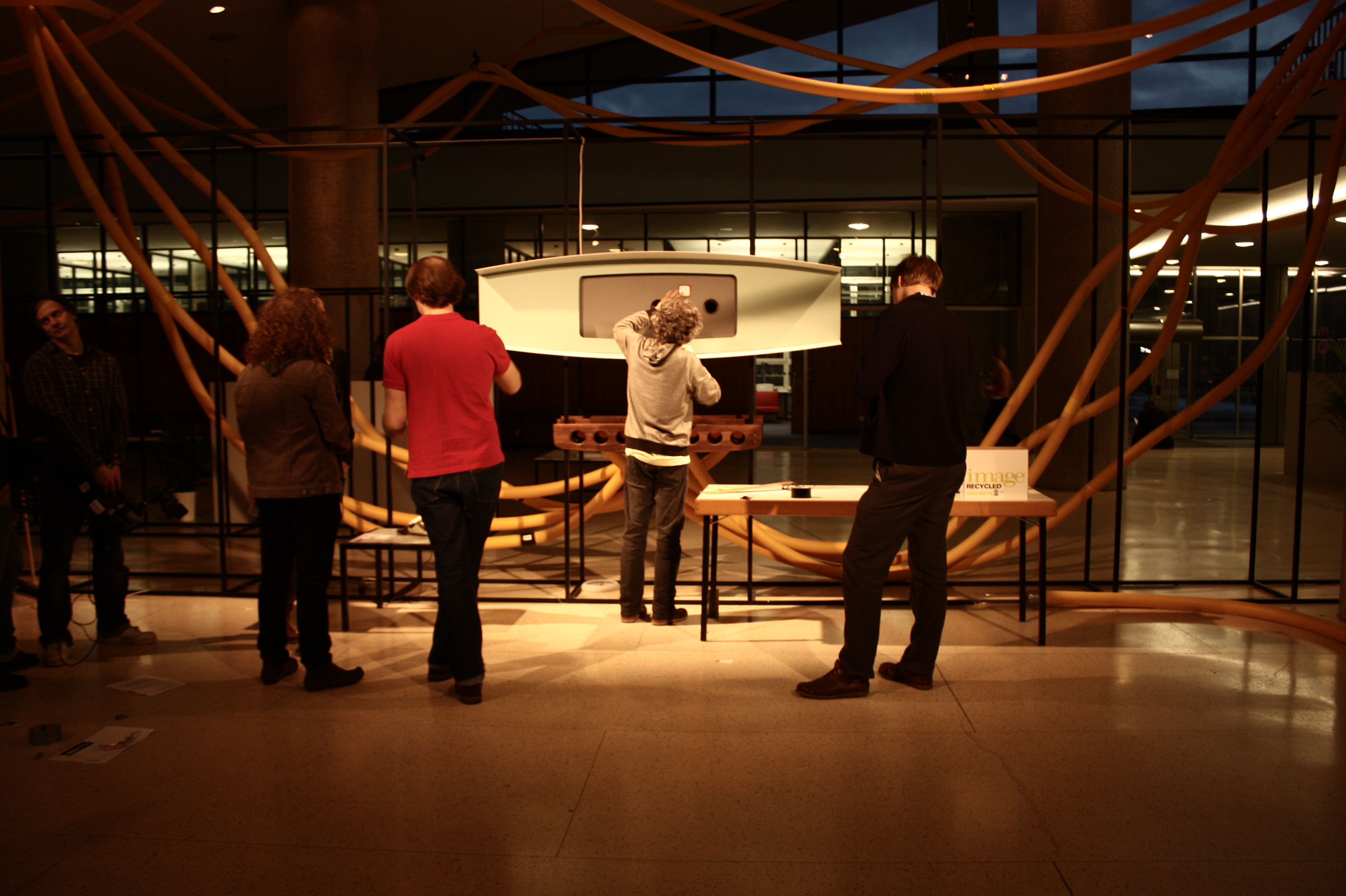
We shouldn’t be celebrating the latest media art installation, we should put on lesser-known speakers in the auditorium and do crazy projects like the OCTO-P7C-1 Intertubular Pneumatic Packet Distribution System in 2013. I think we’re in a position of luxury, both with our funding and our audience, to do that instead of playing the easy card. I really hope that in the future, the festival will pick up on this thread and find new methodologies to deal with new interest from politics and audiences who hope to find answers at transmediale.
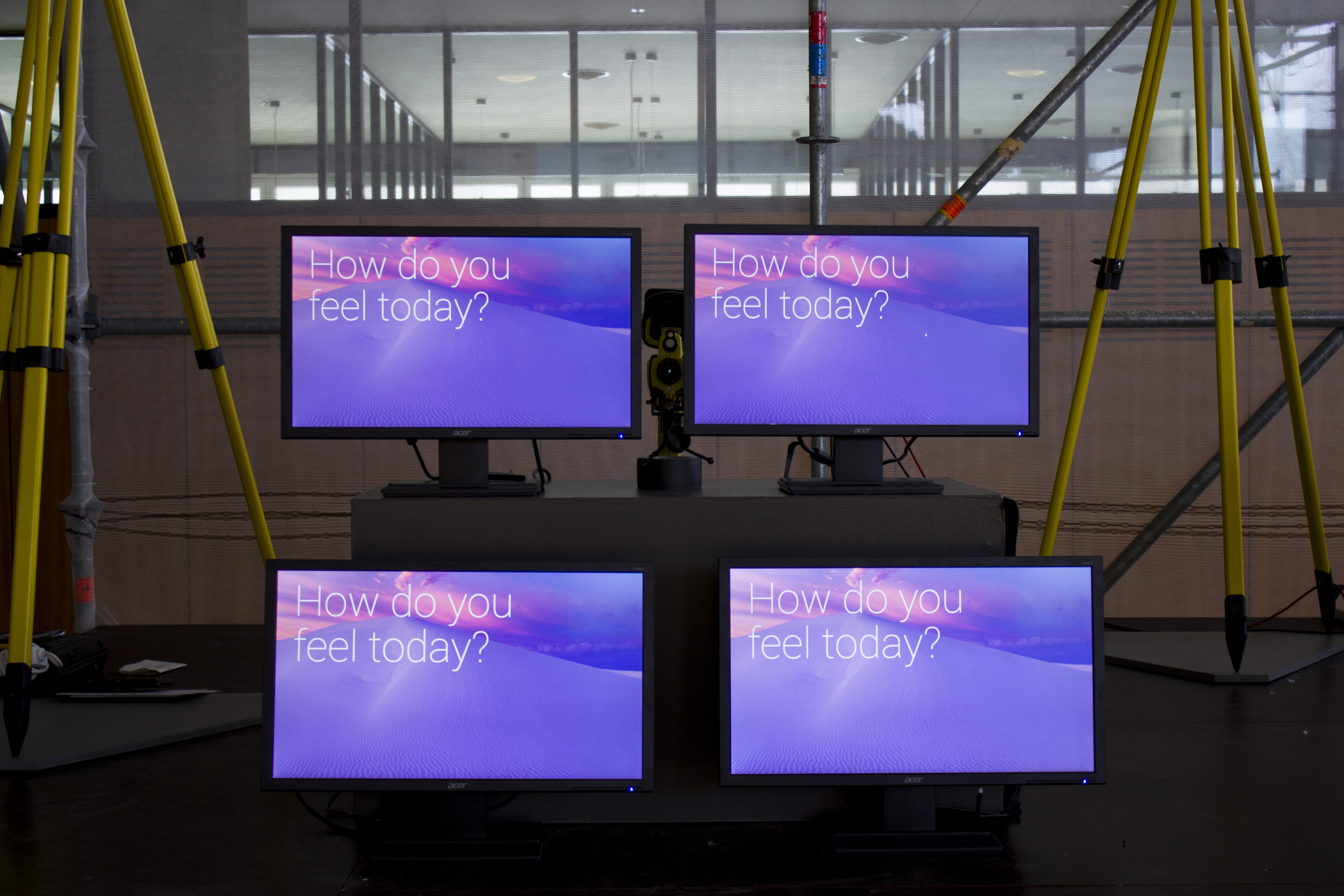
TS: There are two shifts that took place with last year’s programme, including the decision not to publicise the programme on Facebook or Instagram, and not to have a core exhibition. I don’t use the term ‘paradigm shift’ lightly, but the decision to discontinue activity on Facebook and Instagram signals a paradigm shift away from the business-as-usual ideology of cultural initiatives and normal means of distribution. I assume you did this because you found the centralised and gamified nature of these platforms to be incompatible with where you felt social media should be going.
When it comes to the core exhibition, could the decision to note stage one relate to the traditional exhibition format no longer being a viable form for capturing and managing ‘the structuring of feelings’? Could it be said that the traditional exhibition model is just another centralised model that trades or even sacrifices collective subjectivity for individualism?
KG:
The demand for exhibitions can obviously be assigned to a very Western, colonial, representational logic that I think is necessary to challenge and do away with. I’m not against exhibitions as such, and I love to go to exhibitions, but I think there is something scary about the constant demand to package culture in this format, especially in the context of festivals, which are traditionally about putting on a show of international focus, awards, and so on . . . that I think is antiquated. What came after that paradigm was biennial culture, and I think transmediale with me, for better or worse, moved in that direction. When I first came on board, and this goes back to the first question, my idea was to bring a curatorial coherency to what I saw as a festival dissipating into a kind of ‘creative crowd’ without much focus, so I brought in more exhibitions.
Ironically, I’ve done more exhibition-making than any previous artistic director, and for the first time in the history of transmediale, we commissioned new works, had a residency programme, and so on. We really tried to focus on artistic production happening in dialogue with the festival, instead of just, ‘send us your stuff and we’ll show it’; but I think today there is a crisis in this drive for coherence, especially when you look at it from a perspective of the need to decolonise ourselves.
In terms of the curatorial subject bringing order into the disorder of the world, and bringing critical reflection, I think we need to take a more humble approach, and that has a lot to do with the things you are talking about—the emergence of any kind of revolutionary subject depending on a process of unlearning, or at least some kind of humble learning. I’ve made this point at previous festivals.
There is no such thing as one digital culture that everyone can get on board with; it looks very different from different parts of the world. For me, going off Facebook is not a radical act; I don’t think that transmediale should have entered Facebook in the first place. I decided to play along with it for pragmatic reasons, and over the years it grew and grew, and as we said in our statement, it became one of the most important communication platforms; that’s where we had the most response, which has actually been revealed as fake, because since we removed Facebook, there has been more interest than ever and we have hardly done any other advertising. This year, the festival passes sold out quicker than any other year.
We’ve put far too much confidence in these quantified models of sociality and promotion, and that goes hand in hand with the post-representational kind of strategy. I think today it’s legitimate to leave Facebook, whereas a few years ago it may have posed problems for us, even in terms of our funding. I think people understand it’s a problem, and it’s actually responsible to do it this way if you’re a publicly funded institution. I’ve never been on Facebook, and I realise that it’s kind of arrogant, but after some time now it’s obvious that you don’t need to be on there. I think there should be alternatives, and maybe this can be an incentive to build those alternatives.
TS: It’s becoming very clear that you just don’t need these platforms. It’s interesting though that you did not delete your accounts; you’re doing this in a kind of opt-in/opt-out way, which is perhaps the healthier way to go about this. It’s not a complete exit.
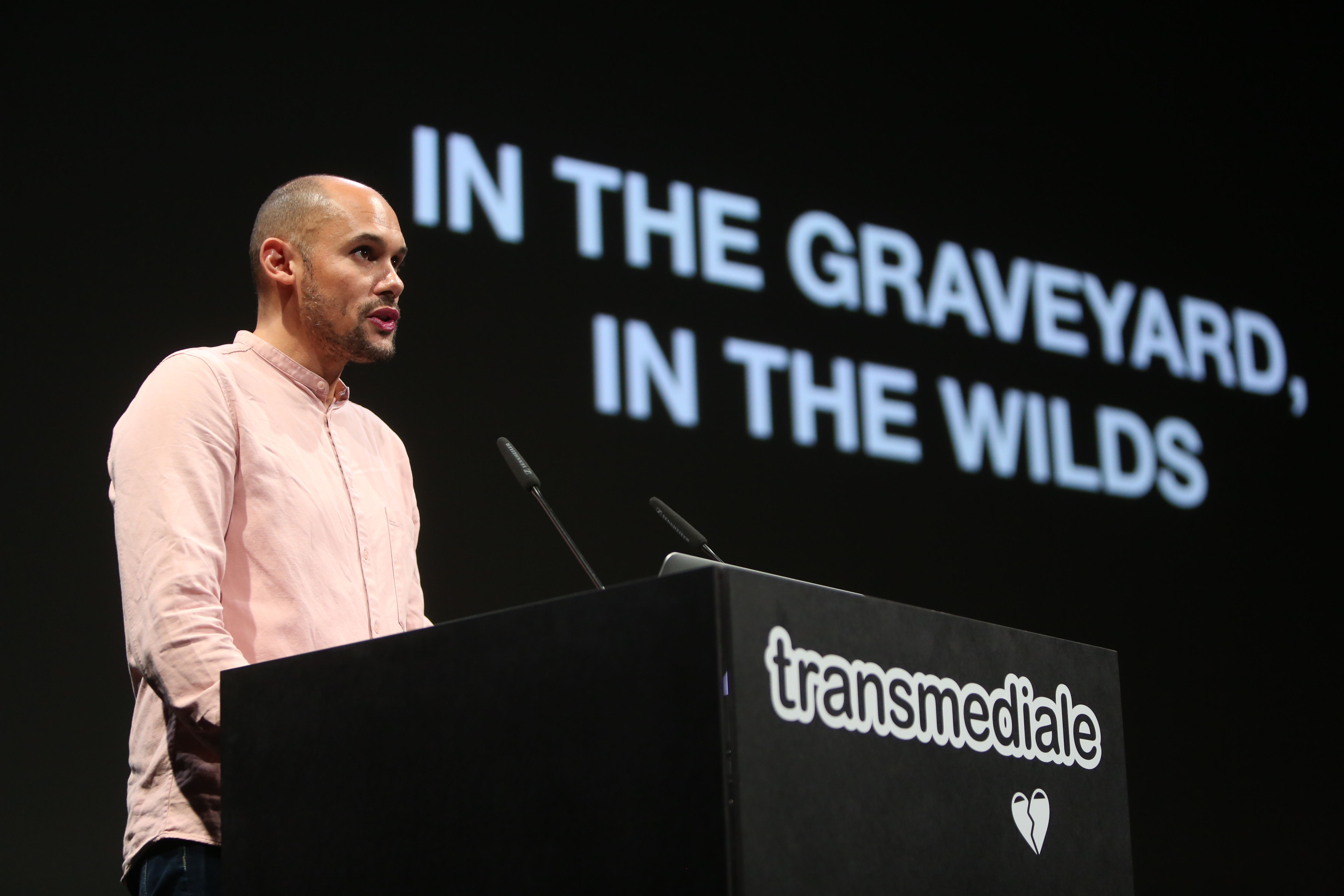
KG: Yes, and it’s not about saying that social media communication is bad, per se. After all, we have a thematic of affect and structures of feeling. On 2 February, we had a keynote by Shaka McGlotten exploring love and social media. Shaka McGlotten makes a twist on business-as-usual from a queer perspective.
TS: I know engineering is a strong word, but in a way you are engineering healthy culture, because online users do not have to deal with these things. Social media is damaging within the creative sector because people are subjected to the numbers game of follows and likes, which is something that represents the worst aspect of politics.
KG: If you’re an author today you have to have social media presence, for example. It’s in every business.
TS: I’d like to talk about the decision behind the screening of Emanuel Almborg’s 2018 film, The Nth Degree, which comes across as somewhat of an anomaly within the more typically transmediale themes of digital scarcity, planetary scale computation, the ontology of artificial intelligence, decentralisation.
The Nth Degree is first and foremost a film dealing with class in a very literal way, something that can be often overlooked in a lot of new media art, and it deals with this matter through a visual style that would not look out of place on Channel 4 in the U.K. There’s a distinctly working-class tone to the work, almost Ken Loach-esque. Could you expand on decision behind including this work in the programme?
KG: That choice was mainly due to our curator Florian Wüst, but we worked together on the Study Circle, Uneasy Alliances, and one of the issues we were trying to deal with there was this question of new forms of collectivity and working with issues like race, class, and gender. We were also trying to form a connection between certain activists who are working more critically with tech, and people working against gentrification, to see if there could be alliances built to resist the development of the ‘creative city of Berlin’—you know, this kind of start-up culture that is seen as very good for the city and that brings more arts and culture, from the point of view of politics, when in fact it just brings more precarious working conditions and risk capital, which of course drives real-estate prices up.
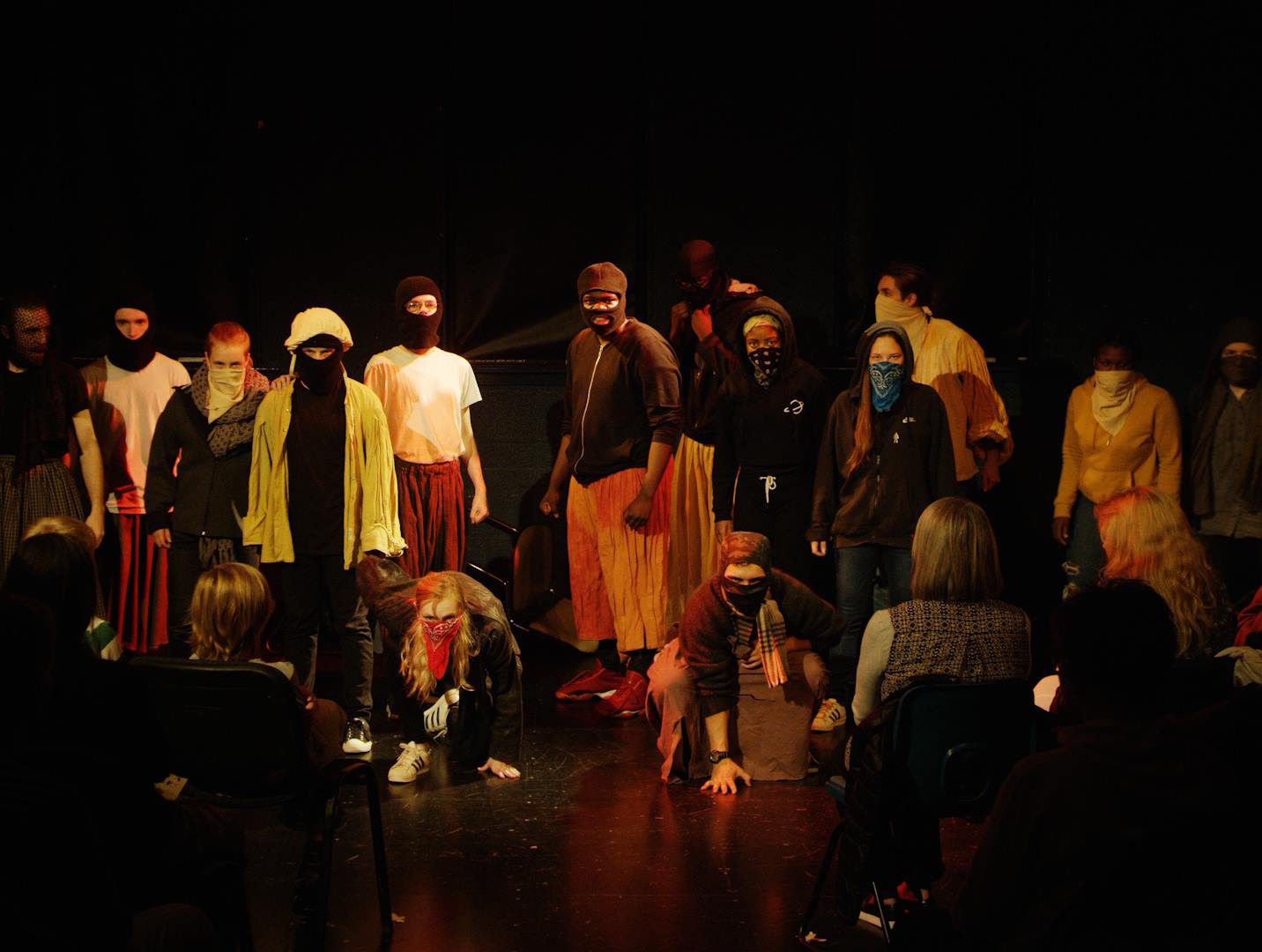
I think Almborg’s movie doesn’t talk about technology in that sense, but obviously it’s about relating historical moments of some kind of collective action and the affective bonds between these different cultural and class contexts. This was central to what we wanted to address in Uneasy Alliances. It’s also, for me at least, related to the yellow vest movement and the parallels with what is happening in France now; we’re trying to make sense of these uprisings. One of the speakers we wanted to get for the festival was Frédéric Lordon, who commented very intelligently on the yellow vests.
“There is not one ‘we’—there are multiple ‘we’ in collectivity. Even our pronouns are under review.
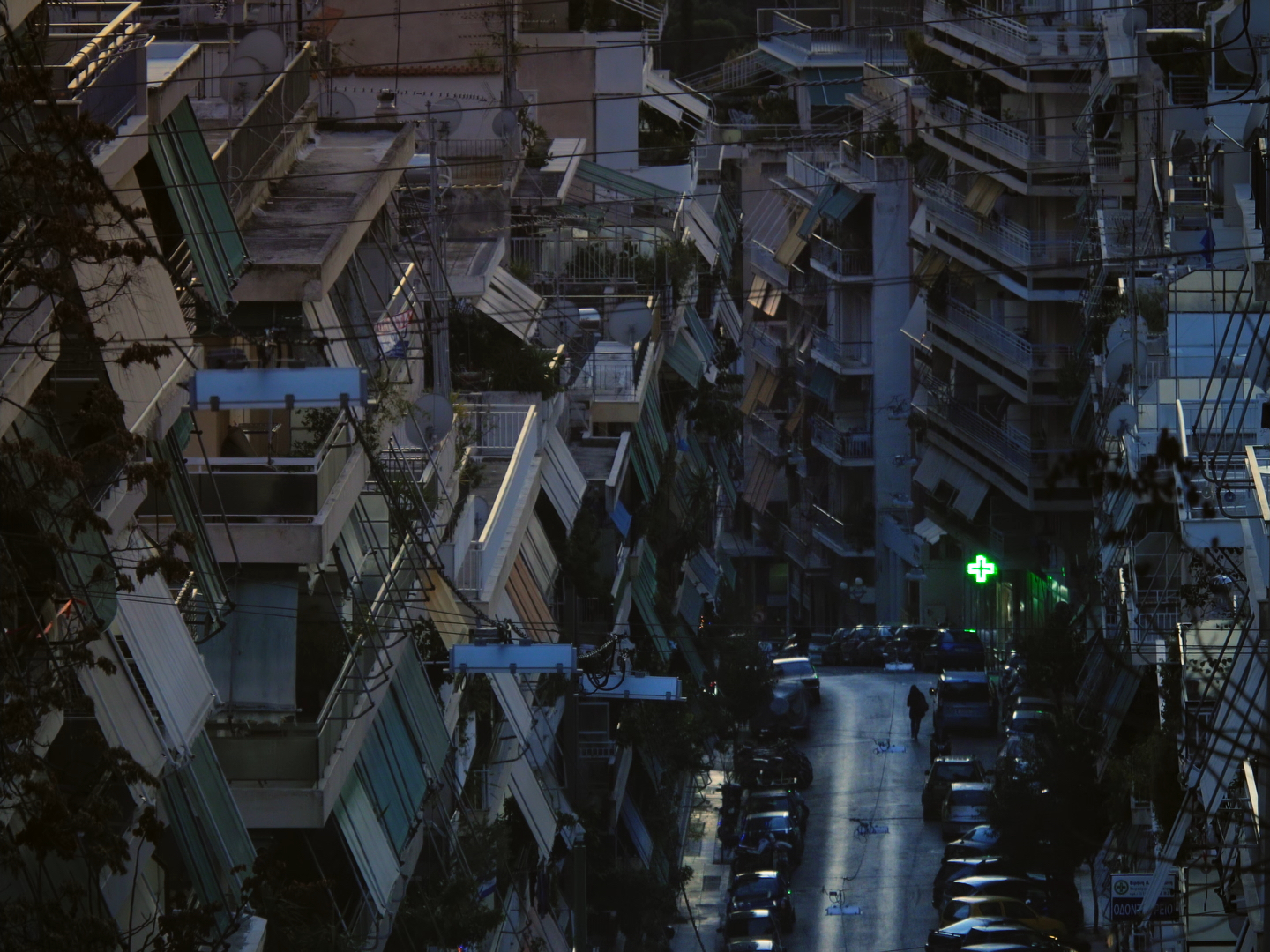
At transmediale, I’m always emphasising transversality rather than the transmediality. It is a festival that always tries to speak about what is going on in the world now, and documentary is something that has a strong history with video, so the inclusion of the film is not so contradictory; we’ve already shown similar works. The work is a bit untypical, but if you look at this programme closely, you’ll find links; for example with Rory Pilgrim’s work, which references technology but also has a similar working progress of bringing people in through a collective process that will later be part of the performance, as seen in Pilgrim’s amazing work, Software Garden. The Nth Dimension also correlates with Robin Vanbesien’s film Under These Words (Solidarity Athens 2016) (2017) about the solidarity movement in Athens. This work is more about coping in the social climate of Greece.
TS: When I said it was ‘untypical’, I guess I meant it in relation to your point about not presenting the traditional curatorial model of the latest and greatest in new media art.
KG: We’ve been doing this consistently over the years. It also shows it’s not so much about being a contemporary arts venue in the classical sense; we still retain the connection to video culture and media theory, for tapping into people from the technical field. I think it’s necessary to find the space in-between, as these are boundaries that have been constructed on an institutional basis; but if you want to think through the issues that we always throw out ambitiously, we’re gonna need to not cater to the new media curator who comes and says, ‘oh that’s not for me’. That’s not why we do this; we do this because we have the utopian idea that these events have an impact and make a difference, even if they don’t do it directly, they have a persistent quality in society.
TS: Leading on from that film, there was a very deliberate communication in the programming of transmediale 2019 that ‘we’—and perhaps ‘we’ needs to be defined—are all entrenched in living networks; that we are affective and affected beings.
Could you discuss the shift towards an interest not just in collectivisation, but also collective wellbeing? Do you see transmediale’s role as having shifted in the last year?
KG: There is a wider expression of a desire to move more towards something that is not naïve; something that is not the Silicon Valley style of ‘we’re saving the future’. One of the methodologies this year is to move towards a more affirmative approach, which relates to this idea of a shared, lived experience, and to start from what we have and try and find the qualities that are there that we can build on. There is not one ‘we’—there are multiple ‘we’ in collectivity. Even our pronouns are under review. I think it is super important to have a festival that is trembling at the emergence of new subjectivities and new collectivities. This festival needs to come without a diagnosis; it’s not about countering negativity, or what has been called the terror of subjectivity that comes with self-optimisation. It’s also about not assuming that we can be critical. —[O]
Main image: Kristoffer Gansing. Courtesy transmediale. Photo: Laura Fiorio.





A respected voice in contemporary art discourse.
Focusing on ambitious storytelling and insightful art-world commentary. Ocula Magazine publishes in-depth interviews, critical essays and timely analysis on the artists, exhibitions and ideas driving the global art world.
Learn more about Ocula Magazine
Showcasing the best of the art world.
Ocula partners with galleries from around the world to highlight their artists, artworks and exhibitions. Gallery membership is by application and invitation, with each member vetted by an independent panel.
Learn more about Ocula Membership
Specialises in the sale of major artworks.
Led by a team with deep ties to the world’s leading auction houses, galleries and collectors. Ocula’s advisory team offers bespoke services to high-net-worth clients from around the world who are looking to acquire the best of contemporary and modern art.
Learn more about our team and services