





Tania Pérez Córdova: Sculptures as Events

Tania Pérez Córdova. Photo: Mauricio Guillén.

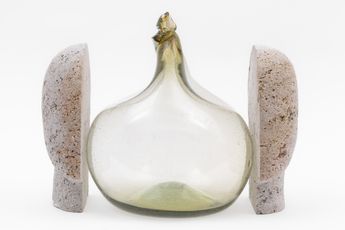
‘I often redo works because I think I need to explore more possibilities of the material,’ says Tania Pérez Córdova. The production process is central to her practice, with the materiality of each sculptural piece revealing infinite narrative possibilities.
Take We Focus on a Woman Facing Sideways (2013–2017), most recently recreated for the artist’s solo exhibition at the Museum of Contemporary Art Chicago (Smoke, nearby, 15 April–20 August 2017). Bridging a corner in the exhibition space, a slender strip of bronze held a Swarovski crystal earring. Nearby, a text read: ‘A woman is missing her left earring. It is suspended on a brass ribbon in the gallery. Until it is reunited with its mate the sculpture exists in both places simultaneously.’
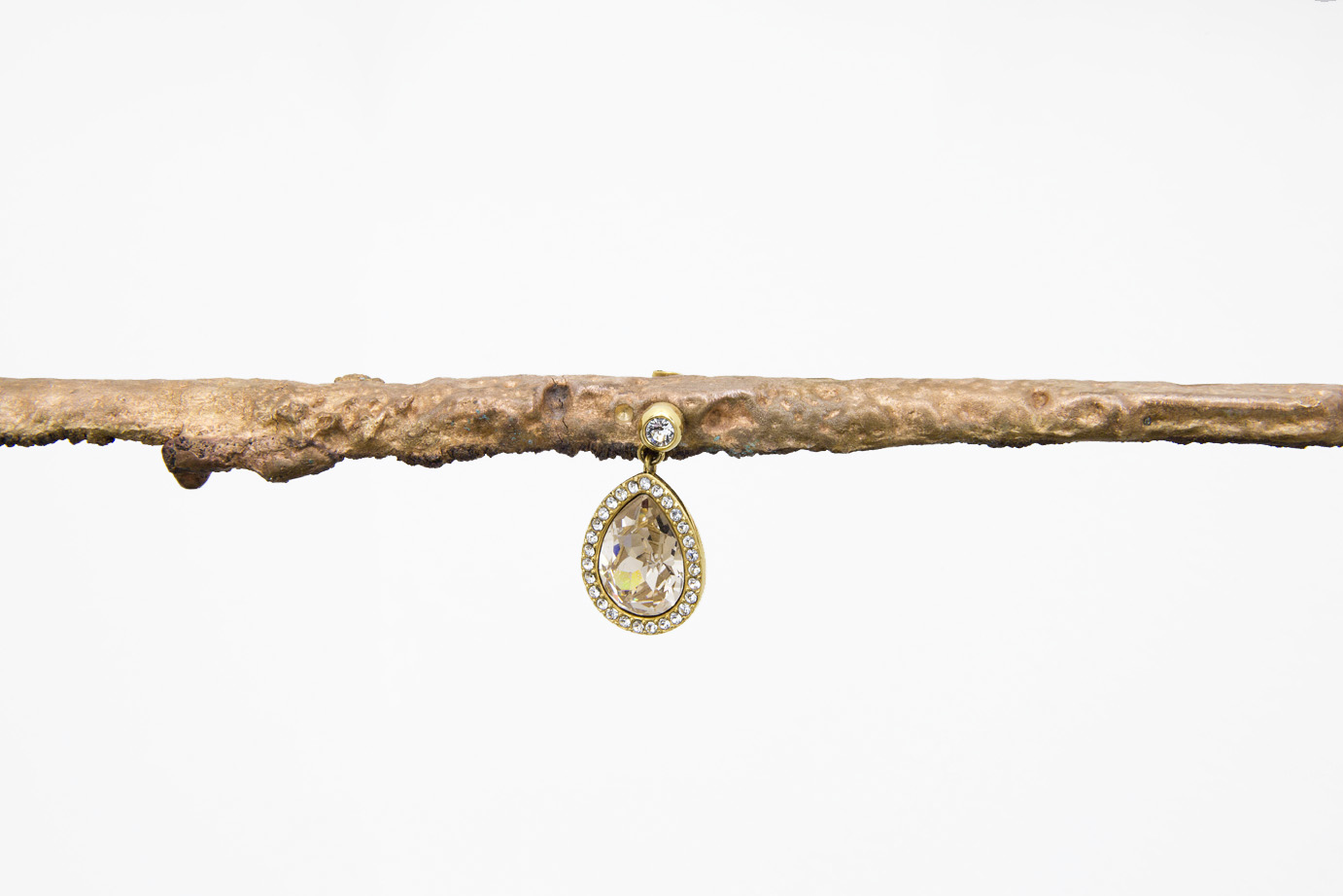
By expanding the material presence of objects—signalling their simultaneous existence elsewhere, as in the case of this work—Pérez Córdova reflects on the mutability of time.


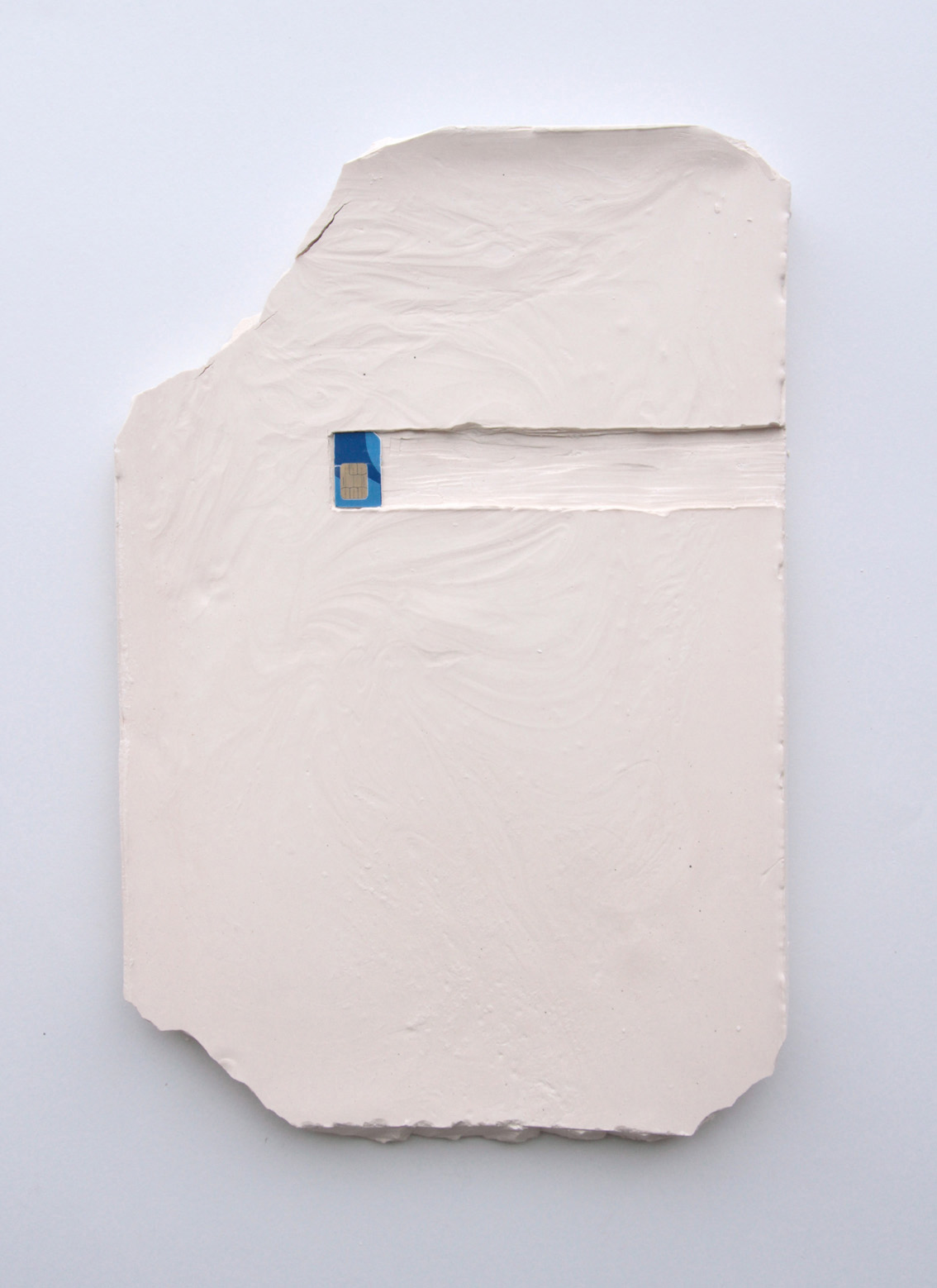
In the series ‘Things in Pause’ (2013) presented at the New Museum Triennial in 2015, the artist embedded the SIM card of a friend into a slab of porcelain. Throughout the duration of the exhibition, his calls were diverted to a temporary number. In later iterations, Pérez Córdova discovered that she was addressing other temporal dimensions as the work naturally entered the ‘electronic ageing timeline’, with the assigned space for the SIM card becoming too large.
Notions of absence and disappearance are as important to Pérez Córdova as materiality. Shown for her solo exhibition at Kunsthalle Basel in 2018 (Daylength of a room, 26 October 2018–6 January 2019), ‘Objects cast into themselves’ (2018), Pérez Córdova casts and re-casts objects so that they become frail versions of their former selves. The series began with a trumpet that she bought from a busker who passed by her house, which she then moulded and melted, bringing it further away from its original function.
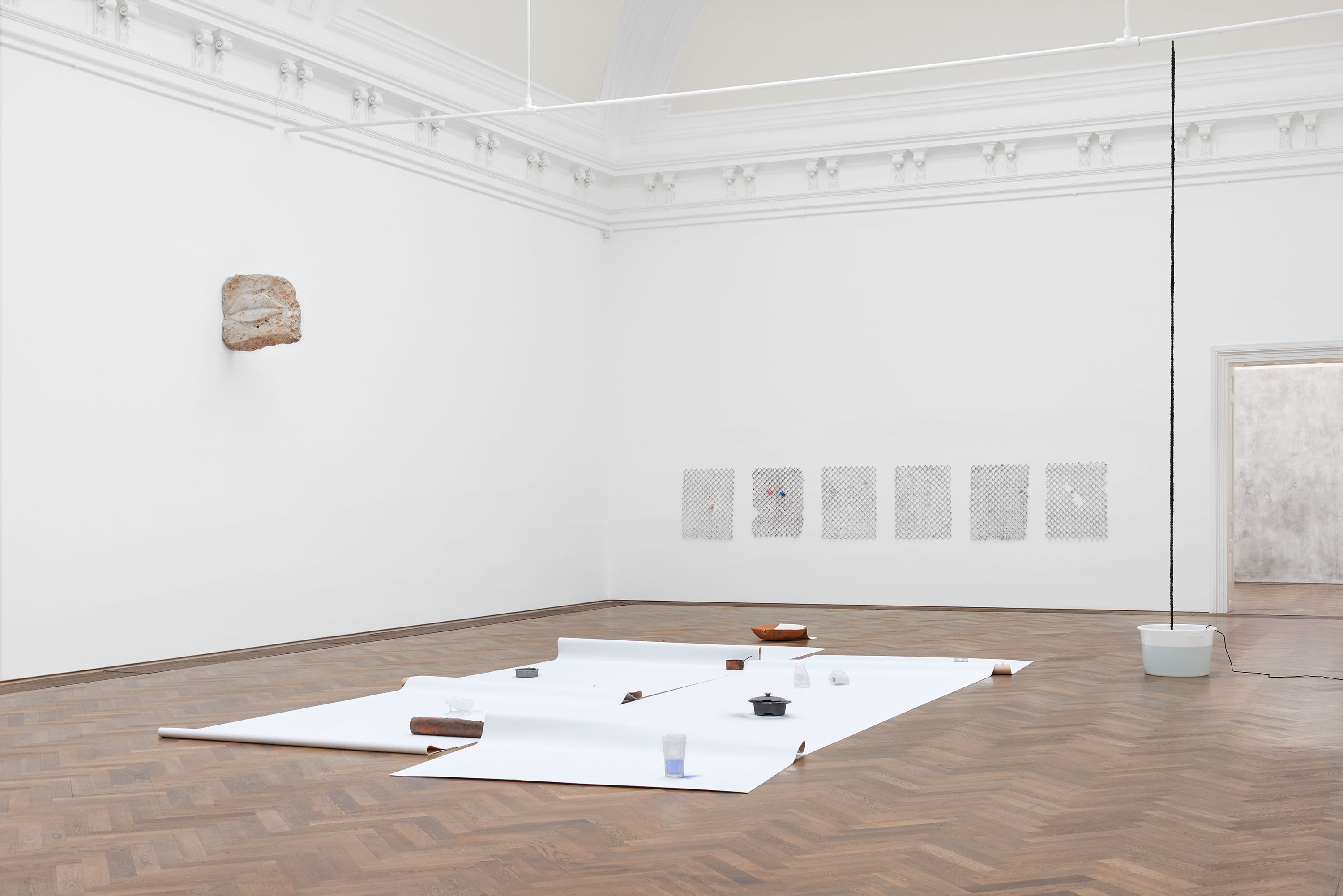
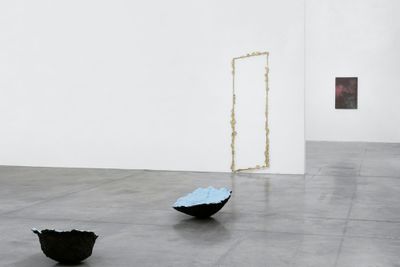
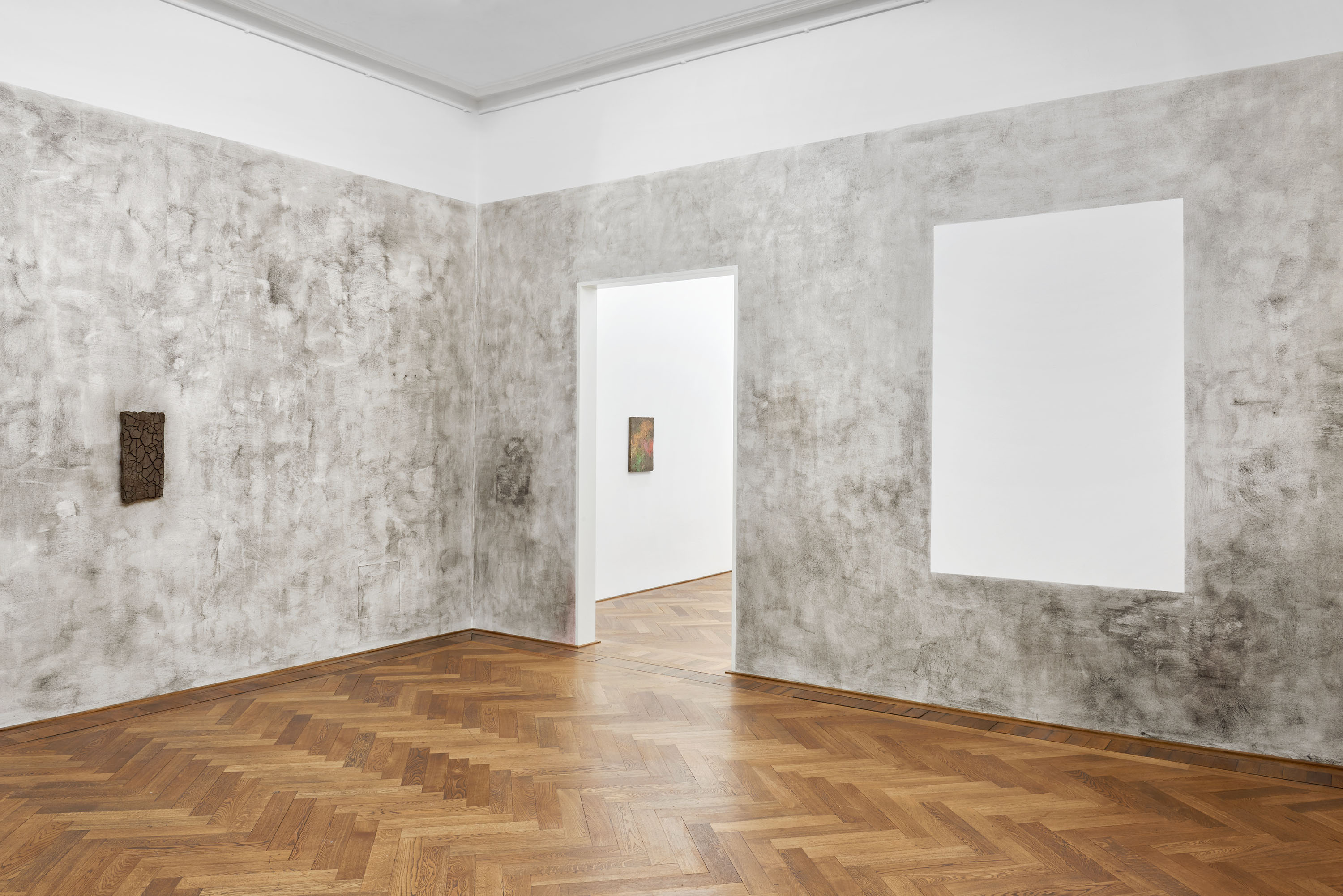
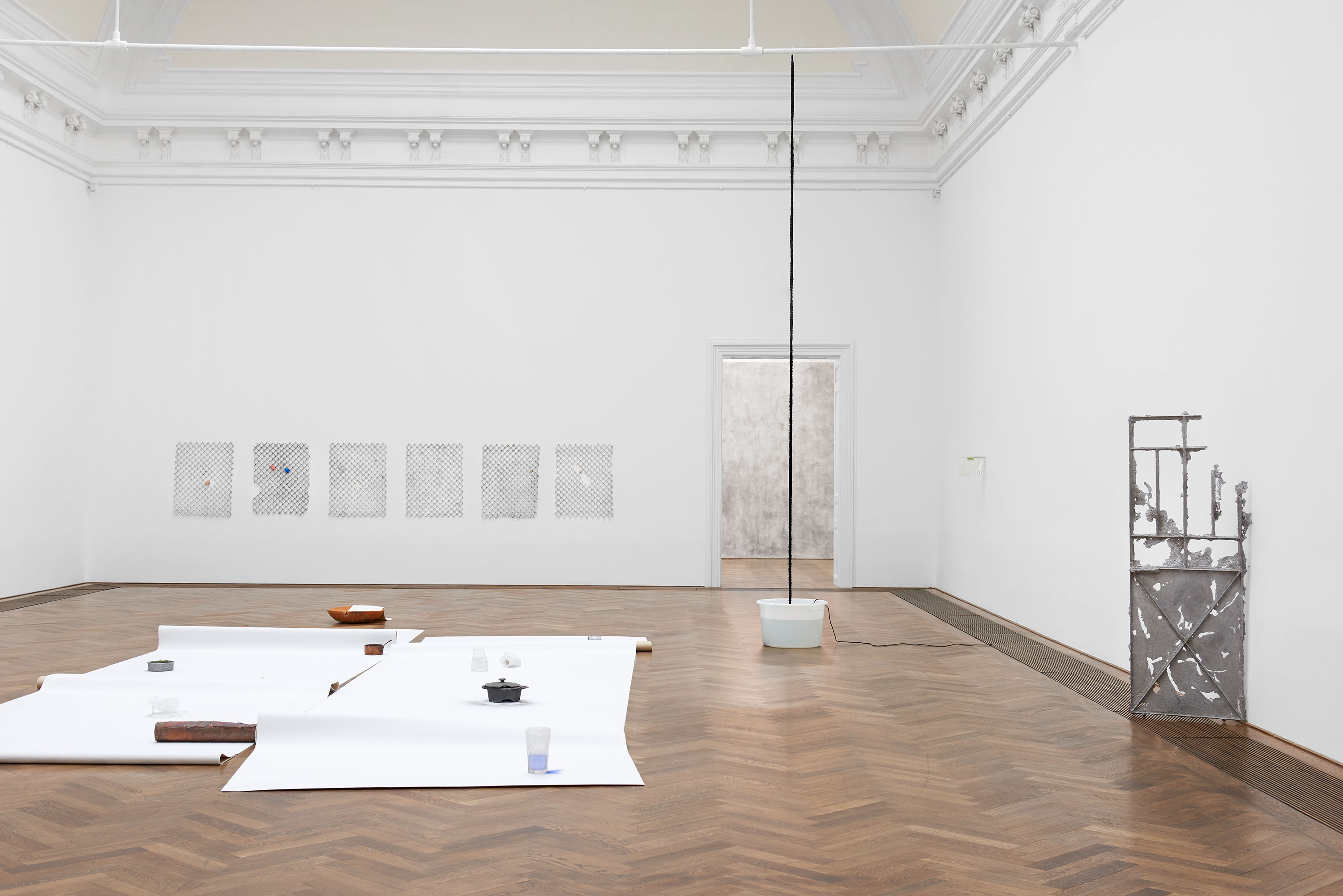
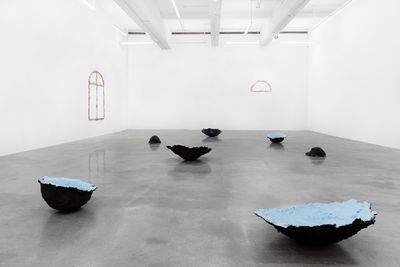
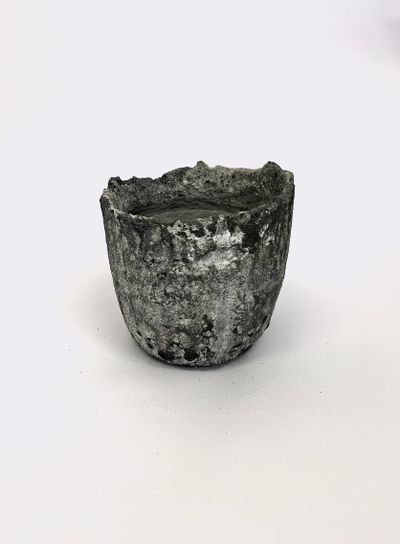
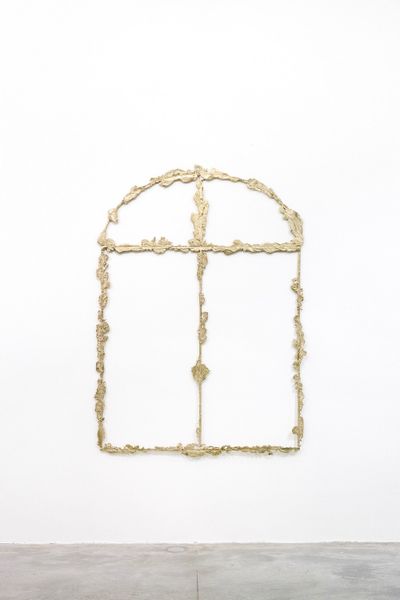
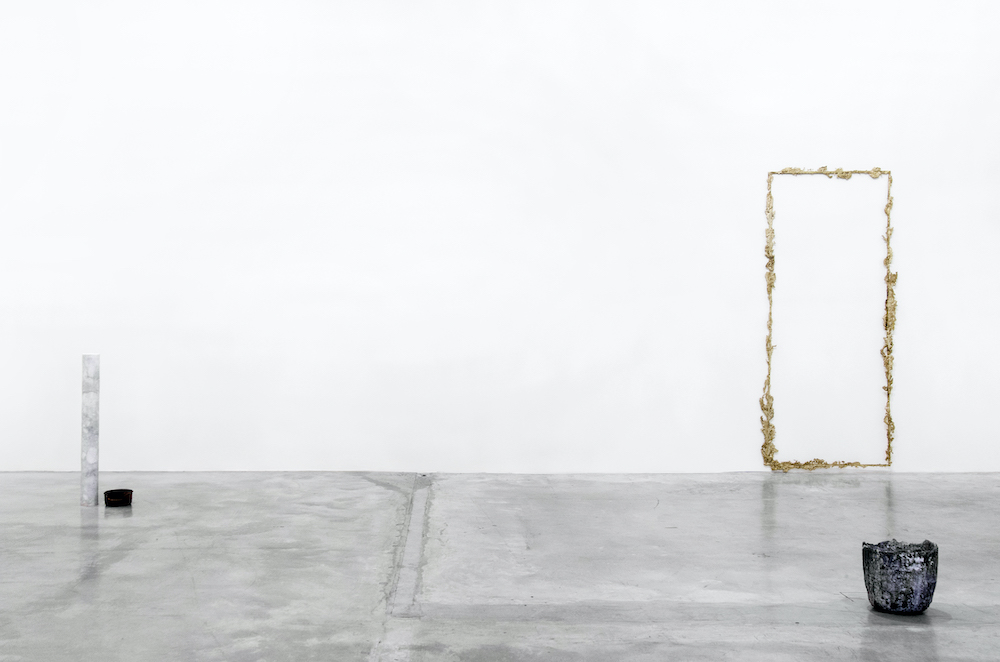
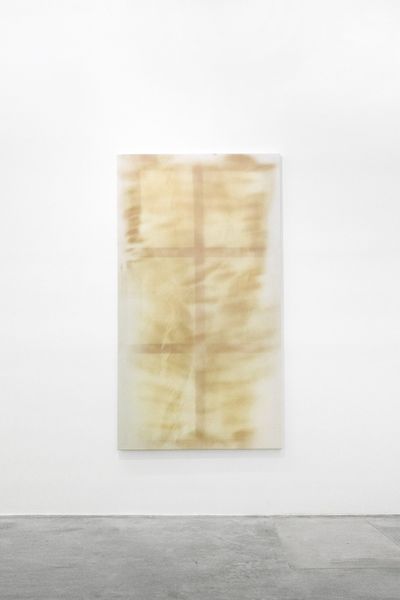
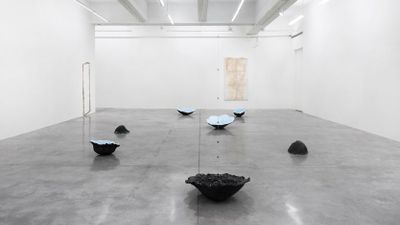
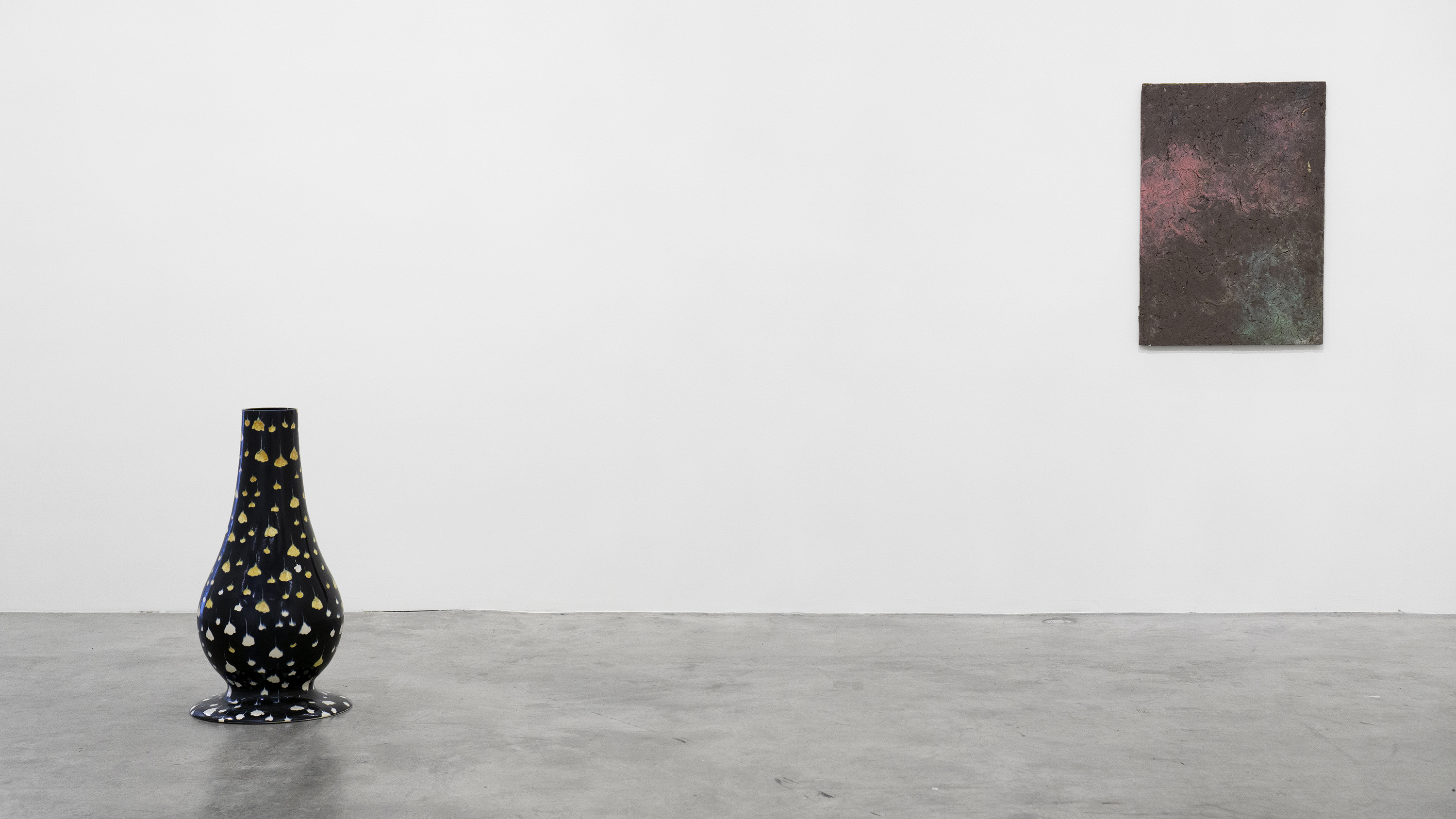
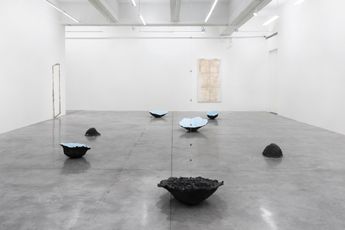
In her most recent exhibition at Tina Kim Gallery, Short Sight Box (12 September–14 November 2020), further transformations were visible in a series of contours created from windows and door frames that the artist had registered by memory. Volcanic ash, artificial tears, petrified earth, and contact lenses constituted other elements of the exhibition, which came together as a poetic ‘mood board’ inscribed in the past, present, and future.
Tania Pérez Córdova speaks about her latest exhibition in this conversation with Lauren Cornell, director of the graduate programme and chief curator at the Center for Curatorial Studies, Bard College, and a former curator at the New Museum. Cornell included Pérez Córdova in the 2015 New Museum Triennial that she co-curated with artist Ryan Trecartin.
LC: Tania, you’ve described this show as a state of mind, and it feels like that: personal, psychological, a reflective step away from our time. I wrote down some of the different materials included: contact lenses, petrified earth, artificial tears, volcanic ash—such distinct elements cohered into a consistent mood. Could you speak about the state of mind that you created here?
TPC: There is a little anecdote I’d like to tell, just to keep in the back of your mind. I read one time that somebody asked John Ashbery how he writes poetry. He said that he didn’t really have any specific methodology, but he gave this example of being in a public place and overhearing a conversation between some strangers, and then really liking a phrase, and taking that exact phrase and using it as the start of his poem.
I like to think that he never knew what that conversation was about, and those strangers never knew that a phrase of theirs was used in a poem. I like to keep this little anecdote as a backdrop.
For some time, I’ve thought of sculptures as events. I continuously ask whether an object can have a situation inscribed not just in the past, but also in the present and future.
I started describing my work as a kind of mood, because my practice is not really research-based and doesn’t really have a concrete story. What I’m interested in is creating an image through objects, through language, and through descriptions of objects. But there is nothing so specific.
If I were to find a kind of narrative form, I would say it’s more like poetry than a novel, because it’s not about anything other than a mood or a state of mind. This is obviously completely intuitive and not a conscious process.
“I’m interested in doubling, what it means culturally, and the value that we assign to these things culturally.
My work is not biographical. I usually collect phrases that I read in the newspaper. If a phrase calls my mind, I just write it down. It’s like a mood board. It’s an attempt to grasp a general state of mind, but obviously it often ends up being about me. But I guess that’s the nature of art, no?
We are all looping between the general and the personal. In trying to talk about the general, one may accidentally talk about the personal. And talking about the personal might be about the general.
LC: This body of work seems, to me, to touch on climate change—does that ring true to you? There seem to be strong aspects of loss and mourning, as reflected not only by the artificial tears and ash but, more subtly, in the hushed, evacuated nature of all the sculptures on view.
TPC:
For some time, I’ve asked myself whether it’s possible to address issues that matter to me in my works, especially when the work is so abstract by nature.
Some time ago, while watching an interview with Rugilė Barzdžiukaitė, Vaiva Grainytė, and Lina Lapelytė, the artists of the Lithuanian Pavilion at the 2019 Venice Biennale, I realised that what fascinated me most about their brilliant piece was how they managed to talk about very concrete, scientific, and extremely urgent issues by constructing an abstract image.
One of them was talking about how scientists are recovering a dying coral reef with 3D printers. Even fascinating research like this was used to build a mood. To me, this felt like opening the possibility of addressing this urgent subject from a purely domestic point of view.
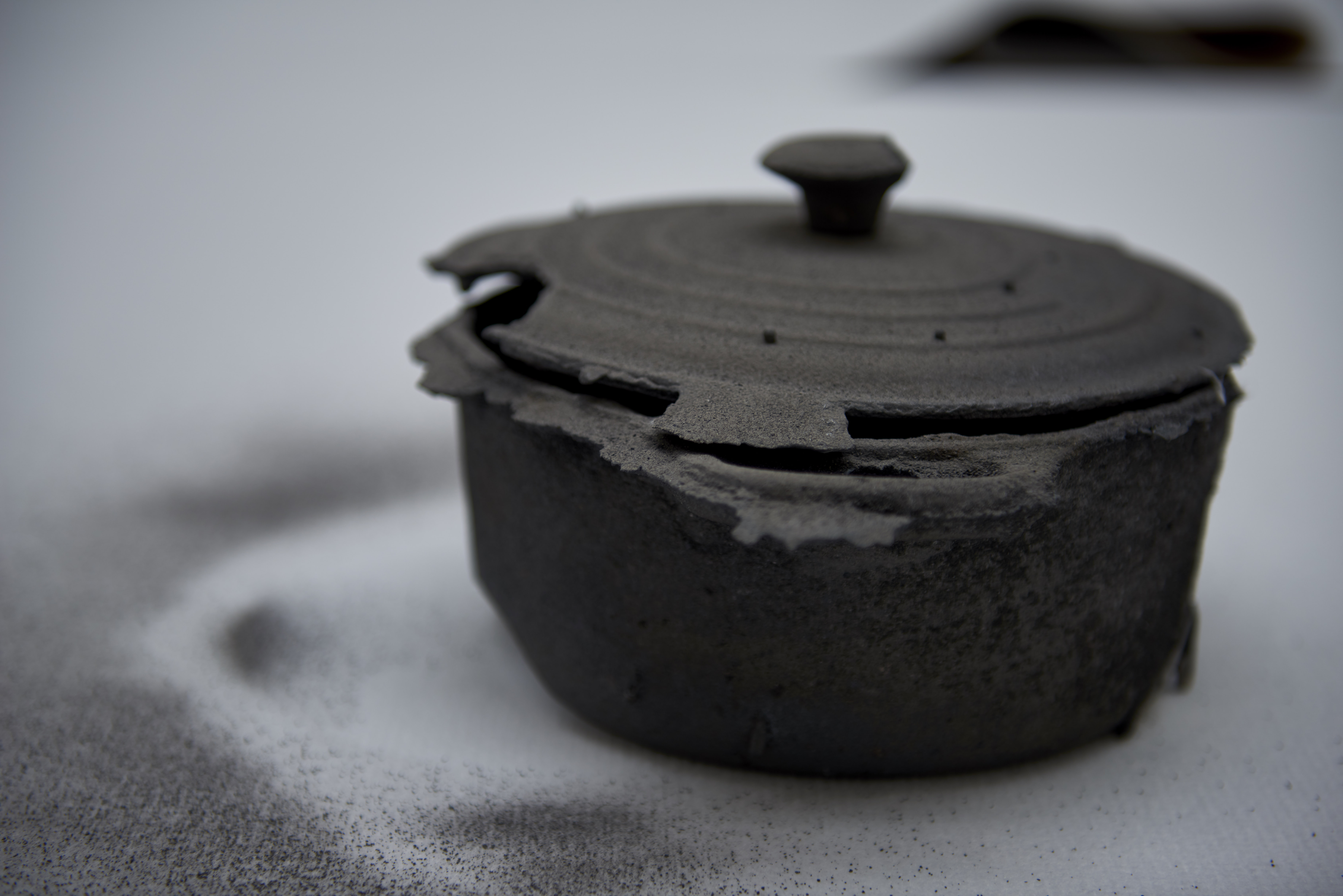
I titled Iron Rain (2020) after reading an article on the history of the climate throughout different ages of the earth and weather phenomena in other planets. In these hypothetical scenarios, there was a description of rainfall in the form of liquified metal—an image for an unreachable and uninhabitable imagined future.
I would not say that the show is about climate change specifically—I guess it’s just a mood that reflects this situation and how it is echoed in surrounding information; in anxiety.
LC: In previous works, you’ve made new objects out of existing materials, such as coins, sometimes regenerating them until they disappear. But there’s a different process in this body of work—could you speak about it?
TPC: The first time I made these works was for a group exhibition in New York at Galerie Martin Janda, curated by Magalí Arriola (A Mouse Drowned in a Honey Pot, 10 March–11 August 2014).
The show was based around a non-existent house that had a personal relation to Magalí. I remember I was given some images of this house, and these images were very personal. The photos were of a children’s party and you could see bits of the house in background.
I decided to recreate some of these contours in approximation to what these places could have been. Then I did this work a few more times. When I was planning the show for Tina Kim Gallery, I wanted to do a larger series, staging an image of domesticity that was in between being inside and outside.
The first one I did was this door, which was the memory of the entrance door of my personal home. Then a whole other series unfolded. When the confinement hit, these works had just been finished, then I thought of something else.
I don’t know if you had the same experience, but in the most extreme part of the confinement, my window view became a still image.
I remember I was once doing a residency in Scotland, and I got really claustrophobic from seeing this one mountain through the window. It was very beautiful, but I felt I couldn’t escape from it.
I thought of these contours, which became the outline of an image from which you’re unable to escape. This is just a thought I had when I was looking at a contour of my window view at home, not being able to go out, just looking at this place from a distance.
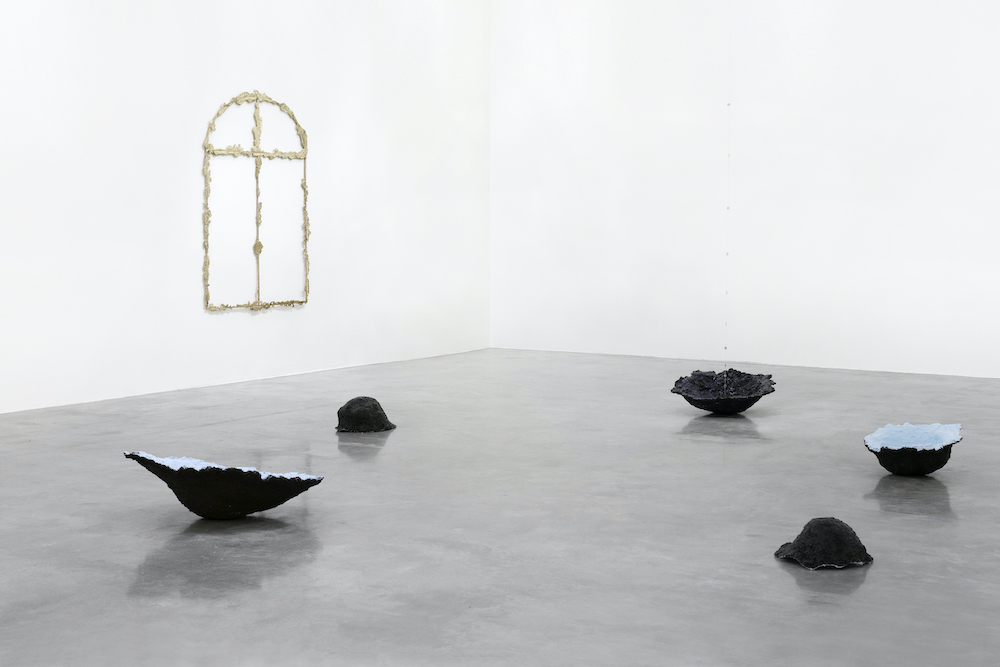
LC: Contours, yes. Here, it feels like we see contours of spaces—designations of inside and outside—within what feels like an open plane. Within a year of lockdowns, the show feels boundless to me.
I want to ask you about technique. In your previous works, there was a tendency to copy things, to renew them, or to follow their half-lives into disappearance.
Here, it feels more like you’re focused on techniques of mirroring, and doubling. Is that correct?
TPC: I thought a lot about the idea of doubling. The first thing that came to my mind was this idea that when a writer is stuck, they should just write something again and it will never happen in the same way.
I’ve been working with this translator called Kate Briggs—she wrote this amazing book called This Little Art, which considers translation as a methodology. If you translate something, it will never be the same as the original expression.
“Making objects feels a lot like fighting the idea that what you’re making needs to be preserved, like a moment frozen in time.
Often in my work, there’s also the idea of the fake and the real, which is another translation, in a way—from the original to the synthetic, for example. I’m interested in doubling, what it means culturally, and the value that we assign to these things culturally.
LC: Can I ask about your ongoing attachment to the contact lens?
TPC: Yes. The first time I used a contact lens, I was thinking of this idea of sculpture as being half of an event—a wearable object that could exist in two different locations.
I think that there’s something interesting about the idea of the contact lens as a synthetic object that refers to the idea of seeing. I often reuse materials and rethink them in different situations.
I love to think that the work is not just about the object, but about thinking of someone or being forced to see someone, which is such a strange moment. When you lock eyes with a stranger, it’s so uncomfortable and so unusual. The work almost creates that interaction with the people coming into this space.
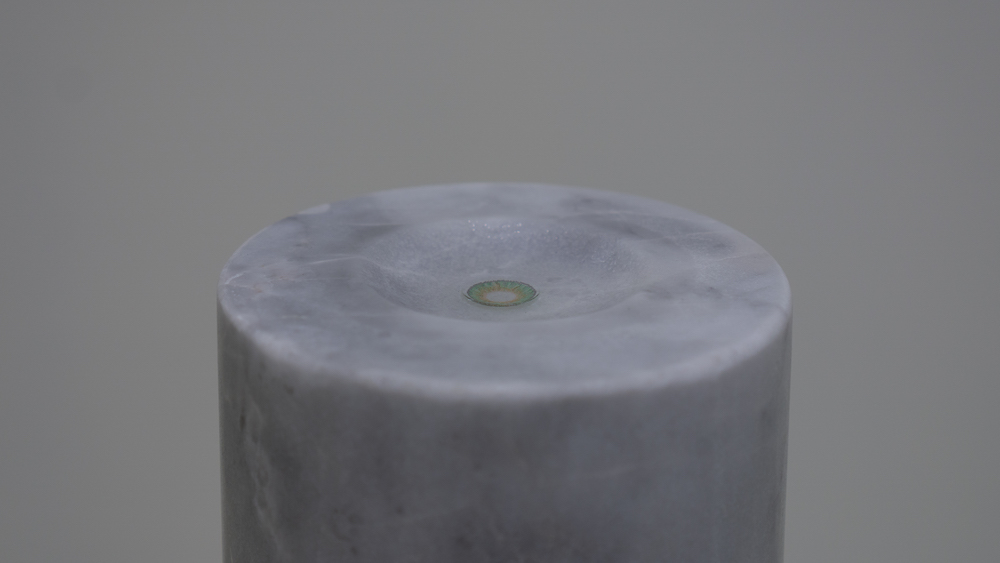
LC: When we worked together on the New Museum Triennial in 2015, we borrowed a contact lens, a SIM card, and an earring for the three different sculptures. It was quite challenging to secure them, to actually borrow them for a short time.
You mentioned that you think about your sculptures as events that pause some action happening outside of the gallery. I was struck by the semblance of a deeper pause in this show. You seem to be looking at a more tectonic shift, even though you have some short-term borrowed objects in the show. Could you speak about time as a material or a subject in this body of work?
TPC: I think what I was trying to show is that although an object might look uneventful, you can still try to think of it within the passage of time. I guess that’s what happens in everyday life. You can look at any object, and you can think about what is going to happen to it in ten years, almost through the way it exists—through its past and future.
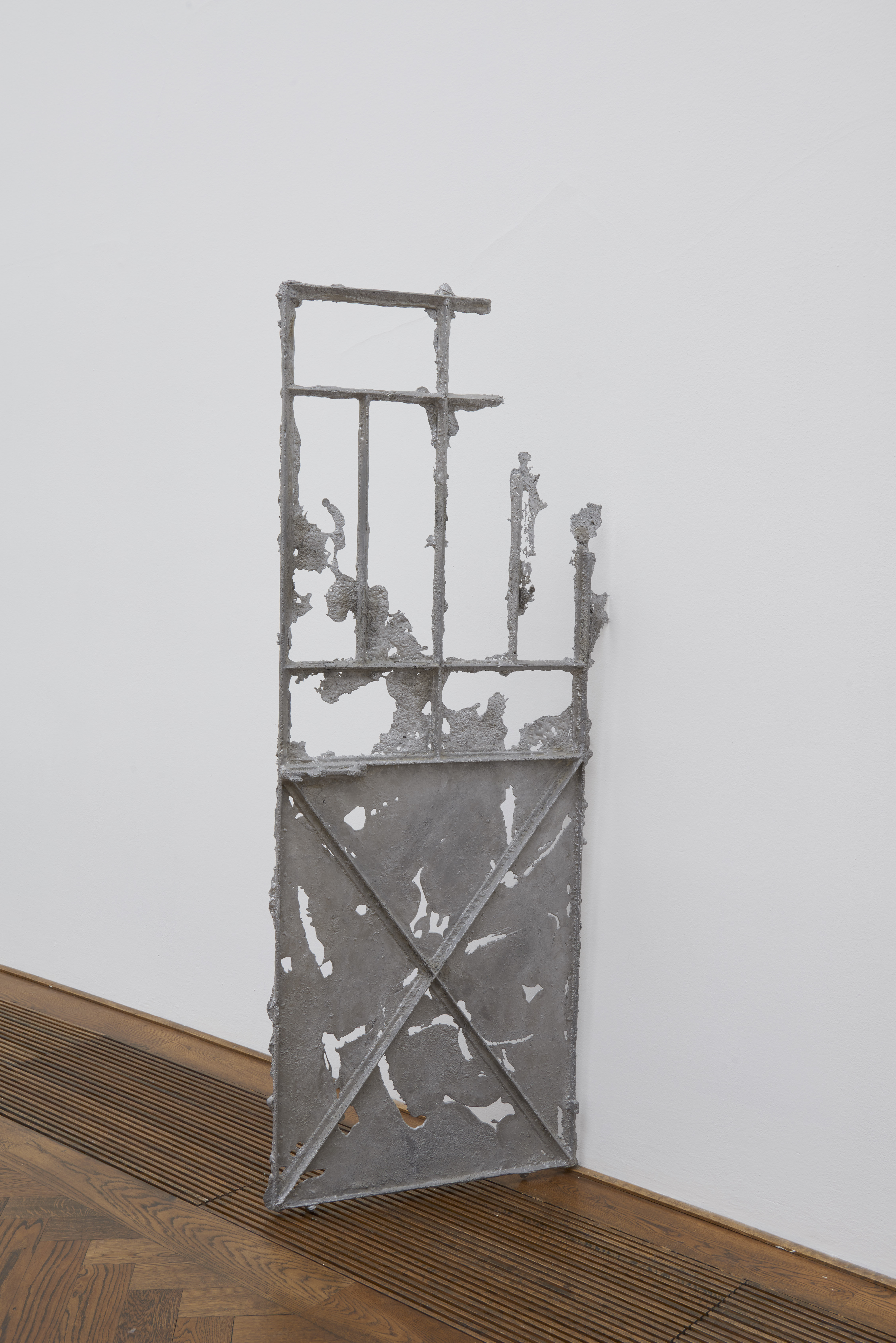
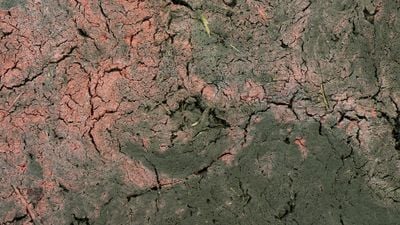
This body of work is more a way of understanding a still image as an object within a timeline. I started casting holes while I was doing a series of high reliefs in earth, a series I called ‘Handhold’ (2016). I was digging holes to gather the earth I needed and I felt the need to address the leftover as well.
I wanted to create this idea of a landscape of situations. That’s why I described elements inside the holes as situations. Each of these holes could be thought of as propositions for something.
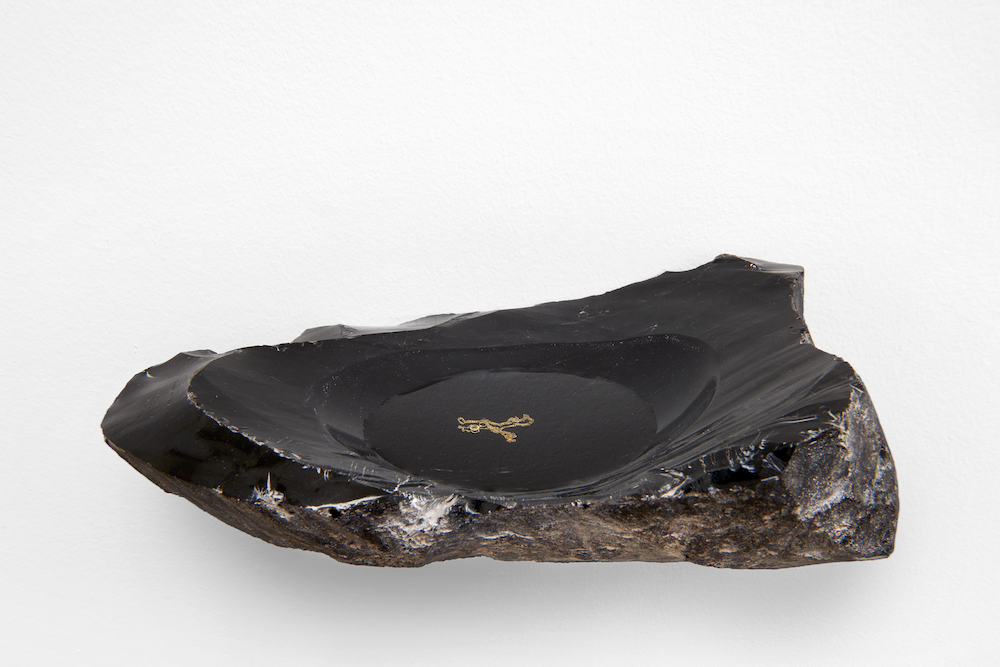
LC: Something that really strikes me about your work is that the final sculptures are often described as delicate, even kind of slight. And, I know they’re quite fragile, having installed them, yet there’s a monumental effort that goes into making and procuring materials for them. How long did it take you to make some of these? What was the process?
TPC: I feel the amateur part of the process of making the works is important. Most of the works have some accidental shape or development. It’s very difficult for me to have something made without me being there, because it’s so much about the incidental nature of arriving to things.
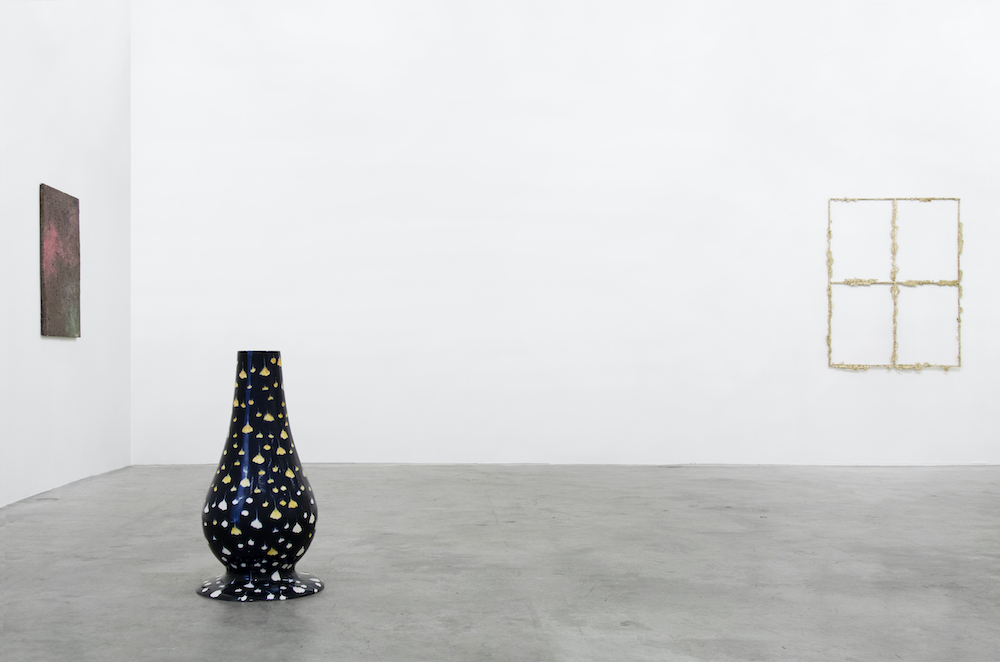
The contours were actually quite a long process. First we traced the casting and made a drawing, as you would do in the sand if you were at the beach, then we poured liquid metal, which travelled across the line. The most time-consuming bit was the pressing of the earth and preparing it for the drawing.
I often work with specialised workshops and part of the process for me has to do with renegotiating the terms of production. I prefer to make agreements in terms of time rather than results because often, what would usually be considered a mistake ends up being the object that works best for me.
LC: The audience is inquiring about value. How do you think about value in relation to your materials?
TPC: Some time ago, I bought a one-peso Mexican coin at a flea market. I paid one euro for it. It’s a small gesture, but it’s fascinating to me that over time, the symbolic value of the coin had overtaken its economic value. One euro is usually about 22 to 24 pesos.
This as a process that interests me. In that specific anecdote, it’s also interesting to think that the exchange rate of the story is impossible: one euro for one peso.
I think that the coins and the pearls and this idea of value are interesting, because it reflects how we assign meaning to things in culture. They are objects that interest me because they change and shift with time. Fake objects interest me, exactly because of how we assign value.
I had the idea that the chain in Short Sight Box – Hole A (2020) would resemble the movement of a falling a coin. It was thinking of both the image of a coin dropped for luck, or the visual idea of a falling economy.
I started working with coins while I was working with a foundry that produces little statues for a well-known Mexican film award. When I saw them casting the pieces, I realised they were adding a lot of beer cans to the mixture to economise the bronze usage. These little things—learning how something works—are fascinating to me.
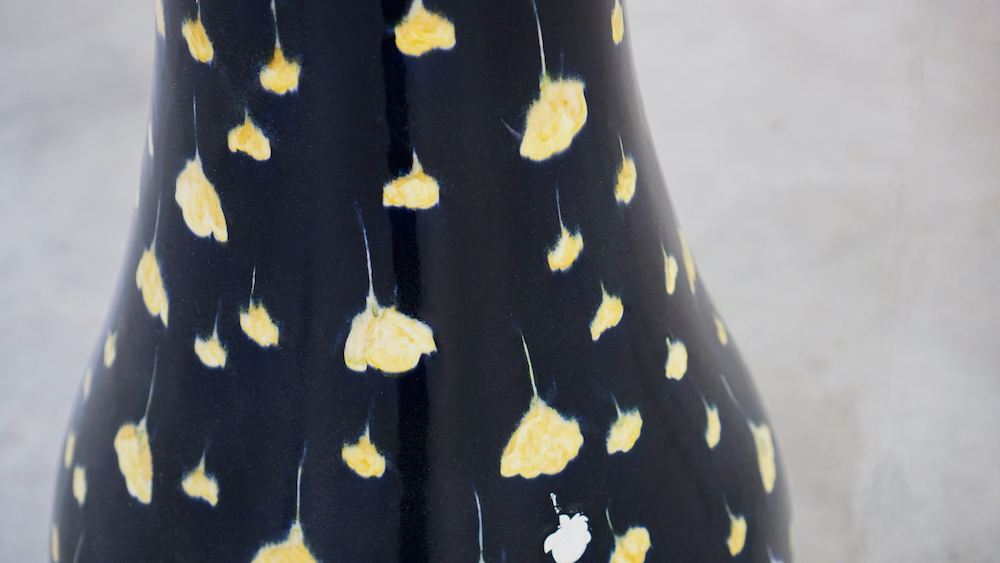
Obviously, the culture we live in is a counterfeit culture. I buy volcanic ash and I buy a necklace, they tell me it’s real, but in Mexico you never know—it could be fake. In a way, I don’t really care if they cheated me or not. I just wanted to get in situations where there is this tension, and I bring this uncertainty to the work.
When I started producing objects, I found that the objects were not sufficient as objects. I could not decide on making something just because it had a certain aesthetic. I needed more from it to be exciting to me.
In a way it’s the narrative that excites me. The narrative that I could either inscribe or uncover. That’s why I think of things as embedded in a timeline, as it allows for them to be expanded further.
Maybe it’s a way to think of the present as moving or attempt to put it in motion. Making objects feels a lot like fighting the idea that what you’re making needs to be preserved, like a moment frozen in time.
LC: Could you talk about the conservation of these objects? In a way, the process of maintaining them involves marking time, too—for example, in having to replace the contact lens liquid when it evaporates.
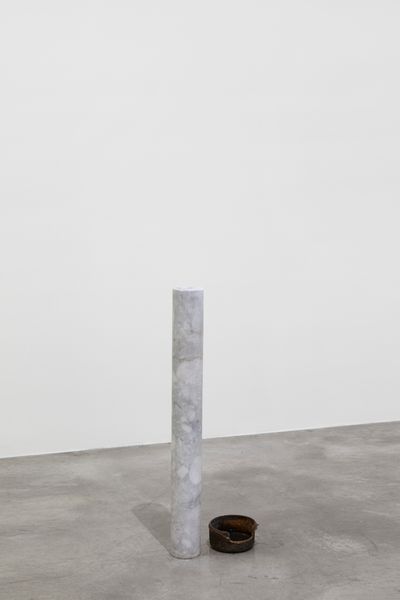
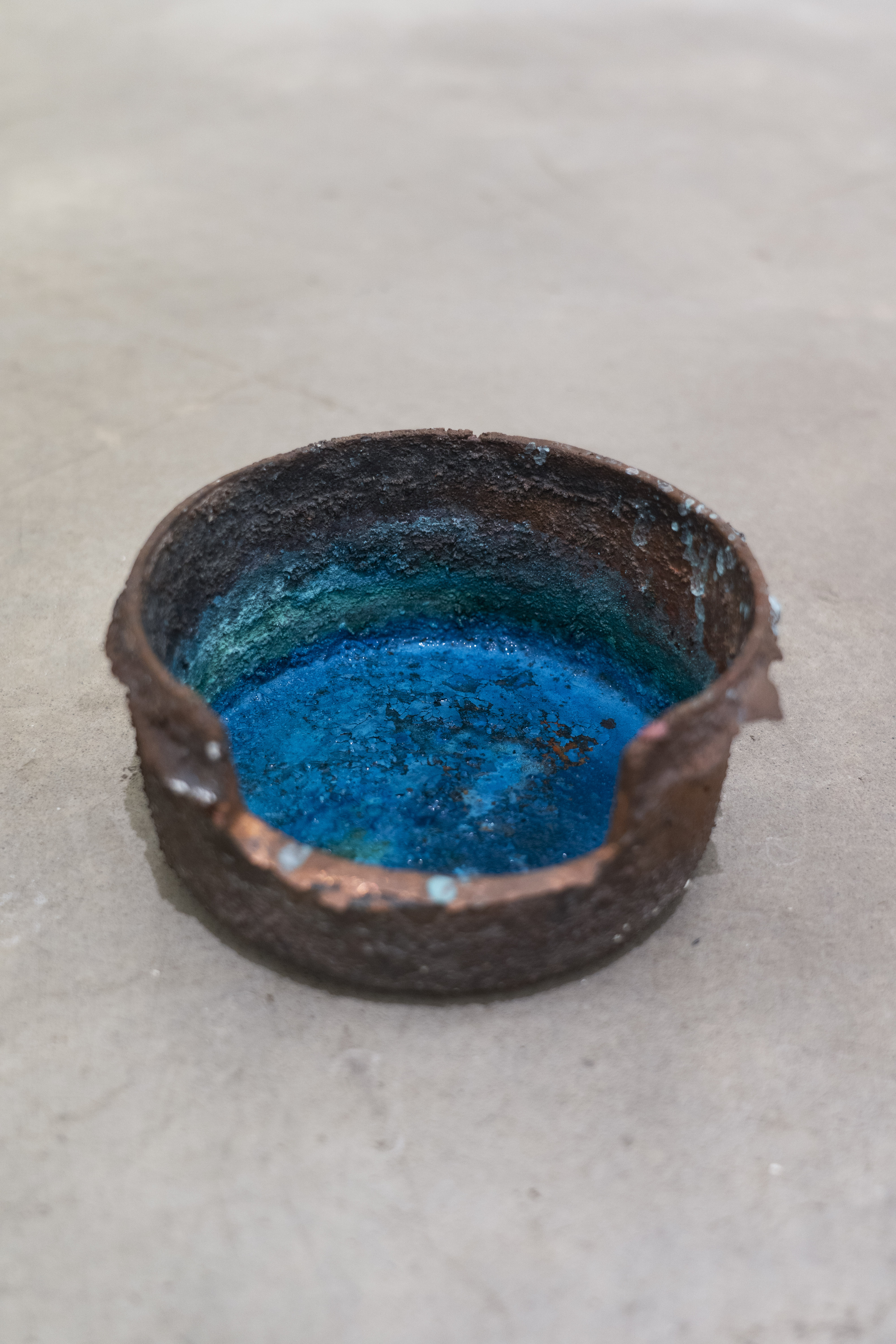
TPC: Yes, it’s also something that happens without me planning it. One day, Katherine [Lauricella] called me to say the pot in To wink, to cry (2020) was rusting and I got so excited. I didn’t think these artificial tears would make it change so fast, and it felt to me that this transformation was necessarily part of the work.
It’s also a way to make the works more active—to have things happening rather than things just being.—[O]
Main image: Tania Pérez Córdova. Photo: Mauricio Guillén.





A respected voice in contemporary art discourse.
Focusing on ambitious storytelling and insightful art-world commentary. Ocula Magazine publishes in-depth interviews, critical essays and timely analysis on the artists, exhibitions and ideas driving the global art world.
Learn more about Ocula Magazine
Showcasing the best of the art world.
Ocula partners with galleries from around the world to highlight their artists, artworks and exhibitions. Gallery membership is by application and invitation, with each member vetted by an independent panel.
Learn more about Ocula Membership
Specialises in the sale of major artworks.
Led by a team with deep ties to the world’s leading auction houses, galleries and collectors. Ocula’s advisory team offers bespoke services to high-net-worth clients from around the world who are looking to acquire the best of contemporary and modern art.
Learn more about our team and services