






Royal Academy Announces Michael Craig-Martin Retrospective

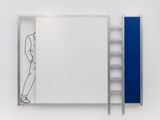
Michael Craig-Martin, Common History: Conference (1999). Acrylic on aluminium, 274.3 x 508 cm. © Michael Craig-Martin. Courtesy Gagosian.

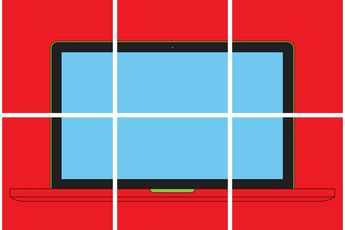
London‘s Royal Academy of Arts will present a major retrospective of works by Michael Craig-Martin, the Irish-born artist who studied at Yale before developing his practice in London, where he also taught at Goldsmiths from 1973 to 1988.
The exhibition will feature over 120 works created from the 1960s onwards from 21 September to 10 December.
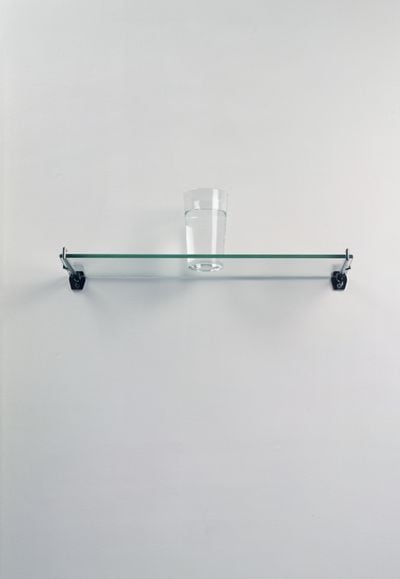
Among them is one of Craig-Martin’s most famous and divisive creations, An Oak Tree (1973). The work is a glass of water mounted on a glass shelf 253 centimetres above the ground. Likened to the Catholic notion of transubstantiation, it draws attention to the faith (or delusion) shared by an artist and a viewer when they imagine a representation to be the thing itself—something René Magritte acknowledged with Ceci n’est pas une pipe (1929)—or in Craig-Martin’s work, something else entirely.
Hilariously, when Australian customs officials denied the artwork entry, classifying it as vegetation, Craig-Martin had to break faith and admit it wasn’t really an oak tree but a glass of water.
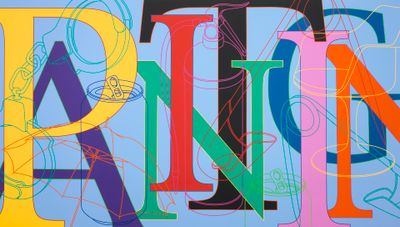
The exhibition will also include tape drawings he showed at MoMA in 1991, the large colourful line paintings of everyday items such as Macbooks and coffee cups for which he is best known, and word paintings, which draw attention to illustrations and text as rival systems of meaning.
When I interviewed Craig-Martin in China in 2015, I asked him how his line paintings differed from similar styles of drawing seen in, for instance, instruction booklets, logos, and app icons.
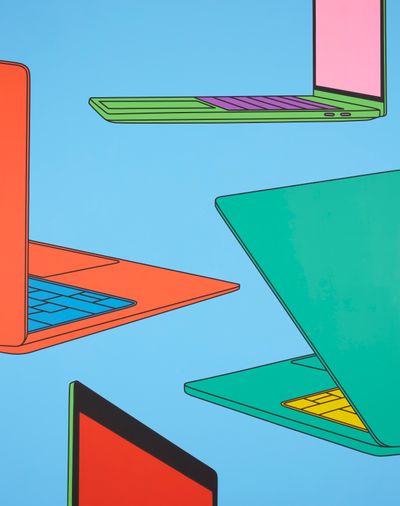
‘From the beginning I wanted to have precise, accurate drawings that would have the same character as the fabricated objects I was drawing,’ he said. ‘I assumed they existed in mainstream culture and was very surprised to discover they didn’t, which is why I started to make them myself.’
‘I want my drawings to seem so obvious they “disappear” leaving only the object,’ he continued. ‘I sought originally to make drawings that were styleless, but ironically they are now recognisable as my style.’ —[O]
Main image: Michael Craig-Martin, Common History: Conference (1999). Acrylic on aluminium, 274.3 x 508 cm. © Michael Craig-Martin. Courtesy Gagosian.



A respected voice in contemporary art discourse.
Focusing on ambitious storytelling and insightful art-world commentary. Ocula Magazine publishes in-depth interviews, critical essays and timely analysis on the artists, exhibitions and ideas driving the global art world.
Learn more about Ocula Magazine
Showcasing the best of the art world.
Ocula partners with galleries from around the world to highlight their artists, artworks and exhibitions. Gallery membership is by application and invitation, with each member vetted by an independent panel.
Learn more about Ocula Membership
Specialises in the sale of major artworks.
Led by a team with deep ties to the world’s leading auction houses, galleries and collectors. Ocula’s advisory team offers bespoke services to high-net-worth clients from around the world who are looking to acquire the best of contemporary and modern art.
Learn more about our team and services