Timothy Taylor is delighted to announce Painting the Essential: New York, 1980-Present, the second exhibition in the gallery’s expanded program of online viewing rooms organised by special guest curators.
Focusing on a group of artists who lived and worked in downtown Manhattan and Brooklyn in the 1980s, Painting the Essential: New York, 1980-Present is curated by American painter Chris Martin (b. 1954), who came of age as an artist in the vibrant and eclectic New York art scene of this period. Reuniting Martin’s friends, collaborators, and influences, the exhibition foregrounds the ways in which the defining political, social and artistic developments of the decade—the shock and devastation of the AIDS crisis, the battle between abstraction and figuration, the lasting effects of the psychedelic counterculture and the rise of the yuppie boom—shaped the artists’ ensuing lives and work.
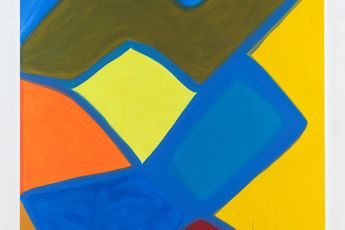
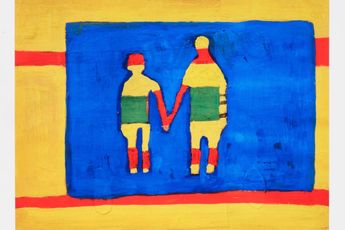
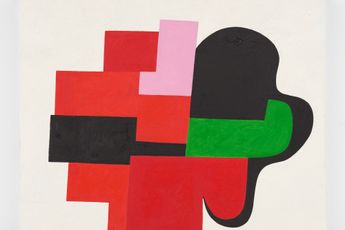
The exhibition features works by Peter Acheson, Marina Adams, Katherine Bradford, Rick Briggs, Ron Gorchov, Bill Jensen, Jonathan Lasker, Margrit Lewczuk, Chris Martin, Andrew Masullo, Tom Nozkowski, Joyce Pensato, Amy Sillman, Fred Tomaselli, and Stanley Whitney, artists united by their exuberant use of colour, focus on process and intuition, and an inventive approach to different forms of media. Reflecting the maximalist zeitgeist of the decade, many of these artists fused the lessons of Abstract Expressionism with figurative imagery, references to pop culture, and fragments of text—a thread this exhibition traces with works from the 80s to today.
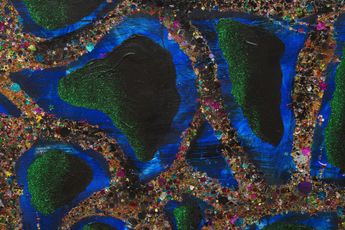
At a time when visual discourse was dominated by artistic dogmas such as Minimalism and Conceptualism, Martin and his friends struggled to find a way around the strictures that defined abstraction and formalism as the finish line of American art history. Informed by their discovery of irreverent German conceptualists such as Sigmar Polke, Martin and his friends moved away from the cool and analytical prevailing creeds and embraced a more intuitive, encyclopaedic way of working. Martin and the artists in his circle began to experiment with nontraditional materials, such as aluminium foil and glitter, blur the line between abstraction and figuration in their work, and to elide conventional distinctions between pop culture and ‘high’ art in favour of a radically all-inclusive approach—methods that formed the foundation for their mature styles into the present day.
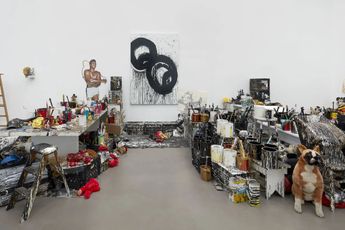
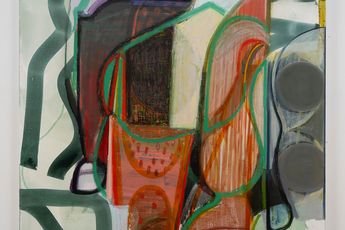
The nascent artist community of Williamsburg, Brooklyn, then considered peripheral to the art world, offered Martin and his peers a space in which to experiment, explore and collaborate outside of the public eye. He shared a loft with artist Katherine Bradford (b. 1942), who began painting luminous scenes of the subconscious, abandoning pure abstraction for a more emotional fusion of abstraction and figuration. Rick Briggs (b. 1954) spent twenty years as an abstract painter before producing his darkly comic narrative paintings, which blend autobiographical elements and borrowed media imagery, and Amy Sillman (b. 1955) moved from figuration to visually lush, gestural abstract paintings. Fred Tomaselli (b. 1956) created pharmaceutical pill-studded assemblages from a vast array of found materials and book or magazine fragments, resulting in extraordinarily detailed mosaics that echoed the ancient, even as they synthesized the American countercultural movement. Embracing figuration and pop culture simultaneously, Joyce Pensato (1941–2019) turned from Abstract Expressionist-style gesturalism to dark and emotionally ambiguous interpretations of cartoon characters.
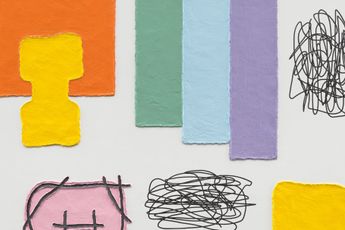
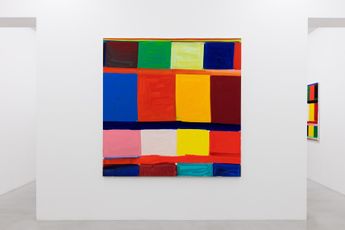
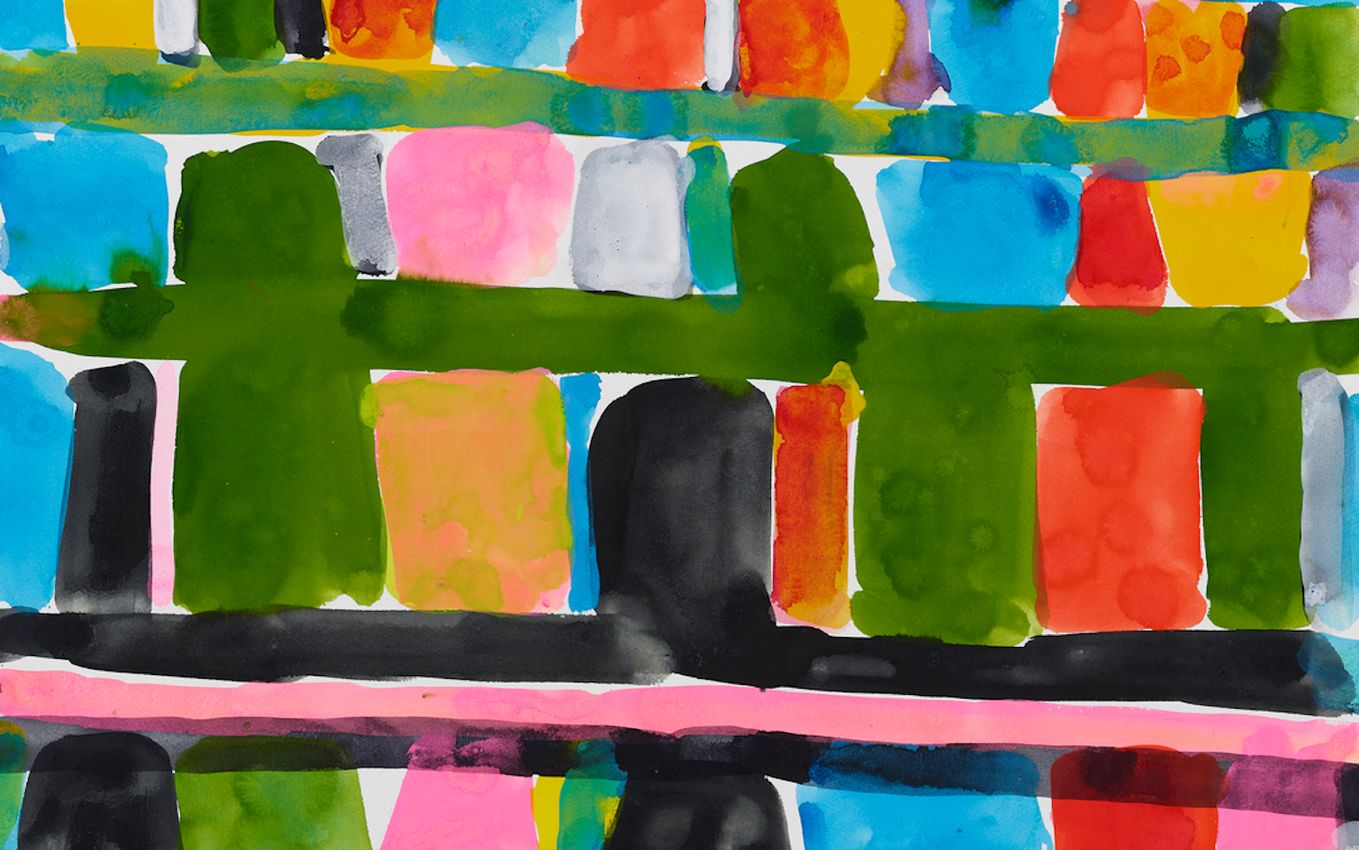
In their search for a more intuitive form of art beyond academic strictures, Martin and his circle looked to older ‘painter’s painters’ whom they admired as sources of inspiration, such as Ron Gorchov, Tom Nozkowski, and Bill Jensen. Jensen (b. 1945) developed tactile, deeply saturated paintings, featuring biomorphic shapes and thick brushstrokes in shadowy spaces. Margrit Lewsczuk (b. 1952) drew upon the vibrant colours and shifting patterns of ancient Aztec art and Mexican social realism in creating her ethereal, phosphorescent paintings, which balance the organic and the geometric. Stanley Whitney (b. 1946) devised his signature gridded structures in sensual colours and irregular patterns, evocative of the improvisational quality of jazz music. Jonathan Lasker (b. 1948) continues to explore the marriage of pure abstraction and cryptic real-world metaphor in his cerebral paintings, which juxtapose lines with squiggles, doodles and zig-zags reminiscent of hieroglyphics under thick layers of impasto.
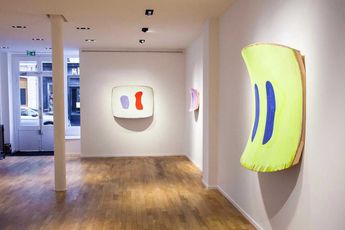
Nozkowksi (1944–2019) painted small, richly-hued abstractions, blending dreamlike references to the organic and the geometric with fragments of his own experiences and memories. Influenced by the expressive surrealism of Arshile Gorky, as well as explorations of sublime colour in the works of colour field painters such as Mark Rothko, Ron Gorchov (b. 1930) began his lifelong series of saddle paintings in lyrical washes of pigment, evoking the Greek shields of the ancient world. His focus on deep, layered panels of colour, and his ability to distill gesture without eliminating imagery, inspired younger generations of artists from the 1980s to the present, including Martin, Adams and Masullo. Working in the tradition of biomorphic abstraction that emerged in the mid-80s, Marina Adams (b. 1960) paints vibrant, organic abstract forms, imbuing gestural brushstrokes with a bold rhythm.
This artistic community was vital for the creative development of this group of painters. ‘I was lucky to be in Brooklyn in the golden age. It meant that there was a group of people who were their own audience, cheering each other on,’ remembers Martin. ’‘Trust yourself’—as a young artist the word trust is so important, because you want to be able to check in with yourself and your intuition and feelings, and trust that, try that. And we shared that interest. Everybody was discovering. We were showing but we were not famous. There’s a freedom of not being in the public eye, only showing to your peers. We were absorbing all of the wonderful paintings out there like sponges, able to just take them in without the pressure of sticking to a single-brand outlook. . . . There are moments in these countercultures: things peak and flower, and then, almost by necessity, they change.’
A respected voice in contemporary art discourse.
Focusing on ambitious storytelling and insightful art-world commentary. Ocula Magazine publishes in-depth interviews, critical essays and timely analysis on the artists, exhibitions and ideas driving the global art world.
Learn more about Ocula Magazine
Showcasing the best of the art world.
Ocula partners with galleries from around the world to highlight their artists, artworks and exhibitions. Gallery membership is by application and invitation, with each member vetted by an independent panel.
Learn more about Ocula Membership

Specialises in the sale of major artworks.
Led by a team with deep ties to the world’s leading auction houses, galleries and collectors. Ocula’s advisory team offers bespoke services to high-net-worth clients from around the world who are looking to acquire the best of contemporary and modern art.
Learn more about our team and services