






TONY OURSLER
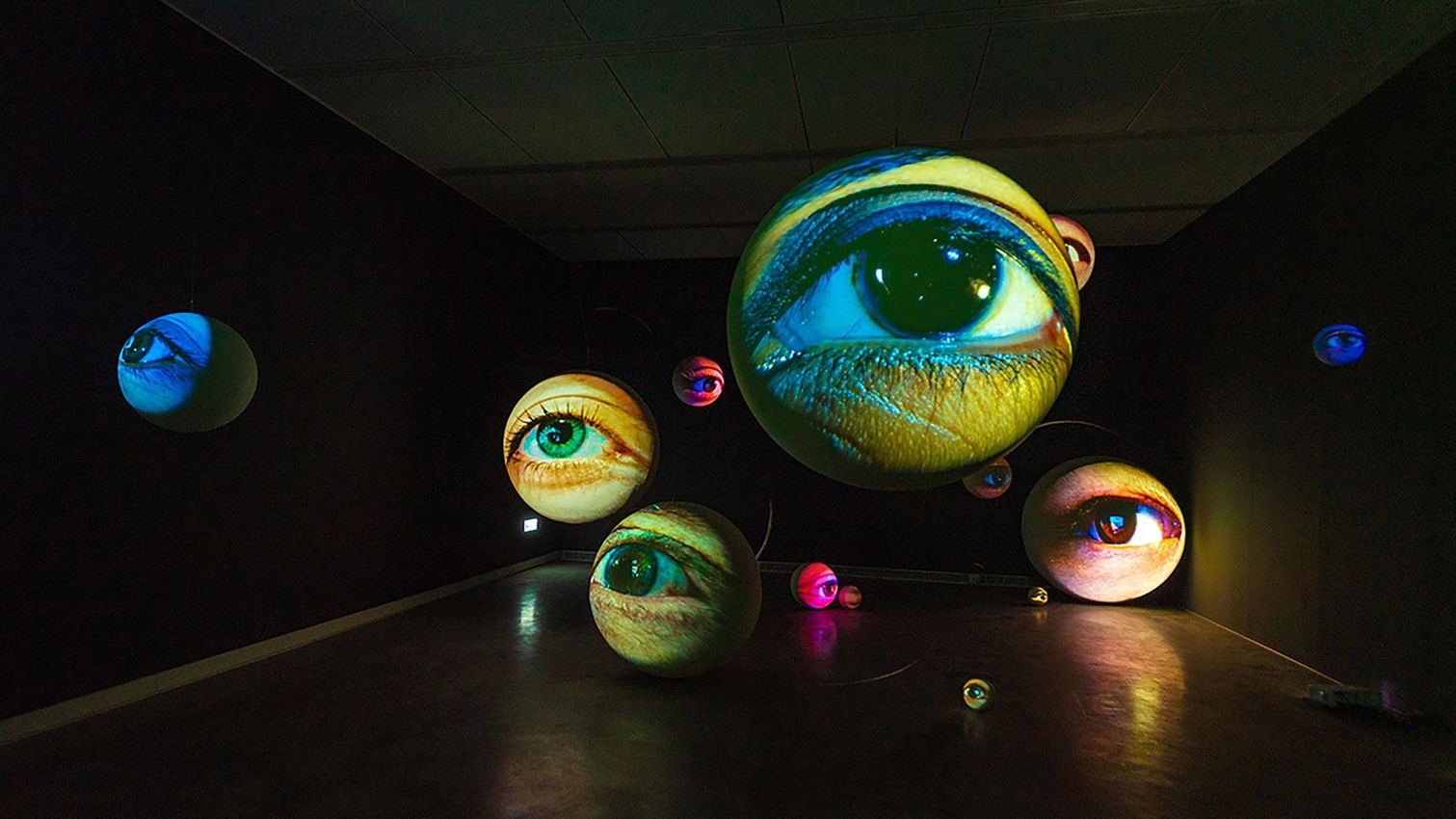
b. 1957, United StatesAmerican artist Tony Oursler has been compared to a circus showman. It is not difficult to imagine Oursler as a ringleader of an orphic recital; known for his twisted and ethereal combinations of sculpture, film and technology.
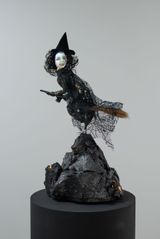
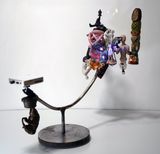
His practice has incorporated projections, smoke, puppets, video screens and automatons to examine themes such as UFOs, magic, séances, pseudoscience, camera obscura and mass media. In his Manhattan studio is a collection of over 15,000 objects, publications and ephemera related to the paranormal and uncanny—an accumulation that has fed his hallucinogenic practice. Over the past 40 years, Oursler has become recognised for his inventive works exploring the intersection of technology and the occult.
Tony Oursler earned a BFA from the California Institute of the Arts in the late 1970s, where John Baldessari and Laurie Anderson were teachers and his peers included artists Mike Kelley, Jim Shaw, Sue Williams and Stephen Prina. He returned to New York after graduating, and his first handmade videos incorporated intricate sets, soundtracks and DIY special effects—works for which he is now considered a pioneer of video art. Formative installations from the 1980s experimented with distorting video images with reflections in mirrors, water and glass in dark rooms.
Tony Oursler’s early popularity was in part due to the fact he was picked up by Electronic Arts Intermix, a non-profit resource for video and media art. In the late 1980s, Oursler began incorporating social critiques into his works, touching on political and cultural violence, mass media and alienation. In the 1990s, he started to project disembodied facial features onto bizarre surfaces including fabric and smoke. The works were accompanied by layered recordings of voices reciting poetic, irreverent and sometimes nonsensical phrases written by Oursler–his ‘sound collage’ technique developed into a mainstay of his practice. His works over the next two decades experimented with the possibilities of video sculpture and psychodramatic technological theatre, all the while pointing at the ephemerality of the virtual image.
Tony Oursler’s artwork has been exhibited extensively in solo and group exhibitions around the world including at the Centre Pompidou in Paris, Tate Liverpool, documenta 8 in Kassel and The Museum of Contemporary Art, Los Angeles. In 2016, Tony Oursler’s Imponderable (2015–16) was exhibited at The Museum of Modern Art, New York; the feature-length film told an alternate history of technology by delving into the artist’s own archive of objects related to the paranormal. Oursler called the work a ‘5-D’ film as an array of sensory effects such as aromas, vibrations and a 19th-century phantasmagorical device made the experience dramatically immersive.
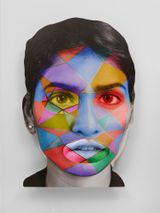
Harking back to the bodiless facial features of the 1990s, more recently Tony Oursler’s art (as seen in his 2016 exhibition PriV%te at Lehmann Maupin) has stemmed from his interest in the pervasiveness of facial recognition technology. LCD screens or iPads are embedded within large, aluminium head-shaped structures and show ultra high-definition moving eyes and mouths accompanied by sound collages, making the actors within seem trapped between technology and real life. Algorithmic points are plotted around the faces, as if recording them in real time. ‘Portraiture today’, Oursler has said, ‘is no longer a chiaroscuro painting or photographic mug shot.’ Instead, according to Tony Oursler, portraiture is comprised of the ubiquity of data collected of our beings without our express knowledge or consent: ‘It’s changed the way we think about ourselves’.
Elliat Albrecht | Ocula | 2018


View Tony Oursler's Artworks
















Explore and Follow Artists Shaping Contemporary Art
A respected voice in contemporary art discourse.
Focusing on ambitious storytelling and insightful art-world commentary. Ocula Magazine publishes in-depth interviews, critical essays and timely analysis on the artists, exhibitions and ideas driving the global art world.
Learn more about Ocula Magazine
Showcasing the best of the art world.
Ocula partners with galleries from around the world to highlight their artists, artworks and exhibitions. Gallery membership is by application and invitation, with each member vetted by an independent panel.
Learn more about Ocula Membership
Specialises in the sale of major artworks.
Led by a team with deep ties to the world’s leading auction houses, galleries and collectors. Ocula’s advisory team offers bespoke services to high-net-worth clients from around the world who are looking to acquire the best of contemporary and modern art.
Learn more about our team and services