Lehmann Maupin presents mAcHiNe E.L.F., an exhibition of new work by Tony Oursler. Based in New York City, Oursler has been a pioneering figure in new media since the 1970s. Over the last four decades, Oursler has explored popular culture through a diverse combination of multimedia projects, immersive environments, expansive outdoor installations, and dynamic dolls, ghosts, and bots that liberate video from its traditional two-dimensional format and bring it into the realm of sculpture. Often taking the human form, especially the face, as his subject, Oursler examines psychological states, the interaction between technological progress and society, and the history of science, pseudoscience, spiritualism, and religion.
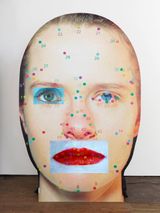
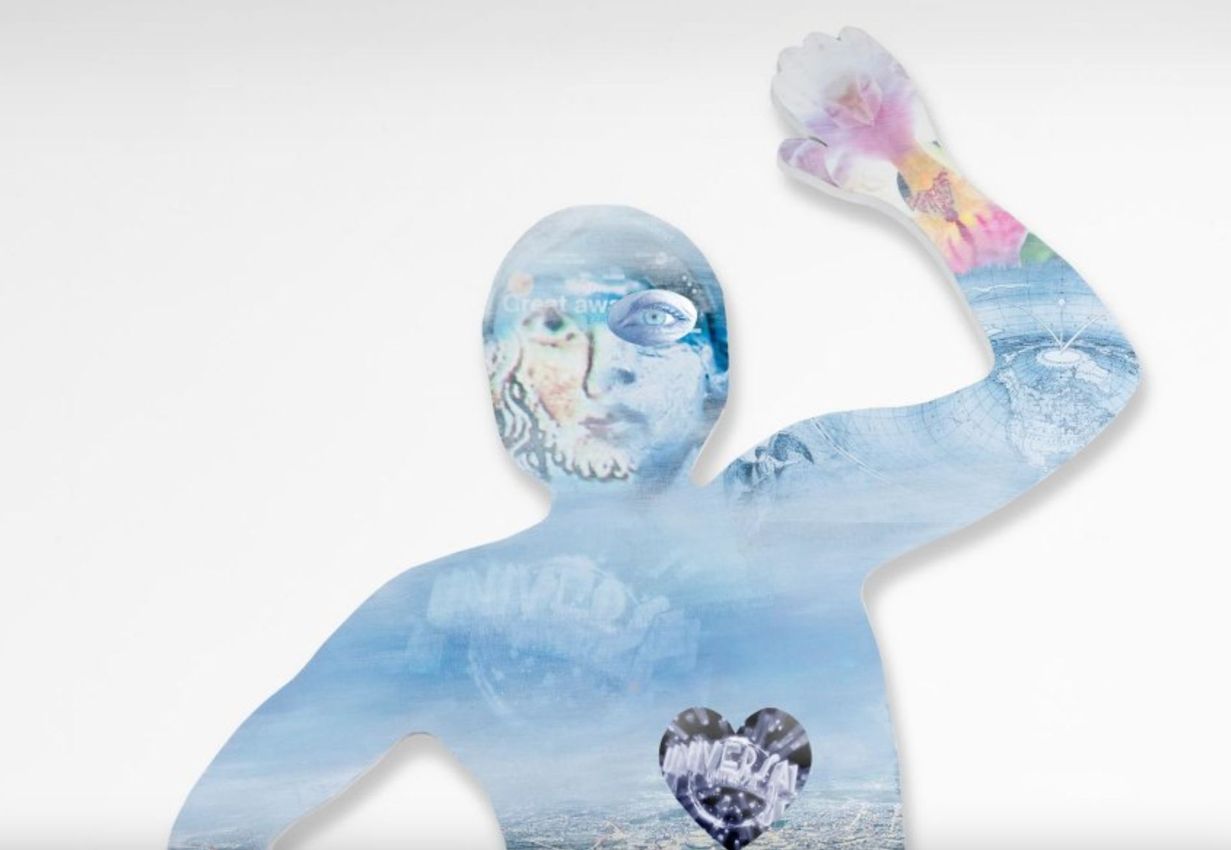
For his latest exhibition the artist has created a series of “electrified” silhouettes that feature painted and printed collages interspersed with embedded digital displays, as well as an immersive, large-scale installation of optical crystal structures that act as reflecting screens for a kaleidoscopic digital projection of otherworldly performers and hand drawn and AI-generated animations.
Using the classic form of the silhouette, the mirror-printed panels in _mAcHiNe E.L.F. _contend with alternative contemporary worldviews—from Luddites and technophobes burning 5G towers to utopian dreams of cold fusion, moon landing hoaxes, and nautical equator crossing rituals. Each work invites the viewer to contemplate the visual culture of science and magical thinking, and Ourlser identifies a creative space between scientific inquiry and occult belief where new paradigms can be generated, but where the risk of conspiracy theorising is high. Across each collaged panel, the artist embeds iconography from conflicting conspiracies, environmental concerns, and subcultures—including in one instance the United Nations emblem, which is believed by some to contain a hidden version of the flat earth map. These ‘easter eggs’ are identifiable by in-the-know viewers and simultaneously reflect the belief that a deeper truth is hidden just beneath the veneer of the conventional world.
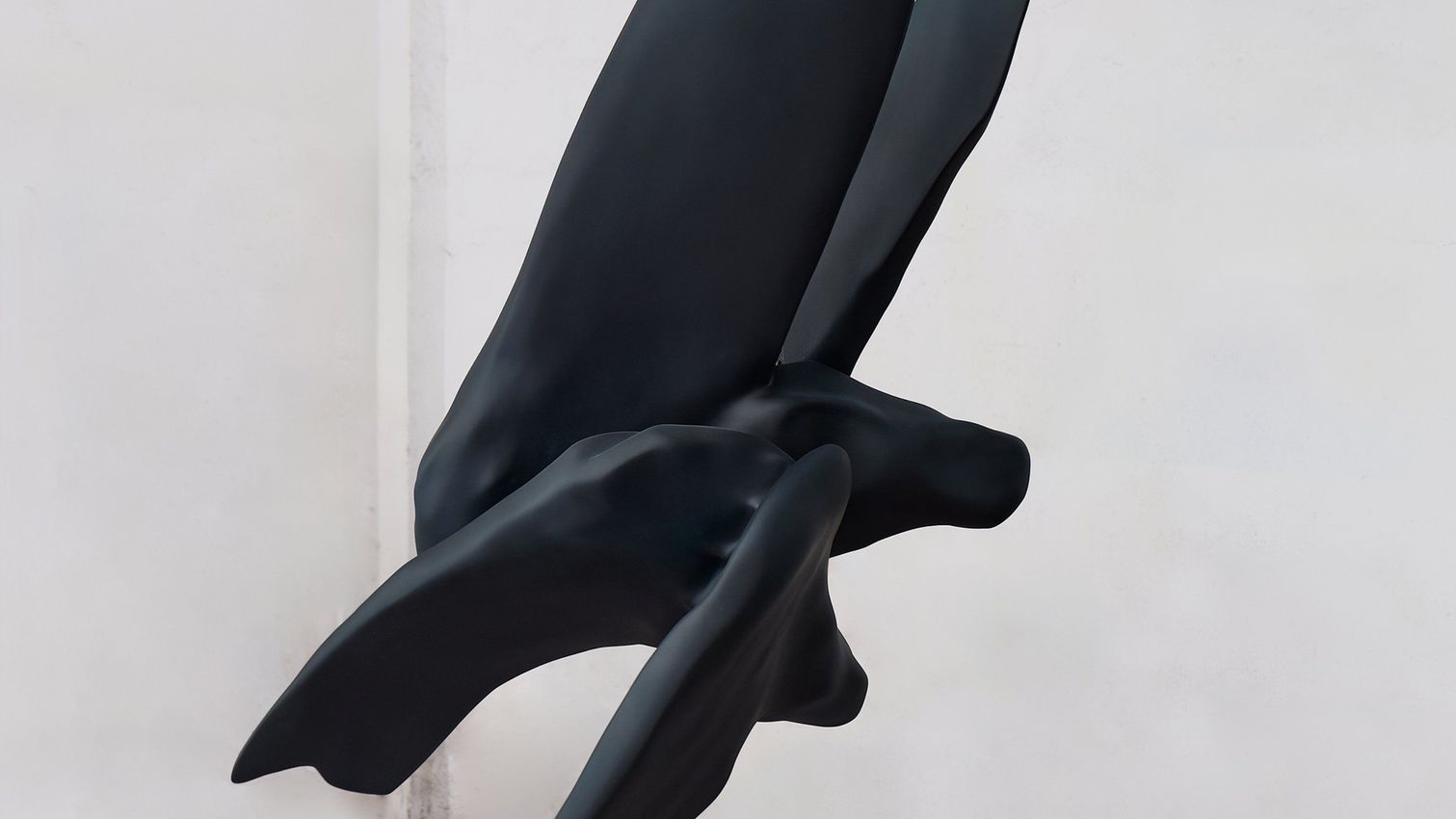
In the second gallery, Oursler has created a large-scale installation inspired by the seven fundamental crystal structures that occur in nature. For the artist, these geometric forms contain two coexisting extremes: hard science and the mythic. In telecommunications and electronic circuitry, crystals are prized for their resonant quality, which allows them to synchronise signals with a high degree of accuracy. When used in mobile phones and computer CPUs, these organic structures coordinate timing, functioning as the ‘heartbeat’ of modern technology. Crystals are also valued for their aesthetic and pseudoscientific properties, which some believe to have healing effects. In New Age discourse, different types of crystals are assigned particular psycho-spiritual or protective properties, and are thought to carry specific energies that can be amplified by exposure to the light of the full moon.
In mAcHiNe E.L.F. (2023) Oursler assimilates all of these references into one of his classic immersive environments. The large-scale crystal forest reflects whirling digital video imagery from an overhead projection, and the structures incorporate various transparent materials, such as shaped mirrors and dichotic refraction screens, which amplify and colorise the images depending on the viewer’s perspective. For this piece, Oursler worked with a large cast of characters, many of whom are longtime collaborators—artists and performers include Constance DeJong, Jim Fletcher, Jason Scott Henderson, and Katiana Rangel. Combining new and archival footage with interventions from AI technology, he explores a series of poetically associated themes in the work, including the digital sublime, melting ice, four-dimensional creatures, extremely low frequencies (ELF), 5G technology, intragroup dynamics, near death experiences, DMT, and Photo 51.
Across the exhibition, Oursler examines how as the average person becomes more distant from highly specialised scientific understanding, science is increasingly translated into myth by the general public. At the same time, he recognises that the development of rationalism and rise in scientific thought has resulted in a process of societal disenchantment and a decline in spirituality. The artist draws inspiration from this paradox, which he describes as ‘the current re-enchantment of America,’ and in this newest body of work Oursler aims to pull back the veil—revealing the science behind the spectacle while acknowledging space for the mystical beyond the edge of human knowledge.
Tony Oursler (b. 1957, New York; lives and works in New York) is best known for his innovative integration of video, sculpture, and performance. While studying at the California Institute of Arts, Oursler was influenced by John Baldessari, who taught him, Mike Kelly, John Miller, and Jim Shaw the importance of the narrative potential of images and the associative power of language. A pioneering figure in new media since the 1970s, Oursler has since explored diverse methods of incorporating video into his practice, breaking video art out of the two-dimensional screen to create moving three-dimensional environments with the use of projections. At the centre of Oursler’s practice is this persisting preoccupation with technology and it’s effect on humanity. In his immersive installations he presents a dissonance of moving image and sound that seeks to disorient and disarm viewers. His videos often take as their subject the human face, fragmenting and distorting its physiognomy, and thus the legibility of expression, by projecting it onto inanimate objects or embedding it into his sculptures. With these video-sculptures Oursler explores the role that the rapid growth of technology plays in altering, and often inhibiting, human social behaviour.


Rachel Lehmann and David Maupin founded Lehmann Maupin in 1996. The gallery represents a diverse range of American artists, as well as artists and estates from across Europe, Asia, Africa, South America, and the Middle East. It has been instrumental in introducing numerous artists from around the world in their first New York exhibitions.

A respected voice in contemporary art discourse.
Focusing on ambitious storytelling and insightful art-world commentary. Ocula Magazine publishes in-depth interviews, critical essays and timely analysis on the artists, exhibitions and ideas driving the global art world.
Learn more about Ocula Magazine
Showcasing the best of the art world.
Ocula partners with galleries from around the world to highlight their artists, artworks and exhibitions. Gallery membership is by application and invitation, with each member vetted by an independent panel.
Learn more about Ocula Membership

Specialises in the sale of major artworks.
Led by a team with deep ties to the world’s leading auction houses, galleries and collectors. Ocula’s advisory team offers bespoke services to high-net-worth clients from around the world who are looking to acquire the best of contemporary and modern art.
Learn more about our team and services