






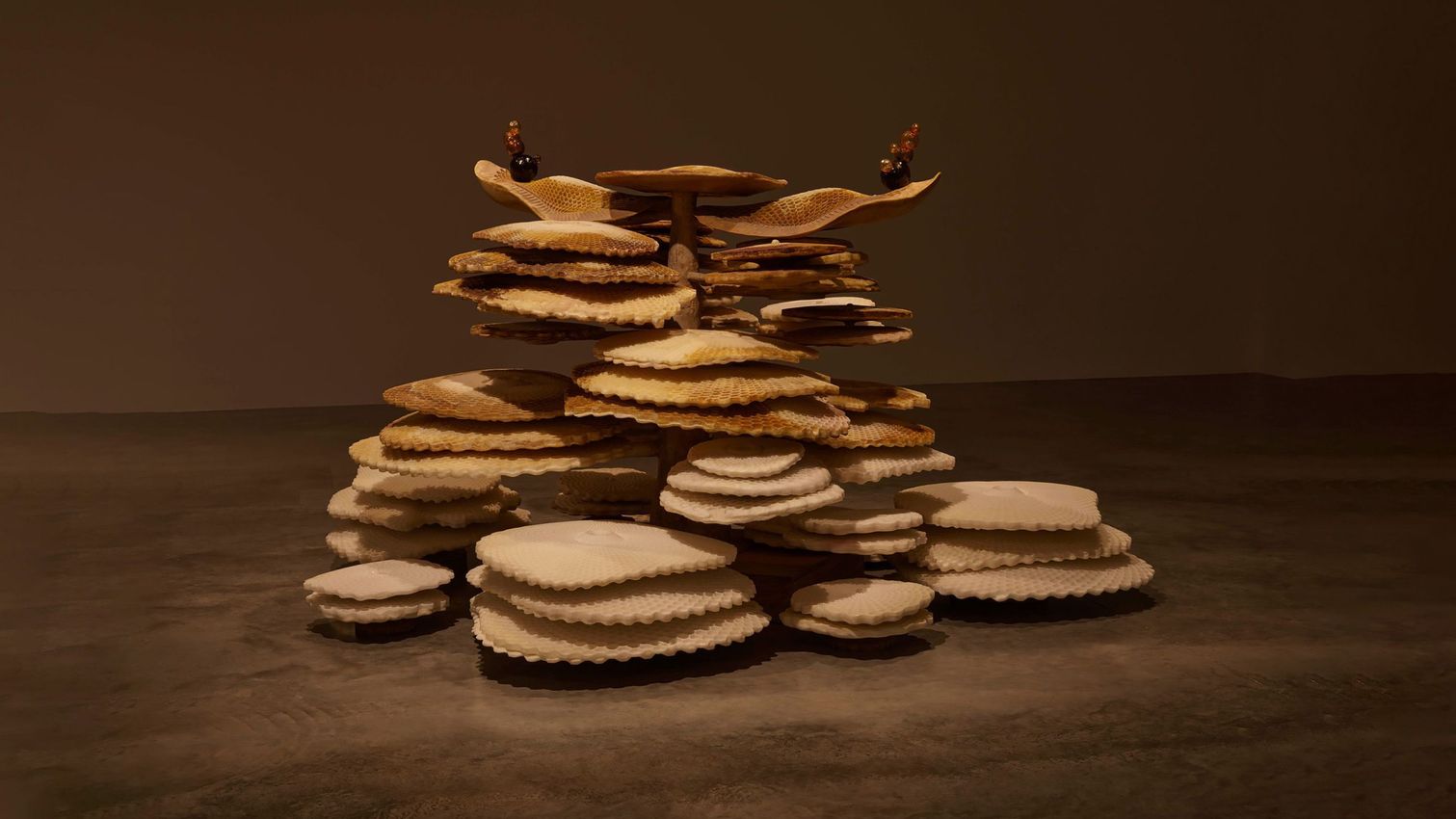
MARGUERITE HUMEAU
b. 1986, FranceMarguerite Humeau is a contemporary artist known for her speculative, research-driven installations that blend science, myth, history, and technology into immersive artworks interrogating the origins and possible futures of life on Earth and beyond. She is best known for large-scale sculptural environments such as Torches (2025), which traverse deep time and imagined worlds through sound, light, and biomorphic forms. In 2026, she was shortlisted for the Turner Prize for Torches, presented at ARKEN Museum of Contemporary Art, Ishøj, and HAM Helsinki Art Museum.
Early Years
Born in the western French town of Cholet and raised in nearby Beaupréau in 1986, Humeau studied textile design at ENSAAMA in Paris before earning a BA in industrial design at the Design Academy Eindhoven, and completed an MA in Design Interactions at the Royal College of Art, London, in 2011. Her early training in design remains central to her practice, informing her interdisciplinary approach to art. Now based mainly in London, Humeau maintains a studio-led practice that thrives on collaboration with scientists, engineers, historians, and theorists.
Humeau’s background in speculative design laid the foundation for an art practice focused on reanimating extinct species, imagining post-human worlds, and staging encounters with other forms of consciousness—biological, artificial, and mythological.
Artworks
Marguerite Humeau’s artworks merge contemporary art with scientific research, archaeology, and speculative fiction, resulting in multimedia installations that simulate alternate evolutionary paths and alternate histories. The ambition of her recent exhibition Torches and its eco-centric worldview led to Humeau’s nomination for the 2026 Turner Prize.
The Opera of Prehistoric Creatures (2012)
_The Opera of Prehistoric Creatures _was an early landmark project that blended speculative storytelling with scientific methodology. Using data sourced from palaeontologists and engineers, she reconstructed the vocal tracts of extinct animals, including the mammoth, and used synthetic air to simulate their calls. This performative sound work staged a haunting, operatic lamentation of lost life, effectively bringing the dead to life through contemporary technology. The work set the tone for Humeau’s career—deeply investigative, sensorially immersive, and emotionally resonant. First exhibited as her graduate project at the Royal College of Art, Opera introduced her signature aesthetic of blending ancient mythologies with synthetic futures.
Torches (2025–2026)
Humeau’s recent museum project Torches (2025–2026) marks a major evolution in her practice, staging a multi-part environment across ARKEN Museum of Contemporary Art in Denmark and HAM Helsinki Art Museum. Combining sculptural assemblages based on existing and fictional species with choreographed light and sound cycles, the exhibition unfolds like an opera of different worlds, moving between ancient human history, nonhuman life and speculative futures. The project adopts an emphatically eco-centric rather than human-centred viewpoint, expressing a sense of kinship with the natural world that impressed the Turner Prize jury for its cinematic exhibition-making and dynamic shifts in scale.
Materials and Making
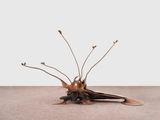
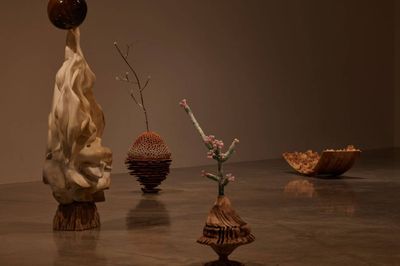
Humeau’s materials are as conceptually rich as her narratives. She works across synthetic and organic media—frequently combining wax, resin, aluminium, concrete, glass, bronze, and artificial scents and pheromone-like compounds. She also uses fog, sound, and scent as sculptural components, making her installations multisensory experiences. 3D printing, CAD modelling, and CNC milling are employed alongside ancient techniques, creating tension between technological precision and organic form. Often collaborating with scientists and industrial fabricators, Humeau sees materials not as passive elements, but as narrative agents—each with their own symbolic and sensorial charge. Her sculptural surfaces are often smooth and ambiguous, evoking both the human body and alien terrain.
Influences and Research Threads
Marguerite Humeau’s influences range widely across disciplines. Ancient mythology, religious ritual, and early human history intersect with biotechnology, speculative fiction, and environmental science. Her practice is often discussed in relation to speculative design methodologies and to theoretical frameworks associated with thinkers such as Donna Haraway and Timothy Morton. She draws on archaeological theory, evolutionary biology, and artificial intelligence to inform her artworks. Visual references include ritual artefacts, anatomical models, and architectural ruins. Yet despite this complexity, her installations are affective and visceral—rooted in an intuitive understanding of narrative, mood, and the timeless human drive to understand what lies beyond ourselves.
Awards and Accolades
- Zurich Art Prize (2017)
- Turner Prize nominee (2026)
Exhibitions
Marguerite Humeau has been the subject of both solo and group exhibitions at important institutions. A selection of important exhibitions are provided below.
Solo Exhibitions
- Torches, ARKEN Museum of Contemporary Art, Denmark (2025)
- \*sk\*/ey-, ICA Miami, Florida (2024)
- Surface Horizon, Lafayette Anticipations, Paris (2021)
- Gisant II, Center Pompidou x West Bund Museum, Shanghai (2020)
- Futurs d’avant, Musée Jeu de Paume, Paris (2020)
- Birth Canal, New Museum, New York (2018)
- Echoes, Art Now, Tate Britain, London (2017)
- FOXP2, Palais de Tokyo, Paris (2016). Travelled to Nottingham Contemporary from October 2016 to January 2017.
Group Exhibitions
- Soil, Somerset House, London (2025)
- Double Agent, Ljubljana Biennale, Slovenia (2024)
- 15th Gwangju Biennale, South Korea (2024)
- The Irreplaceable Human, Louisiana Museum of Modern Art, Humlebæk (2023)
- The Milk of Dreams, 59th Venice Biennale (2022)
- rīvus, 23rd Biennale of Sydney (2022)
- INFORMATION (Today), Kunsthalle Basel, Switzerland (2021)
Marguerite Humeau’s Instagram can be found here.
Critical Reception
Marguerite Humeau’s work has been profiled in leading art publications including Brooklyn Rail, Cultured Mag, and Frieze
Marguerite Humeau FAQs
What is Marguerite Humeau known for?
Marguerite Humeau is known for creating ambitious, research-based installations that blend contemporary art with speculative fiction, science, and myth. Her multisensory artworks often feature sound, scent, and sculptural forms that explore questions about the origins of life, evolution, and post-human futures. Humeau’s projects are characterised by their immersive environments and imaginative storytelling, often involving collaborations with scientists and historians. She has gained international recognition for her unique ability to visualise the invisible and breathe emotional resonance into complex, abstract ideas. In 2026, she was nominated for the Turner Prize.
What themes does Marguerite Humeau explore in her artworks?
Marguerite Humeau’s art explores a wide range of themes, including extinction, evolution, communication, spirituality, ecological transformation, and the speculative futures of human and non-human life. Her work frequently questions anthropocentric narratives and envisions new cosmologies shaped by alternate intelligences—biological, artificial, and mythological. Themes of ritual, resurrection, and reincarnation also recur, often filtered through feminist and post-human lenses. Whether evoking prehistoric gods or future species, Humeau’s practice encourages viewers to reconsider how life is defined and what it might become.
How does science influence Marguerite Humeau’s art?
Science is foundational to Marguerite Humeau’s artistic process. Her projects often begin with months of intensive research and consultation with specialists in fields such as palaeontology, neuroscience, evolutionary biology, and artificial intelligence. She uses scientific theories and technologies as jumping-off points to create fictional yet plausible scenarios that blur the lines between fact and speculation. Humeau’s work doesn’t merely illustrate scientific ideas—it transforms them into emotionally resonant, poetic forms that challenge how we understand consciousness, history, and the future of life on Earth.
Ocula | 2026


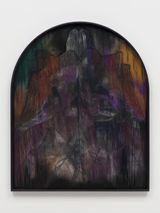

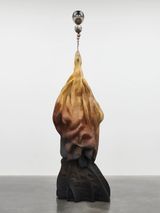
377 x 120 x 108 cm
White Cube Request Price & Availability

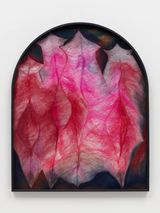
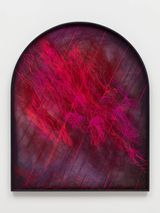
162.6 x 132 cm
White Cube Request Price & Availability

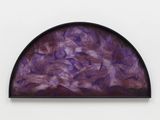
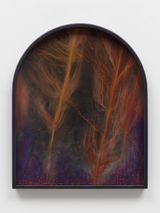
106.1 x 199 cm
White Cube Request Price & Availability

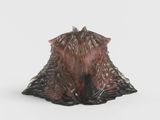
44.5 x 72 x 28.5 cm
White Cube Request Price & Availability

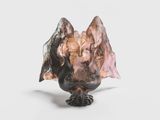
49 x 51 x 35 cm
White Cube Request Price & Availability

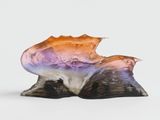
41 x 78 x 22.5 cm
White Cube Request Price & Availability


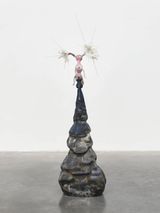
119 x 51 x 38 cm
White Cube Request Price & Availability

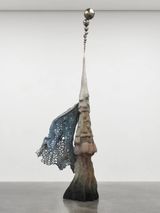
440 x 146 x 88 cm
White Cube Request Price & Availability





Explore Marguerite Humeau's Exhibitions














Explore and Follow Artists Shaping Contemporary Art
A respected voice in contemporary art discourse.
Focusing on ambitious storytelling and insightful art-world commentary. Ocula Magazine publishes in-depth interviews, critical essays and timely analysis on the artists, exhibitions and ideas driving the global art world.
Learn more about Ocula Magazine
Showcasing the best of the art world.
Ocula partners with galleries from around the world to highlight their artists, artworks and exhibitions. Gallery membership is by application and invitation, with each member vetted by an independent panel.
Learn more about Ocula Membership
Specialises in the sale of major artworks.
Led by a team with deep ties to the world’s leading auction houses, galleries and collectors. Ocula’s advisory team offers bespoke services to high-net-worth clients from around the world who are looking to acquire the best of contemporary and modern art.
Learn more about our team and services