Press Release

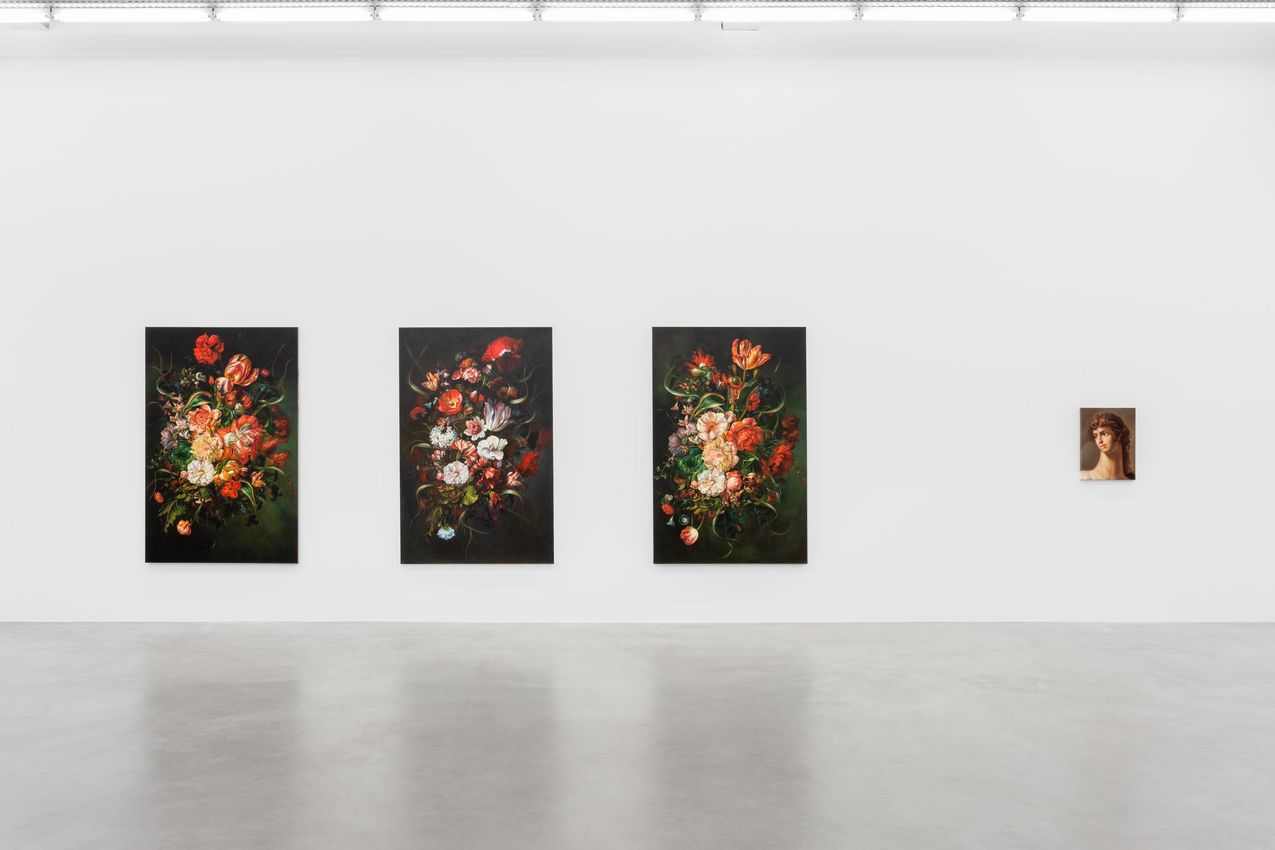
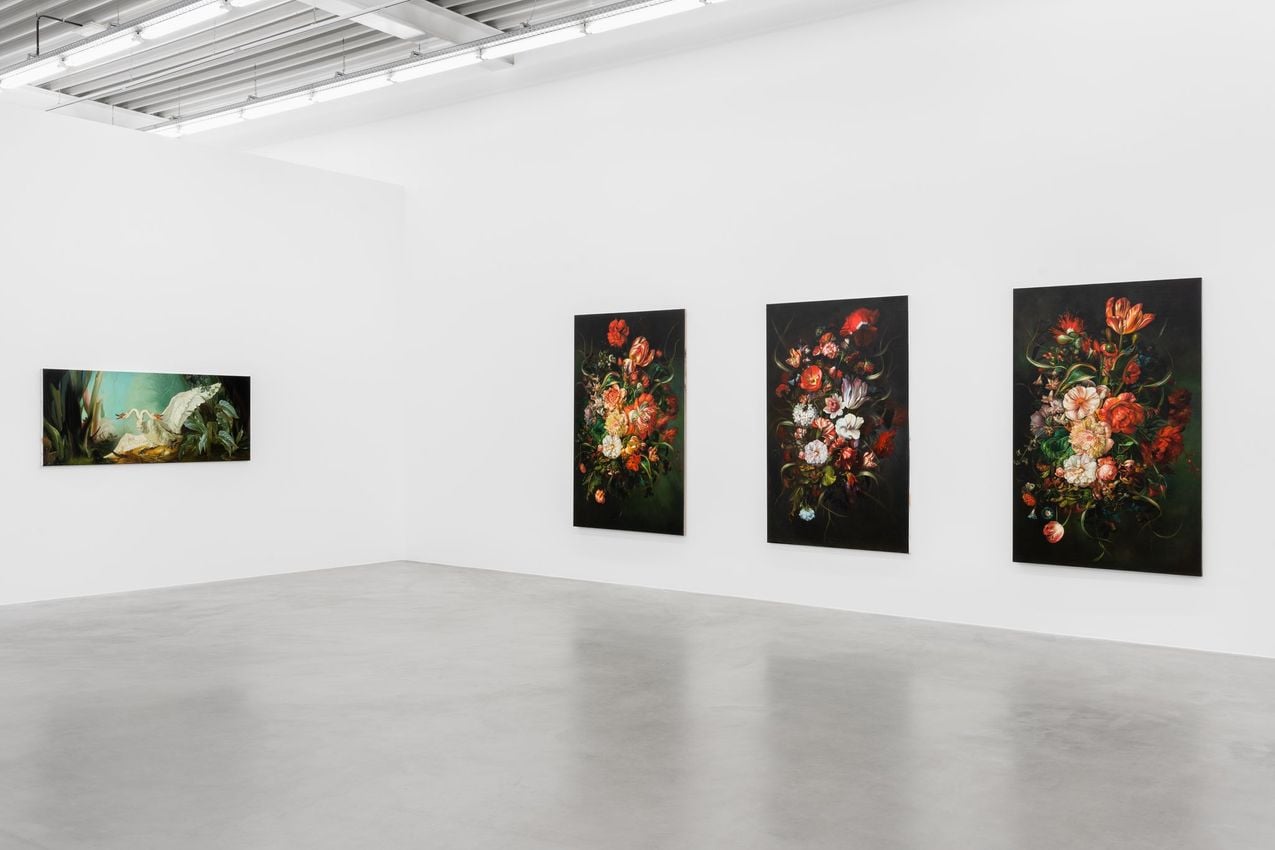
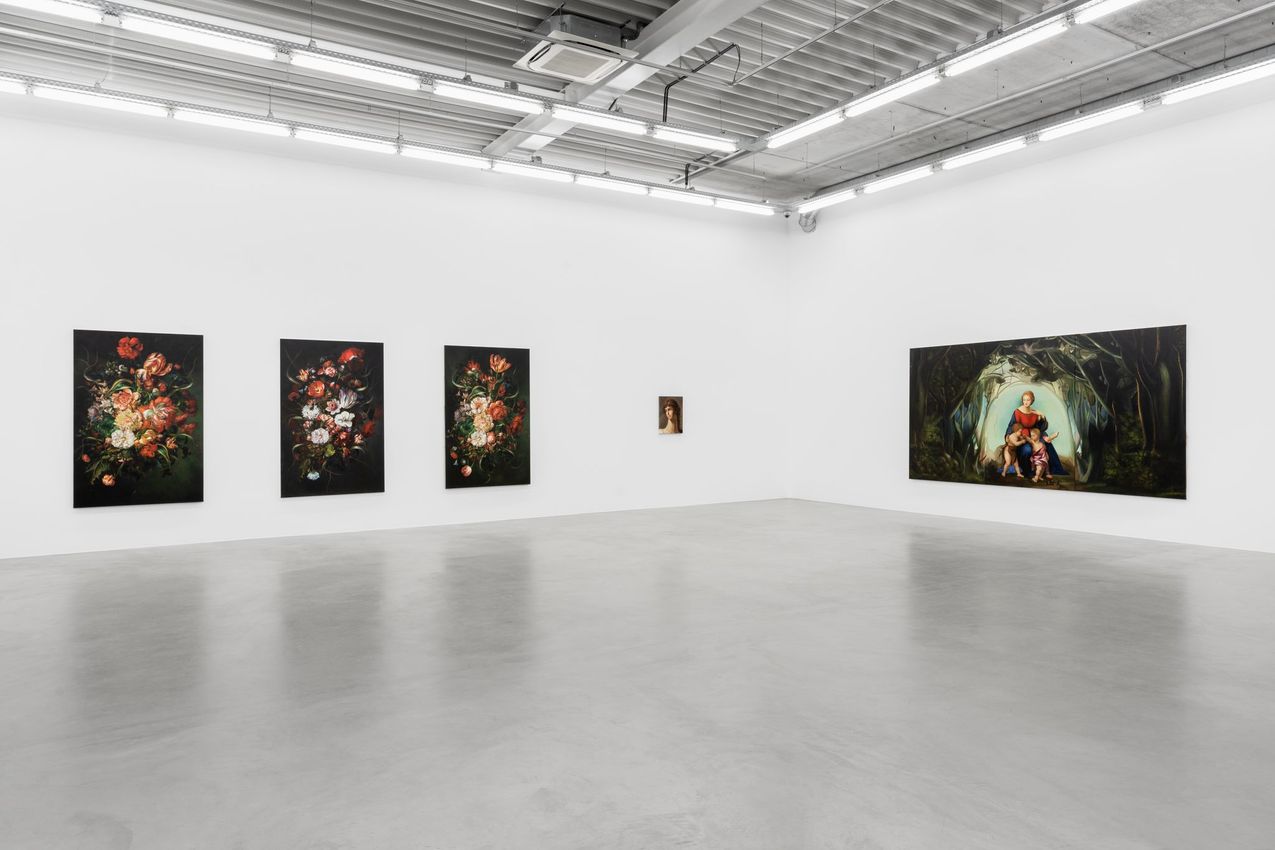
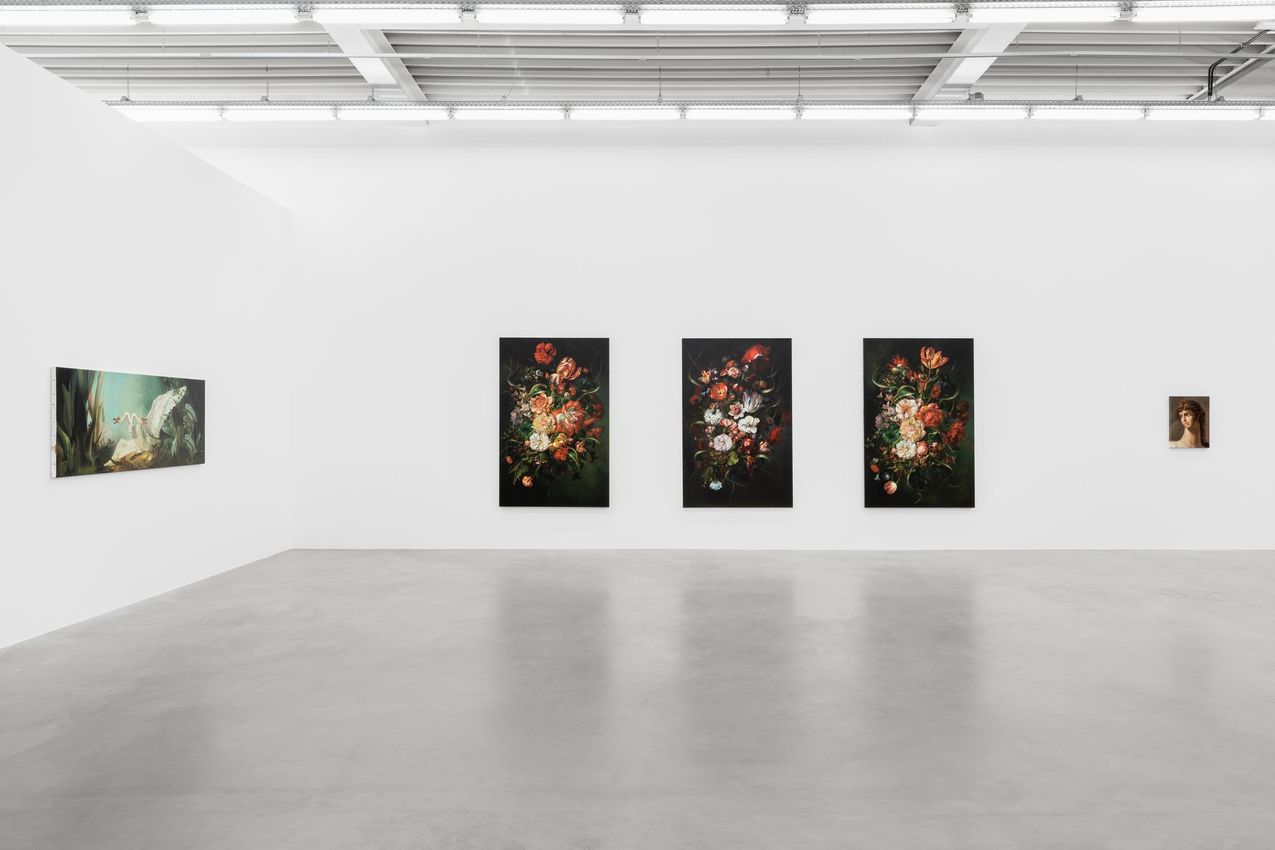
Ted Pim once watched a nature documentary where a tree fell in a forest. In the film, hesaw the repercussions, how the fauna and flora on the forest floor struggled, climbing overeach other in an attempt to get to the light. ‘That is how I see my flower paintings’, heexplains: that underneath–or as part of–the beauty of the paintings, is this dark overtone.

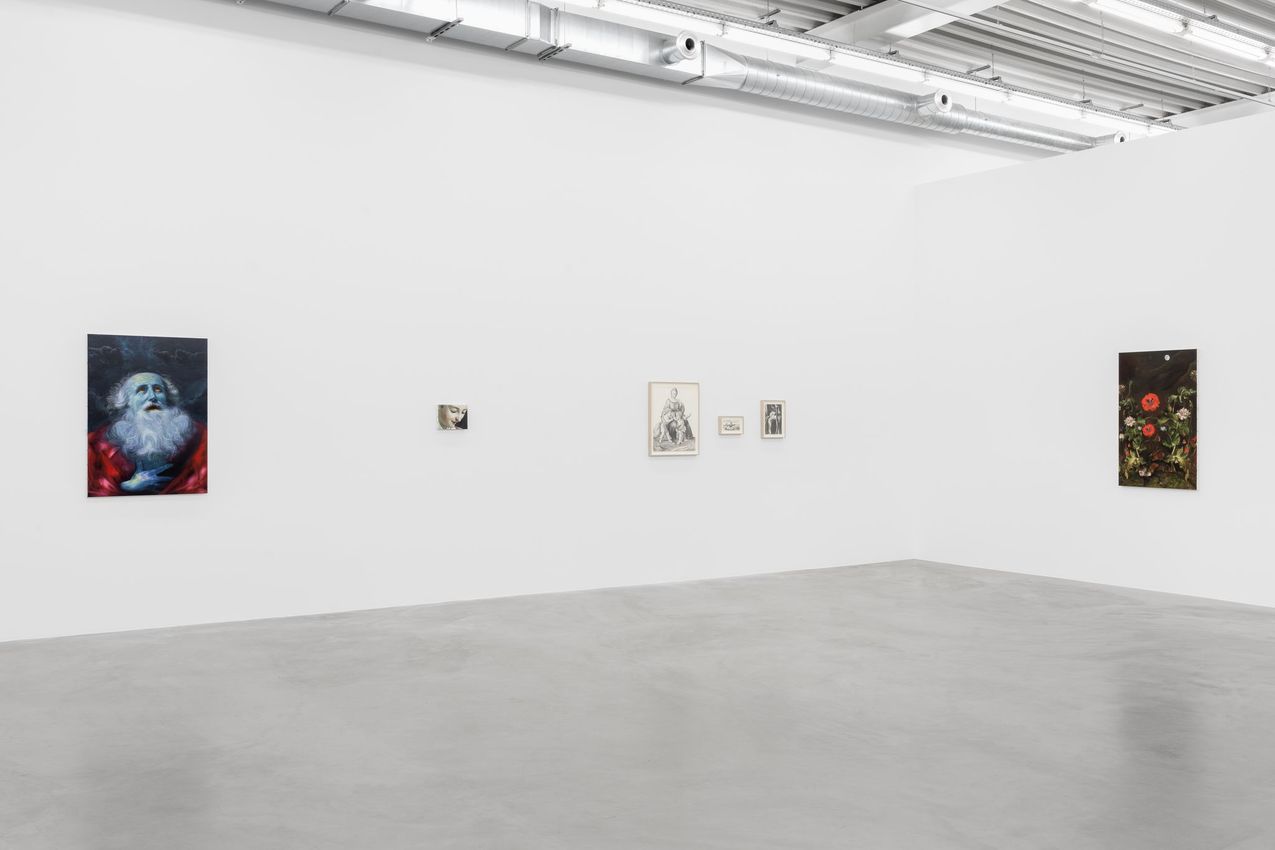
Of course, Pim’s paintings are inspired by the old masters. In his studio, printed images ofDutch seventeenth century and Italian Renaissance paintings, among others, are tacked tothe walls next to the canvases he is working on. Each painting can have a number ofsources, so a floral work could be inspired by a Dutch Golden Age canvas and a dress froma contemporary fashion shoot can end up as the garb of one of Pim’s figures, lookingcontemporary and Renaissance at once. This mix of high art and mass produced imagery isin keeping with Pim’s work, where references, direct quotations, source imagery, stories andpersonal associations meet. He builds singular paintings from multiple art historical sources,and the result is a personal vision, where, Pim says, he constructs his own reality.

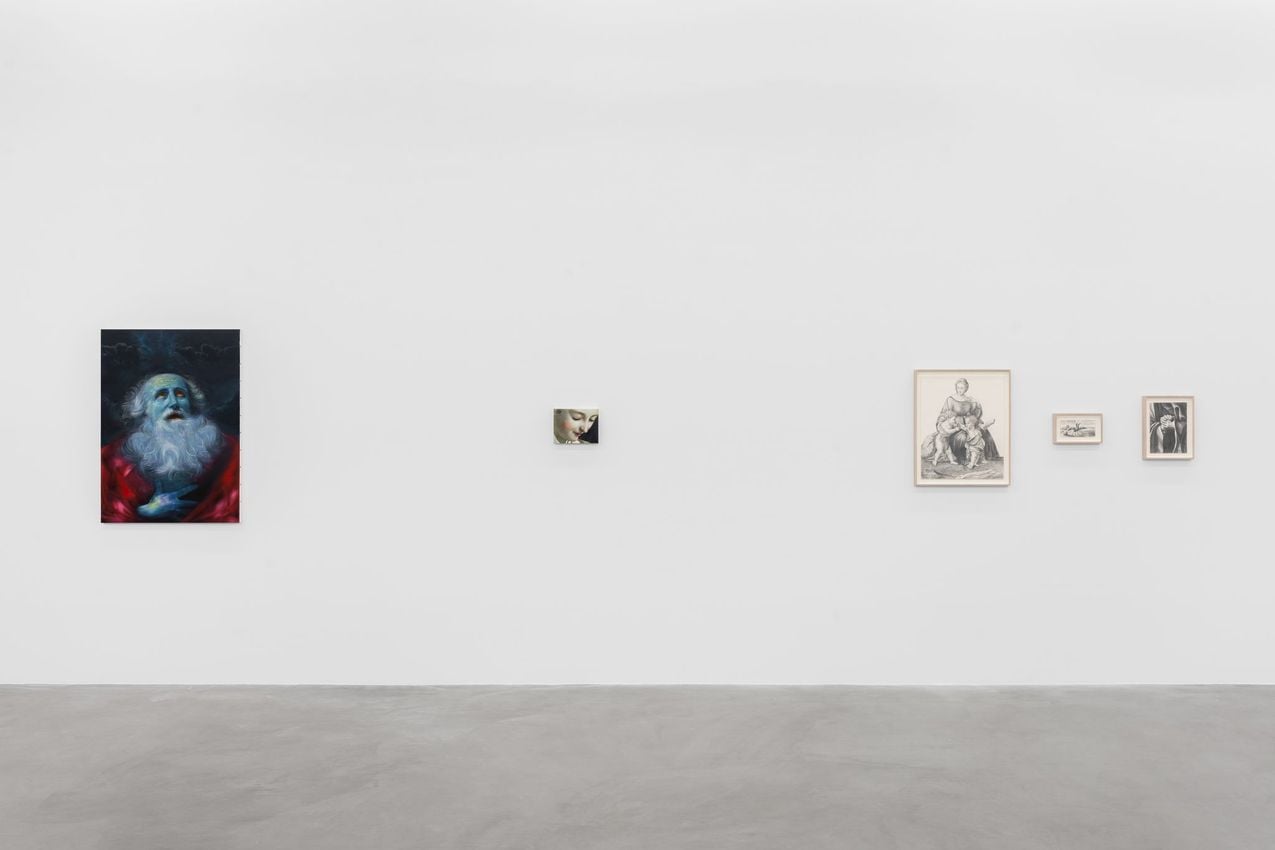
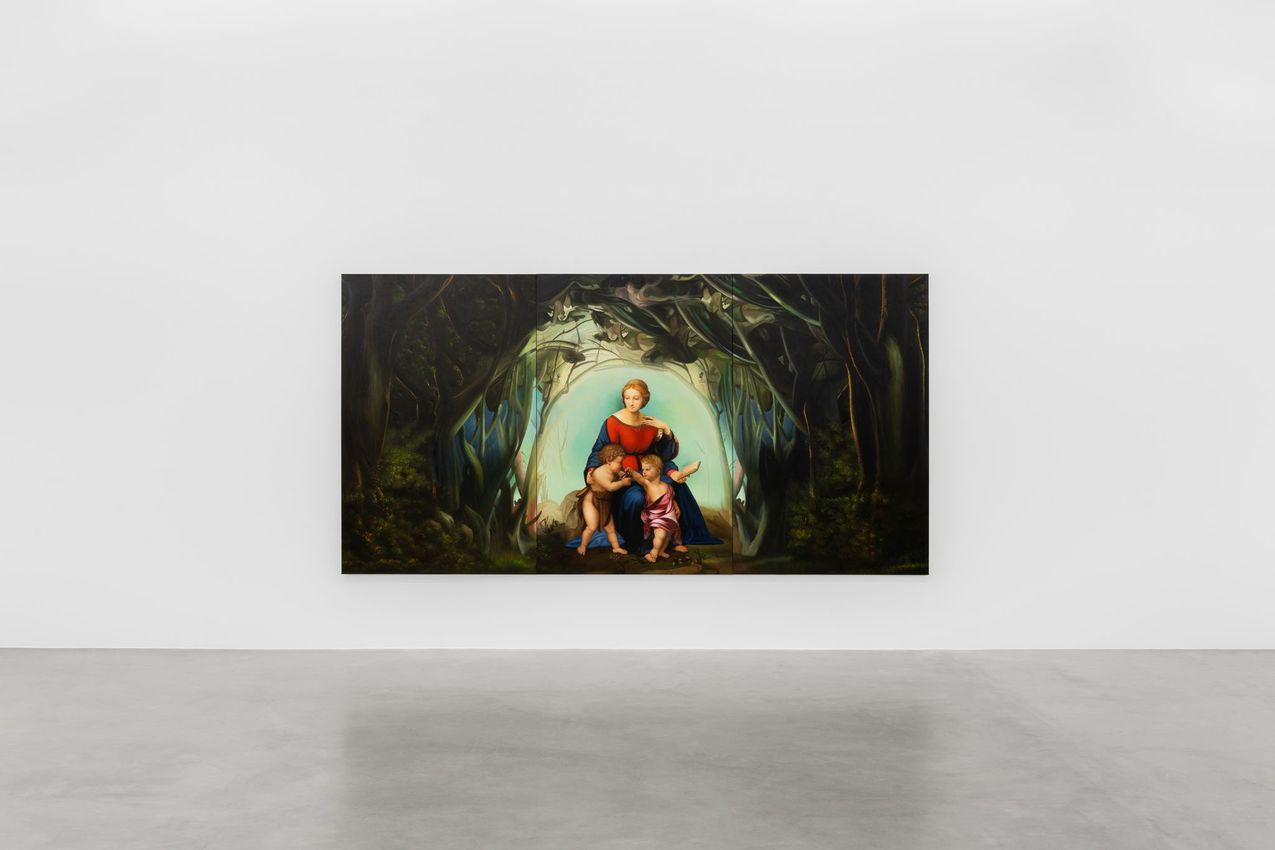
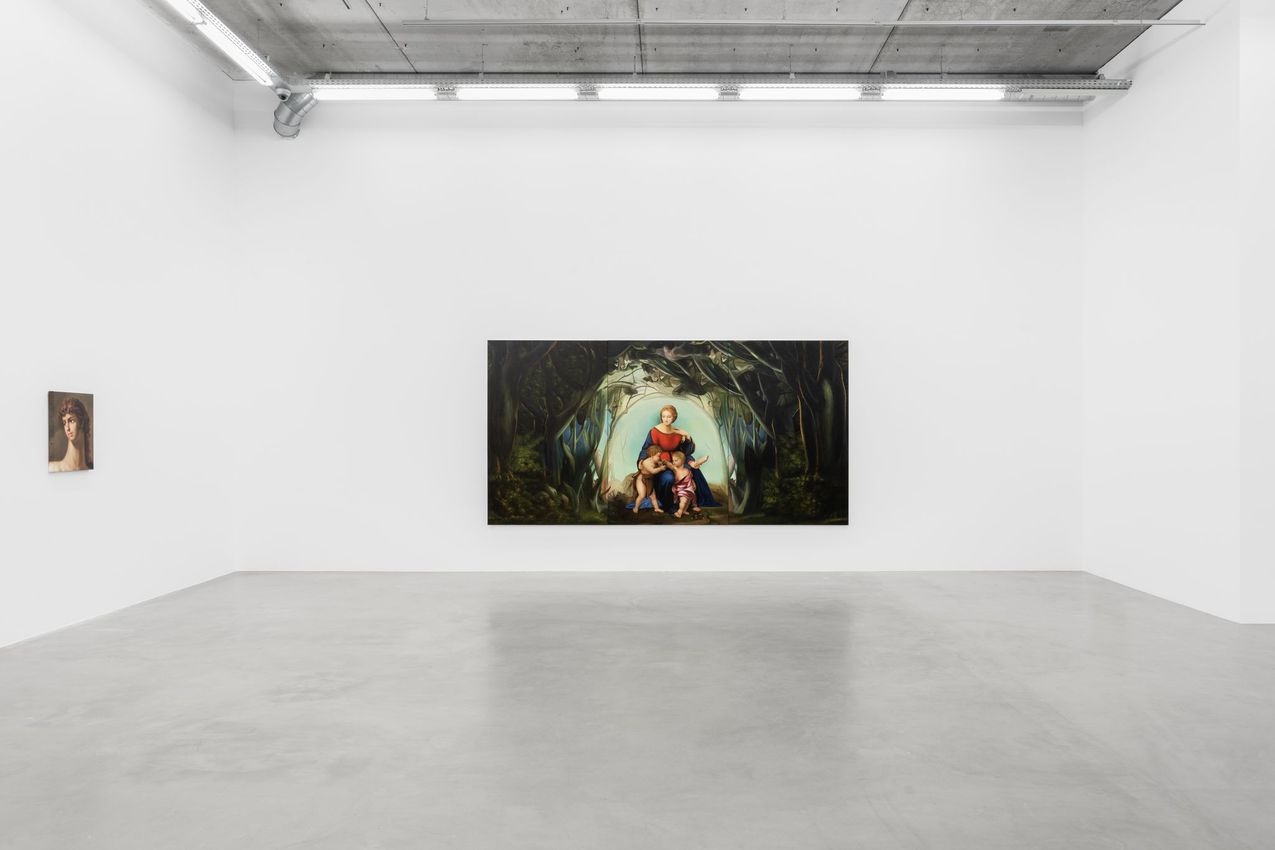
These diverse reference points are at times easier to recognise than others. The startingpoint for this show was the triptych, in which the Madonna and Child Pim paints are adirect quotation from Raphael’s c.1506 painting of Mary, Christ and the infant John theBaptist, known as the Madonna of the Goldfinch (because John the Baptist holds and showsthe little bird to Jesus, who touches it gently). Pim was raised Catholic, in Belfast. Thoughhe is no longer religious, the images he saw in church in his childhood have fed into andinspired his artwork: ‘I’m still fascinated by the extravagance of it all, the gold, theBaroque paintings, the feeling of awe when you enter a grand chapel’. Raphael’s numerousrepresentations of the Madonna are some of the most iconic imagery created in the religion.But the triptych also shows another kind of world-making–it is the result of working withartificial intelligence.

When Pim was invited by an artificial intelligence company to imagine how his art practicecould be informed by working with AI, he gave the software descriptions, a list of wordsthat describe some of the things in his paintings, and the result was new source imagery hecould incorporate. His last series of paintings had a palette inspired by Disney movies, andthe AI read the Raphael Madonna, Child and St John the Baptist as Disney characters. Italso created the arched forest background in which Pim’s Madonna is nestled. Itimmediately reminded Pim of Mass rocks, the gathering places in nature where IrishCatholics, who were banned from practising their faith following the English conquest ofIreland, would meet to say Mass, using rocks for altars.

Pim’s Madonna has three arms. On the third hand is a ‘lovers’ eye’–a lateeighteenth-century fad for miniatures with an image of one’s lover’s eye, which began withKing George IV, who sent a miniature of his eye to the woman he was courting, MariaAnne Fitzherbert, whom he could not marry because she was a twice-widowed Catholic.King George IV also wore a brooch with Fitzherbert’s eye on it, a small sign of devotionthat became widespread across high society in England for half a century, then disappeared.Other eyes appear throughout Pim’s recent paintings: unfamiliar in a contemporarycontext, when their story is told they present a new haunting intimacy to the exhibition.

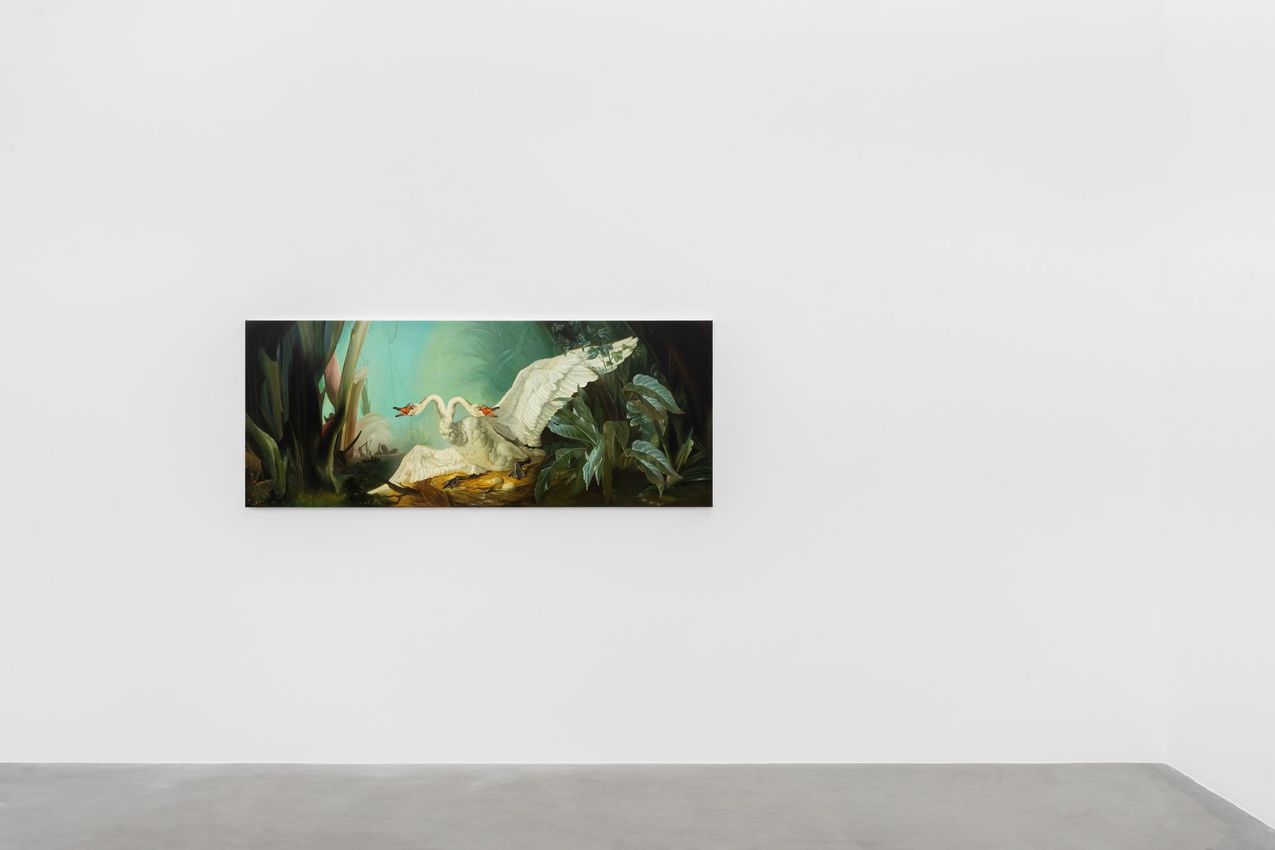
A companion piece to the triptych shows a double-headed swan in a forest reminiscent inshade and colour of the arch of trees the Madonna inhabits in the triptych. The swanappears often in Pim’s work, a reference to numerous myths. In Celtic mythology, afamiliar tale that Pim would have heard as a child, tells of the four beautiful children ofKing Lir, who were so beloved by their father that their jealous stepmother cast a spell onthem, turning them into four white swans. Swans also appear in Ovid’s Metamorphoses–twice. Zeus comes as a swan to Leda, the Queen of Sparta and wife of Tyndareus, and hasher. And King Cycnus of Aetolia punished the young man who was devoted to him,Phylius, by throwing him off a cliff, only to watch as Phylius transforms into a swan andflies away.

Ovid’s poem recounts numerous instances of metamorphosis and shapeshifting and they arethe reason and the result of violence. A new shape can save – like Phylius, or like Daphne,who turns into a tree when she escapes Apollo who chases her against her wishes. A newshape can also be a form of violence (Zeus becomes a swan, a bull when he abducts Europa,a bird with his wife Hera) or a punishment when humans were cast into stones, objects,animals and fauna in retribution for angering the gods. Something is not what it seems andstories are multiple. The shapeshifting of the children of Lir becomes a foundation for SwanLake and multiple representations of Leda exist throughout the history of art. We tell thesestories over and over again, and they become more beautiful and haunting with the telling.Like a two-headed swan, like a single eye sent to a loved one, like a third arm and like theworld we live in: affecting, memorable, chaotic. And then we see something in it all, and wetry to reflect it, explain it, through narrative and image and art.

Leda was famous for her good looks and her daughter by Zeus was Helen of Troy, who saidto have been the most beautiful woman in the world. Again: beauty emerges from violence.Look in the back of the compositions of Pim’s floral paintings and see – the struggle isthere. What is in the back attempts to come to the forefront, what is ahead suppresseswhat’s behind. It doesn’t make it any less beautiful, or any less violent. And that makes itvery, very real.

Press release courtesy Almine Rech. Text: Orit Gat.

Read More

Installation Views

About the Artist

Irish artist Ted Pim uses darkness as a tool to portray a moody and even macabre ambience throughout his works. Often in a manner that is subversively ominous, through the darkly lit canvases he emphasises the focal points of his work which are most notably beautiful assortments of flowers and baroque figures.

View Artist Profile

Also Exhibiting at Almine Rech

Address
Abdijstraat 20 / Rue de l’Abbaye
Brussels
Belgium
Opening Hours
Tuesday – Saturday
11am – 7pm
(1)
Brussels Abdijstraat 20 / Rue de l’Abbaye
Almine Rech
Abdijstraat 20 / Rue de l’Abbaye, Brussels, Belgium
+32 264 856 84
http://www.alminerech.com

Opening hours
Tuesday – Saturday
11am – 7pm
The art world in focus