






The Quietly Radical Influence of Choreographer Simone Forti
On a visit to the Venice Dance Biennale, Isabelle Bucklow felt the presence of the late movement artist Simone Forti all around her. Save to My OculaAs I prepared to travel to the Venice Dance Biennale’s closing weekend, I learned that Simone Forti had passed away. My Instagram was flooded with her image: Robert McElroy’s black-and-white photographs of Simone, oh so cool in a plain T-shirt and loose trousers, performing (that is, running, walking, hanging, crawling) in various New York City lofts, as well as pages from her poetry books and images of Forti with fellow performers Yvonne Rainer and Joan Jonas.
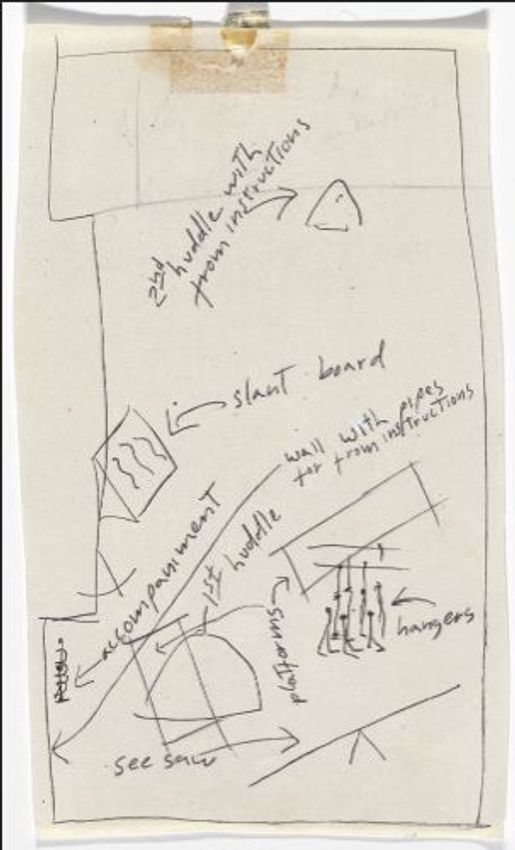
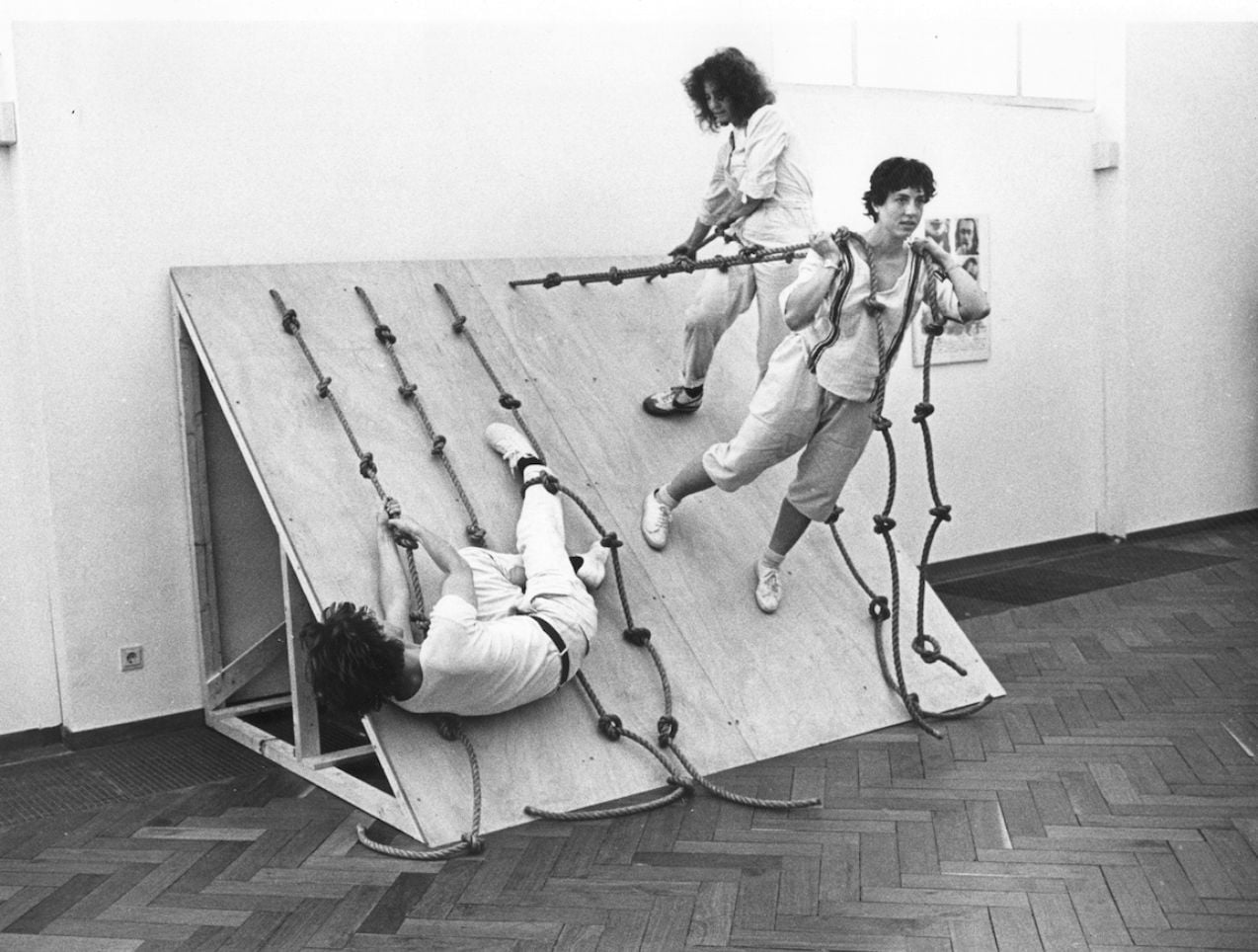
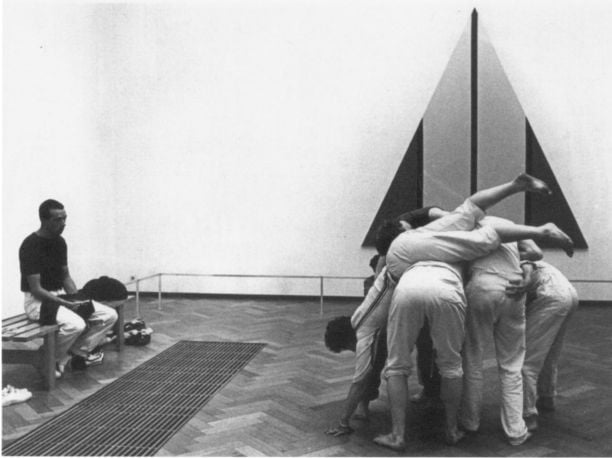
Forti was a dancer, choreographer and writer. She was born in Florence in 1935 to Jewish parents; her family soon fled Mussolini’s Italy, via Switzerland, for Los Angeles. She trained in a nature-based improvisation technique inspired in equal measure by Zen and Dada and much admired by John Cage, before moving to New York where she became part of the avant-garde art scene. During the 1960s, when (mostly male) artists were conceptualising their work within grand theoretical abstractions of “space and time”, Forti grounded her choreography in the body, in a specific space, at a specific time. Her 1961 Dance Constructions, which she installed in Yoko Ono’s bare loft, involved dancers engaging with sculptural configurations while the audience was invited to circulate around them. In Slant Board, performers hoisted themselves or hung at angles from ropes attached to a 45-degree plywood ramp. Perhaps her most famous “construction”, Huddle, was a mound of six or seven people. The principal “action” was that a single person “climbed” the mountain of bodies before rejoining the collective.
When I first encountered Forti’s work as an undergraduate, I remember thinking: “This is not dance as I understand it.” Yet it was dance: quotidian, pedestrian, conceptual, sculptural dance. And so there I was in Venice, watching shows at the biennale and thinking about Forti. The experience clarified for me the strength of her influence on almost everything I saw around me.
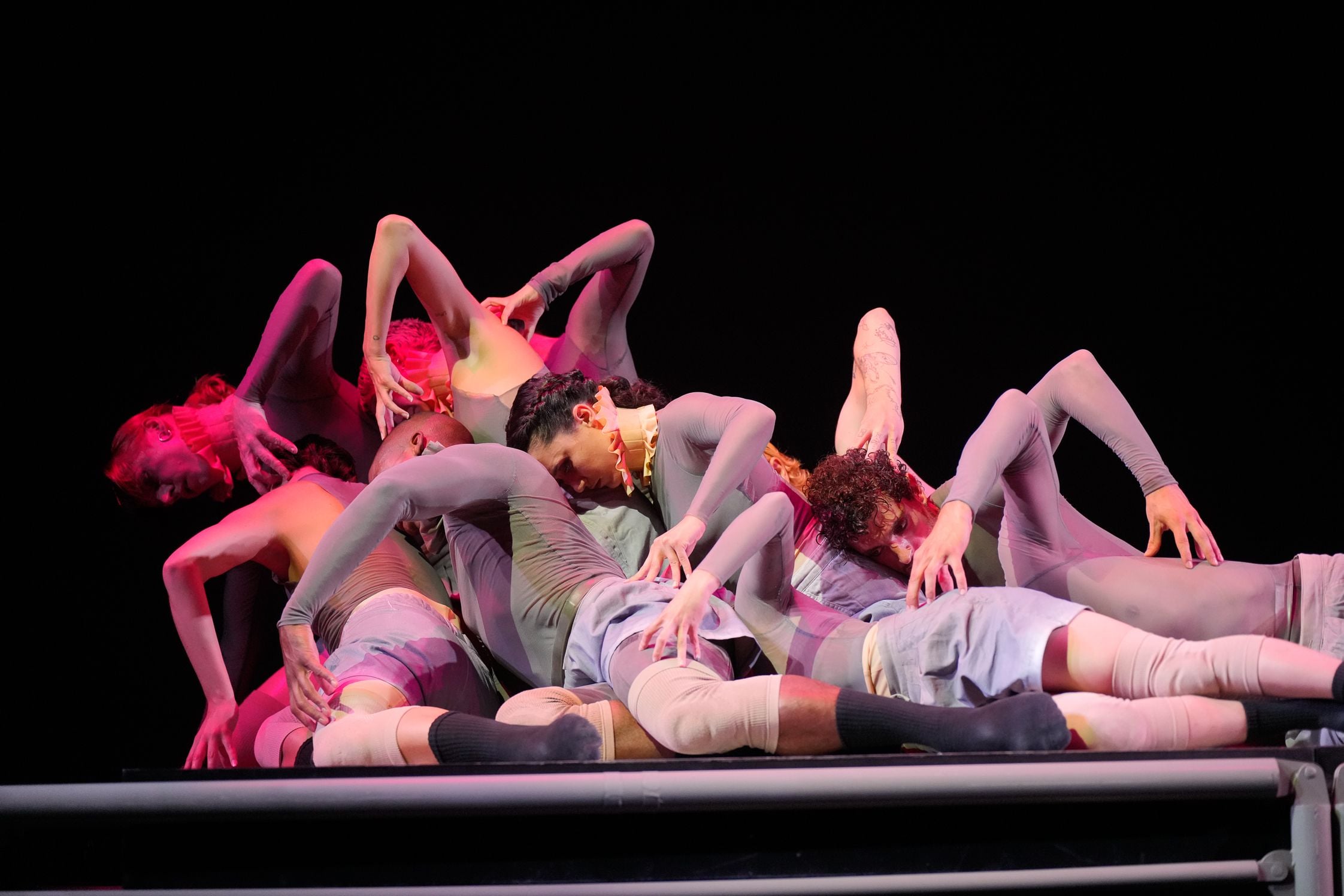
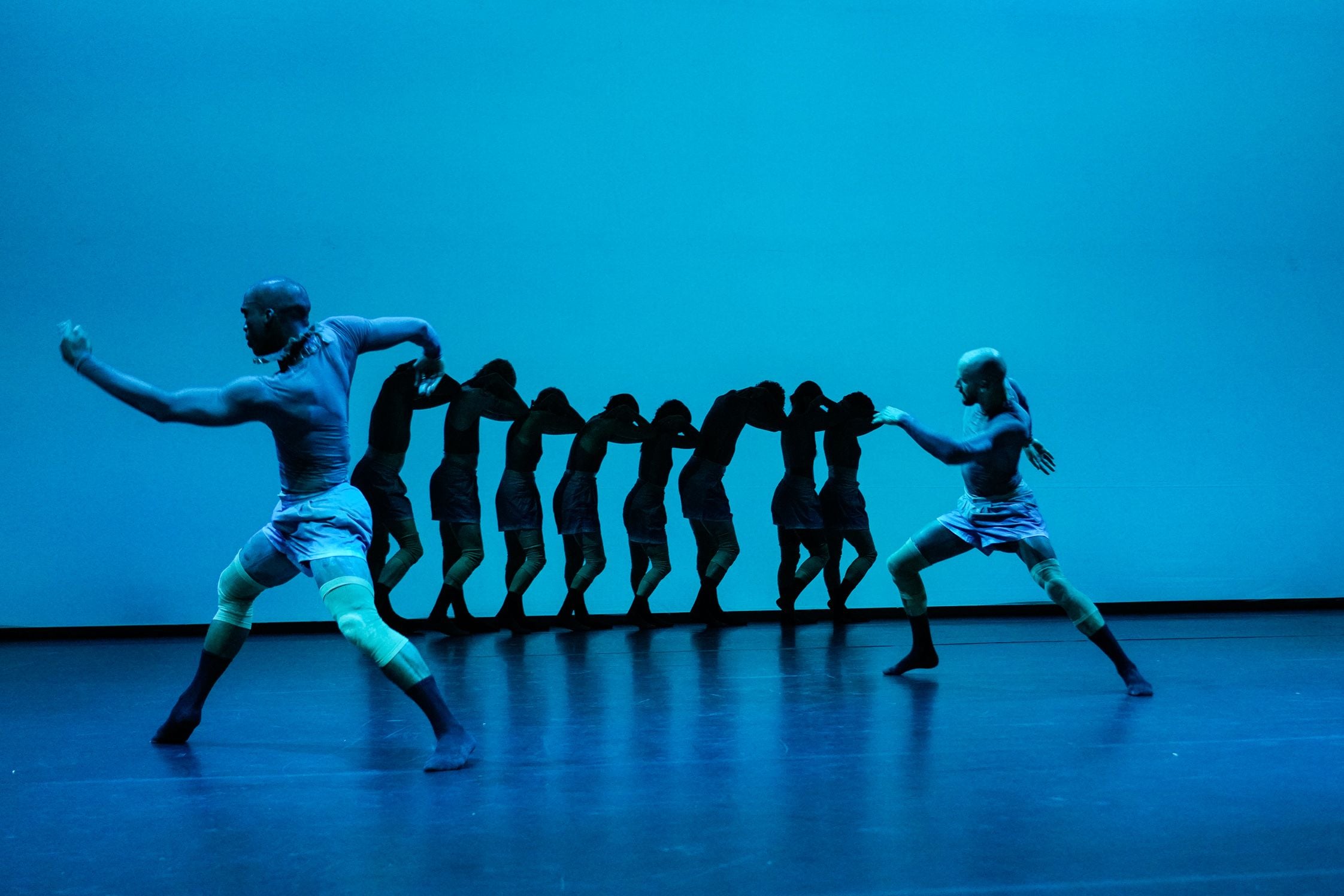
Forti’s Dance Constructions were immediately recognisable in Adam Linder’s Drip Tekhne. A stripped-back scenography, comprising two platforms and two scaffold structures on wheels, provided the apparatus for 10 performers to build and move between various worlds: a stage, a screen, a cage. In one section, a composite of bodies pulsed and vibrated, spewing out an individual who attempted to free themselves, only to be subsumed back into the mass. Linder’s interest in the tension between the individual and group, and the assembly and disassembly of non-hierarchical collectives, recalled Forti’s Huddle.
Forti herself said that she over-identified with animals and, when in New York City, would spend hours in their company at the zoo. Studying animal gestures, she observed the limbering-up of bears and distilled their behaviour into its essential gestural properties. Later works would see her embody sparrows and flamingos, the motion of seaweed being carried by the surf, and water-striders skimming a lake. You could see those ideas, too, in Linder’s bodies. In his four-part choreography, performers “evolved” from learning to use limbs to inquisitive prowling before becoming robotic. They, however, performed the “animalistic” as an excess of gesture, like self-propagating art nouveau tendrils that represent nature as symbol rather than specimen. It left me cold. Forti was interested in the specific (the characteristics that differentiated the leap of a gazelle from the leap of a frog) and her physical approximations of animal behaviour were rooted in the world, not in abstract ideas. Her practice, I was reminded, was about coming to know the other through the body.
Forti favoured the durational over the theatrical narrative arc, often providing dancers with open instructions rather than a fixed score. She observed of her own work that primary movements, like walking or climbing, could be “strenuous even when done casually. If a performer needs to rest, he may do so by using the ropes any way he can [...] But the performers must stay on the board for the duration”.
“Forti grounded her choreography in the body, in a specific space, at a specific time”
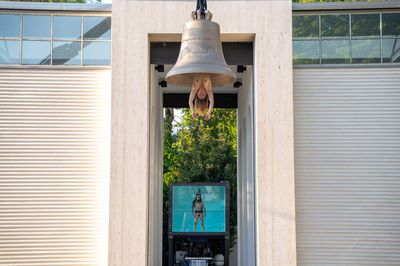
Between performances at the dance biennale, I walked through the art biennale. Florentina Holzinger was at her much-sensationalised Austrian Pavilion. Her work straddles dance, visual and performance art, her casts comprising ballet dancers and stunt artists. I saw that the utility pole (covered with bronze nudes) was being scaled by a nude performer in a safety harness. Clipping on to hooks, she ducked between bronzes, occasionally pulling the rope taut to extend into acrobatic poses. This use of the structure was, counterintuitively, more in the spirit of Forti than what I’d seen at the dance biennale. I say counterintuitively, because Holzinger has been typecast for her shock and theatrics. This choreography, however, so matter of fact, left room for the performer to make her own decisions through improvisatory route-making.
Here, as there, our attention is drawn to the effort of holding the body against gravity. Gravity proves an ongoing interest for Holzinger, who has previously responded to the conceit of the “weightless” body in ballet. In her Venice show, bodies do not defy their limits but endure their fallible existence in the systems—biological, ecological and sociopolitical— of which they are necessarily a part.
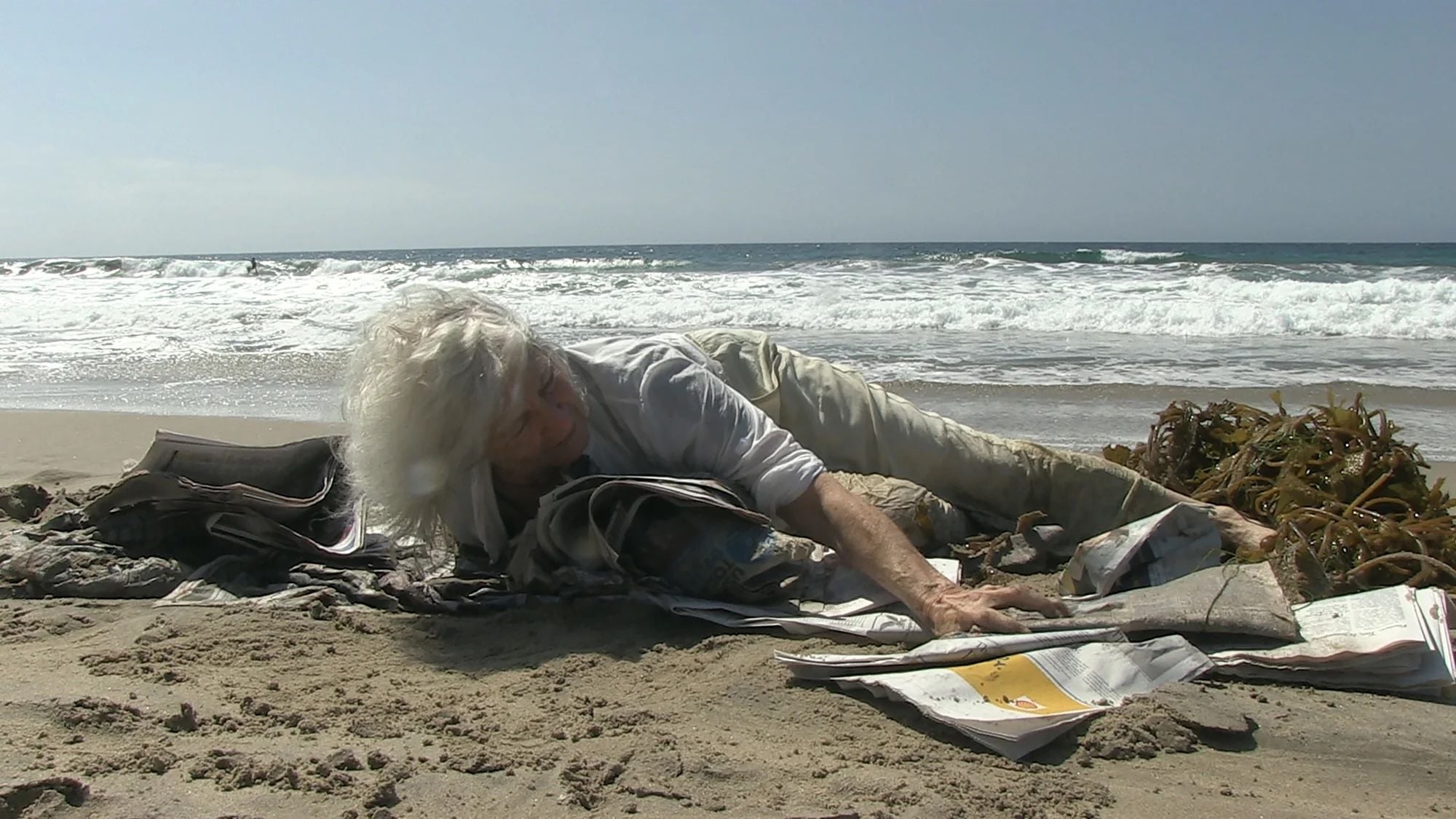
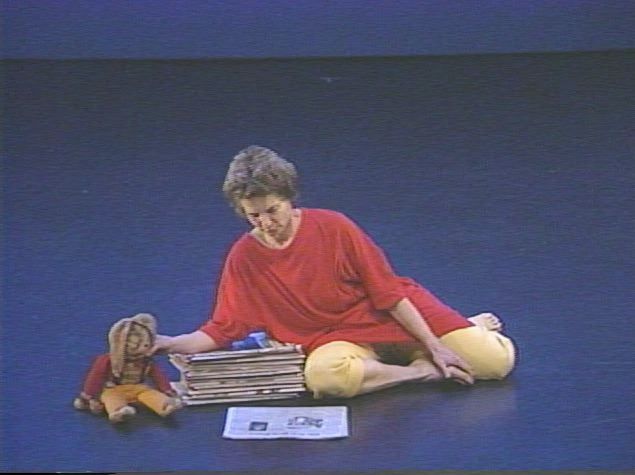
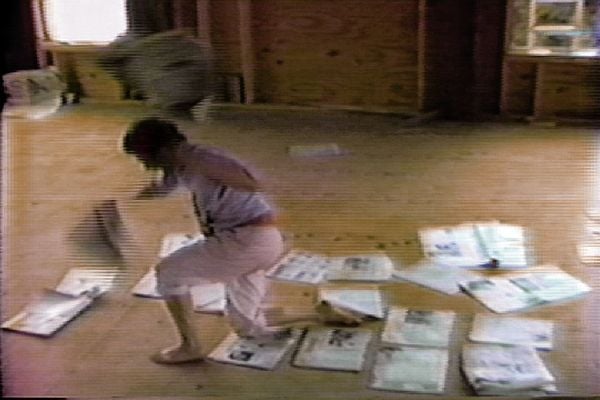
For Forti and her minimalist peers, the notion of forces (such as gravity) and games (such as contact rules) could be enough to generate whole works. But she was also politically motivated: environmental and social concerns were increasingly present, though never didactic. They started in the 1980s News Animations series. Her father had been an avid newspaper reader, and it was his consumption of news that prompted the family to flee Italy in 1938, escaping antisemitic persecution. Following his death, she discovered that reading the papers “felt like a way to be close to him”. She brought newspapers on stage, danced them into an arrangement and translated headlines into corresponding movements and words. “I see… the news in terms of pressures, wedges and balance shifts,” Forti said. That shouldn’t be interpreted as a neutralising abstraction; her News Animations acknowledged that the news—of wars, of climate change—is felt and carried in the body.
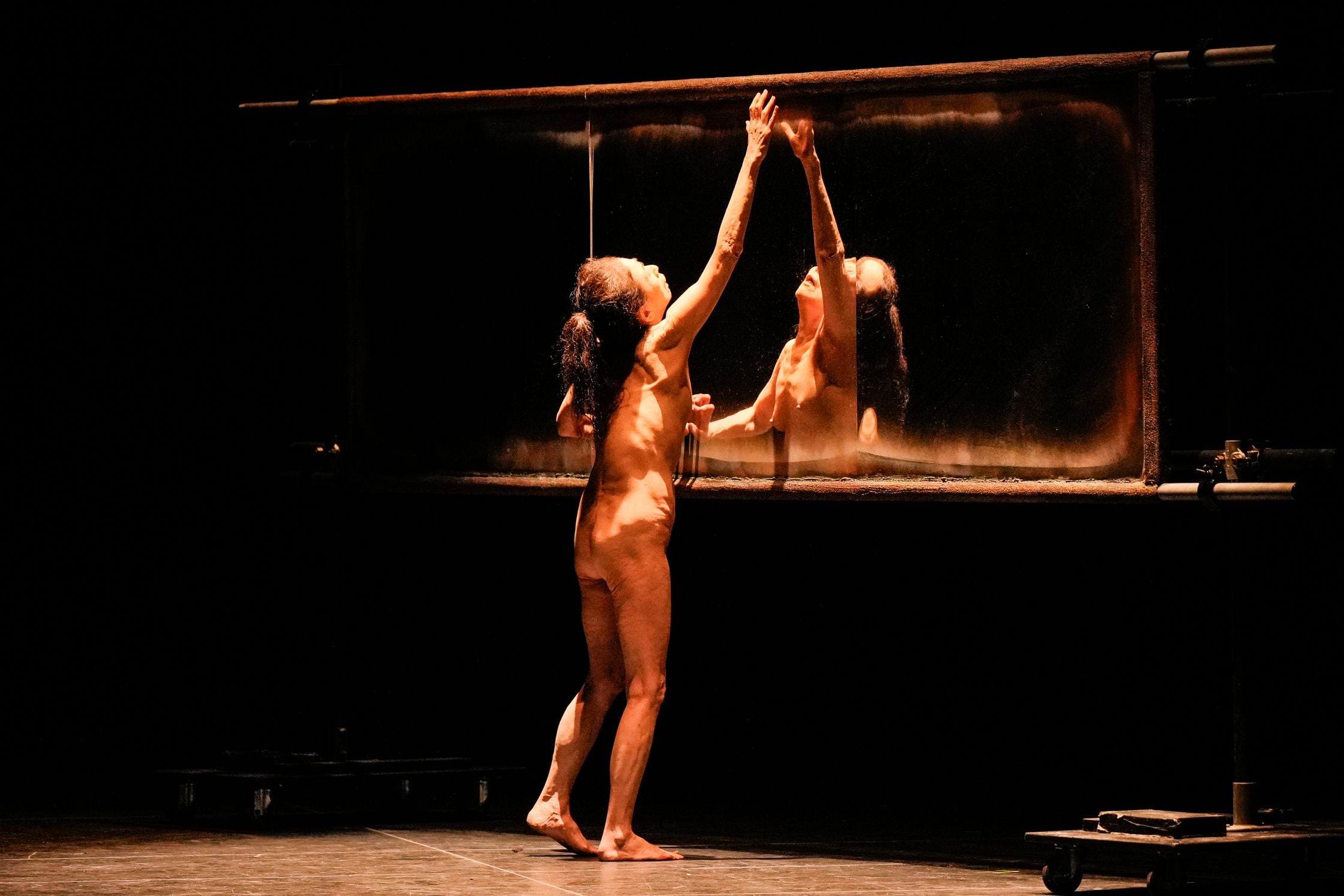
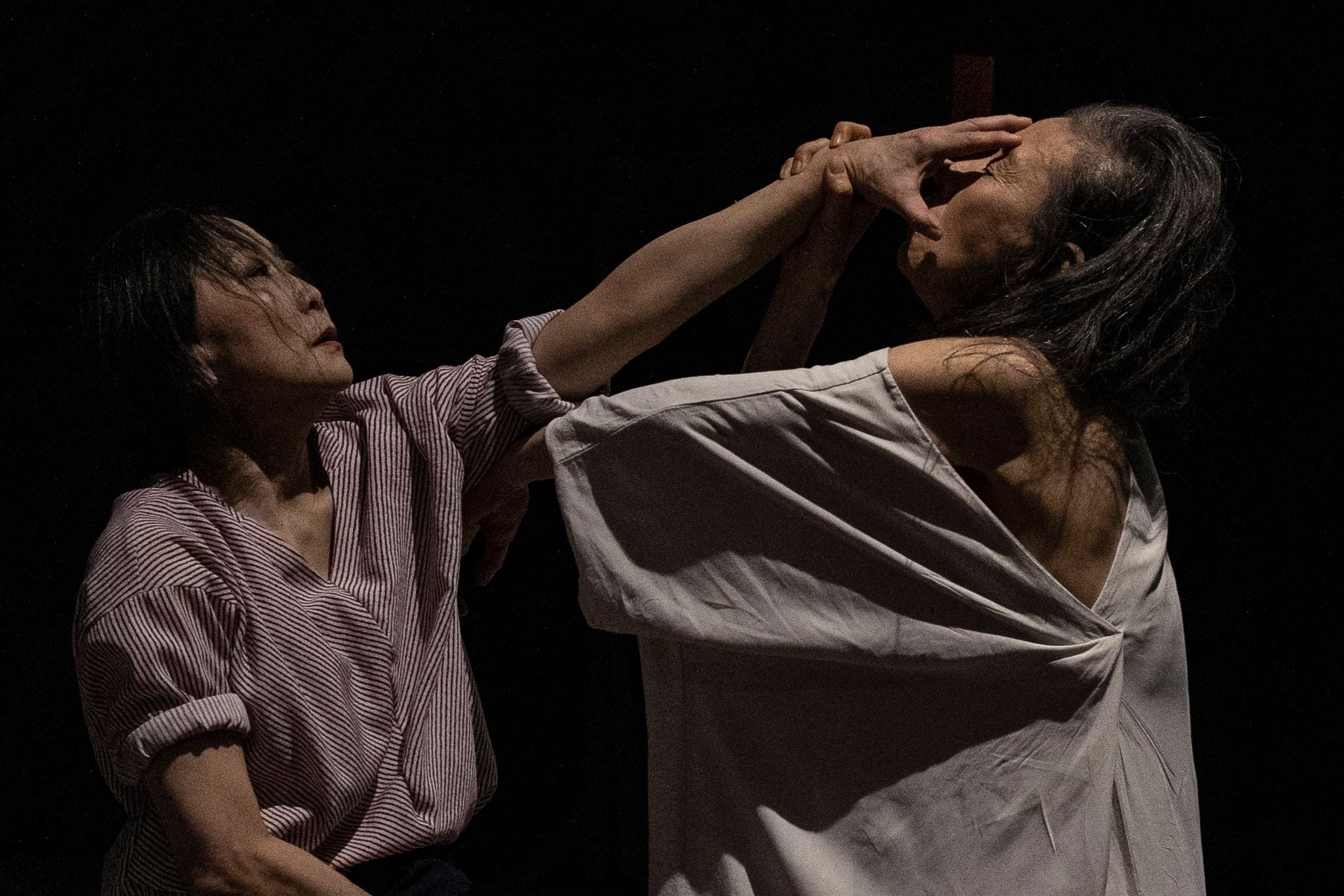
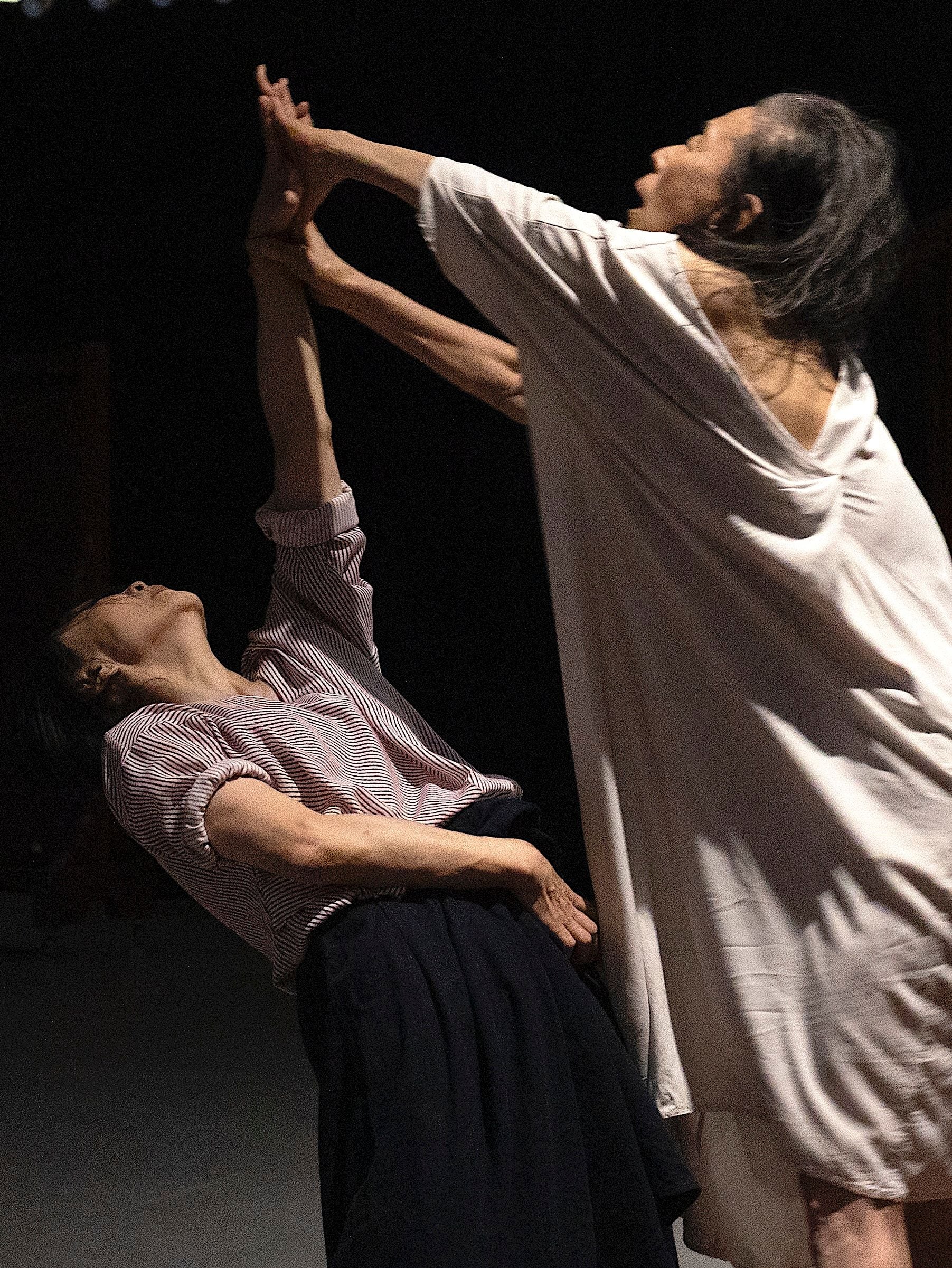
The dance biennale closed with Eiko Otake and Wen Hui’s spectacular What is War? (premiered in 2025). The duet, between the Japanese choreographer, artist and friend of Forti, and the pioneer of modern dance in China wove together their experiences of coming of age in post-war Japan and during the Chinese Cultural Revolution respectively, and their ancestors’ experiences in the Second Sino-Japanese and Sino-Vietnamese wars. Eiko asked: “Does the war have anything to do with my person?” Of course it does. Archival news footage and family photography was projected on moveable structures, manipulated throughout the performance, while Eiko and Wen shifted between sharing anecdotes and statistics. In one scene they wrote directly on to one another’s skin. The work’s exceptional power was its commitment to the particular as a means of addressing the universal. When Eiko spoke of 100,000 Japanese civilians killed by 300 American B-29 bombers in 1945 it was impossible not to think of Gaza, Ukraine, Iran. Speaking and moving are ways of processing trauma, they are also—as Simone Forti found in her News Animations—“a way to be close” to the dead.
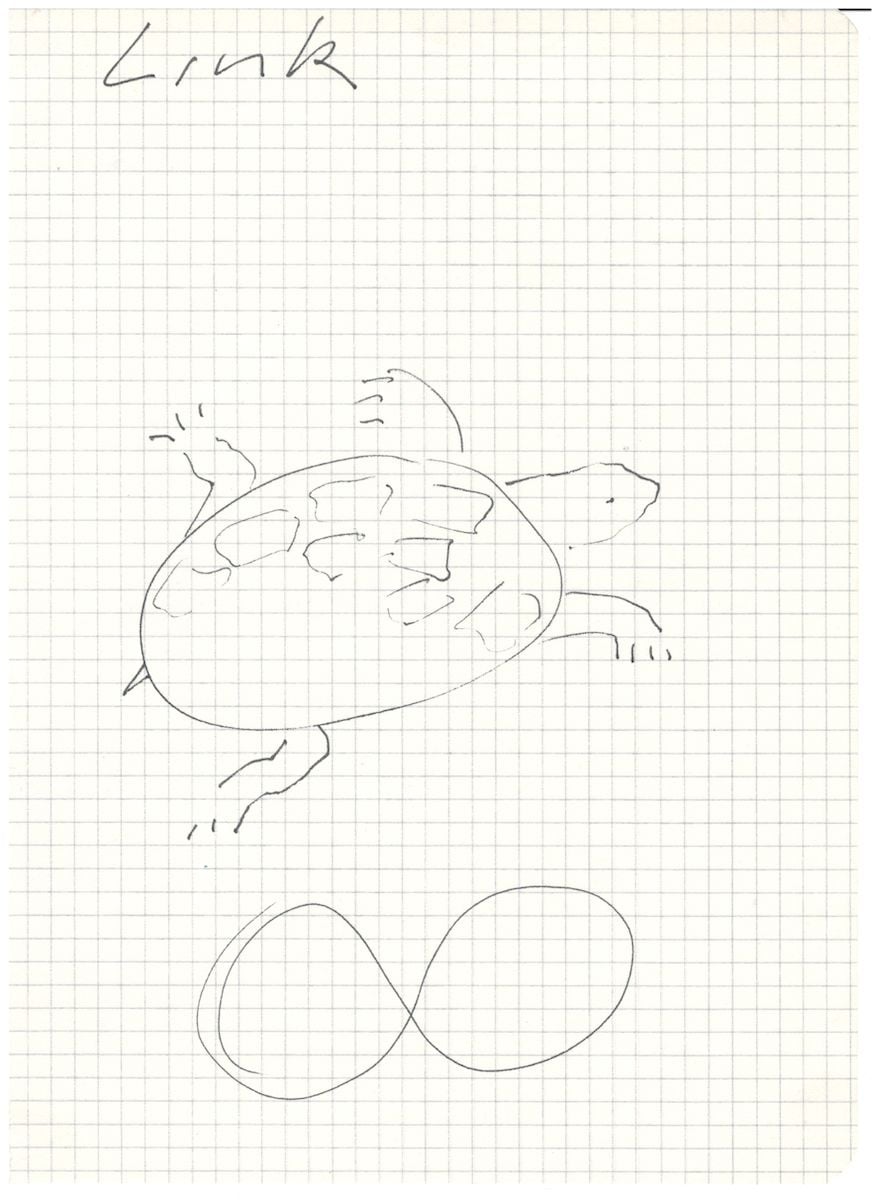
On the way to this final performance I walked past a fountain filled with turtles, nestled together, necks outstretched in the sunshine and gliding below the surface with indolent ease. I stopped and watched, taking their presence as a sign from Forti. After all, she made a drawing in 1970 called A Very Important Turtle (Animal Study). The sketch also contains, below the turtle, an infinity symbol. If the title of this year’s dance biennale proclaimed Time Does Not Exist (taking after physicist Carlo Rovelli’s ideas around linear time), it’s Forti’s enduring presence in the various performances that proves it so. Time circles and loops; it isn’t something left behind but carried forward, a shell on our backs. —[O]
Main image: Simone Forti, De Dans Voorbij, 1980.





A respected voice in contemporary art discourse.
Focusing on ambitious storytelling and insightful art-world commentary. Ocula Magazine publishes in-depth interviews, critical essays and timely analysis on the artists, exhibitions and ideas driving the global art world.
Learn more about Ocula Magazine
Showcasing the best of the art world.
Ocula partners with galleries from around the world to highlight their artists, artworks and exhibitions. Gallery membership is by application and invitation, with each member vetted by an independent panel.
Learn more about Ocula Membership
Specialises in the sale of major artworks.
Led by a team with deep ties to the world’s leading auction houses, galleries and collectors. Ocula’s advisory team offers bespoke services to high-net-worth clients from around the world who are looking to acquire the best of contemporary and modern art.
Learn more about our team and services