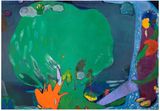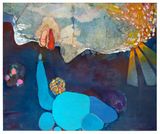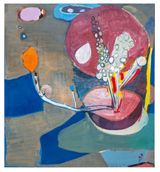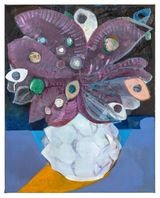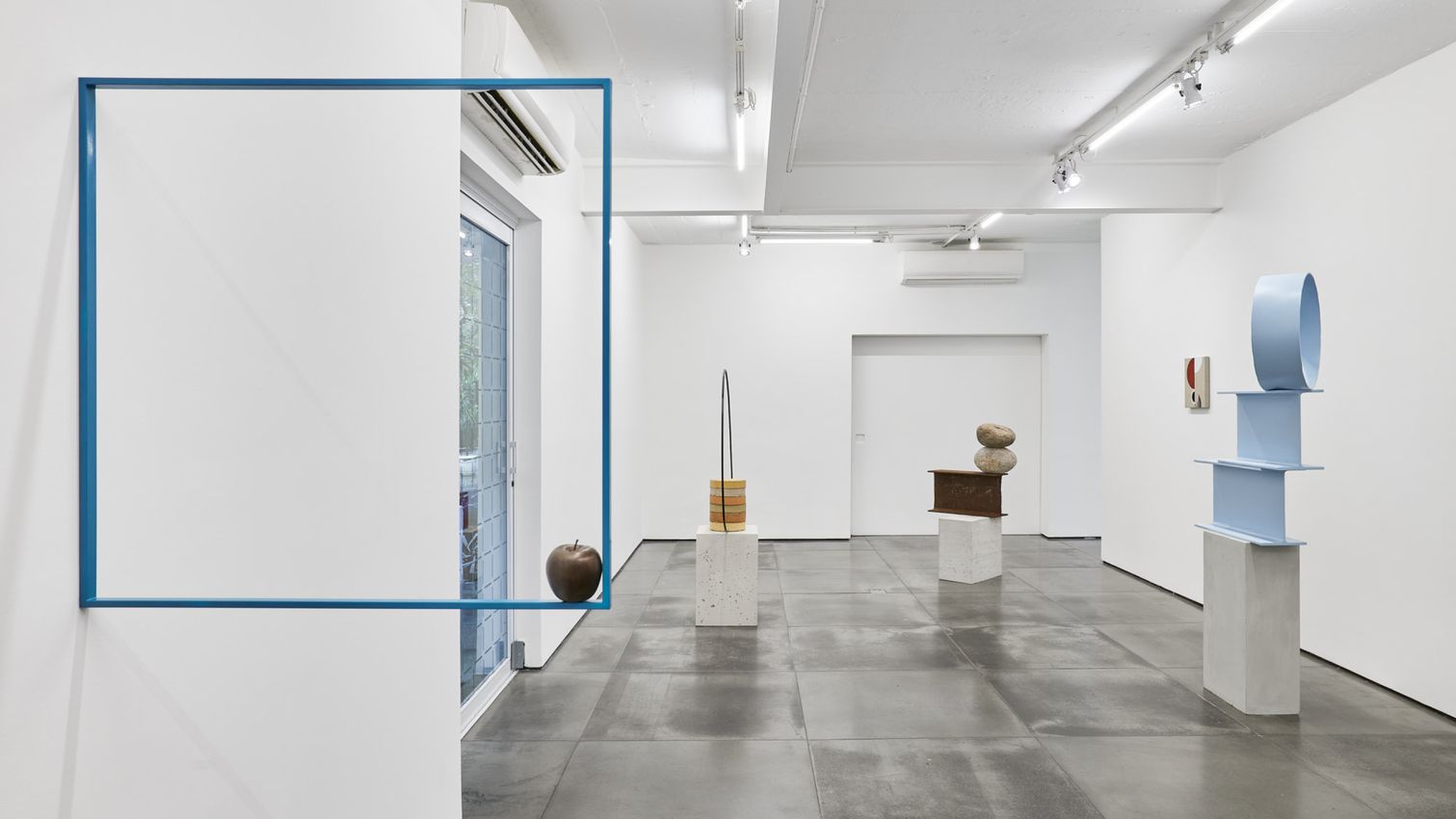
Nara Roesler São Paulo presents Memento Vivere, Cristina Canale’s sixth solo exhibition at the gallery’s São Paulo location.The showcase brings together a selection of her most recent artworks, created between 2021 and 2023. Curated by Marcelo
Campos, the exhibition features thirteen paintings and six drawings, all of which are previously unseen and will be open to thepublic from August 19th, coinciding with the 4th edition of the Circuito Jardim Europa.
Cristina Canale emerged in the Brazilian art scene during the 1980s, a period marked by a resurgence of painting in Brazil andinternationally, greatly influenced by German neo-expressionism. She also participated in the emblematic group exhibition Como vai você, Geração 80? (How Are You, Generation 80?), held at the Escola de Artes Visuais do Parque Lage (EAVParque Lage) in Rio de Janeiro in 1984, which brought together many artists of that generation.
Throughout her career, Canale has consistently explored established painting genres such as portraiture and landscape.She often incorporates elements and scenes from everyday life, frequently derived from advertising photographs, creatingcompositions characterised by vibrant colours, an abundance of ambiguous forms and dreamlike settings.
The central theme of this exhibition revolves around a series of portrait paintings focused on female figures. In creating theseworks, the artist revisits not only the history of portraiture but also draws inspiration from mythological elements. Canalepoints out that the primary function of a portrait is to immortalise faces and presence, serving as mementos. Thus, in someof her works, she starts with mythological figures like the goddess Thetis and Princess Danae, symbolising the female figureas a source of fertility and life. In other cases, she employs a technique commonly used in portrait art since the Renaissance–mirroring or duplicating the subject, as seen in Sincronias (2022) and Mãe e filha II (2023).
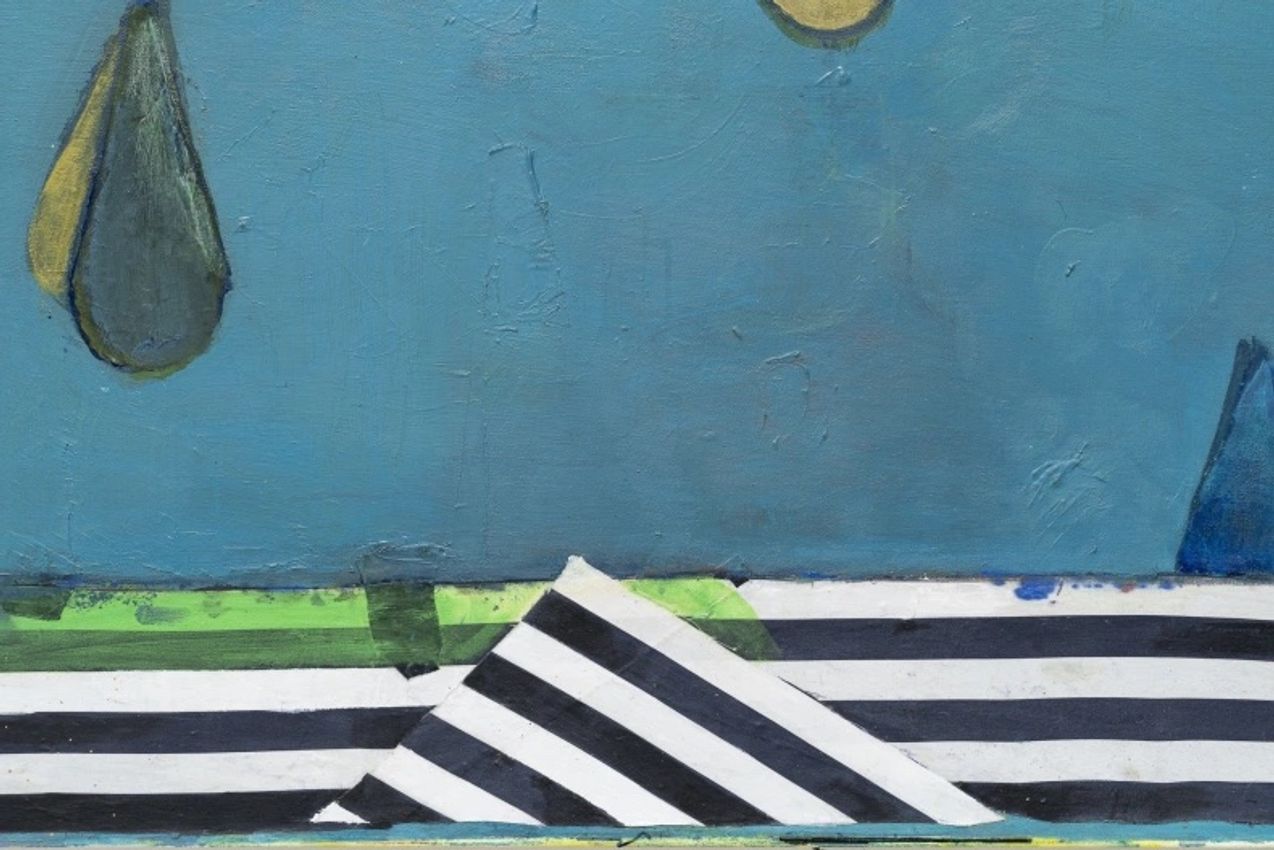
As a recurring motif in her artistic journey, Canale removes distinct facial features from her characters, reducing their facesto essential lines. Her compositions also incorporate recurring elements like dialogue balloons, clouds, droplets, andatmospheric elements, blurring the boundaries between pictorial genres, blending landscape and portraiture, and challengingthe distinction between figuration and abstraction. These artistic approaches ultimately give rise to what Canale describes asan ‘anti-portrait,’ where she dissolves the conventional notion of portraiture.
In this exhibition, Canale introduces two-dimensional elements through collages, a technique she has previously employed inher work. These elements are present not only in her paintings but also in a series of drawings on paper. Using various colourfuland richly patterned papers traditionally found in gift wrapping, these drawings establish a dialogue with her artwork.
Even in pieces that are not explicitly portraits, the feminine element, associated with life and vitality, appears directly orindirectly. While traditional portraits often served as ‘memento mori’–reminders of mortality – Canale’s anti-portraitsbecome their opposite: ‘memento vivere’–reminders to embrace life.
Cristina Canale (b. 1961, Rio de Janeiro, Brazil) rose to prominence following her participation in the iconic group exhibition Como vai você, Geração 80?, at Escola de Artes Visuais do Parque Lage (EAV Parque Lage) in Rio de Janeiro in 1984. Like many of her colleagues from the so-called “Generation 80”, her early works reveal the influence of the international context as painting resurfaced, especially with that of German Neo-expressionism. Loaded with visual elements and thick paint, her early paintings have a material or textural characteristic that is reinforced by her use of contrasting and vivid colors. In the early 1990s, Canale moved to Germany to study in Düsseldorf under the guidance of the Dutch conceptual artist Jan Dibbets. Her compositions soon acquired a sense of spatiality, as she began to incorporate the use of planes and depth, while also adding greater fluidity to her use of colors.

Founded in São Paulo in 1989, Galeria Nara Roesler is a leading Brazilian gallery dedicated to showing the work of contemporary Brazilian and international artists. The gallery established another branch in Rio de Janeiro in 2014, followed by its first international outpost in New York City in 2015.

A respected voice in contemporary art discourse.
Focusing on ambitious storytelling and insightful art-world commentary. Ocula Magazine publishes in-depth interviews, critical essays and timely analysis on the artists, exhibitions and ideas driving the global art world.
Learn more about Ocula Magazine
Showcasing the best of the art world.
Ocula partners with galleries from around the world to highlight their artists, artworks and exhibitions. Gallery membership is by application and invitation, with each member vetted by an independent panel.
Learn more about Ocula Membership

Specialises in the sale of major artworks.
Led by a team with deep ties to the world’s leading auction houses, galleries and collectors. Ocula’s advisory team offers bespoke services to high-net-worth clients from around the world who are looking to acquire the best of contemporary and modern art.
Learn more about our team and services