

Firenze Lai, Chronicler of the Body in the Age of the iPhone
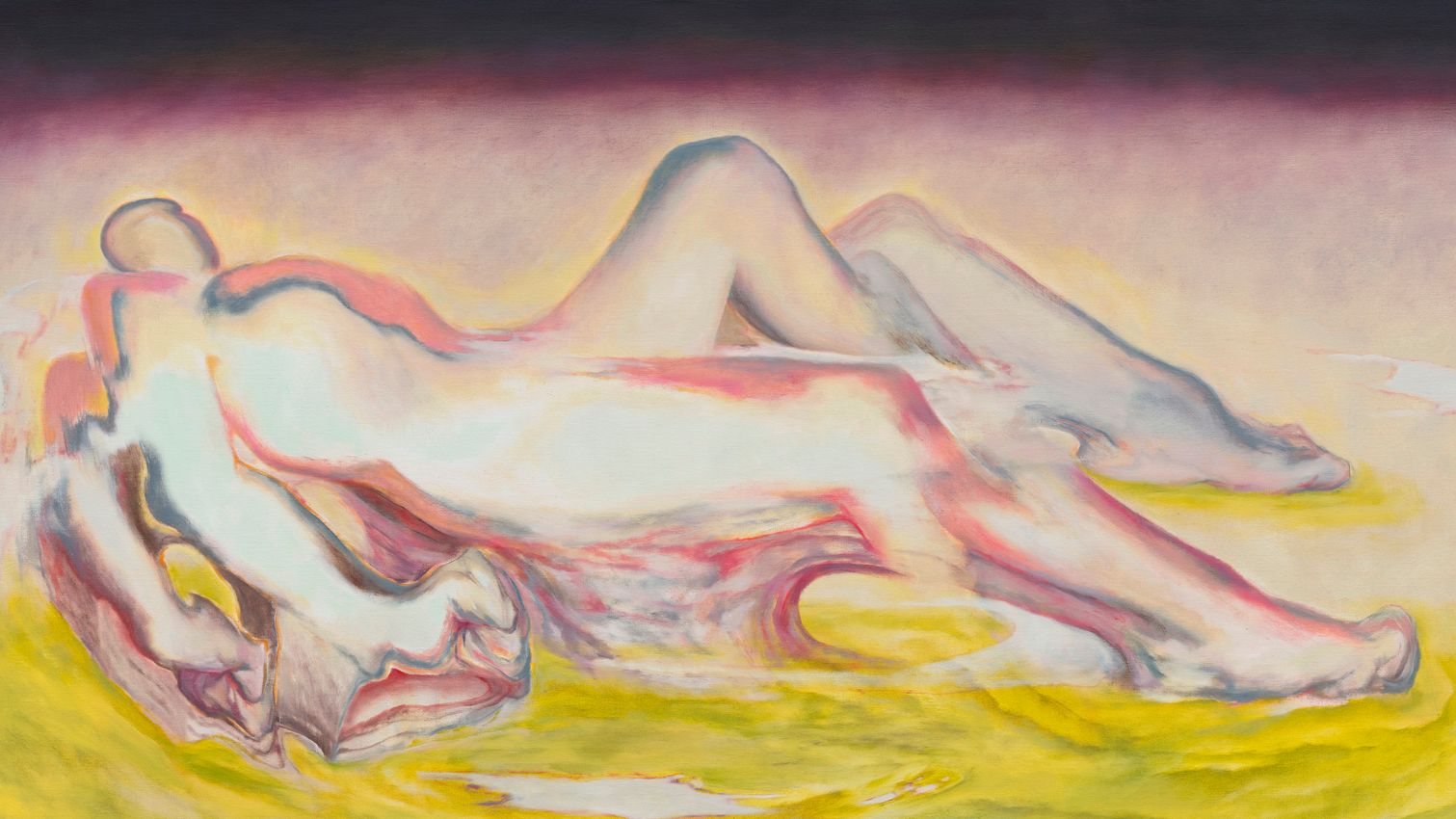
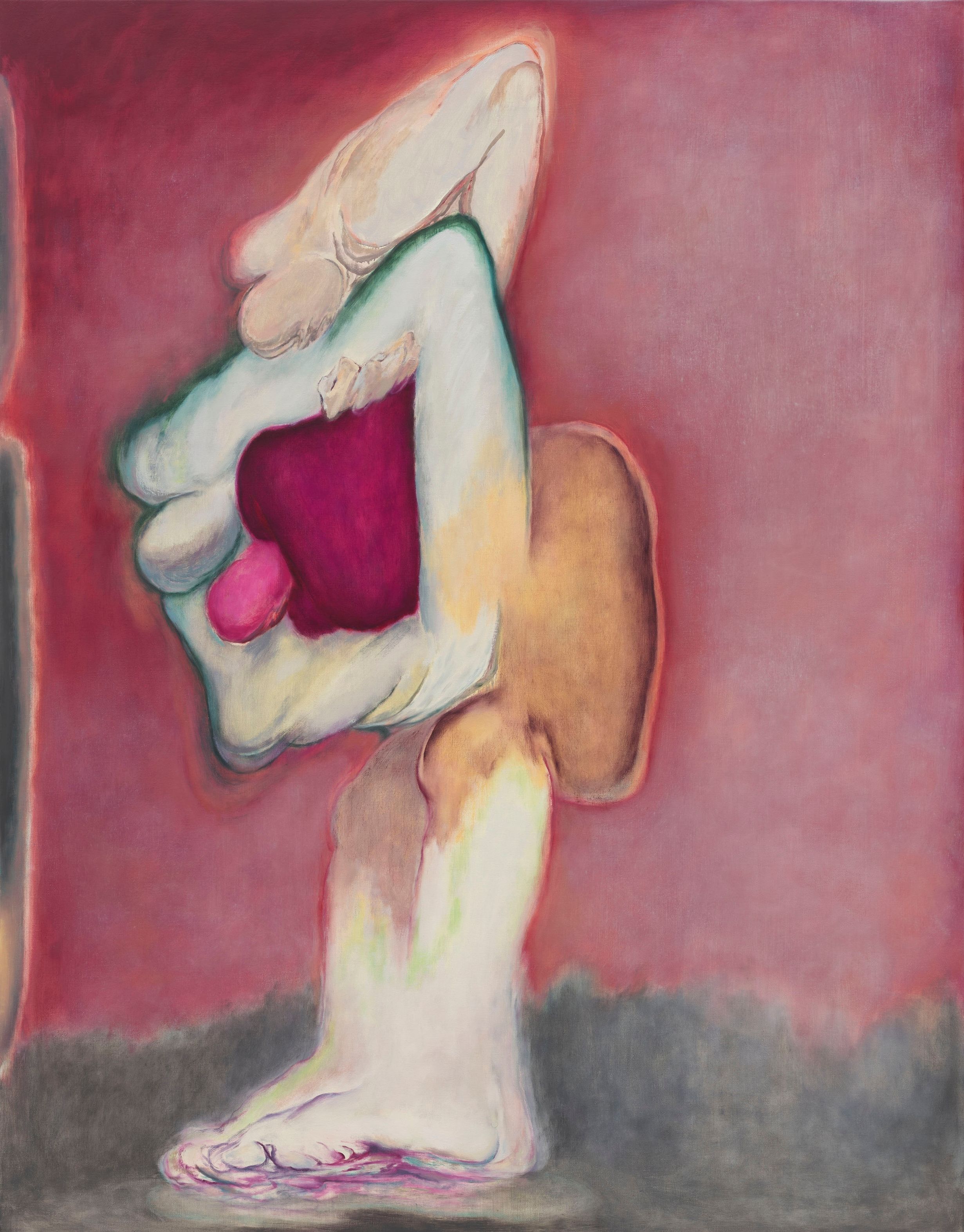
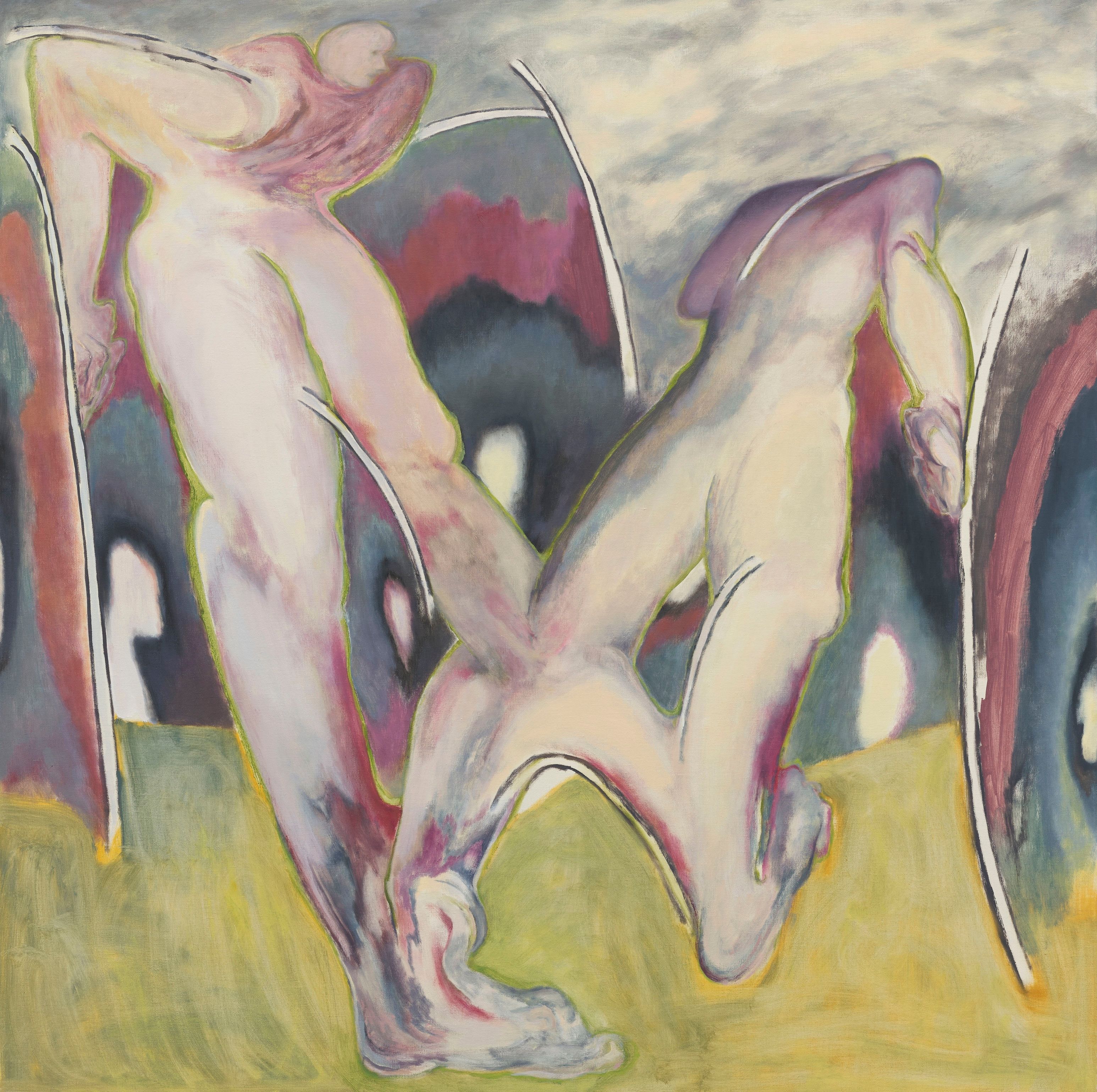
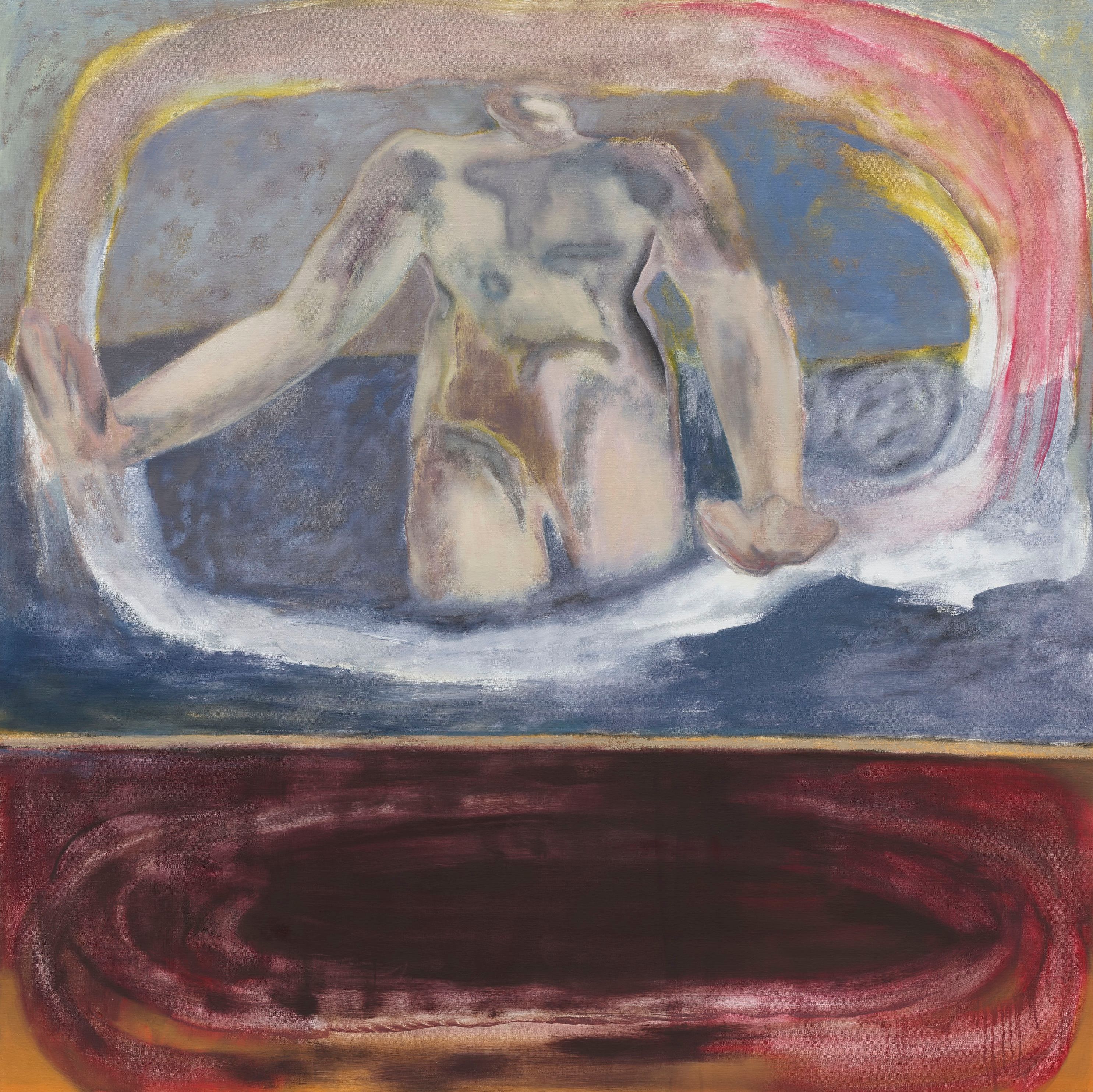
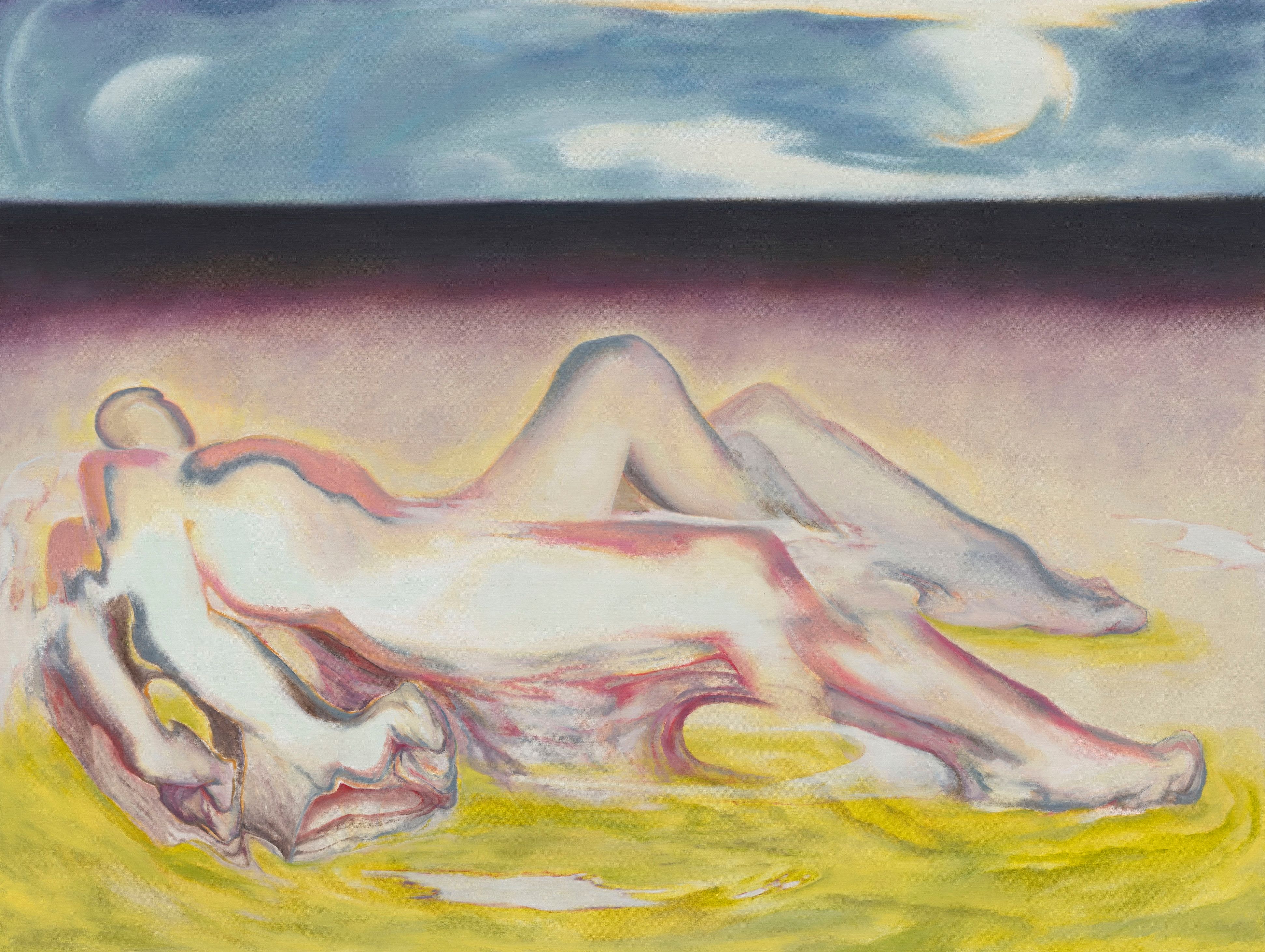
As her first solo exhibition in the UK takes place at Mason’s Yard, the London‑based artist talks about how tech impacts the body, getting lost and why the figures in her paintings have big feet. Save to My OculaThere’s a sense of something portentous in Firenze Lai’s large paintings, currently on display at White Cube Mason’s Yard in central London. The distant landscapes and massed, moody skies lend their foreground figures a sense of inscrutable significance. They appear like classical sculptures, pale as plaster and, more often than not nude, their faces blurred or featureless, an expression of Lai’s interest in states that are more, in her words, “collective and ambiguous” than directly representative.
Yet the figures are deeply expressive in their posture, body language and gestural modes. The shape of the body depends on where its attention is directed.
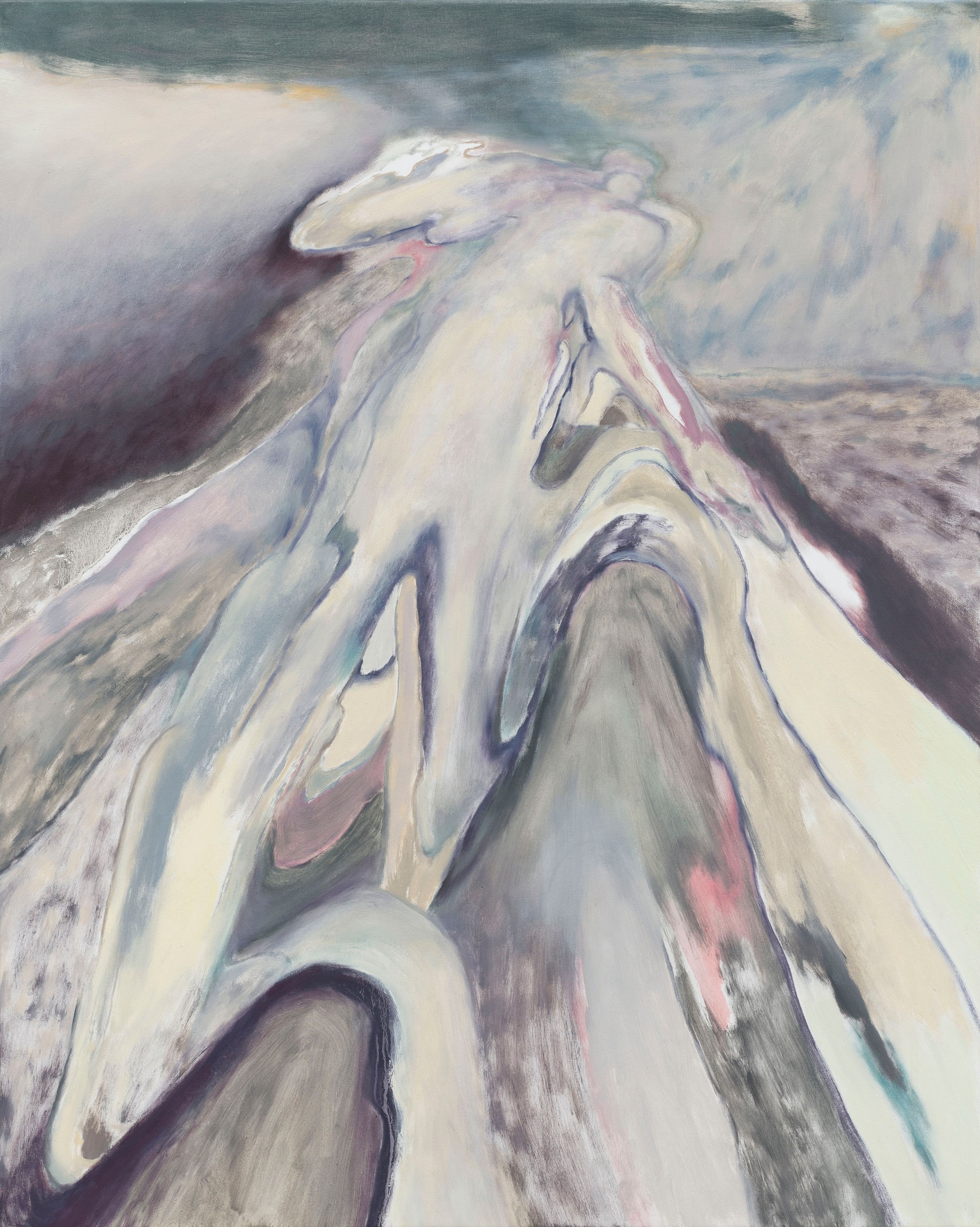
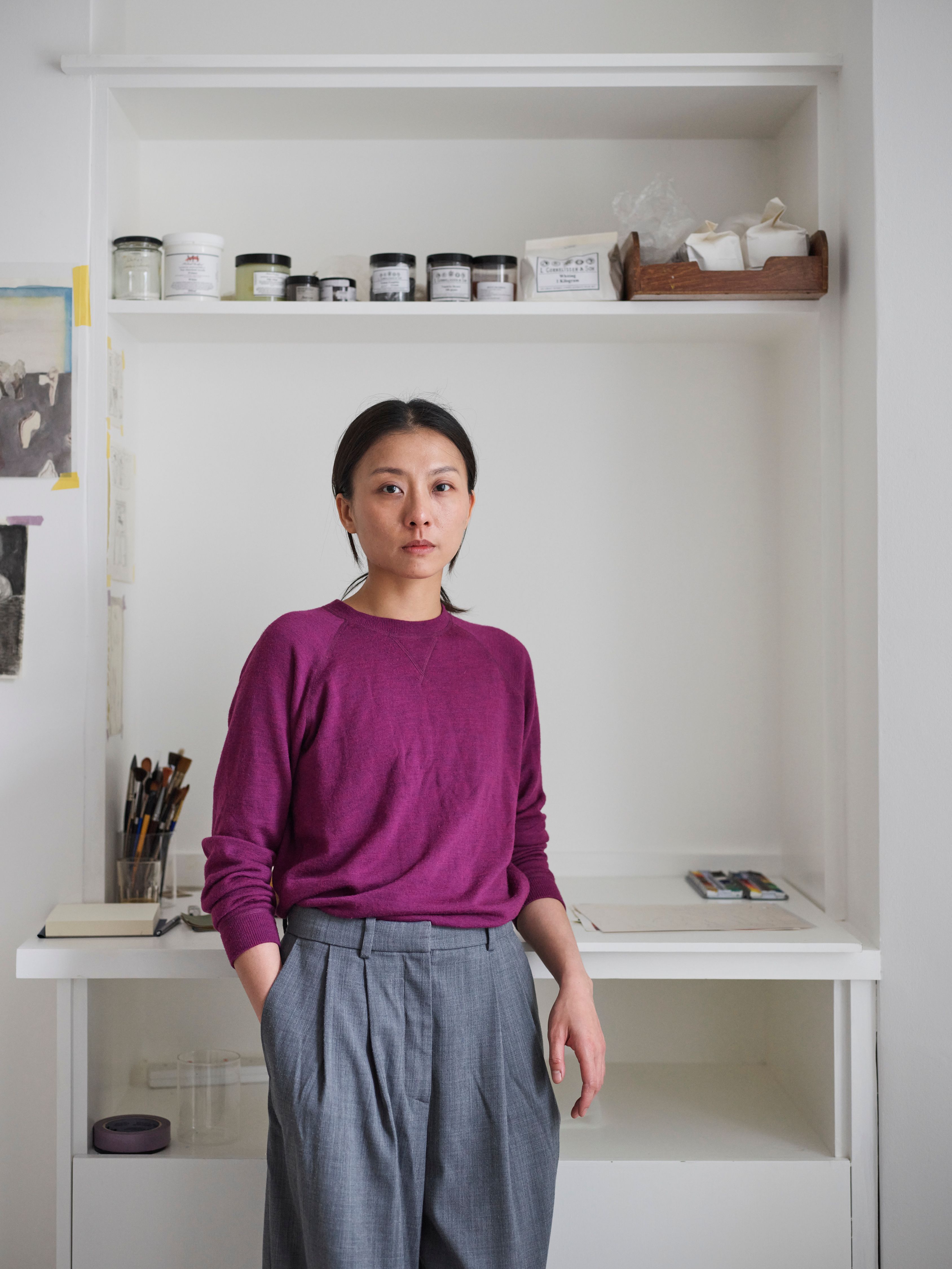
Lai, who was born in Hong Kong, moved to the UK in 2022 as the country was emerging from successive Covid-19 lockdowns. A moment of disorientation outside London’s Piccadilly Circus station provoked a longstanding interest in the particular pinching movement we make on our phone screens to zoom in or out, or to reorient the blue cursor—one of the many almost-unconscious movements on which we rely, every day, to tell us where we are.
Nell Whittaker: Tell me about your work Trinity. Why did you choose that name?
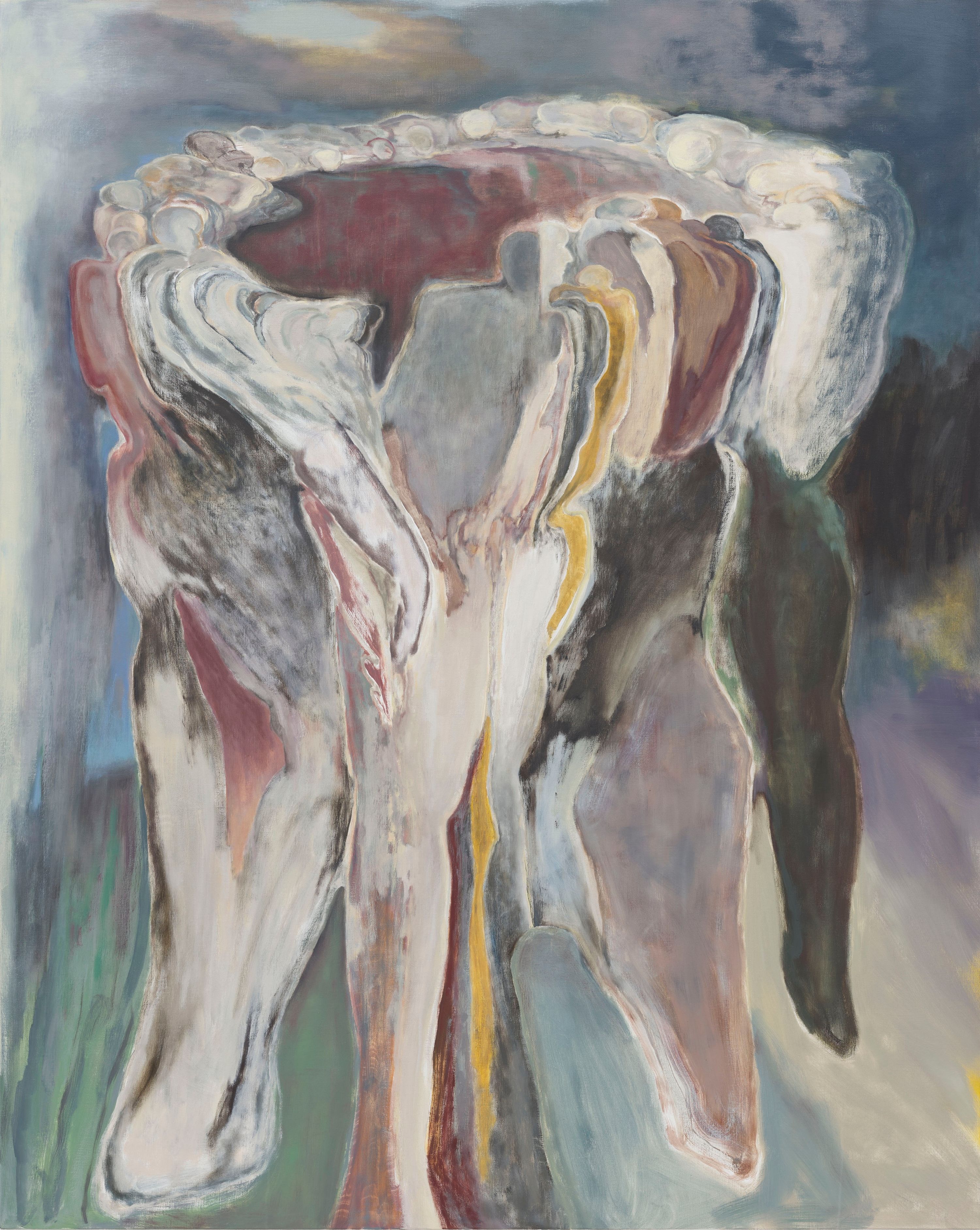
Firenze Lai: When I was living in Hong Kong, I went to church once, and an auntie taught me about the Trinity: Jesus, the Father and the Holy Spirit. About God, she said: “He’s not a person; He’s everywhere.” I was confused—what do you mean, everywhere? She said: “He’s in the air. He’s in the water. He’s everywhere. He’s in you.” I asked: “Is he in my pencil?” She said: “Yes.” I think I can understand what Jesus is—he’s between this world and another world, and we’re kind of similar here. But God is different—everywhere, and expanding. This work, Trinity, isn’t about religion, it’s about our digital systems—the infrastructure of the online world. This element at the top of the three, I thought originally that it was the algorithm, but it’s not—it’s what people really want. It’s the desire of the whole era that’s expressed by you and me, making choices, every day. I’m still confused by the whole thing, just as I am by Christian belief. The world is shifting—everyone believes that there is something in the near future which will make life completely different from how it’s been for the past thousand years. I feel very lucky that we’re able to witness this moment.
NW: What’s happening in the backgrounds of your paintings?
FL: Hong Kong is tropical. We have lots of storms every year, and we can feel a storm before it comes—in our bones, our hair, everywhere. But for the last 10 years, we have also now had aerial images—God’s perspective. While the weather in Hong Kong is more intense than in the UK, for all of us, the experience of the body is our permanent reality. You can be in prison or you can be on a first-class flight, but all you have is your own body.
NW: Your figures are usually naked, but sometimes they wear clothes. What do you dress them in?
FL: Clothes are very important for me, because this is the first layer our body feels. Sometimes, you’ll see a beautiful woman wearing jeans, and you will notice the side seam has moved to the wrong place. Something is wrong. Maybe it’s her posture, or way of walking. Clothes are perfectly symmetrical, but we are not. Our centre of gravity is different—right now, I’m calculating how your pelvis sits. That’s how I understand other people. That’s how I collect my samples, if you like. Today, I’m wearing black, but sometimes I will wear a shocking pink and so throughout the day, I will have a pink aura. If I decide to put clothes on my figures, sometimes it’s just to let them have the comfort of their body not being exposed. But other times, it might suggest some social setting. Previously, my figures were more likely to wear shoes.
NW: Why is the exhibition titled North and True North?
FL: When I came to the UK four years ago, I was terrible at directions. I couldn’t imagine how people before us went to the Czech Republic or Poland without an iPhone. They might have had a map, but the street names aren’t English. I came here during peak Covid, when the Ukraine war had just broken out, and there were so many people coming to London, including from Hong Kong. At some point, I was standing right next to Piccadilly Circus, and I was doing this pinching thing to align myself on Google Maps, but the signal there was so bad. It is still very bad there. I was imagining, just at that moment, how many people in London were doing the same thing, this rotation movement with our fingers. This is the gesture of our age.
NW: Why do your figures often have large feet?
FL: The large feet are because most of the time, your feet are the only contact point between you and the earth. You can never feel your own weight, and for me, that is a mystery. Sometimes I feel like we are floating. Our experiences are not as physical as previous generations’. We spend at least half of our time online. We just sit there. I believe that in maybe 50 years or 100 years, our eyes will have to have changed because we are so used to these blue lights. Perhaps you will feel completely fine in your room with your phone, but you can’t stand a normal day outside.
NW: Are there any sculptures that are important to you?
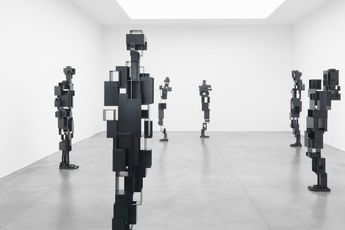
FL: One is The Arch 1979–1980 by Henry Moore. The second is Reclining Figure (1951), also by Henry Moore, currently in the Tate. And the rest is Antony Gormley. I’m a fan. They move me enormously. The artist is transforming this energy of this being into something you can you can still relate to. It’s a very hard thing to do. I have tried to make some sculptures, but I was always thinking, how can I put this back in my drawing or painting?
Firenze Lai, North and True North (until 14 November 2026) at White Cube Mason’s Yard, London
Main image: Firenze Lai, Slow Sand (2025). © Firenze Lai and White Cube. Photo: Theo Christelis.






A respected voice in contemporary art discourse.
Focusing on ambitious storytelling and insightful art-world commentary. Ocula Magazine publishes in-depth interviews, critical essays and timely analysis on the artists, exhibitions and ideas driving the global art world.
Learn more about Ocula Magazine
Showcasing the best of the art world.
Ocula partners with galleries from around the world to highlight their artists, artworks and exhibitions. Gallery membership is by application and invitation, with each member vetted by an independent panel.
Learn more about Ocula Membership
Specialises in the sale of major artworks.
Led by a team with deep ties to the world’s leading auction houses, galleries and collectors. Ocula’s advisory team offers bespoke services to high-net-worth clients from around the world who are looking to acquire the best of contemporary and modern art.
Learn more about our team and services